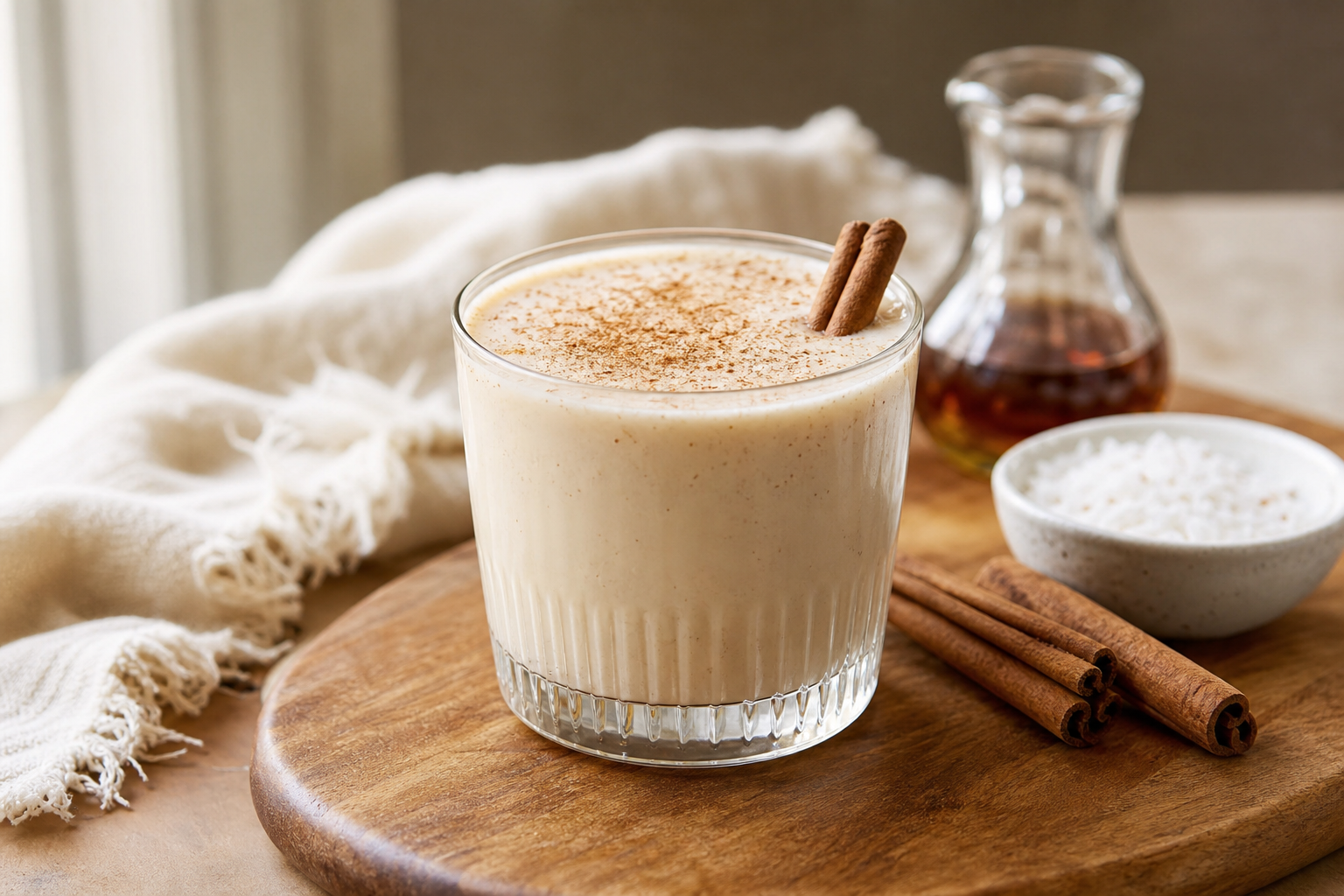
Coquito is a Puerto Rican coconut eggnog made with rum, coconut milk, cream of coconut, sweetened condensed milk and warm spices, with no eggs in it. Serve it cold in small glasses for a cozy holiday drink that is just as welcome at a fall gathering as it is at Christmas.
Coquito is Puerto Rico’s answer to eggnog, a creamy coconut-spiked drink that shows up at every holiday gathering from Thanksgiving through Three Kings Day. Unlike American eggnog, it skips the raw eggs entirely and builds its richness from three forms of coconut, sweetened condensed milk, and a generous pour of rum. The result tastes like melted coconut ice cream with a warm spice kick, and it gets better after a few days in the fridge as the cinnamon and nutmeg bloom.
What Makes Coquito Different From Eggnog
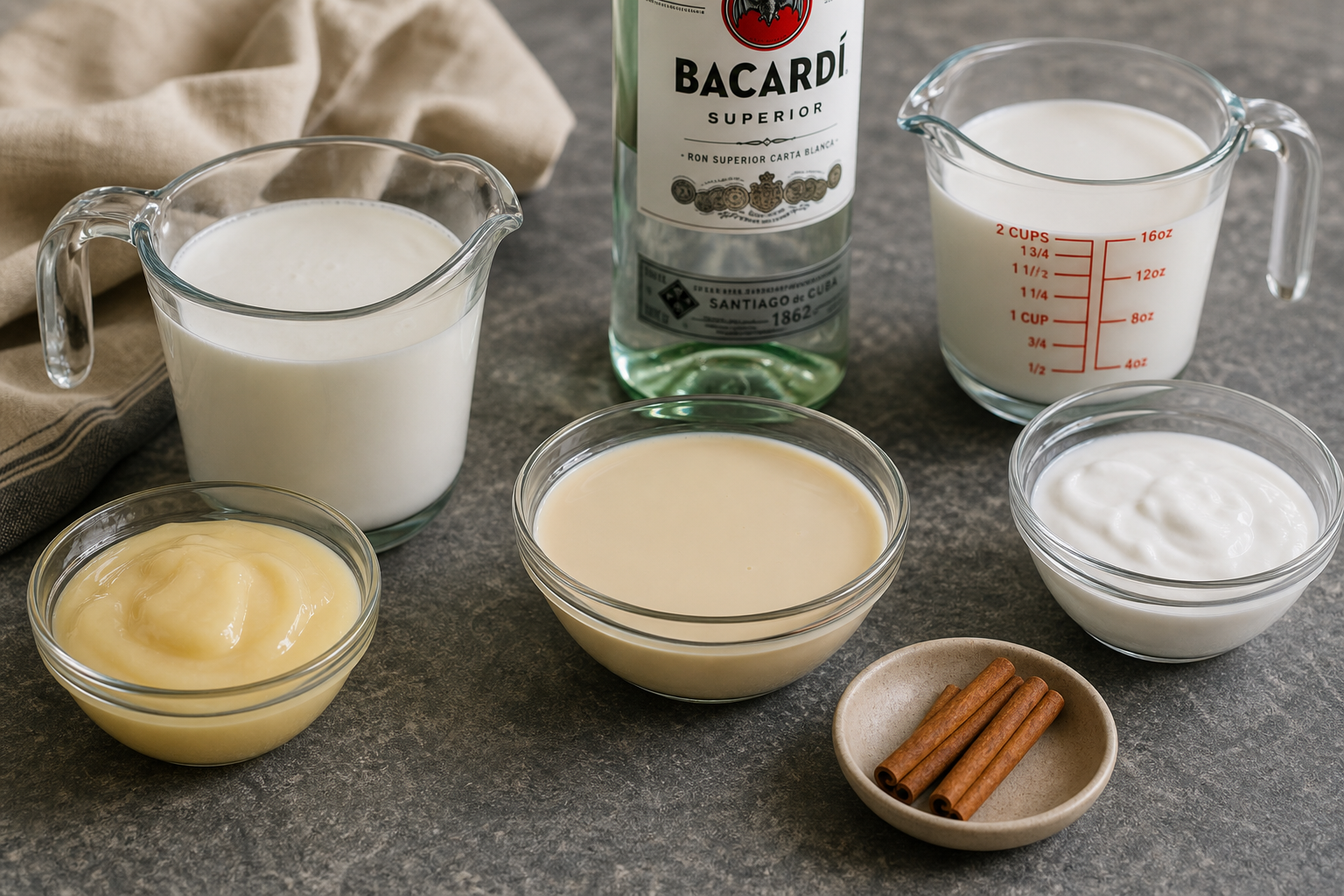
The biggest difference is what’s missing. Traditional eggnog relies on raw or cooked eggs for body and richness, which gives it that custard-like texture and pale yellow color. Coquito gets its creamy weight from coconut cream, coconut milk , and evaporated milk instead, so it pours thicker and tastes cleaner without any eggy flavor.
The spice profile shifts too. Eggnog leans on nutmeg with maybe a hint of cinnamon, while coquito uses both spices in equal measure and often steeps whole cinnamon sticks in the rum base. That makes it taste warmer and more aromatic, closer to a liquid version of arroz con dulce than a dairy custard.
Rum replaces brandy or bourbon. Most Puerto Rican families use white rum, which keeps the drink pale and lets the coconut flavor lead. The alcohol content runs higher than most eggnog recipes, usually around 1 1/2 cups of rum for a batch that serves eight, so each glass hits harder.
Ingredients
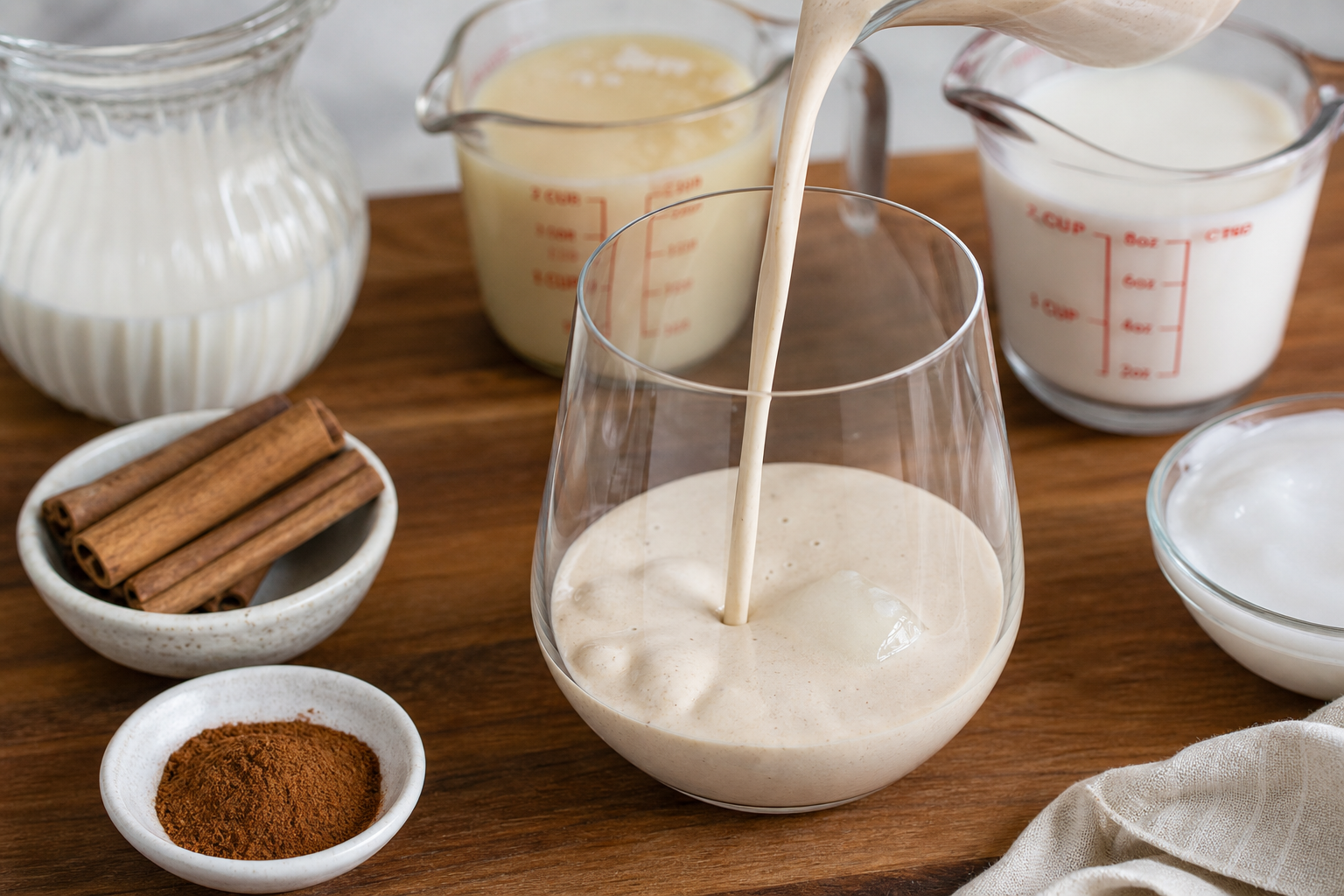
- 1 1/2 cups rum
- 2 cinnamon sticks
- 1 (14 oz) can sweetened condensed milk (or coconut sweetened condensed milk)
- 1 (15 oz) can cream of coconut (Coco Lopez or Goya brand)
- 1 (13.5 oz) can coconut milk
- 4 oz evaporated milk
- 1/2 teaspoon freshly ground nutmeg
- 1/2 teaspoon ground cinnamon
- 1/2 teaspoon vanilla extract
Instructions
- Optional but worth it: pour the rum into a large lidded pitcher, or split it between two big lidded jars (the finished coquito makes about 56 ounces). Drop in the cinnamon sticks and let them steep for at least 24 hours, or up to a week, for a deeper, spicier rum.
- Blend the sweetened condensed milk, cream of coconut, coconut milk, evaporated milk, nutmeg, ground cinnamon and vanilla until smooth.
- Pour the blended mixture into the rum and shake well. Chill for at least 4 hours so the flavors come together and the coquito thickens as the cream of coconut gets cold.
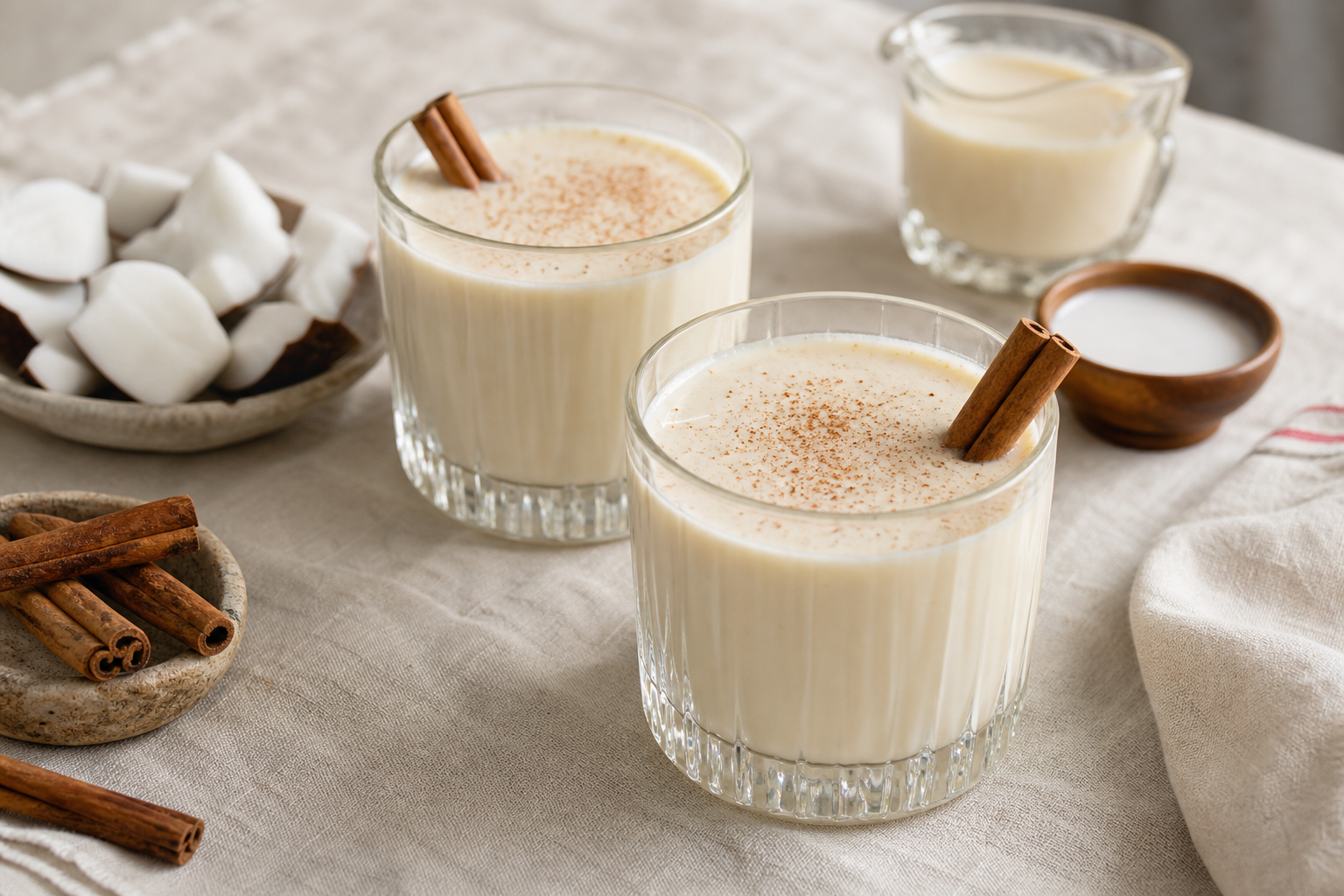
- Keep it in an airtight container in the refrigerator for up to 6 weeks. Shake well before every pour, and serve cold with a little cinnamon or nutmeg sprinkled on top.
Choosing Your Coconut Products
- Cream of coconut: The sweetened, thick syrup sold in cans near the drink mixers, usually Coco Lopez or Goya brand. It’s what gives coquito its signature sweetness and body, so don’t substitute coconut cream here.
- Coconut milk: The unsweetened liquid in the 13.5 oz can, usually in the Asian foods aisle. It thins the drink just enough to make it pourable while adding coconut flavor without extra sugar. Shake the can hard before opening since the cream separates and floats to the top.
- Coconut cream: Some recipes call for the thick layer skimmed from the top of a chilled can of full-fat coconut milk. This recipe uses cream of coconut instead, which is already sweetened and blended, so you don’t need to buy a separate product or chill and skim anything.
Rum Selection and Alcohol Variations
White rum is traditional and keeps the drink pale and coconut-forward. Bacardi, Don Q, or any Puerto Rican white rum works well. Dark rum adds molasses and caramel notes that some families prefer, but it changes the flavor profile and turns the drink tan instead of cream-colored.
The 1 1/2 cups of rum in this recipe makes a strong batch. You can drop it to 1 cup for a lighter version that still tastes boozy, or go up to 2 cups if you want something closer to a spiked milkshake. Below 1 cup, the drink starts tasting more like a coconut dessert than a cocktail.
For a non-alcoholic version, replace the rum with additional coconut milk or whole milk and add 1/2 teaspoon of rum extract if you want a hint of that flavor. The texture stays creamy, but the drink won’t thicken as much in the fridge without the alcohol.
Storage and Make-Ahead Timeline
Coquito keeps in the refrigerator for up to 6 weeks in an airtight container, and most people say it tastes better after the first week as the spices bloom and the flavors marry. Keep it cold and sealed.
The mixture will separate as it sits, with the coconut solids rising to the top and the liquid settling below. That’s normal. Shake the container hard for 10 to 15 seconds before every pour to re-emulsify it. If you’re serving a crowd, pour the batch into a pitcher and stir it well, then keep it on ice or in the fridge between pours.
You can make coquito weeks ahead of a party, which makes it one of the easiest holiday drinks to prep in advance. Some families make a double or triple batch right after Thanksgiving and portion it into glass bottles as gifts, storing them in the fridge until it’s time to hand them out.
Common Problems and How to Fix Them
- Coquito is too thick to pour: Add 2 to 4 oz of coconut milk or whole milk and shake well. The drink thickens as it chills, especially if you used full-fat coconut milk, so thinning it slightly won’t hurt the flavor.
- Mixture separates and won’t stay blended: Shake harder and longer, at least 15 seconds. If it still separates immediately, your cream of coconut may have been too cold or the rum too warm when you mixed them. Let the batch come to room temperature, blend it again in the blender, then chill it slowly.
- Drink tastes grainy or gritty: The cream of coconut didn’t fully dissolve. Warm the can in hot water for 5 minutes before opening, or microwave the opened can for 20 seconds, then blend everything again on high speed for a full minute.
- Flavor is flat or tastes only like coconut: You skipped the cinnamon stick infusion or didn’t let the batch chill long enough. Add another 1/4 teaspoon each of ground cinnamon and nutmeg, shake well, and refrigerate for at least 24 hours before serving.
- Coquito is too sweet: Cut the cream of coconut by 1/4 cup and replace it with an equal amount of coconut milk next time. You can also add 1 to 2 oz of fresh lime juice to the current batch to balance the sweetness, though that’s not traditional.
Serving and Presentation
Serve coquito ice-cold in small glasses, usually 3 to 4 oz per serving since it’s rich and strong. Dust the top of each glass with a pinch of ground cinnamon or add a whole cinnamon stick as a stirrer. Some people grate fresh nutmeg over the top right before serving for a hit of aromatics.
The drink pairs well with Puerto Rican holiday foods like pernil, arroz con gandules, and pasteles, cutting through the richness of roasted pork and seasoned rice. It also works as a dessert on its own, especially alongside something crisp like polvorones or mantecaditos.
For a party, pour the batch into a large glass beverage dispenser or a clear pitcher so guests can see the creamy color. Keep it on ice or in a bucket of ice water, and set out a small bowl of ground cinnamon and a spoon so people can add their own garnish. Remind everyone to shake or stir the dispenser before pouring since the mixture will separate as it sits.
Frequently Asked Questions
Does coquito contain raw eggs?
No. Traditional coquito recipes use coconut products and evaporated milk for richness instead of eggs, so it is a good pick if you want an eggnog-style drink without eggs.
Can you freeze coquito?
Yes, but the texture changes. The coconut solids and dairy will separate when thawed, and shaking won’t fully bring them back together. If you do freeze it, thaw it in the fridge overnight and re-blend it in a blender before serving. It’s better to make smaller batches and keep them refrigerated.
What type of rum works best in coquito?
White rum is traditional and keeps the coconut flavor in front. Bacardi, Don Q, or any light Puerto Rican rum works well. Dark rum adds molasses notes and turns the drink darker, which some families prefer, but it’s less common.
How far in advance can you make coquito?
Up to 6 weeks. The flavor actually improves after the first week as the spices bloom and the ingredients marry. Store it in an airtight container in the refrigerator and shake well before every pour.
Why is my coquito separating?
Separation is normal. The coconut solids are lighter than the liquid, so they float to the top as the batch sits. Shake the container hard for 10 to 15 seconds before pouring to re-emulsify it. If it separates immediately after shaking, the ingredients may have been at very different temperatures when you mixed them.
Can you make coquito without alcohol?
Yes. Replace the rum with additional coconut milk or whole milk and add 1/2 teaspoon of rum extract if you want a hint of that flavor. The drink will be thinner and won’t keep as long, so refrigerate it and enjoy it within about 2 weeks.
Conclusion
Everyone who passes this recipe down adds a small tweak, but the core stays put: coconut, rum, warm spices, and time in the fridge. Make it a week before you need it, shake it hard before every pour, and keep it cold. It’ll last well into the holiday season if you don’t drink it first.