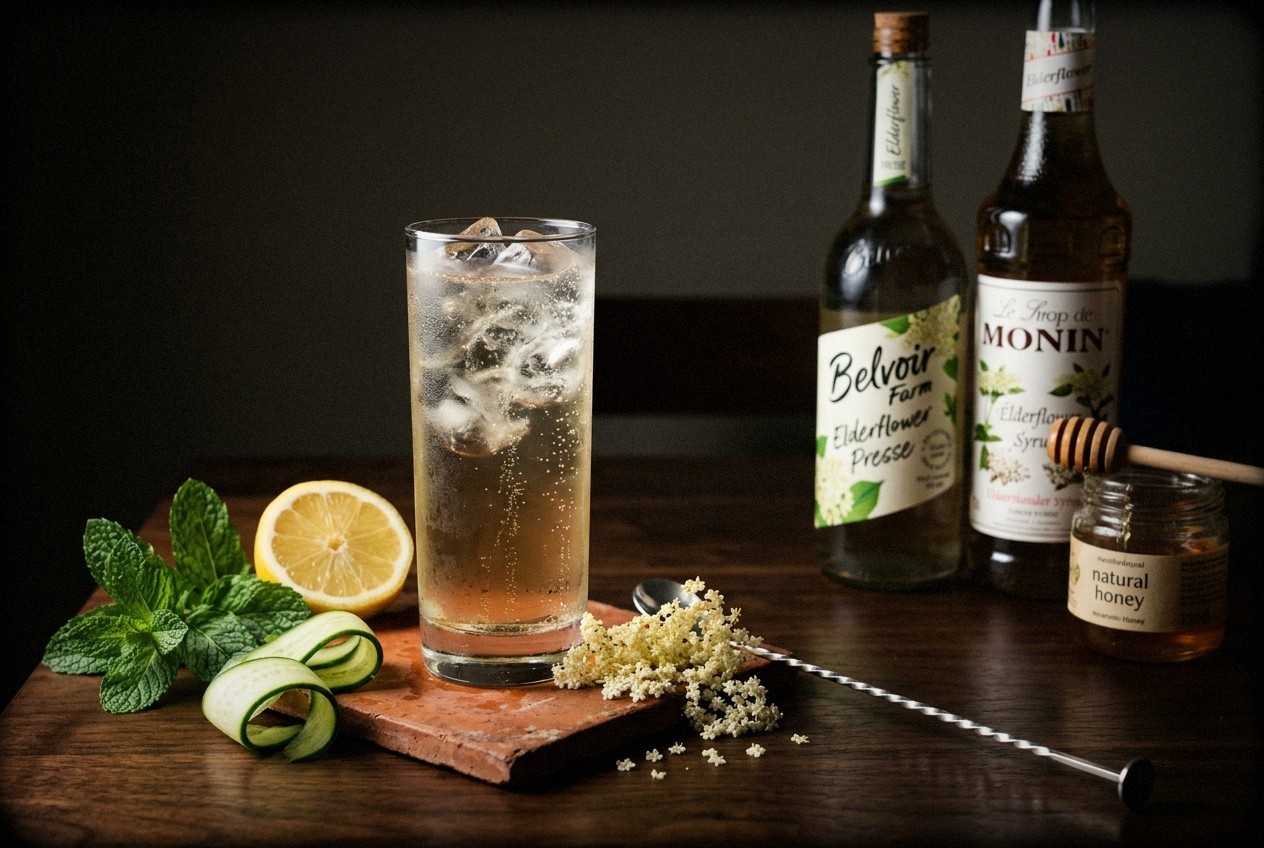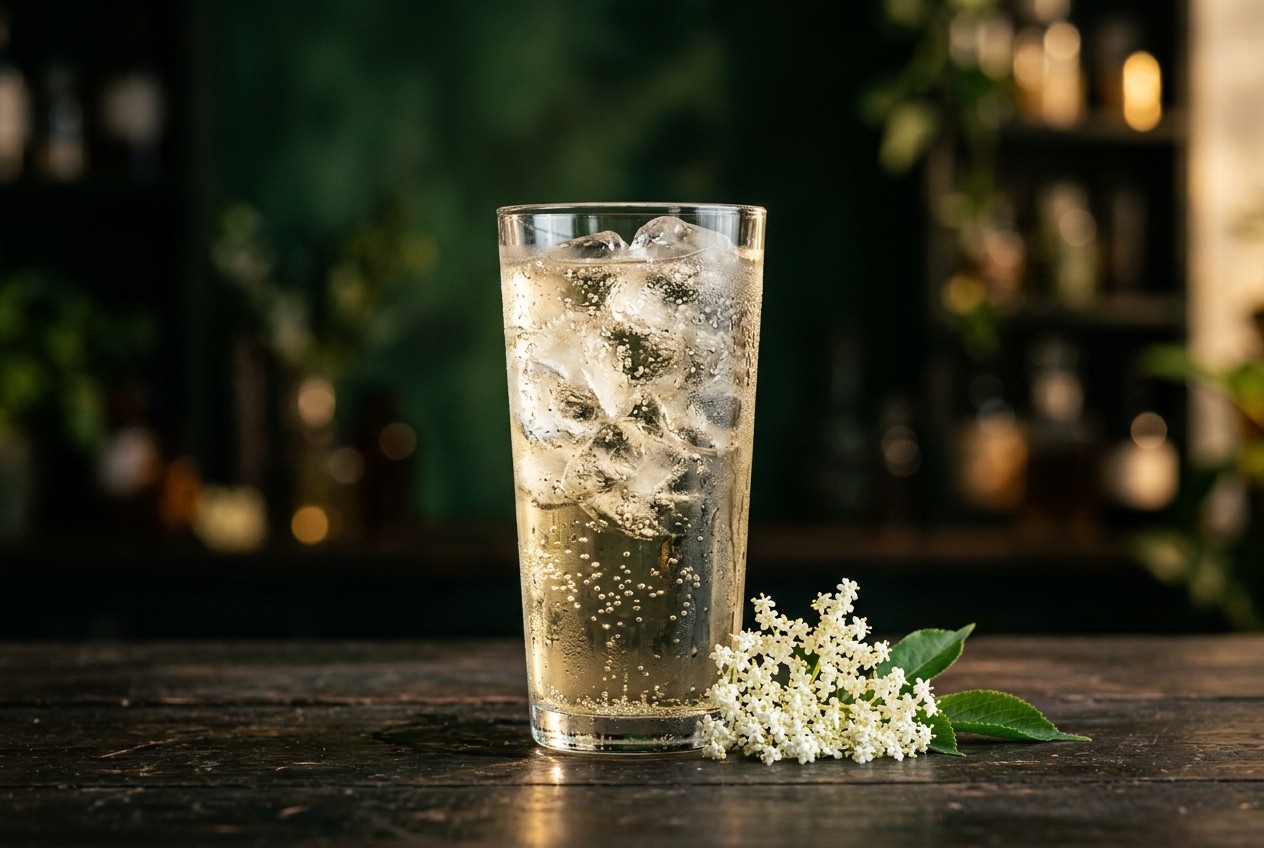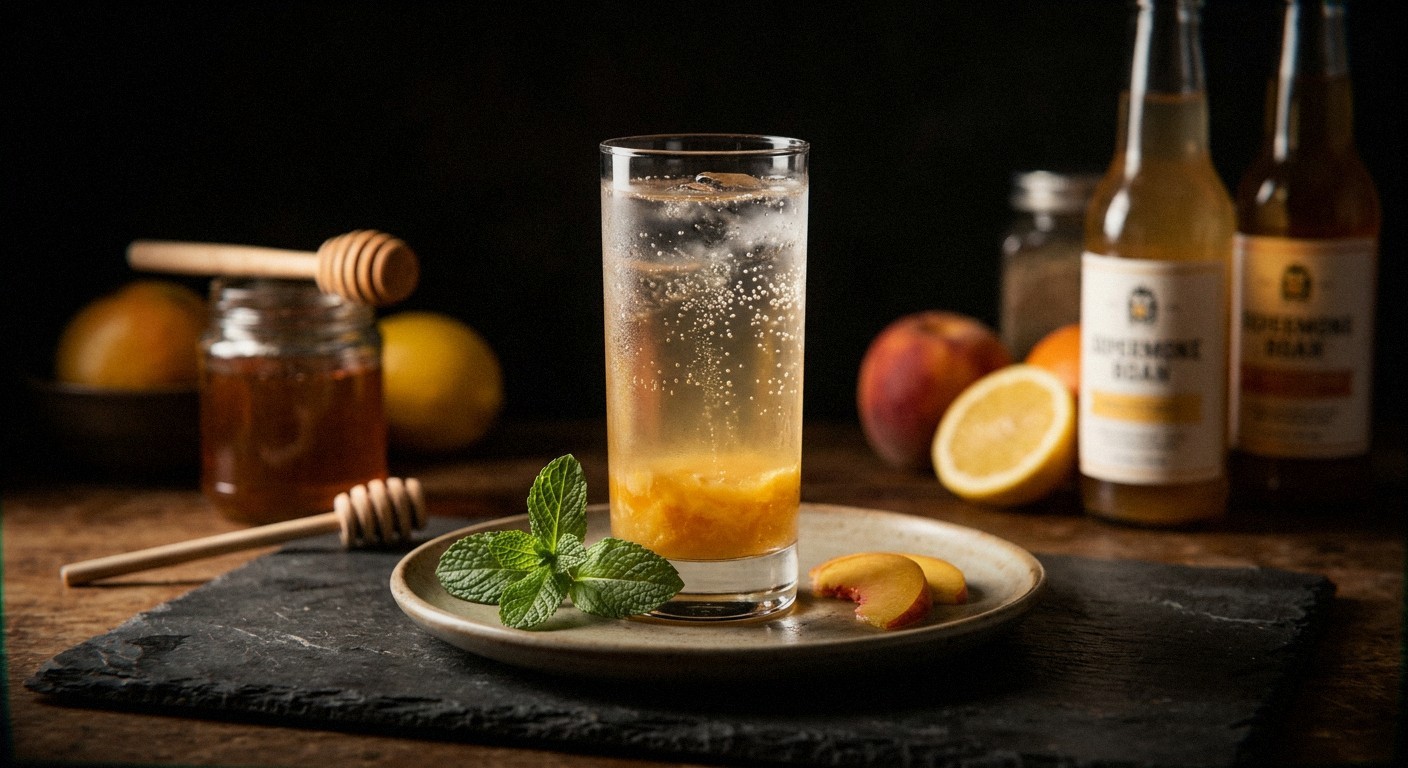
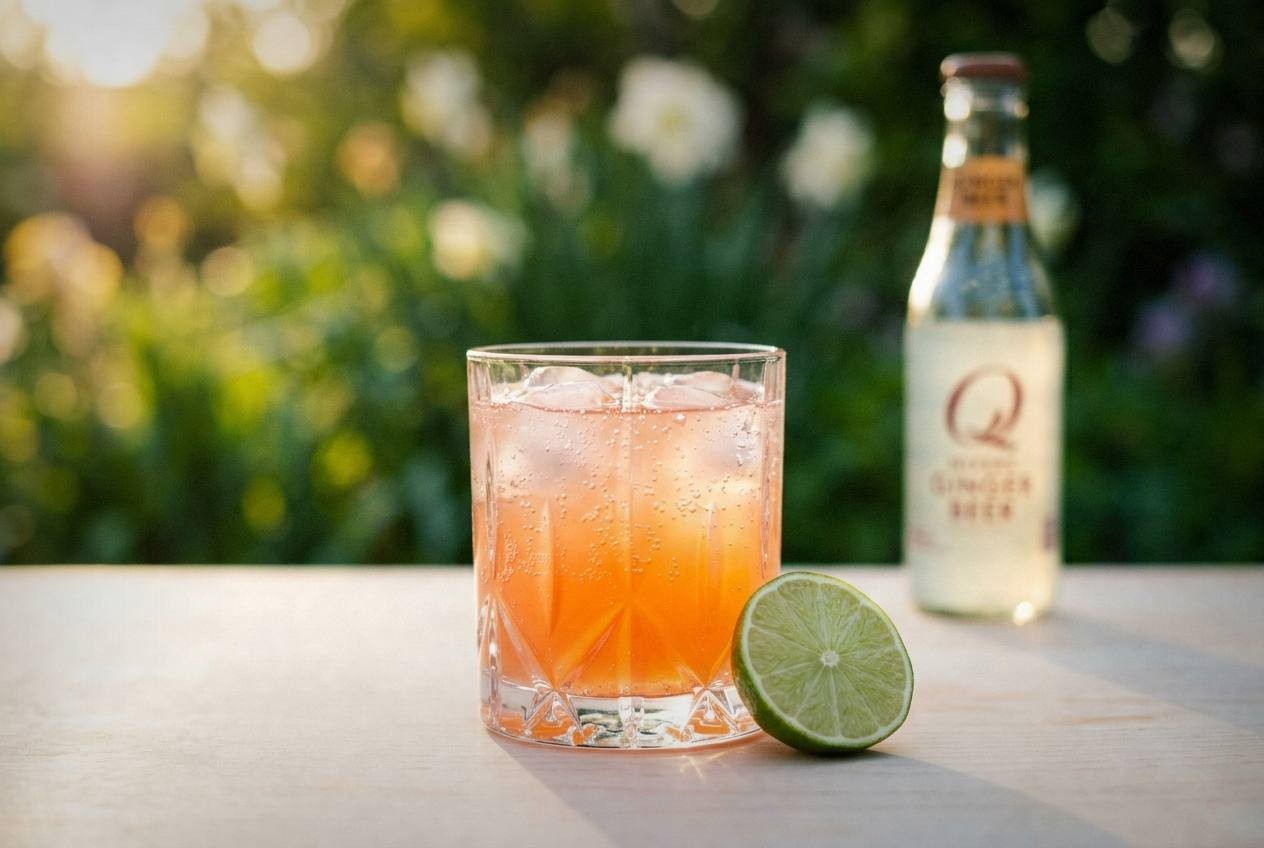
Light cucumber elderflower spritz with fresh lime, elderflower cordial, and sparkling water. Get the easy spa mocktail recipe.
This cucumber elderflower spritz combines muddled fresh cucumber, elderflower cordial, and cucumber tonic water in a chilled glass. It takes 5 minutes to make and yields a light, botanical mocktail with the floral sweetness of elderflower balanced by cucumber’s cool, green notes.
Note: This is a mocktail variation inspired by botanical spritz traditions. It differs from the established Cucumber Spritz cocktail (created by Tony Conigliaro, 2017, featured in Difford’s Guide), which uses Sauvignon Blanc wine as its base. This alcohol-free version has been reformulated to create a distinct drink while honoring similar flavor profiles.
At a Glance
| Detail | Info |
|---|---|
| Prep time | 5 minutes |
| Total time | 5 minutes |
| Servings | 1 |
| Difficulty | Easy |
| Key ingredient | Elderflower cordial |
| Best for | Spring brunch, afternoon refreshment |
| Flavor profile | Floral, crisp, lightly sweet, botanical |
| Caffeine | Naturally caffeine-free |
Why You Will Love This
The elderflower brings a delicate honeyed-floral note that tastes like spring itself, while cucumber adds a spa-fresh coolness without any bitterness. The cucumber tonic water provides a subtle quinine backbone that adds complexity to each sip. You muddle the cucumber directly in the glass, so there is no shaker to clean.
The Story Behind It
Elderflower cordial has been a British springtime staple since the 1800s, made when elder trees bloom in May and June. Cucumber became a spa water ingredient in the early 20th century at European thermal baths, where guests sipped infused water between treatments. This spritz borrows from both traditions, turning them into a single glass that feels like a garden party and a spa day at once.
What You Will Need
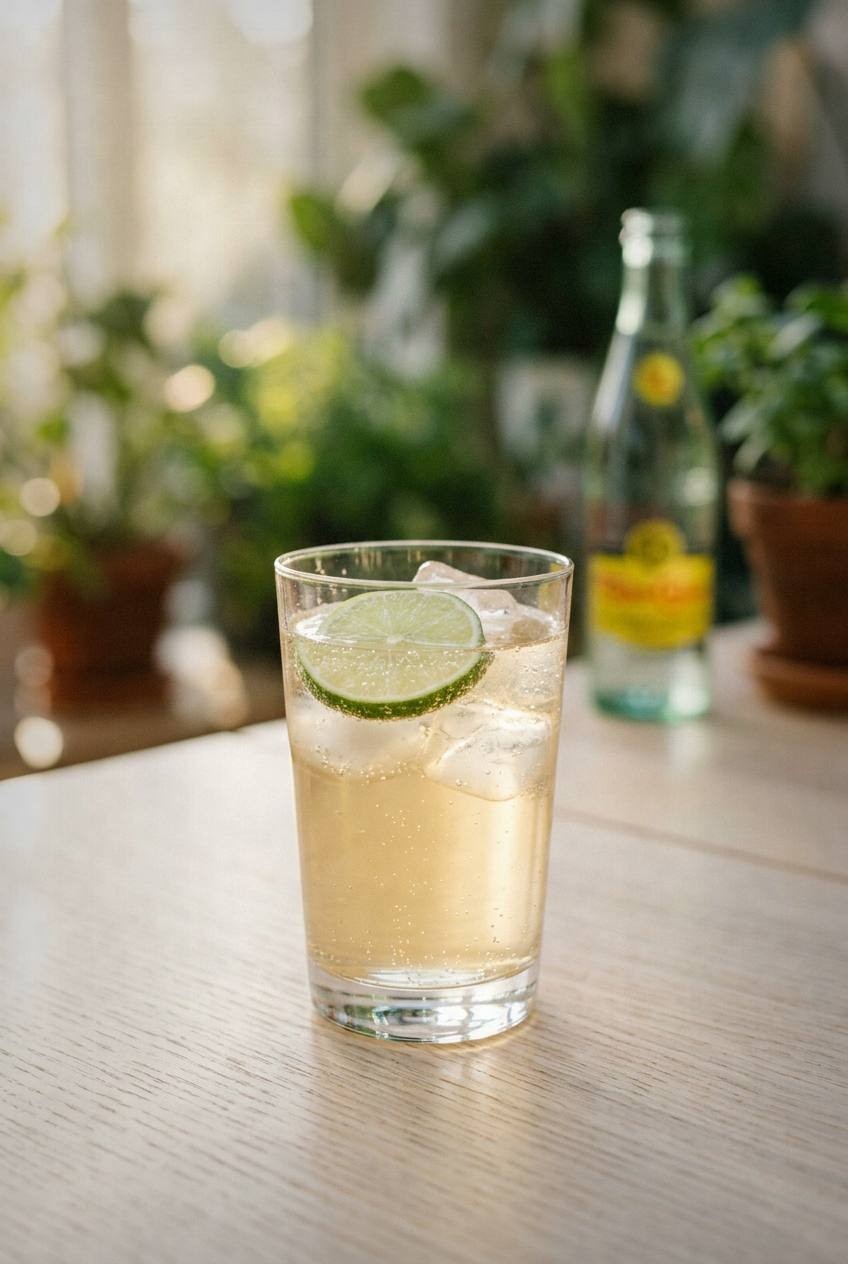
- 3 thin cucumber slices, plus 1 for garnish
- 2 teaspoons elderflower cordial
- 4 ounces chilled cucumber tonic water
- Ice cubes
- Fresh mint sprig for garnish (optional)
How to Make It
- Gently muddle 3 cucumber slices in the bottom of a large wine glass or copa glass. Press just enough to release the juice, not to pulverize.
- Fill the glass with ice cubes to the rim.
- Pour 2 teaspoons elderflower cordial over the ice.
- Top with 4 ounces chilled cucumber tonic water.
- Stir gently once with a bar spoon or straw to combine.
- Garnish with a cucumber slice threaded onto the rim and a fresh mint sprig. Serve immediately while cold and fizzy.
Herbalist Notes
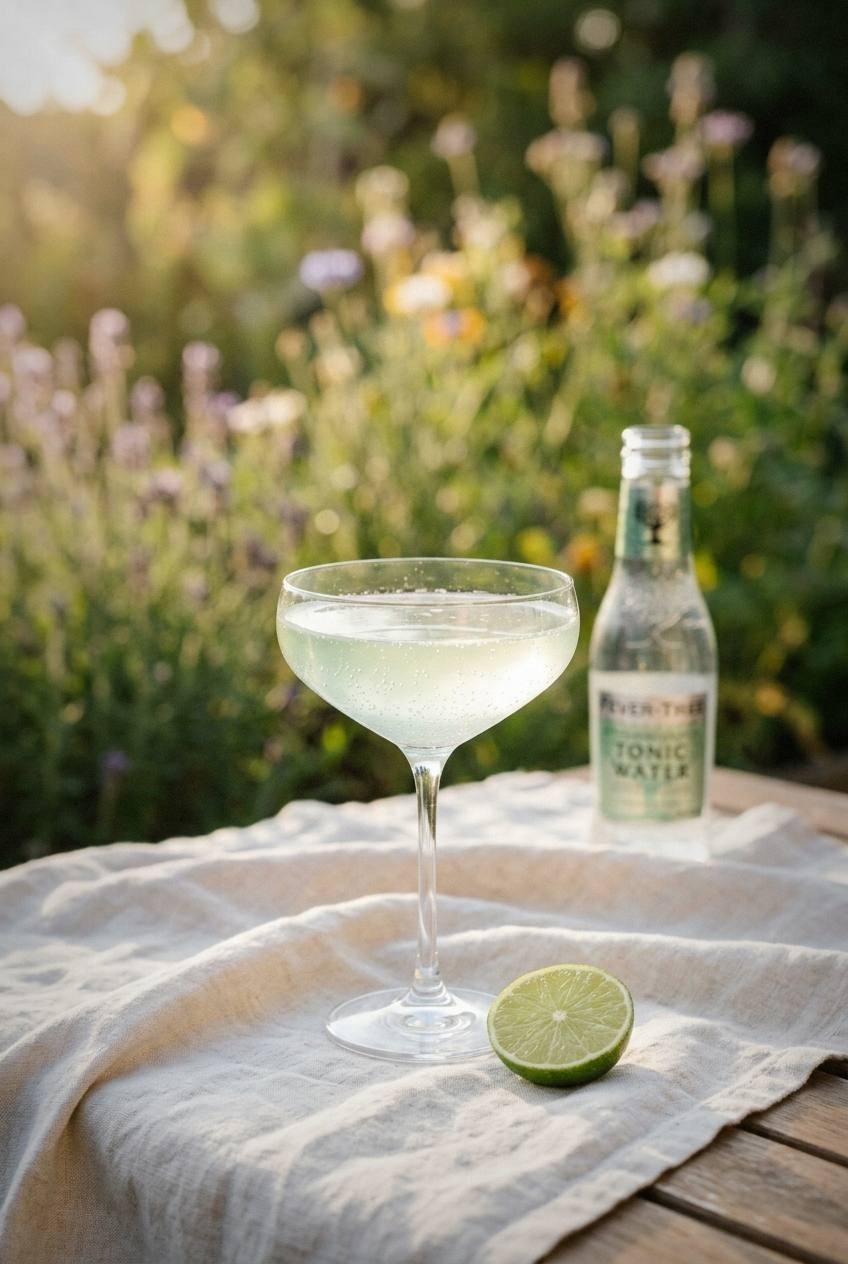
Elderflower (Sambucus nigra) has been used in Western herbalism since ancient Greece as a cooling, anti-inflammatory botanical. The flowers are harvested in late spring when their aroma is most concentrated, typically late May through early June in temperate climates. Traditional elderflower cordial uses a 1:1 sugar-to-water ratio steeped with fresh blossoms for 24 hours, then strained and preserved with citric acid.
Cucumber contains silica and vitamin K, both of which support skin hydration. That is why cucumber slices appear in every spa treatment room. When you muddle cucumber, you release cucurbitacins, compounds that give cucumber its characteristic fresh, slightly bitter edge.
The quinine in tonic water adds a subtle bitter note that balances the elderflower’s sweetness and enhances the botanical character of the drink.
Make It Your Own
Swap cucumber tonic water for plain sparkling water if you prefer a lighter, less botanical profile. Add a quarter teaspoon of rose water along with the elderflower cordial for a more perfumed, Turkish-garden direction. If you prefer a less sweet drink, reduce the elderflower cordial to 1 teaspoon and add a splash of fresh lemon juice for brightness.
Before You Start
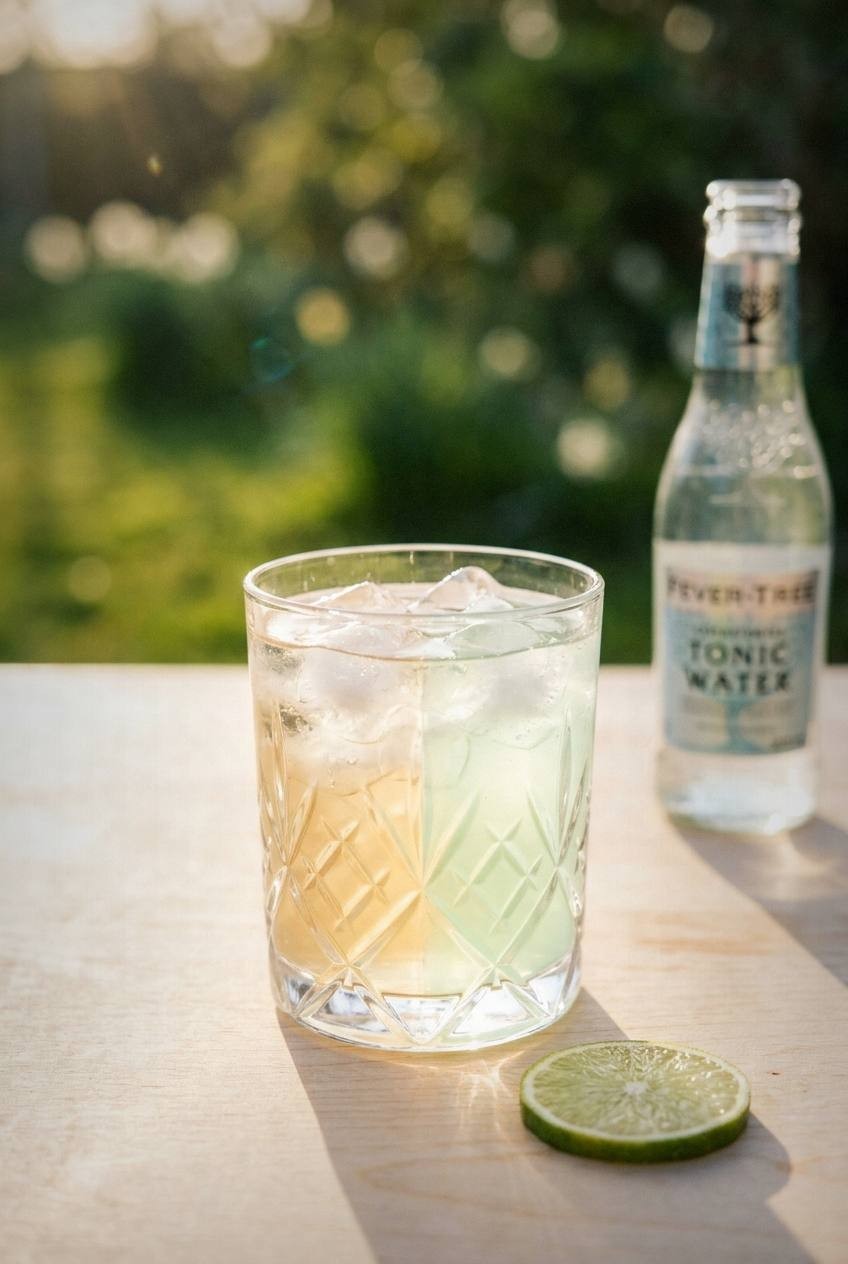
Use a large wine glass or copa glass so the drink stays cold longer and the bubbles have room to rise. Pre-chill the glass in the freezer for 10 minutes if you have time. Look for elderflower cordial (a non-alcoholic syrup) in the mixer aisle of grocery stores or online. Belvoir and Ikea both make widely available versions. Do not confuse it with St-Germain elderflower liqueur, which contains alcohol. English cucumbers work best because they have fewer seeds and thinner skins than standard cucumbers, but any variety will work if sliced thin. Cucumber tonic water is available from brands like Fever-Tree and Q Mixers.
Common Questions
What is elderflower and what does it taste like?
Elderflower is the cream-colored blossom of the elder tree (Sambucus nigra), which blooms in late spring across Europe and North America. It tastes like a cross between lychee, pear, and honeysuckle, with a floral sweetness that is not cloying. The flavor is delicate, so it pairs well with cucumber and botanical elements without overwhelming them.
Can you make elderflower mocktails without cordial?
Yes, but you will need to make your own elderflower syrup or use dried elderflowers. Steep 2 tablespoons dried elderflowers in 1 cup hot water with ¼ cup sugar for 20 minutes, then strain and chill. Use 2 teaspoons of this syrup in place of the cordial. The flavor will be less concentrated than commercial cordial, so you may need to adjust sweetness.
What are the best botanical ingredients for spring mocktails?
Spring mocktails shine with fresh herbs (mint, basil, lemongrass), early-season citrus (Meyer lemon, blood orange, lime), and floral elements (elderflower, rose, lavender, chamomile). Cucumber, rhubarb, and strawberries also peak in spring and bring bright, clean flavors. Look for ingredients that taste green and fresh rather than warm and spicy.
How do you make a spa-quality mocktail at home?
Use fresh ingredients, not bottled juices. Chill everything before you build the drink, including the glass. Measure precisely so the balance of sweet, sour, and botanical stays consistent. Garnish with intention, not as an afterthought. A single perfect mint sprig or a thin cucumber ribbon looks more elegant than a cluttered rim. Serve immediately while the carbonation is still active.

Camille writes about botanical drinks, herbal cocktails, and the old plant wisdom that makes them work. Most days you'll find her in the garden or the kitchen, turning herbs into something worth sipping.