Ginger and mint kombucha recipe with live probiotics. Get the recipe for this gut-soothing fermented drink.
Why You Will Love This
Fresh ginger heat meets cool mint in a kombucha that actually does something for your gut. The second fermentation builds natural carbonation while ginger’s gingerol compounds (up to 14.1mg per gram of fresh root) work on digestive motility. The probiotics are live, the fizz is real, and this tastes like spring in a bottle.
The Story Behind It
I started making this batch in early March when my digestion felt sluggish after a heavy winter. Ginger kombucha shows up in Ayurvedic traditions as a digestive fire-builder, and Western herbalism has used mint for gas and bloating since at least the 1st century AD (Pliny documented it). The combination works because ginger stimulates gastric emptying while mint’s menthol relaxes the smooth muscle of the digestive tract. Spring is the perfect time to brew this, when fresh mint starts showing up at markets and your body craves lighter, more active flavors.
What You Will Need
For First Fermentation:
- 1 gallon (3.8 liters) filtered water (chlorine kills probiotics, so filter or boil and cool tap water)
- 8 black or green tea bags (or 2 tablespoons loose leaf)
- 1 cup (200g) organic cane sugar (the SCOBY eats most of this, leaving about 2-6g per cup in finished kombucha)
- 1 SCOBY with 1 cup starter liquid from a previous batch or store-bought raw kombucha
For Second Fermentation:
- 3-inch piece fresh ginger root, sliced thin (about 30g)
- 1/2 cup fresh mint leaves, lightly crushed
- Optional: 1-2 tablespoons raw honey to boost carbonation
Equipment:
- 1-gallon glass jar
- Breathable cloth cover and rubber band
- 4-5 swing-top bottles (16 oz each) or recycled kombucha bottles
How to Make It
Boil 4 cups of the filtered water. Remove from heat and steep tea bags for 7-10 minutes. Black tea creates a more robust flavor, green tea makes it lighter. Remove tea bags and stir in sugar until fully dissolved.
Add remaining water to cool the mixture to room temperature (70-75°F / 21-24°C). Hot liquid kills the SCOBY. Pour into a 1-gallon glass jar.
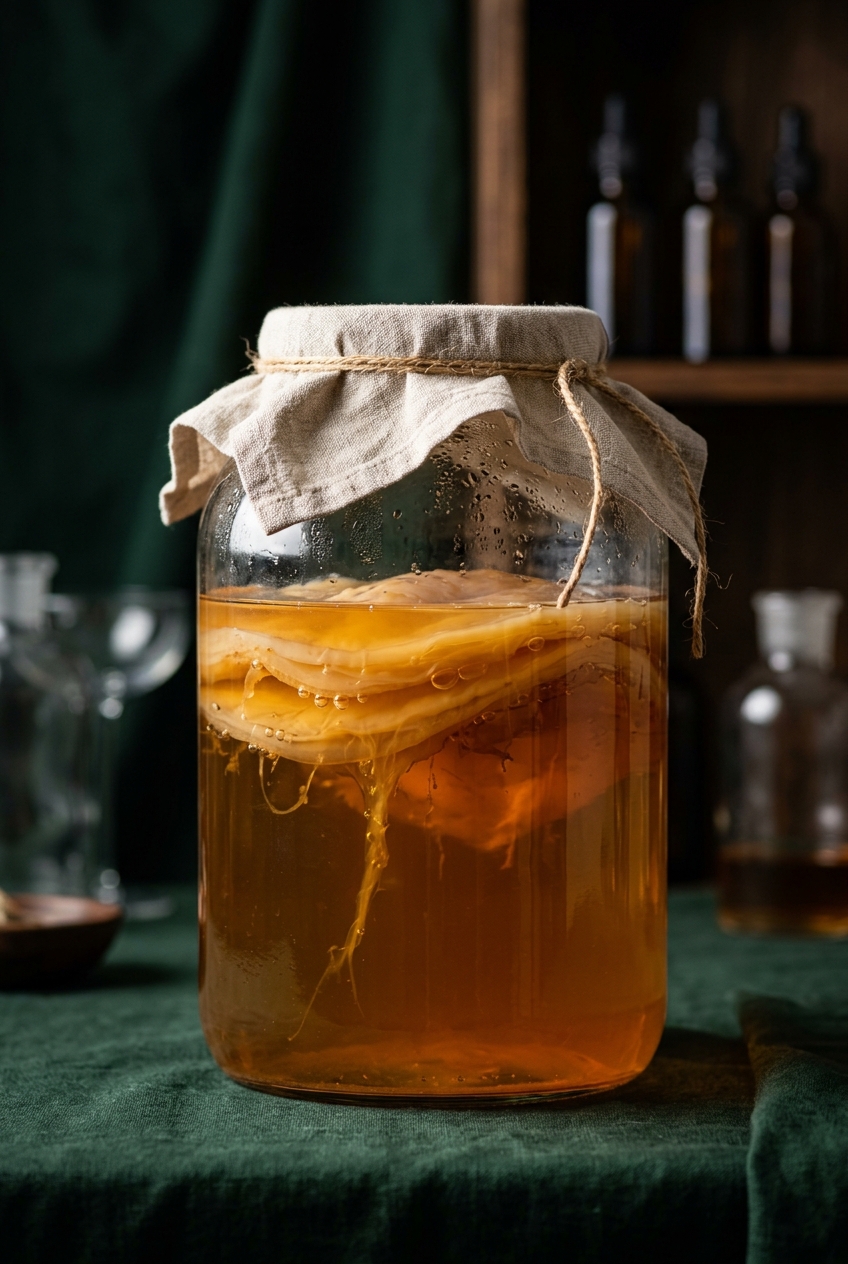
Add SCOBY and starter liquid. The starter acidifies the batch and prevents mold. Cover jar with a breathable cloth secured with a rubber band. No metal lids during fermentation. Place in a warm spot away from direct sunlight. A kitchen counter works well if your home stays between 68-78°F (20-26°C).
Ferment for 7-10 days, tasting after day 7. The kombucha should be tart but still slightly sweet. Warmer temps speed fermentation, cooler temps slow it. Remove SCOBY and reserve 1 cup liquid for your next batch. The SCOBY can live in this starter liquid in the fridge for up to 4 weeks between batches.
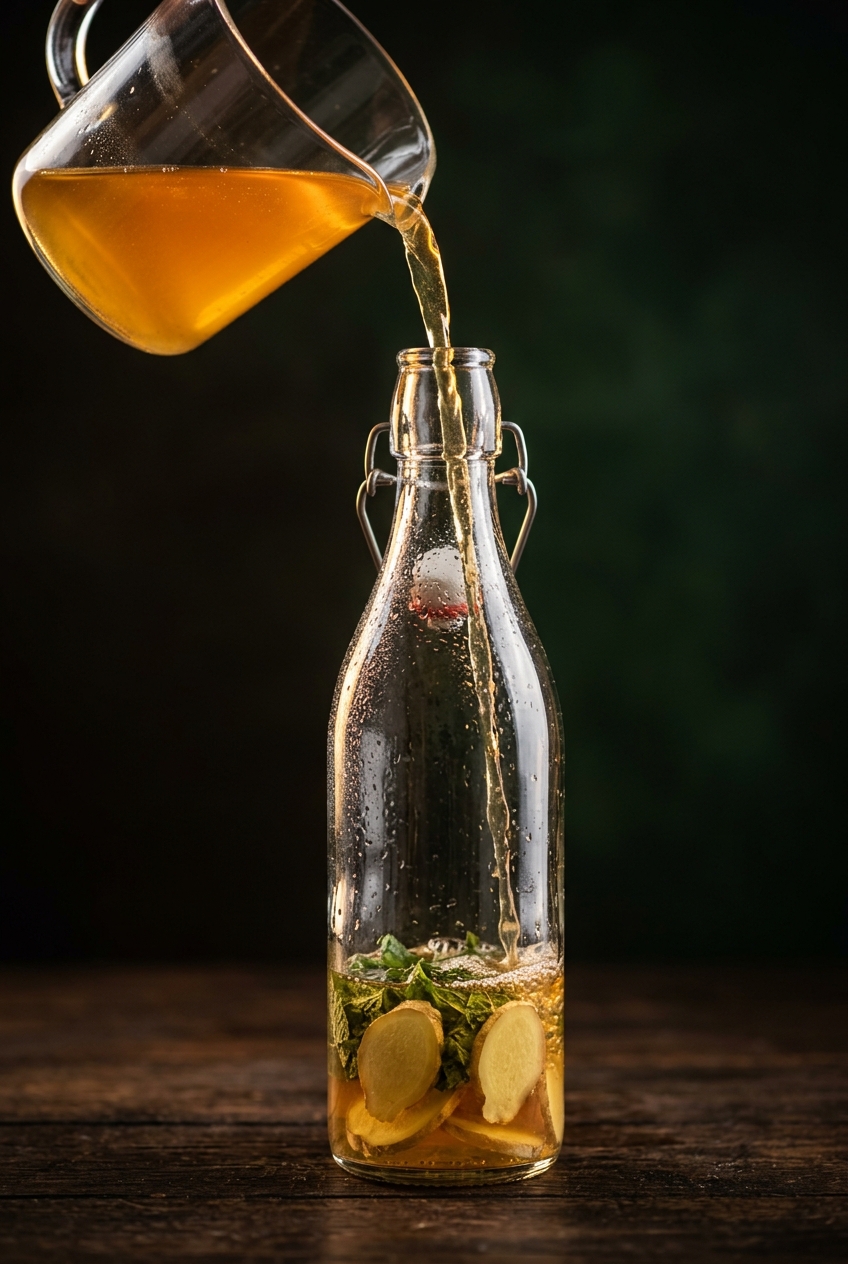
For second fermentation: Add sliced ginger and crushed mint to clean bottles. Distribute evenly across all bottles. Pour kombucha over herbs, leaving 1 inch headspace for carbonation expansion. Seal tightly with swing-top caps or screw lids.
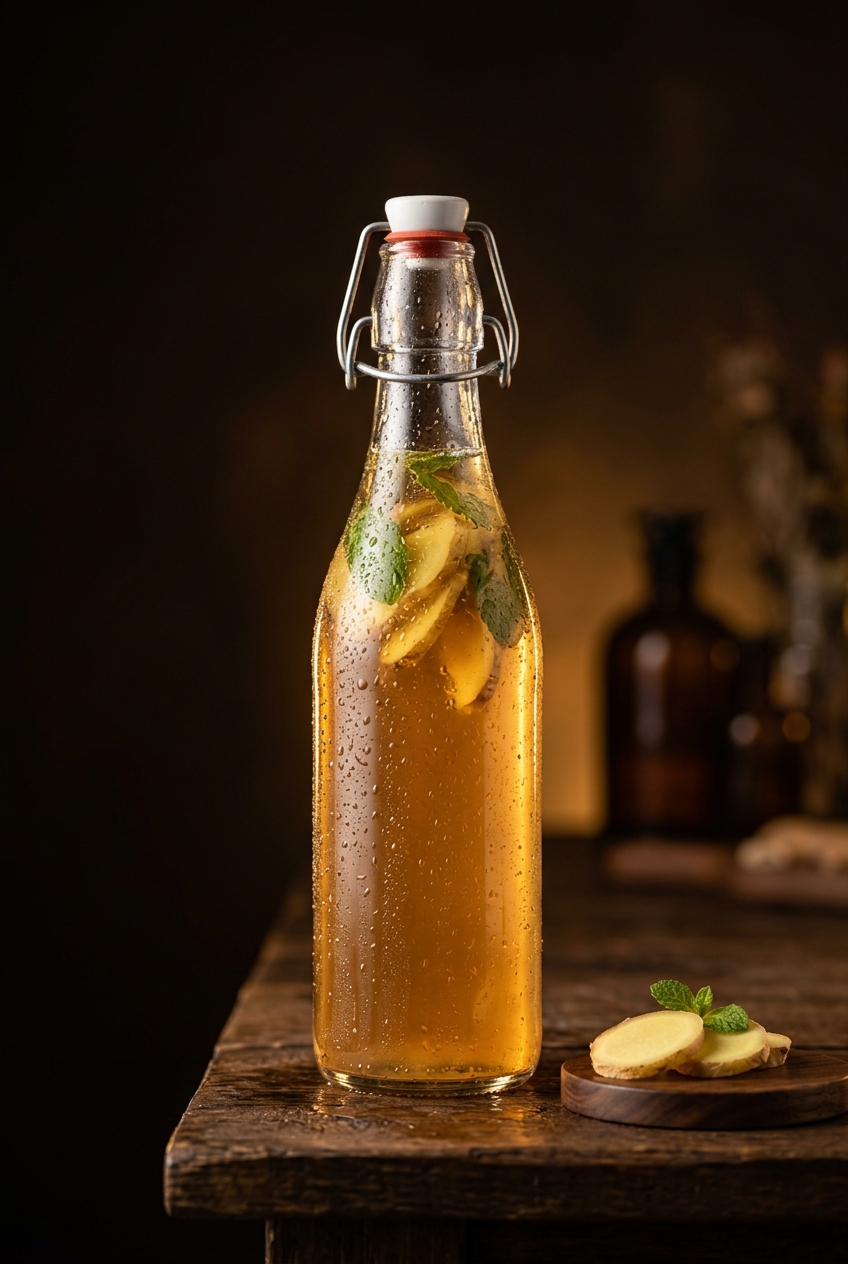
Leave bottles at room temperature for 2-3 days to build carbonation. Burp bottles daily to release pressure and prevent explosions. You will hear a hiss when you crack the seal. Refrigerate when fizzy enough for your taste. The cold stops fermentation and locks in carbonation.
Herbalist Notes
Ginger for Gut Motility: Fresh ginger contains 6-gingerol and 6-shogaol, compounds shown in a 2011 study (European Journal of Gastroenterology & Hepatology) to accelerate gastric emptying by up to 25%. This is why ginger works for bloating and that “stuck” feeling after meals. Slice it thin so more surface area contacts the kombucha.
Mint’s Antispasmodic Action: Peppermint and spearmint both contain menthol, which relaxes the smooth muscle lining your digestive tract. A 2019 meta-analysis in BMC Complementary Medicine found peppermint oil reduced IBS symptoms in 74% of participants. Fresh mint in kombucha delivers lower doses than capsules but still provides noticeable relief for gas and cramping.
Probiotic Strains in Kombucha: A healthy SCOBY culture contains Acetobacter (converts alcohol to acetic acid), Gluconacetobacter (builds the SCOBY layer), and various Lactobacillus strains. One 2014 study identified up to 10^6 CFU/mL of beneficial bacteria in home-brewed kombucha. That is comparable to many commercial probiotic drinks but at a fraction of the cost.
Make It Your Own
Swap mint for fennel seeds (1 tablespoon per bottle) if you want a sweeter, more licorice-like digestive. Or add 1/4 teaspoon turmeric powder with the ginger for anti-inflammatory support. The basic ratio holds: 3 inches ginger plus 1/2 cup aromatic herb per gallon of kombucha.
For a stronger probiotic punch, extend first fermentation to 12-14 days. The kombucha will be more vinegary but contain higher concentrations of beneficial acids. You can also do a third fermentation in the fridge for 1-2 weeks to mellow the flavors and create finer bubbles.
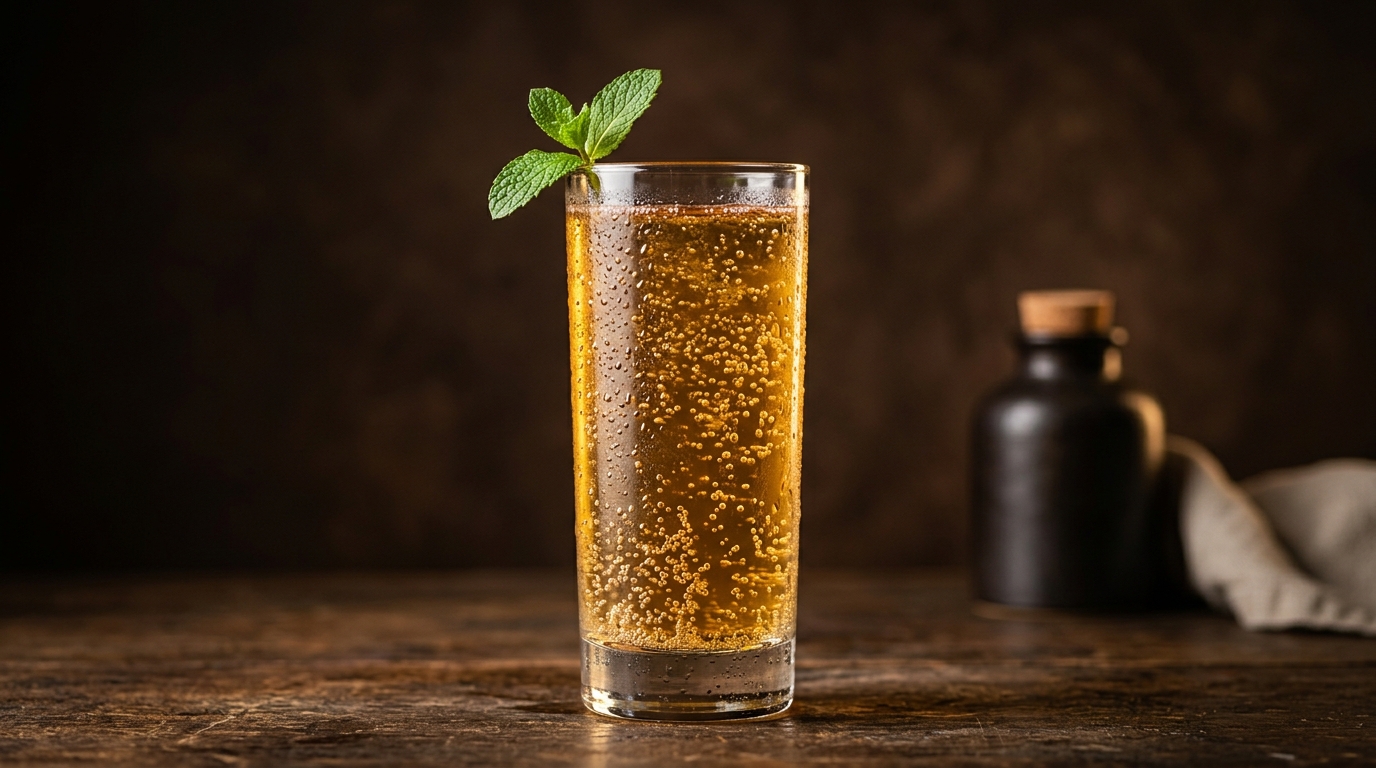
Serve this over ice with a sprig of fresh mint. It works as a digestive aperitif before meals or as a mid-afternoon pick-me-up when you need something fizzy but functional. The ginger warmth balances the mint’s coolness, making it surprisingly satisfying in both spring and fall.
Common Questions
What kombucha flavors are best for digestion?
Ginger is the gold standard for digestive kombucha because gingerol compounds directly stimulate gut motility and reduce nausea. Mint, fennel, and chamomile are also excellent second fermentation additions. Fennel contains anethole, which reduces gas by relaxing intestinal muscles. Chamomile’s apigenin has mild anti-inflammatory effects on the gut lining. Avoid high-sugar fruits during second fermentation if you are targeting digestive benefits, as excess fructose can worsen bloating in sensitive individuals.
Can kombucha help with digestive issues?
Yes, but it depends on the issue and the individual. Kombucha contains acetic acid (0.5-1.2% in finished brews), which can improve stomach acid levels and help break down food. The live probiotics support a healthy gut microbiome, which plays a role in everything from bowel regularity to immune function. A 2014 study in the Journal of Medicinal Food found that kombucha improved markers of liver and digestive health in rats. Start with 4 ounces daily and increase gradually. Some people with SIBO or histamine intolerance may react poorly to fermented drinks, so pay attention to your body.
How do you make ginger kombucha at home?
Start with a gallon of sweet tea cooled to room temperature, add a SCOBY and starter liquid, and ferment for 7-10 days in a covered glass jar. After first fermentation, remove the SCOBY and bottle the kombucha with fresh ginger slices (about 3 inches of root per gallon). Seal bottles and leave at room temperature for 2-3 days to carbonate, burping daily. Refrigerate when it reaches your preferred fizz level. The ginger infuses during second fermentation while residual sugars create natural carbonation.
What is the best time to drink kombucha for digestion?
Drink 4-8 ounces 20-30 minutes before meals to stimulate digestive enzymes and stomach acid production. The acetic acid and ginger compounds prime your system for efficient breakdown of food. You can also drink it after a heavy meal to relieve bloating and support gut motility. Avoid drinking large amounts on an empty stomach if you have acid reflux, as the acidity can irritate sensitive esophageal tissue. Morning and early afternoon are ideal, as the probiotics and slight caffeine from tea can interfere with sleep if consumed late in the day.
How long does homemade kombucha last?
Properly refrigerated kombucha stays good for 2-3 months, though flavor and carbonation peak in the first month. The probiotics remain viable as long as the kombucha tastes tart and fizzy. If it develops mold (fuzzy spots on the surface, usually green or black), discard the entire batch and sanitize your equipment. Mold is rare if you use enough starter liquid and maintain proper fermentation temperatures, but it can happen. A healthy batch smells tangy and slightly yeasty, never rotten or overly sweet.