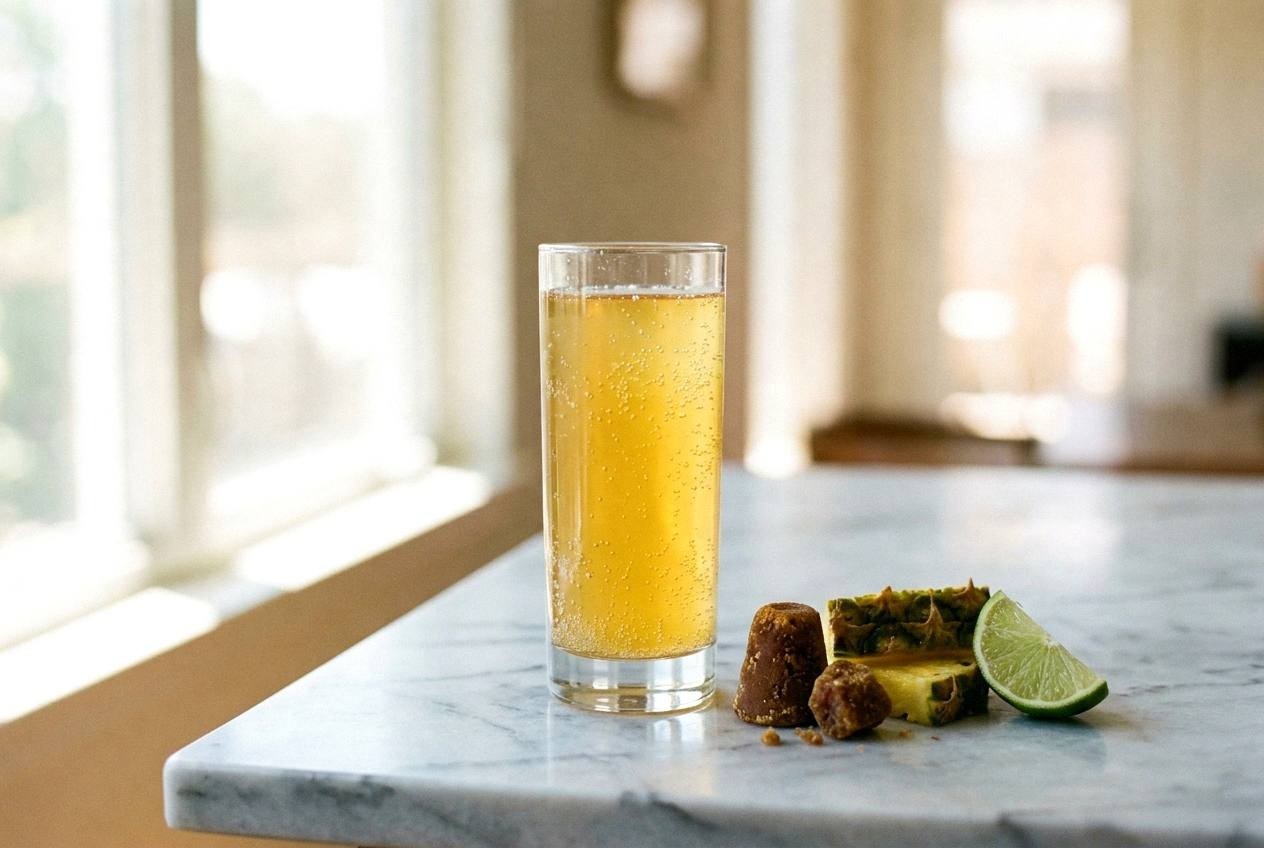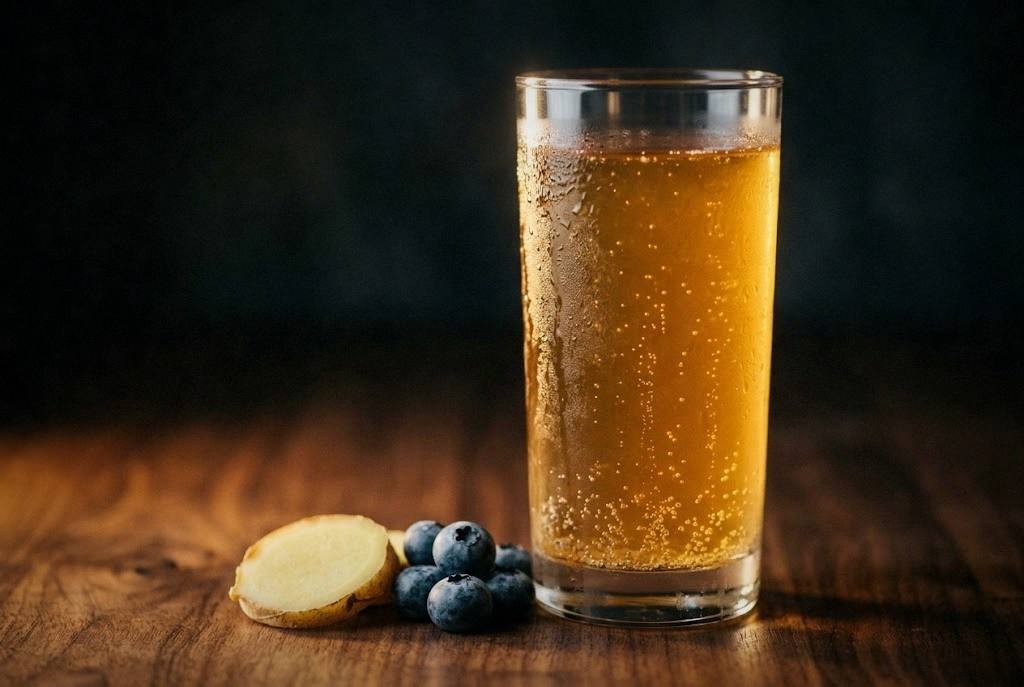
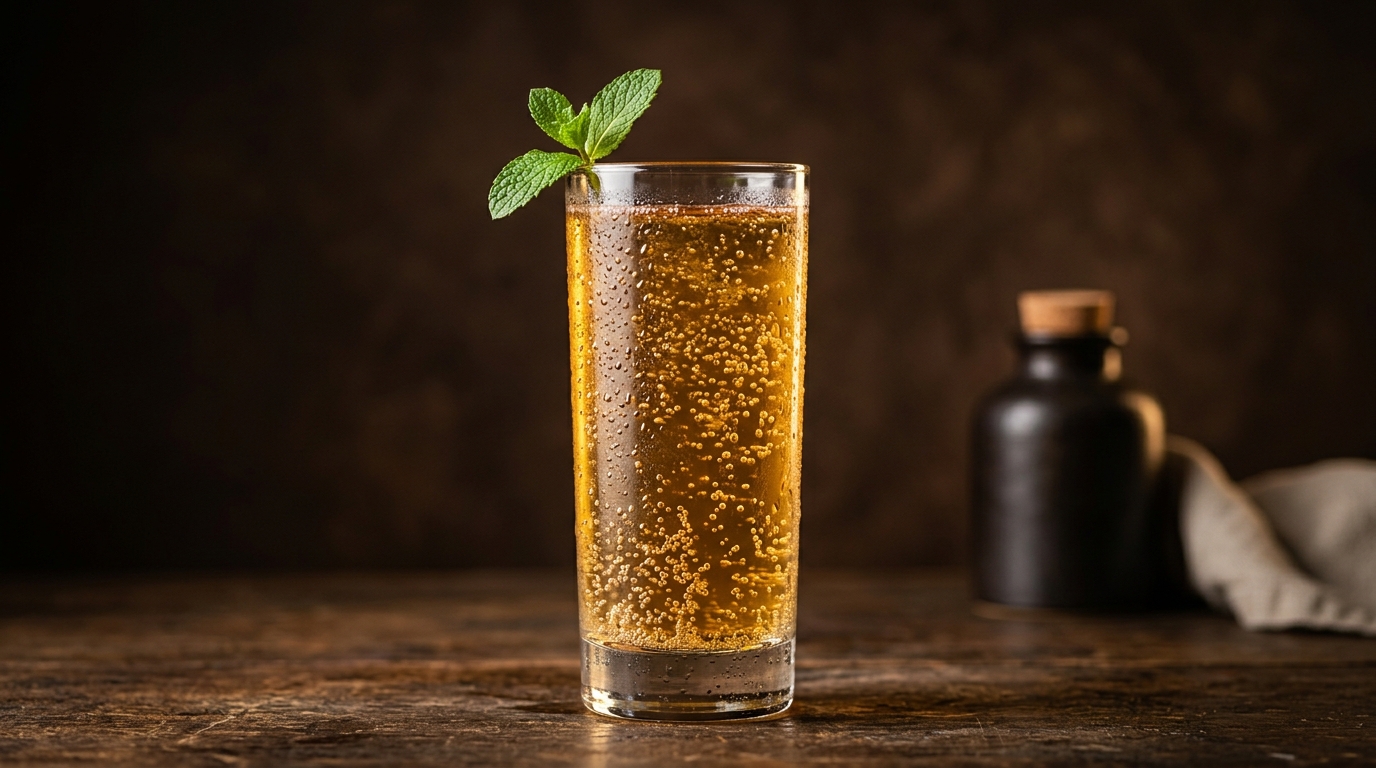
Digestive kombucha with fresh ginger, mint, and live cultures. Second fermentation builds natural carbonation in 3 days. Bright, fizzy, properly tart.
Why You Will Love This
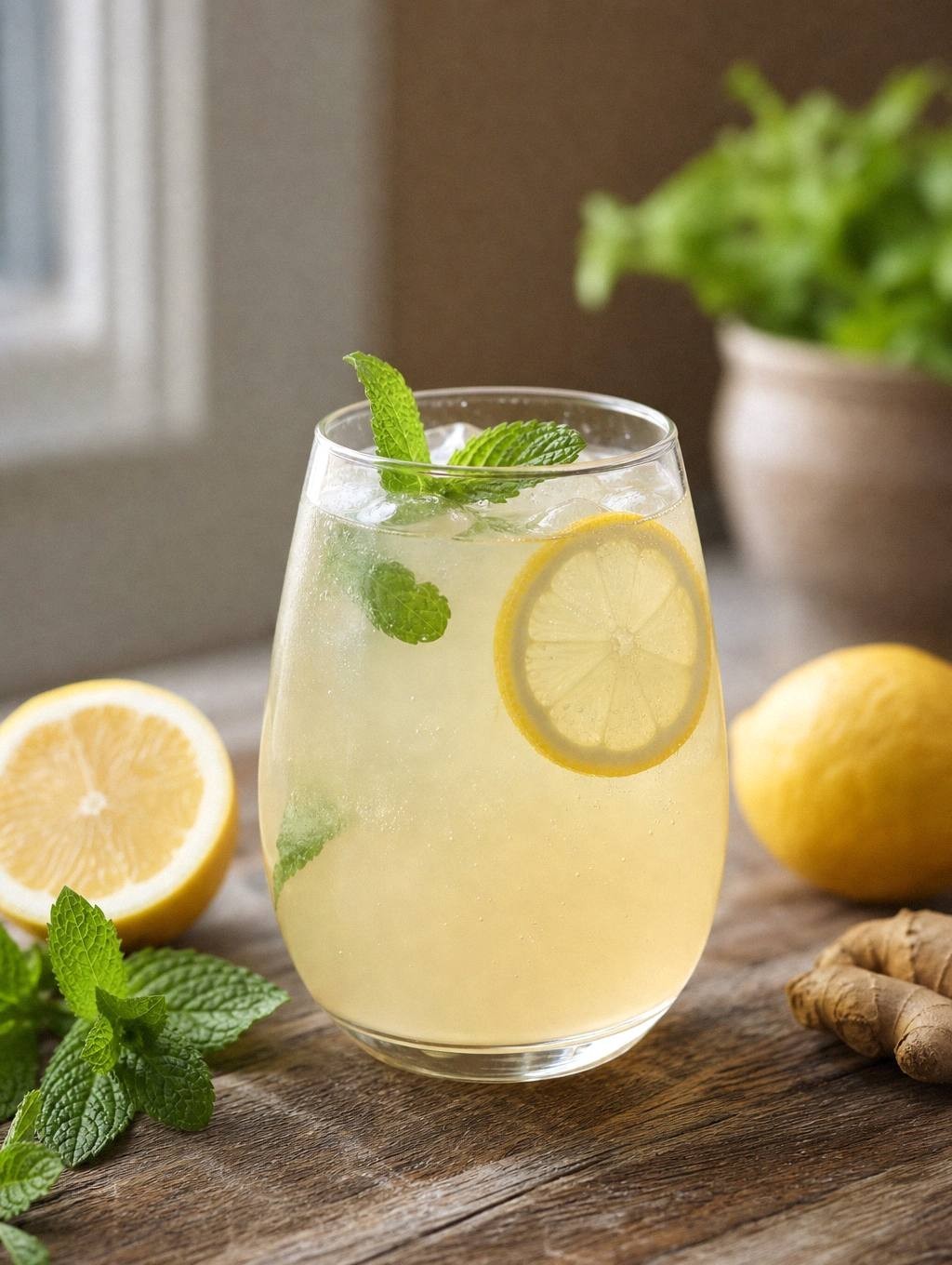
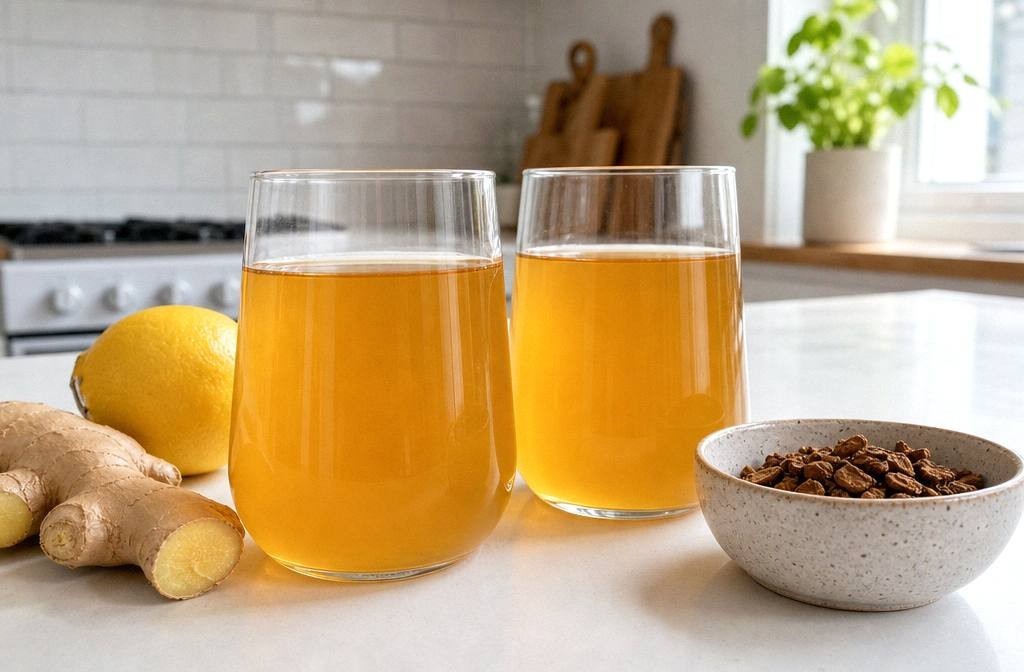
Fresh ginger heat meets cool mint in a kombucha with far more going on than the bottled stuff. The second fermentation builds real carbonation, the ginger arrives as actual heat rather than a suggestion of it, and the mint keeps the whole thing from sitting heavy. The cultures are live, the fizz is real, and this tastes like spring in a bottle.
The Story Behind It
I started making this batch in early March, when winter food had begun to sit badly. Ginger kombucha shows up in Ayurvedic traditions as a builder of digestive fire, and Western herbalism has reached for mint after a heavy meal since at least the 1st century AD, where Pliny wrote it down. I am not going to explain what either plant is doing to your smooth muscle, because I do not know, and neither does the page that confidently tells you it does. What I do know is that ginger and mint after dinner is one of the oldest habits people have, on more or less every continent, and that this is a very good way to drink both of them. Spring is the time to brew it, when fresh mint starts showing up at markets and heavy flavours stop appealing.
What You Will Need
For First Fermentation:
- 1 gallon (3.8 liters) filtered water (chlorine kills probiotics, so filter or boil and cool tap water)
- 8 black or green tea bags (or 2 tablespoons loose leaf)
- 1 cup (200g) organic cane sugar (the SCOBY eats most of this, so the finished kombucha is far less sweet than the tea you started with)
- 1 SCOBY with 1 cup starter liquid from a previous batch or store-bought raw kombucha
For Second Fermentation:
- 3-inch piece fresh ginger root, sliced thin (about 30g)
- 1/2 cup fresh mint leaves, lightly crushed
- Optional: 1-2 tablespoons raw honey to boost carbonation
Equipment:
- 1-gallon glass jar
- Breathable cloth cover and rubber band
- 4-5 swing-top bottles (16 oz each) or recycled kombucha bottles
How to Make It
Boil 4 cups of the filtered water. Remove from heat and steep tea bags for 7-10 minutes. Black tea creates a more robust flavor, green tea makes it lighter. Remove tea bags and stir in sugar until fully dissolved.
Add remaining water to cool the mixture to room temperature (70-75°F / 21-24°C). Hot liquid kills the SCOBY. Pour into a 1-gallon glass jar.
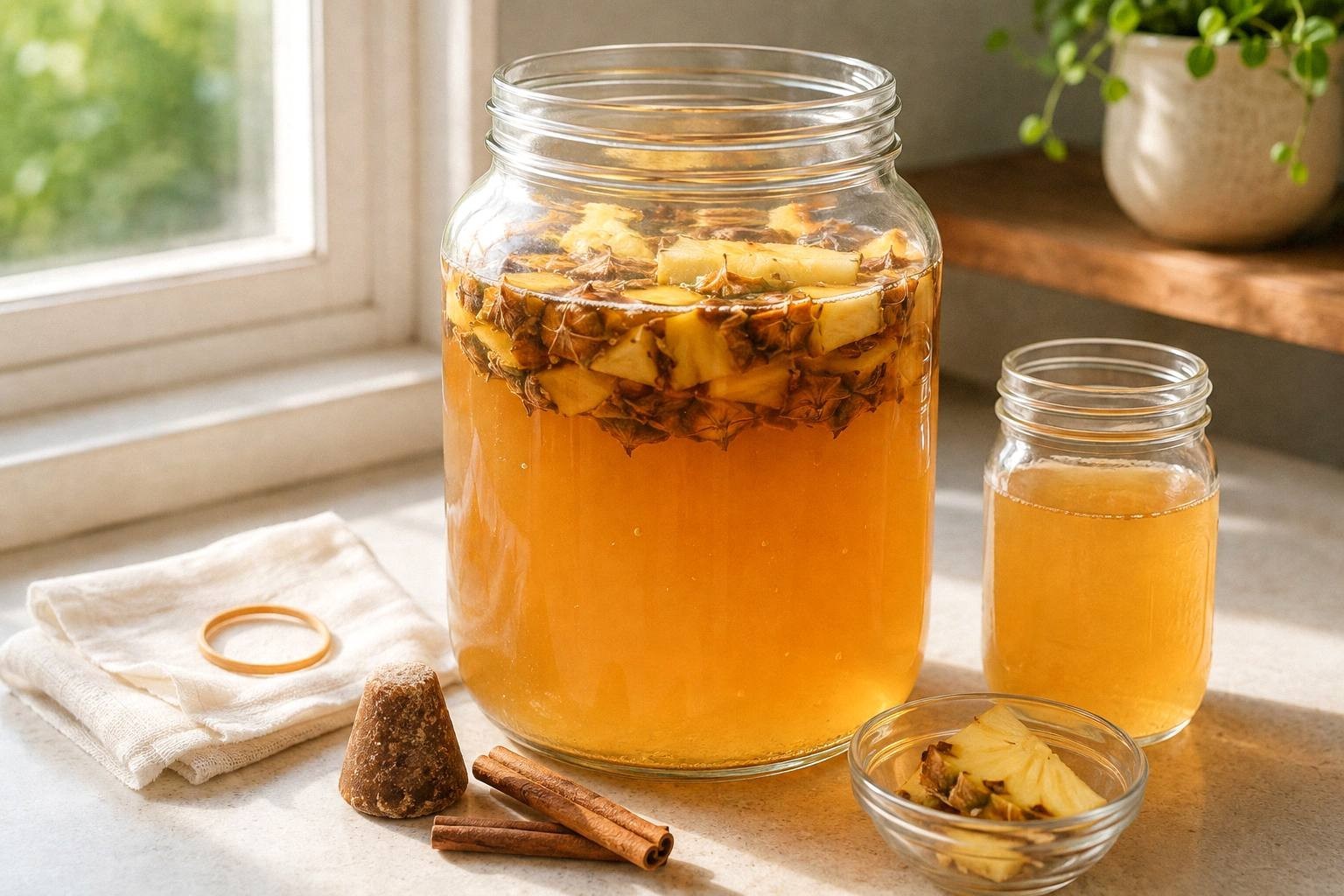
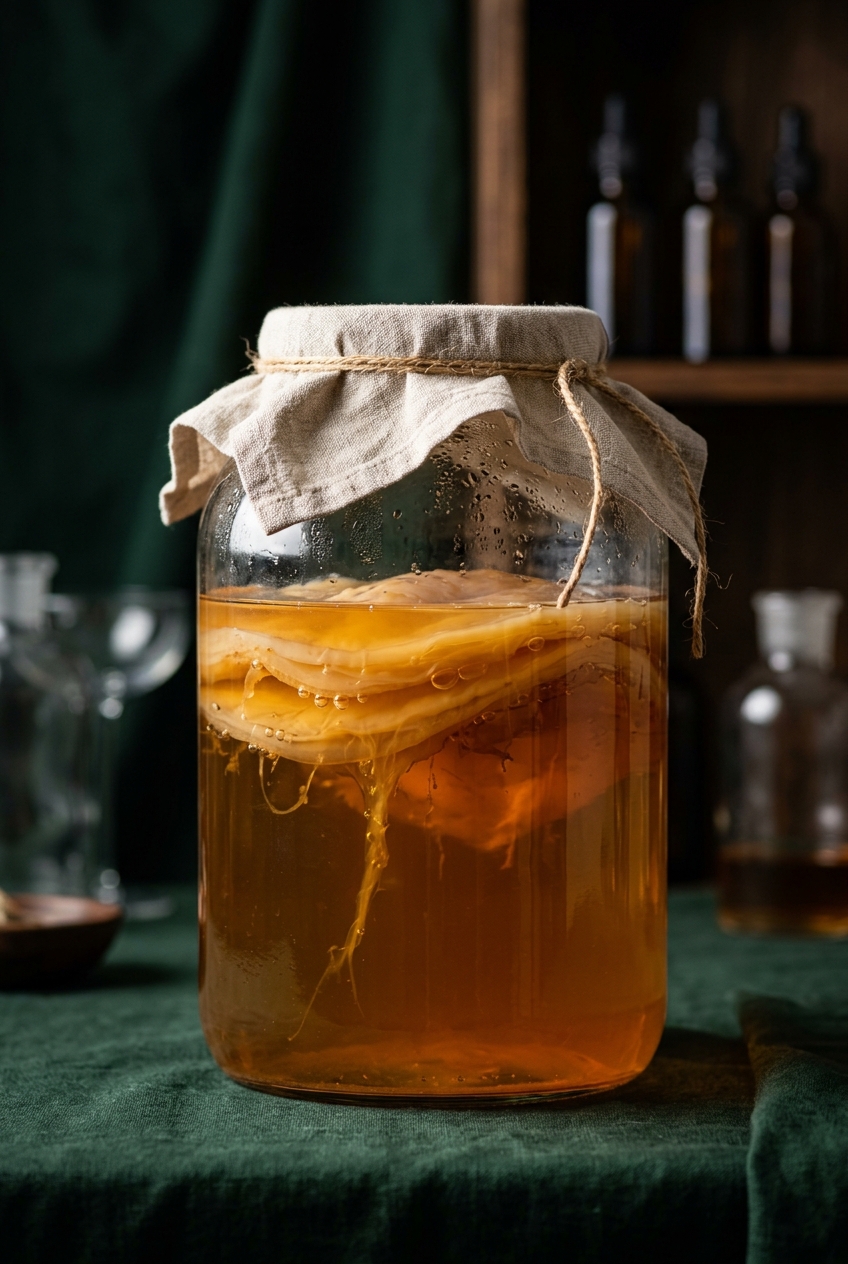
Add SCOBY and starter liquid. The starter acidifies the batch and prevents mold. Cover jar with a breathable cloth secured with a rubber band. No metal lids during fermentation. Place in a warm spot away from direct sunlight. A kitchen counter works well if your home stays between 68-78°F (20-26°C).
Ferment for 7-10 days, tasting after day 7. The kombucha should be tart but still slightly sweet. Warmer temps speed fermentation, cooler temps slow it. Remove SCOBY and reserve 1 cup liquid for your next batch. The SCOBY can live in this starter liquid in the fridge for up to 4 weeks between batches.
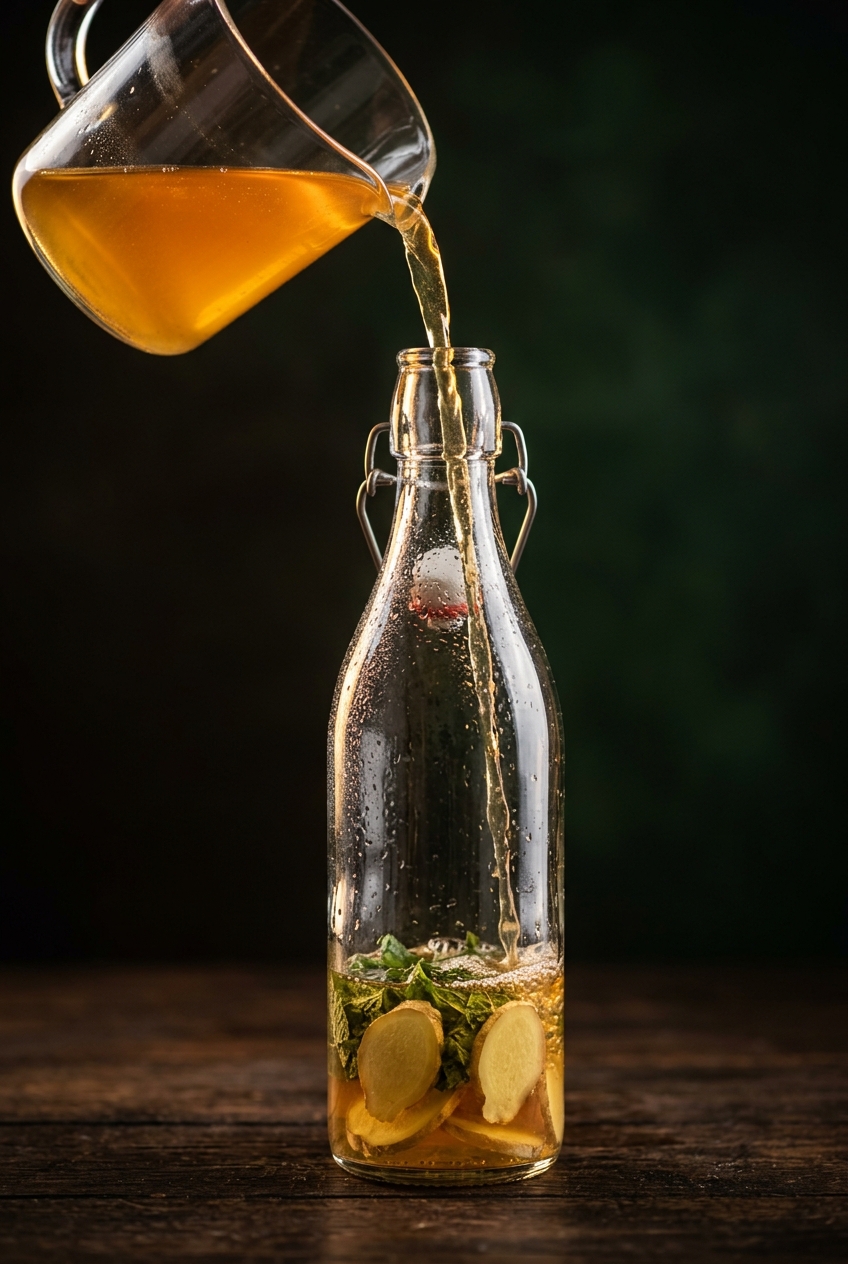
For second fermentation: Add sliced ginger and crushed mint to clean bottles. Distribute evenly across all bottles. Pour kombucha over herbs, leaving 1 inch headspace for carbonation expansion. Seal tightly with swing-top caps or screw lids.
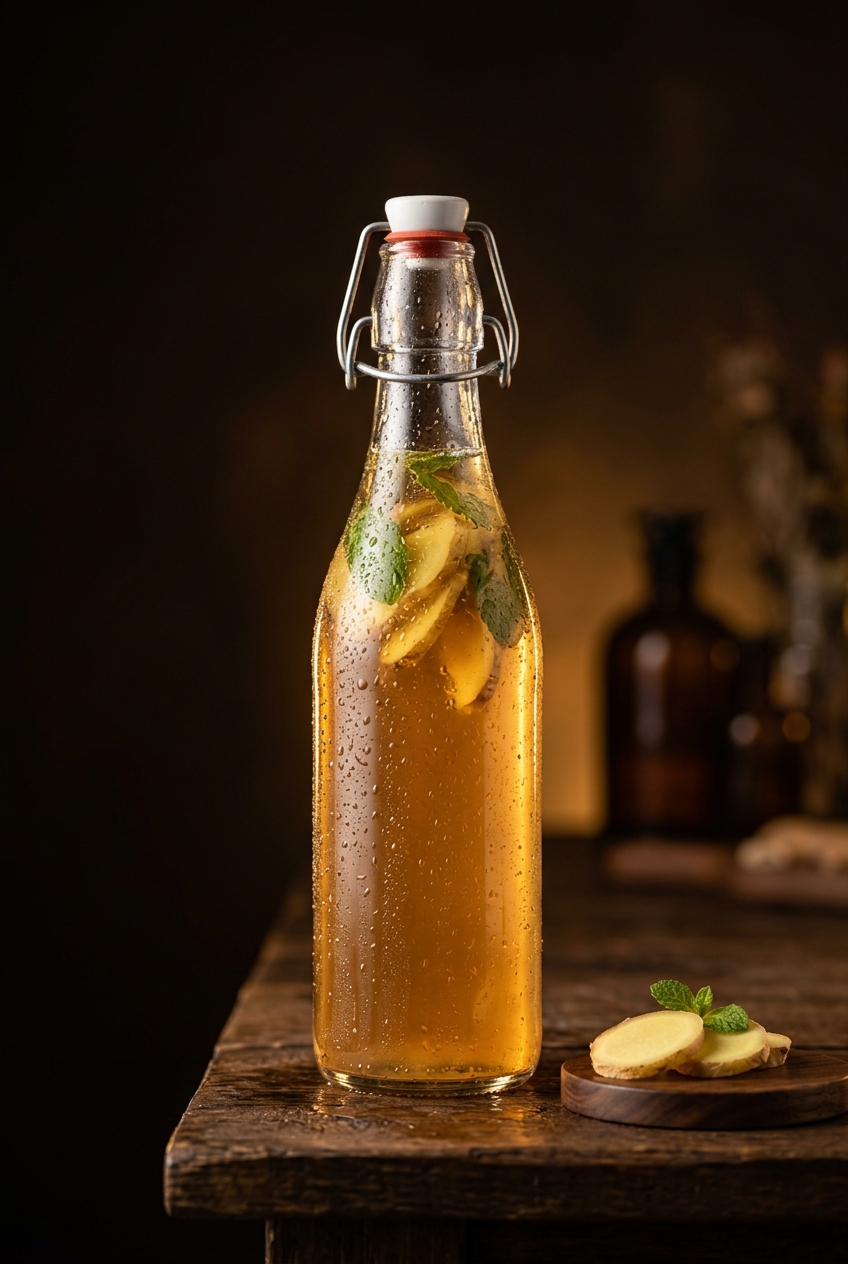
Leave bottles at room temperature for 2-3 days to build carbonation. Burp bottles daily to release pressure and prevent explosions. You will hear a hiss when you crack the seal. Refrigerate when fizzy enough for your taste. The cold stops fermentation and locks in carbonation.
Herbalist Notes
Slice the Ginger Thin: Fresh ginger contains 6-gingerol and 6-shogaol, which are the compounds that make it taste hot, and they are also why ginger has been the after-dinner root from Canton to Kerala for as long as anyone has been writing things down. I will leave the mechanism there, because the percentages that circulate about it are invented and I am not going to pass them along. What matters for this recipe is surface area. Slice the ginger thin so more of it is actually touching the kombucha, or you end up with a bottle that smells strongly of ginger and tastes of very little.
Crush the Mint, Do Not Chop It: Peppermint and spearmint both carry menthol, which is what gives them that cold finish on the back of the palate. Mint after a meal is a habit so widespread it barely counts as herbalism any more. Crush the leaves lightly rather than chopping. Bruising releases the oil; chopping tears the leaf, and torn mint turns a ferment grassy and faintly bitter within a day.
What Actually Lives in a SCOBY: A healthy culture holds Acetobacter, which converts alcohol into acetic acid, Gluconacetobacter, which builds the rubbery SCOBY layer itself, and various Lactobacillus strains. That mix is why a home brew smells the way it does and why it keeps going more sour if you leave it on the counter. Nobody can tell you the count in your particular jar without culturing it, and any page that quotes you a figure has lifted it from somewhere that was not your kitchen.
Make It Your Own
Swap mint for fennel seeds (1 tablespoon per bottle) if you want a sweeter, more licorice-like digestive. Or add 1/4 teaspoon turmeric powder with the ginger for anti-inflammatory support. The basic ratio holds: 3 inches ginger plus 1/2 cup aromatic herb per gallon of kombucha.
For a stronger probiotic punch, extend first fermentation to 12-14 days. The kombucha will be more vinegary but contain higher concentrations of beneficial acids. You can also do a third fermentation in the fridge for 1-2 weeks to mellow the flavors and create finer bubbles.
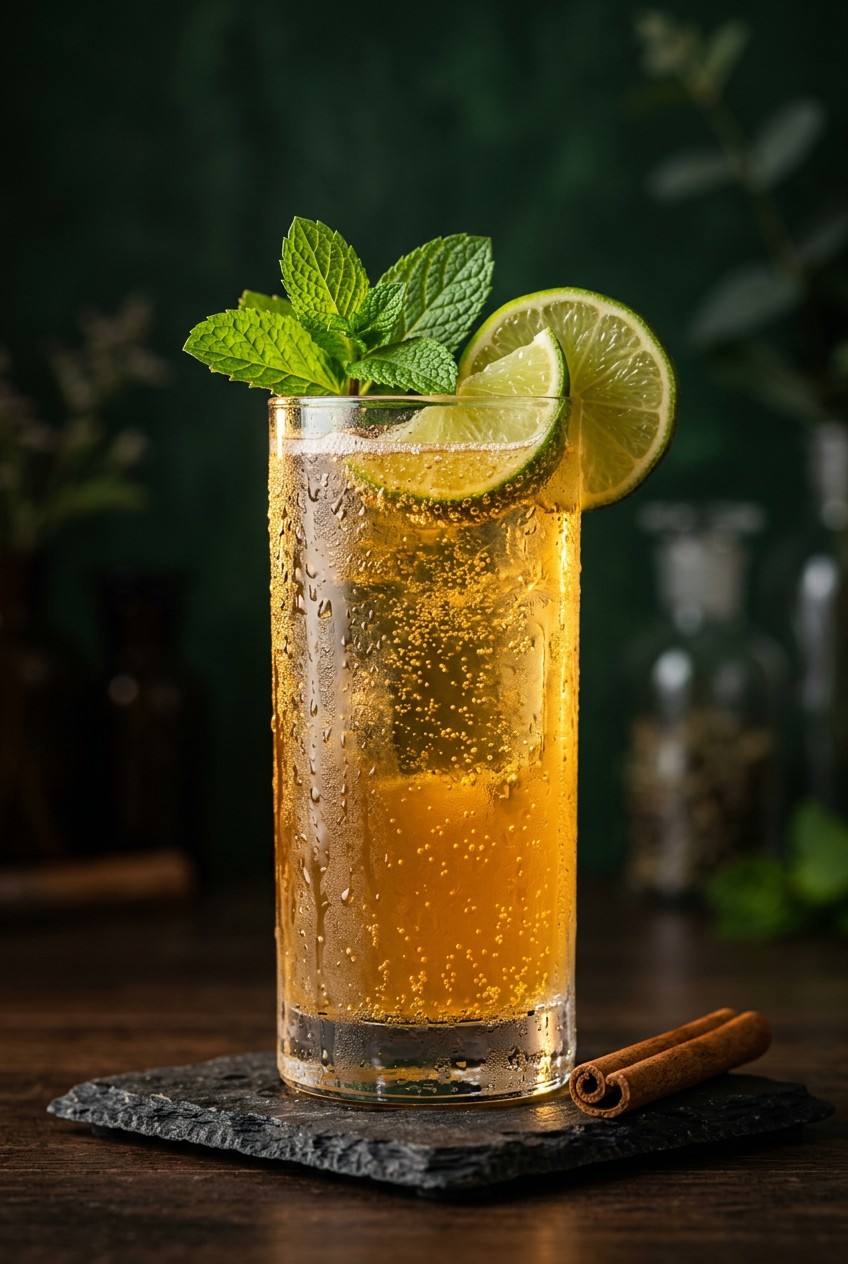
Serve this over ice with a sprig of fresh mint. It works as a digestive aperitif before meals or as a mid-afternoon pick-me-up when you need something fizzy but functional. The ginger warmth balances the mint’s coolness, making it surprisingly satisfying in both spring and fall.
Common Questions
What kombucha flavors are best for digestion?
Ginger is the classic, and for good reason: it is the after-dinner root across most of Asia, the heat carries beautifully through a ferment, and it is the flavour most people already associate with the end of a big meal. Mint, fennel, and chamomile are the other traditional three and all take well to a second fermentation. Fennel goes sweet and licorice-like, chamomile goes soft and faintly apple-ish, and both are what Mediterranean households have reached for after eating too much for a very long time. Skip the high-sugar fruits in the second ferment if you want a dry, digestive-style bottle, because they will push the whole thing toward soda.
Can kombucha help with digestive issues?
Honestly, it depends entirely on the person, and I am not going to promise you that it will. Kombucha is a live, sour, lightly acidic drink, and plenty of people find a small glass around a big meal suits them very well. Plenty of others find it does nothing much at all. Some find that any fermented drink disagrees with them outright. All three of those are ordinary outcomes, and none of them means you brewed it wrong. Start with a small glass rather than a pint, see how it sits, and go from there. If you are dealing with something your doctor has a name for, that is a conversation to have with them rather than with a brewing page.
How do you make ginger kombucha at home?
Start with a gallon of sweet tea cooled to room temperature, add a SCOBY and starter liquid, and ferment for 7-10 days in a covered glass jar. After first fermentation, remove the SCOBY and bottle the kombucha with fresh ginger slices (about 3 inches of root per gallon). Seal bottles and leave at room temperature for 2-3 days to carbonate, burping daily. Refrigerate when it reaches your preferred fizz level. The ginger infuses during second fermentation while residual sugars create natural carbonation.
What is the best time to drink kombucha for digestion?
There is no correct hour, and anyone handing you one is inventing it. A small glass before a meal is the traditional pattern, because sour and bitter things before eating are a habit far older than any of the science people cite about them. A glass after a heavy meal is just as common and, in my house, considerably more likely. What I would genuinely steer you away from is a large amount on an empty stomach if acidic drinks tend to bother you, because kombucha is properly acidic and will let you know. Morning and early afternoon suit most people, since this is made with tea and carries some caffeine through the ferment.
How long does homemade kombucha last?
Properly refrigerated kombucha stays good for 2-3 months, though flavor and carbonation peak in the first month. The probiotics remain viable as long as the kombucha tastes tart and fizzy. If it develops mold (fuzzy spots on the surface, usually green or black), discard the entire batch and sanitize your equipment. Mold is rare if you use enough starter liquid and maintain proper fermentation temperatures, but it can happen. A healthy batch smells tangy and slightly yeasty, never rotten or overly sweet.
Printable recipe
Digestive Kombucha Recipe
Digestive kombucha with fresh ginger, mint, and live cultures. Second fermentation builds natural carbonation in 3 days. Bright, fizzy, properly tart.
Ingredients
- 1 gallon (3.8 liters) filtered water
- 8 black or green tea bags (or 2 tablespoons loose leaf)
- 1 cup (200g) organic cane sugar
- 1 SCOBY with 1 cup starter liquid
- 3-inch piece fresh ginger root, sliced thin
- 1/2 cup fresh mint leaves, lightly crushed
- Optional: 1-2 tablespoons raw honey for second fermentation
Instructions
- Boil 4 cups of the filtered water. Remove from heat and steep tea bags for 7-10 minutes. Remove tea bags and stir in sugar until fully dissolved.
- Add remaining water to cool the mixture to room temperature (70-75°F / 21-24°C). Pour into a 1-gallon glass jar.
- Add SCOBY and starter liquid. Cover jar with a breathable cloth secured with a rubber band. Place in a warm spot away from direct sunlight.
- Ferment for 7-10 days, tasting after day 7. The kombucha should be tart but still slightly sweet. Remove SCOBY and reserve 1 cup liquid for your next batch.
- For second fermentation: Add sliced ginger and crushed mint to clean bottles. Pour kombucha over herbs, leaving 1 inch headspace. Seal tightly.
- Leave bottles at room temperature for 2-3 days to build carbonation. Burp bottles daily to release pressure. Refrigerate when fizzy enough for your taste.
Keep browsing
Turn this into the next thing you make

Camille writes about botanical drinks, herbal cocktails, and the old plant wisdom that makes them work. Most days you'll find her in the garden or the kitchen, turning herbs into something worth sipping.