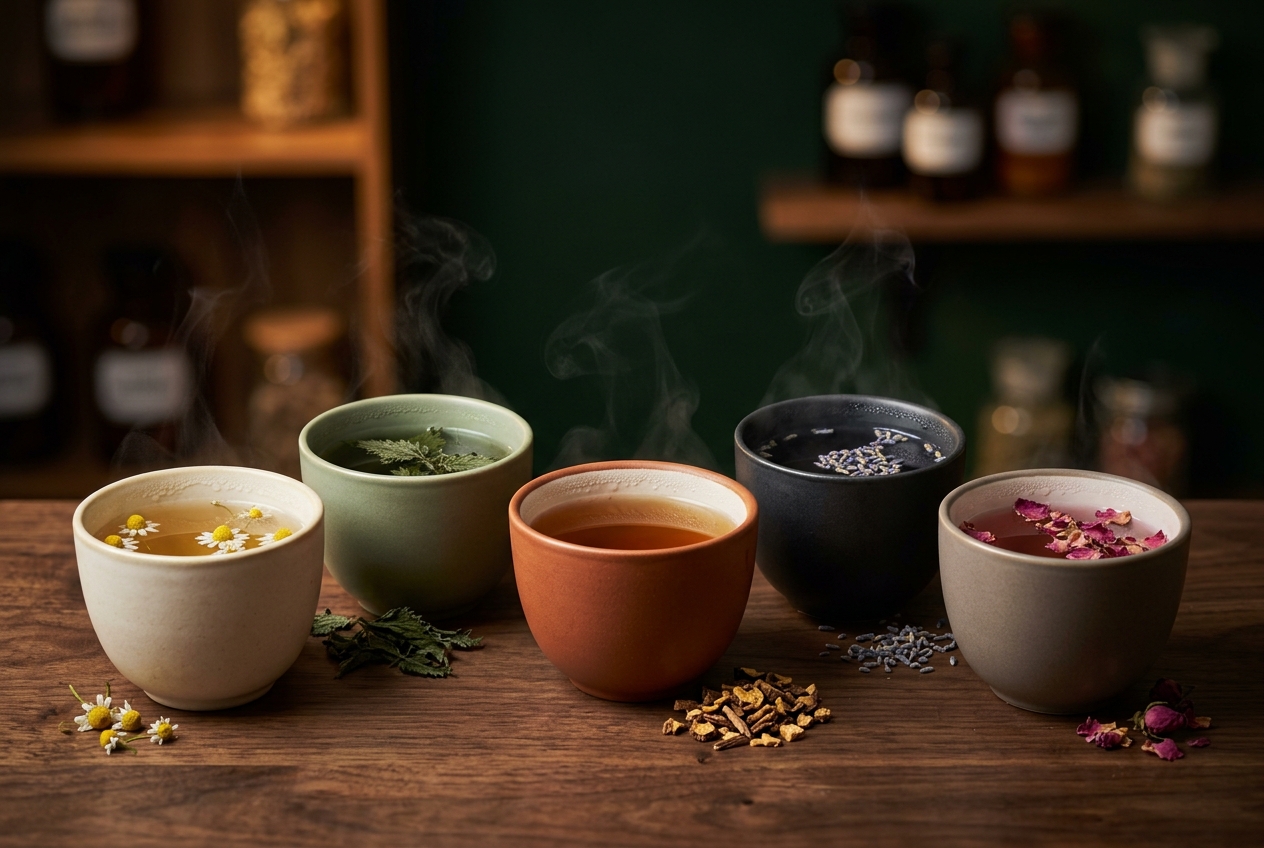
5 spring herbal tea blend recipes with dandelion, nettle, mint, and lavender. Learn exact ratios and steeping times for DIY loose leaf tea.
Why You Will Love This
Spring asks your body to wake up. These five herbal tea blend recipes answer with dandelion root that tastes like earth warming, nettle that delivers 428 mg calcium per cup, and mint that clears winter fog from your sinuses in under three minutes. Each blend uses a 2:1:0.5 ratio that balances base herbs, supporting flavors, and accent notes without requiring a scale.
The Story Behind It
March in the herb garden means trimming last year’s dried stalks and finding volunteer lemon balm already six inches tall. I started blending loose leaf tea the year I grew more mint than I could use fresh. The first batch combined whatever looked good in the drying racks. Peppermint, nettle, a handful of calendula. It tasted better than anything I’d bought in a tin. These five recipes came from that same approach, refined over three springs of testing ratios and recording what actually worked.
What You Will Need
Blend 1: Spring Detox (Liver Support)
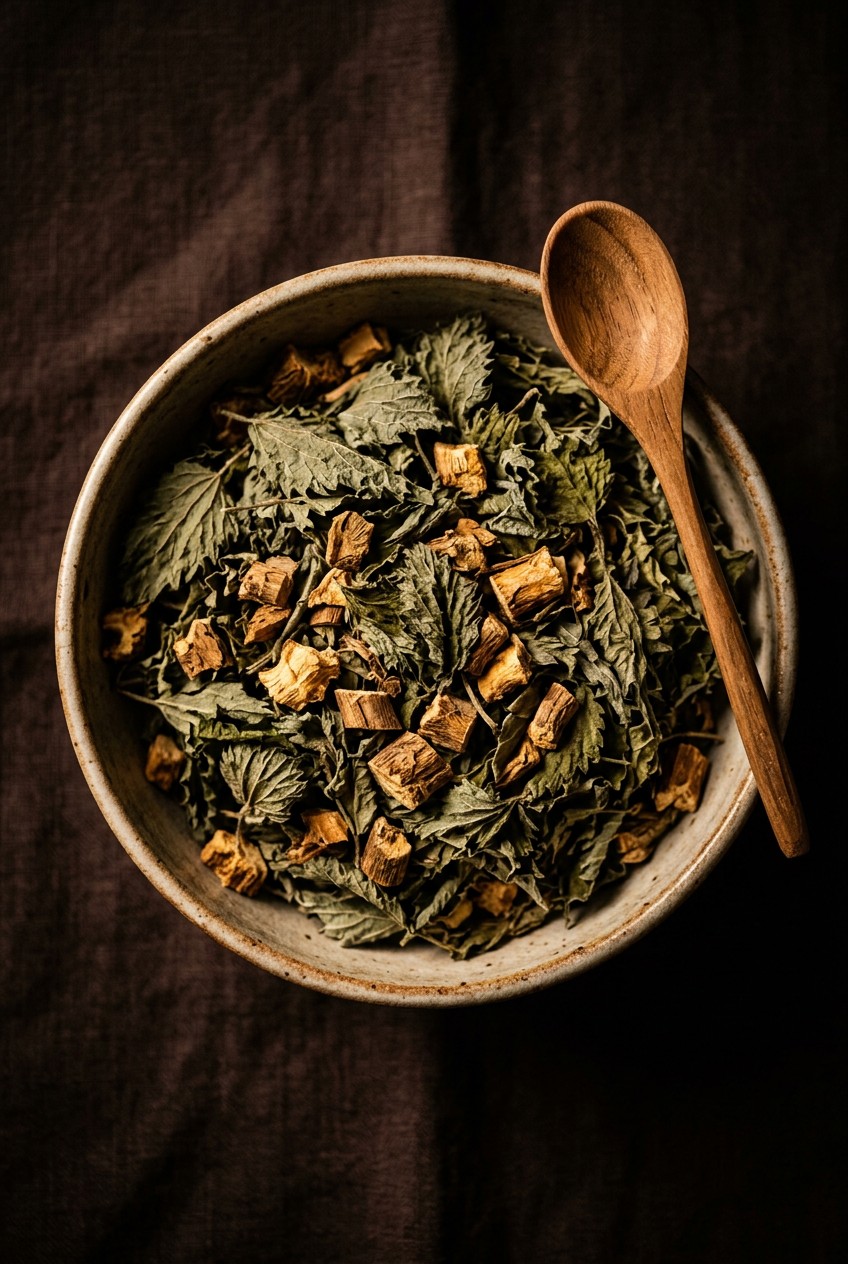
- 2 tbsp dried dandelion root (roasted)
- 1 tbsp nettle leaf
- 1 tsp roasted chicory root
Blend 2: Garden Calm (Nervous System)
- 2 tbsp spearmint leaf
- 1 tbsp lemon balm
- 1 tsp lavender buds (culinary grade)
Blend 3: Sunset Rose (Skin & Mood)
- 2 tbsp chamomile flowers
- 1 tbsp rose petals (Rosa damascena)
- 1 tsp calendula flowers
Blend 4: Green Mineral (Nutrient Dense)
- 2 tbsp nettle leaf
- 1 tbsp red clover blossoms
- 1 tsp oatstraw (Avena sativa)
Blend 5: Morning Spark (Caffeine-Free Energy)
- 2 tbsp tulsi (holy basil, Rama or Krishna variety)
- 1 tbsp lemongrass
- 1 tsp ginger root chips
Equipment:
- 5 small mixing bowls
- 5 airtight glass jars (4 oz each)
- Labels
- Measuring spoons
How to Make It
Measure the dried herbs for your first blend into a small bowl. Use your hands to gently mix them together, breaking up any clumped pieces. The oils from your hands help the herbs meld.
Transfer the blend to a clean, dry glass jar. Seal tightly. Label with the blend name and today’s date. Dried herb blends stay potent for 6-8 months when stored away from heat and light.
Repeat for each of the remaining four blends. Line them up on your counter. You now have 40-50 cups of custom tea.
To brew any blend: Boil water and let it cool for 30 seconds (this brings it to 200-205°F, ideal for preserving volatile oils in herbs like mint and lemon balm). Use 1 heaping teaspoon of blend per 8 oz water.
Pour water over the herbs in a teapot or directly in your mug with an infuser. Cover while steeping. Leaf-heavy blends like Garden Calm need 5-7 minutes. Root-heavy blends like Spring Detox need 10-12 minutes for full extraction.
Strain and drink. The second steep of the same herbs yields a lighter but still flavorful cup if you add 2-3 extra minutes to steep time.
Herbalist Notes
Dandelion root in Blend 1 stimulates bile production by 40% according to German Commission E monographs. Roasting the root first (15 minutes at 350°F) reduces bitterness and adds a coffee-like depth. Buy pre-roasted or roast your own dried root on a baking sheet.
Nettle appears in two blends because spring nettle harvested before flowering contains the highest mineral content. One cup delivers 428 mg calcium, 1.46 mg iron, and 297 mg magnesium. Western herbalism has used nettle as a spring tonic since at least the 16th century, documented in John Gerard’s 1597 Herball.
Tulsi in Blend 5 reduces cortisol by an average of 12.5% in human trials (2012 study, Journal of Ayurveda and Integrative Medicine, 39 participants, 60 days). The Rama variety tastes sweeter than Krishna. Both work here.
Make It Your Own
Double the lavender in Blend 2 if you want stronger floral notes, but don’t exceed 2 tsp per batch or it starts tasting like soap. Add 1 tsp dried peppermint to Blend 4 for a cooling mineral drink that works iced. Replace chamomile in Blend 3 with 2 tbsp dried hibiscus for a tart, ruby-red version with 15 mg vitamin C per cup.
Store your blends in a cool, dark cupboard, not on an open shelf. Light degrades chlorophyll in green herbs like nettle within 3 months, turning them brown and grassy. If you grow your own herbs, harvest leaves in mid-morning after dew evaporates but before afternoon heat. Dry them in a single layer on screens in a room under 90°F with good airflow. Properly dried herbs snap rather than bend.
Mix different herbal teas together freely. The worst that happens is a flavor you don’t prefer. I’ve combined Blend 2 and Blend 3 (half and half) for a chamomile-mint evening tea that worked better than either alone.
Common Questions
How do you make your own herbal tea blend?
Start with the 2:1:0.5 ratio by volume. Pick a base herb that makes up half your blend (2 tablespoons), a supporting herb for flavor or function (1 tablespoon), and an accent herb for complexity (1 teaspoon). Base herbs include nettle, chamomile, or tulsi. Supporting herbs add flavor: mint, lemon balm, lemongrass. Accents provide punch: ginger, lavender, rose. Mix thoroughly, store in glass, and use within 8 months.
What herbs blend well together for tea?
Mint pairs with nearly everything but especially chamomile, nettle, and tulsi. Lemon-flavored herbs (lemon balm, lemongrass, lemon verbena) work with floral herbs like lavender and rose. Earthy roots like dandelion and chicory need bright counterpoints: add orange peel, ginger, or cinnamon. Avoid mixing more than two strong flavors (like peppermint and ginger) in one blend unless you want intensity. Test small batches first. Steep 1 teaspoon of your test blend for the recommended time and adjust ratios before making a full jar.
How much loose leaf tea per cup?
Use 1 heaping teaspoon of dried herbs per 8 oz water for most herbal tea blends. Denser ingredients like roots or bark need 1.5 teaspoons. Fluffy flowers like chamomile can go as light as 3/4 teaspoon. A heaping teaspoon equals roughly 2 grams of dried leaf herbs. For a stronger brew, increase steep time to 10 minutes rather than adding more herbs. Over-leafing makes tea bitter, especially with tannin-rich herbs like raspberry leaf or rose.
Can you mix different herbal teas together?
Yes. Herbal teas contain no caffeine or tannins that would clash chemically. Mixing different herbal teas creates new flavor profiles and combines therapeutic properties. Try half chamomile, half peppermint for a calming digestive blend. Combine nettle tea with red clover tea for a mineral-rich spring tonic. Even pre-bagged herbal teas can be opened and blended. The only rule: taste as you go. Some combinations (like strong licorice root with delicate rose) will overpower each other.
How should I store loose leaf tea blends to keep them fresh?
Store in airtight glass jars in a cupboard away from light, heat, and moisture. Dried herbs lose potency when exposed to UV light, which degrades essential oils and chlorophyll within 8-12 weeks. Keep jars sealed between uses. Humidity above 60% causes herbs to reabsorb moisture and can introduce mold. Whole dried herbs (like ginger chips or dandelion root) stay potent for 12 months. Crushed or powdered herbs lose volatile oils faster, use within 6 months. Label jars with the blend date so you know when to refresh your supply.