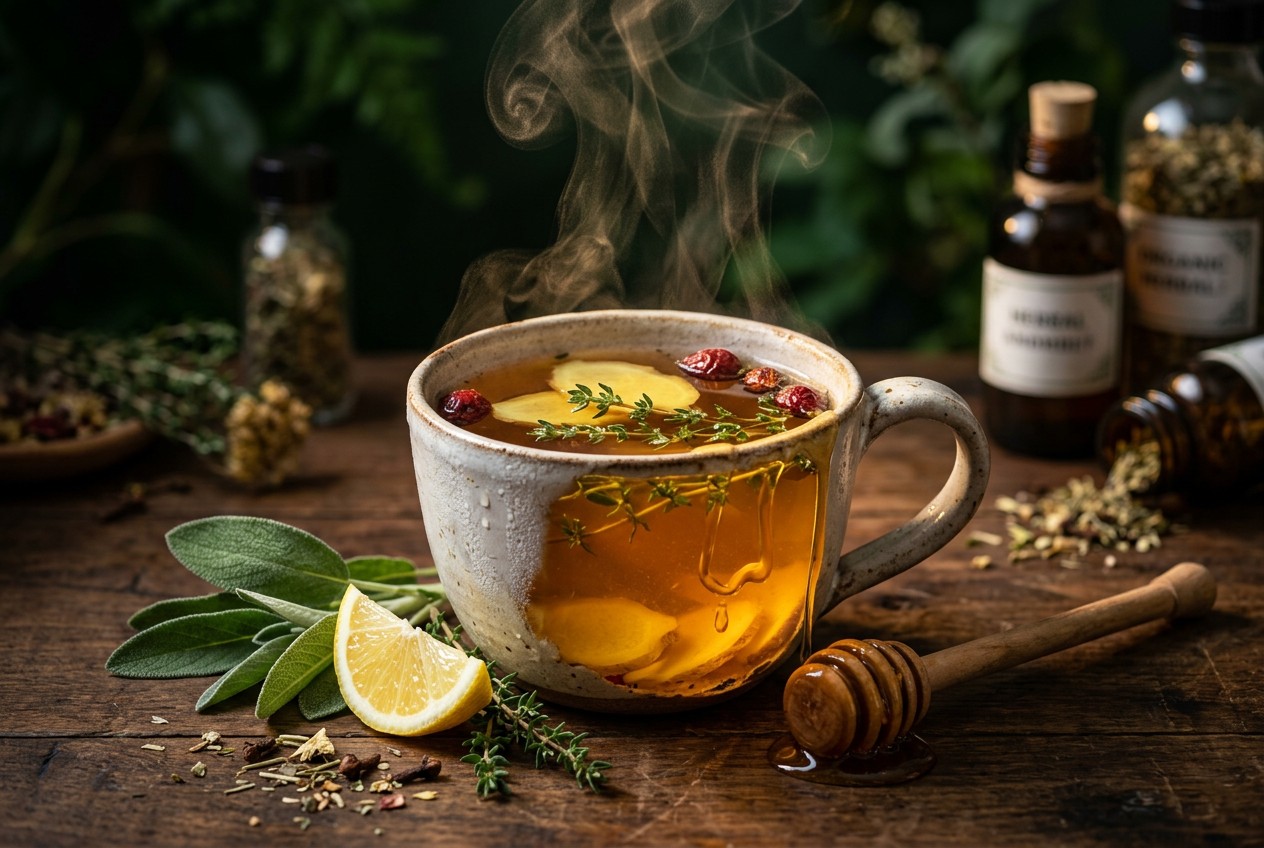
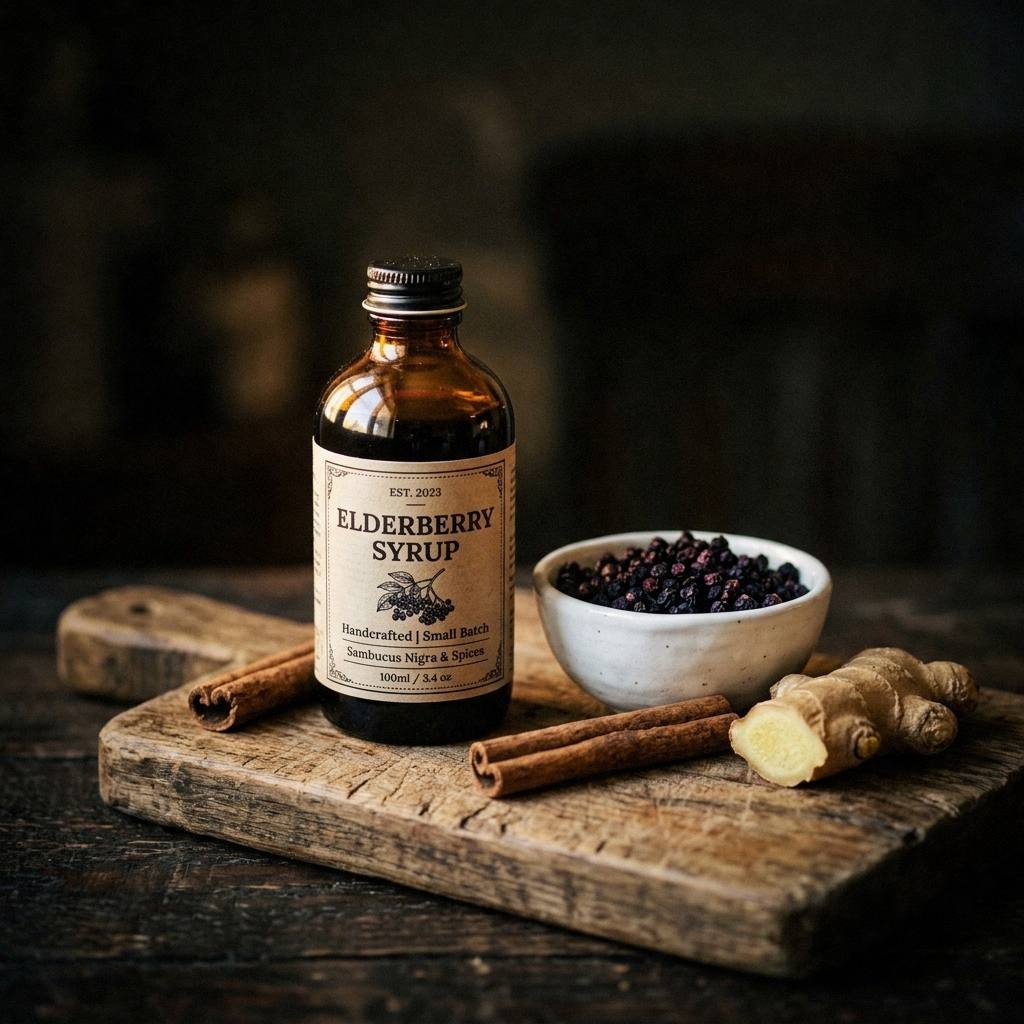
Homemade elderberry syrup with dried elderberries, honey, cinnamon, and ginger. A traditional immune support remedy you can make in an hour.
Elderberry syrup has been around so long it predates the concept of a remedy. Hippocrates called the elder tree his “medicine chest.” European folk herbalists made elderberry preparations for centuries before anyone studied why they worked. Now we have the studies, and they more or less confirmed what your grandmother already knew: elderberries are loaded with anthocyanins and vitamin C, and the syrup is one of the simplest ways to take them regularly.
At a Glance
| Detail | Info |
|---|---|
| Prep time | 10 minutes |
| Total time | 1 hour (mostly simmering) |
| Yield | About 16 oz (32 tablespoon servings) |
| Difficulty | Easy |
| Key ingredient | Dried elderberries (Sambucus nigra) |
| Best for | Daily immune support, cold and flu season |
| Flavor profile | Berry, slightly sweet, warm spices |
| Shelf life | 2-3 months refrigerated |
Why Elderberries Work
The bulk of elderberry research centers on Sambucol, a standardized elderberry extract. A randomized, double-blind trial published in the Journal of International Medical Research found that flu patients who took Sambucol recovered an average of four days faster than the placebo group. A separate study of 312 air travelers published in Nutrients found that those who took elderberry extract experienced colds that lasted 4.75 days on average compared to 6.88 days for the placebo group, with significantly less severe symptoms. Research published in the European Cytokine Network found that Sambucol increased production of inflammatory cytokines (TNF-alpha) by up to 44.9-fold, suggesting a direct immune-activating mechanism.
The active compounds are primarily anthocyanins (the same pigments that color blueberries and butterfly pea flowers), specifically cyanidin-3-glucoside and cyanidin-3-sambubioside. These compounds appear to inhibit viral replication at the cellular level, though the exact mechanism is still being studied. Elderberries also contain significant vitamin C, about 35 mg per 100 grams of fresh fruit.
The syrup you make at home is not standardized like Sambucol, so the concentration of active compounds will vary. But the base ingredients and the preparation method are the same thing herbalists have been making for generations. It works well enough that people keep making it.
A Safety Note You Should Not Skip
Raw elderberries, bark, and leaves are toxic. They contain sambunigrin, a cyanogenic glycoside that converts to cyanide in the body. Eating raw elderberries causes nausea, vomiting, and diarrhea. In severe cases, it can be dangerous.
Cooking destroys sambunigrin. A 1983 CDC report documented 11 of 25 people sickened in California after drinking elderberry juice that was pressed with leaves and stems. Eight were hospitalized. All recovered, but the incident underscores why the simmering step in this recipe is not optional. Never eat raw elderberries, never skip the cooking process, and never use leaves or stems. Only the cooked berries and the flowers are safe.
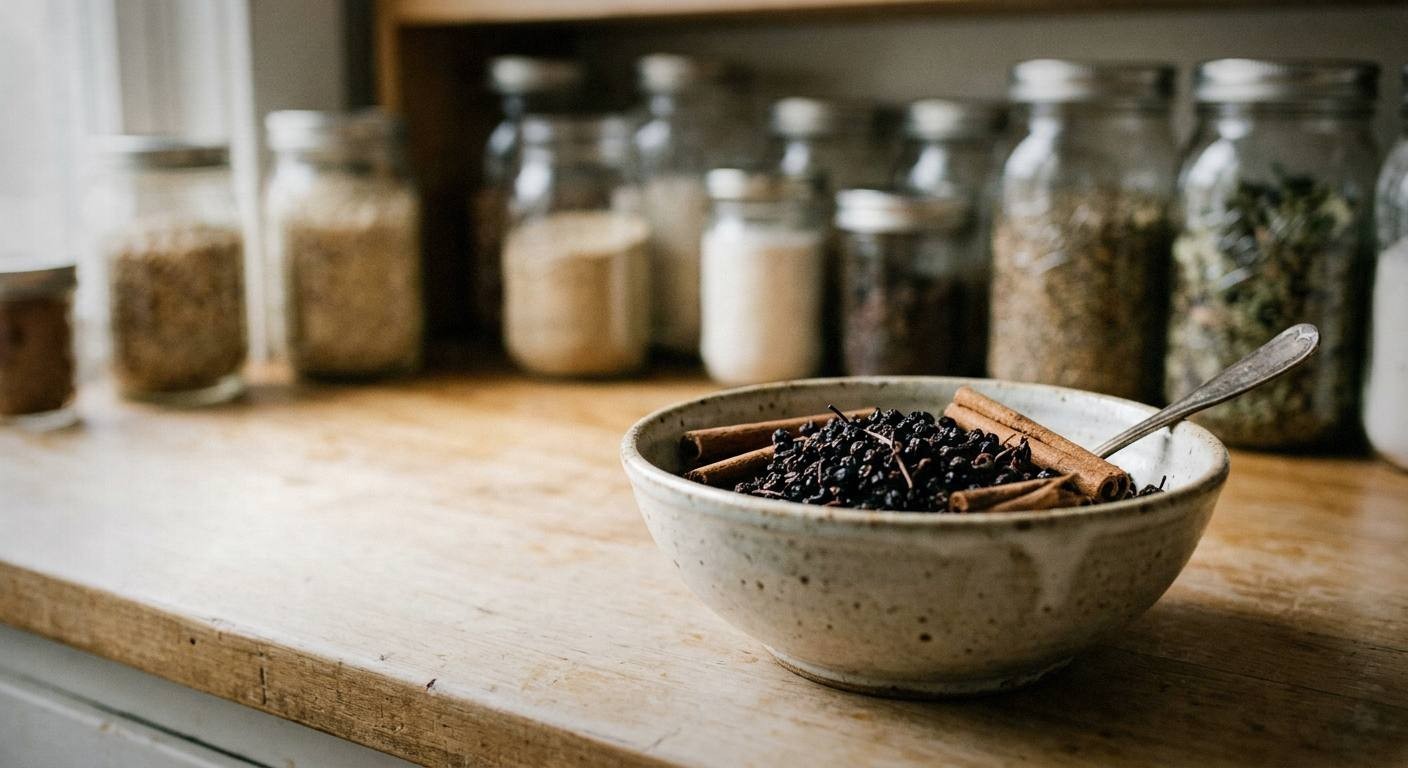
Dried elderberries from reputable suppliers (Mountain Rose Herbs, Frontier Co-op, Starwest Botanicals) are harvested and dried for exactly this purpose. Fresh elderberries must be cooked before use.
What You Will Need
- 1 cup dried elderberries (Sambucus nigra)
- 3 cups filtered water
- 1 tablespoon fresh ginger, grated or thinly sliced
- 1 cinnamon stick
- 4 whole cloves
- 1 cup raw honey
On the elderberries: Sambucus nigra (European elderberry) is the species used in virtually all the clinical research. Sambucus canadensis (American elderberry) is also used in herbal traditions and has similar compounds, but the European variety is the researched one. Mountain Rose Herbs and Frontier Co-op sell organic dried elderberries. A one-pound bag makes about four batches of syrup.
On the honey: Raw honey is added after cooking specifically to preserve its enzymes and beneficial compounds, which break down above 110F. The honey serves a dual purpose: sweetener and mild antimicrobial. If you need a vegan version, substitute maple syrup at the same ratio, though the shelf life may be shorter.
On the spices: Ginger and cinnamon add warmth and their own bioactive compounds (gingerols and cinnamaldehyde, respectively). The cloves are optional but contribute eugenol, which has mild analgesic and antimicrobial properties. These spices are not just flavor, they are part of the traditional formula.
How to Make It
Combine 1 cup dried elderberries, 3 cups water, grated ginger, cinnamon stick, and cloves in a medium saucepan. Stir once.
Bring to a boil over medium-high heat, then reduce to a low simmer. You want small, lazy bubbles, not a rolling boil.
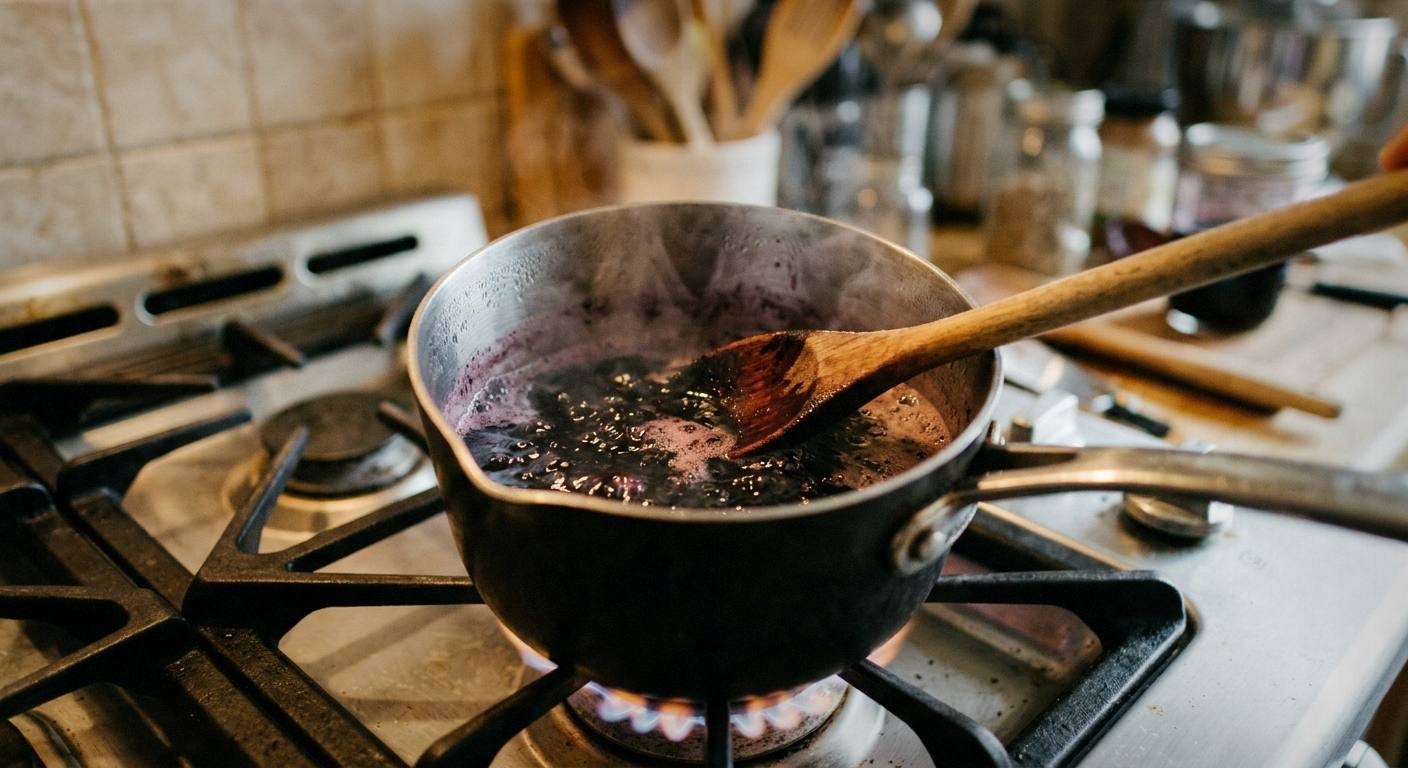
Simmer uncovered for 45 minutes to 1 hour. The liquid should reduce by roughly half. The color will deepen to a dark, inky purple. Stir occasionally.
Remove from heat. Let it cool until the pot is warm to the touch but not hot. The temperature needs to be below 110F before you add honey. This usually takes 20 to 30 minutes.
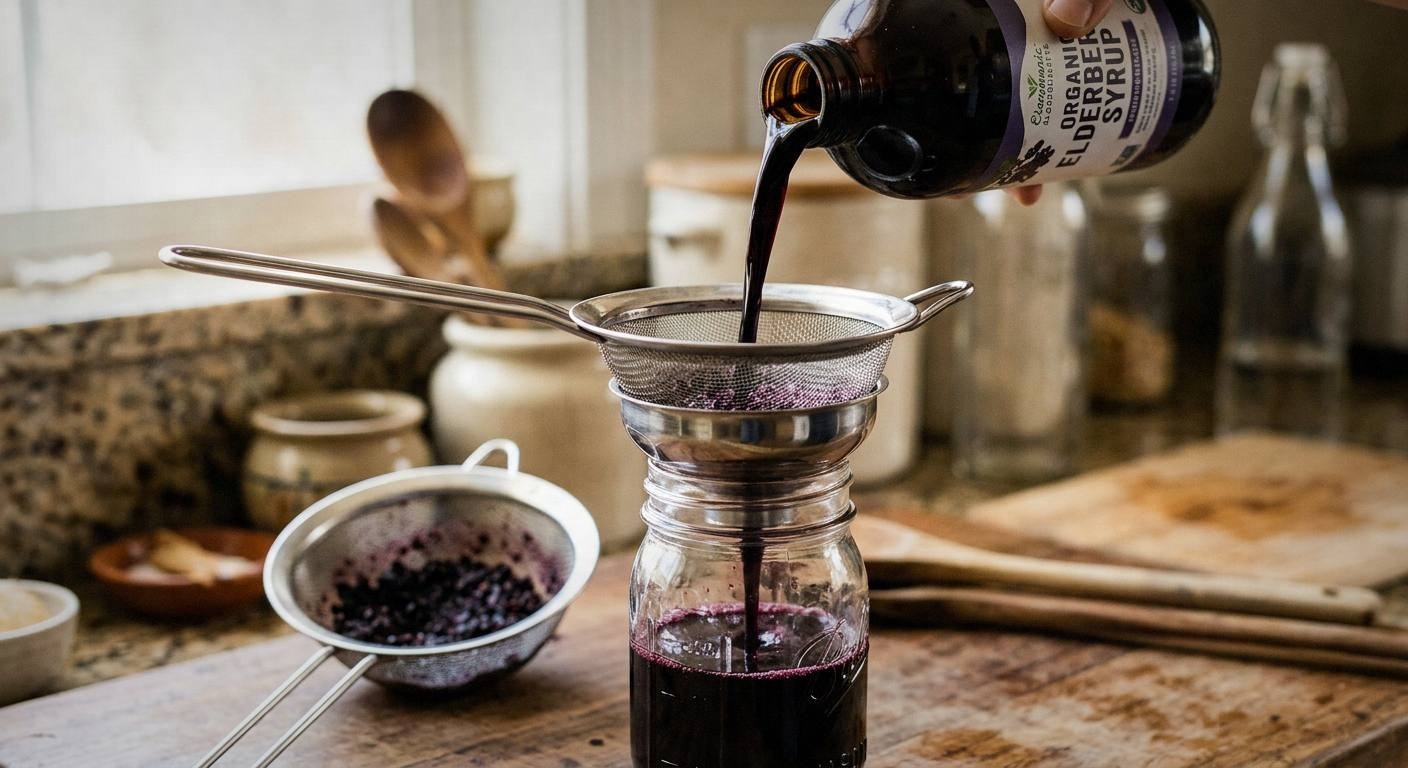
Strain through a fine mesh sieve into a large glass measuring cup or bowl. Press the cooked berries with the back of a spoon to extract every drop of juice. The berries have given up their color and their flavor. Discard the solids and spices.
Add 1 cup of raw honey to the warm (not hot) liquid. Stir until the honey dissolves completely. The result should be a thick, pourable syrup with a dark berry color.
Pour into a clean glass jar with a tight-fitting lid. A 16 oz mason jar works perfectly.
How to Use It
Daily maintenance dose (adults): 1 tablespoon per day. Take it straight from the spoon, stir it into a glass of sparkling water, or drizzle it over yogurt or oatmeal.
During illness (adults): 1 tablespoon every 2 to 3 hours, up to 4 times per day.
Children (ages 2-12): 1 teaspoon per day for maintenance, 1 teaspoon every 2 to 3 hours during illness. Always check with your pediatrician first.
In drinks: Stir 1 tablespoon into sparkling water with a squeeze of lemon for an elderberry tonic. Mix it into herbal tea for cold and flu as a sweetener that pulls double duty. Add it to kombucha during second fermentation for an elderberry kombucha flavor.
On food: Works as a pancake syrup, a yogurt topping, or stirred into oatmeal. The flavor is berry-forward with warm spice, which plays well with breakfast foods.
Storage and Shelf Life
The honey acts as a natural preservative. Refrigerated, the syrup keeps for 2 to 3 months. You will know it has turned if you see mold on the surface, if it smells fermented, or if the taste is off.
For longer storage, freeze the syrup in ice cube trays. Pop out the cubes and store them in a freezer bag. Each cube is roughly 1 tablespoon. Frozen elderberry syrup keeps for 6 months.
Always use a clean spoon when scooping from the jar. Introducing bacteria from a used spoon is the fastest way to shorten the shelf life.
The Elderflower Connection
Elderberries and elderflowers come from the same plant (Sambucus nigra). The flowers bloom in late spring and have their own therapeutic profile, traditionally used as diaphoretics for fevers and upper respiratory infections. Our elderflower healing benefits guide covers the flower side of the plant in detail.
If you want to use elderflowers in drinks, the elderflower cordial recipe is a UK-style preparation that makes a versatile mixer. And the St-Germain elderflower French 75 uses commercial elderflower liqueur for a faster cocktail route.
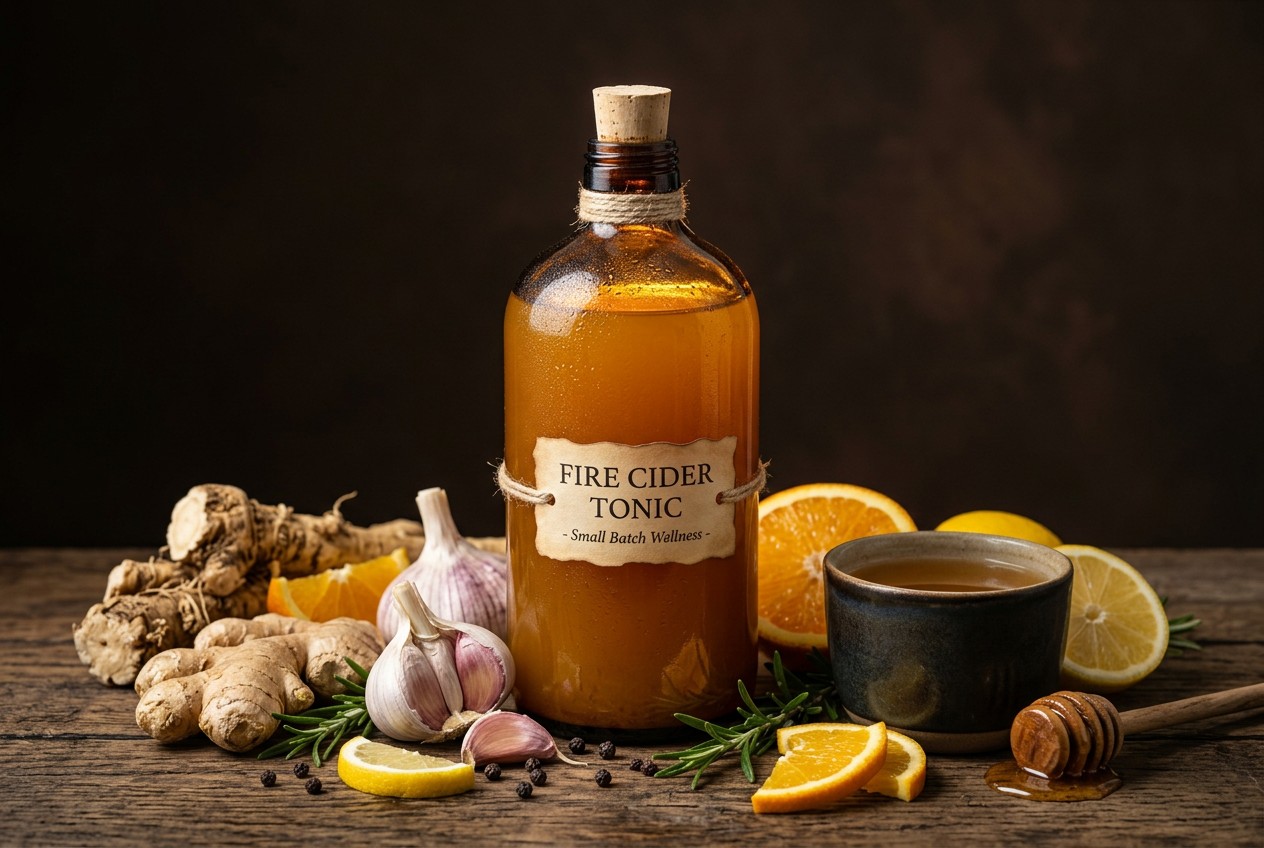
For a broader immune support strategy, our fire cider recipe takes a different approach with apple cider vinegar, horseradish, and hot peppers. The immunity drink recipe uses citrus and fresh herbs for a daily vitamin C boost.
Before You Start
Buy from reputable suppliers. Dried elderberries should be clearly labeled as Sambucus nigra, organic if possible, and from a company that specializes in bulk herbs. Mountain Rose Herbs, Frontier Co-op, and Starwest Botanicals are the standard recommendations.
Never forage elderberries without positive identification. Elderberry looks similar to water hemlock (Cicuta), which is deadly. If you want to forage, go with an experienced forager the first few times. Dried berries from a supplier eliminate this risk.
The honey temperature matters. Adding honey to hot liquid (above 110F) destroys beneficial enzymes. Test with your hand: if you can comfortably hold the pot, it is ready for honey.
This is a food, not a drug. Elderberry syrup is a traditional herbal preparation. It is not FDA-approved to treat, cure, or prevent any disease. The research is encouraging but not conclusive enough to replace medical treatment.
Common Questions
Can I use fresh elderberries instead of dried?
Yes, but use twice the volume (2 cups fresh for every 1 cup dried). Fresh elderberries must be fully ripe (deep purple-black, not red) and must be cooked. Remove all stems and leaves. The cooking step is non-negotiable with fresh berries.
How much does a batch cost?
A one-pound bag of organic dried elderberries costs about 18 to 25 dollars and makes four batches. Each batch uses about 4 dollars of berries, a dollar of honey, and negligible amounts of spices. That comes to about 5 dollars per batch, or roughly 15 cents per tablespoon serving. A 4 oz bottle of commercial elderberry syrup costs 12 to 20 dollars.
Can I give this to babies or toddlers?
Do not give honey to children under 12 months due to botulism risk. For children ages 1 to 2, consult your pediatrician on elderberry and appropriate doses. For ages 2 and up, start with 1/2 teaspoon per day.
What is the difference between elderberry syrup and elderberry tincture?
Syrup is a water-based extraction sweetened with honey. A tincture is an alcohol-based extraction. Both deliver elderberry compounds, but tinctures are more concentrated (you take drops, not tablespoons) and have a much longer shelf life (years vs. months). The syrup is better if you want something palatable that kids will take willingly.

Camille writes about botanical drinks, herbal cocktails, and the old plant wisdom that makes them work. Most days you'll find her in the garden or the kitchen, turning herbs into something worth sipping.