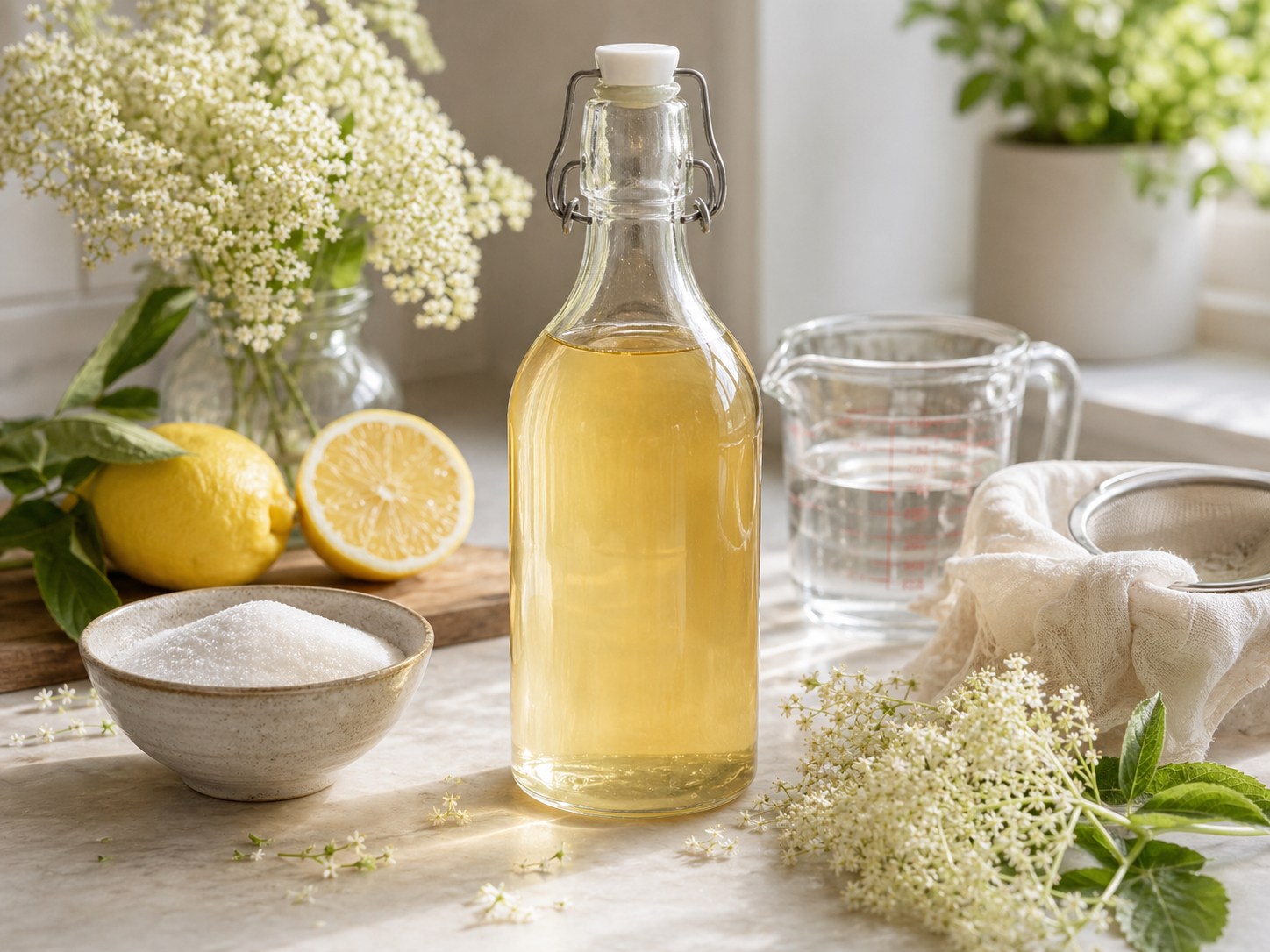
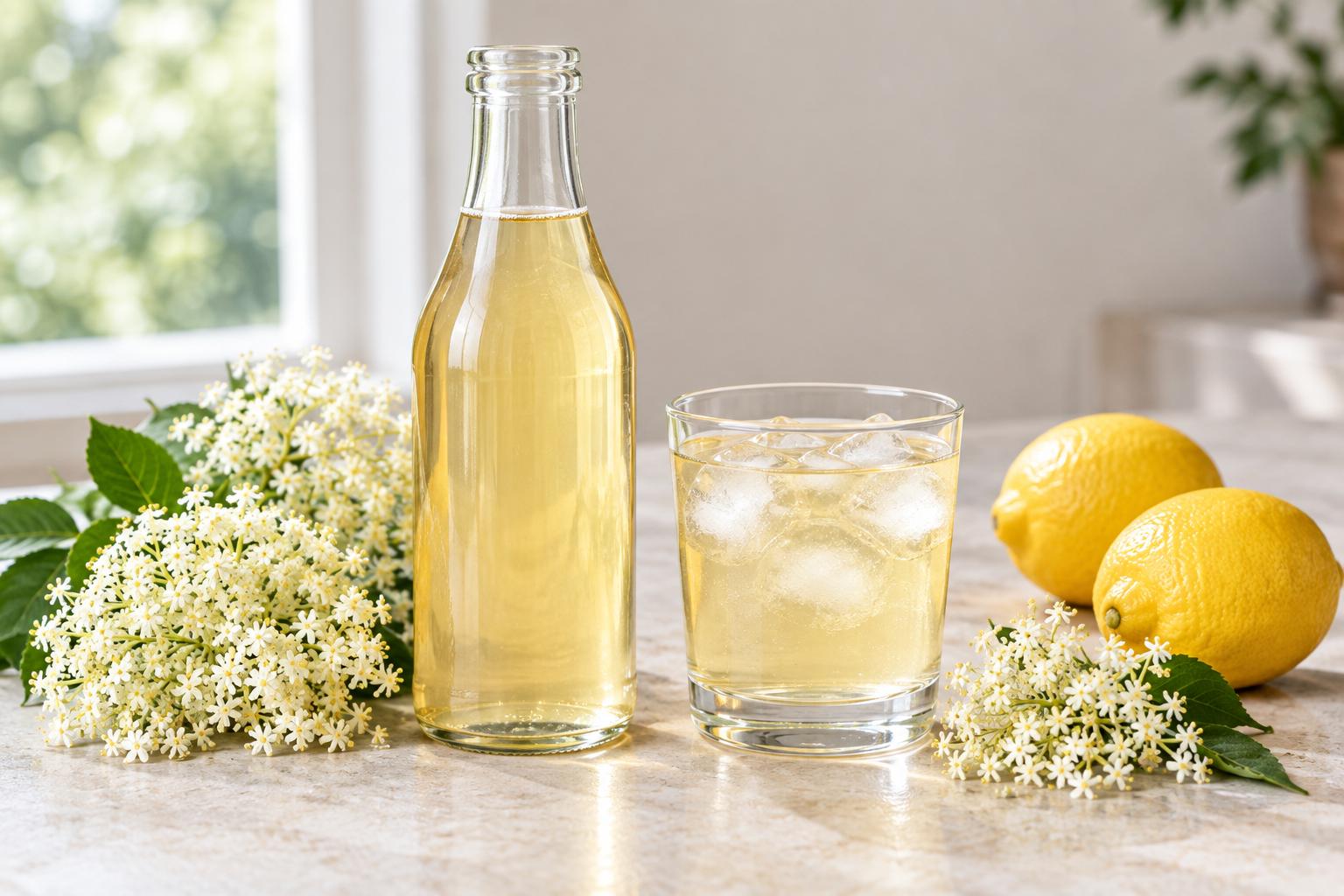
To make elderflower cordial, dissolve 2.5 kg of sugar in 1.5 litres of water, add 20 elderflower heads, 2 lemons, and 85 g of citric acid, steep for 24 hours, then strain and refrigerate. It’s a concentrated floral syrup for sparkling water, lemonade, iced tea, and cocktails, and it makes about 4 litres. It’s sweet by design, so start with a little in the glass and dilute to taste. A splash in hot tea is nice too once the weather turns cooler.
Elderflower Cordial Recipe at a Glance
| Detail | Amount or method |
|---|---|
| Fresh flowers | 20 elderflower heads |
| Sugar and water | 2.5 kg sugar to 1.5 litres water |
| Citrus and acid | 2 unwaxed lemons and 85 g citric acid |
| Steeping time | 24 hours |
| Yield and storage | About 4 litres; refrigerate for up to 6 weeks |
Ingredients and Equipment
- 2.5 kg granulated sugar
- 1.5 litres water
- 2 unwaxed lemons
- 20 fresh elderflower heads
- 85 g citric acid
- Large pan, heatproof bowl or pot, fine sieve, clean muslin, and clean bottles
Use elderflowers you can identify with confidence, from an unsprayed area. Choose creamy, fragrant heads in full bloom and skip any that have browned. Gently swish the heads in cold water to loosen dirt and insects, then trim off the large green stalks. Measure the citric acid by weight rather than by spoonful.
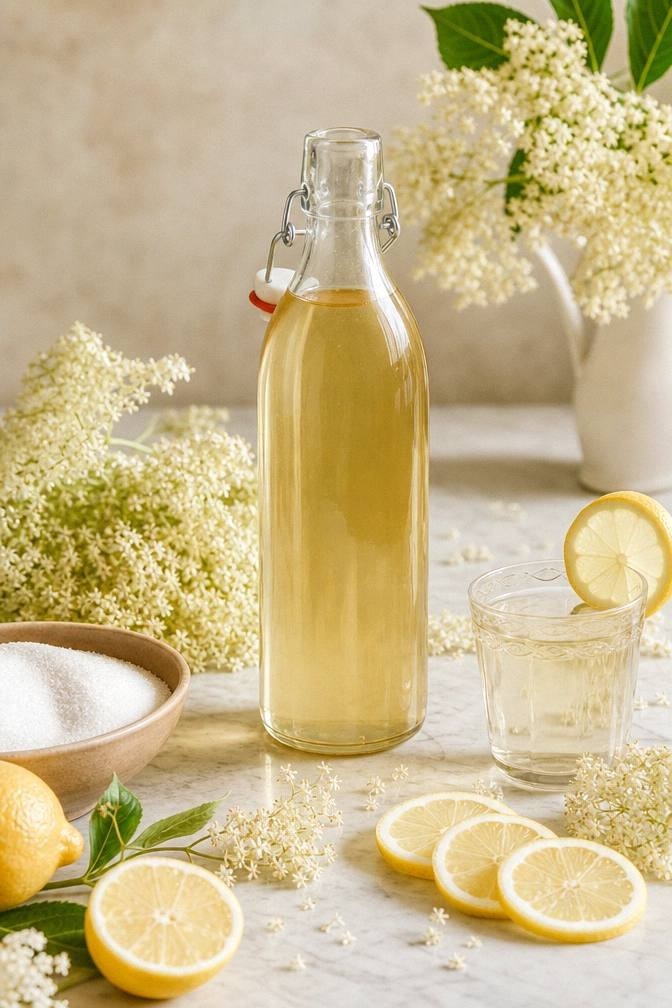
How to Make Elderflower Cordial
- Put the sugar and water in a large pan. Heat gently, stirring until the sugar dissolves. Bring to a boil, then turn off the heat.
- Pare the zest from the lemons and slice them into rounds. Gently swish and trim the elderflower heads.
- Add the lemon slices and zest, elderflowers, and citric acid to the hot syrup. Cover and steep for 24 hours.
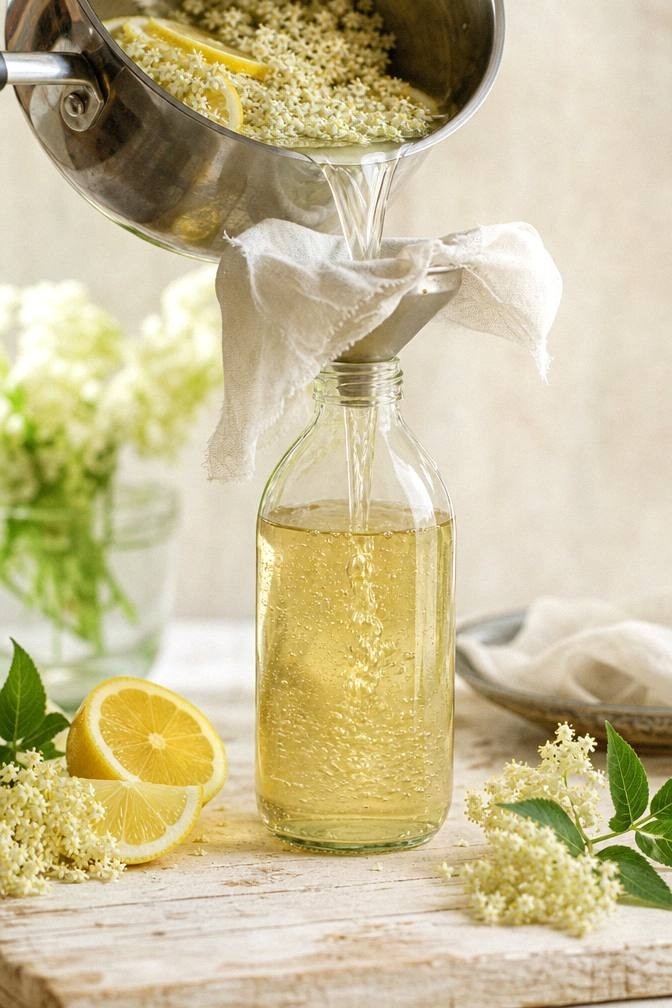
- Strain through clean muslin or a very fine sieve into clean bottles. Seal and refrigerate.
The finished syrup should smell floral and citrusy. If you want a cordial made without powdered citric acid, use the separate lemon-and-orange elderflower cordial , which uses a different method.
How to Serve Elderflower Cordial
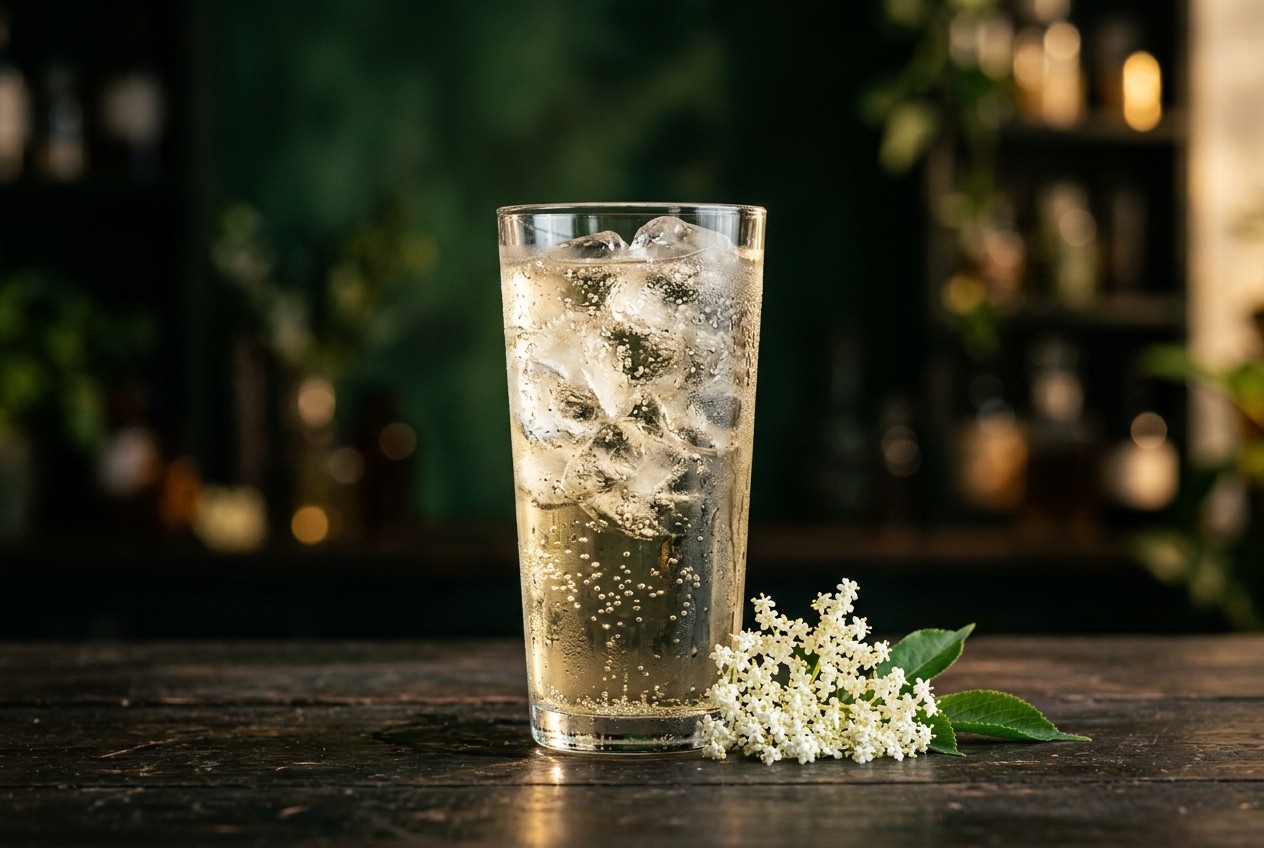
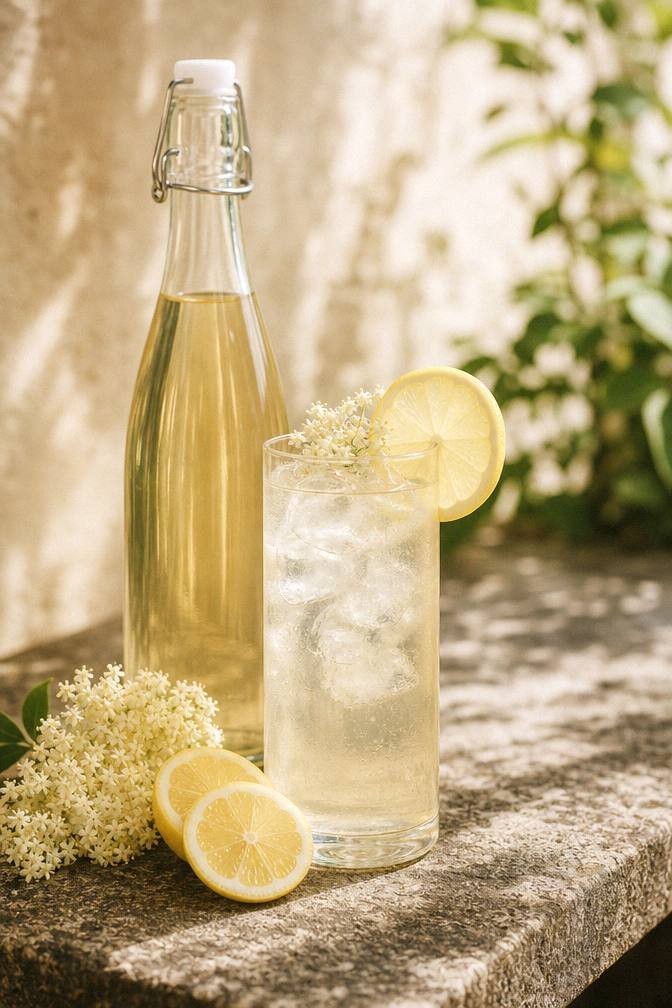
Start with one part cordial and four parts cold sparkling water. Add ice and a lemon slice, then adjust the concentration to your taste. A smaller pour also sweetens unsweetened iced tea or lemonade. For a complete drink, try the cucumber elderflower spritz or browse spring botanical mocktails .
| Drink | Starting point |
|---|---|
| Spritz | Cordial, sparkling water, ice, lemon |
| Iced tea | A small splash in unsweetened chilled tea |
| Lemonade | Use cordial as part of the sweetener and taste before adding more |
| Party pitcher | Mix just before serving to keep the bubbles lively |
Storage and Common Questions
Refrigerate the bottled cordial, where it keeps for up to six weeks. Keep bottles and pouring utensils clean, and discard a batch that develops mold, unexpected fizz, or an off smell.
Can I substitute lemon juice for the citric acid?
Use a recipe formulated for that substitution. The citric-acid-free version uses fresh lemon and orange with different proportions and a different method.
When are elderflowers ready to pick?
Pick fully opened, fragrant flower heads while they are creamy white. Bloom timing varies by place and weather, so use the flowers rather than a fixed calendar date as your guide.