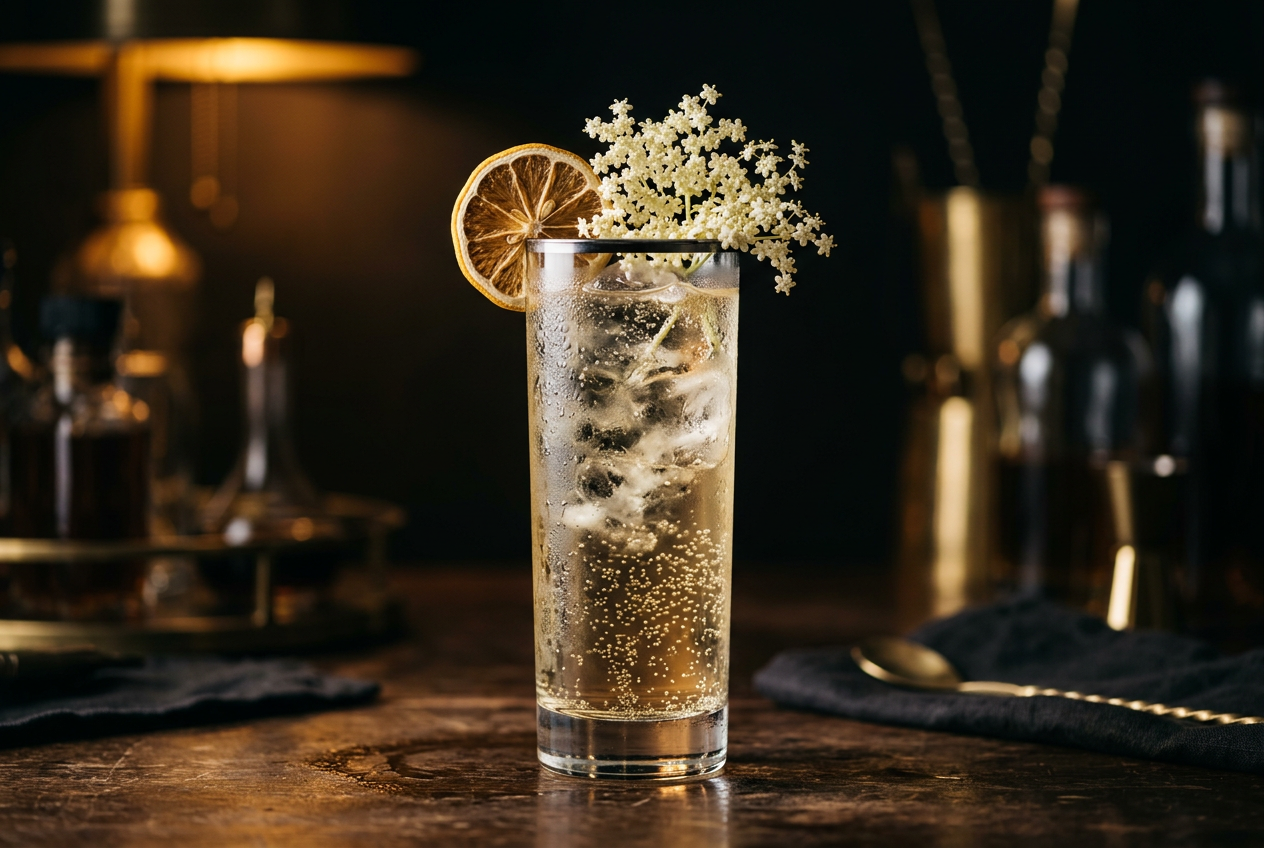
This elegant elderflower gin collins combines floral botanicals with bright citrus for a refreshing herbal cocktail. Perfect for spring and summer sipping with both alcoholic and non-alcoholic options.
Why You Will Love This
This elderflower gin collins is everything a botanical cocktail should be: light, refreshing, and beautifully balanced. The delicate floral notes of elderflower pair perfectly with gin’s juniper-forward profile, while fresh lemon juice adds brightness and sparkling water provides effervescence. Unlike heavy, syrupy cocktails, this drink feels like springtime in a glass.
The elderflower brings a subtle honey-like sweetness with gentle floral undertones that never become cloying or perfumed. Whether you are hosting a garden party, enjoying a quiet evening on the porch, or looking for a sophisticated alternative to standard cocktails, this herbal collins delivers elegance without fuss.
Best of all, this recipe works beautifully as both an alcoholic and non-alcoholic beverage. The botanical complexity shines through either way, making it inclusive for all your guests.
The Story Behind It
The Tom Collins has been a classic cocktail since the 1870s, but adding elderflower transforms this old standby into something altogether more botanical and herbal. Elderflower has been used in European folk medicine for centuries, prized for its immune-supporting properties and delicate flavor.
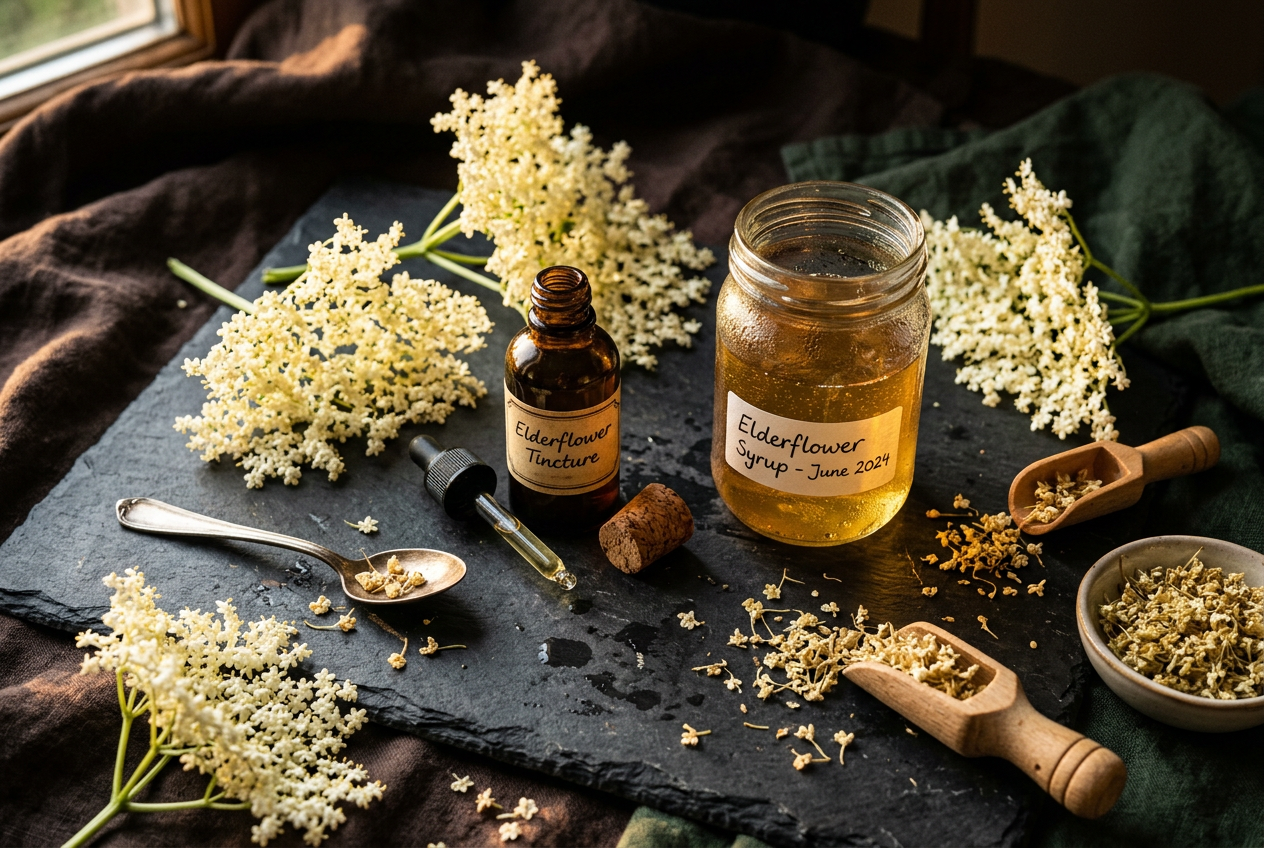
I first experimented with this combination after foraging wild elderflowers during a late spring walk. The blooms were at their peak, creamy white and incredibly fragrant. While I made traditional elderflower cordial with most of my harvest, I reserved some to infuse into a simple syrup specifically for cocktails.
The marriage of elderflower and gin felt natural. Both share botanical DNA, after all. Quality gin already contains botanicals like coriander, angelica, and citrus peel. Elderflower simply extends that herbal conversation, adding its own gentle voice to the chorus.
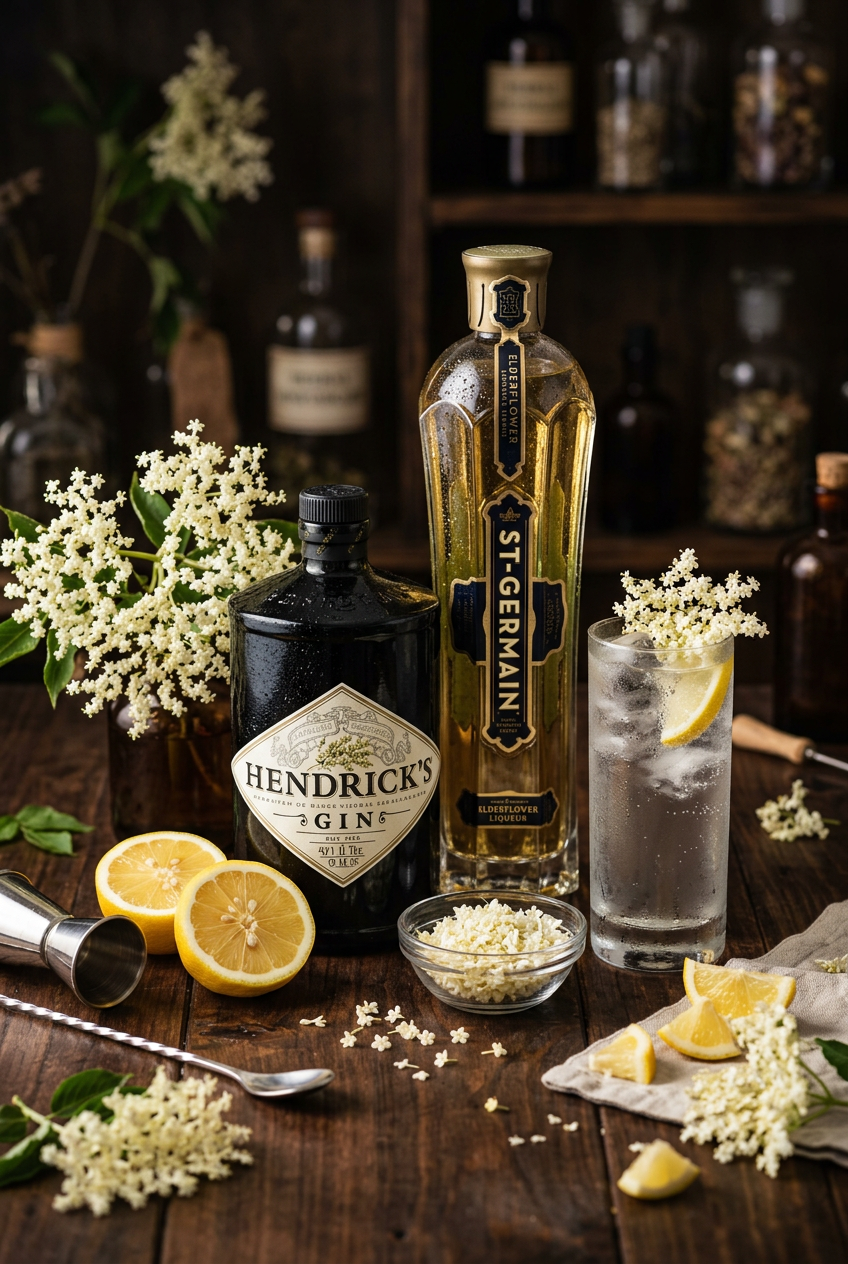
Fresh elderflowers add delicate floral notes to this botanical cocktail
What You Will Need
For the Elderflower Simple Syrup:
- 1 cup water
- 1 cup organic cane sugar
- 1/4 cup fresh elderflowers (or 2 tablespoons dried)
- 1 strip lemon peel
For the Cocktail (Spirit Version):
- 2 ounces quality gin (preferably a botanical or floral gin)
- 3/4 ounce fresh lemon juice
- 3/4 ounce elderflower simple syrup
- 2-3 ounces sparkling water
- Ice
- Fresh elderflowers or lemon wheel for garnish
For the Non-Alcoholic Swap:
- 2 ounces non-alcoholic botanical spirit (such as Seedlip Garden 108 or Ritual Gin Alternative)
- Follow the same proportions for lemon juice, syrup, and sparkling water
Alternatively, for a simple alcohol-free version, use 2 ounces of strong chamomile or green tea in place of the spirit. The tea adds body and botanical complexity that prevents the drink from tasting flat.
How to Make It
Prepare the Elderflower Simple Syrup:
Start by making your elderflower syrup, as it needs to cool completely before use. Combine water and sugar in a small saucepan over medium heat. Stir until the sugar dissolves completely.
Remove from heat and add the elderflowers and lemon peel. Cover and let steep for 30 minutes. The mixture will take on a pale golden color and a beautiful floral aroma. Strain through a fine-mesh sieve, pressing gently on the flowers to extract all the flavor. Store in a clean glass jar in the refrigerator for up to two weeks.
Build the Cocktail:
Fill a collins glass (or highball glass) with ice. Add the gin, fresh lemon juice, and elderflower syrup to the glass.
Stir gently for about 10 seconds to combine and chill the ingredients. Top with sparkling water, adding it slowly to preserve the carbonation.
Give one final gentle stir to incorporate the sparkling water without losing all the bubbles.
Garnish with a fresh sprig of elderflower if available, or a thin lemon wheel. For an extra aromatic touch, express a lemon peel over the drink before adding your garnish.
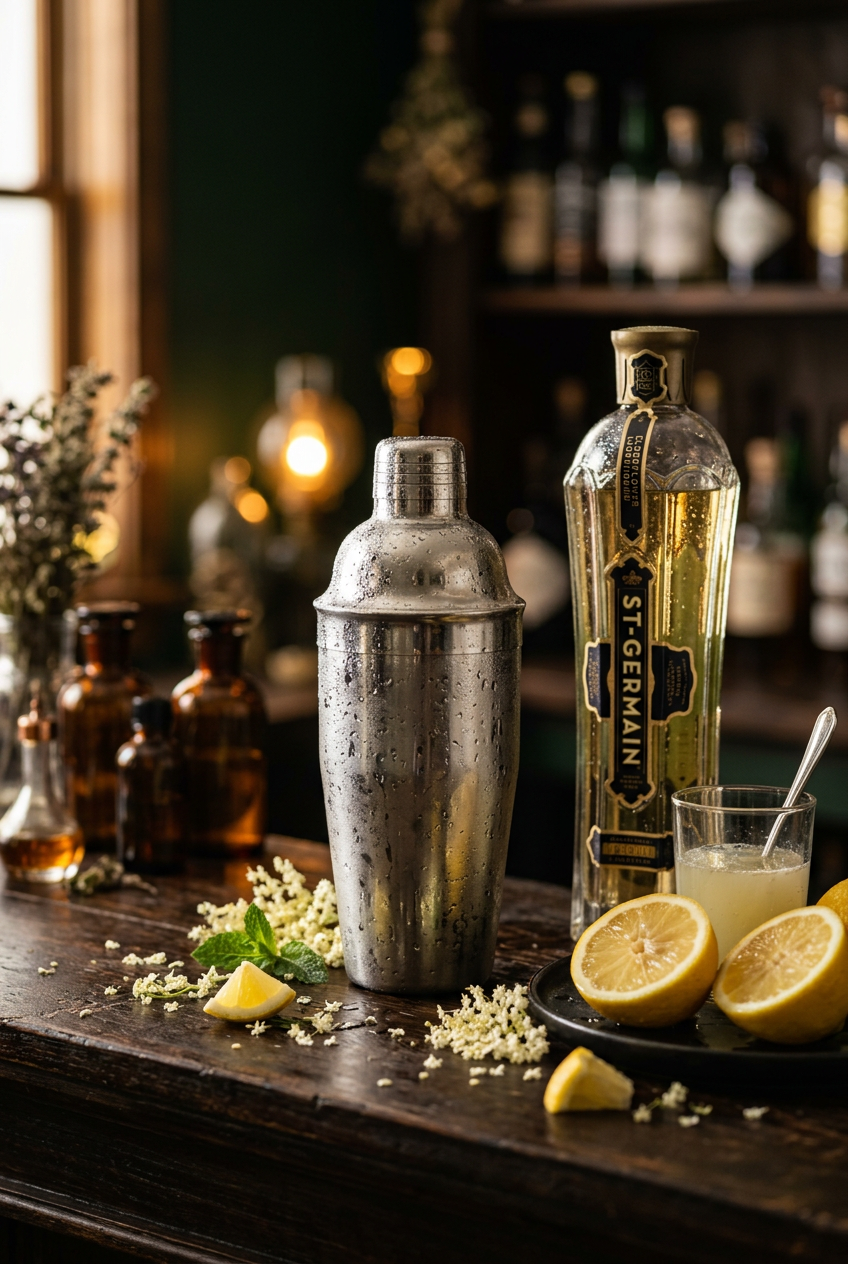
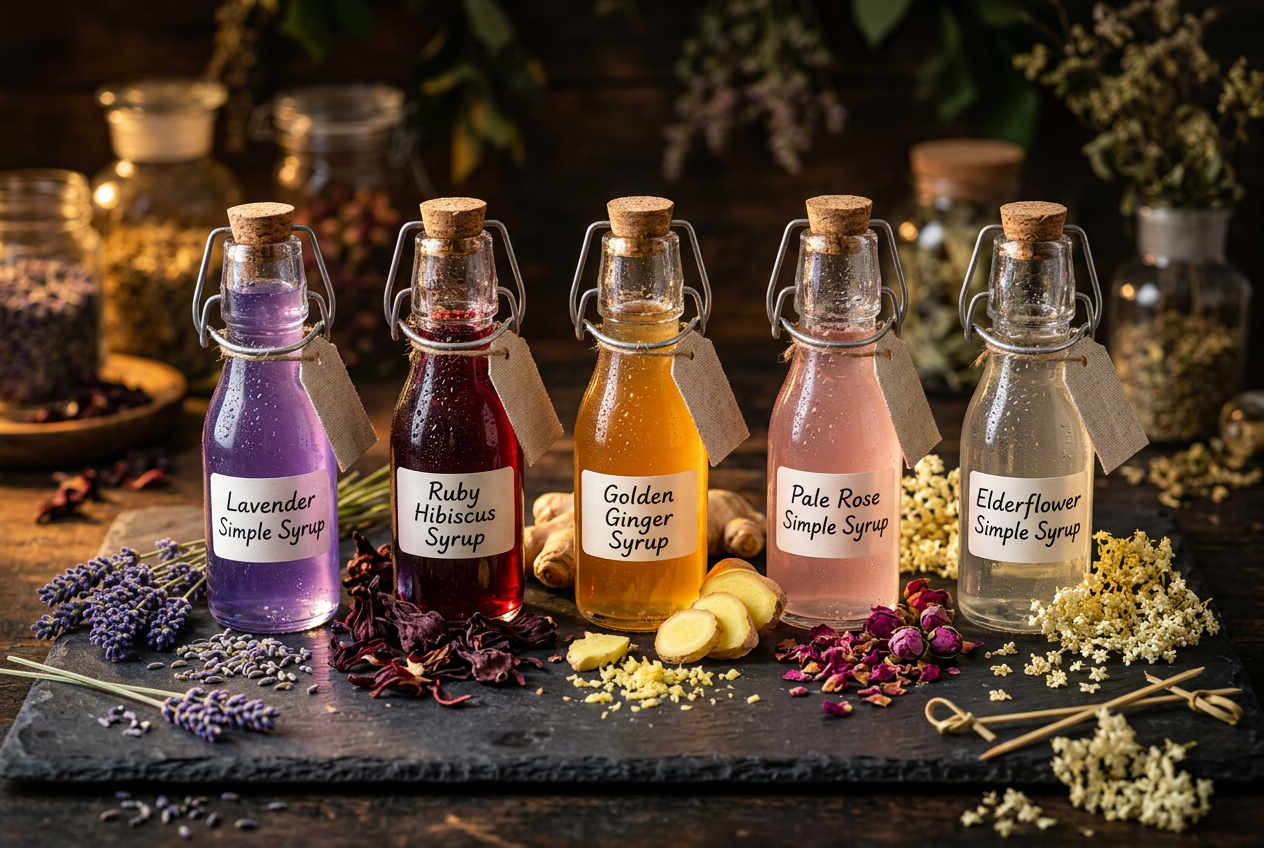
Layer the botanical ingredients before topping with sparkling water
Herbalist Notes
Elderflower (Sambucus nigra) has been used in traditional European herbalism for respiratory support, as a gentle diaphoretic (promoting healthy sweating), and for seasonal immune wellness. The flowers contain flavonoids and phenolic acids that contribute to their traditional uses.
When foraging elderflowers, proper identification is critical. Harvest only the creamy white flower clusters in late spring or early summer, when they are fully open and fragrant. Avoid any flowers that have started to brown. Never consume elderberries raw, and ensure you are harvesting from an area free of pesticides and pollution.
The flowers should smell sweet and slightly honey-like. If they have an unpleasant odor, do not use them. Always remove the flowers from the stems, as the stems contain compounds that can cause digestive upset.
For those purchasing dried elderflowers, source from reputable herbal suppliers. The dried flowers should still retain a pleasant aroma and a pale cream color, not brown or musty.
While this cocktail contains only small amounts of elderflower, it is worth noting that elderflower is generally considered safe for most people. However, those who are pregnant, nursing, or taking medications should consult with a qualified healthcare provider before consuming herbal preparations regularly.
Make It Your Own
This elderflower gin collins is wonderfully adaptable. Here are some variations to explore:
Herbal Additions: Muddle a few fresh mint or lemon balm leaves in the glass before adding the other ingredients. Both herbs complement elderflower beautifully and add another layer of freshness.
Citrus Variations: Swap half the lemon juice for fresh grapefruit juice for a more bitter, complex flavor. Or try Meyer lemon when in season for a sweeter, more floral citrus note.
Berry Boost: Add a few muddled fresh raspberries or blackberries to the glass before building the drink. The berries add color, subtle sweetness, and pair naturally with elderflower.
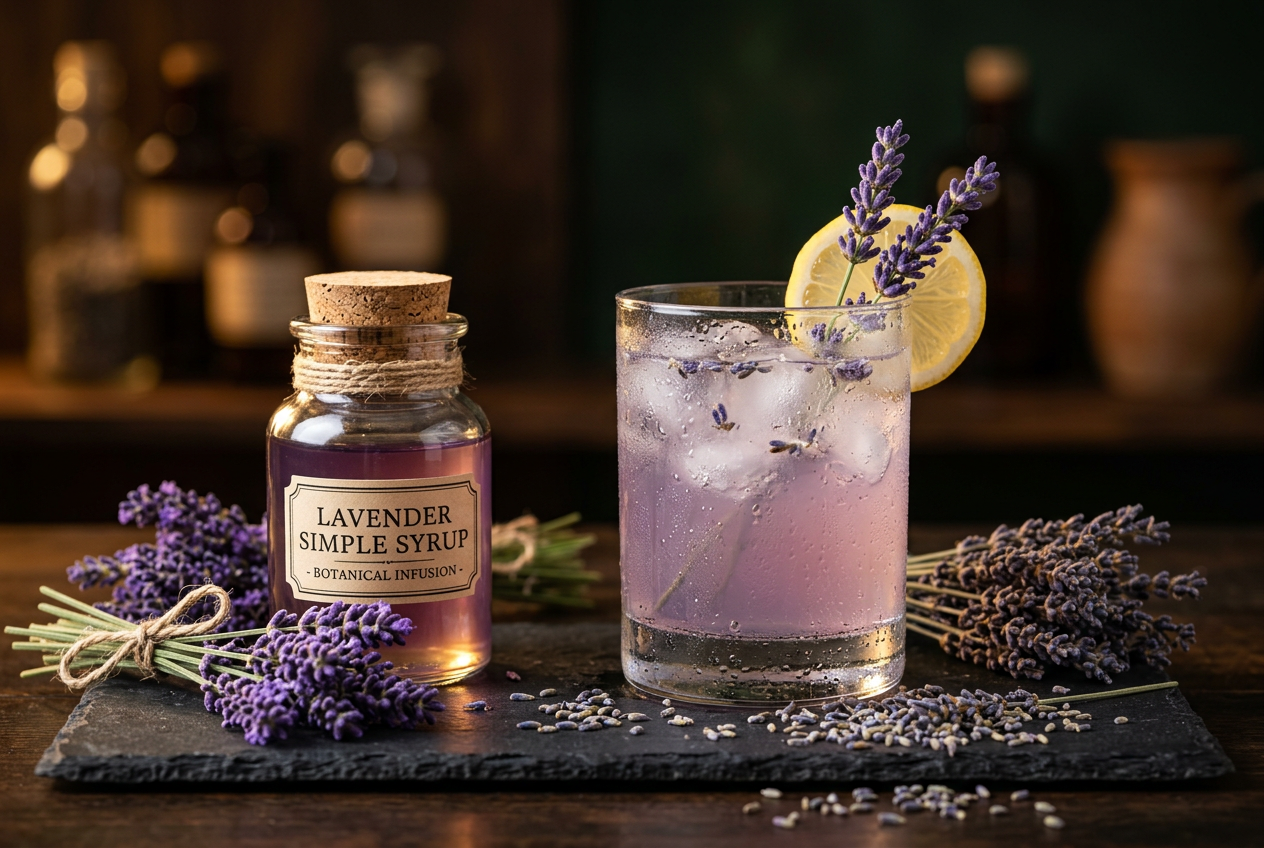
Lavender Elderflower Collins: Add a tiny pinch of culinary lavender to your simple syrup while steeping. Use a light hand, as lavender can quickly overpower the delicate elderflower.
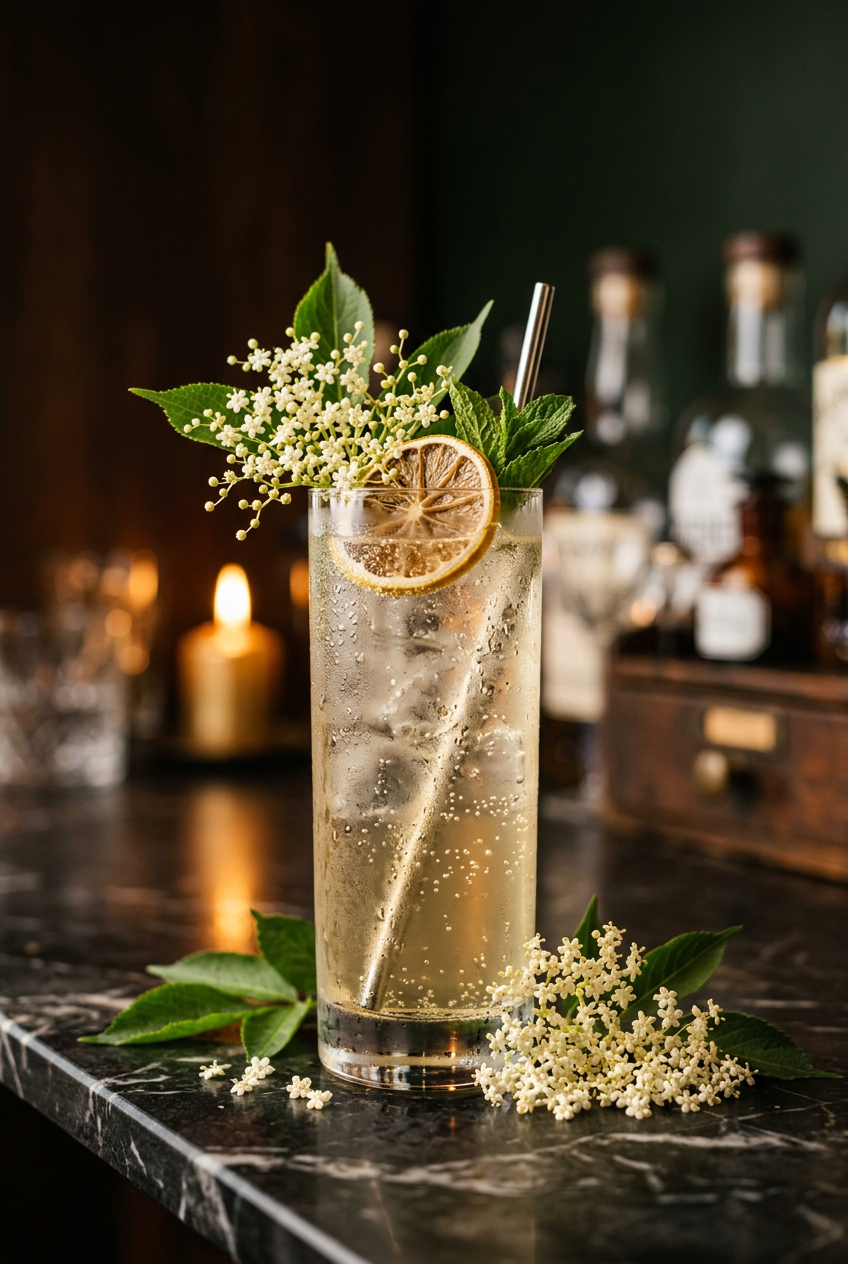
The finished elderflower gin collins is light, refreshing, and beautifully botanical
Rosemary Variation: Add a small sprig of fresh rosemary to the glass and gently press it against the ice to release the oils. The piney, aromatic quality of rosemary creates an interesting contrast with the floral elderflower.
Cucumber Elderflower Collins: Add three thin slices of cucumber to the glass before adding ice. This creates an even more refreshing, spa-like drink perfect for hot summer days.
Stronger Elderflower Flavor: If you want a more pronounced elderflower taste, increase the syrup to 1 ounce and reduce the lemon juice slightly to 1/2 ounce. This creates a sweeter, more floral-forward cocktail.
Batch for a Crowd: To make a pitcher for entertaining, combine 12 ounces gin, 6 ounces lemon juice, and 6 ounces elderflower syrup in a large pitcher. Keep chilled, and when ready to serve, pour 4 ounces of the mixture over ice in each glass and top with sparkling water. This makes about 6 cocktails.
The beauty of this elderflower gin collins lies in its simplicity and the quality of its ingredients. Use the best gin you can afford, squeeze your lemon juice fresh, and take the time to make your own elderflower syrup. These small efforts result in a cocktail that tastes like it came from a high-end cocktail bar, not your home kitchen.
Whether you are sipping this on a warm spring evening, serving it at a bridal shower, or simply treating yourself to something special after a long day, this botanical herbal cocktail offers a moment of floral, refreshing elegance. Cheers to the simple magic of flowers, herbs, and good spirits.