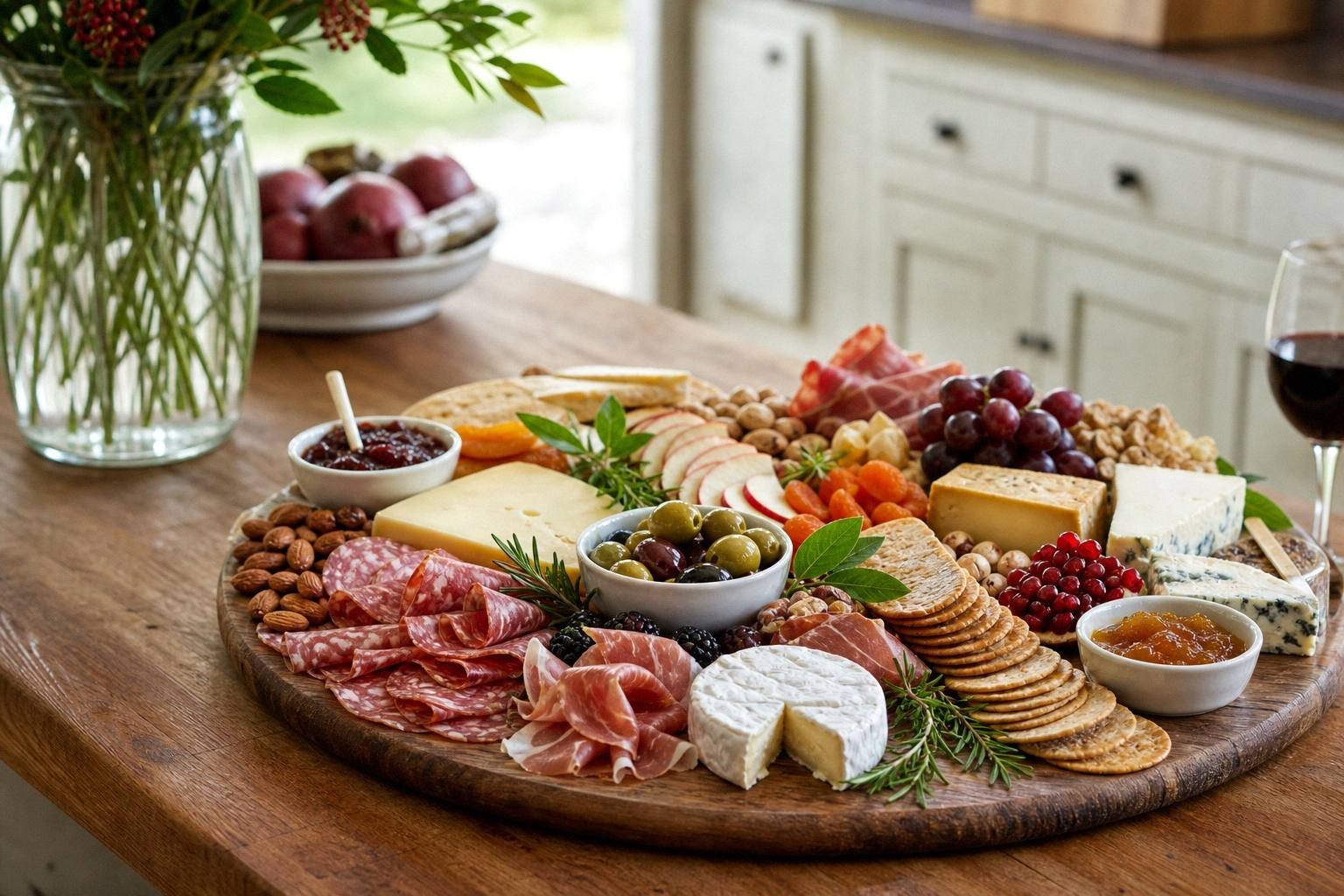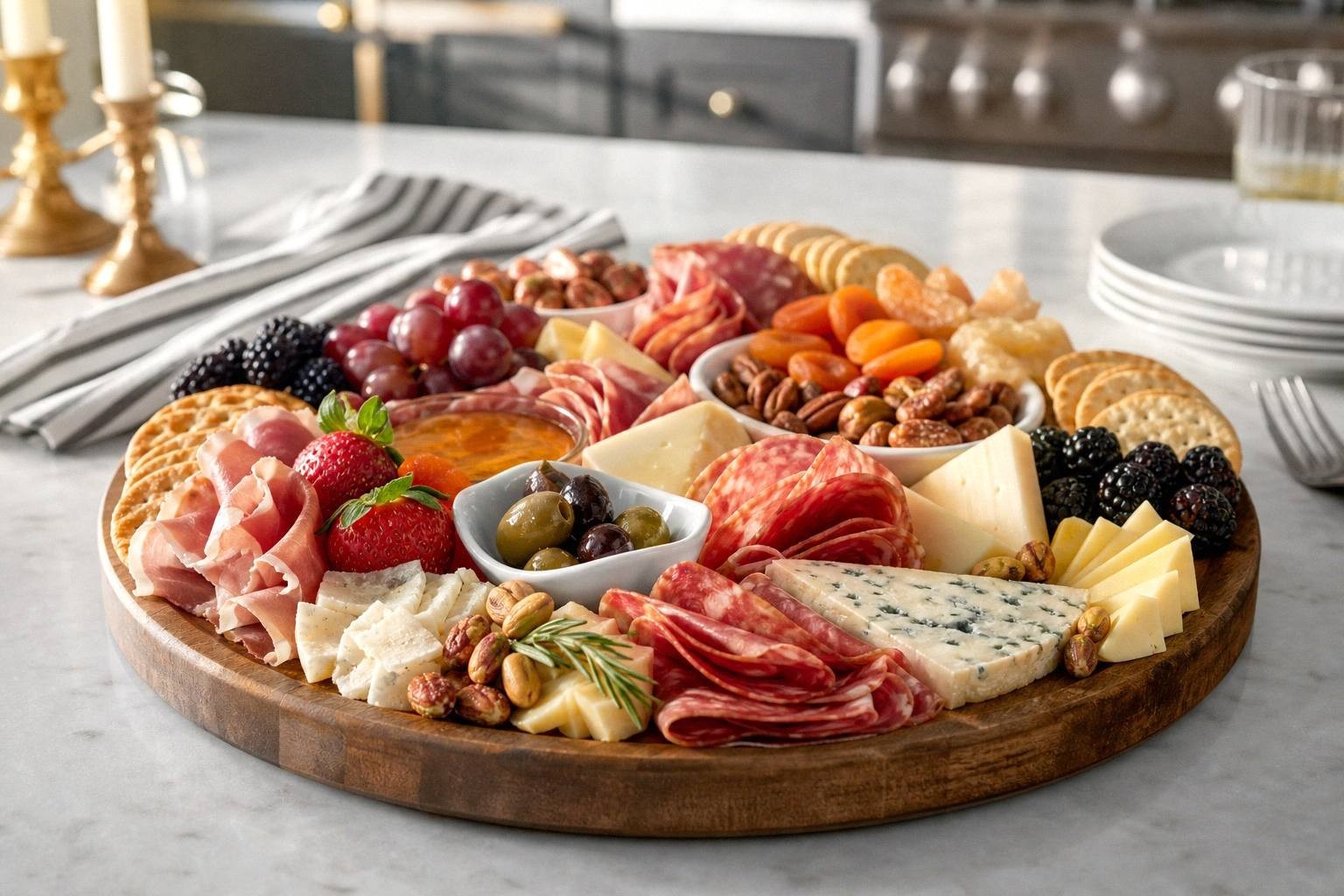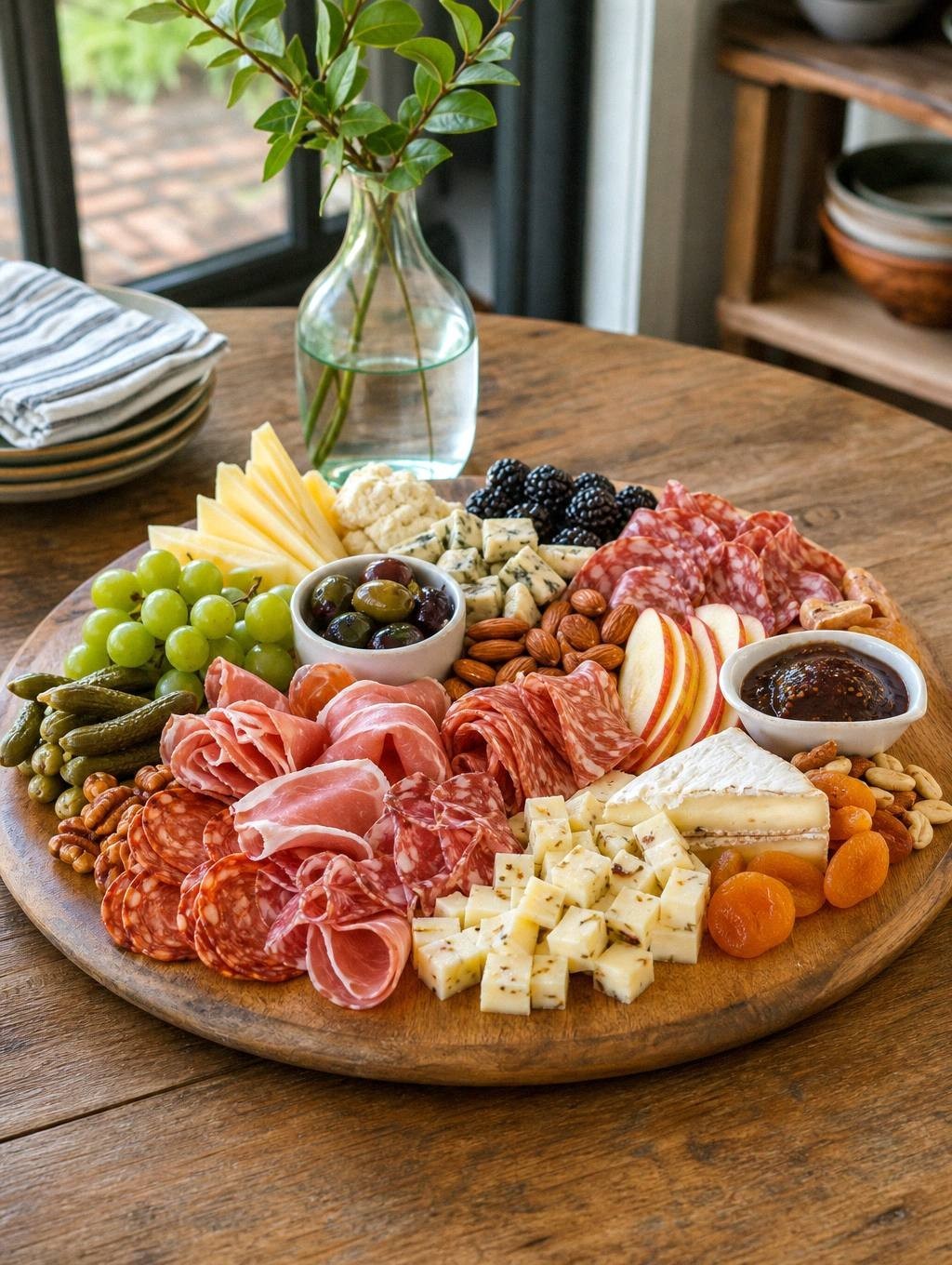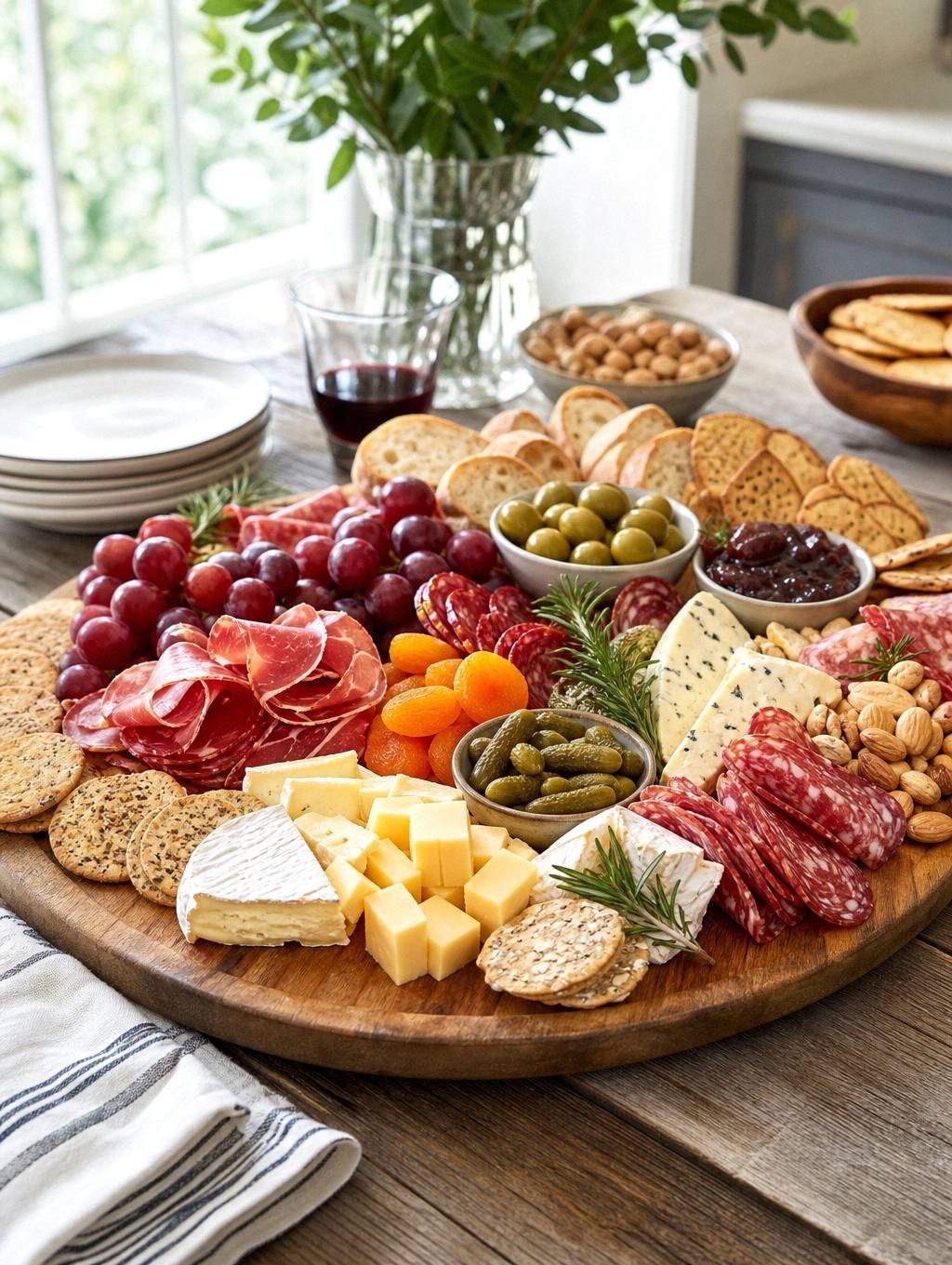
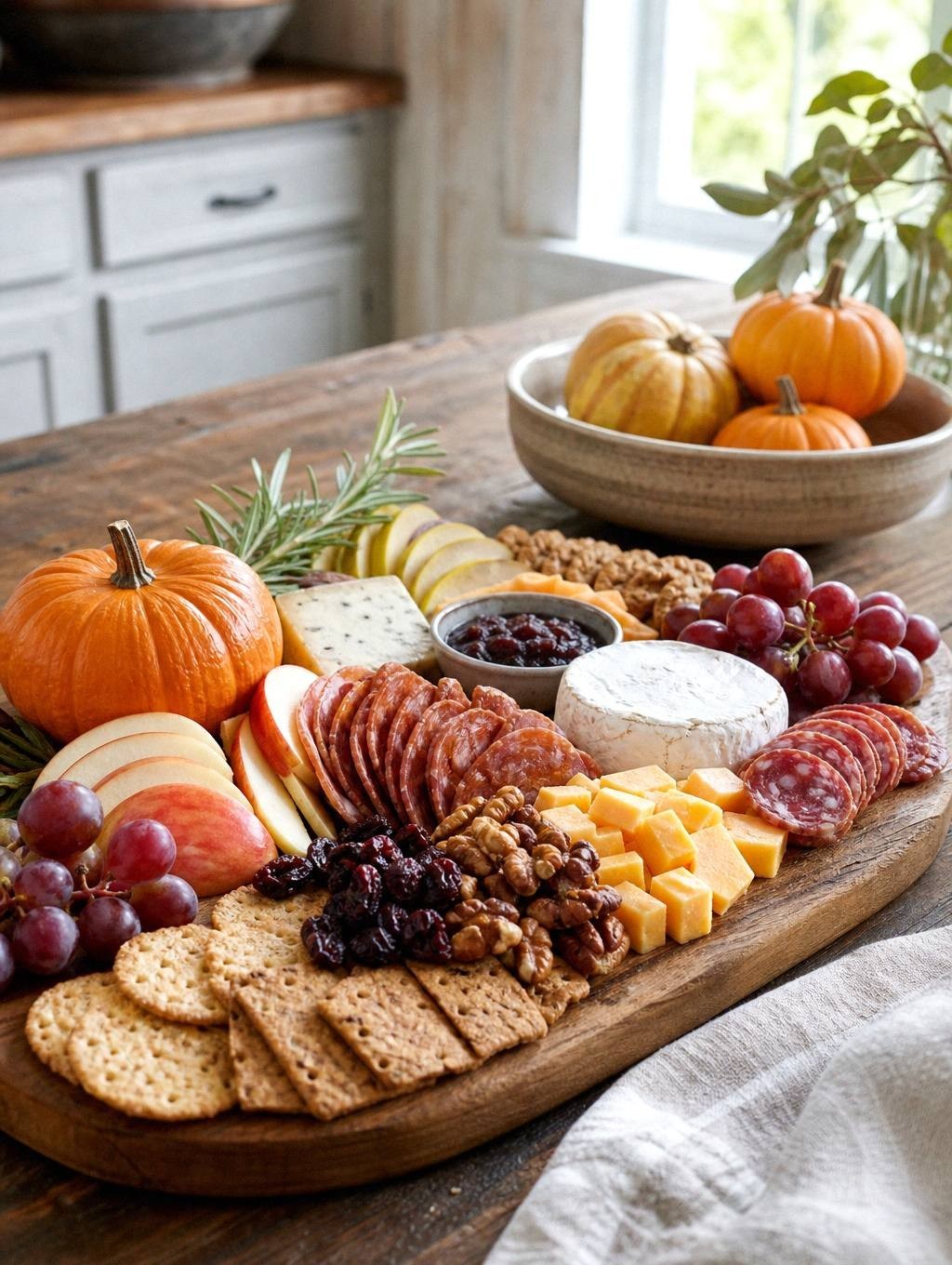
Fall charcuterie board ideas turn seasonal ingredients into a crowd-pleasing centerpiece in fifteen minutes. Fall thanksgiving charcuterie board ideas.
A fall charcuterie board turns seasonal ingredients into a centerpiece that feeds a crowd without keeping you in the kitchen. The best autumn boards balance rich cheeses with crisp apples, sweet preserves, and crunchy nuts, arranged so guests can build their own bites. You’ll spend fifteen minutes assembling it and the rest of the evening actually talking to people.
Why Fall Boards Work Better Than Summer Ones
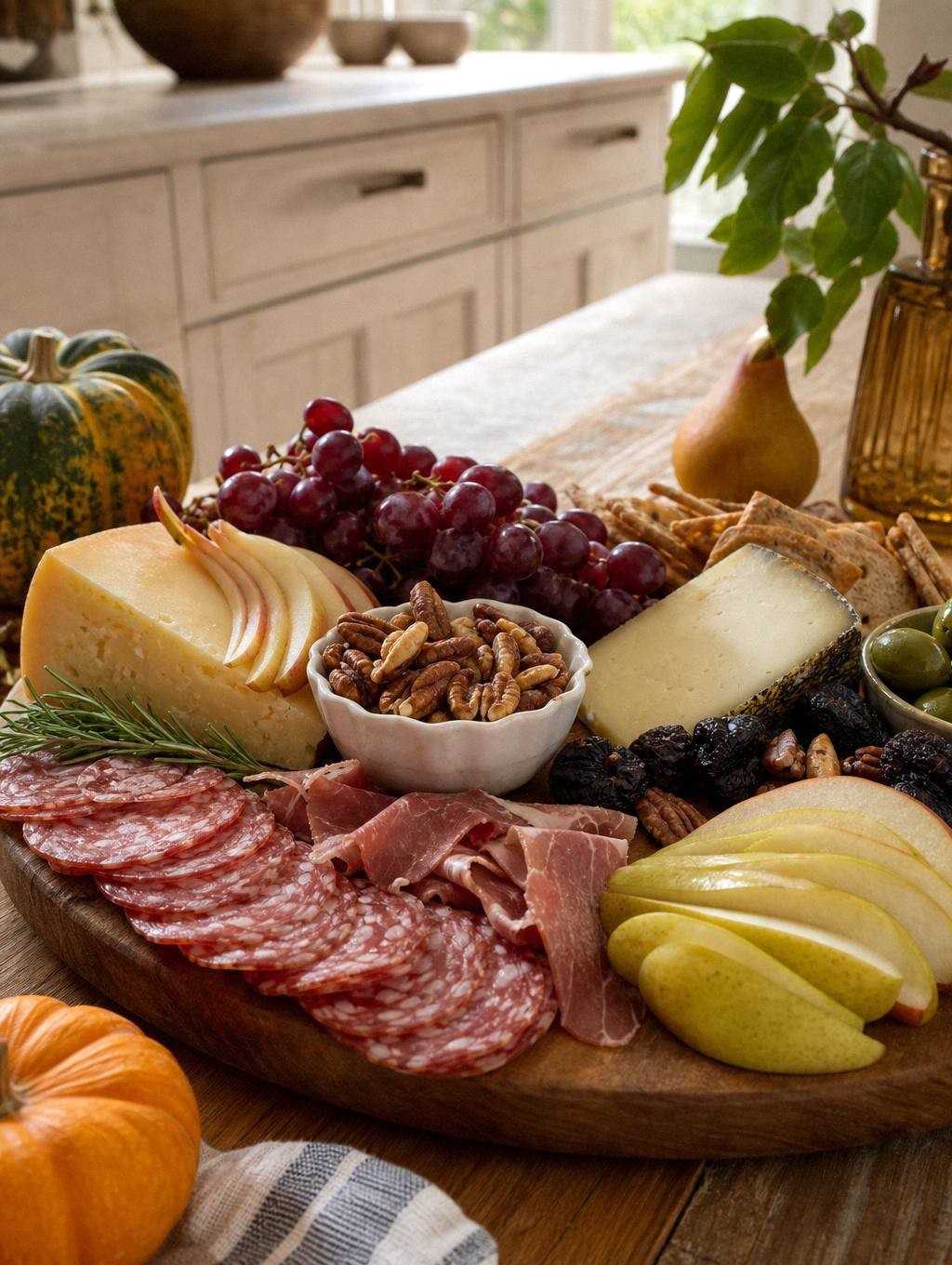
Autumn ingredients hold up at room temperature longer than summer produce, which means your board stays safe and attractive through a long party. Aged cheeses, hard salami, apples, pears, and nuts don’t wilt or weep moisture the way soft berries and fresh mozzarella do. You can set the board out an hour before guests arrive and it’ll look just as good when the last person leaves.
Fall flavors also run richer and sweeter, which makes pairing easier. Apple butter, fig jam, and honey all complement both sharp aged cheddar and creamy brie without fighting for attention. The same sweetness bridges salty prosciutto and earthy walnuts, so you don’t need to overthink which item goes next to what.
What Cheeses to Buy for Autumn Boards
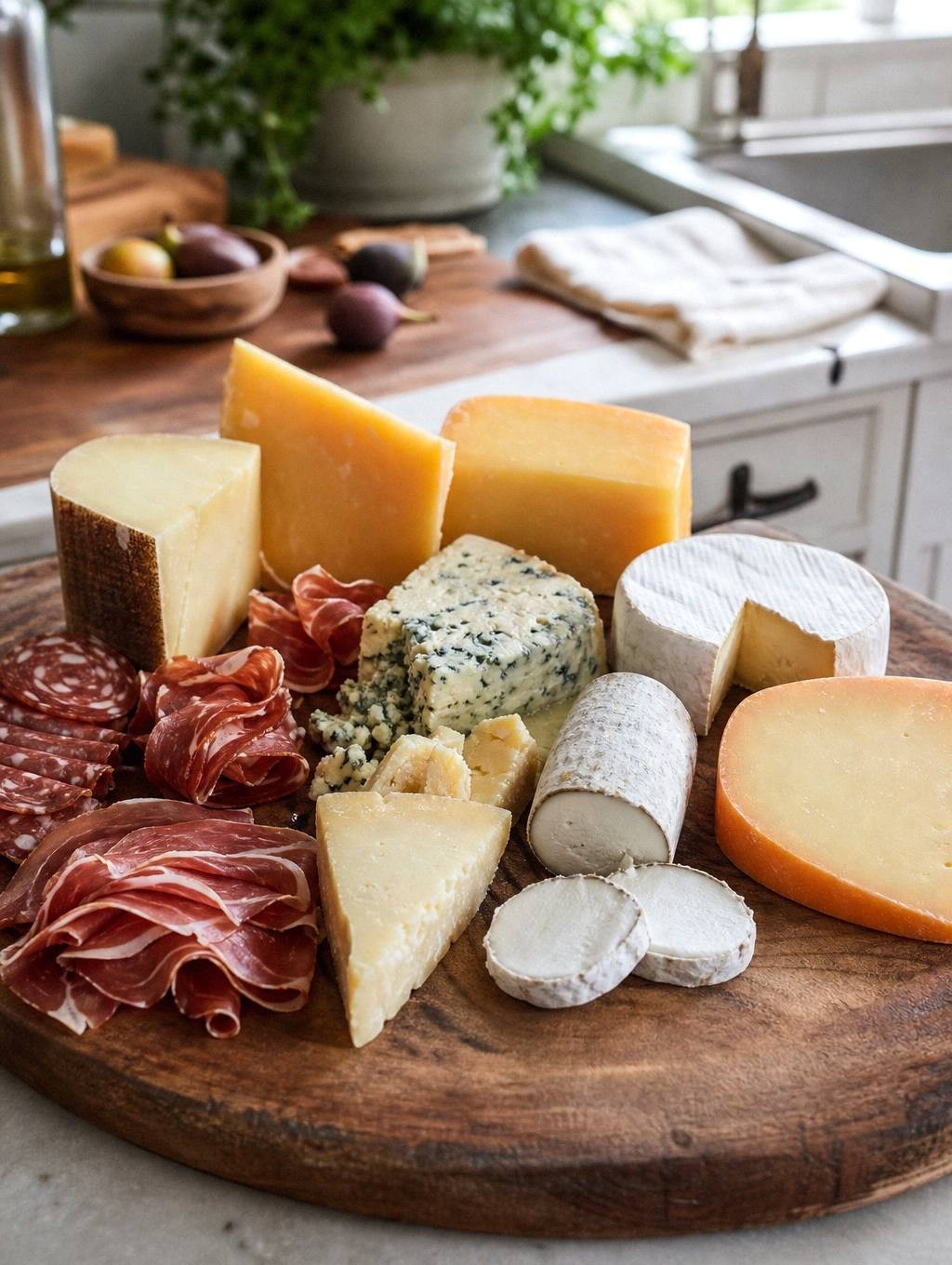
Choose three or four cheeses with different textures and milk sources so every guest finds something they like. One aged and firm, one soft and spreadable, one blue or funky, and one mild crowd-pleaser covers the range without overwhelming the board.
| Cheese Type | What to Buy | Why It Works |
|---|---|---|
| Aged and firm | Aged cheddar, Gouda, Manchego, Parmigiano-Reggiano | Sharp, nutty flavors pair with apples and honey; holds shape when sliced |
| Soft and spreadable | Brie, fresh chèvre, Bucheron | Creamy texture contrasts with crunchy crackers; mild enough for hesitant guests |
| Blue or funky | Gorgonzola, Roquefort, Humboldt Fog | Bold flavor stands up to sweet fig jam and salty prosciutto |
| Crowd-pleaser | Gruyère, Pecorino | Familiar taste, melts slightly at room temperature for easy spreading |
Buy about two ounces of cheese per person if the board is an appetizer, four ounces if it’s the main event. Let everything sit at room temperature for thirty minutes before serving so the flavors open up and the textures soften.
Seasonal Fruits and How to Use Them
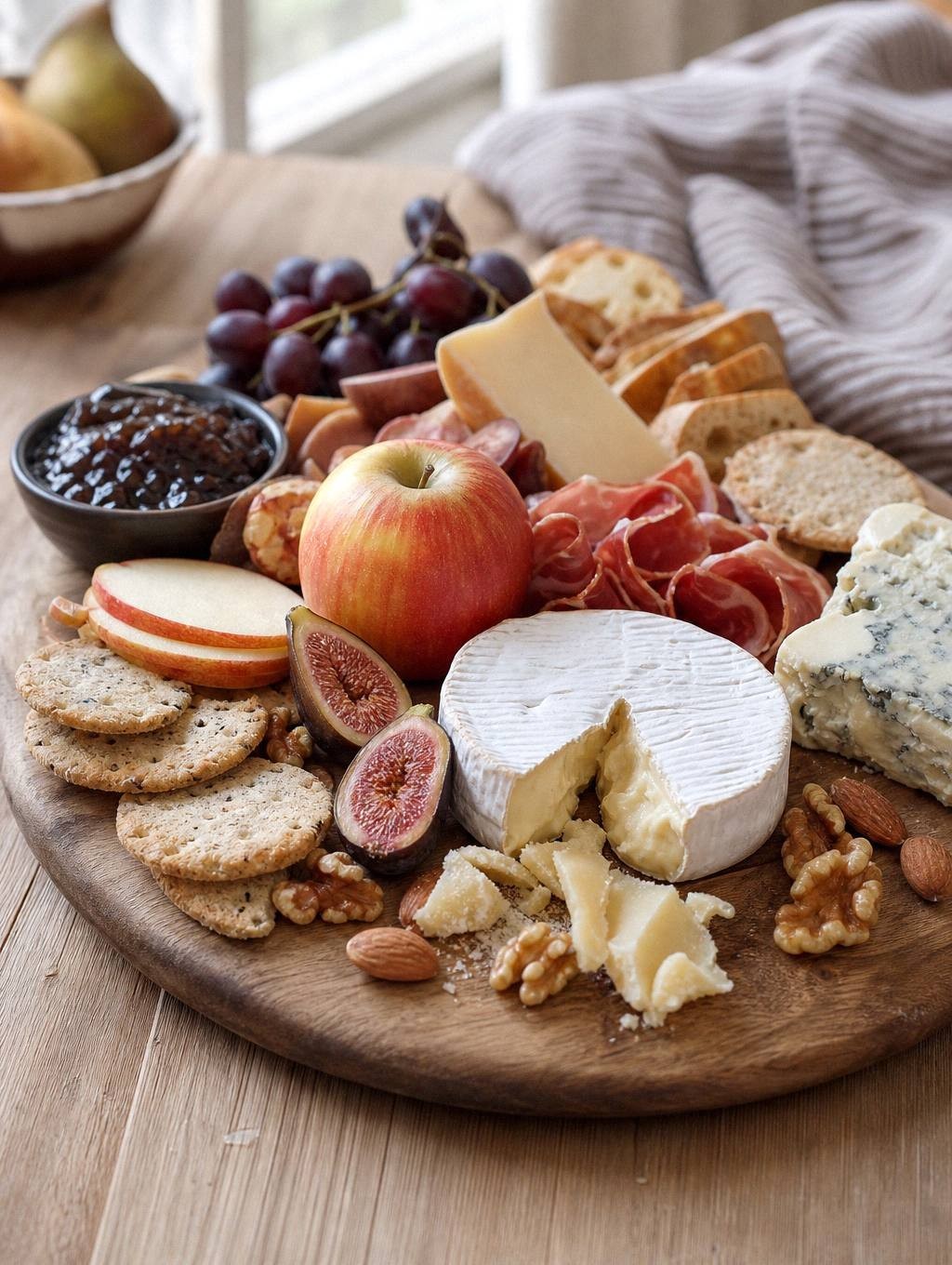
Crisp apples and ripe pears are the backbone of a fall board because they stay firm for hours and their sweetness cuts through rich cheese and salty meat. Slice them just before guests arrive and toss the slices with a squeeze of lemon juice if you’re worried about browning, though most varieties hold their color for an hour or two on their own.
Grapes add pops of color and a juicy contrast to dry crackers. Dried apricots and cranberries work when fresh options look tired at the store, and they won’t brown or leak. Figs are a fall luxury if you can find them fresh, but dried figs soaked in warm water for ten minutes plump up enough to slice and fan across the board.
Ingredients
- Cow’s milk cheeses: 1 or 2 of aged cheddar, Gouda, Brie, most blue cheeses (such as Gorgonzola), Gruyère
- Goat’s milk cheeses: 1 or 2 of fresh chèvre, Bucheron, Humboldt Fog
- Sheep’s milk cheeses: 1 or 2 of Manchego, Pecorino, Parmigiano-Reggiano, Roquefort
- Assorted charcuterie meats: 1 to 3 of prosciutto di Parma, salami, andouille, bresaola, Coppa, spicy Soppressata, and so on
- Fresh seasonal fruits: 1 to 3 of crisp apples, grapes, ripe pears, dried apricots, dried cranberries
- Assorted nuts: 1 generous handful pecans, walnuts, or almonds
- Sweet condiments: 1 or 2 of small bowls of honey, chutney, fig jam, apple butter, pumpkin butter, fruit preserves
- Decorative garnishes: 1 to 3 mini pumpkins (washed), a few generous sprigs of very fresh rosemary, sage, or thyme
- Assorted crackers, crisps, hard pretzels, or slices of fresh bread
Instructions
- Start by placing the cheeses on your board or platter, spacing them evenly to create visual balance.
- Arrange the charcuterie next, folding or rolling slices for added dimension and texture.
- Fill in the remaining spaces with nuts, condiments, and garnishes around the charcuterie and cheeses.
- Layer items at different heights to create an appealing, abundant presentation.
Tip: Place small bowls for wet items like olives or honey to prevent the board from getting messy.
Styling Techniques That Make the Board Look Abundant
Start with your largest items and work down to the smallest so you’re not trying to wedge a wedge of brie into a space that’s already crowded with crackers. Cheeses anchor the layout, meats fill the middle ground, and nuts or berries act as edible grout between everything else.
Layer items with different heights to make the board look full even when you’re not using a ton of food. Stand crackers upright in a small glass, fan salami slices so they overlap, and pile grapes into a mound instead of scattering them flat. A few sprigs of fresh rosemary or sage tucked under the edge of a cheese wedge add color and make the whole thing smell like a holiday.
Use small bowls or ramekins for anything wet or sticky like honey, jam, or apple butter. Spooning condiments directly onto the board looks casual at first but turns into a mess as guests dig in. A tiny spoon in each bowl keeps hands clean and preserves the arrangement longer.
Common Mistakes and How to Fix Them
- Cheese is too cold and hard to spread: Let it sit at room temperature for thirty minutes before serving. Cold cheese tastes muted and tears crackers instead of spreading smoothly.
- Apples turn brown before guests arrive: Slice them no more than an hour ahead and toss with lemon juice, or choose varieties like Granny Smith that oxidize slowly.
- Board looks sparse even with plenty of food: You’ve left too much empty space. Push items closer together and use nuts, dried fruit, or herb sprigs to fill gaps.
- Guests can’t reach items in the center: Place the board where people can walk around at least three sides, or arrange everything within arm’s reach of the edges.
- Crackers get soggy sitting next to wet cheese: Keep crackers in a separate basket or stand them upright in a glass so air circulates around them.
- Meats dry out and curl at the edges: Fold or roll slices instead of laying them flat, and don’t set the board in direct sunlight or near a heat vent.
Frequently Asked Questions
How far in advance can I assemble a fall charcuterie board?
Assemble the board up to two hours before guests arrive and keep it covered loosely with plastic wrap in a cool room, not the refrigerator. Add fresh herbs and any items that brown easily, like sliced apples, in the last thirty minutes. Cheese and charcuterie can sit at room temperature safely for up to two hours total.
What’s the best size board for six people?
A board or platter between 12 and 16 inches across gives you enough room to arrange three or four cheeses, a few meats, and all the accompaniments without crowding. For twelve people, move up to an 18-inch board or use two smaller boards so guests on both ends of the table can reach everything.
Can I make a dessert version of a fall charcuterie board?
Yes. Swap the cheeses and meats for dark chocolate chunks, caramel squares, pumpkin cookies, and cinnamon graham crackers. Add apple slices, dried figs, candied pecans, and small bowls of Nutella or salted caramel sauce for dipping. The same arrangement principles apply.
What crackers pair best with fall flavors?
Choose plain water crackers or seeded flatbreads that won’t compete with the cheese and condiments. Avoid flavored crackers like rosemary or garlic unless you’re certain they complement every cheese on the board. A sliced baguette toasted until just crisp works for guests who want something more substantial.
How do I accommodate guests with dietary restrictions?
Label each cheese and meat with a small card so guests with allergies know what they’re eating. For gluten-free guests, add rice crackers or vegetable slices like cucumber rounds and bell pepper strips. For vegetarians, skip the charcuterie and double the cheese, nuts, and fruit.
What do I do with leftovers?
Wrap cheeses tightly in wax paper or plastic wrap and refrigerate them for up to a week. Store meats separately in an airtight container for three to five days. Toss any fruit that’s been sitting out for more than two hours, and save unopened crackers and nuts in sealed containers.
Conclusion
A fall charcuterie board works because it turns shopping into arranging and arranging into a meal that looks like you tried harder than you did. Buy good cheese, slice some apples, and let the ingredients do the work. Your guests will assume you spent all afternoon on it, and you’ll know you spent fifteen minutes and the rest of the time making sure there’s enough wine.
Printable recipe
Fall Charcuterie Board Ideas
Fall charcuterie board ideas turn seasonal ingredients into a crowd-pleasing centerpiece in fifteen minutes. Fall thanksgiving charcuterie board ideas.
Ingredients
- Cow's milk cheeses: 1 or 2 of aged cheddar, Gouda, Brie, most blue cheeses (such as Gorgonzola), Gruyère
- Goat's milk cheeses: 1 or 2 of fresh chèvre, Bucheron, Humboldt Fog
- Sheep's milk cheeses: 1 or 2 of Manchego, Pecorino, Parmigiano-Reggiano, Roquefort
- Assorted charcuterie meats: 1 to 3 of prosciutto di Parma, salami, andouille, bresaola, Coppa, spicy Soppressata, and so on
- Fresh seasonal fruits: 1 to 3 of crisp apples, grapes, ripe pears, dried apricots, dried cranberries
- Assorted nuts: 1 generous handful pecans, walnuts, or almonds
- Sweet condiments: 1 or 2 of small bowls of honey, chutney, fig jam, apple butter, pumpkin butter, fruit preserves
- Decorative garnishes: 1 to 3 mini pumpkins (washed), a few generous sprigs of very fresh rosemary, sage, or thyme
- Assorted crackers, crisps, hard pretzels, or slices of fresh bread
Instructions
- Start by placing the cheeses on your board or platter, spacing them evenly to create visual balance.
- Arrange the charcuterie next, folding or rolling slices for added dimension and texture.
- Fill in the remaining spaces with nuts, condiments, and garnishes around the charcuterie and cheeses.
- Layer items at different heights to create an appealing, abundant presentation.
Keep browsing
Turn this into the next thing you make

Camille writes about botanical drinks, herbal cocktails, and the old plant wisdom that makes them work. Most days you'll find her in the garden or the kitchen, turning herbs into something worth sipping.