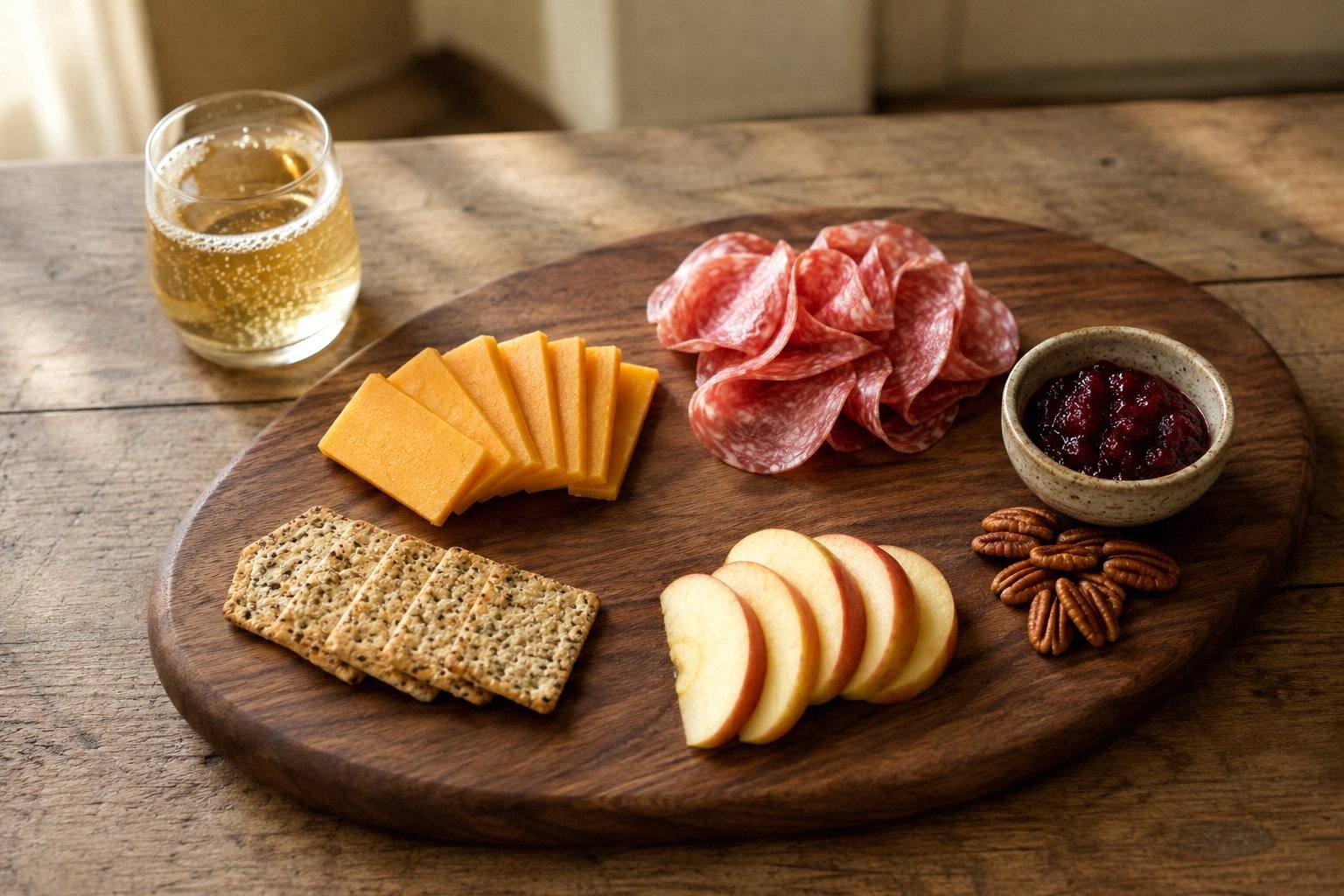
A fall charcuterie board does not need three fancy cheeses and a cart full of tiny jars. Give it five anchors: one cheese, one savory item, one cracker, one fall fruit, and one pantry finish. Arrange those in separate pockets, leave a little board showing, and refill from the kitchen instead of piling everything on at once.
That is the whole budget method. You buy the parts that make the board feel intentional, then let crackers, nuts, pickles, jam, or dried fruit you already own do the filling-in.
The Quick Plan
| Anchor | Start with | Lower-cost move |
|---|---|---|
| Cheese | A wedge or block of cheddar | Slice it yourself instead of buying a prepared cheese tray |
| Savory | Salami, pepperoni, or a hearty meatless bite | Choose one, not a sampler pack |
| Crunch | One dependable cracker | Use a pantry box before buying a second shape |
| Fall fruit | Apples, pears, or grapes | Buy the fruit that looks best that week |
| Pantry finish | Mustard, jam, nuts, olives, or pickles | Open one jar or bowl you already have |
Why Five Anchors Work
The board feels complete when it has contrast, not when every inch is covered.
Cheese brings richness. A savory item brings salt. Crackers give guests something to build on. Fresh fruit keeps the board from feeling heavy. One small bowl of something sharp, sweet, or crunchy makes the choices feel connected.
Those five jobs are easier to shop for than a long ingredient list. They also keep you from buying several versions of the same thing just because a large inspiration board had them.
1. Choose One Cheese That Can Carry the Board
For a first board, cheddar is hard to beat. It works with apples, pears, mustard, salami, pecans, and cider. A block also gives you more control over the presentation. Cut some pieces into slim rectangles and leave a small portion in a wedge so the board looks varied without requiring a second cheese.
If brie or goat cheese is on sale and you know your guests like it, use it. The budget rule is not “buy the cheapest cheese.” It is “buy one cheese with several good partners before buying three cheeses that compete for attention.”
2. Pick One Savory Item
Salami is familiar and easy to fold into loose ribbons. Pepperoni can be even simpler, especially for a casual game night or family gathering. If you want a meatless board, use roasted chickpeas, marinated white beans, or a firm baked dip as the savory anchor.
You do not need a meat rose. Loose folds and small overlapping stacks look natural, are easy to grab, and are less likely to turn the board into a craft project ten minutes before guests arrive .
3. Use One Cracker, Then Refill It
A board looks calmer when the crackers repeat in two small groups instead of becoming a wall around the edge. Put out part of the box and keep the rest close by. A refill takes seconds, and crackers stay crisper in the package than they do sitting beside juicy fruit.
If you already have two open boxes, use both. This is pantry-first, not pantry-perfect.
4. Let Fall Fruit Do the Visual Work
Apples and pears give you color, shape, and an obvious link to cider. Grapes are useful when you want something guests can pick up without a knife. Choose one or two fruits, not a produce aisle.
Dip sliced apples or pears in lightly salted water for a few minutes, drain them well, and pat them dry before arranging. The surface should be dry enough that it does not soften the crackers beside it.
5. Add One Pantry Finish
This is the small bowl that makes the board feel finished. It might be cranberry preserves, grainy mustard, apple butter, pickles, olives, toasted nuts, or the last handful of dried cherries in a pantry bag.
Choose the finish after the first four anchors. If the board is rich and salty, add something sharp or sweet. If it already has sweet fruit, add mustard, pickles, or olives.
Shop Your Kitchen Before the Store
Take five minutes and pull out anything that could fill one of the anchor jobs. Check the refrigerator door, snack shelf, baking cabinet, and fruit bowl.
Useful finds include:
- half a jar of jam, mustard, olives, or pickles
- pecans, walnuts, almonds, or roasted seeds
- dried cranberries, cherries, apricots, or raisins
- an open box of sturdy crackers
- apples or pears that need to be used
- a block of cheese large enough to cut in two different shapes
Now write the grocery list around the missing jobs. If you already have crackers, fruit, and mustard, you are shopping for cheese and one savory item, not “a charcuterie board.” That wording shift alone makes the trip easier to control.
How to Arrange It Without Making It Look Sparse
Start with the small bowl slightly off center. Place the cheese on the opposite side, then add the savory item in a loose curved pocket. Put crackers in two short rows. Finish with two compact fruit groups and a small scattering of nuts only where a gap genuinely needs it.
Keep the groups recognizable. Cheese should look like cheese, and crackers should be easy to lift without excavating them from grapes. A little visible wood between groups gives the eye somewhere to rest. It also makes the board look more believable than an overflowing, perfectly symmetrical spread.
If the board still feels too large, use a smaller board. The cheapest way to make food look abundant is to give it the right-sized surface.
Three Fall Combinations That Do Not Require a Huge Shopping List
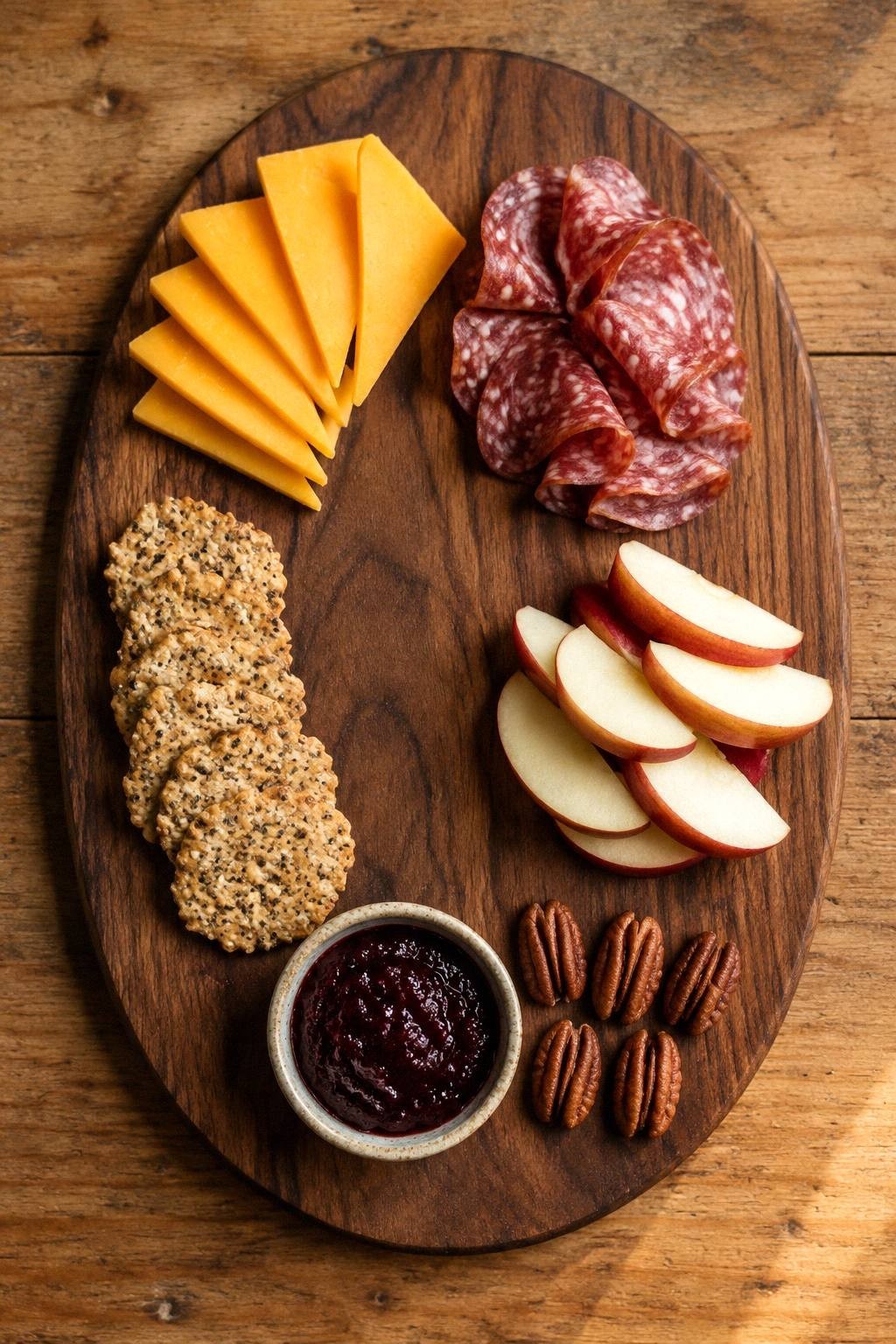
Cheddar, Apple, and Salami
Use sharp cheddar, salami or pepperoni, sturdy crackers, crisp apple slices, and grainy mustard. Add pecans if they are already in the pantry.
Pour with it: cold sparkling apple cider. The bubbles and acidity are welcome beside cheddar and cured meat.
Brie, Pear, and Cranberry
Use one small wheel or wedge of brie, crackers, pear slices, cranberry preserves, and walnuts. Add a few folds of salami only if you want the savory contrast.
Pour with it: a dry or lightly sweet apple cider. If the preserves are quite sweet, keep the drink on the drier side.
Goat Cheese, Apple Butter, and Toasted Nuts
Use goat cheese, plain crackers, apple slices, apple butter, and toasted pecans or walnuts. A few pickles on the side keep the combination from leaning too sweet.
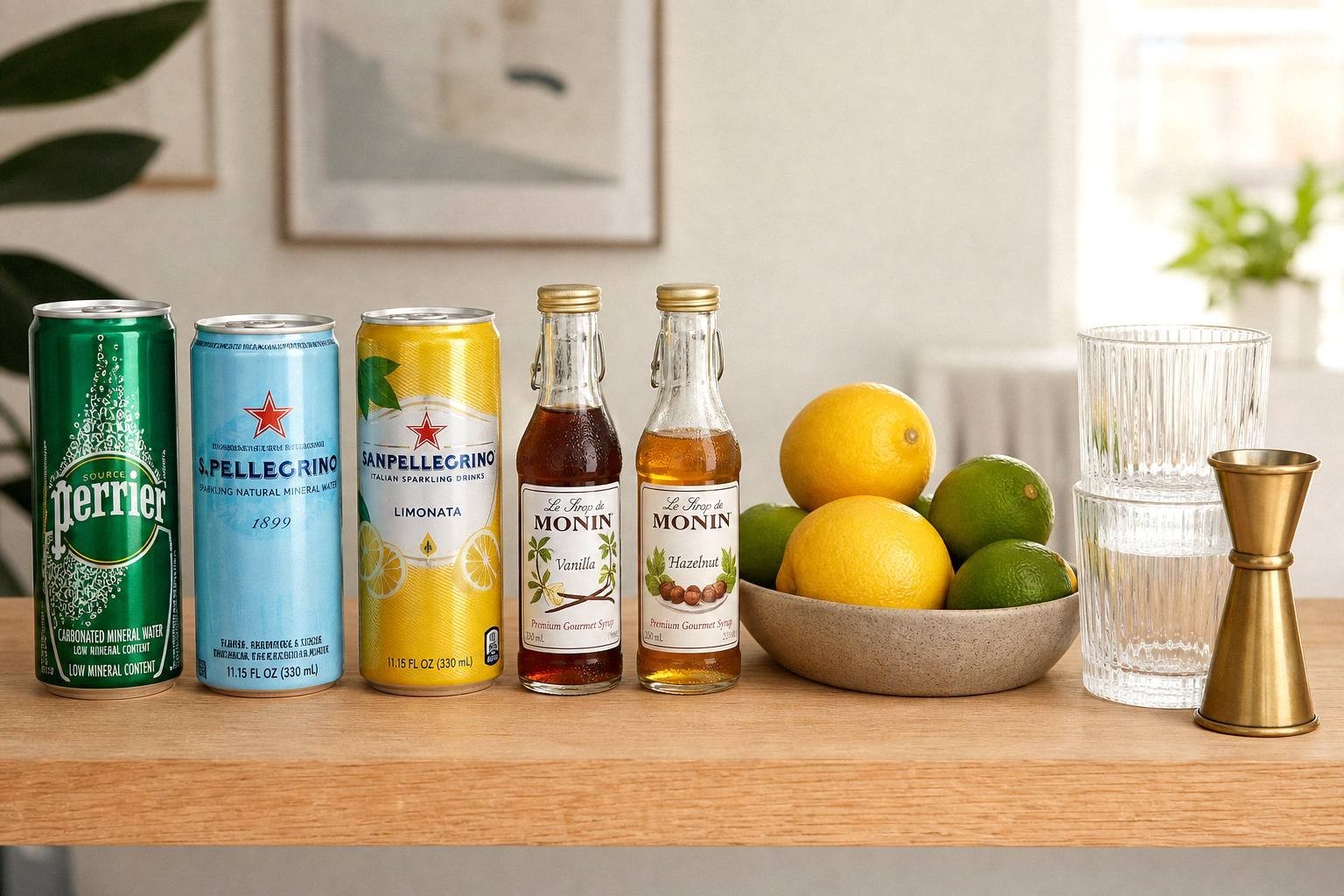
Pour with it: sparkling water topped with a short pour of apple cider and a squeeze of lemon, or a simple bourbon-and-cider drink for guests who want a cocktail.
Make the Cider Feel Like Part of the Board
You do not need a separate drink menu. Pick one cider lane and give guests an easy optional add-on.
- Zero-proof: chilled apple cider plus plain sparkling water
- Tart: apple cider plus cranberry juice and sparkling water
- Cocktail: apple cider plus a modest pour of bourbon, served over ice
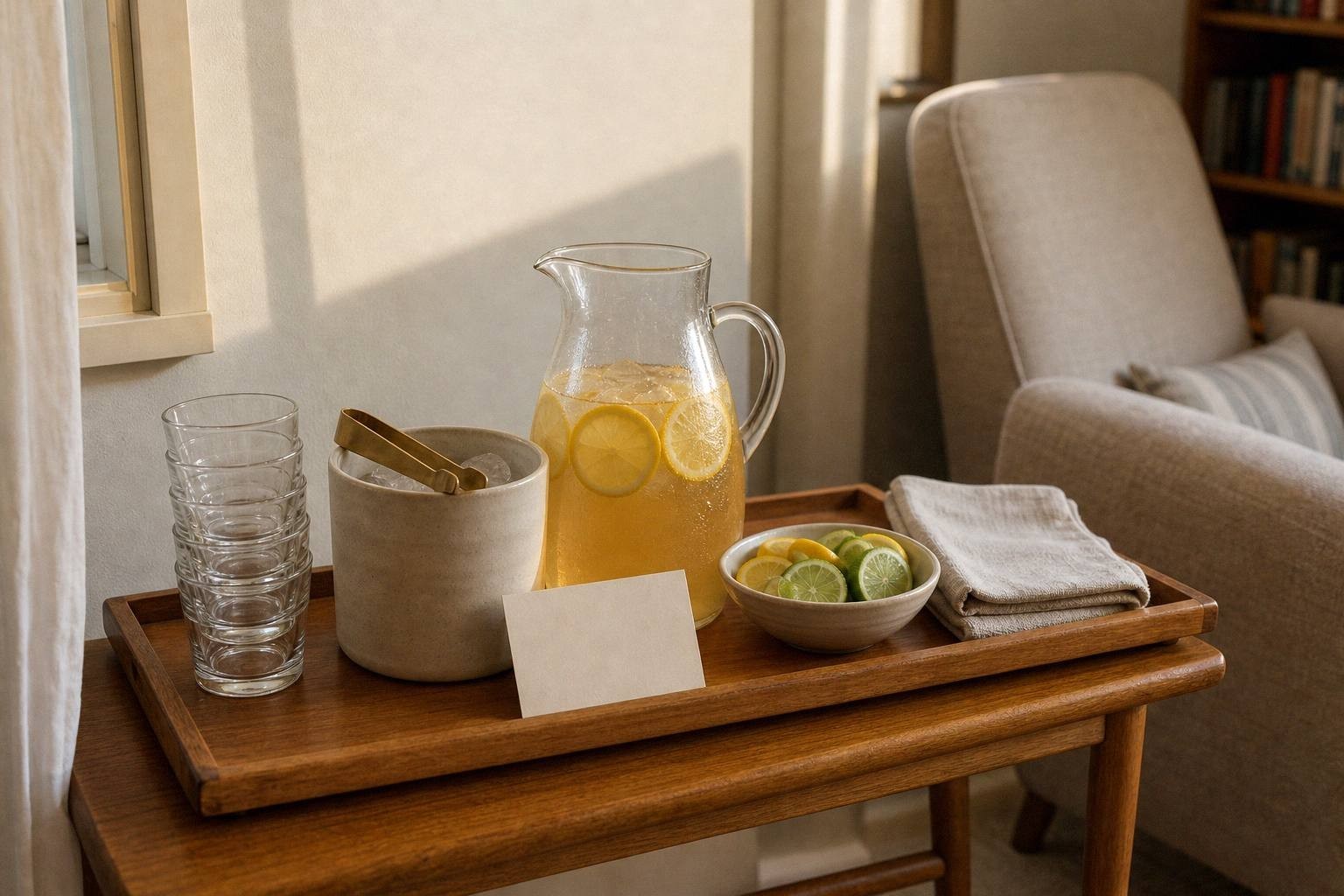
Put the cider in one pitcher or carafe and keep the sparkling water cold. If bourbon is offered, leave it in its bottle with a jigger instead of pre-mixing the whole pitcher. Guests can choose their own strength, and the zero-proof drink stays truly separate.
For a spirit-forward fall option after the board, the Maple Bourbon Old Fashioned with black walnut bitters uses a measured teaspoon of maple instead of turning the drink into dessert.
What to Prep Ahead
The night before, wash the fruit, portion nuts, choose the bowl, and set aside the board and knife. You can also cut firm cheese and refrigerate it in a covered container.
Shortly before serving, fold the meat, add the cheese, fill the small bowl, and arrange the crackers. Slice apples and pears last. Keep extra crackers and fruit off the board for quick refills.
Do not leave meat, cheese, or cut fruit sitting out all afternoon. FoodSafety.gov says perishable foods should not stay out of refrigeration for more than two hours, or more than one hour when the temperature is above 90°F. If the gathering will run long, put out a smaller amount and refill it from the refrigerator. Read the federal food-safety guidance .
Common Budget-Board Mistakes
Buying Variety Before Buying Enough
One useful block of cheddar is better than three tiny cheese ends that disappear after four guests. Cover the five jobs first. Add variety only when it serves the group.
Choosing the Board Before the Food
A very large board creates pressure to fill space. Lay out the unopened ingredients on the counter first, then choose the surface that fits them.
Using Fruit as Decoration Instead of Food
Guests should be able to reach the apple or grapes without moving a bowl. Keep the fruit in practical clusters and refill it when needed.
Letting Every Ingredient Touch
Crackers soften beside wet fruit and pickles. Leave a small gap, use a bowl, or put the wet item on a separate little plate.
Spending on Tiny Jars You Already Own in Another Form
The mustard in your refrigerator and the nuts in your baking cabinet do not need prettier packaging to belong on the board.
Final Board
Start with the pantry, buy the missing anchors, and let one cheese do more work. A fall charcuterie board can look generous with five clear groups, a little breathing room, and a cold cider that makes the whole table feel connected.
That is a board worth refilling, not overbuilding.
Download the four-page Budget Charcuterie Board Builder for a shopping checklist, quantity guide, and lower-cost swaps.