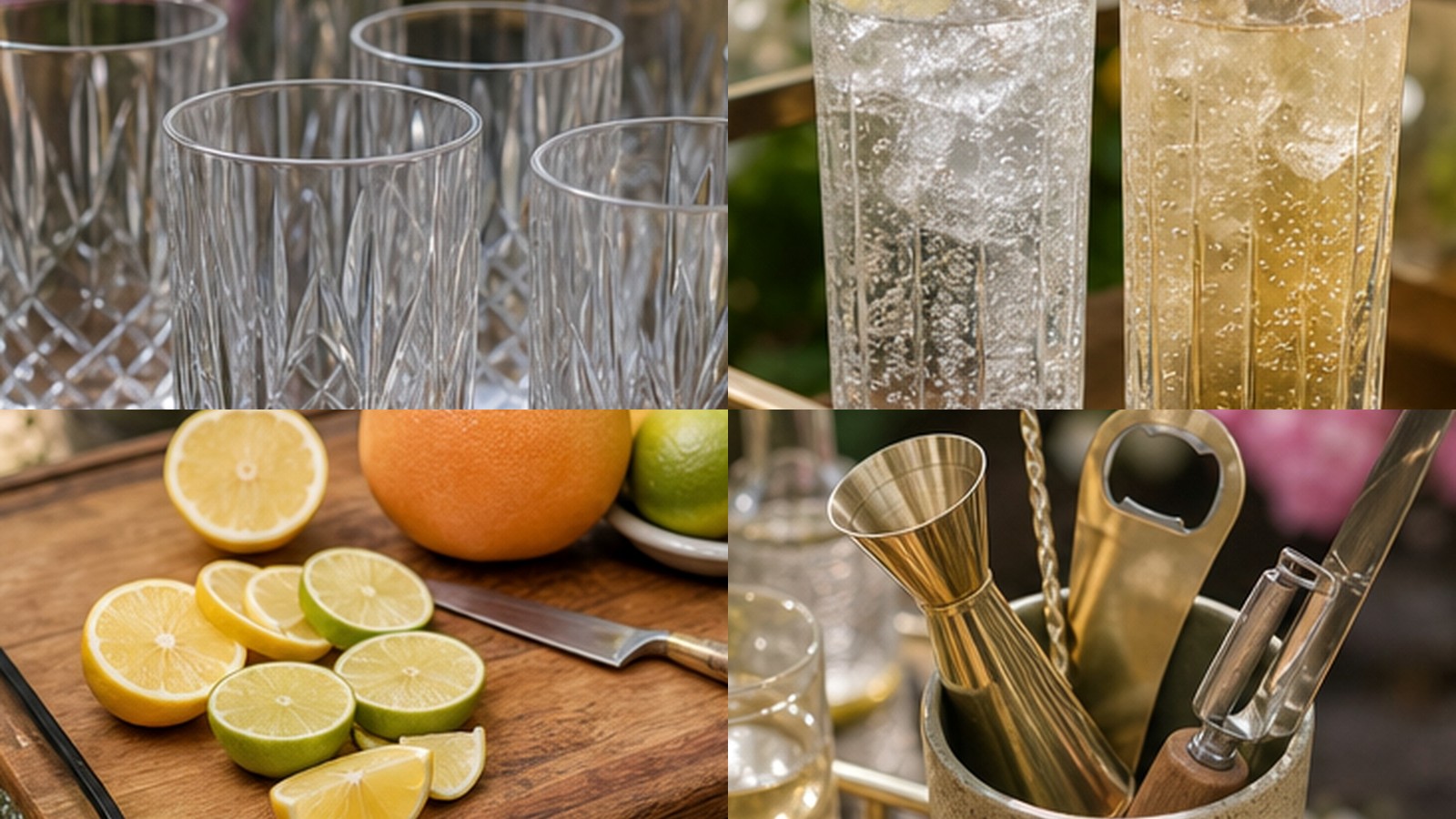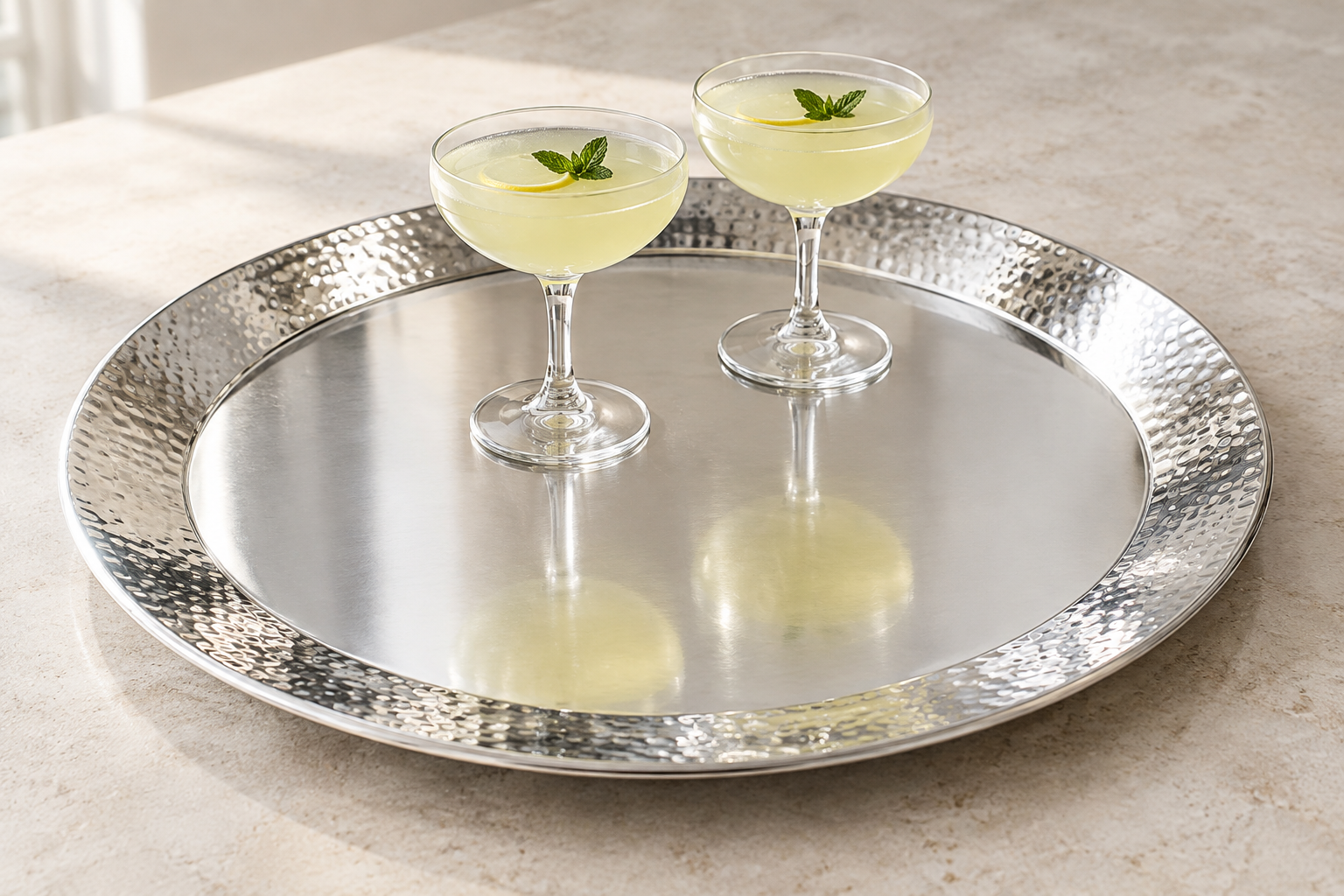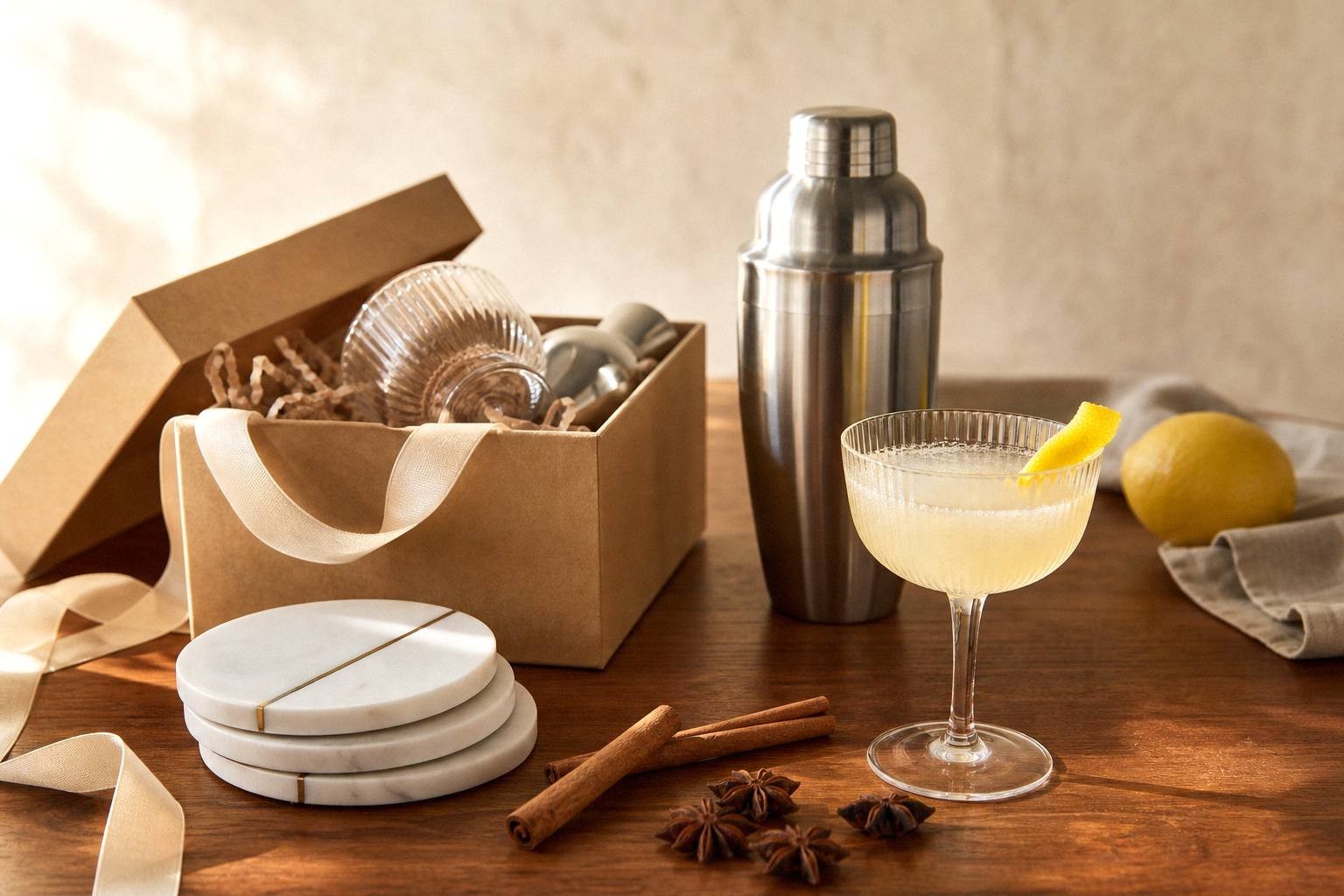
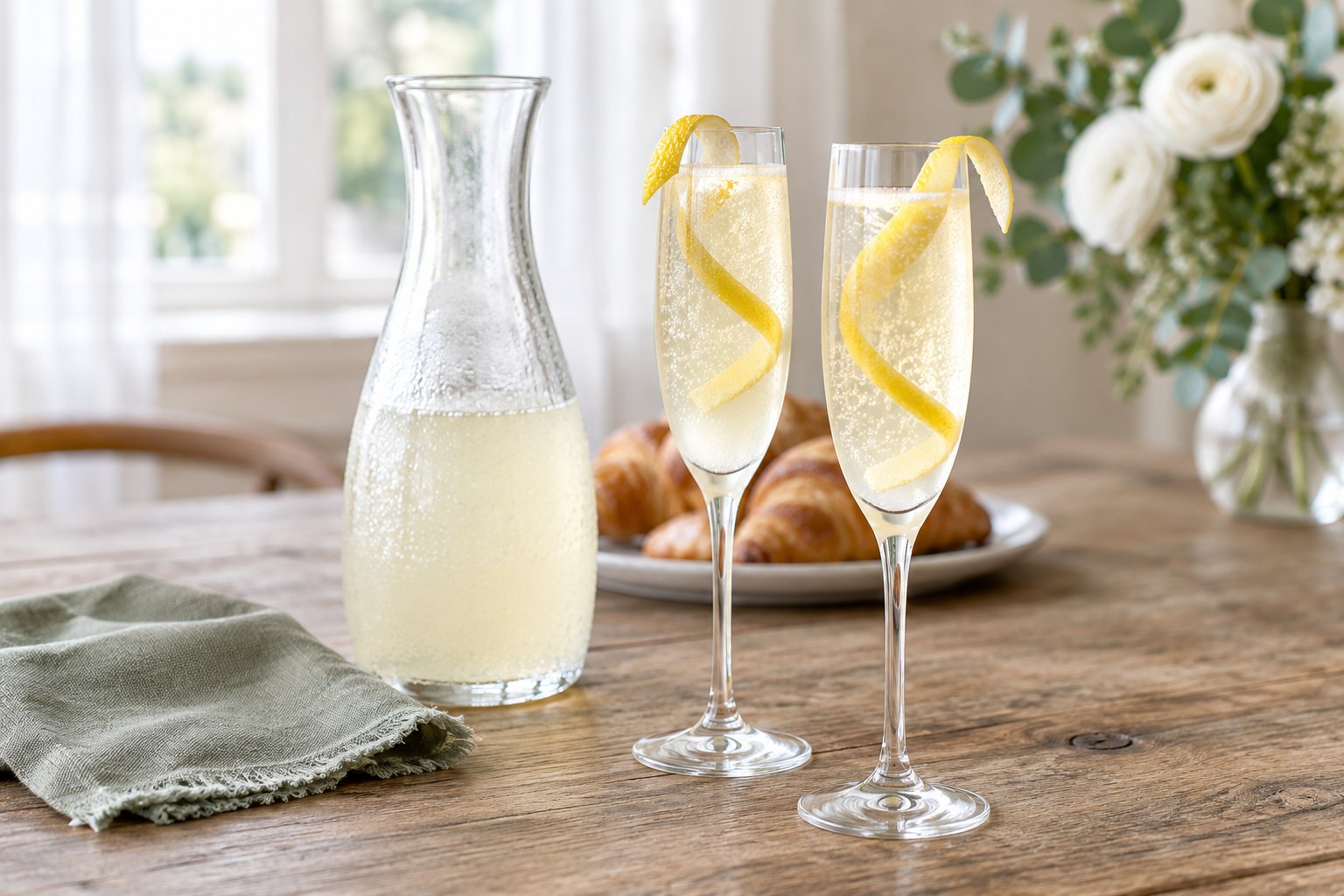
A French 75 is the easiest upgrade over plain mimosas for bridal showers, Sunday brunch, and New Year’s Eve. Gin brings crisp juniper and citrus botanicals, fresh lemon juice keeps every sip lively, and dry Champagne lifts the glass into something celebratory without tasting syrupy.
Best of all, the batch math is practically built for a 750-ml wine bottle. Scaling Taste of Home’s verified French 75 (1 ounce gin, 1/2 ounce fresh lemon juice, 1/2 ounce simple syrup, and 3 ounces Champagne per glass) by an exact 8x multiplier yields 16 ounces of chilled gin-lemon base and calls for 24 ounces of Champagne, matching one standard 750-ml bottle (25.36 ounces) with zero half-open flat wine left behind. You can also check BBC Good Food’s slightly drier French 75 (30 ml gin, 20 ml lemon juice, 10 ml sugar syrup) if your crowd prefers less sweetness. Browse more sparkling pitchers in our punch and batch drinks hub , or set up brunch nibbles beside the flutes from our charcuterie boards hub .
Why the “Chilled Base + Bottle Top-Off” Method Beats Pre-Mixing Bubbles
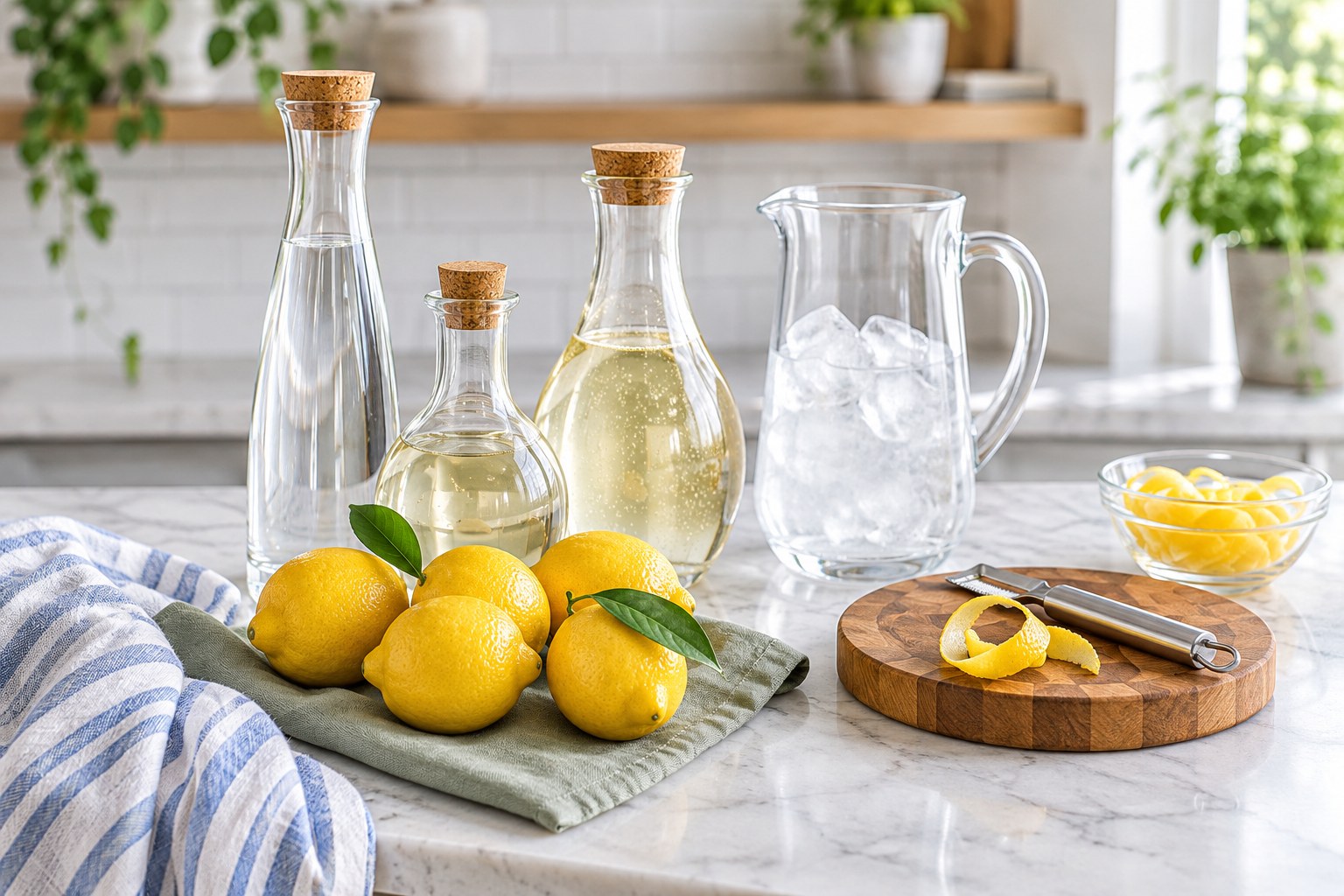
You can certainly pour a whole bottle of chilled Champagne straight into a glass pitcher of cold gin-lemon base when all eight guests are standing around the table ready to toast at once. If guests trickle in over an hour, though, sparkling wine sitting in an open pitcher loses half its carbonation in thirty minutes.
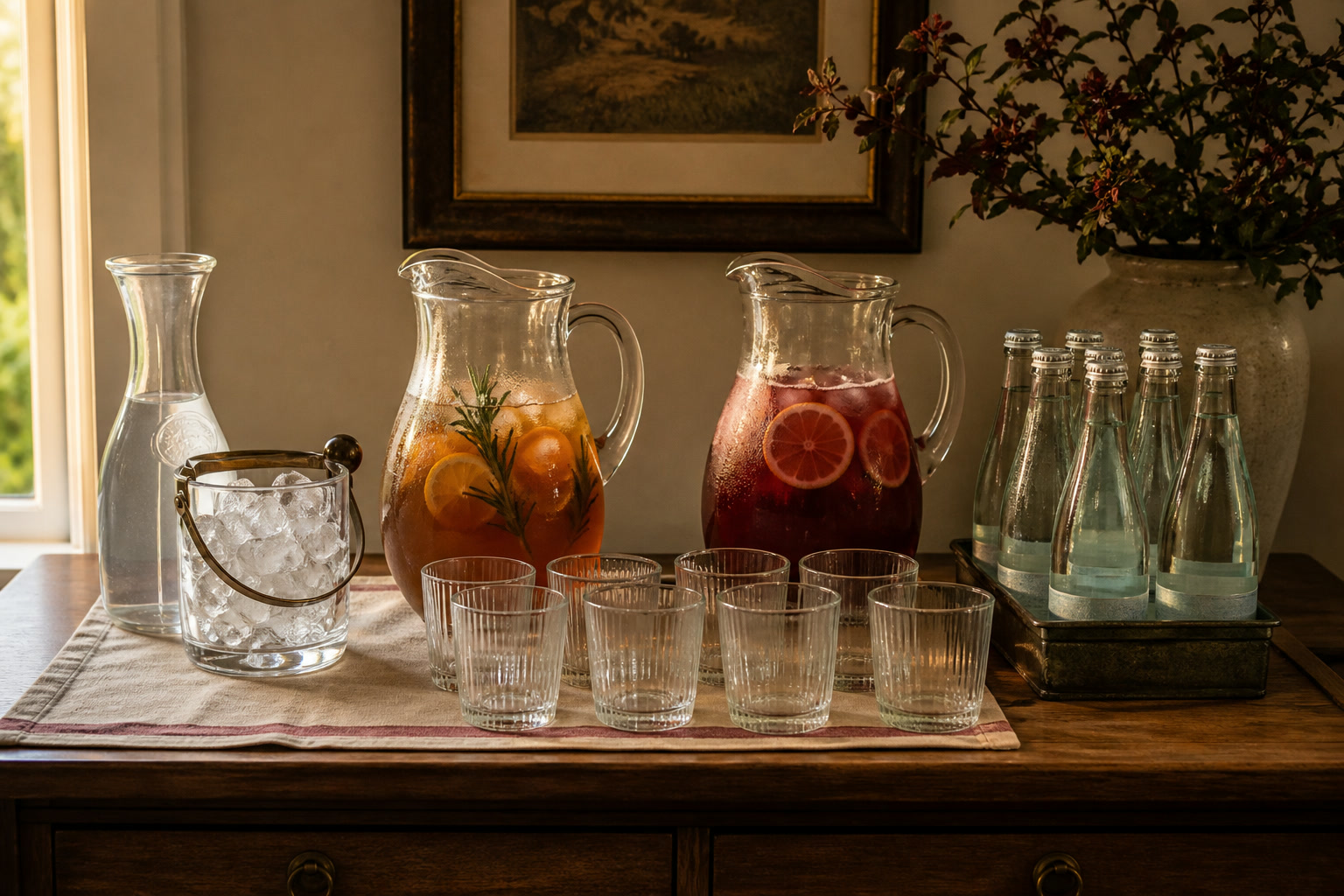
The pro brunch workaround takes the exact same effort with far better fizz: chill the 16-ounce gin, lemon juice, and simple syrup base in a sleek glass carafe, set an open chilled bottle of Champagne in an ice bucket right next to it, and place a small tent card beside the flutes: “Pour 2 oz Chilled Gin-Lemon Base, Top With 3 oz Champagne, Add a Lemon Twist.” Every single guest, from the first arrival to the latecomer an hour later, gets needle-sharp bubbles.
Seasonal Fall & Holiday Twist: The Dry Pear 75 Swap
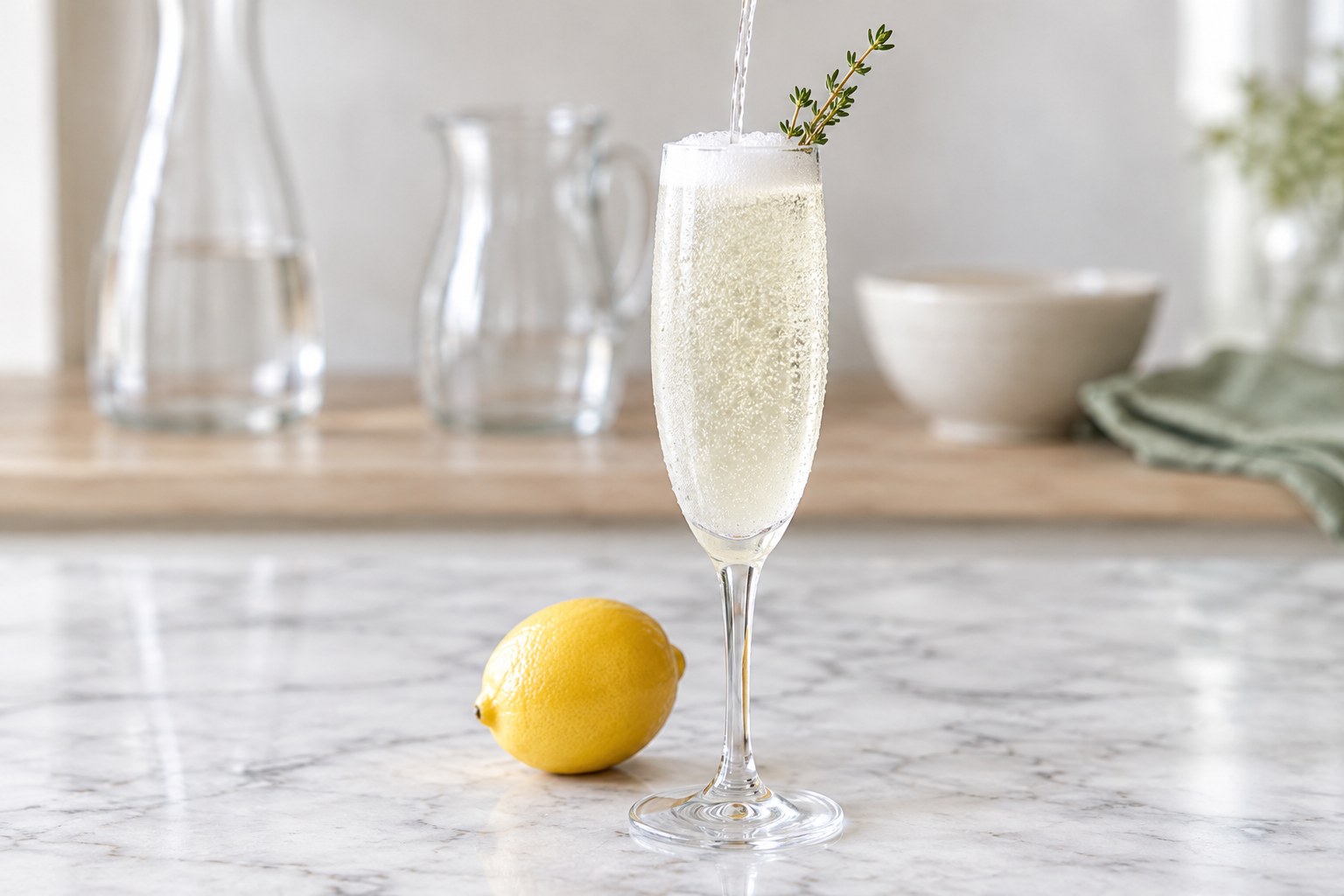
For autumn showers, Thanksgiving pre-dinner toasts, or winter brunches, you can turn the exact same verified French 75 gin-lemon base into a Pear 75 without inventing unproven syrup formulas:
- Dry Sparkling Pear Cider (Poire) 1:1 Swap: Replace the 24 ounces of dry Champagne with one chilled 750-ml bottle of dry French Normandy poire (sparkling pear cider) or crisp dry sparkling perry, keeping the exact 2-ounce gin-lemon base to 3-ounce sparkling top-off ratio. Dry pear cider shares the fine bubbles and crisp acidity of Brut sparkling wine while adding clean orchard-pear aroma that pairs naturally with botanical gin.
- Fresh pear garnish: Fan two paper-thin slices of ripe Bartlett or Bosc pear onto the rim or drop a crisp pear wedge beside the lemon peel strip right before pouring.
- Want a dedicated pear gin cocktail or zero-proof pear toast? Try our Vanilla Pear Gin Fizz or set out our Sparkling Vanilla Pear Mocktails alongside the flutes.
Ingredients
- 8 ounces (1 cup) gin
- 4 ounces (1/2 cup) fresh lemon juice, strained
- 4 ounces (1/2 cup) simple syrup
- 24 ounces (1 chilled 750-ml bottle) dry Champagne, Cava, or Brut sparkling wine
- Ice cubes, for chilling the base
- 8 lemon peel strips, for garnish
Instructions
- In a chilled glass pitcher, stir together the gin, strained fresh lemon juice, and simple syrup until completely combined.
- Cover and refrigerate the gin-lemon base for at least 1 hour (or up to 6 hours) so it is thoroughly cold. If serving immediately, stir the base briefly with a handful of ice cubes for 15 seconds, then strain into a clean chilled pitcher.
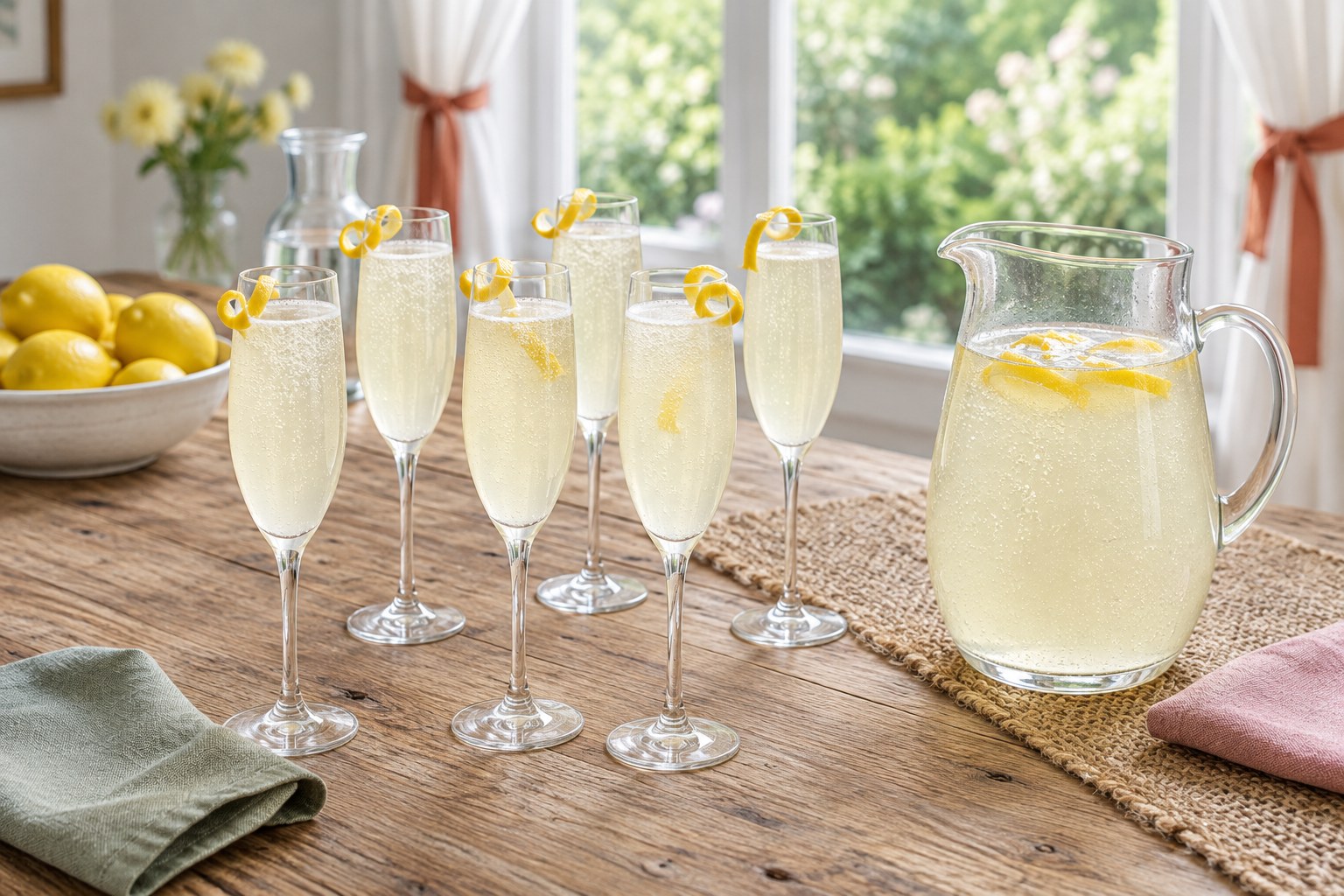
- To keep bubbles lively for a crowd, pour 2 ounces of the chilled gin-lemon base into each chilled Champagne flute or coupe, then slowly top each glass with 3 ounces of chilled Champagne (or slowly pour the chilled bottle into the pitcher right before immediate pouring).
- Garnish each glass with a fresh lemon peel strip twisted lightly over the surface and serve immediately.
Batch Scaling and Bottle Top-Off Table (8, 16, and 24 Guests)
Every column below scales Taste of Home’s single-serve French 75 directly by 8x, 16x, and 24x. Notice how cleanly every 8 guests maps to one exact 750-ml bottle of sparkling wine.
| Ingredient | 8 Guests (8x / 1 Bottle) | 16 Guests (16x / 2 Bottles) | 24 Guests (24x / 3 Bottles) |
|---|---|---|---|
| Gin | 8 oz (1 cup) | 16 oz (2 cups) | 24 oz (3 cups / ~1 750-ml bottle) |
| Fresh lemon juice, strained | 4 oz (1/2 cup / ~3 lemons) | 8 oz (1 cup / ~6 lemons) | 12 oz (1 1/2 cups / ~9 lemons) |
| Simple syrup | 4 oz (1/2 cup) | 8 oz (1 cup) | 12 oz (1 1/2 cups) |
| Total chilled base volume | 16 oz (2 cups) | 32 oz (4 cups) | 48 oz (6 cups) |
| Chilled Champagne / Cava / Dry Poire | 24 oz (1 bottle, 750 ml) | 48 oz (2 bottles, 750 ml) | 72 oz (3 bottles, 750 ml) |
| Lemon peel strips (garnish) | 8 strips (2 lemons) | 16 strips (3 to 4 lemons) | 24 strips (5 to 6 lemons) |
Make-Ahead and Sparkling Timing Table
Chill both the base carafe and every bottle of sparkling wine overnight so you get maximum carbonation and zero frantic last-minute shaking.
| Timing | Prep Task | Why It Matters |
|---|---|---|
| 12 to 24 hours ahead | Make and chill simple syrup; refrigerate Champagne bottles and gin | Cold wine foams far less on contact with lemon juice and stays fizzy longer |
| 4 hours ahead | Peel lemon strips first with a Y-peeler (store wrapped in a damp towel in the fridge), then juice and fine-strain the lemons; mix gin, lemon juice, and simple syrup in a sealed carafe | Fine-straining out pulp stops sparkling wine from foaming wildly when poured |
| 30 minutes ahead | Place Champagne flutes or coupes in the refrigerator; fill an ice bucket halfway with ice and cold water for the Champagne bottles | Ice-plus-water chills wine bottles twice as fast as dry ice cubes alone |
| At serving time | Set out the chilled base carafe with a 2-oz jigger, pop one sparkling bottle at a time, and pour gently down tilted flutes | Guarantees crisp carbonation for both early and late guests |
Vessel, Fizz, and Ice Strategy
- Double-strain the lemon juice: Taste of Home’s recipe notes double-straining through a fine-mesh sieve for a reason. Tiny lemon pulp fibers act like Mentos in soda, causing Champagne to erupt into foam as soon as it hits the base. Strain the lemon juice through a fine mesh before mixing your carafe.
- Never put ice inside the flutes or pitcher: A French 75 is served up in chilled stemware with zero ice cubes. Chill the base and bottles hard in the fridge beforehand (or stir the base briefly over ice and strain it into a clean cold carafe if you didn’t have an hour to chill).
- Use Brut sparkling wine, Cava, or dry Prosecco: Sweet sparkling wines like Moscato or Asti clash with the simple syrup in the base and turn the drink cloying. Spanish Brut Cava delivers Champagne-like crispness at an everyday party price.
- Pause halfway on the Champagne pour: Follow BBC Good Food’s step: pour half the sparkling wine, wait 3 seconds for the initial foam collar to settle, then top up the flute cleanly.
- Planning a big celebratory table? Pair this bright citrus flute with our Hugo Spritz pitcher or set up a chilled punch bowl with a decorative fruit ice ring .
Zero-Proof Twin and Troubleshooting
Keep a matching flute option on the exact same table by mixing a simple zero-proof base (4 ounces strained fresh lemon juice plus 4 ounces simple syrup, chilled) and setting a chilled bottle of non-alcoholic sparkling wine or dry sparkling pear cider beside it so non-drinking guests pour 1 ounce of lemon-syrup base and top with 4 ounces of cold bubbles. You can also serve our non-alcoholic mimosa pitcher right next to the French 75 station.
- Drinks foam over the top of the glass: Either the lemon juice wasn’t fine-strained, the Champagne wasn’t chilled overnight, or the wine was poured too fast straight down the center. Fine-strain juice, tilt the flute 45 degrees, and pause halfway through the pour.
- French 75 tastes too tart: Swap from extra-brut Champagne to standard Brut, or add 1 additional tablespoon of simple syrup to an 8-drink base carafe and stir before pouring.
- French 75 tastes too sweet: Use BBC Good Food’s drier ratio (cutting simple syrup from 1/2 ounce down to 1/3 ounce per drink) and stick strictly to Brut Cava or Brut Champagne.
- Gin flavor feels too pine-forward for brunch guests: Choose a lighter, citrus- or floral-leaning modern gin rather than an aggressively juniper-heavy bottle, or try our St-Germain Elderflower French 75 .
Frequently Asked Questions
Can I substitute vodka or cognac for gin in a French 75 pitcher?
Yes. Replacing gin 1:1 with cognac or brandy gives you the classic French 75 variation popular in New Orleans bars, while replacing gin 1:1 with neutral vodka gives a cleaner, lighter “French 76” for guests who dislike juniper.
How far in advance can I mix the gin, lemon juice, and simple syrup base?
Up to 6 to 8 hours ahead in a tightly sealed glass bottle or carafe in the refrigerator. Fresh lemon juice loses its sharp aroma after 24 hours, so juice the lemons the morning of your brunch or evening party.
What glasses should I use for a big-batch French 75?
Standard 6-ounce Champagne flutes or coupe glasses work best. Flutes preserve bubbles longest, while coupes showcase a wide lemon peel strip neatly. Avoid oversized wine goblets, which invite double pours and drain your sparkling wine twice as fast.
How many bottles of Champagne do I need for 24 guests?
Plan on 3 bottles (750 ml each) for one round of 24 French 75s, or 5 to 6 bottles if your party runs two hours and most guests will pour a second flute.