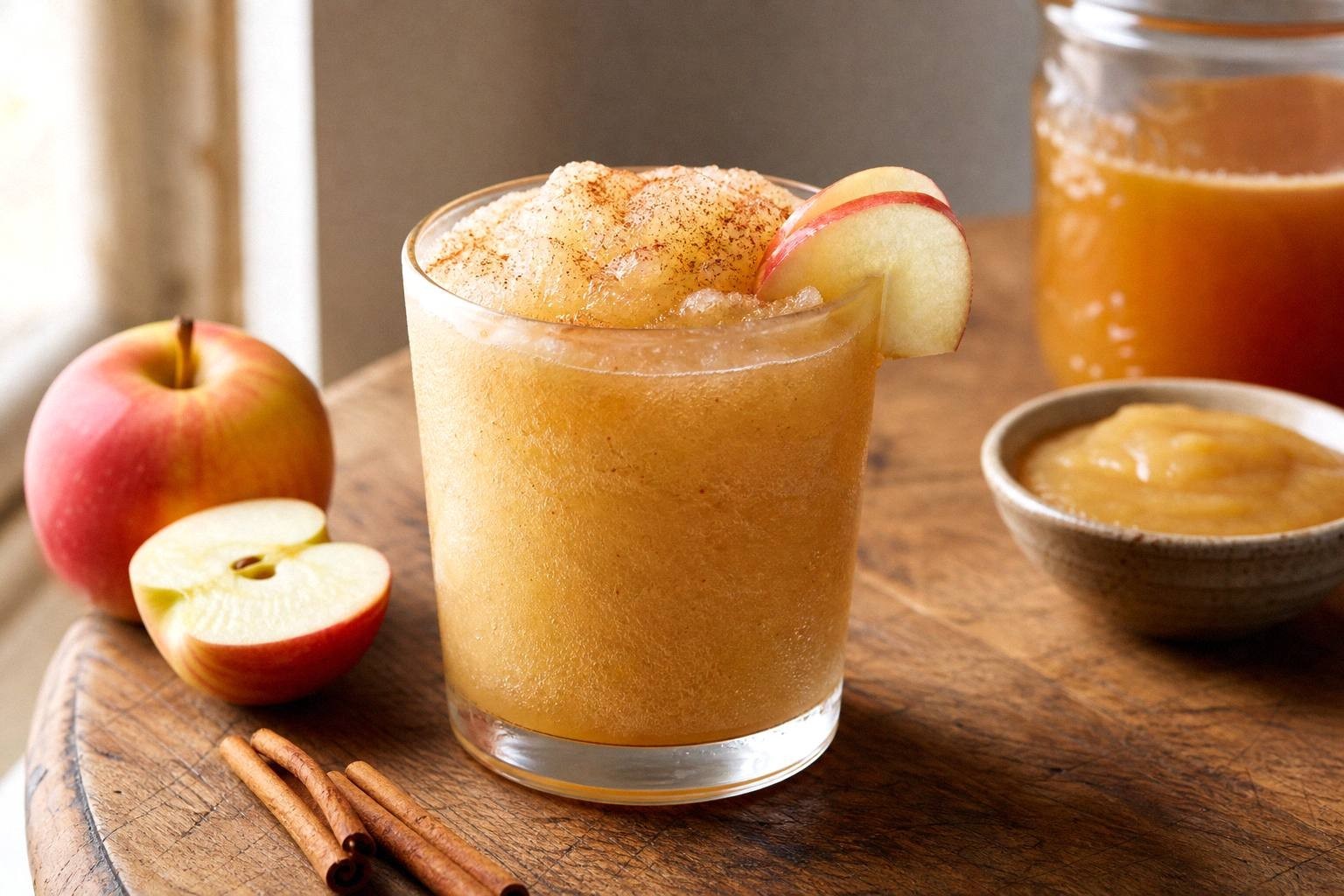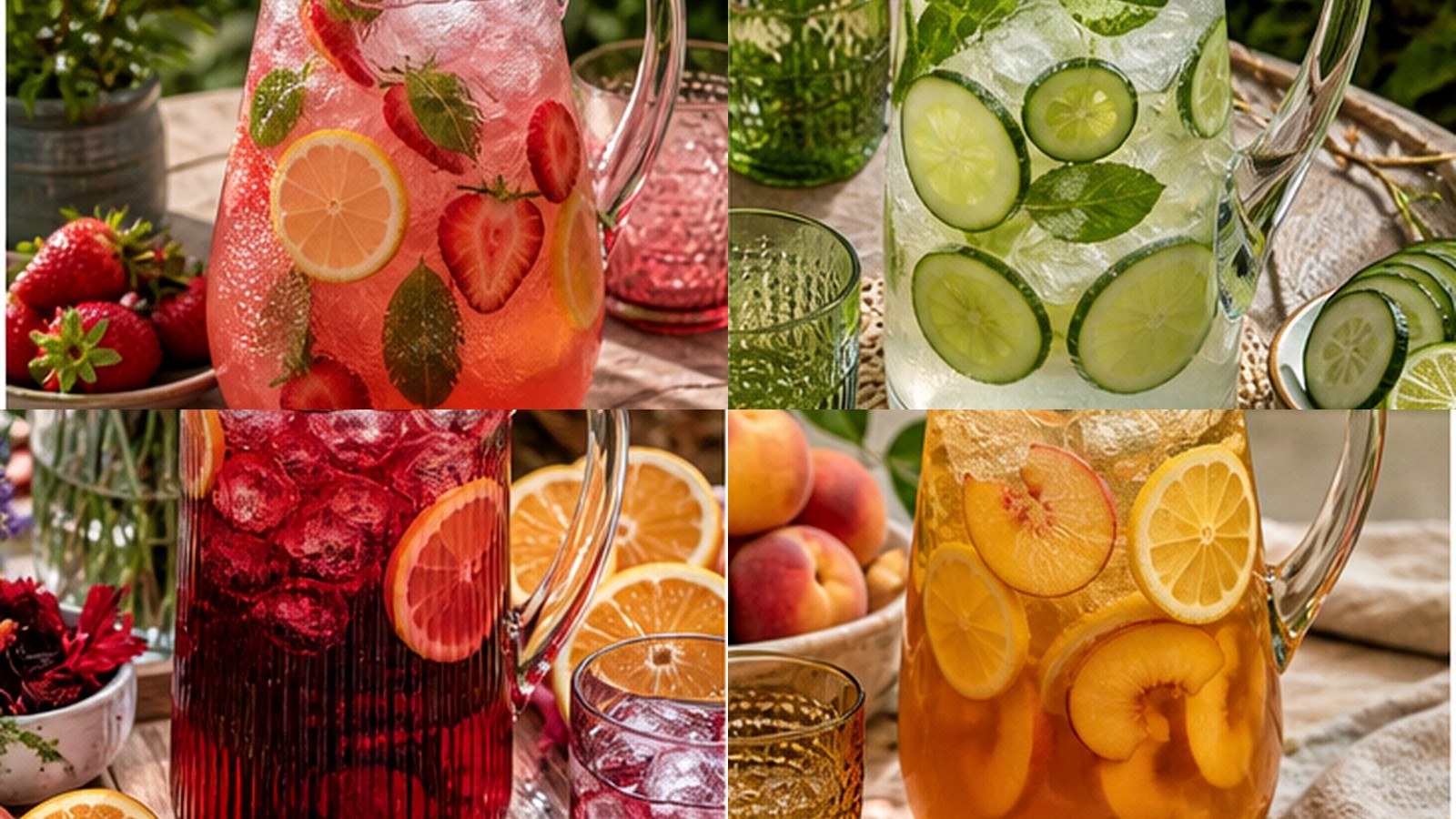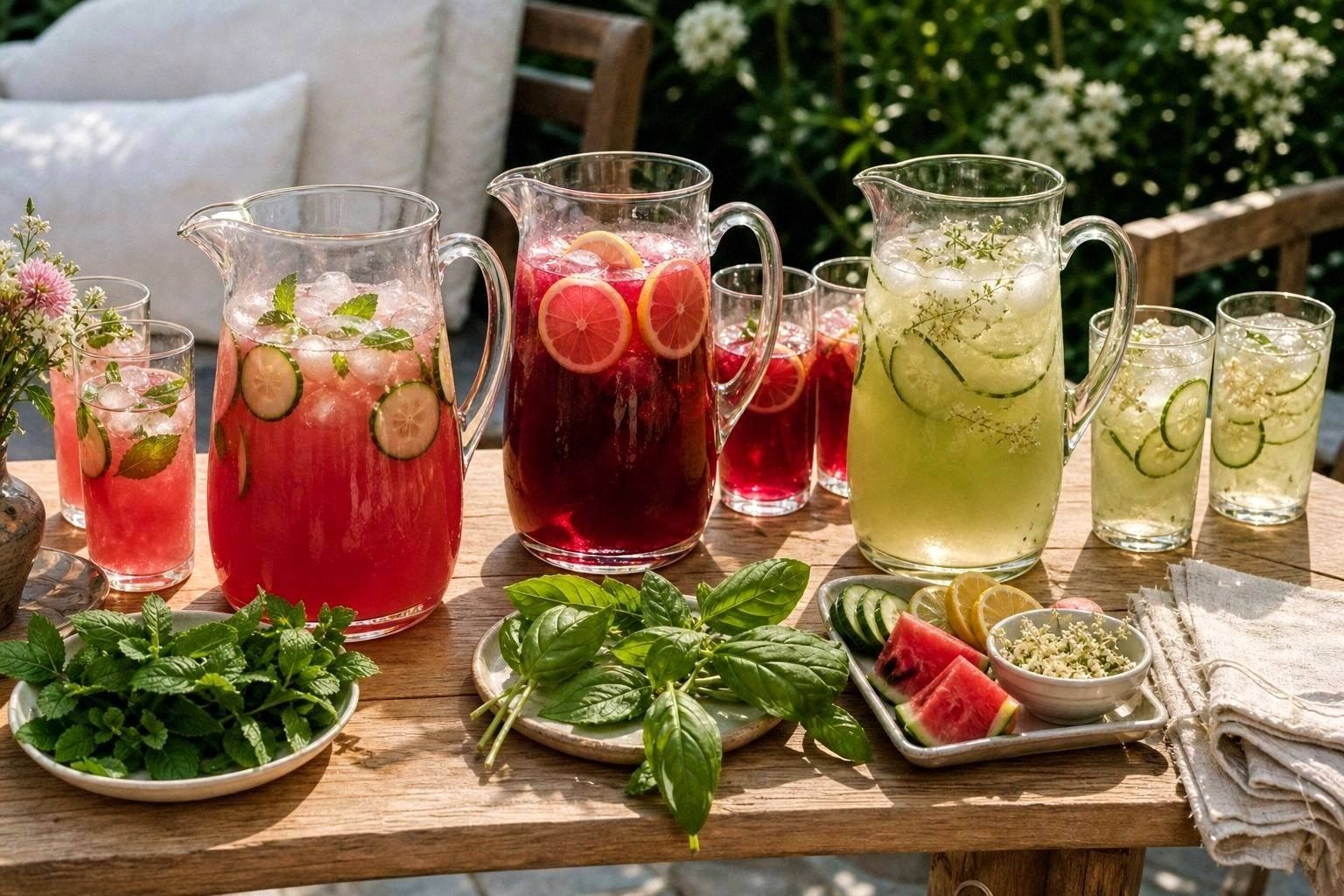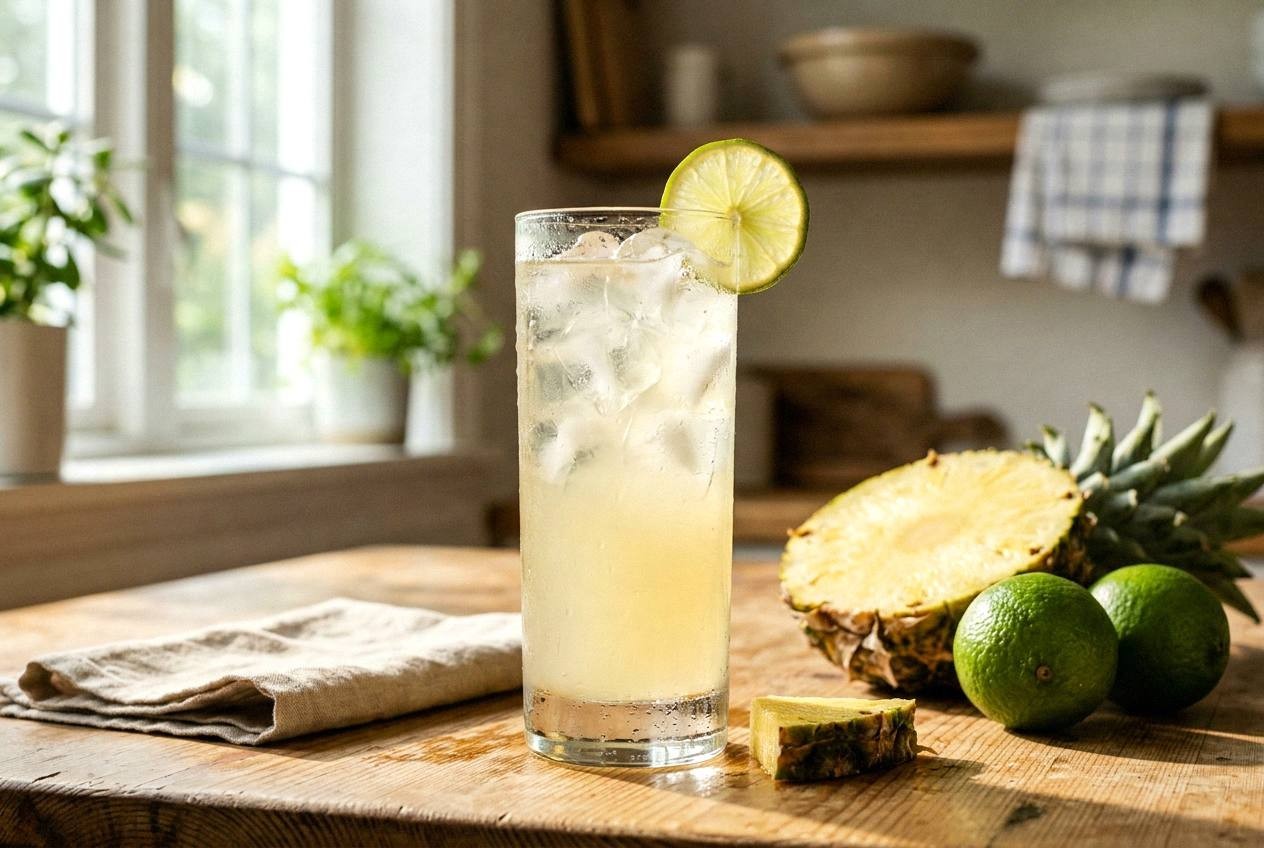
The first frozen mocktail of the year usually happens by accident. There is too much fruit on the counter, the kitchen is too warm to do anything ambitious, and the blender is right there. Ten minutes later you are holding something cold, slushy, and bright pink, and you remember why people bother.
Frozen mocktails live or die by two decisions: what you freeze, and how much liquid you add. Get those right and the texture is creamy, scoopable, and slow to melt. Get them wrong and you end up with either a fruit-flavored snow cone or a glass of cold juice with foam on top.
Below are three that hit different moods. A tropical poolside version with real coconut richness. A berry-and-herb one that tastes like a garden in July. And a hibiscus-ginger slushy that finishes more like a cooler than a smoothie.
At a Glance
| Detail | Info |
|---|---|
| Prep time | 10 minutes |
| Total time | 10 minutes |
| Yield | 2 servings per recipe |
| Equipment | Blender, fine sieve for the hibiscus version |
| Flavor | Pineapple coconut, strawberry basil lime, hibiscus ginger |
| Glassware | Hurricane, coupe, or chilled rocks glass |
Why Frozen Mocktails Are Worth the Blender Cleanup
A good frozen mocktail does something a glass of iced juice cannot. The fruit pulp, the air worked in by the blender, and the half-frozen sugar all soften the way the drink lands on your tongue. Tart edges round off. Sweet drinks taste less sweet. A small pour feels generous because it takes longer to drink.
It is also the easiest way to make a non-alcoholic drink that feels like a proper cocktail. You hand someone a hurricane glass with a pineapple wedge on the rim and they stop asking if there is anything stronger. The drink is the event.
Ingredients and Blender Strategy
The single biggest move with frozen drinks is to use frozen fruit instead of ice whenever you can. Frozen fruit chills the drink while adding flavor, so you need far less ice and the finished drink resists dilution as it sits. Plated Cravings notes that using frozen pineapple in place of ice “makes this mocktail extra creamy and flavorful.”
Sweetener matters more than people expect. Plain granulated sugar does not dissolve well in a cold blender. Simple syrup, honey, agave, or naturally sweet fruit juice all blend cleanly. Taste of Home points out that honey and agave give frozen drinks a thicker body, which buys you a few extra minutes before the texture breaks.
Blender order: liquids first, soft ingredients next, frozen fruit and ice last. KitchenAid recommends starting with a few short pulses to break the frozen fruit down, then moving from low to high. Over-blending heats the drink and turns it watery in about thirty seconds.
Glassware: a hurricane, a coupe, or a heavy rocks glass. Pre-chill them in the freezer if you have ten minutes. A warm glass is the fastest way to ruin good blender work.
How to Make Each Frozen Mocktail
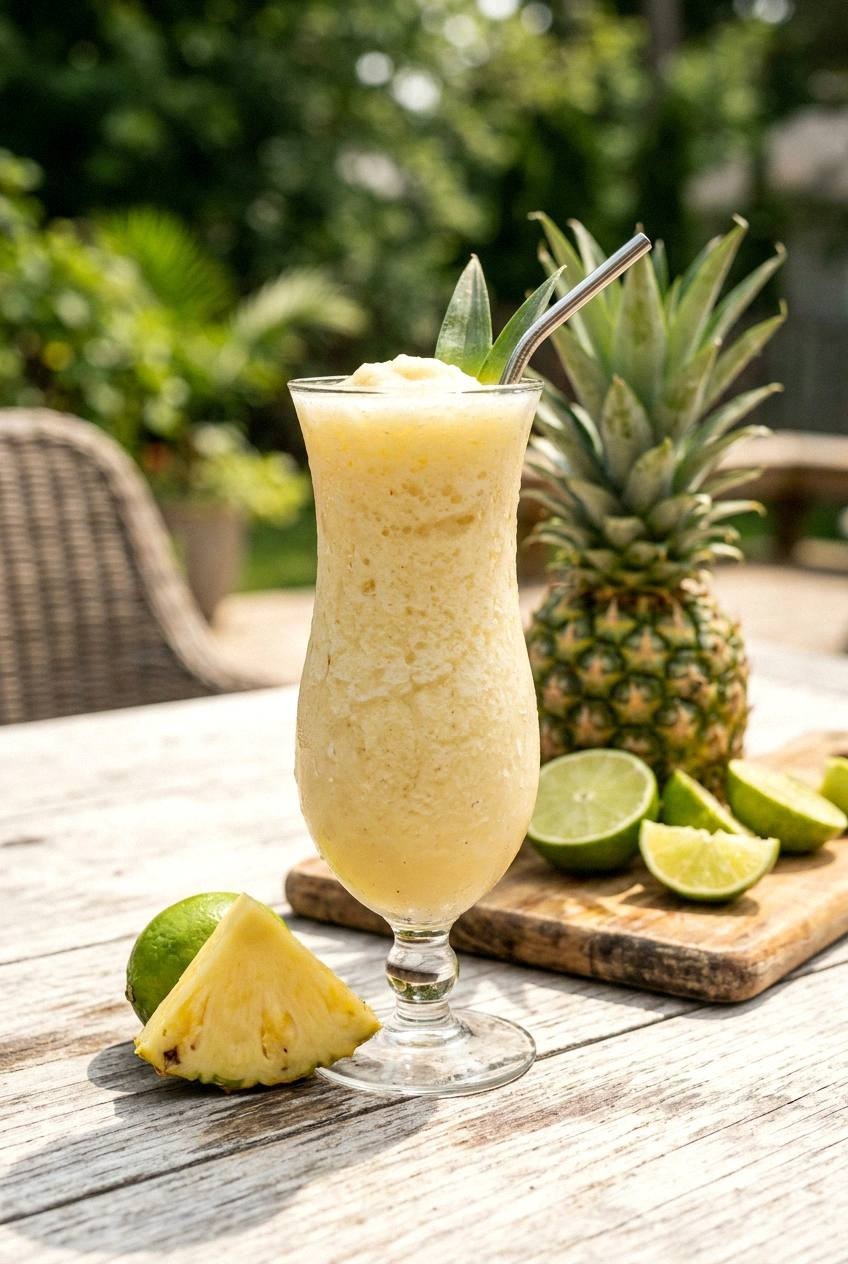
Frozen Pineapple Coconut Mocktail
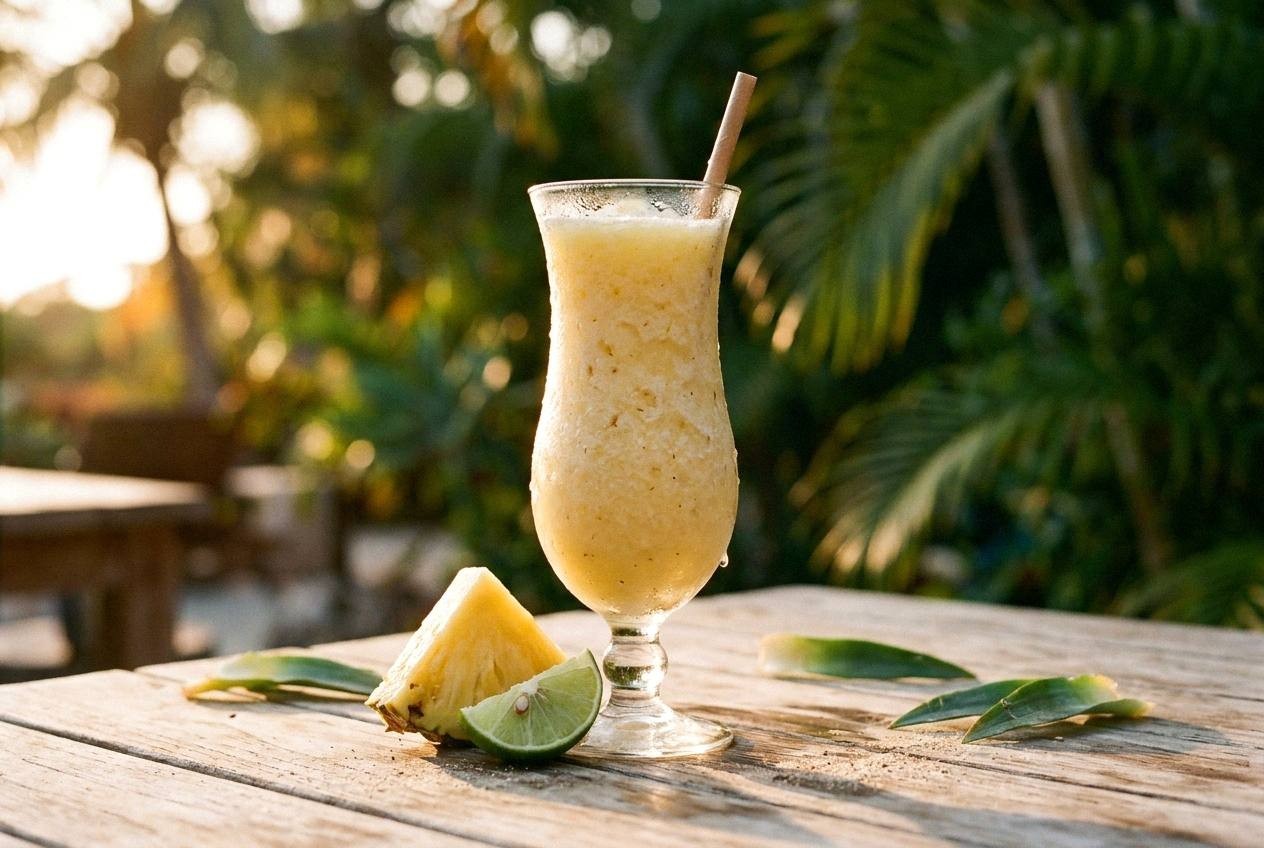
This is the poolside one. Creamy, tropical, and rich enough that two glasses count as dessert.
Makes 2 servings
- 1 cup frozen pineapple chunks
- 1/2 cup pineapple juice
- 1/3 cup cream of coconut, the sweetened kind sold with the drink mixers
- 1 tablespoon fresh lime juice
- 1/2 cup ice, only if needed
Add pineapple juice, cream of coconut, and lime juice to the blender first. Top with frozen pineapple. Pulse a few times, then blend low to high until smooth and thick. Taste. Add ice only if the drink is too sweet or too loose. Pour into a chilled hurricane glass and serve at once.
Cream of coconut is not the same thing as canned coconut milk. The Plated Cravings recipe calls for cream of coconut specifically because the sugar and coconut fat together give the drink its body. Canned coconut milk will taste flat and slightly chalky in the same recipe.
Garnish with a fresh pineapple wedge perched on the rim and a lime cheek. Keep the umbrellas if you like them. Skip the maraschino cherry. It tastes like syrup and the drink is already sweet.
Frozen Strawberry Basil Lime Mocktail
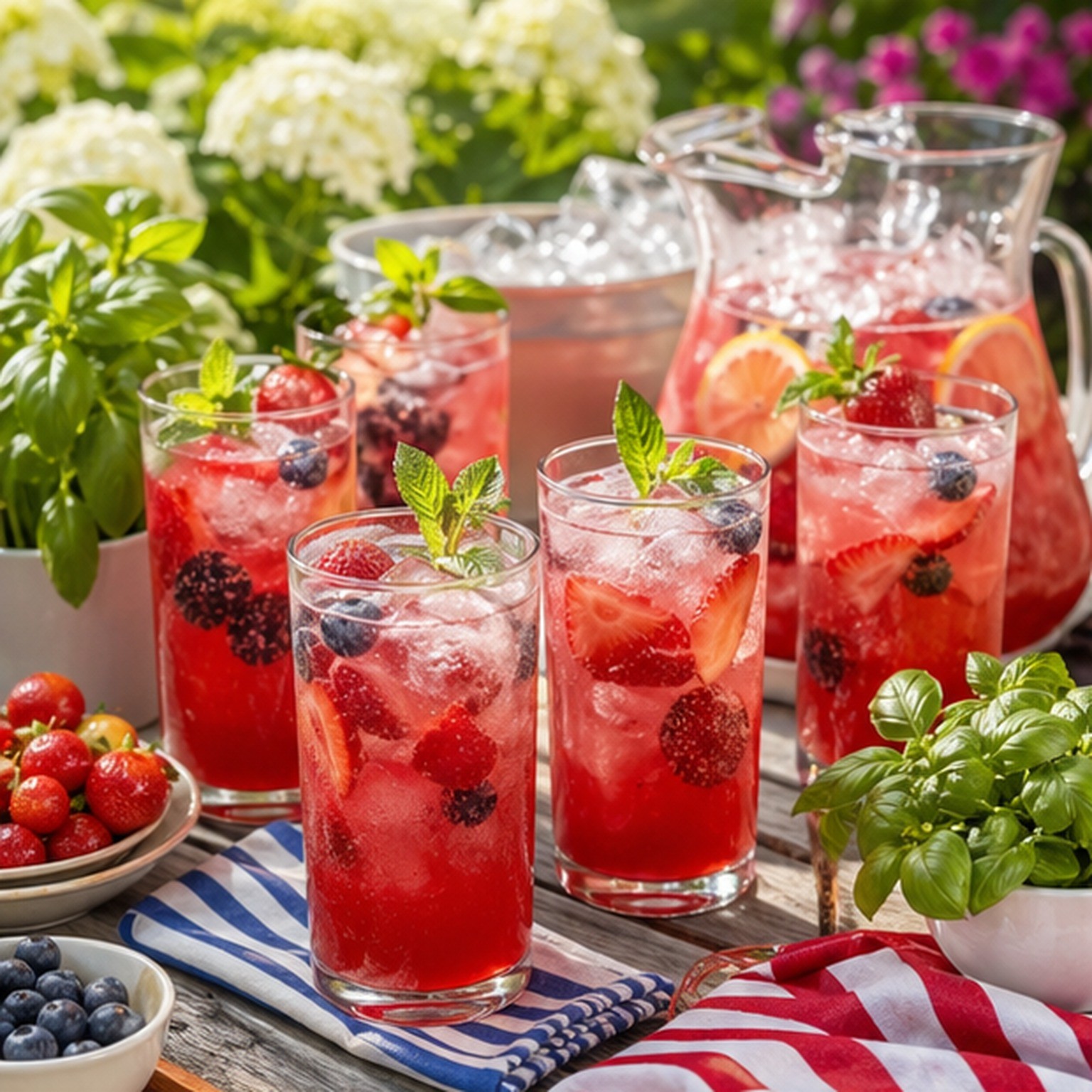
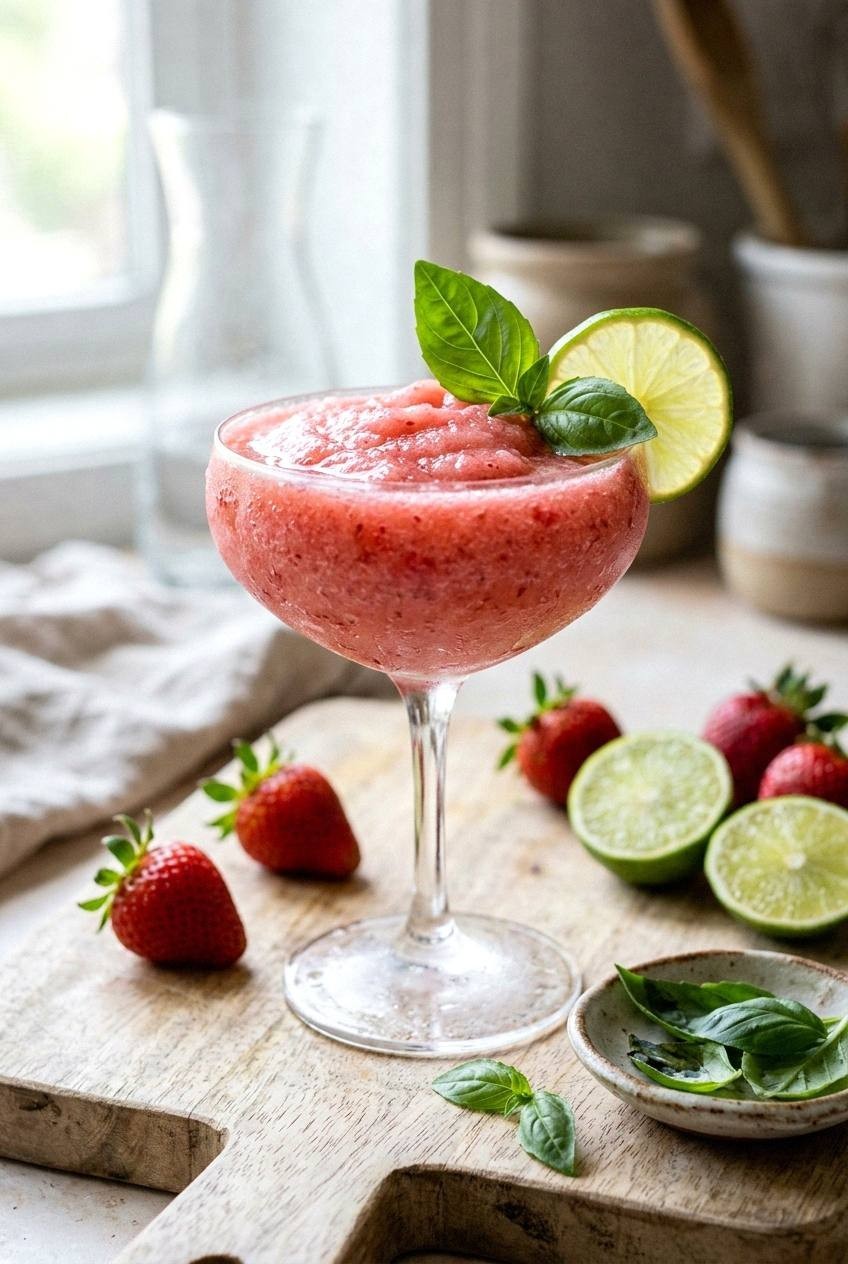
The berry-and-herb one. Brighter than the pineapple version, with a green edge from the basil that keeps it from tasting like a daiquiri mix.
Makes 2 servings
- 2 cups frozen strawberries
- 1/2 cup cold water or coconut water
- 1/4 cup fresh lime juice, from about 2 limes
- 2 tablespoons honey or agave
- 6 fresh basil leaves, plus more for garnish
- Pinch of salt
Add water, lime juice, honey, basil, and salt to the blender. Pulse to chop the basil. Add the frozen strawberries. Blend low to high until smooth. The texture should be thick enough that a spoon stands up in it for a second.
If it tastes flat, add another squeeze of lime. If the basil flavor disappears, tear in one more leaf and pulse twice. Do not over-blend. Crushed basil turns dark and the drink loses its garden brightness.
Serve in a coupe with a single basil leaf and a thin lime wheel. The salt is not optional. It pulls the strawberry forward the way it does in a fruit salad.
Frozen Hibiscus Ginger Slushy
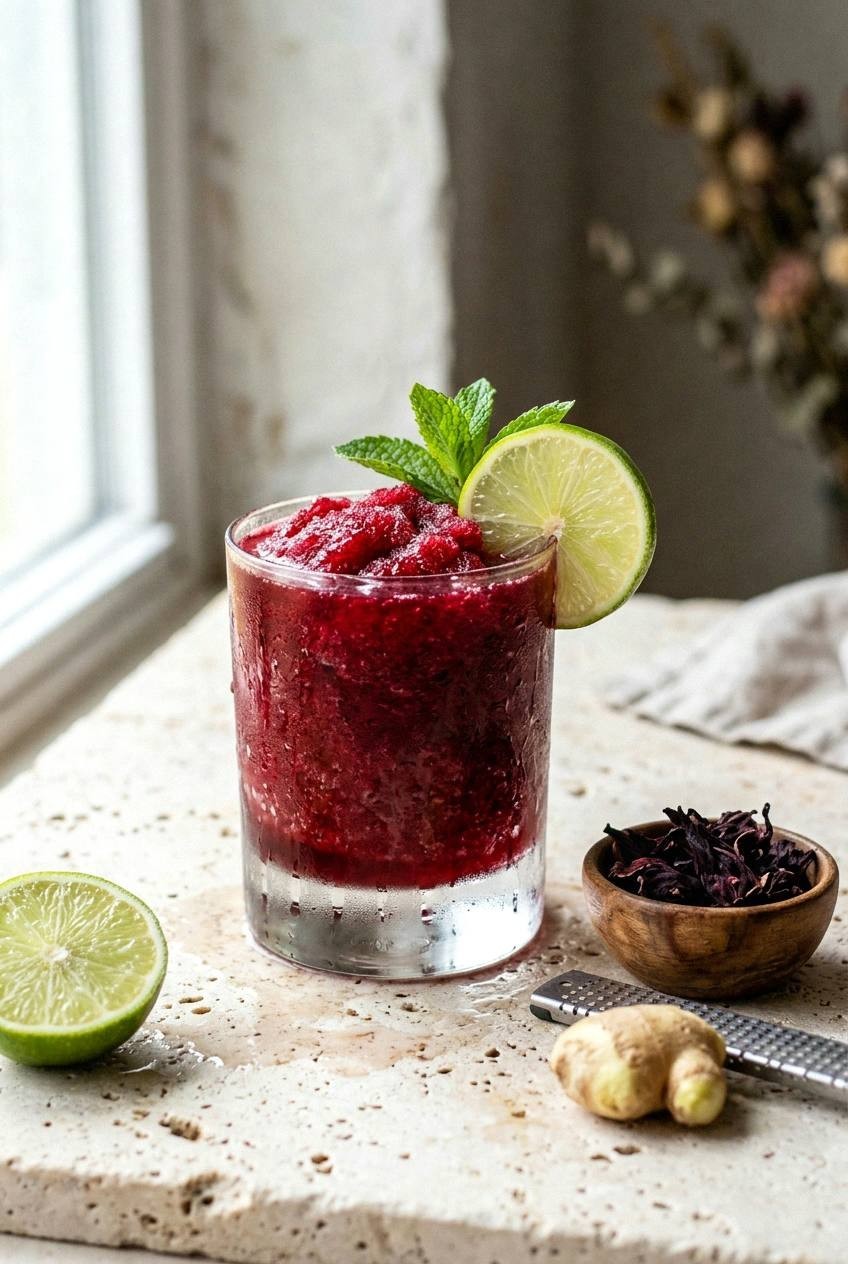
The grown-up one. Tart, floral, and a little spicy. Closer to a cooler than a smoothie. This is the drink to serve to people who say they do not like mocktails.
Makes 2 servings
- 1 1/2 cups strong brewed hibiscus tea, chilled
- 1 tablespoon fresh grated ginger
- 2 tablespoons honey or agave, plus more to taste
- 1 tablespoon fresh lime juice
- 1 1/2 cups ice
- Thin slice of fresh ginger and a lime wheel for garnish
Brew the hibiscus tea strong, about two heaping tablespoons of dried hibiscus to 1 1/2 cups of just-off-boil water. Steep for ten minutes, then strain and chill until cold.
Blend the cold tea, fresh ginger, honey, and lime juice for ten seconds to break down the ginger. Strain through a fine sieve back into the blender to catch the ginger fibers. Add the ice. Blend low to high until slushy.
Taste before pouring. Hibiscus on its own is sharply tart, so adjust honey one teaspoon at a time. Pour into chilled rocks glasses. Garnish with the fresh ginger slice and a lime wheel.
Because this one uses ice instead of frozen fruit, drink it within fifteen minutes. After that it starts to separate. If you are making it for a group, hold the blended slushy in the freezer for up to thirty minutes and re-blend with a small splash more tea right before serving.
Fixing a Frozen Drink That Came Out Wrong
Too icy. This usually means the ratio of frozen to liquid was off, or the blender did not break the ice down. Add a small splash of juice or water, two tablespoons at a time, and re-blend. Going from low speed to high in steps gives a smoother texture than blasting it on high from the start.
Too watery. It either sat too long or had too much liquid to start. Drop in a handful of frozen fruit and pulse a few times. Frozen fruit is almost always a better rescue than more ice, because ice melts back into the same watery problem within minutes.
Too sweet. Add lime, lemon, or a pinch of salt. A drink that reads as too sweet is usually a drink with not enough acid. Try the squeeze of citrus first. If it is still sweet after that, add a few more frozen strawberries or a splash of unsweetened juice.
Too sour. Add sweetener in small amounts. Honey and agave blend cleanly into a cold drink. Granulated sugar does not, and you will taste it. If you only have sugar, dissolve it in a tablespoon of hot water first, then blend it in.
Separating in the glass. This happens fastest with all-juice or all-tea drinks. Either serve immediately or add a small spoonful of yogurt, coconut cream, or a quarter teaspoon of chia seeds before blending. The Chowhound technique of dry-blending sugar and citrus first, then adding crushed ice last, also stretches the slushy texture.
Variations
Frozen mango lime. Swap the frozen pineapple for frozen mango in the tropical recipe. Use coconut water instead of pineapple juice and skip the cream of coconut for a lighter, brighter version.
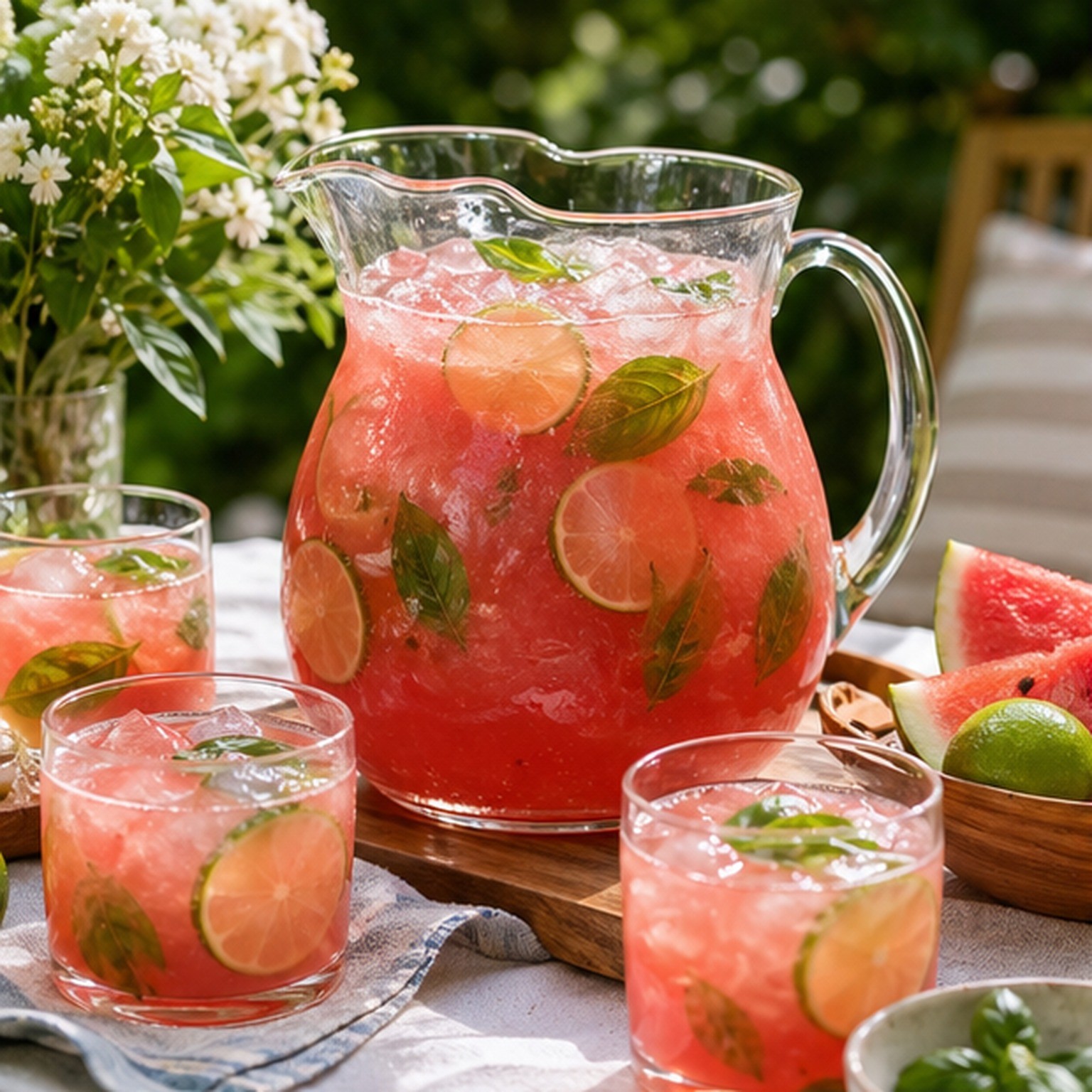
Frozen watermelon mint. Freeze cubed watermelon overnight. Blend 2 cups frozen watermelon with the juice of one lime, a tablespoon of honey, and six mint leaves. No added water. Watermelon brings its own.
Frozen blackberry thyme. Use the strawberry basil method but swap blackberries for strawberries and a single thyme sprig for the basil. Strain the seeds out if you want a smoother drink.
Frozen cucumber lime. Blend 1 cup frozen cucumber, 1/2 cup coconut water, juice of one lime, 1 tablespoon honey, and a pinch of salt. Surprisingly cooling on a humid day.
Spiked option for guests who want it. Pour 1 1/2 ounces of rum, tequila, or vodka over the finished frozen mocktail in the glass. Stir gently. This keeps the alcohol-free version intact for everyone else.
For more summer pitcher ideas, see our non-alcoholic sangria recipe for summer pitchers . For another bright, fast warm-weather drink, try the ginger shots in a blender recipe.
Common Questions
Can I make frozen mocktails ahead of time?
The pineapple coconut version freezes reasonably well for about thirty minutes in a covered container. Re-blend with a small splash of juice before serving. The strawberry basil and hibiscus ginger versions are best blended right before drinking. Both lose their bright color and herb flavor within an hour.
What is the best blender for frozen drinks?
A blender with a strong motor and a tamper handles frozen fruit and ice without struggling. A standard household blender works if you cut the fruit into smaller chunks and add liquid first. An older or underpowered blender will heat the drink while it struggles, which is the main cause of icy, watery results.
Why is my frozen drink melting so fast?
A warm glass and an over-blended drink are the two usual reasons. Pre-chill the glass in the freezer for ten minutes. Blend in steps from low to high, and stop the second the texture turns smooth. Frozen fruit instead of ice also slows the melt considerably.
Can I sweeten frozen mocktails with regular sugar?
You can, but it does not dissolve well in a cold blender and the finished drink will taste slightly grainy. Simple syrup, honey, agave, or naturally sweet fruit juice all blend in cleanly. If you only have granulated sugar, dissolve it in a tablespoon of hot water first.
Are frozen mocktails high in calories?
It depends on the recipe. The pineapple coconut version is the richest because cream of coconut is sweetened. The strawberry basil and hibiscus ginger versions are much lighter. Cut the honey or use unsweetened juice if you want to lower the calories further.
Frozen mocktails are forgiving once you understand the levers. Use frozen fruit as both ice and flavor. Sweeten with something liquid. Blend in steps and pour into a cold glass. The first batch teaches you the texture you like, and after that you can build one out of whatever fruit is on the counter when the kitchen gets too warm to cook.