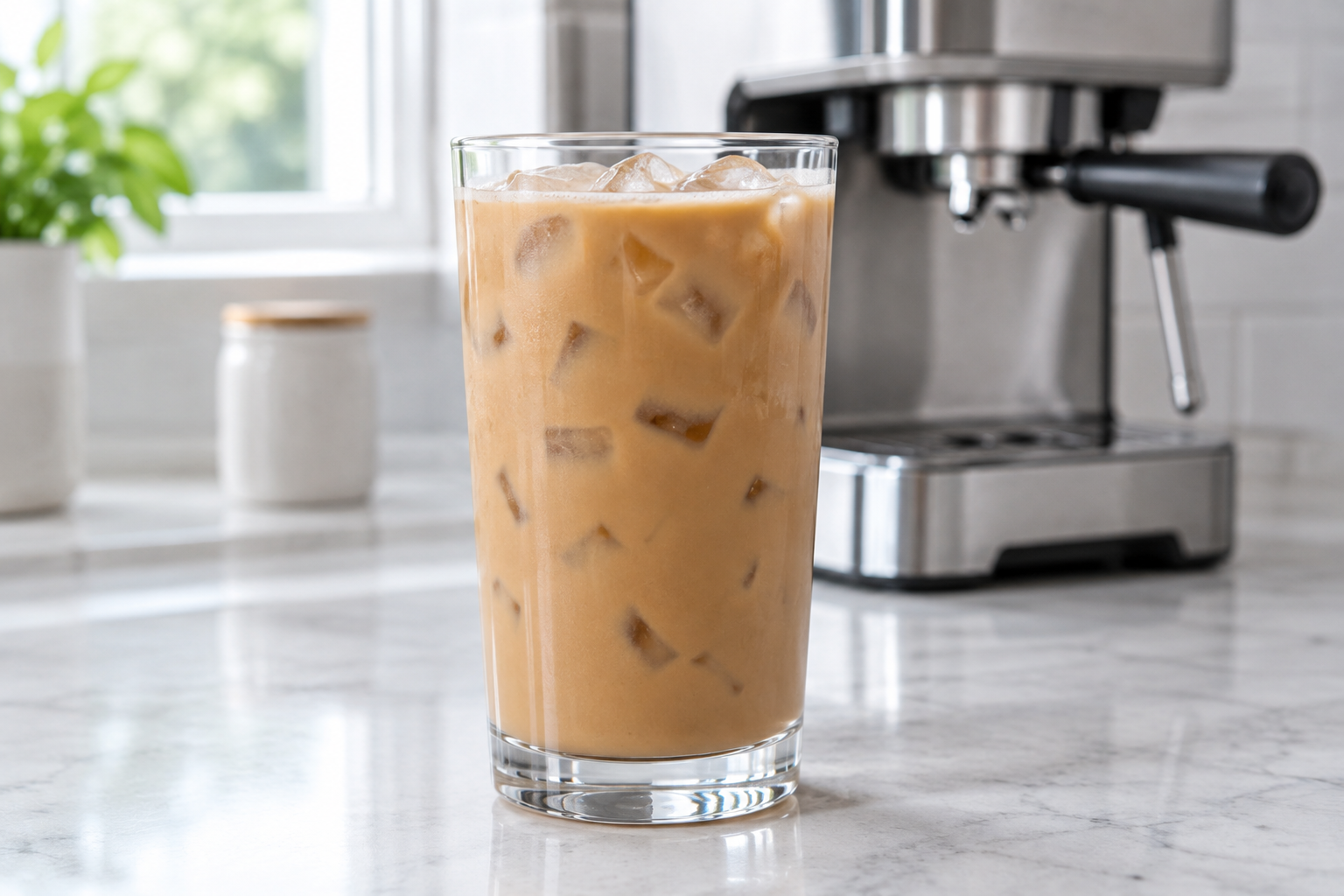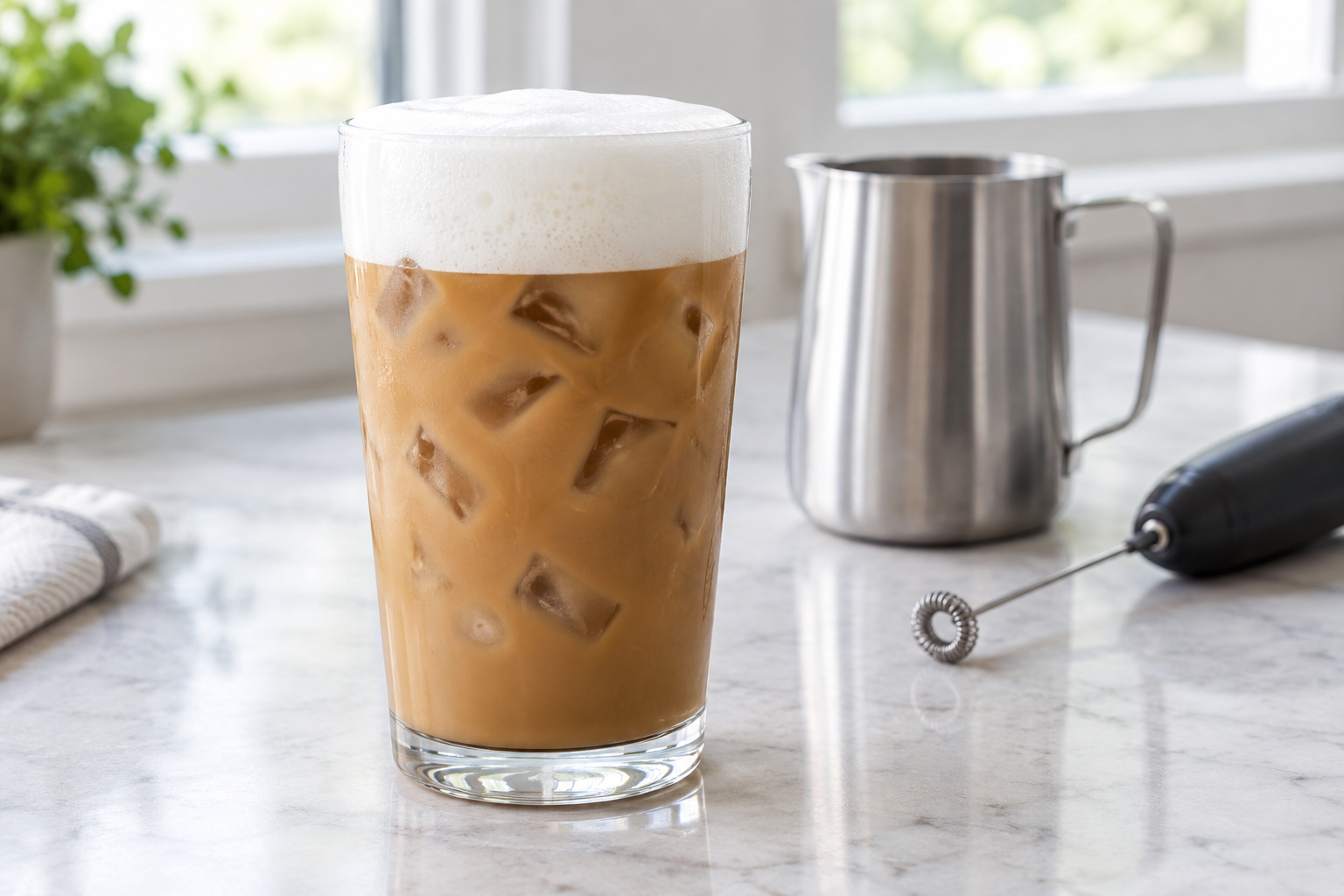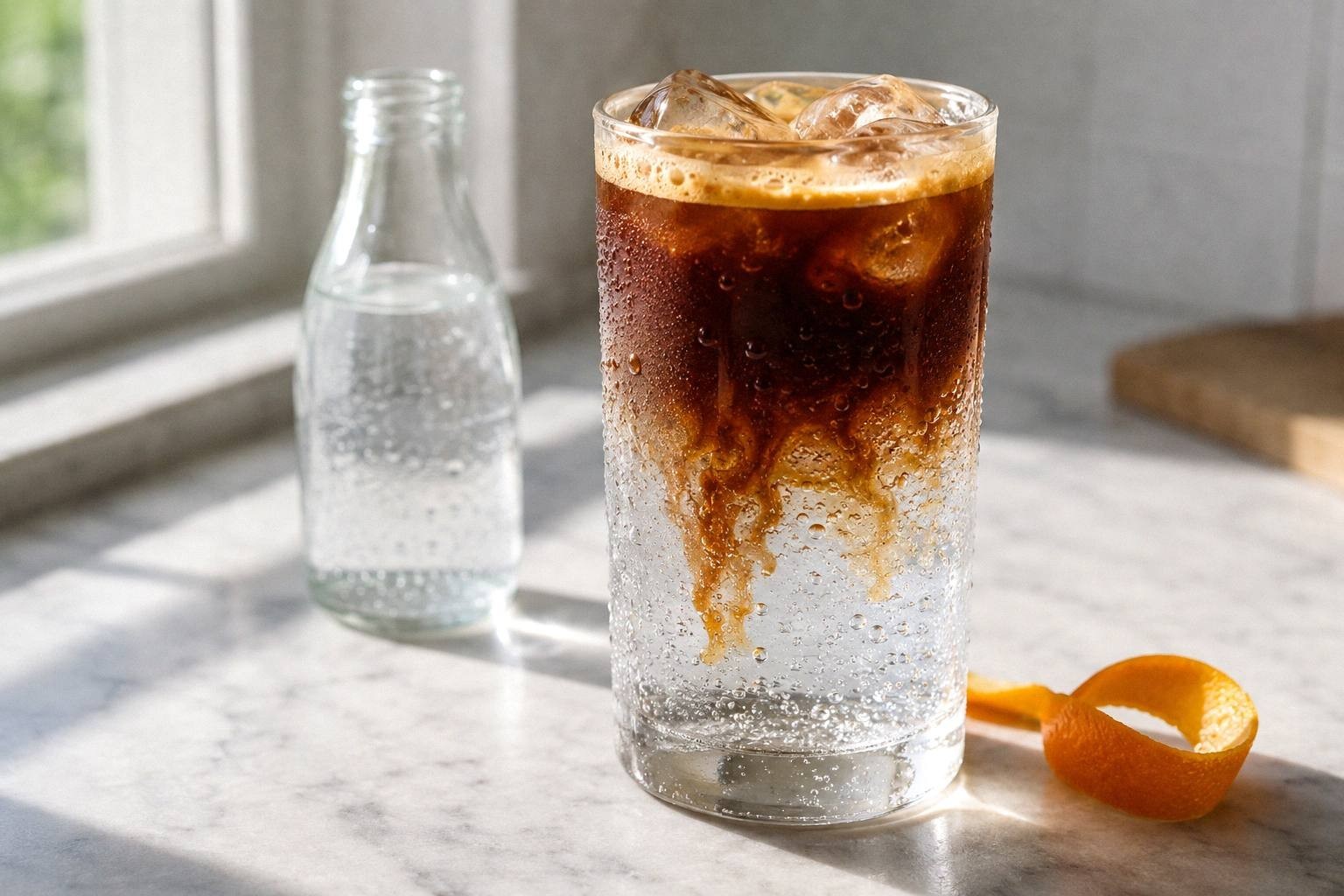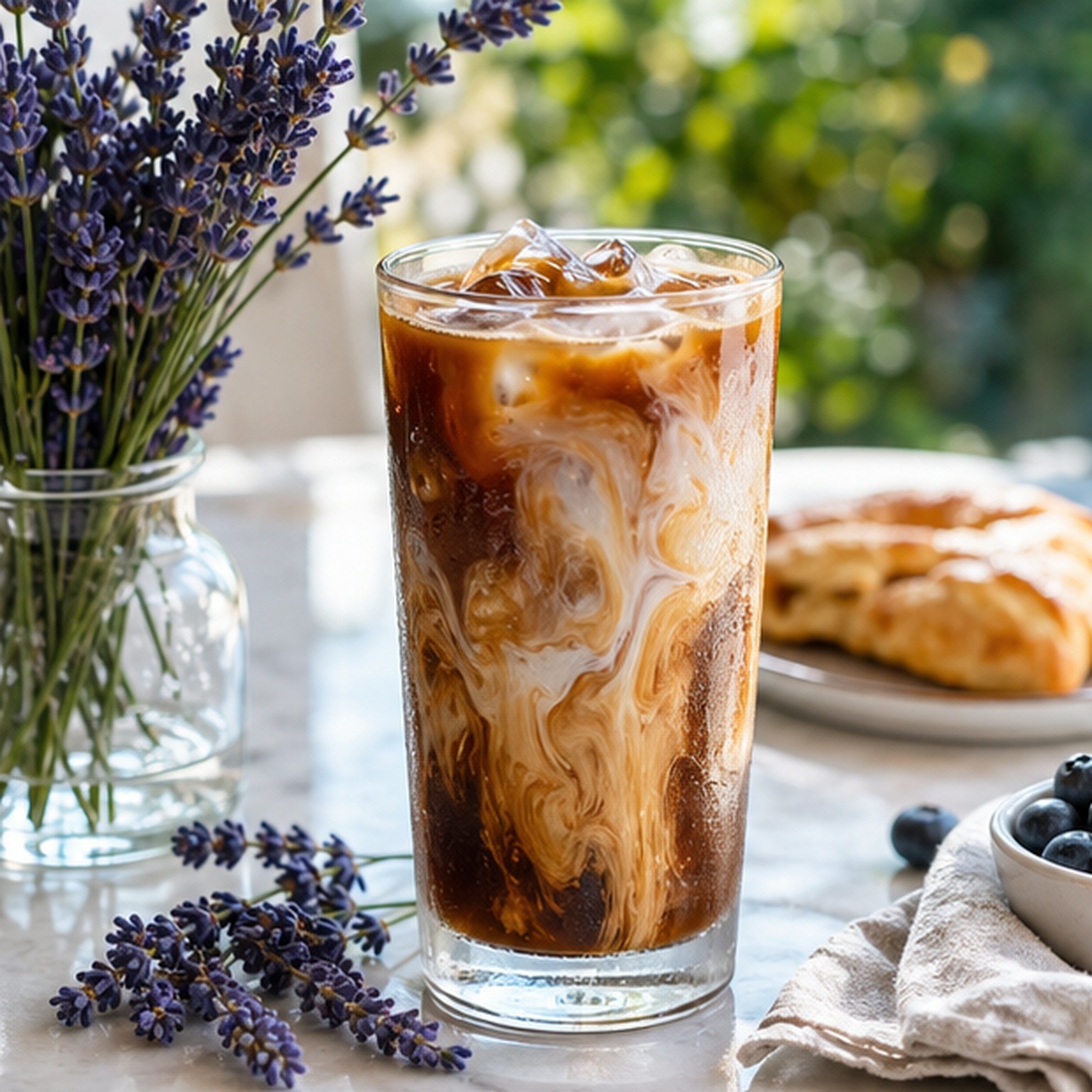

A Greek freddo cappuccino is chilled espresso over ice with a thick layer of cold milk foam on top. For one drink you need 4 ounces of espresso, 2 teaspoons of sugar, and 1/4 cup of nonfat milk. It’s Greece’s answer to iced coffee, and it’s a nice pick-me-up on a warm early-fall afternoon too. A freddo espresso is the same drink without the foam.
The technique is simple but specific. You need real espresso, not drip coffee, and the milk has to be cold and low-fat to froth properly. The layers last about five minutes, so make it and serve it right away.
What Makes This Greek

Greek cafés treat cold coffee as an everyday habit, not a summer novelty. American iced coffee is usually brewed hot and poured over ice. A freddo starts with espresso and goes over ice with a cap of cold foam.
The milk layer is the other signature. Cafés froth cold milk with a handheld frother and spoon it over the coffee so it sits on top like a cloud. Whole milk makes a thinner, wetter foam that collapses quickly, which is why skim or low-fat milk is the usual choice.
The sugar goes in while the espresso is still hot, so it dissolves completely. In Greece you order by sweetness: skétos means no sugar, métrios means 2 teaspoons, and glykós means 4. This recipe is the métrios middle ground.
Why Low-Fat Milk Froths Better

Milk foam is a net of tiny air bubbles held together by milk proteins, and fat gets in the way of that net. Skim milk has almost no fat, so the foam comes out denser and glossier and lasts longer. Whole milk gives a loose, wet foam that deflates fast.
Cold milk froths better than warm, so use it straight from the refrigerator. The foam should get noticeably thicker, enough to spoon rather than pour.
If you only have whole milk, you can still make the drink. The foam will be thinner and mix into the coffee sooner, which some people like because it makes the whole glass creamy. It’s a different drink, but not a worse one.
Equipment You Need

You need a way to make espresso and a way to froth milk. An espresso machine works, and so does a stovetop moka pot or an AeroPress. Drip and French press coffee are too weak for the ice and milk, and you’ll end up with something closer to coffee-flavored milk.
A handheld electric frother is the usual tool. It looks like a small whisk on a battery handle. A jar, whisk, or blender can froth milk too, but the foam tends to come out looser and wetter, so this recipe is written for a handheld frother.
Ingredients
- 4 ounces (2 shots) freshly brewed espresso
- 2 teaspoons granulated sugar
- 1/4 cup nonfat milk
- Ice cubes
Instructions
- Pour the hot espresso into a lowball glass. Drop in the sugar while it’s still hot and stir until it dissolves. Let it cool for 5 minutes.
- While that cools, froth the nonfat milk with a hand frother for 60 seconds until you have a glossy, smooth foam.
- Add a handful of ice to the cooled espresso. Spoon the frothed milk carefully on top to create a foam layer. Serve right away.
Common Problems and How to Fix Them
- Foam collapses immediately: The milk was too warm or too high in fat. Use cold skim milk straight from the refrigerator.
- Layers mix together right away: The espresso was still too hot, or the milk was poured instead of spooned. Let the espresso cool first and use a spoon to set the foam on top.
- Coffee tastes watery: The espresso was too weak, or there was too much ice. Use two real shots of espresso.
- Foam is wet and thin: The milk was frothed too briefly or had too much fat. Froth the full 60 seconds, and switch to skim if you’re using whole.
- Sugar did not dissolve: It went in after the espresso cooled. Stir it into the hot espresso right away.
Instant Coffee Version
This recipe is written for espresso. Instant coffee makes a lighter, less concentrated drink that’s closer to a Greek frappé , so treat it as a separate drink rather than a true freddo.
Make-Ahead and Batching
A freddo cappuccino can’t be made ahead, because the foam deflates and the layers blend together within minutes. You can brew the espresso in advance and chill it, which helps if you’re making several drinks.
For a group, set out chilled espresso, a bowl of ice, cold skim milk, and a frother. Froth the milk fresh for each glass, since foam that sits starts to separate and goes thin by the second or third drink.
Frequently Asked Questions
What is a freddo cappuccino?
It’s a Greek iced coffee drink made with chilled espresso over ice and topped with a thick layer of cold-frothed milk foam. The milk is frothed cold rather than steamed, which makes a denser foam that floats on top.
Can I use instant coffee instead of espresso?
You can, but the drink will taste lighter and less concentrated, more like a Greek frappé than a true freddo cappuccino.
How do I froth milk without a frother?
A jar with a tight lid, filled no more than halfway, works if you shake it hard until the milk thickens. A blender also works. Either way the foam will be a little looser than frother foam.
What type of milk works best?
Skim or nonfat milk gives the thickest, most stable foam. Whole milk is thinner and wetter, and low-fat milk falls somewhere in between.
How is freddo cappuccino different from frappé?
A freddo cappuccino is made with espresso and topped with cold milk foam. A Greek frappé is instant coffee shaken with water, sugar, and ice until frothy. The frappé is lighter and more granular, and the freddo is creamier and stronger.
Can I make it without sugar?
Yes. Greeks order that skétos. It will taste more bitter, so use a balanced espresso rather than a harsh dark roast.
Conclusion
A freddo cappuccino depends on three things: cold milk, strong espresso, and a good froth. Make one glass at a time, froth the milk cold, and serve it right away.