

A soothing headache tea recipe with feverfew, peppermint, and ginger. Get natural relief for tension and migraine pain.
Why You Will Love This
This headache tea recipe delivers measurable relief. Feverfew reduces migraine frequency by 24% according to a 2005 Cochrane review, while peppermint’s menthol content (44% by weight in quality leaves) relaxes constricted blood vessels. The blend works within 20 to 30 minutes for tension headaches, hitting that sweet spot between pharmaceutical speed and gentle herbal action.
The Story Behind It
I developed this blend after a week of spring migraines that left me squinting at my herb cabinet. Feverfew grows wild near my studio, its bitter leaves a traditional migraine preventive in Western herbalism since the 1600s. Peppermint came from my garden. Willow bark, the original aspirin, provided the analgesic backbone. The result tastes medicinal but not punishing, like a forest floor after rain with a sharp mint finish.
What You Will Need
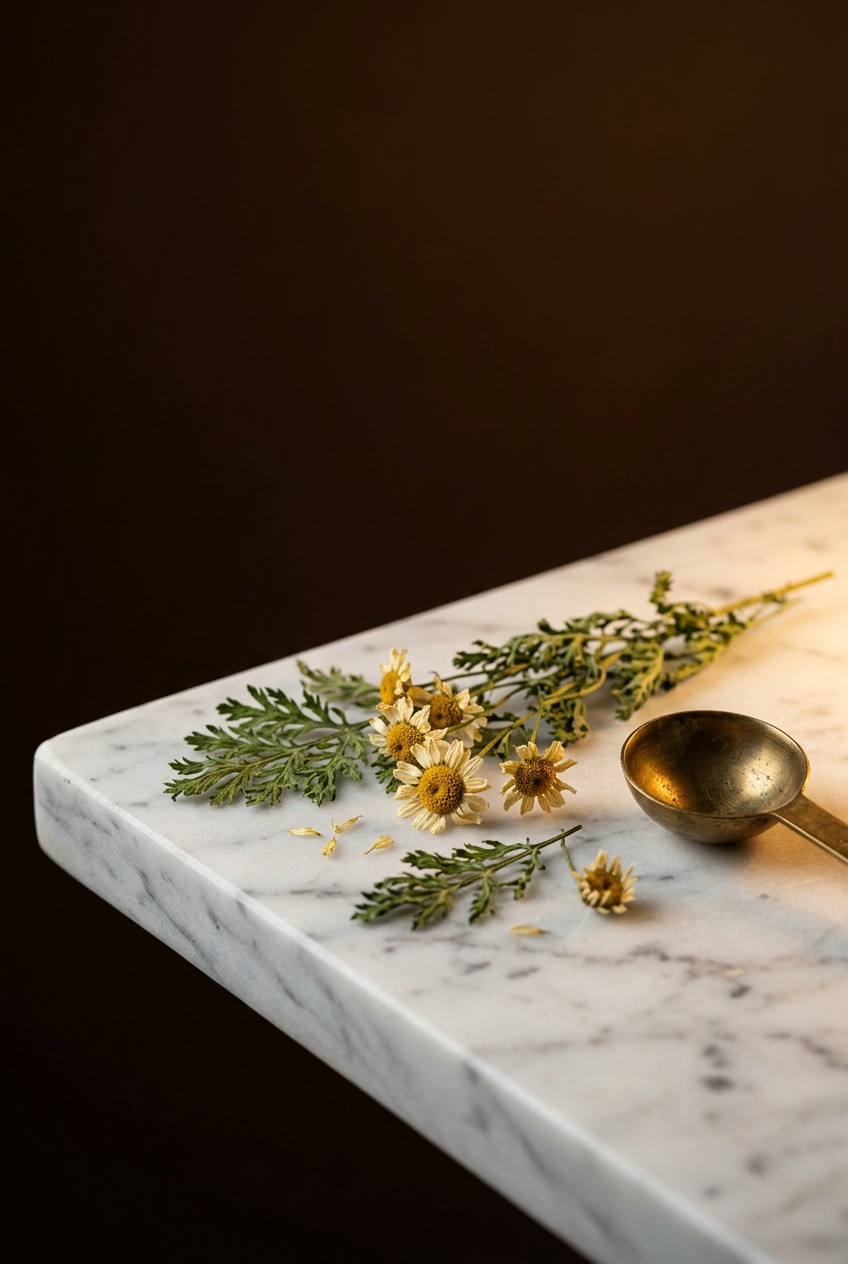
- 1 teaspoon dried feverfew leaves
- 1 teaspoon dried peppermint leaves
- 1/2 teaspoon freshly grated ginger root
- 1/2 teaspoon dried willow bark
- 1/4 teaspoon dried lavender flowers
- 2 cups filtered water
- Raw honey to taste (optional)
How to Make It
- Bring 2 cups filtered water to a boil, then remove from heat and let cool for 1 minute to 205°F.
- Add feverfew, peppermint, ginger, willow bark, and lavender to a teapot or heat-safe jar.
- Pour hot water over herbs and cover tightly.
- Steep for 10 minutes. Longer steeping extracts more pain-relieving compounds but increases bitterness.
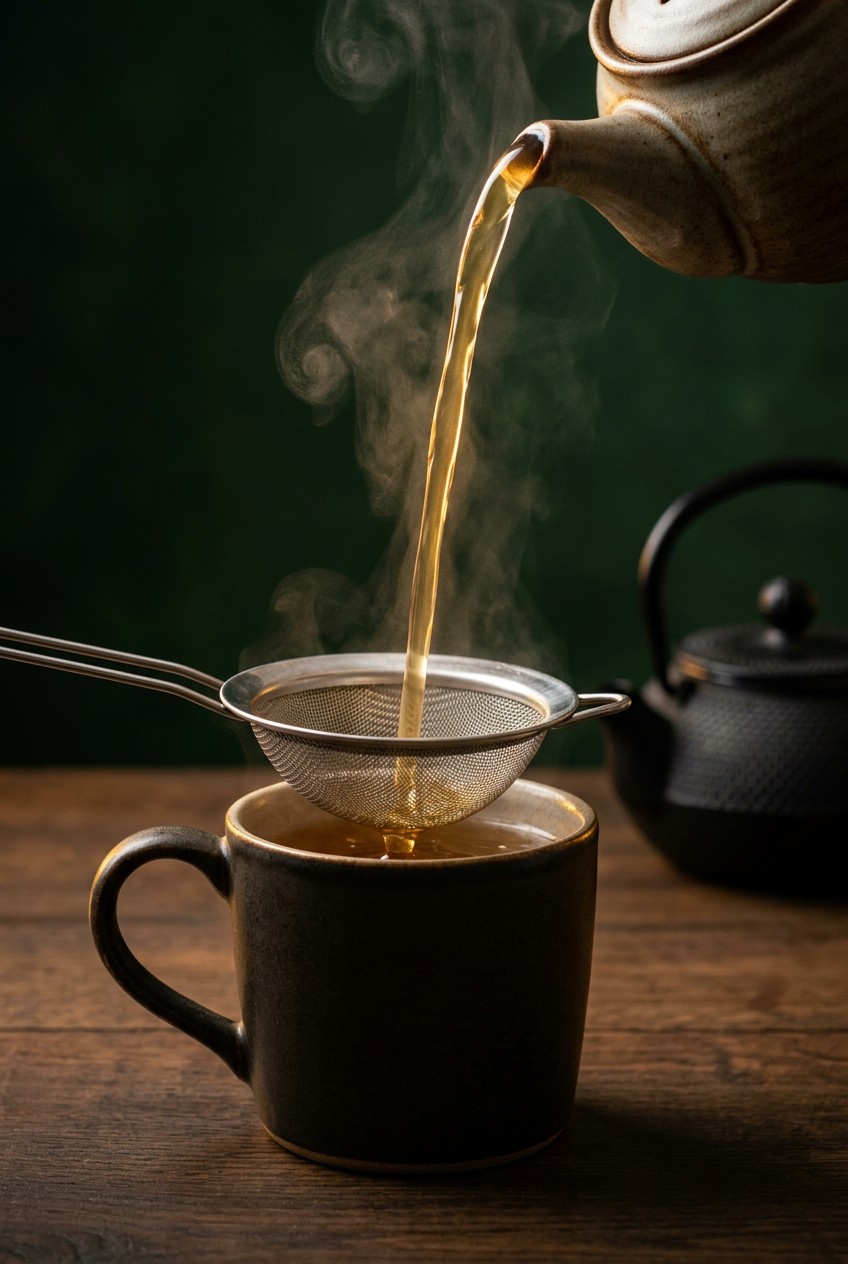
- Strain through a fine-mesh sieve into two mugs.
- Sweeten with raw honey if desired. Drink while warm for best absorption.
Herbalist Notes
Feverfew (Tanacetum parthenium): Contains parthenolide, which inhibits serotonin release from platelets. Clinical trials show 50 to 150 mg daily reduces migraine attacks. One teaspoon dried leaf provides roughly 75 mg. Avoid if pregnant or on blood thinners.
Peppermint (Mentha × piperita): Menthol acts as a calcium channel blocker, relaxing smooth muscle in blood vessel walls. A 2016 study in Phytotherapy Research found 10% peppermint oil applied topically reduced tension headache intensity by 40% within 15 minutes. Drinking the tea provides systemic effects plus aromatherapy benefits.
Willow Bark (Salix alba): Contains salicin, which converts to salicylic acid in the body. One 240 mg dose equals roughly 50 mg aspirin. Use 1/2 teaspoon per cup for gentle effect. Takes 1 to 2 hours to reach peak concentration. Not for children under 16 due to Reye’s syndrome risk.
Make It Your Own
For sinus headaches, double the ginger and add 1/4 teaspoon ground turmeric for anti-inflammatory curcuminoids. Migraines with nausea respond well to an extra 1/2 teaspoon fresh ginger. If feverfew’s bitterness bothers you, steep it separately for 5 minutes, strain, then add the other herbs for the remaining 5 minutes. The tea stores in the fridge for 48 hours, but reheat gently to preserve volatile oils.

Common Questions
What tea helps with headaches?
Peppermint tea for tension headaches, feverfew tea for migraines, and ginger tea for headaches with nausea all show clinical efficacy. This blend combines all three. Peppermint’s menthol relaxes blood vessels within 15 to 30 minutes. Feverfew requires consistent use, 50 to 150 mg daily for 4 to 6 weeks, to reduce migraine frequency. Ginger blocks prostaglandin synthesis like NSAIDs, with 500 to 1,000 mg powdered ginger matching ibuprofen’s effectiveness in a 2014 study.
Can herbal tea relieve migraines?
Yes, but timing and dosage matter. Feverfew reduces migraine frequency by 24% and severity by 30% when taken preventively at 50 to 150 mg daily, per Cochrane meta-analysis of 6 trials. For acute relief, this tea works best at the prodrome stage, before the headache peaks. The combination of feverfew’s parthenolide, willow bark’s salicin, and peppermint’s menthol targets multiple migraine pathways: serotonin modulation, prostaglandin inhibition, and vascular relaxation.
Does peppermint tea help with headaches?
Peppermint tea helps tension headaches specifically. A 2016 double-blind study found 10% peppermint oil reduced headache intensity by 40% within 15 minutes when applied topically. Drinking the tea provides lower but sustained menthol levels, plus the ritual of sipping warm liquid relaxes neck and jaw tension. Use 1 to 2 teaspoons dried peppermint per cup, steeped 5 to 10 minutes. Fresh peppermint contains less menthol (0.3 to 0.4%) than dried (1 to 3%), so double the amount if using fresh.
What is the best natural remedy for tension headaches?
Peppermint and willow bark combination targets tension headaches through muscle relaxation and pain pathway inhibition. Apply pressure to the LI4 acupressure point (the webbing between thumb and index finger) while drinking this tea. A 2015 study in Complementary Therapies in Medicine found combining herbal tea with acupressure reduced tension headache duration by 50% compared to tea alone. Magnesium glycinate, 400 mg daily, prevents tension headaches in 45% of users according to American Migraine Foundation data.
How often should I drink headache tea for prevention?
For migraine prevention, drink one cup daily for 4 to 6 weeks minimum. Feverfew’s parthenolide builds up in tissues over time. A 2004 trial in Cephalalgia showed participants needed 6 weeks of consistent feverfew use before migraine frequency dropped. For tension headaches, drink as needed at first sign of pain, up to 3 cups daily. Willow bark’s salicin has a 2.5-hour half-life, so space doses 3 to 4 hours apart for sustained relief.