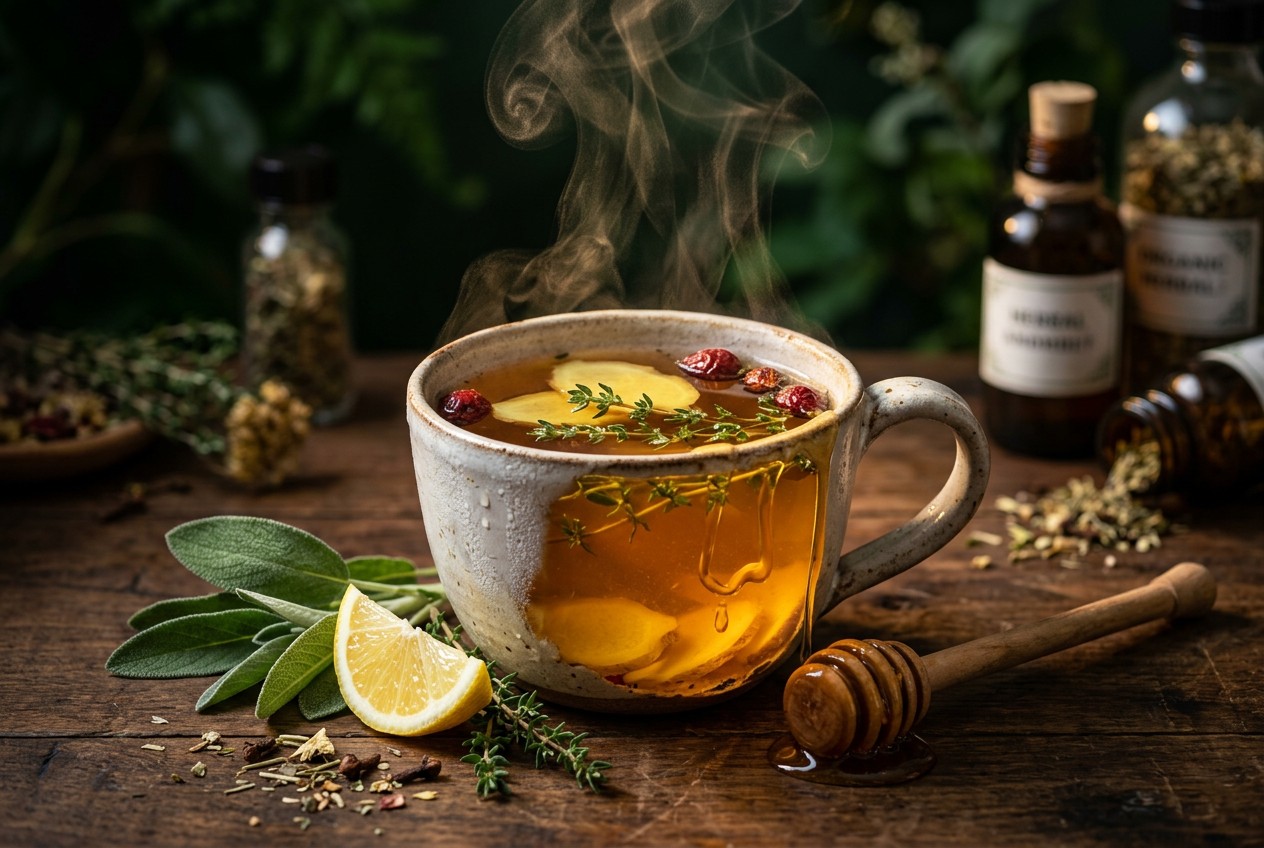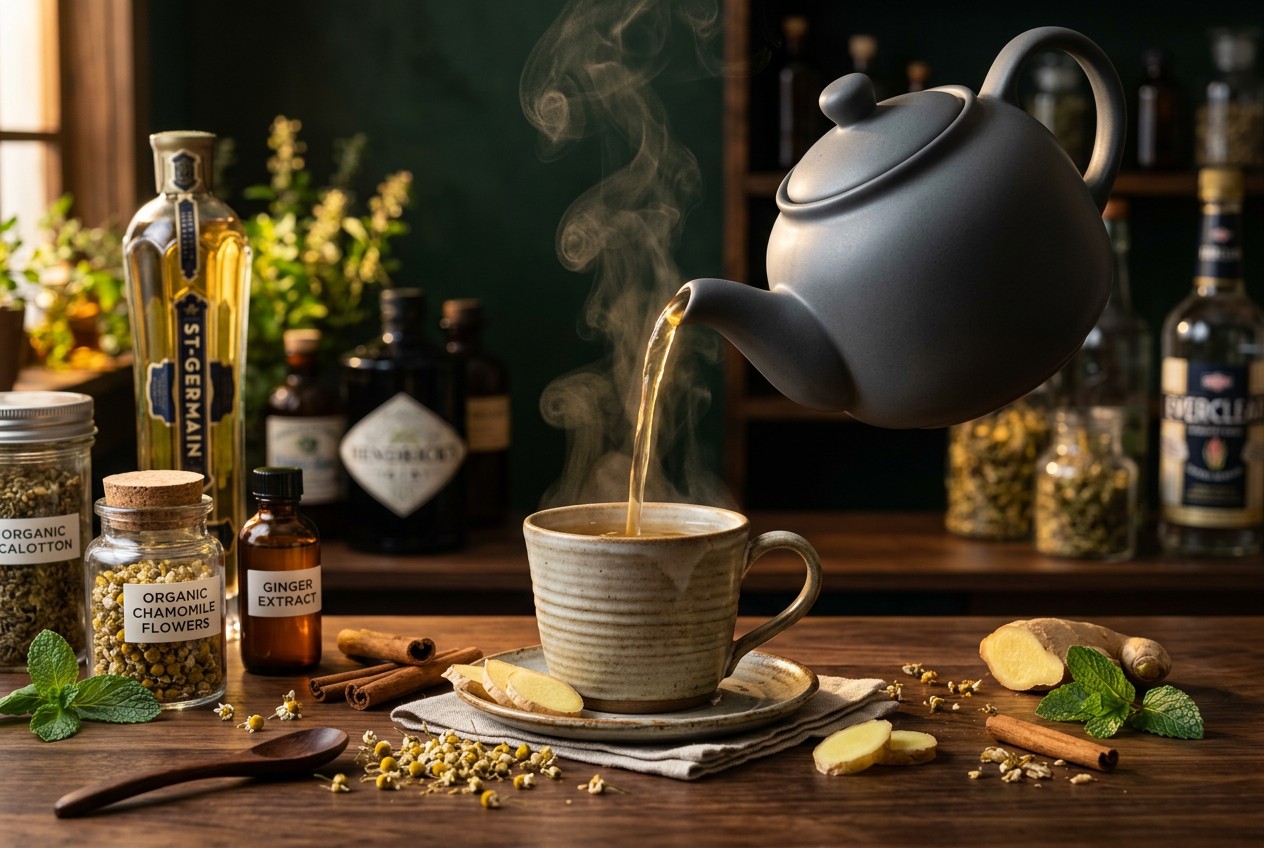
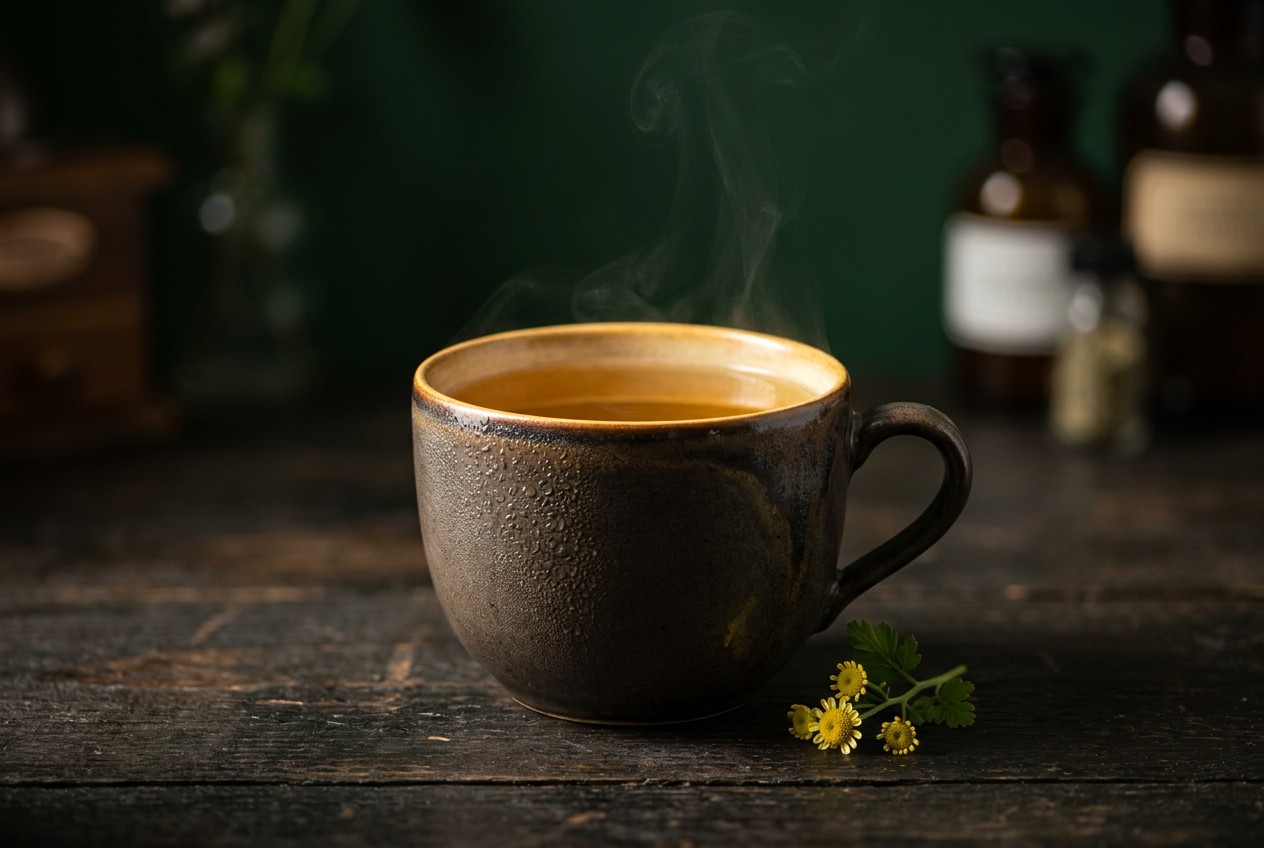
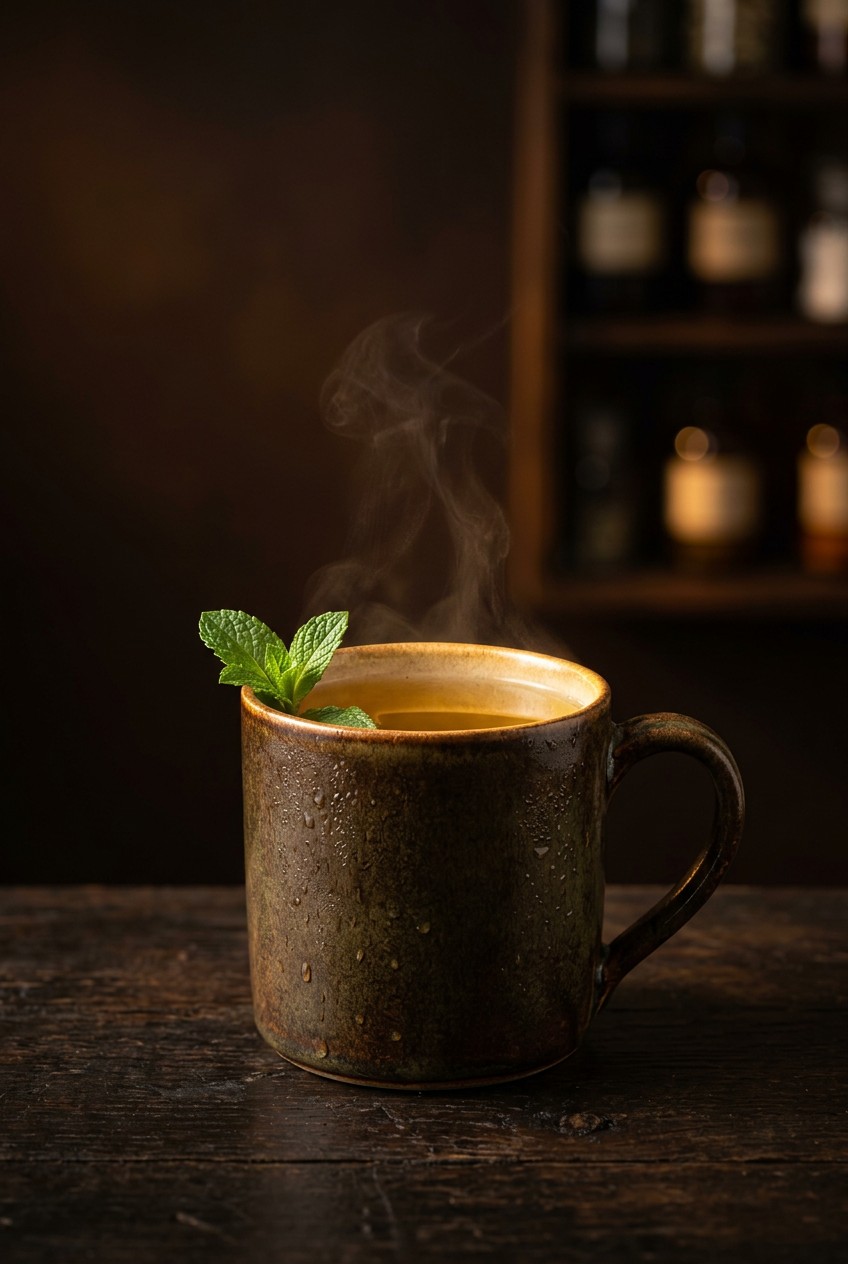
Combine dried feverfew, peppermint, and fresh ginger. Steep in boiling water for 10-15 minutes, then strain. Feverfew is the bitter herb Western herbalists have reached for the longest, and peppermint is what makes the cup worth drinking.
Headache tea recipe with feverfew, peppermint, ginger, and willow bark. A bitter, cooling, traditional herbal blend that brews in 15 minutes.
Why You Will Love This
This is the cup I reach for when my head feels tight and I want something warmer and more deliberate than another glass of water. Feverfew is the bitter old standby of Western herbalism for people who get bad heads often. Peppermint brings a cool, sharp lift you notice in your sinuses before you even taste it. Ginger warms the whole thing, willow bark gives it a dry bark edge, and lavender rounds off the worst of the bitterness. I am not going to tell you it works like a pill, because I do not know that and neither does anyone selling you herbs. What I can tell you is that it tastes like something made on purpose, and that sitting still for ten minutes with a hot mug is doing part of the work.
The Story Behind It
I developed this blend after a week of spring headaches that left me squinting at my herb cabinet. Feverfew grows wild near my studio, its bitter leaves a traditional remedy in Western herbalism since the 1600s. Peppermint came from my garden. Willow bark, chewed and brewed for aches long before anyone bottled anything, gave the blend its backbone. The result tastes medicinal but not punishing, like a forest floor after rain with a sharp mint finish.
What You Will Need
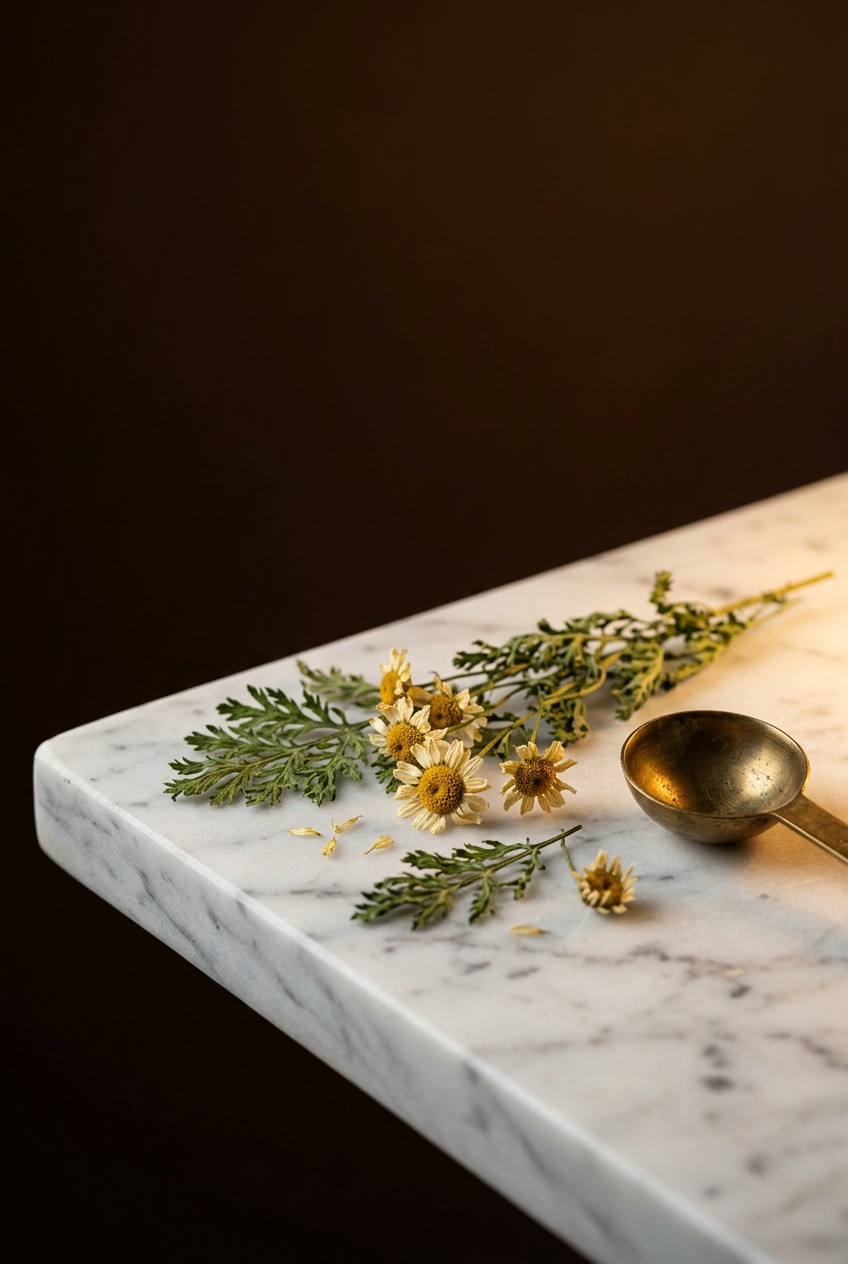
- 1 teaspoon dried feverfew leaves
- 1 teaspoon dried peppermint leaves
- 1/2 teaspoon freshly grated ginger root
- 1/2 teaspoon dried willow bark
- 1/4 teaspoon dried lavender flowers
- 2 cups filtered water
- Raw honey to taste (optional)
How to Make It
- Bring 2 cups filtered water to a boil, then remove from heat and let cool for 1 minute to 205°F.
- Add feverfew, peppermint, ginger, willow bark, and lavender to a teapot or heat-safe jar.
- Pour hot water over herbs and cover tightly.
- Steep for 10 minutes. Longer steeping pulls more out of the herbs but increases bitterness.
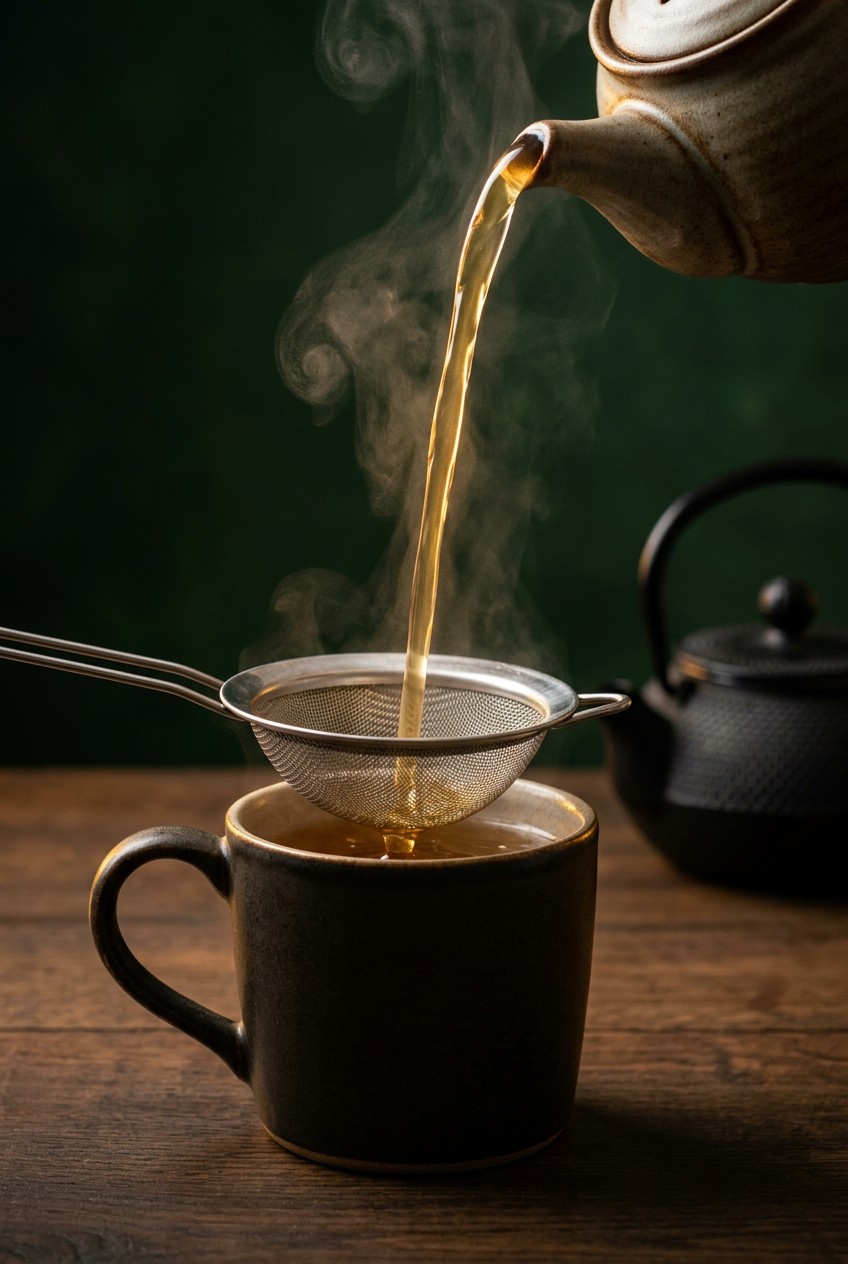
- Strain through a fine-mesh sieve into two mugs.
- Sweeten with raw honey if desired. Drink while warm.
Herbalist Notes
Feverfew (Tanacetum parthenium): This is the herb Western herbalists reach for first when someone gets recurring bad heads, and it has been used that way for centuries. It is genuinely bitter, which is part of why it belongs in a blend rather than alone in a mug. Traditional use is steady and unhurried rather than grabbed in a crisis. Skip it entirely if you are pregnant or taking blood thinners, and talk to whoever manages your care before making it a habit.
Peppermint (Mentha × piperita): The menthol is what you notice, and you notice it in your nose before your tongue. Peppermint is the cooling herb here and the reason the cup does not taste like punishment. Good dried leaf still smells sharp when you crush it between your fingers. Tired leaf smells like hay and makes a flat, grassy tea that no amount of honey will save.
Willow Bark (Salix alba): One of the oldest bitter barks in the European herbal cabinet, brewed long before anyone knew what was in it. It brings a dry, tannic backbone to the blend. Use it lightly, about 1/2 teaspoon per cup, because more turns the whole thing astringent and chalky. It is not a children’s herb, and that is a conversation with a pediatrician rather than something to settle from a recipe page.
Make It Your Own
For sinus headaches, double the ginger and add 1/4 teaspoon ground turmeric for warmth and colour. If a bad head arrives with a queasy stomach, an extra 1/2 teaspoon fresh ginger is worth it. If feverfew’s bitterness bothers you, steep it separately for 5 minutes, strain, then add the other herbs for the remaining 5 minutes. The tea stores in the fridge for 48 hours, but reheat gently to preserve the volatile oils that make peppermint worth using at all.
Common Questions
What tea helps with headaches?
Peppermint, feverfew, and ginger are the three herbs that come up again and again in herbal traditions for head pain, and this blend uses all three. Peppermint is the cooling one, the herb people reach for when the tightness sits across the forehead and temples. Feverfew is the bitter one, traditionally used steadily over weeks rather than grabbed the moment something starts. Ginger is the one to lean on when a bad head arrives with a queasy stomach. None of that is a promise about your particular headache. It is what these herbs are for, traditionally, and why they keep ending up in the same jar.
Can herbal tea relieve migraines?
I am not going to tell you a mug of tea clears a migraine, because that is not something I can stand behind. Feverfew has a long reputation among herbalists as the herb for people who get them often, and a reputation that old and that widespread is worth something. But traditional use is not proof, and a migraine is a medical problem rather than a tea problem. If you get them regularly, the conversation worth having is with a clinician who can actually look at the pattern. The tea can be the warm, quiet thing you do alongside that, in a dark room, with your phone face down.
Does peppermint tea help with headaches?
Peppermint is the herb most associated with the tight band across the forehead, and it is the one most people reach for first. Part of that is the menthol, which you feel in your sinuses as much as you taste on your tongue. Part of it is honestly the ritual: warm liquid, a slow ten minutes, shoulders finally coming down off your ears. Use 1 to 2 teaspoons dried peppermint per cup, steeped 5 to 10 minutes. Fresh leaf is much milder than dried, so use roughly double if you are picking it out of the garden.
What is the best natural remedy for tension headaches?
For tension headaches I like peppermint and willow bark together, because the cooling herb and the dry bark balance each other and the cup is actually worth drinking. Beyond the tea itself: steady pressure on the webbing between thumb and index finger while you sip, a dark room, and no screen for as long as you can manage. I cannot hand you a ranked list of natural remedies with numbers attached, because the honest answer is that people differ enormously, and the remedy that helps is the one you will actually sit down and do.
How often should I drink headache tea for prevention?
Feverfew is traditionally used steadily rather than occasionally, so if you are drinking this as a preventive, one cup in the morning through a rough stretch is a sensible rhythm. Give it weeks rather than days, and pay attention to whether you actually feel better rather than to whether you are supposed to. For a headache that has already arrived, brew it when you first notice the tightness starting. And if you find yourself drinking it every single day for months to hold something at bay, take that as a signal to get the headaches looked at properly rather than a signal to make more tea.
When to Serve and Pairings
This tea is best served when you want a quieter drink: something warm, simple, and easy to repeat without much setup.
Perfect occasions include:
- Bedtime wind-downs
- Rainy afternoons
- Slow mornings
- Seasonal sniffle days
- Reading breaks
- After-dinner sipping
Food pairings:
- Honey toast
- Plain shortbread
- Oatmeal with fruit
- Citrus slices
- Almond biscotti
- Simple yogurt bowls
For herbal teas, keep pairings mild and not too sweet so you can still taste the herb, steep time, and honey or lemon if you add them.
Printable recipe
Headache Tea Recipe: Natural Herbal Blend for Relief
Headache tea recipe with feverfew, peppermint, ginger, and willow bark. A bitter, cooling, traditional herbal blend that brews in 15 minutes.
Ingredients
- 1 teaspoon dried feverfew leaves
- 1 teaspoon dried peppermint leaves
- 1/2 teaspoon freshly grated ginger root
- 1/2 teaspoon dried willow bark
- 1/4 teaspoon dried lavender flowers
- 2 cups filtered water
- Raw honey to taste (optional)
Instructions
- Bring 2 cups filtered water to a boil, then remove from heat and let cool for 1 minute to 205°F.
- Add feverfew, peppermint, ginger, willow bark, and lavender to a teapot or heat-safe jar.
- Pour hot water over herbs and cover tightly.
- Steep for 10 minutes. Longer steeping pulls more out of the herbs but increases bitterness.
- Strain through a fine-mesh sieve into two mugs.
- Sweeten with raw honey if desired. Drink while warm.
Keep browsing
Turn this into the next thing you make

Camille writes about botanical drinks, herbal cocktails, and the old plant wisdom that makes them work. Most days you'll find her in the garden or the kitchen, turning herbs into something worth sipping.