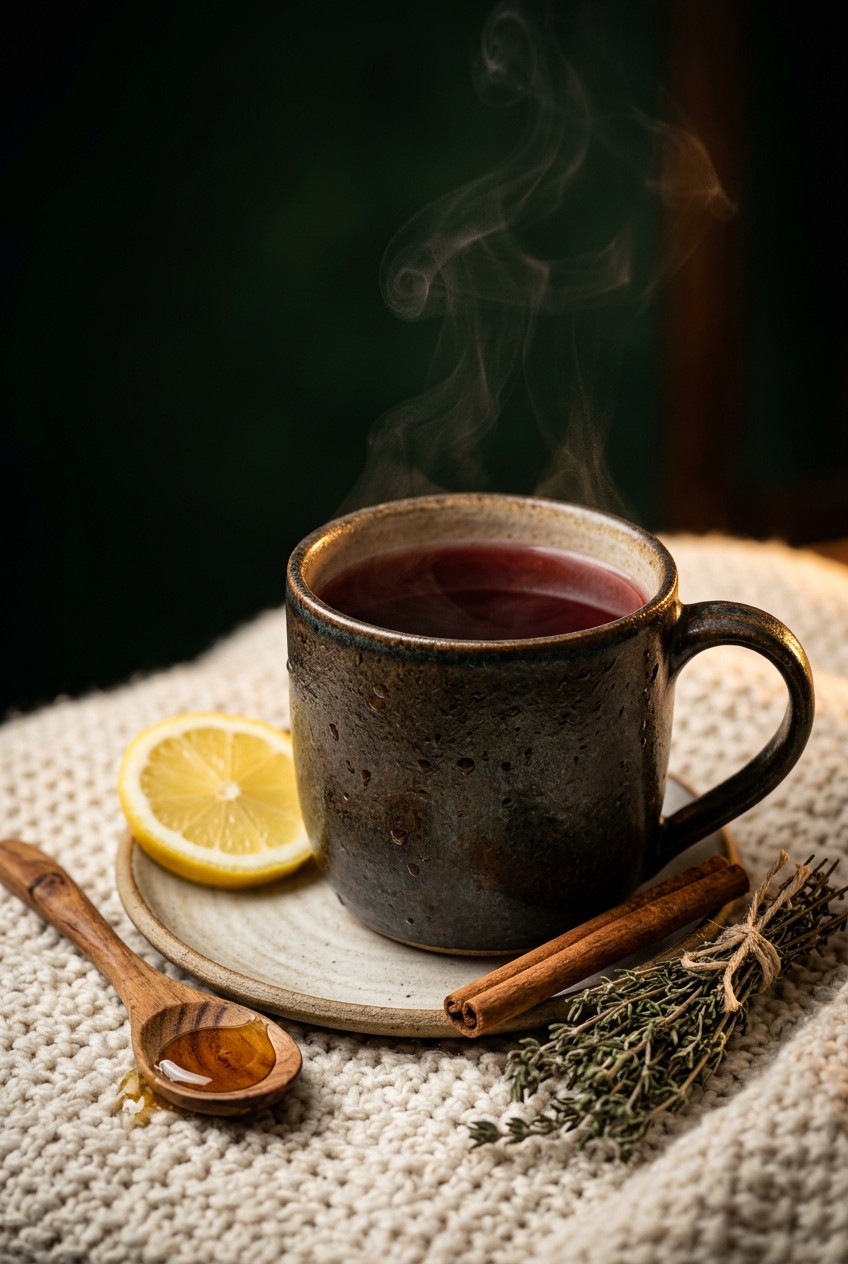
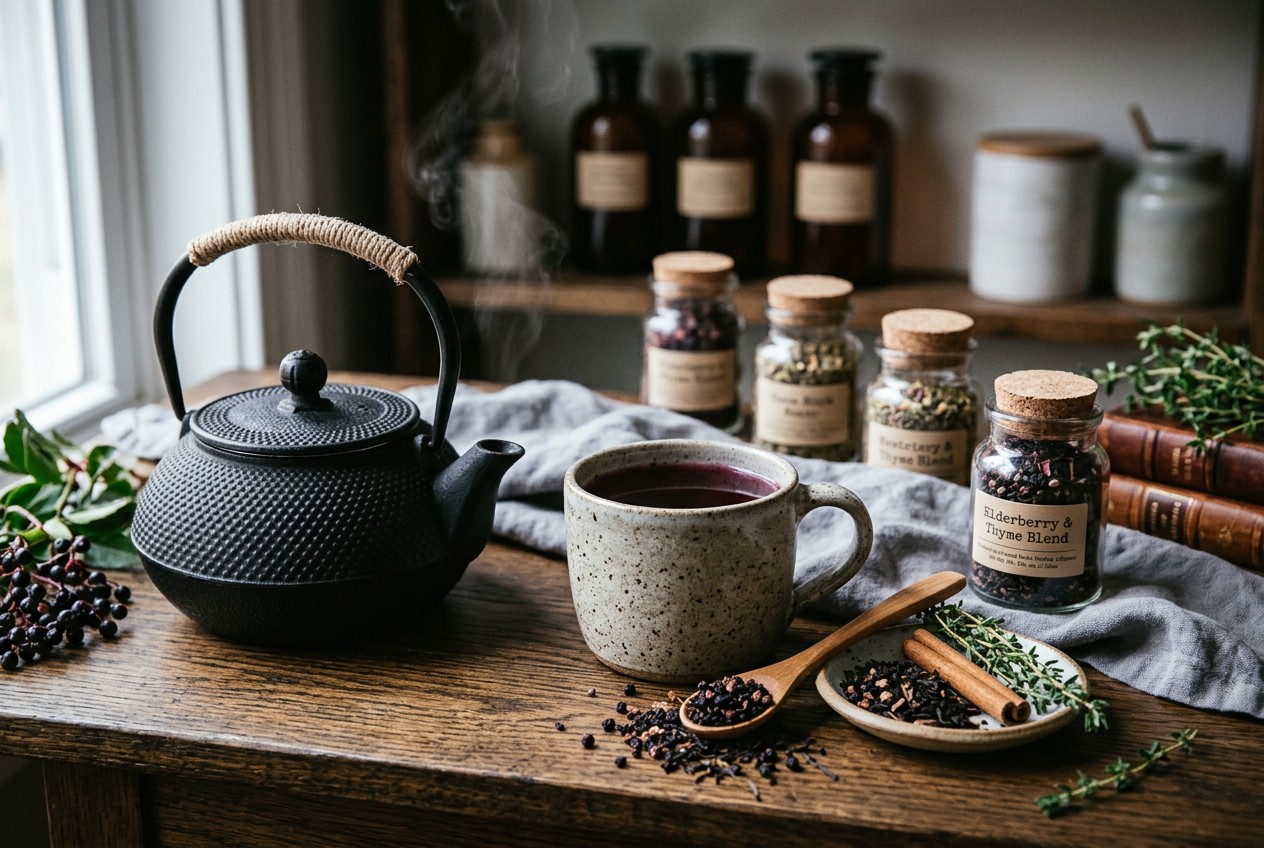
Healing herbal tea with elderberry, ginger, and thyme. Get the recipe for natural cold and flu relief.
Why You Will Love This
This is the tea I reach for when I feel the first scratch in my throat or the familiar ache settling into my bones. It tastes like warmth and medicine in the best way: sweet from elderberries, sharp with ginger heat, rounded out with honey and lemon. Every sip feels like it is doing something real.
The Story Behind It
I learned to make this immune boosting tea from an herbalist in Vermont who swore by layering herbs that work on different parts of the cold cycle. Elderberry for viral defense. Ginger to move stagnation and warm the body. Thyme to ease the cough that keeps you up at night. It is a formula born from necessity, refined over countless winter seasons.
What You Will Need
For the tea blend (makes 4 servings):
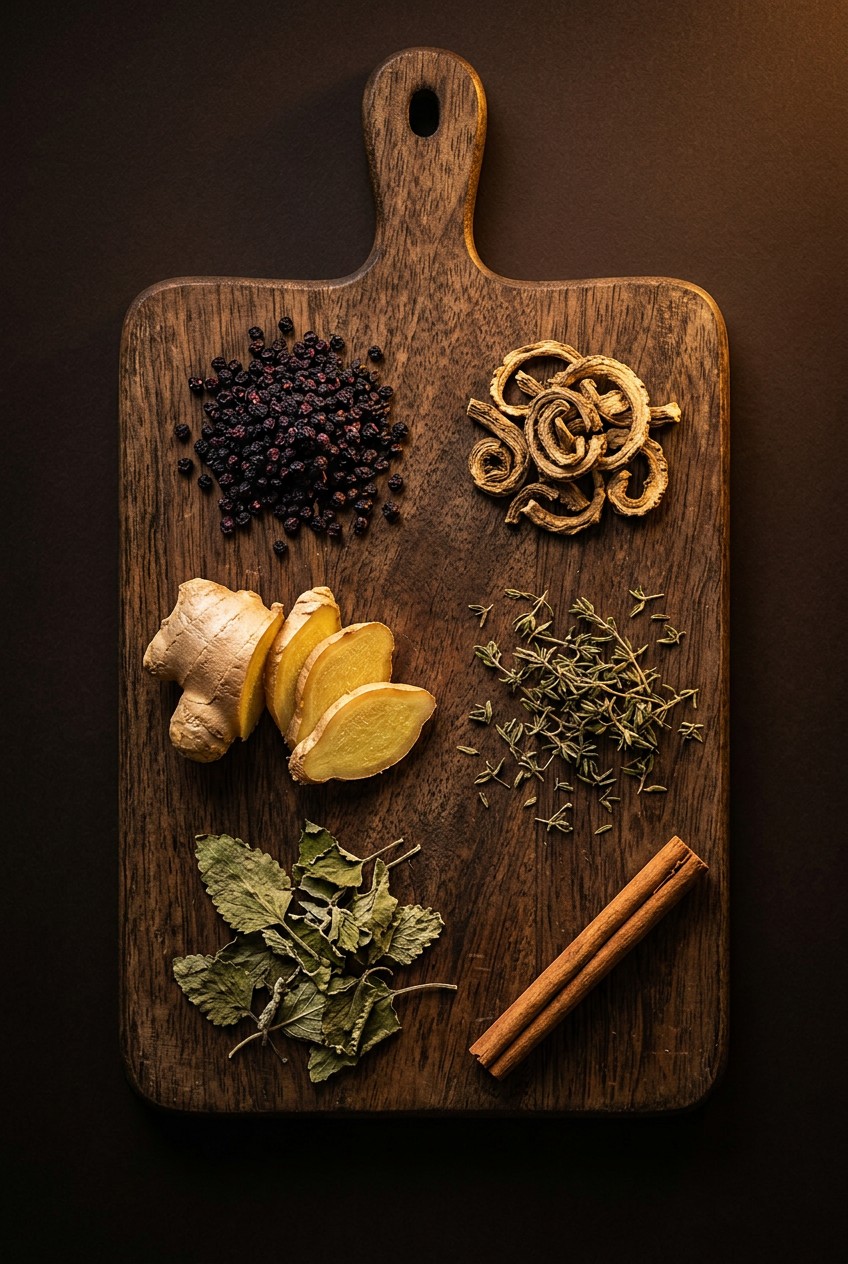
- 2 tablespoons dried elderberries
- 1 tablespoon dried echinacea root or leaf
- 1-inch piece fresh ginger, sliced thin
- 1 tablespoon dried thyme
- 1 tablespoon dried lemon balm
- 1 cinnamon stick
- 4 cups water
To serve:
- Raw honey, to taste
- Fresh lemon juice
- Optional: a pinch of cayenne for extra heat
How to Make It
Combine elderberries, echinacea, ginger, thyme, lemon balm, and cinnamon stick in a medium saucepan with 4 cups of cold water.
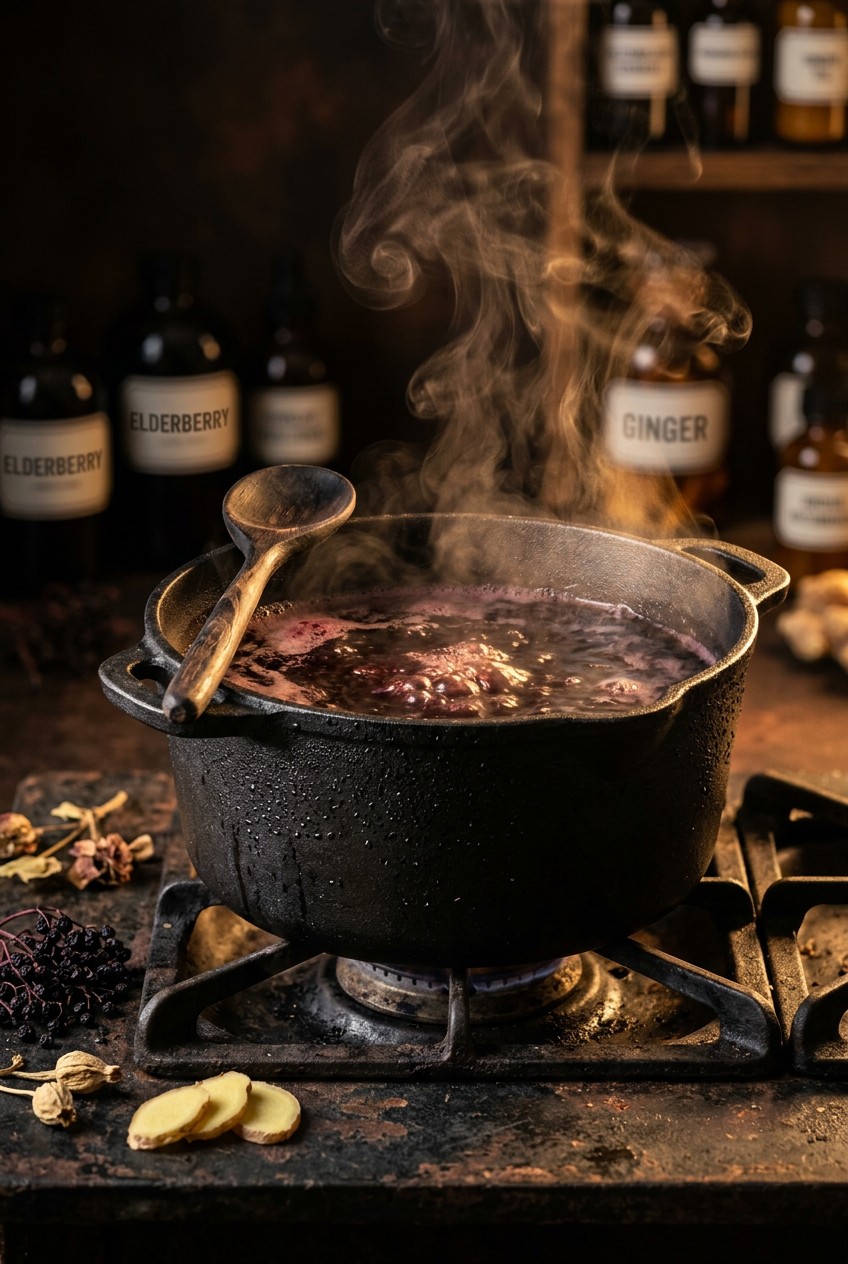
Bring to a gentle boil, then reduce heat to low. Cover and simmer for 20 minutes. The longer simmer extracts the deeper medicine from roots and berries.
Remove from heat and let steep, covered, for another 10 minutes.
Strain through a fine-mesh sieve, pressing on the solids to extract every bit of flavor and benefit.
Pour into mugs. Stir in honey while the tea is still hot (honey loses some benefits in boiling water, so add it after). Squeeze in fresh lemon juice just before drinking.
Herbalist Notes
Elderberry is the backbone here. Research supports its traditional use for shortening duration of colds and flu. It works best when taken at the first sign of symptoms.
Ginger and thyme answer the question of what tea helps break up mucus. Ginger is a powerful expectorant that warms the lungs and gets things moving. Thyme contains thymol, an antiseptic compound that loosens phlegm and calms spasmodic coughs. Together, they target the chest congestion that makes breathing feel like work.
Echinacea has been used for generations to stimulate immune response. While studies are mixed, many herbalists (myself included) find it most effective in the early stages of illness, not as a preventive taken daily for months.
Make It Your Own
If you are dealing with a sore throat specifically, double the thyme and add a tablespoon of marshmallow root for its mucilaginous, coating properties. For fever and body aches, increase the ginger and add a few yarrow flowers if you have them.
This healing tea recipe works as a concentrate too. Make a double batch, strain it well, and store in the refrigerator for up to five days. Reheat a cup at a time and add fresh honey and lemon each serving. When you are sick, the last thing you want is to stand at the stove measuring herbs.