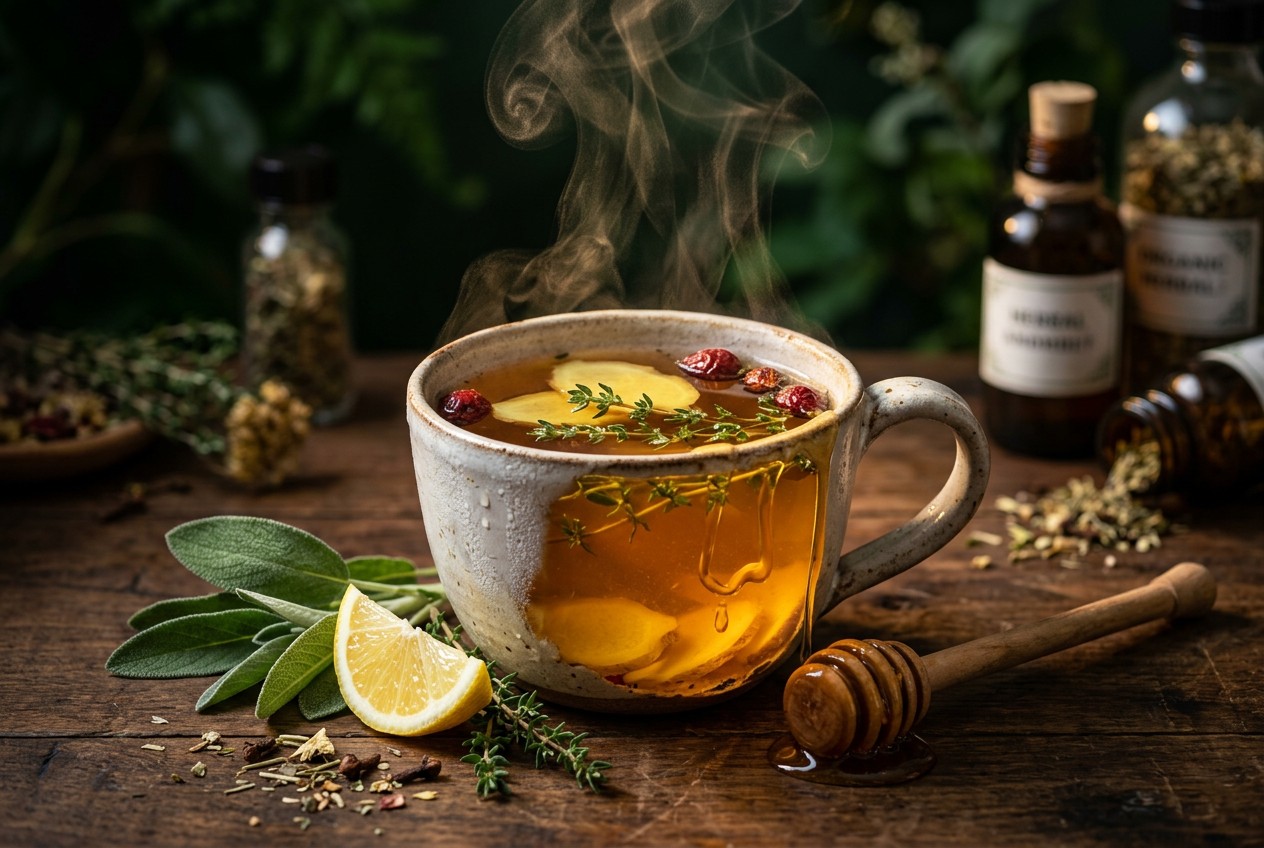
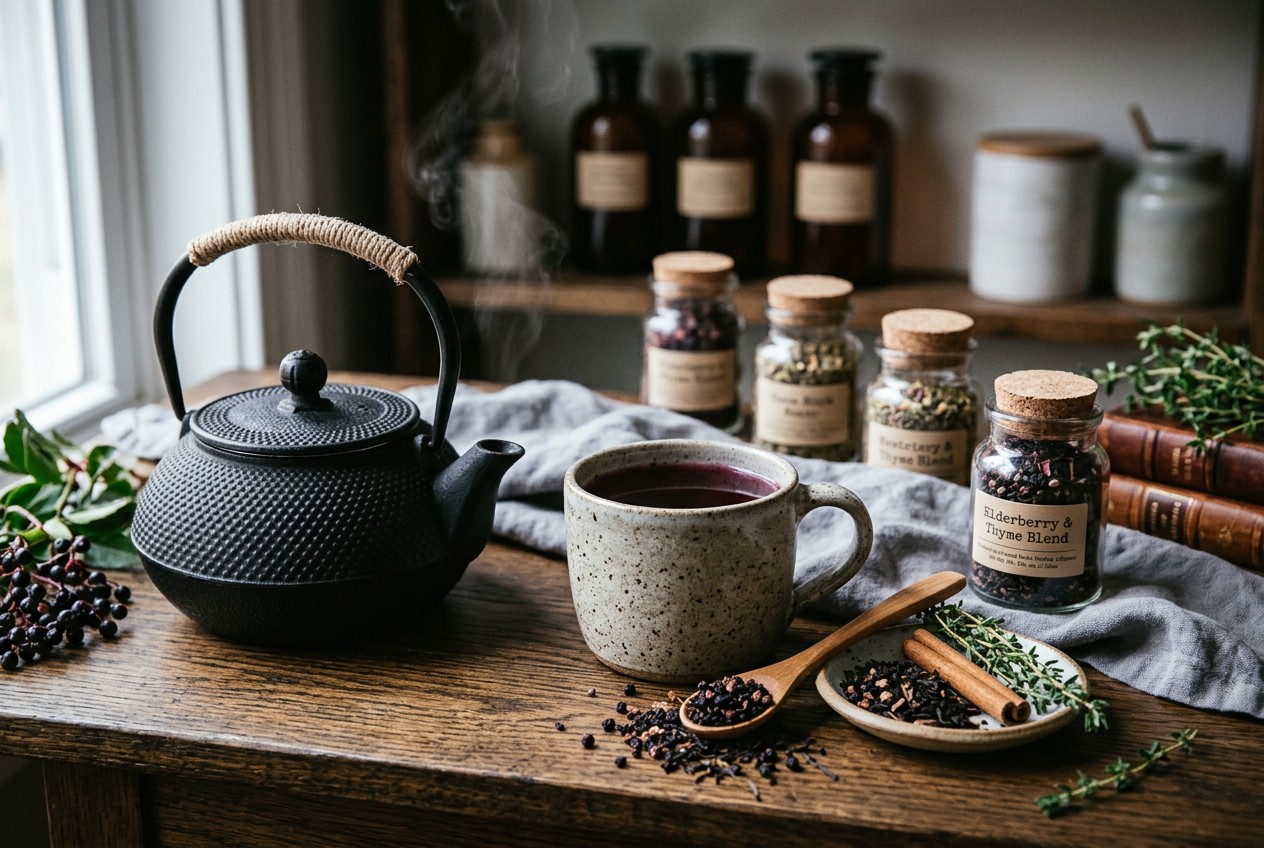
A good herbal tea for cold and flu season starts with dried elderberries simmered with ginger for 20 minutes, then thyme and rosemary steeped in at the end. The berries turn the pot dark and jammy, the ginger adds heat, and the herbs bring a savory edge. Make it when the first chilly fall days arrive and you want something hot to hold. One small pot makes about two cups.
Why You Will Love This
This is the tea I reach for when the first scratch shows up in my throat or the familiar ache settles into my bones. It’s sweet from the elderberries, sharp with ginger heat, and rounded out with honey. It’s the mug you want in your hands on the days nothing else appeals.
The Story Behind It
I got the idea for this tea from an herbalist in Vermont who built her winter blend the way a cook builds a stock, layering things that taste good together and hold up to a simmer. Elderberries give the dark, jammy sweetness. Ginger gives the heat. Thyme adds the savory, almost medicinal note that arrives at the back of the sip.
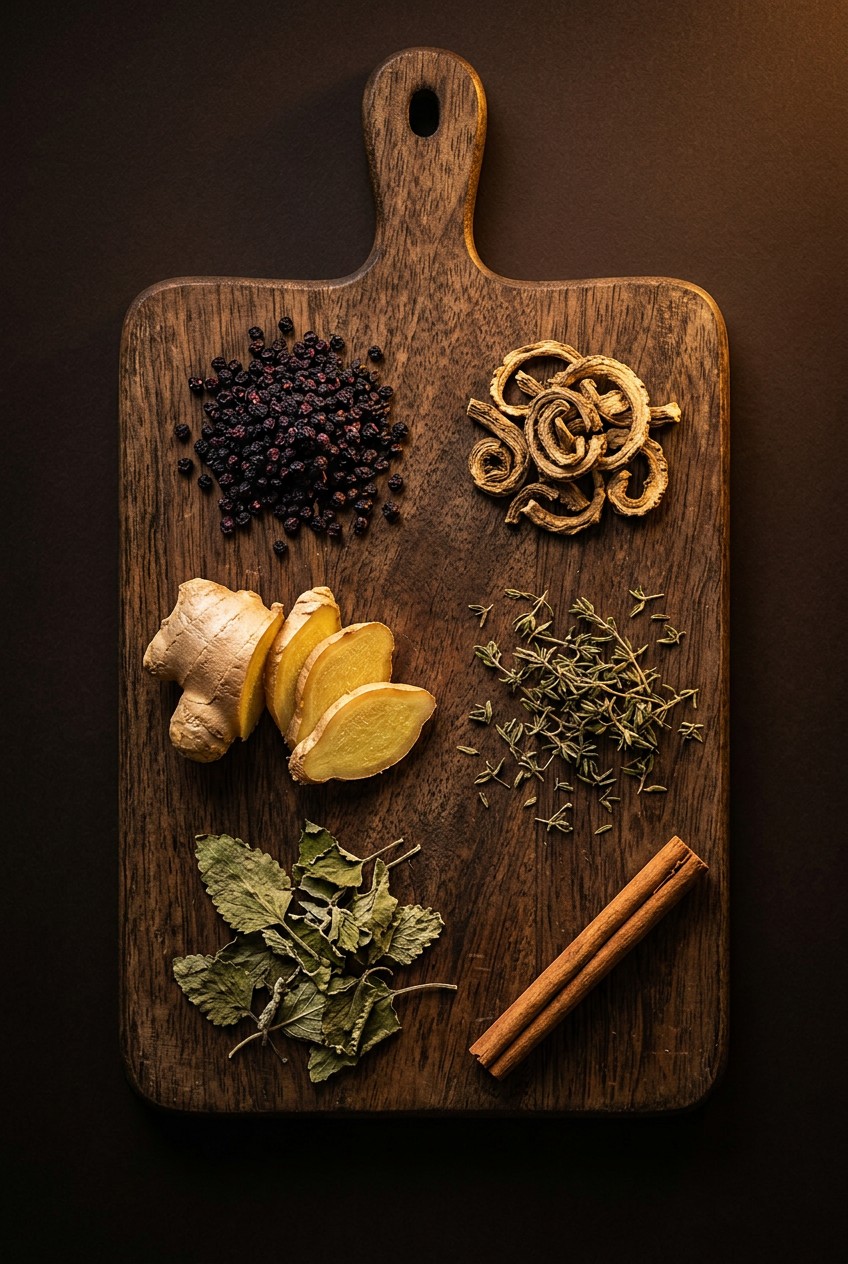
What You Will Need
- 1/4 cup dried elderberries
- 1/2 teaspoon dried ginger pieces
- 1/4 teaspoon black peppercorns, coarsely ground
- 14 ounces water
- 1 teaspoon dried rosemary
- 1 teaspoon dried thyme
- Honey or other sweetener, optional
How to Make It
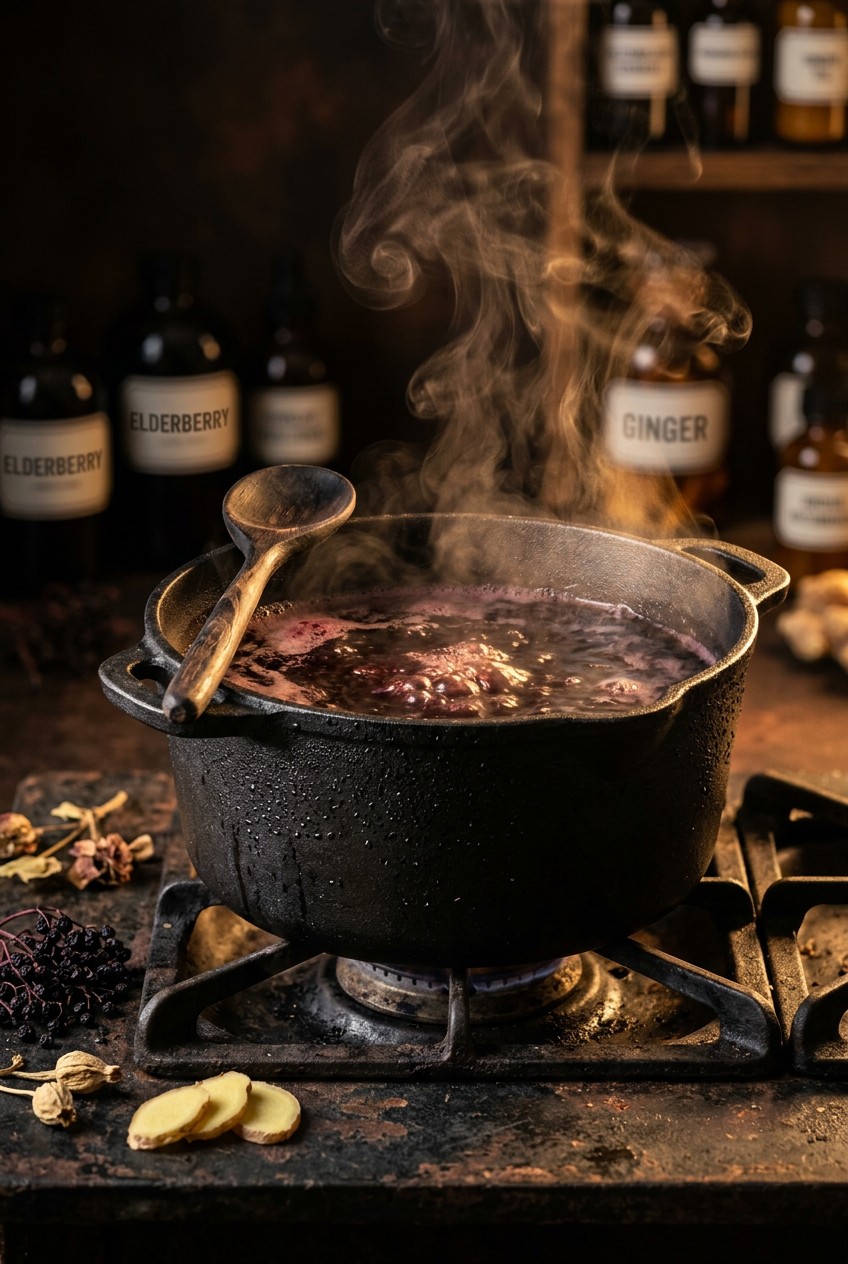
Put the elderberries, ginger, black pepper and water in a small saucepan. Cover, bring to a boil, then simmer for 20 minutes. Elderberries must be cooked, so don’t skip the simmer.
Turn off the heat. Add the rosemary and thyme, cover, and steep for 5 minutes. The delicate herbs go in last so their oils stay in the cup instead of steaming away.
Strain through a fine-mesh sieve, pressing on the berries to get every bit of flavor.
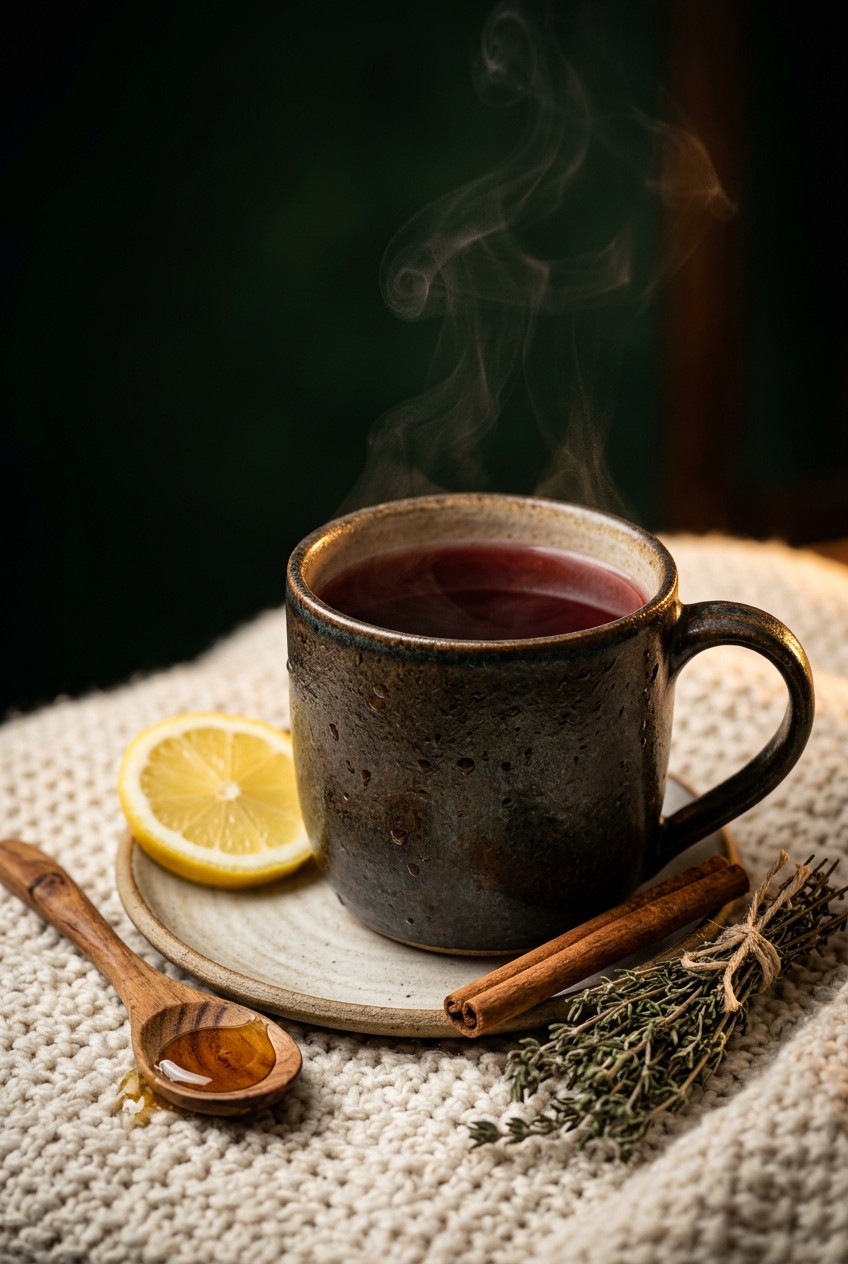
Stir in honey if you like and drink warm. Sip it through the day.
Herbalist Notes
Elderberry is the backbone here. It turns the pot deep purple-black and gives the tea its jammy sweetness. Dried berries need the full simmer to give that up. A quick steep would leave most of the color and flavor in the sieve.
Ginger and thyme keep this from tasting like a fruit tea. Ginger brings the clean heat you feel at the back of the throat. Thyme carries thymol, the compound behind the sharp smell that rises the moment hot water hits it. The pinch of black pepper adds a little more warmth.
Make It Your Own
If a sore throat is what’s bothering you most, there’s a separate sore throat tea on the site with ginger, thyme and lemon. For a sweeter cup, stir in a spoonful of elderberry syrup . Double the batch and keep the strained tea in the refrigerator, then reheat a cup at a time and add fresh honey . Never give honey to a child under one year old.
Common Questions
What are the best herbs for a cold and flu tea?
Elderberry, ginger, thyme and rosemary each bring something different. Elderberry gives the dark color and the jammy sweetness. Ginger brings the heat. Thyme brings the savory herbal edge, and rosemary adds a piney note that keeps the pot from tasting heavy.
Why does this tea feel like it clears your head?
Mostly steam and aroma. Any hot drink held under your nose does some of that, and this one is more fragrant than most. Thyme is the old cough herb of European kitchens, and ginger and black pepper make the cup feel hot in your chest, not just your mouth.
Can you add honey to this tea, and when?
Yes. Stir it in after you take the pot off the heat, once the tea is in the mug, so it dissolves cleanly and keeps its flavor.
How long should you simmer this tea?
Simmer the elderberries, ginger and pepper for 20 minutes, covered. Then add the thyme and rosemary off the heat and steep for 5 minutes before straining.