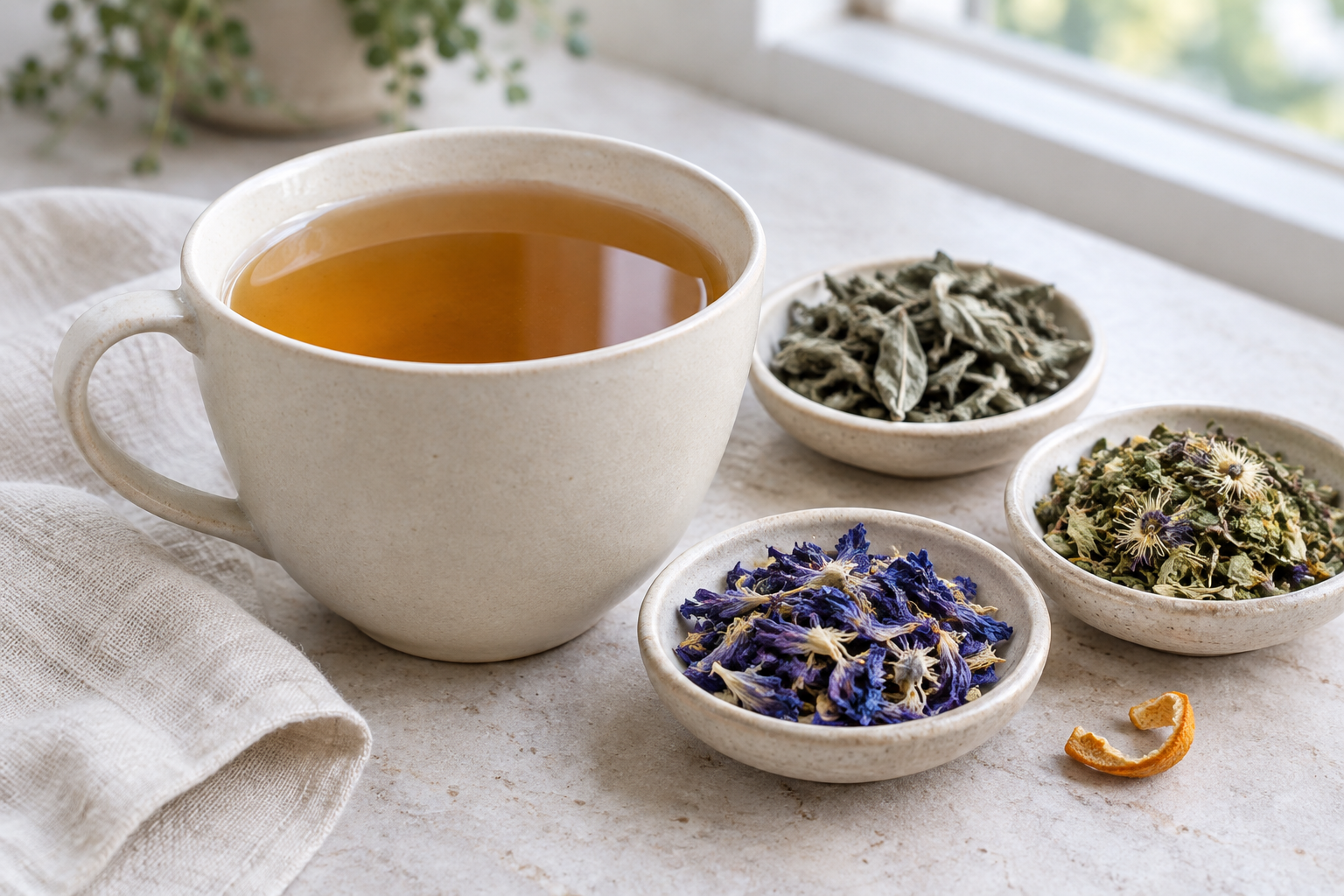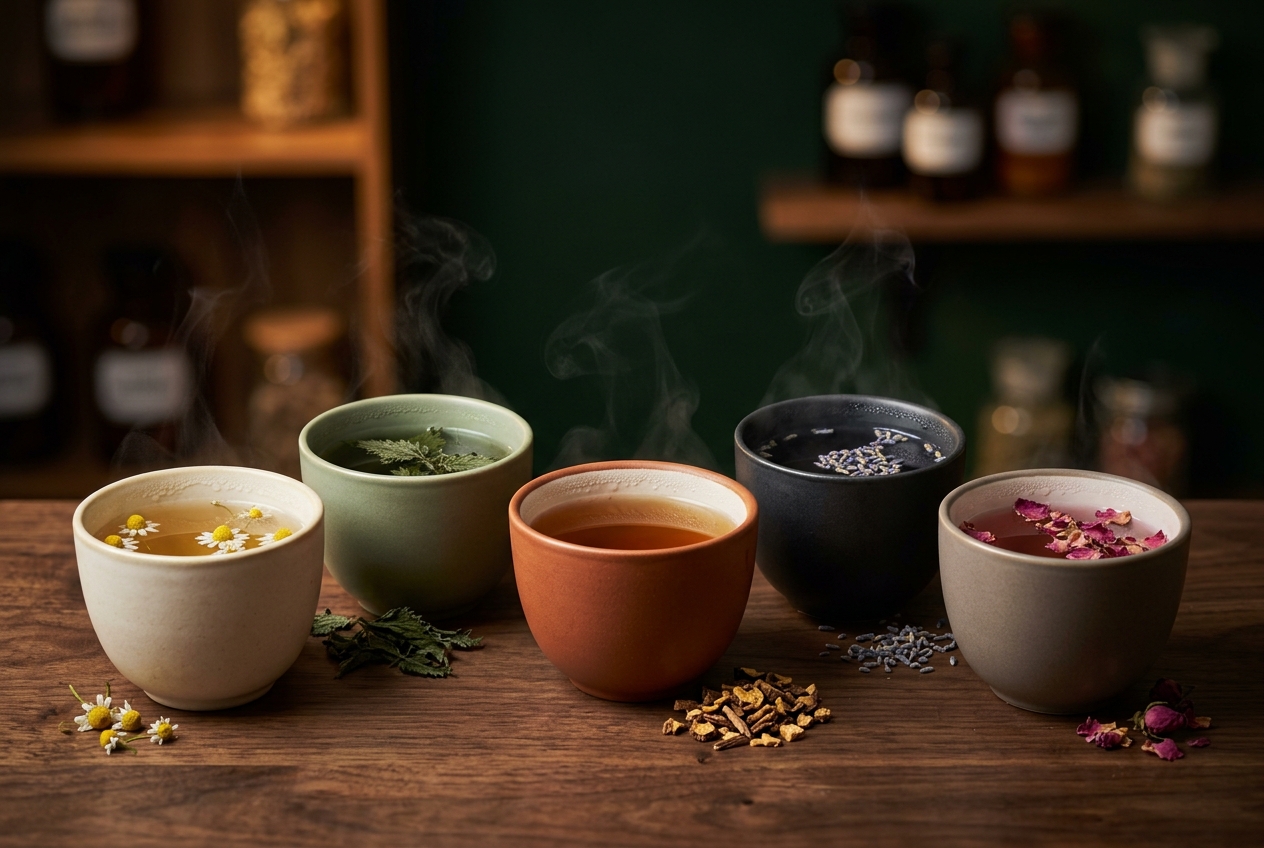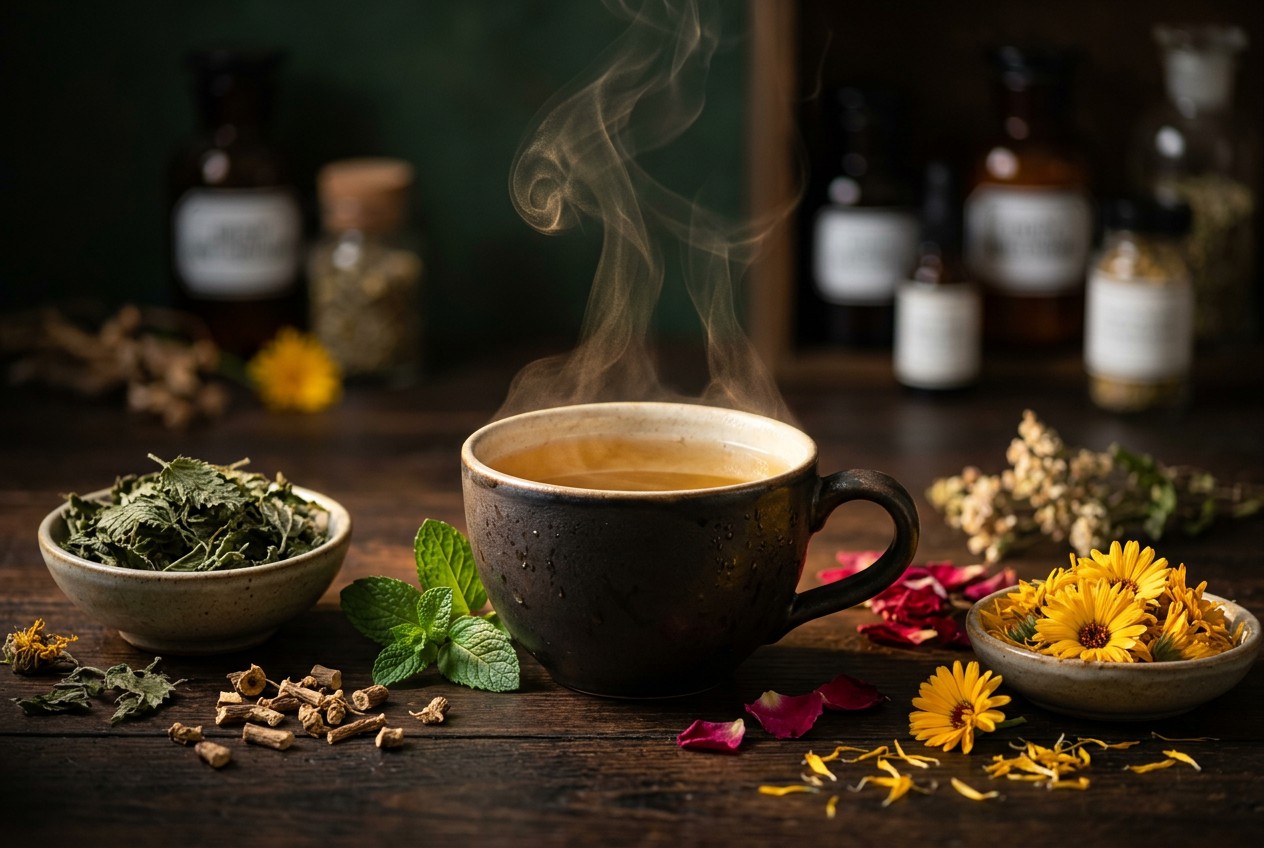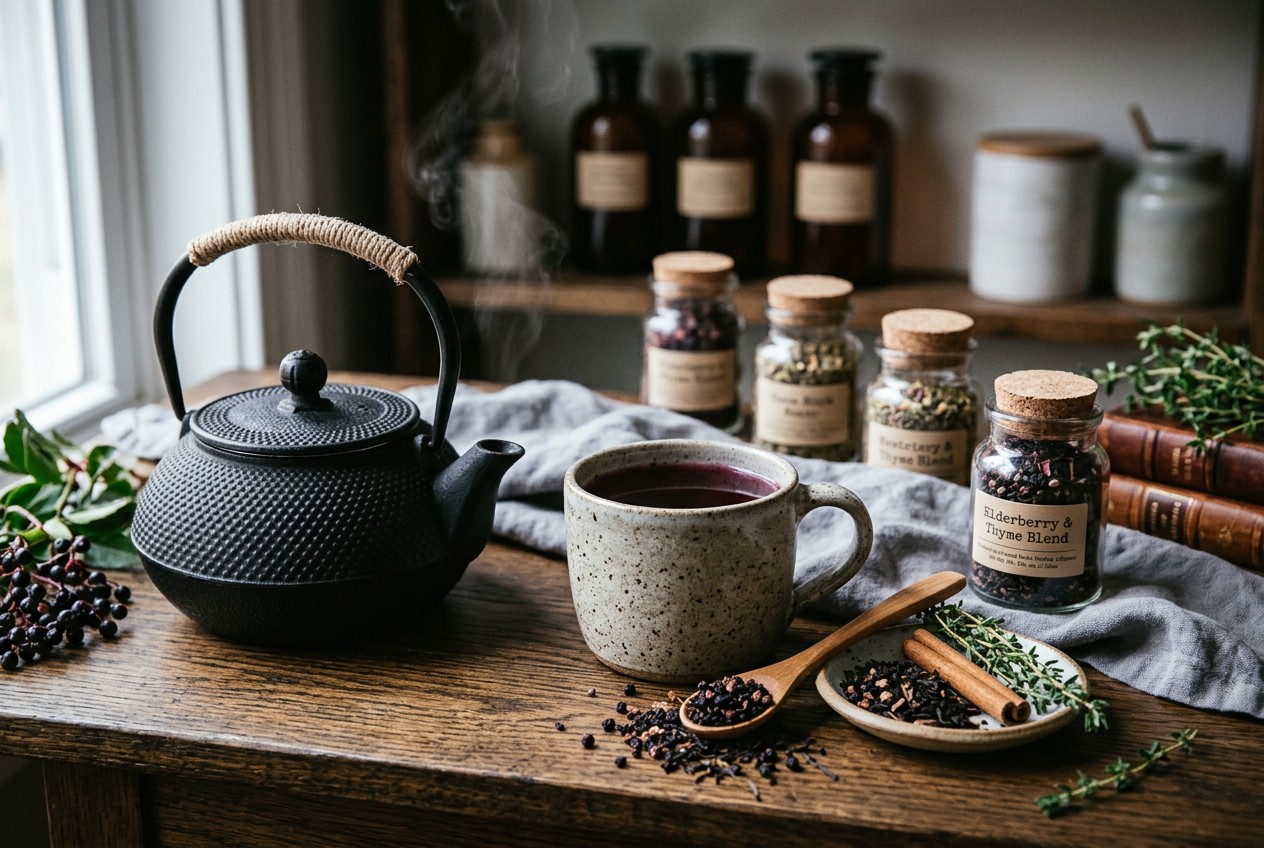
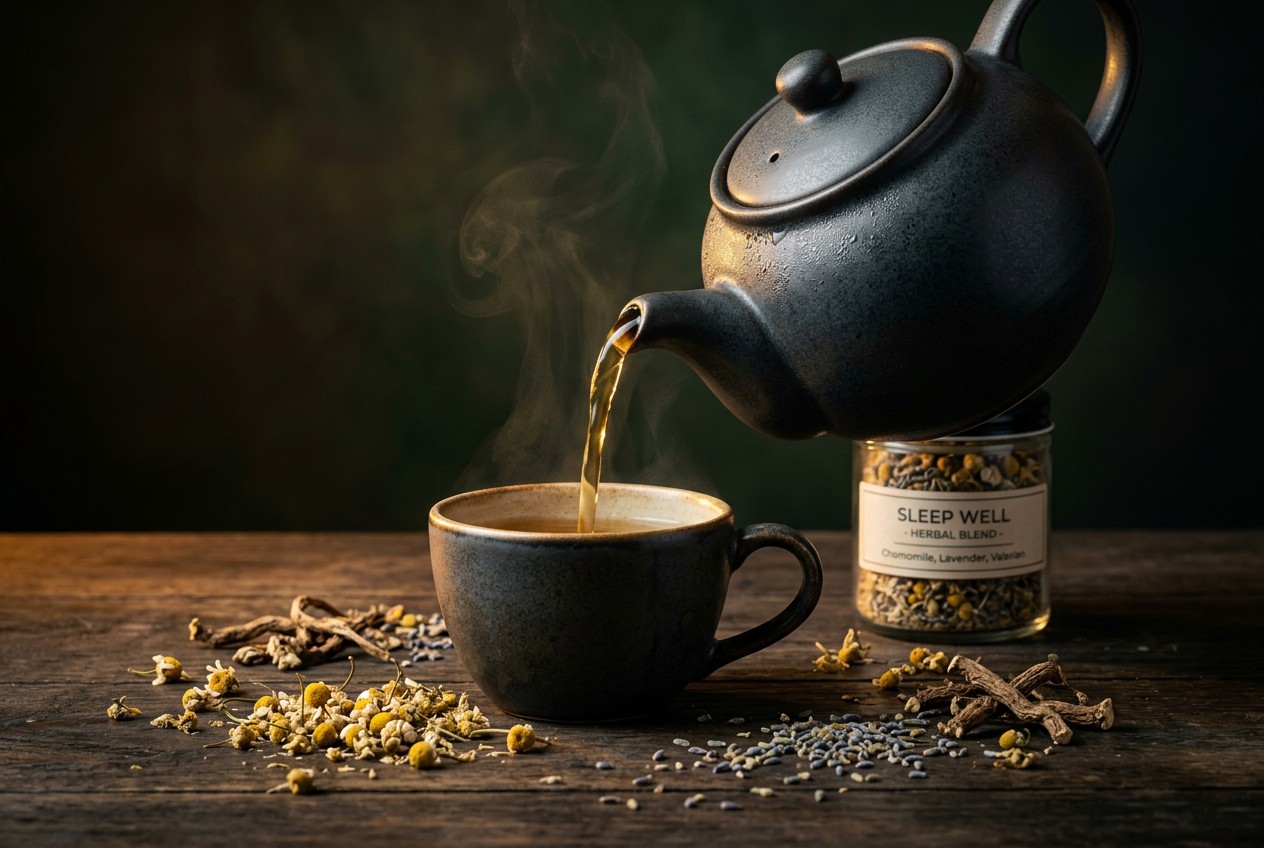
A good herbal tea for sleep is a simple jar of dried chamomile, lavender, passionflower and valerian root that you mix once and scoop from all week. Steep one tablespoon in a cup of boiling water, covered, for 5 minutes, and sip it slowly in the evening. It smells like a linen closet in Provence, and on a chilly fall night it’s the cup to hold with both hands.
Why You Will Love This
This sleep tea blend wraps around you like a soft blanket. The chamomile tastes gently floral, the lavender adds a whisper of calm, passionflower rounds it out, and the valerian root sits quietly in the background. Sip it slowly and let the warmth settle into your shoulders while the day fades.
The Story Behind It
I started making this herbal tea recipe for sleep during a winter when my mind wouldn’t quiet down at night. Now this bedtime tea sits in a glass jar on my counter, ready whenever I want to tell my body the day is over.
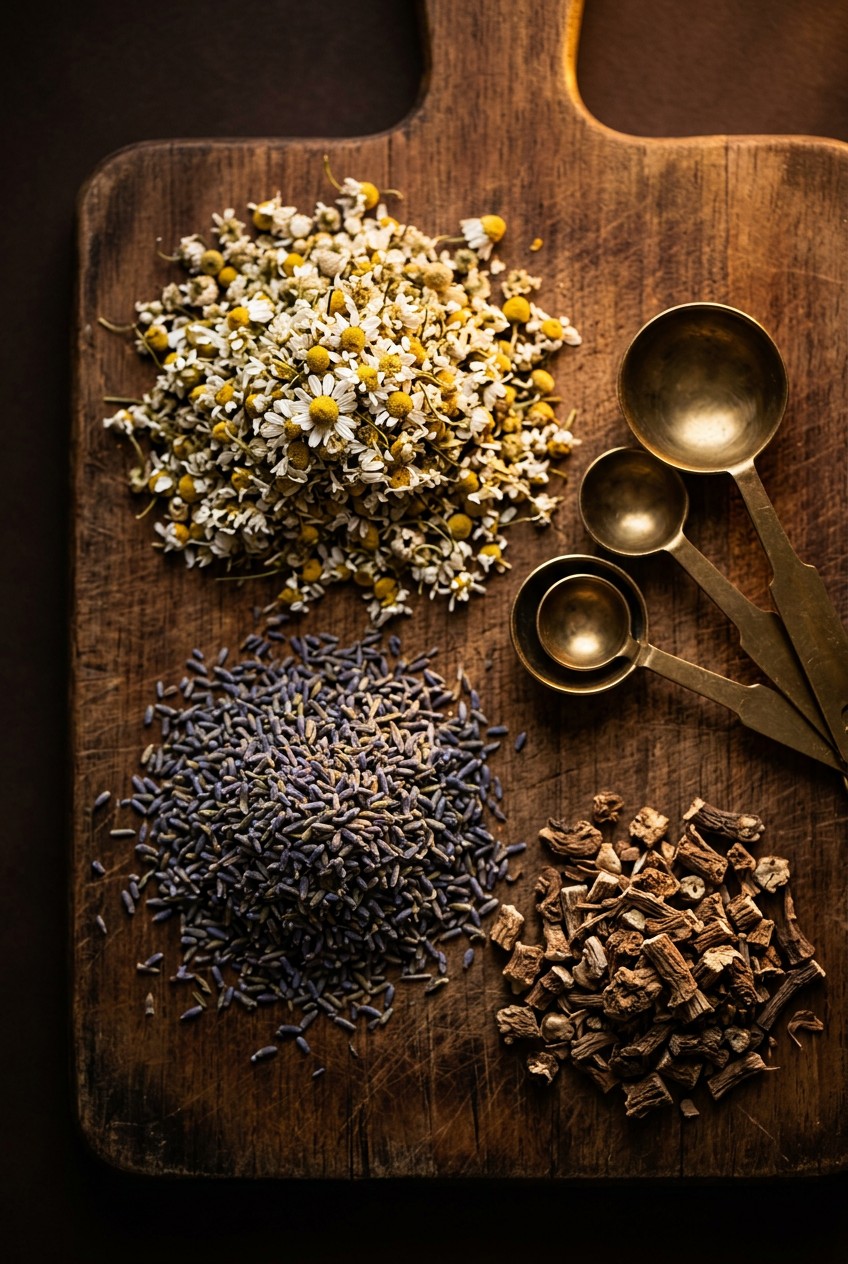
What You Will Need
For the dry blend (about 1 cup, enough for 16 cups of tea):
- 6 tablespoons dried chamomile
- 5 tablespoons dried lavender
- 2 tablespoons dried passionflower
- 2 tablespoons dried valerian root
For each cup:
- 1 tablespoon of the blend
- 1 cup boiling water
Passionflower and valerian root are easy to find at specialty tea shops, health stores or online.
How to Make It
- Combine the chamomile, lavender, passionflower and valerian root in a bowl. Store the blend in an airtight container at room temperature for up to 1 month.
- For one cup of tea, put 1 tablespoon of the blend in a tea infuser or sachet.
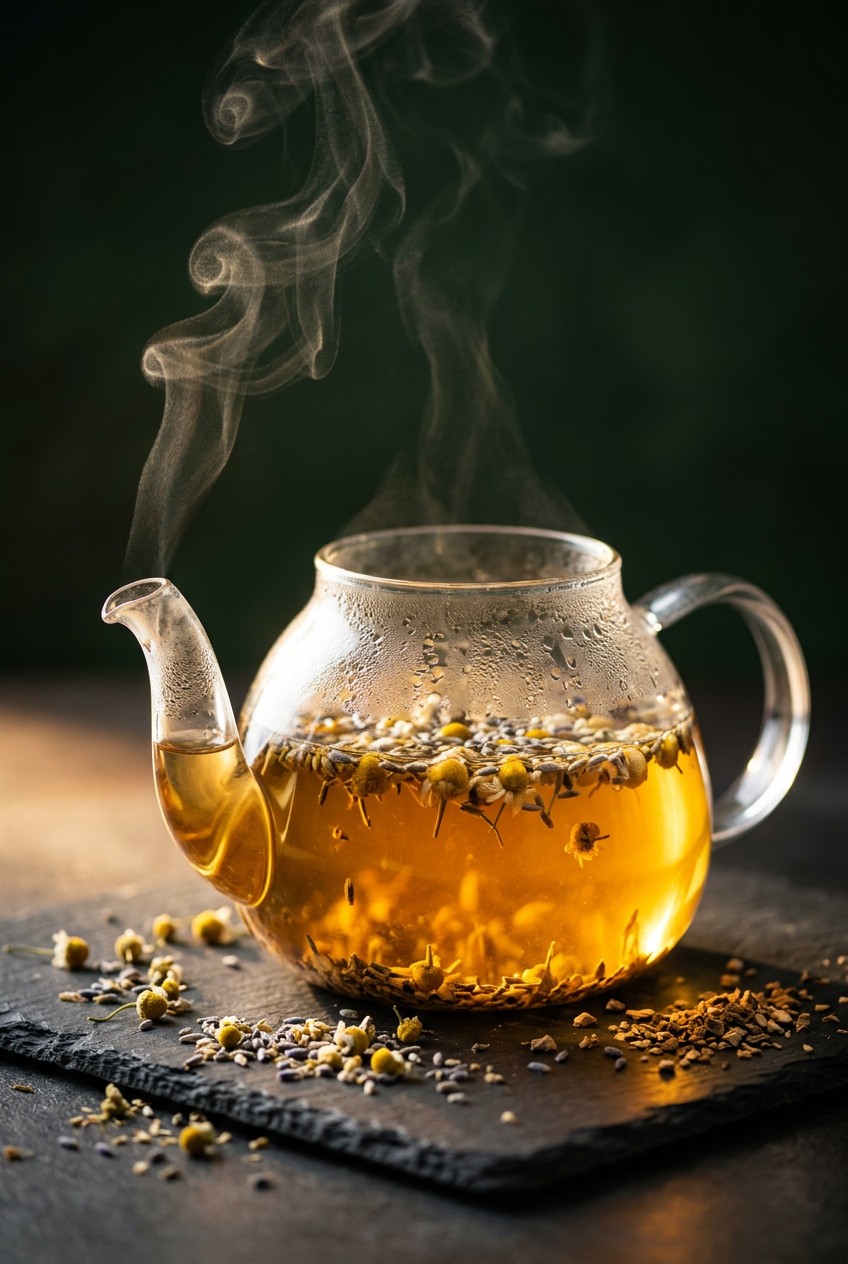
- Steep it in 1 cup of boiling water in a covered teacup for 5 minutes. Covering keeps the aroma in the cup instead of letting it leave with the steam.
- Remove the infuser and serve right away.
Herbalist Notes
Chamomile is the gentle workhorse here. It’s the classic bedtime flower across most of Europe, and it tastes of apples and hay. Lavender is the calming herb of the Mediterranean, sewn into pillows and sachets centuries before it went into a cup. Passionflower is mild and grassy and helps round out the floral notes. Valerian is the strong one, the root Western herbalism has kept for the evening. It smells frankly awful, which is the first thing anybody notices, so it’s the smallest part of the jar.
Make It Your Own
For a milder, sweeter cup, stir in a little raw honey or a few fresh lemon balm leaves after steeping. A small piece of cinnamon stick adds warmth for fall evenings, and a pinch of dried rose petals gives a floral note. For a cold, fizzy take on the same flavors, try the lavender chamomile bedtime mocktail or the lavender honey lemon mocktail . The loose-leaf guide covers more blending ratios.
Common Questions
What are the best herbs to use in a sleep tea?
Chamomile, lavender, passionflower and valerian root are the herbs this blend is built on. Chamomile is the gentle one, and most people already have it in the cupboard. Valerian is earthy and strong-smelling, so it stays a small part. Lavender does part of its work before you drink anything, because the steam coming off the cup smells so soothing.
How long before bed should you drink sleep tea?
Most people like to finish a cup 30 to 45 minutes before bed. The point is the ritual: finish the cup, brush your teeth and turn the lights down before you get into bed, instead of lying there holding a hot mug.
How do I store the blend?
Keep the dry blend in an airtight container at room temperature. It stays good for up to a month, so mix a jar at a time.
Can you cold brew herbal sleep tea?
This blend is steeped hot, covered, for 5 minutes. For an iced version, brew it hot, strain, and chill it.