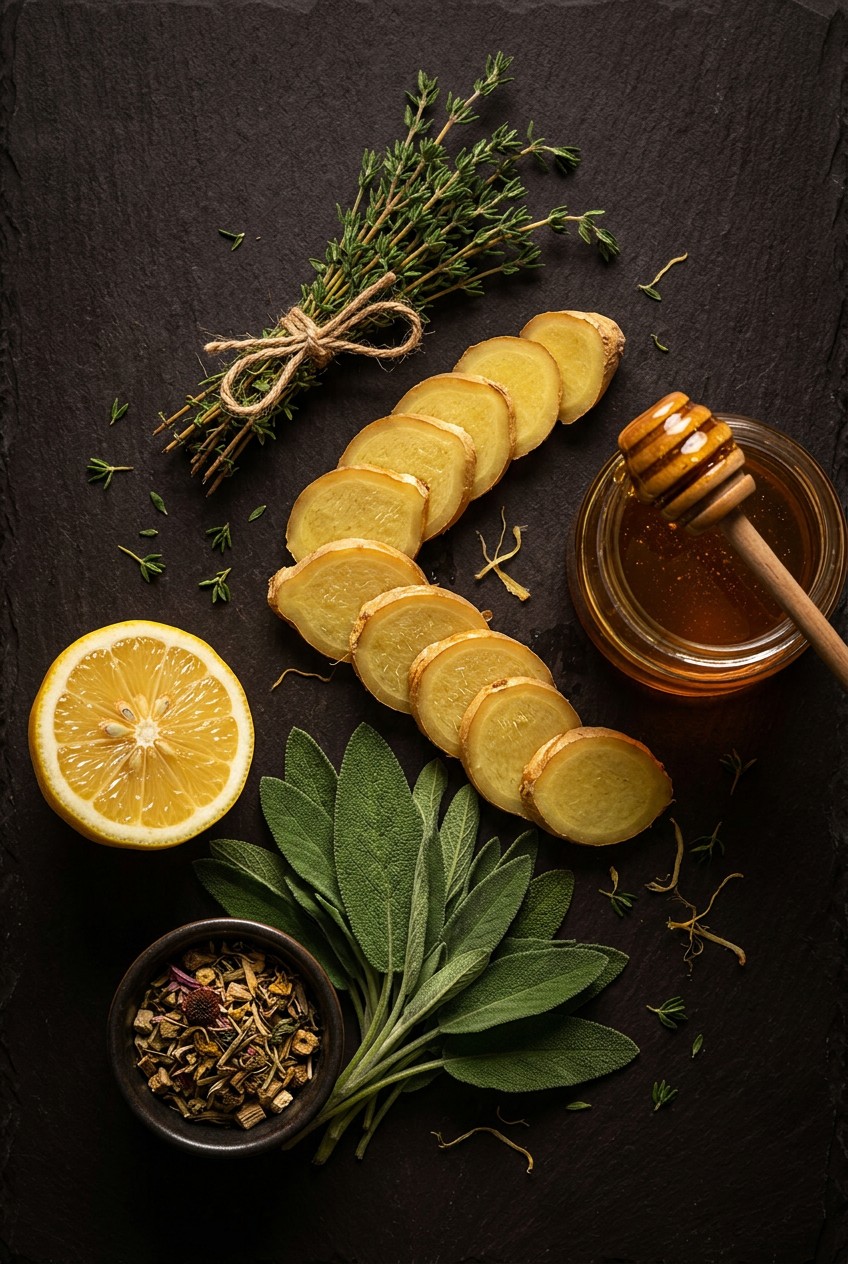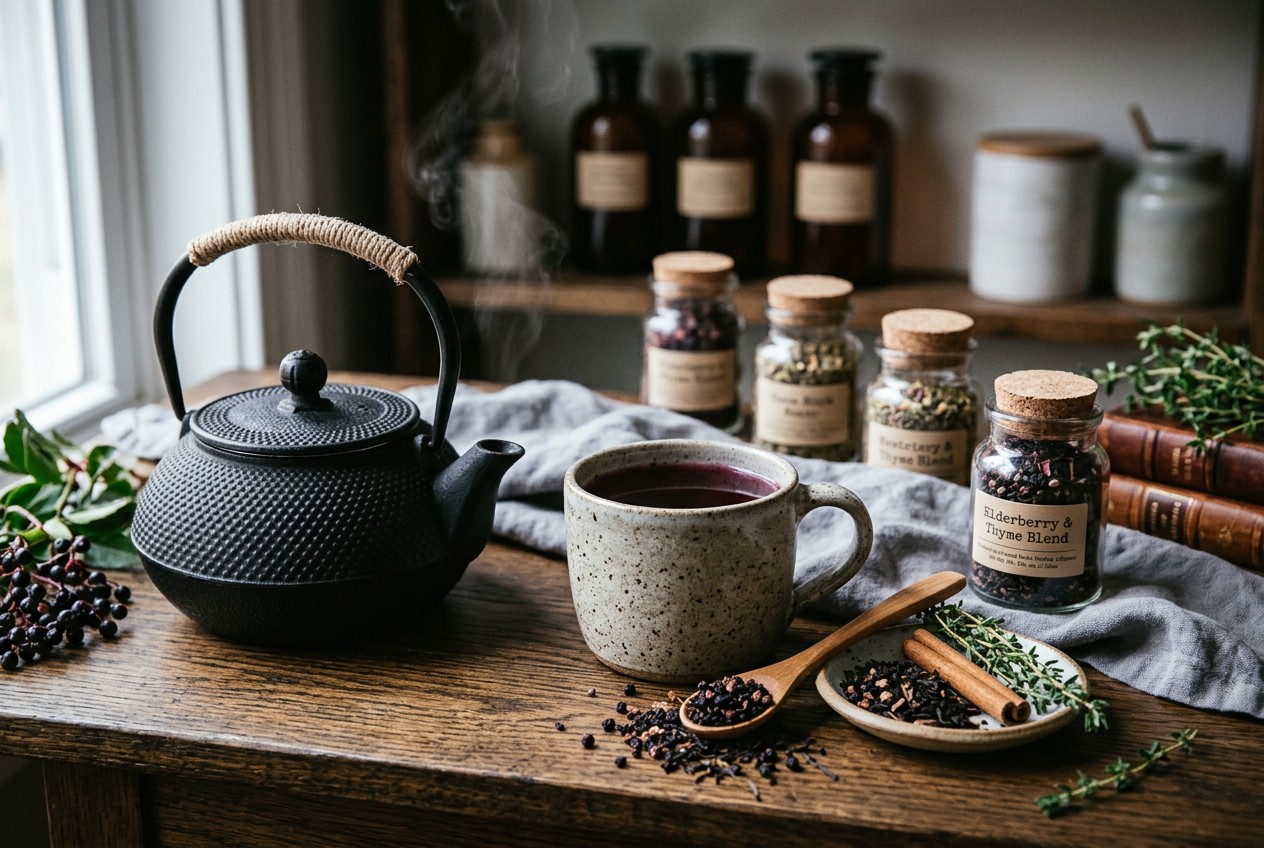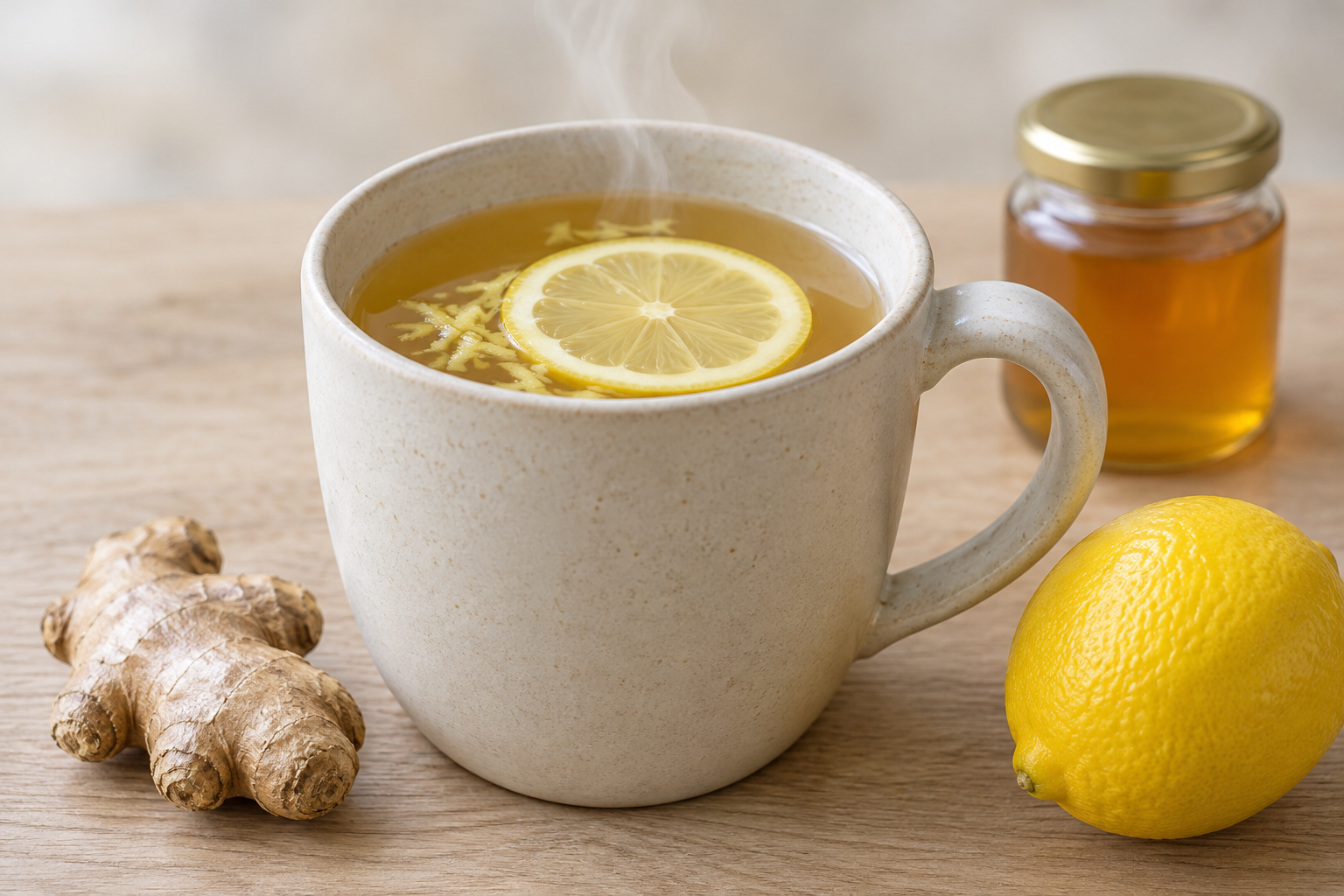

Herbal tea for sore throat with ginger, thyme, sage, lemon, and honey. Thyme contains thymol, a natural antiseptic that coats and soothes throat tissue.
Why You Will Love This
The first sip coats your throat like warm silk. Ginger brings heat without harshness, thyme and sage offer their gentle antimicrobial embrace, and raw honey smooths every rough edge. This healing tea for throat relief works because it combines herbs that have soothed sore throats for centuries, and you can make it in your own kitchen with ingredients you probably already have.
The Story Behind It
I learned this blend during a winter when every conversation felt like swallowing glass. A herbalist friend handed me a thermos and said, “Drink this every two hours.” By evening, the fire in my throat had dimmed. The secret wasn’t one miracle herb but the synergy: ginger’s warming compounds, thyme’s thymol content, sage’s astringent tannins, and honey’s coating action. Traditional medicine knew what modern research now confirms. These herbs genuinely help.

What You Will Need
For the Base Blend (makes 1 large mug):
- 1-inch piece fresh ginger root, thinly sliced
- 3 sprigs fresh thyme (or 1 teaspoon dried)
- 2 fresh sage leaves (or 1/2 teaspoon dried)
- 1 tablespoon fresh lemon juice
- 1 tablespoon raw honey (local if possible)
- 12 ounces (1.5 cups) boiling water
Optional Additions:
- 1/2 teaspoon ground turmeric for extra anti-inflammatory power
- 1 cinnamon stick for warmth and sweetness
- Pinch of cayenne pepper if you can handle the heat
How to Make It
Place the sliced ginger, thyme, and sage in a large mug or small teapot.
Pour boiling water over the herbs. Cover with a small plate or lid to trap the volatile oils.
Steep for 10 minutes. This is longer than regular tea because you want to extract the medicinal compounds fully.
Strain into your favorite mug. The liquid should be golden and fragrant.
Stir in lemon juice and honey while the tea is still hot. The heat activates honey’s soothing properties without destroying its beneficial enzymes.
Sip slowly, letting each mouthful coat your throat before swallowing.

Herbalist Notes
Thyme contains thymol, a compound with proven antimicrobial properties that can help fight the bacteria or viruses irritating your throat. Sage’s tannins create an astringent effect that tightens inflamed tissues and reduces swelling. Fresh ginger delivers gingerols that reduce pain and inflammation while stimulating circulation to speed healing.
Raw honey does more than sweeten. It forms a protective coating over irritated throat tissues and has natural antibacterial properties. Local honey may also help with seasonal allergies that sometimes trigger throat irritation.
How often should you drink this sore throat tea? Every two to three hours while symptoms persist. The relief is cumulative. One cup helps, but consistent sipping throughout the day gives your throat the sustained support it needs to heal.
Make It Your Own
If you cannot find fresh herbs, dried work beautifully. Use half the amount since dried herbs are more concentrated. Keep a jar of the dried blend ready in your pantry: combine 2 tablespoons dried thyme, 1 tablespoon dried sage, and 1 tablespoon dried ginger chips. Store in an airtight container and use 1 tablespoon per cup when throat trouble strikes.
For children over one year old (never give honey to infants), reduce the ginger by half and add a splash of apple juice for sweetness. The immune-boosting properties remain, but the flavor becomes more approachable.
Make a double batch and keep it in a thermos. Sip throughout the day, reheating as needed. Cold tea loses its soothing effect, so warmth matters as much as the herbs themselves.

Common Questions
What are the best herbs for sore throat tea?
Thyme, sage, ginger, and slippery elm are the four most effective herbs for sore throat relief. Thyme contains thymol, which has proven antimicrobial activity against both bacteria and viruses. Sage provides astringent tannins that tighten inflamed tissues and reduce swelling. Ginger delivers gingerols that reduce pain and stimulate circulation to speed healing. Slippery elm, not in this recipe but worth knowing, forms a mucilaginous coating over the throat that provides sustained physical relief. Licorice root is another option; its glycyrrhizin compounds have anti-inflammatory and antiviral properties.
How often should you drink sore throat tea?
Every 2 to 3 hours while symptoms are active. One cup helps, but the relief from these herbs is cumulative and short-lived, meaning a single cup does not carry you through the whole day. Make a double batch and keep it in a thermos so you are not reboiling water constantly. Consistent warmth and hydration matter as much as the herbs themselves. Sipping regularly throughout the day keeps your throat coated and the anti-inflammatory compounds working, rather than waiting for discomfort to peak before reaching for another cup.
Does honey actually help a sore throat?
Yes, and it has solid research behind it. Honey forms a physical coating over irritated throat tissue, which reduces the friction that makes swallowing painful. It has natural hydrogen peroxide production that gives it antibacterial activity. A 2021 review in BMJ Evidence-Based Medicine found honey more effective than usual care for upper respiratory tract symptoms including sore throat. Raw honey provides more enzyme activity than processed honey. Local honey has the added benefit of potential allergy support. Use 1 tablespoon per cup, stirred in while the tea is hot but after it comes off direct heat.
Can you gargle with this herbal tea?
Yes, and it works well. Let the tea cool to a comfortable temperature, around 100 to 110 degrees Fahrenheit, then take a mouthful and gargle for 30 seconds before spitting. The thyme and sage in this blend are particularly effective as a gargle because their antimicrobial compounds make direct contact with the throat tissue. Add an extra pinch of salt to the gargling portion for additional astringent action. Gargle two to three times daily in addition to drinking the tea. Do not gargle with boiling or very hot tea, as it will irritate rather than soothe.
When should you see a doctor for a sore throat?
See a doctor if your sore throat is severe and comes on suddenly, if you have a fever above 101 degrees Fahrenheit, if you notice white patches or pus on your tonsils, if you have difficulty breathing or swallowing, or if symptoms do not improve after five to seven days of home care. These can be signs of strep throat or tonsillitis, which require antibiotics. Herbal tea is appropriate support for a viral sore throat from a cold, but it is not a treatment for bacterial infection. If you have been around someone with confirmed strep, get tested rather than waiting.
When to Serve and Pairings
This tea is best served when you want a quieter drink: something warm, simple, and easy to repeat without much setup.
Perfect occasions include:
- Bedtime wind-downs
- Rainy afternoons
- Slow mornings
- Seasonal sniffle days
- Reading breaks
- After-dinner sipping
Food pairings:
- Honey toast
- Plain shortbread
- Oatmeal with fruit
- Citrus slices
- Almond biscotti
- Simple yogurt bowls
For herbal teas, keep pairings mild and not too sweet so you can still taste the herb, steep time, and honey or lemon if you add them.
Printable recipe
Herbal Tea Recipe for Sore Throat
Herbal tea for sore throat with ginger, thyme, sage, lemon, and honey. Thyme contains thymol, a natural antiseptic that coats and soothes throat tissue.
Ingredients
- 1-inch piece fresh ginger root, thinly sliced
- 3 sprigs fresh thyme (or 1 teaspoon dried)
- 2 fresh sage leaves (or 1/2 teaspoon dried)
- 1 tablespoon fresh lemon juice
- 1 tablespoon raw honey (local if possible)
- 12 ounces (1.5 cups) boiling water
- 1/2 teaspoon ground turmeric for extra anti-inflammatory power
- 1 cinnamon stick for warmth and sweetness
- Pinch of cayenne pepper if you can handle the heat
Instructions
- Place the sliced ginger, thyme, and sage in a large mug or small teapot.
- Pour boiling water over the herbs. Cover with a small plate or lid to trap the volatile oils.
- Steep for 10 minutes. This is longer than regular tea because you want to extract the medicinal compounds fully.
- Strain into your favorite mug. The liquid should be golden and fragrant.
- Stir in lemon juice and honey while the tea is still hot. The heat activates honey's soothing properties without destroying its beneficial enzymes.
- Sip slowly, letting each mouthful coat your throat before swallowing.
Keep browsing