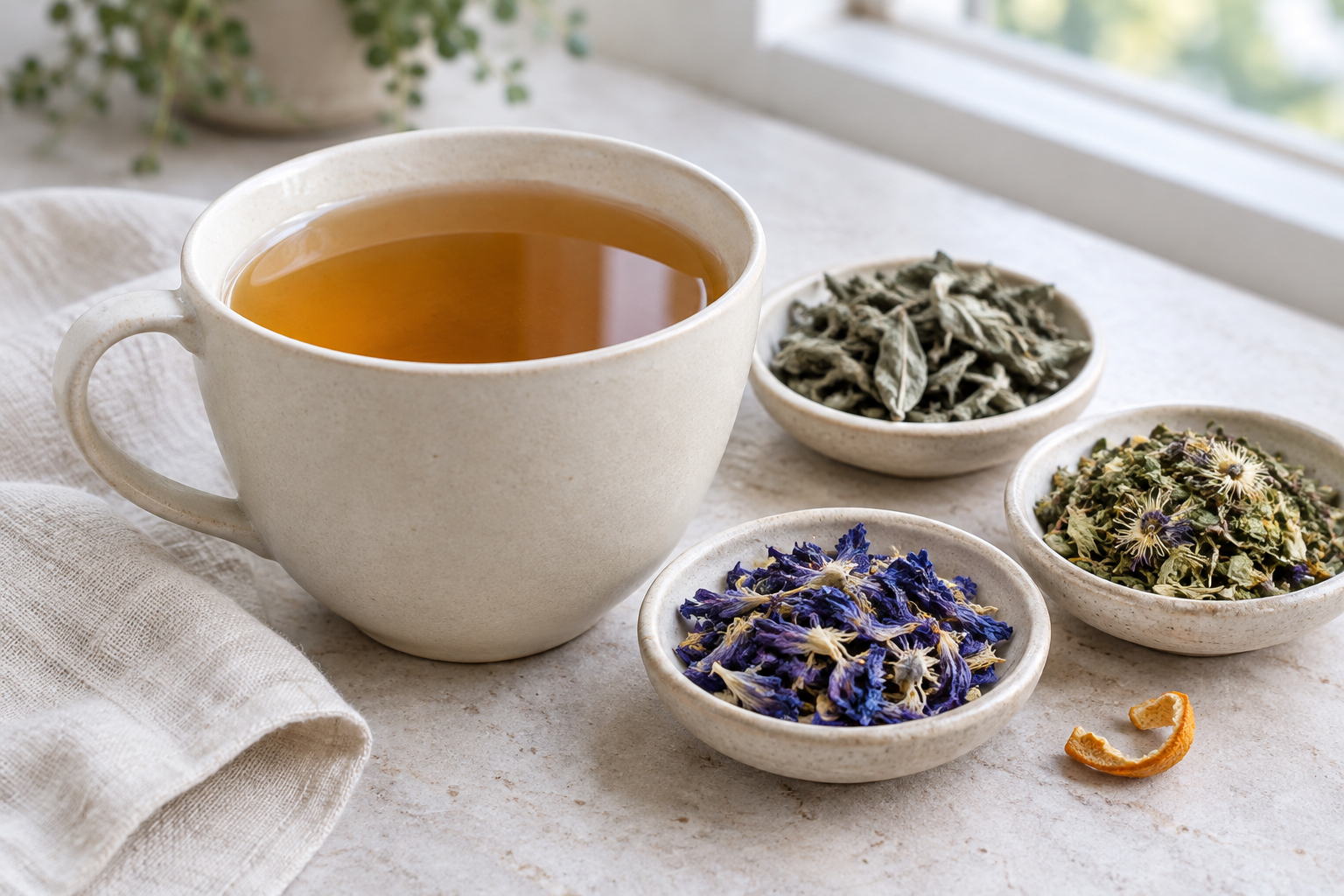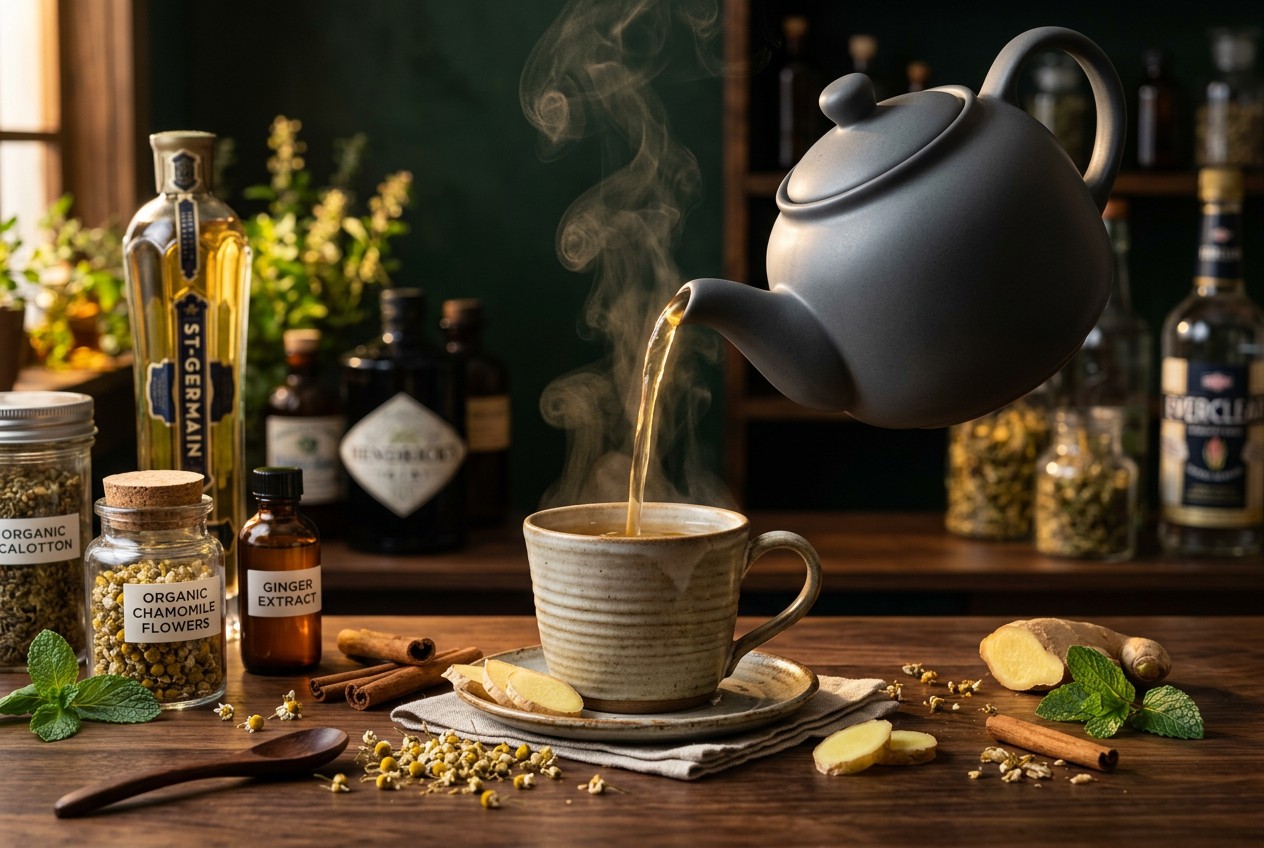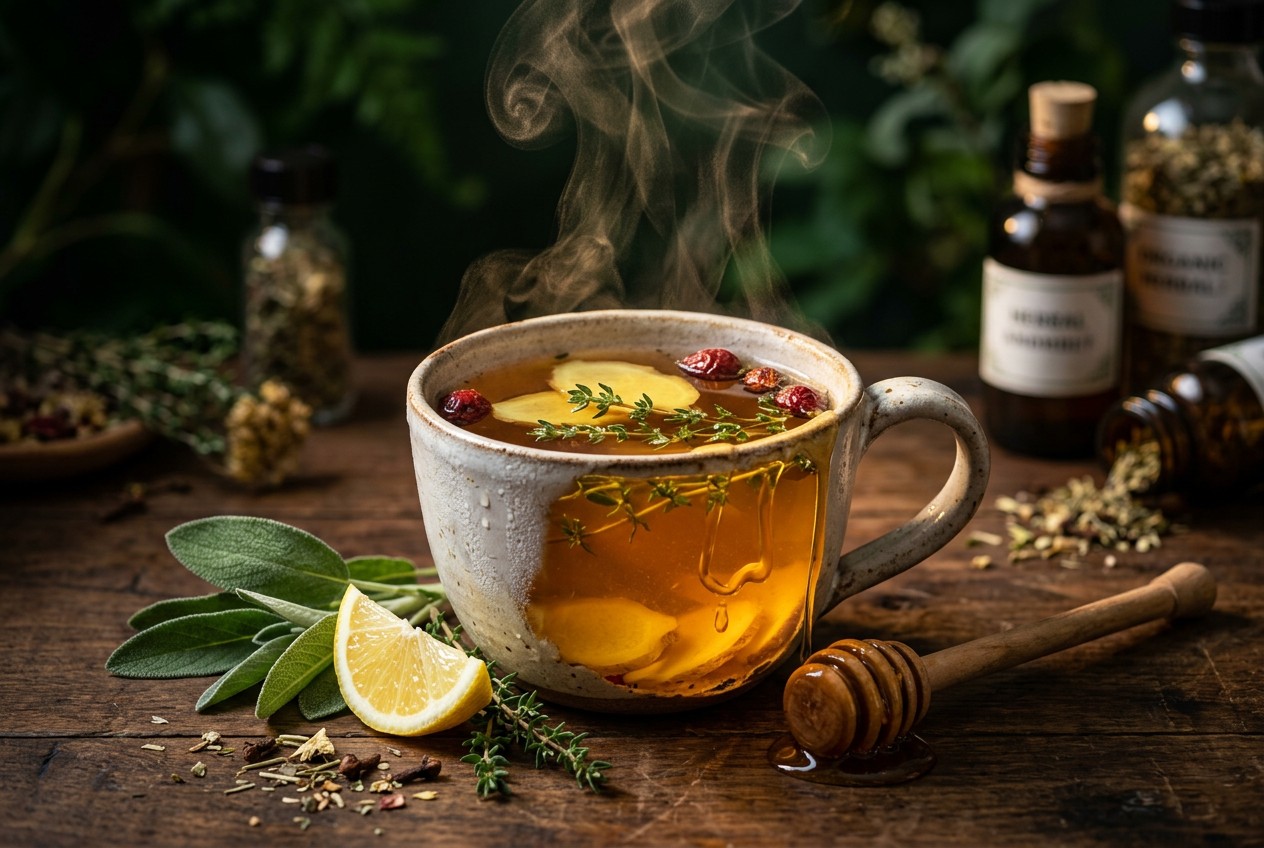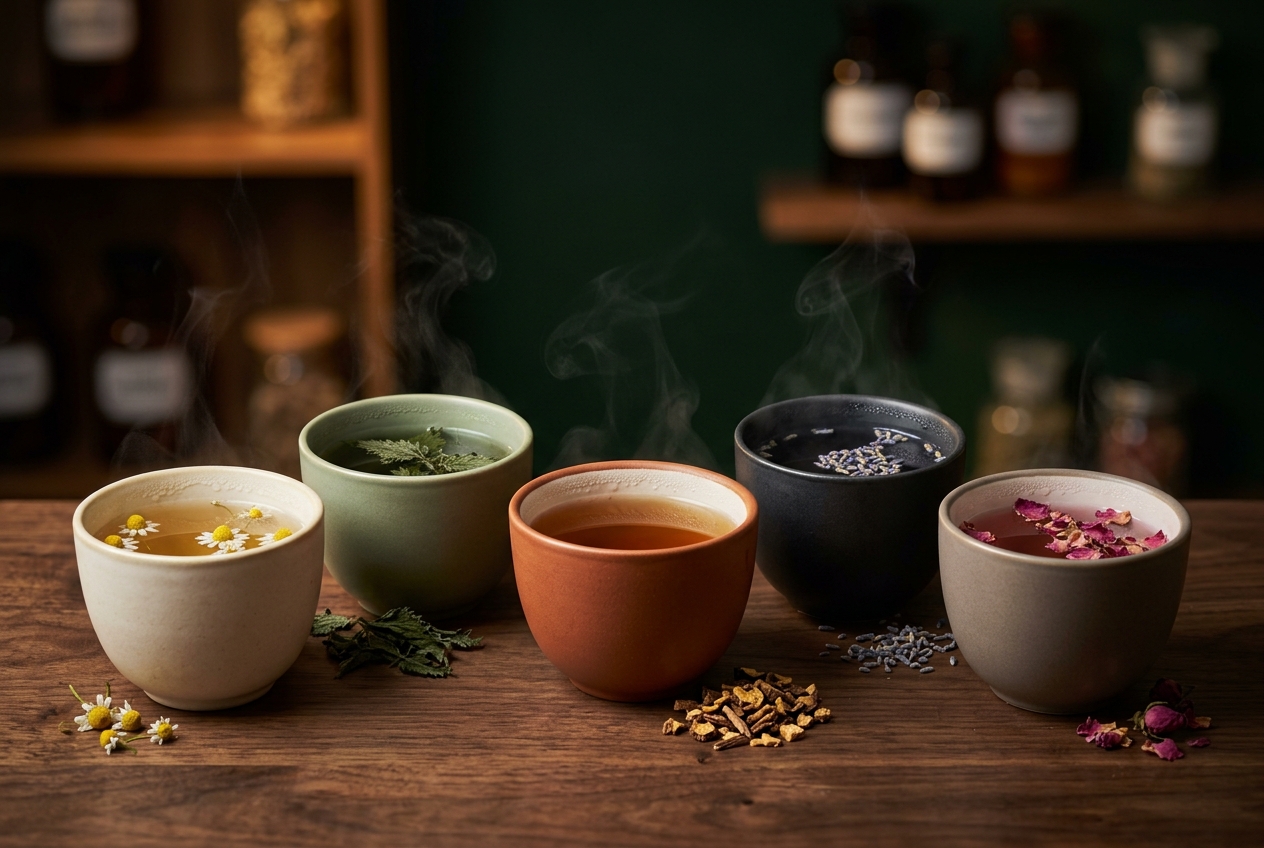
The best herbal tea for energy is a warming, spicy cup like ginger tea, a root blend such as eleuthero, or a bright mint tea, all of which give you a ritual and a lift without any caffeine. Below are three easy recipes: a cozy ginger eleuthero lemon tea for fall mornings, a rhodiola lemon tea for the afternoon slump, and an iced ginger mint tea for when you want something cold.
Why You Will Love These
These herbal tea recipes for energy give you a warm, flavorful cup without the jitters or crash that coffee brings. Ginger is warm, mint has a bright snap, and eleuthero is earthy and deep. Each does something different, so you can pick the one that suits the time of day.
The Story Behind It
For centuries, herbalists have turned to adaptogens and warming botanicals when energy flagged. It’s less a frantic buzz and more the steady comfort of a hot cup on a cold morning. These recipes draw from European folk herbalism and the traditional root teas of Siberia and North America, and they’re simple enough to brew in your kitchen.

What You Will Need
Morning Ginger Eleuthero Lemon Tea (makes about 1 quart)
- 1/4 cup of the herb mix below
- 1 quart water
- Honey, to taste
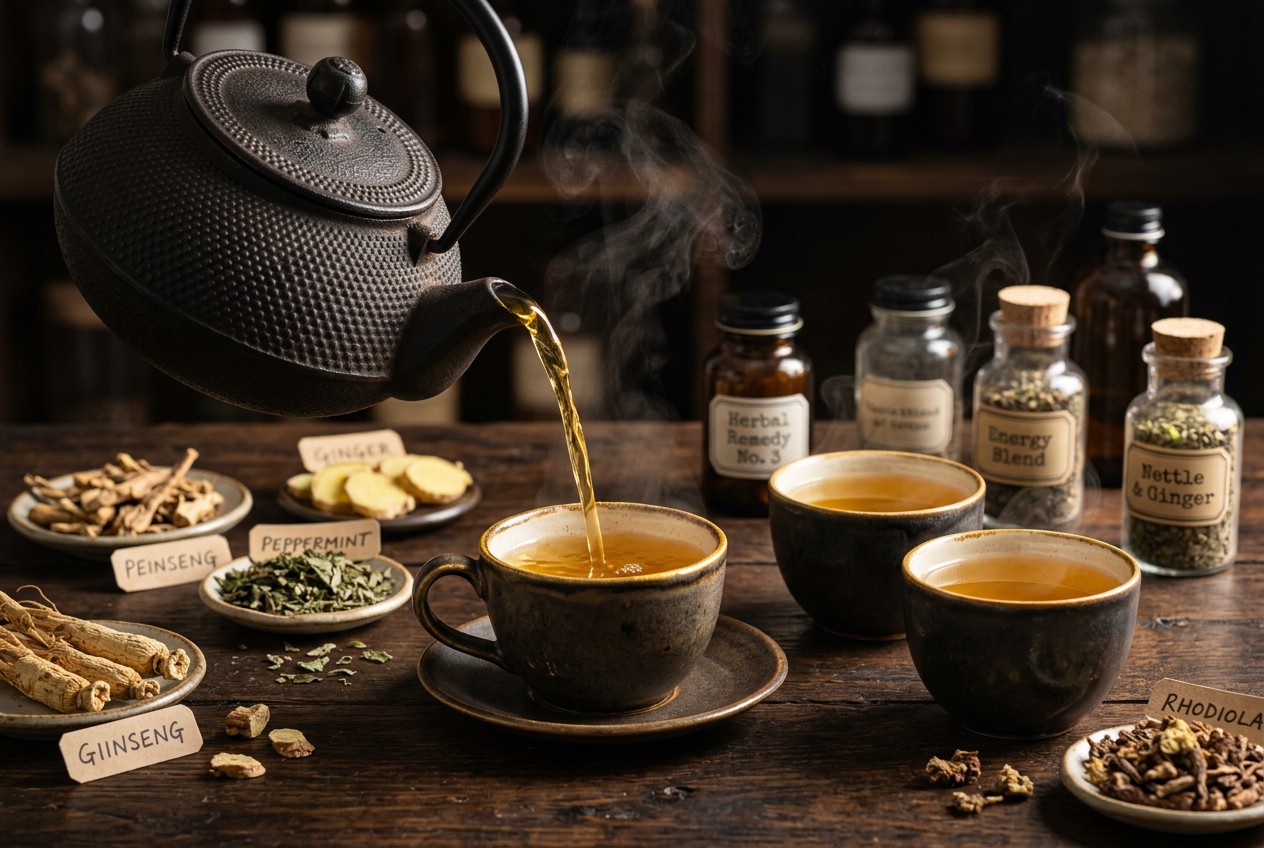
For the herb mix (makes enough for several batches): 1 cup dried ginger root, 1/2 cup dried eleuthero root, 1/4 cup dried American ginseng root broken into small pieces, and 1/4 cup dried lemon peel. Stir together in a bowl and store in a jar.
Afternoon Rhodiola Lemon Tea (makes 2 cups)
- 1 teaspoon rhodiola powder
- 2 cups water
- 2 to 4 tablespoons agave or maple syrup
- Lemon slices (optional)
Iced Ginger Mint Tea (makes 2 servings)
- 1 1/2 inches fresh ginger, peeled and sliced
- 1/2 cup fresh mint leaves
- 2 tablespoons honey, adjusted to taste
- 2 cups water
- Ice cubes
How to Make It
Morning Ginger Eleuthero Lemon Tea:
- Mix the dried ginger, eleuthero, American ginseng and lemon peel in a bowl until well combined.
- Simmer 1/4 cup of the mix in 1 quart of water, covered, for 15 minutes. Keep it at a gentle simmer, not a hard boil.
- Strain out the herbs and add honey to taste.
- Drink it warm in the morning, with breakfast or on its own.
Afternoon Rhodiola Lemon Tea:
- Heat the water to a boil and pour it into a glass or teapot.
- Add the rhodiola powder and whisk.
- Add the sweetener to taste, and lemon slices if you like.
- Sip slowly when your energy dips between 2 and 4 PM.
Iced Ginger Mint Tea:
- Bring the water to a boil, add the sliced ginger and simmer about 10 minutes.
- Take the pan off the heat, add the mint leaves, cover and steep 10 minutes.
- Strain into a pitcher and stir in the honey while the tea is still warm.
- Cool, then chill 1 to 2 hours. Pour over ice and garnish with extra mint. For a cozy fall cup, skip the chilling and drink it warm straight from the pot.

Herbalist Notes
Eleuthero (Eleutherococcus senticosus), often called Siberian ginseng, is the cornerstone of many energy tea recipes . It’s a woody root, which is why it’s simmered rather than just steeped. It tastes earthy and a little sweet.
Rhodiola root grows on Arctic cliffs and has been chewed by Scandinavian and Siberian workers for as long as anyone up there has kept records. It’s classed as an adaptogen, and it tastes faintly of roses, which nobody ever warns you about. The lemon and a little maple syrup keep the cup from tasting like a supplement.
Ginger heats you from the inside, and you feel it in your chest within a mouthful. Mint does more than freshen breath. A hot or iced mint cup hits the back of your nose with a sharp, cool jolt that wakes you up.
Make It Your Own
If you prefer a cooler brew, chill any of these teas and pour over ice with a splash of sparkling water. Add fresh mint sprigs and cucumber slices for a spa-like energy drink.
For a creamier cup, blend the cooled eleuthero tea with a splash of oat milk and a date for a nourishing latte. Want more heat in the ginger mint tea? Use a little more ginger . Treat these recipes as starting points. The best herbs for natural energy are the ones you’ll actually drink every day. If you want a pitcher to sip all afternoon, our cold brew herbal tea is another easy choice.

Common Questions
What herbal tea gives you energy?
Warming, spicy and minty teas are the usual picks: ginger, peppermint, eleuthero and rhodiola. None contain caffeine, so the lift is gentle and comes with the ritual of a hot cup.
How do you make herbal tea for energy?
For the morning blend, simmer 1/4 cup of the ginger, eleuthero, American ginseng and lemon peel mix in 1 quart of water for 15 minutes, then strain and add honey. For a quick cup, whisk 1 teaspoon rhodiola powder into 2 cups of hot water with lemon and a little maple syrup.
Can I drink these teas cold?
Yes. The ginger mint tea is built to be chilled and served over ice. The other two chill well too.
What is the best time to drink energy tea?
The morning blend suits breakfast, the rhodiola tea suits the 2 to 4 PM dip, and the ginger mint tea is good any time you want something refreshing.