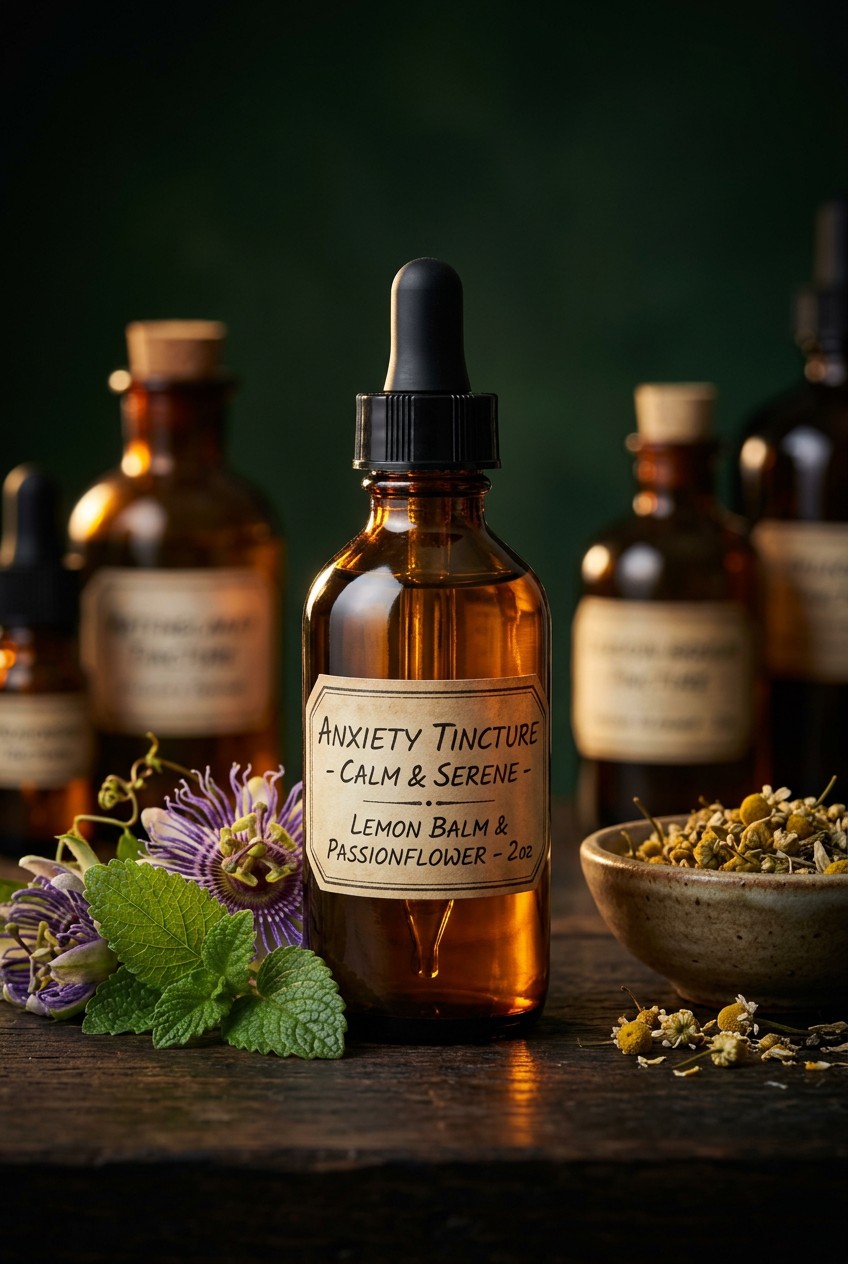
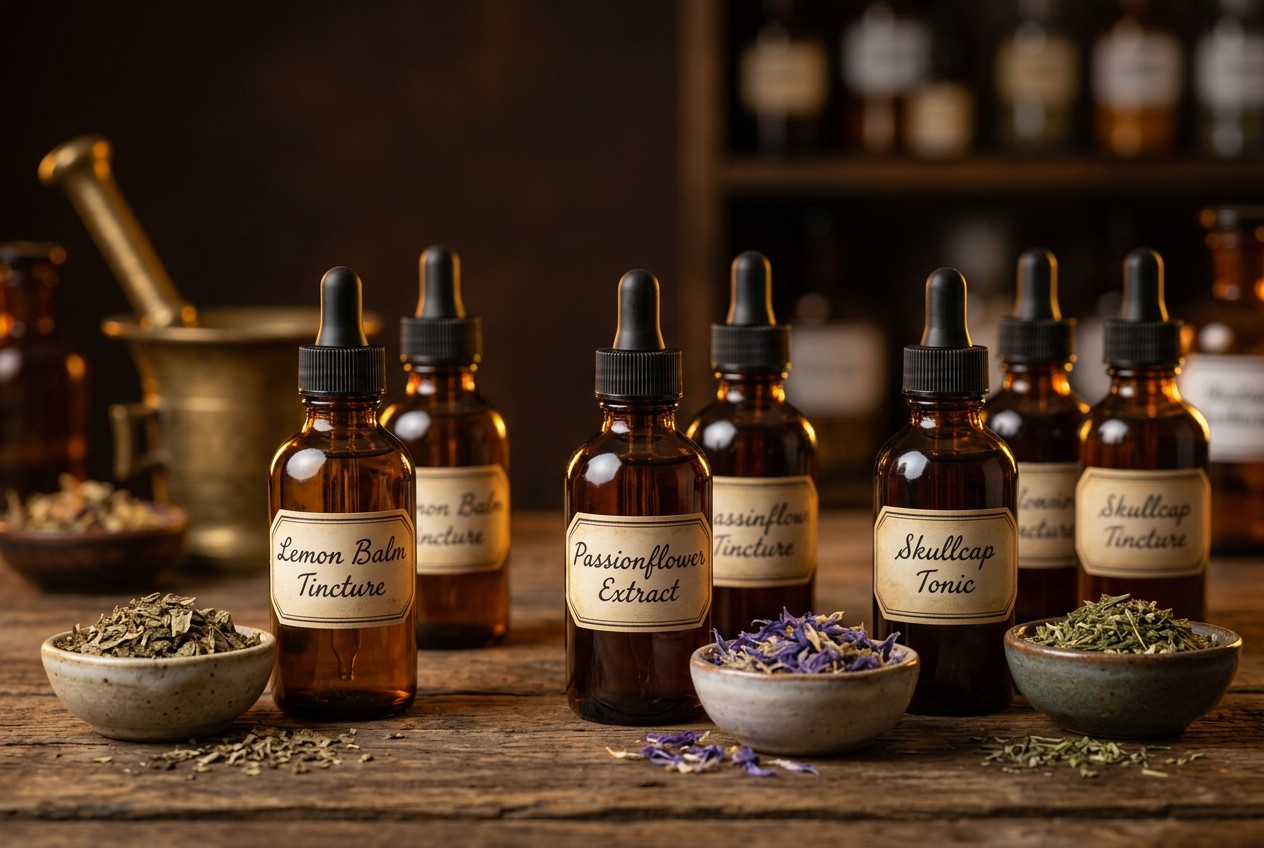
Make your own anxiety relief tincture with lemon balm, passionflower, and skullcap. Get the recipe for this calming nervine blend.
Why You Will Love This
This calming tincture recipe pulls together four nervine herbs that have steadied anxious minds for generations. The blend tastes mildly sweet and green, with a hint of earthiness from the skullcap. Within 20 to 30 minutes of taking it, most people notice their racing thoughts slow down and their shoulders drop away from their ears.
The Story Behind It
I started making this herbal tincture for anxiety after a particularly rough spring when my cortisol felt permanently elevated. A clinical herbalist friend handed me a similar formula and said, “Take this for two weeks, then tell me how you feel.” The difference was undeniable. Now I keep a bottle in my apothecary year-round, especially during seasons when the world feels too loud.
What You Will Need
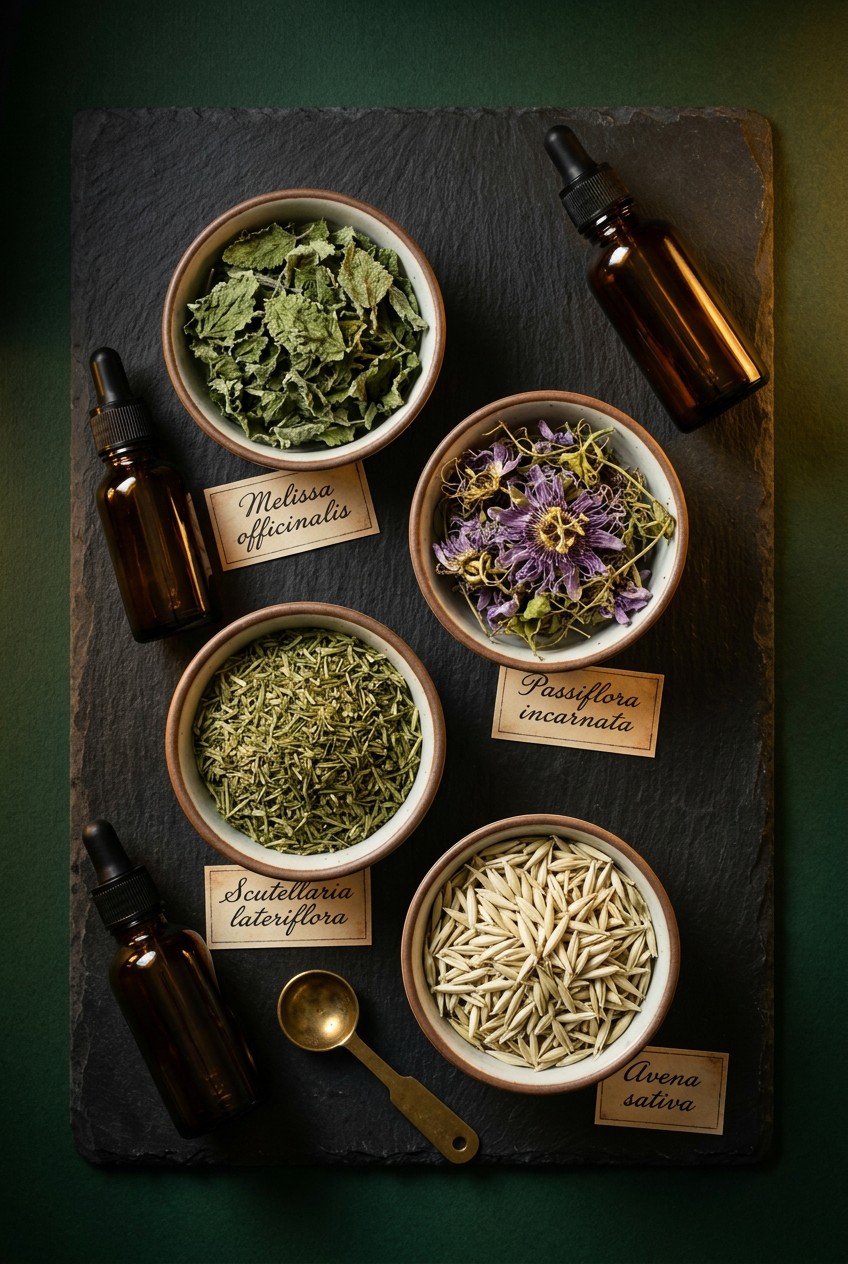
- 2 tablespoons dried lemon balm (Melissa officinalis)
- 2 tablespoons dried passionflower (Passiflora incarnata)
- 1 tablespoon dried skullcap (Scutellaria lateriflora)
- 1 tablespoon dried milky oat tops (Avena sativa)
- 8 ounces 80-proof vodka or brandy
- One 8-ounce glass jar with tight-fitting lid
- Cheesecloth or fine-mesh strainer
- Amber dropper bottles for storage
- Labels
How to Make It
- Combine all dried herbs in a clean 8-ounce glass jar with a tight-fitting lid.
- Pour vodka or brandy over the herbs until they are completely covered with at least 1 inch of liquid above the plant material.
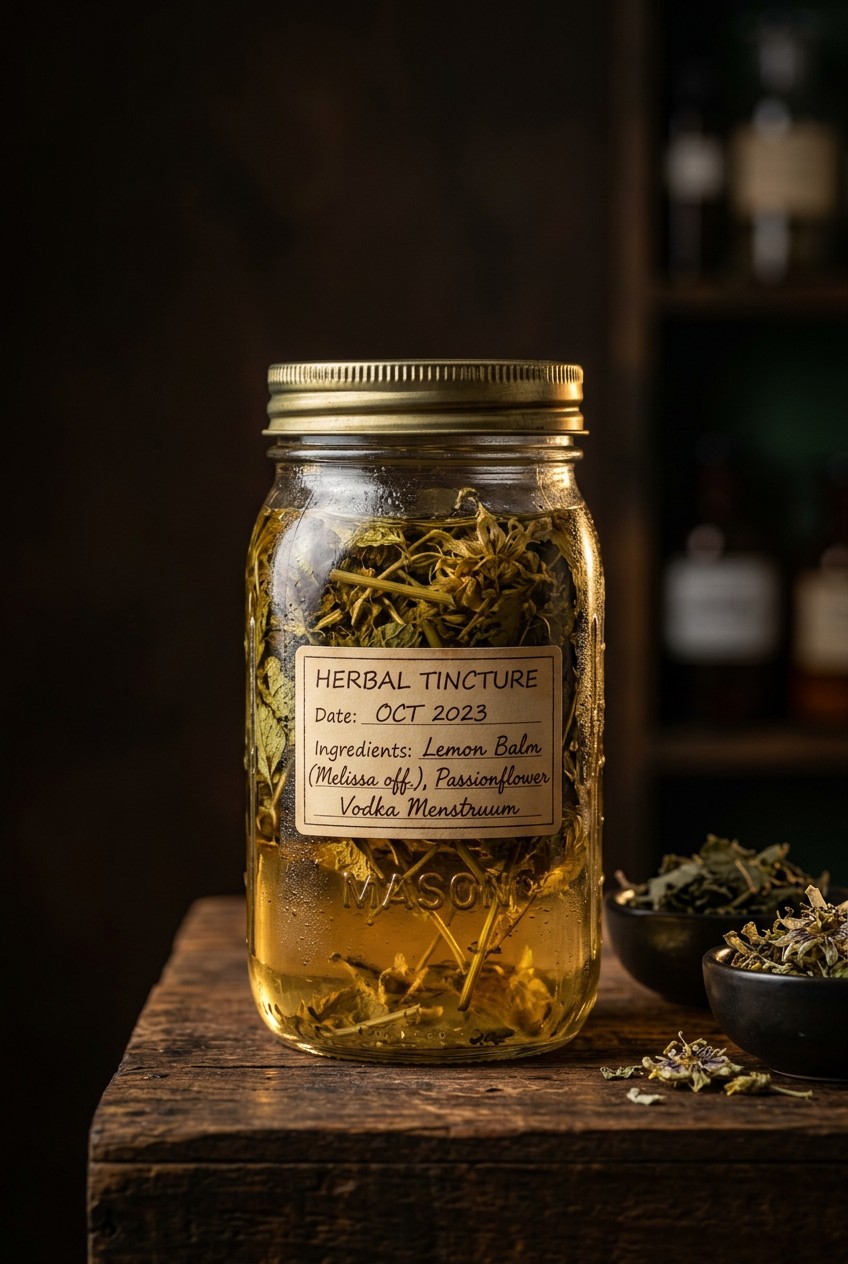
- Seal the jar tightly and label it with the date and ingredients.
- Place the jar in a cool, dark cupboard. Shake it vigorously once daily for 4 weeks.
- After 4 weeks, strain the tincture through cheesecloth or a fine-mesh strainer, squeezing out all liquid from the herbs.
- Pour the finished tincture into amber dropper bottles. Label with the date and dosage instructions.
- Store in a cool, dark place. The tincture will remain potent for 3-5 years.
Herbalist Notes
Lemon balm is the star nervine here. Western herbalism has used it since medieval times for “melancholy and disturbance of the spirits.” Modern research backs this up: a 2014 study in Phytomedicine found that 600mg of lemon balm extract reduced anxiety symptoms by 18% and improved cognitive performance under stress.
Passionflower works on GABA receptors in the brain, similar to benzodiazepines but without the dependency risk. A 2001 study in the Journal of Clinical Pharmacy and Therapeutics showed passionflower extract was as effective as oxazepam for generalized anxiety disorder, with fewer side effects. It also helps if your anxiety keeps you awake at night.
Skullcap and milky oat tops are both traditional nervous system restoratives. Skullcap calms the racing mind, while milky oats (harvested when the seed head releases a white, milky sap) nourish frazzled nerves over time. Think of them as long-term nervous system support, not quick fixes.
Standard dosage is 30-60 drops (about 1-2 dropperfuls) in water, 2-3 times daily. Some people take it only when anxiety spikes. Others use it daily for two weeks, then take a week off. Most people feel the effects within 20-30 minutes, though the full benefit builds over consistent use. If you want to make this tincture without alcohol, substitute vegetable glycerin for the vodka. The extraction will be gentler and the shelf life shorter (1-2 years), but the nervine properties remain intact.
Make It Your Own
If you cannot find milky oat tops, substitute chamomile or tulsi (holy basil). Chamomile adds a gentle, floral calm. Tulsi brings adaptogenic support for stress resilience. For a stronger sleep-inducing version, add 1 tablespoon of dried valerian root, though be warned: valerian smells like old gym socks and tastes worse. Some people also add a small piece of fresh ginger root to the blend for digestive support, since anxiety often shows up as stomach tension. Take this tincture straight under the tongue for faster absorption, or mix it into herbal tea if the alcohol burn bothers you.