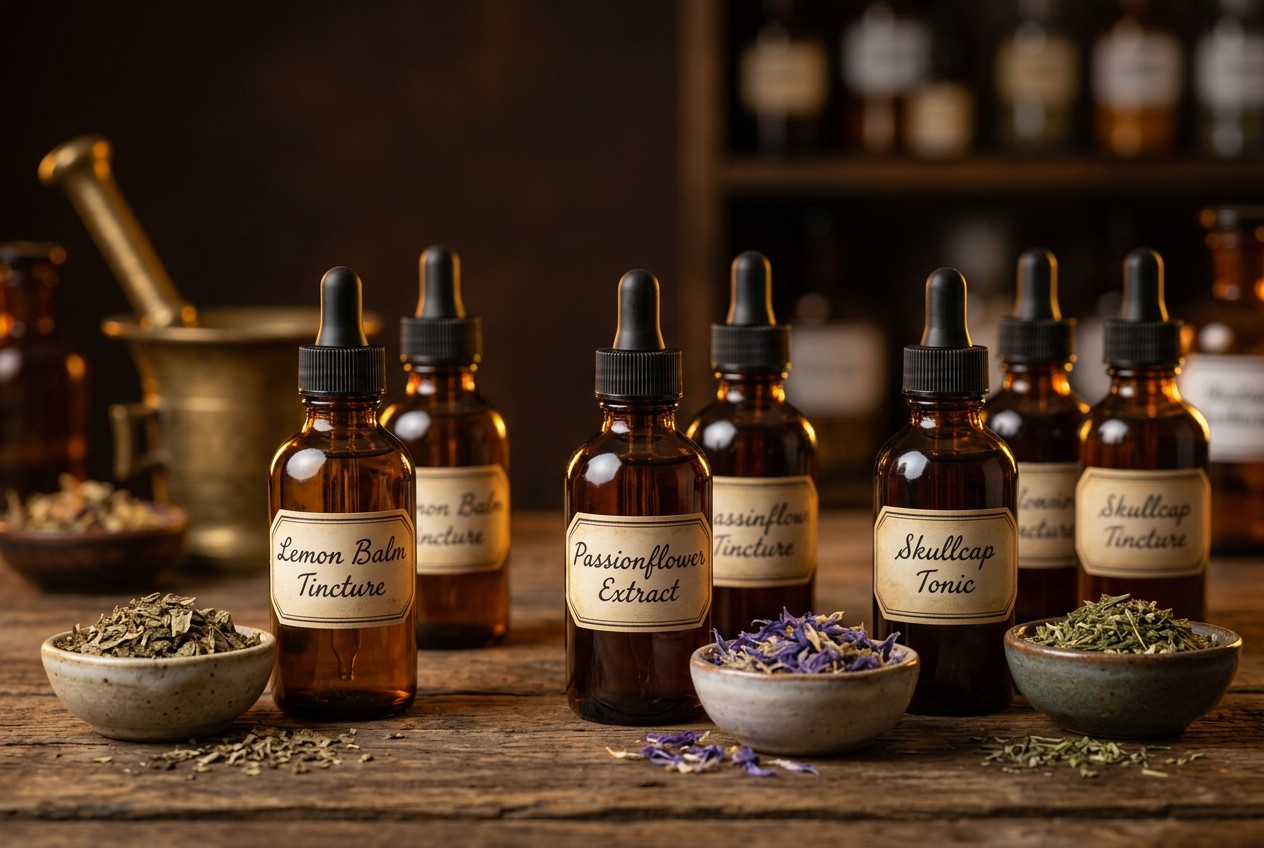
This herbal tincture steeps four dried herbs, passionflower, lemon balm, skullcap and oat straw, in 100-proof vodka for 4 to 6 weeks. It takes about 15 minutes of hands-on work and makes about 400 mL. Below the main blend are three more: a single-herb passionflower tincture, a holy basil (tulsi) tincture and an evening blend with chamomile and valerian.
New to tinctures? The herbal tincture guide explains the folk method, ratios and alcohol strength. This page is the recipe.
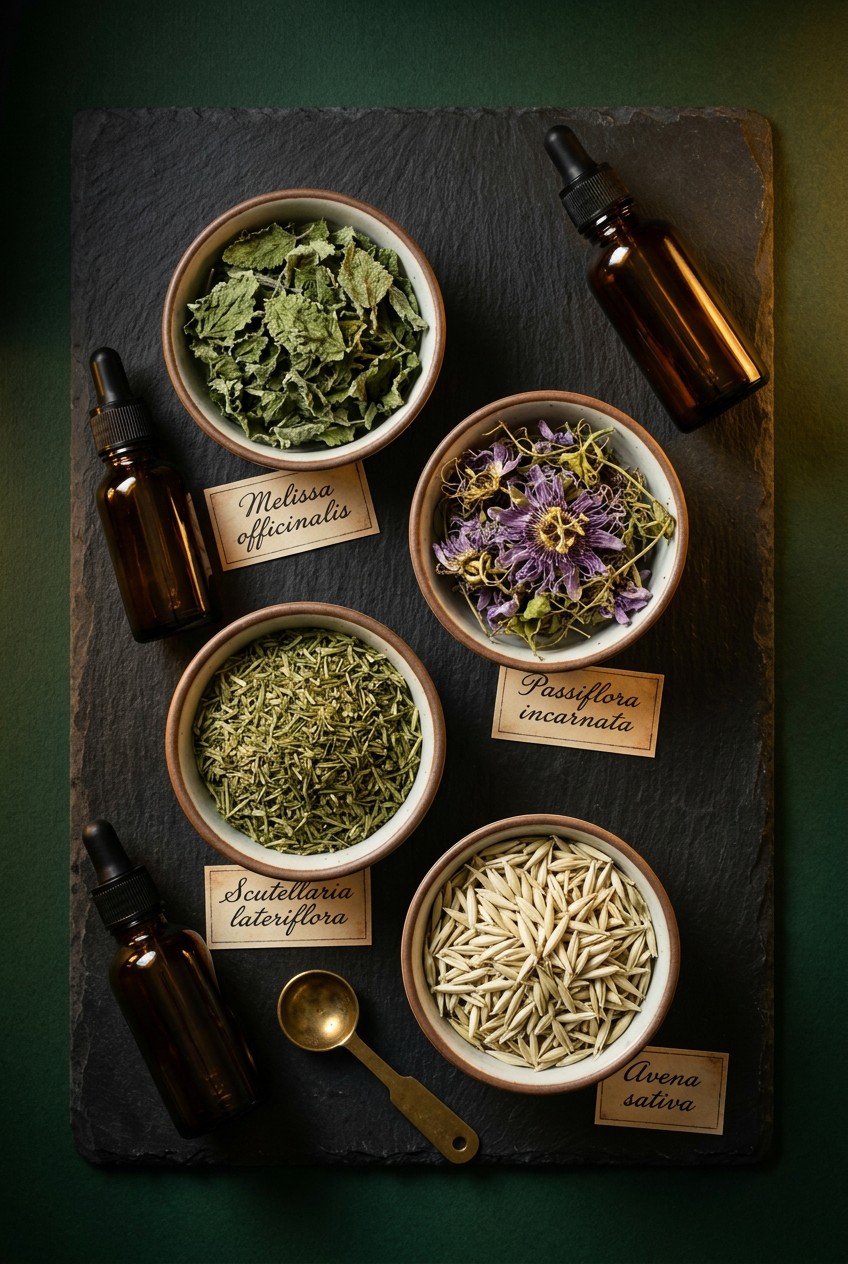
The Four Herbs
These four often turn up together in traditional evening blends. The finished tincture tastes mildly sweet and green, with an earthy note from the skullcap.
| Herb | Latin name | Part used | Flavor |
|---|---|---|---|
| Passionflower | Passiflora incarnata | Dried leaves, vine and flowers | Mild and grassy |
| Lemon balm | Melissa officinalis | Dried leaves | Bright and lemony |
| Skullcap | Scutellaria lateriflora | Dried leaves and stems | Green and earthy |
| Oat straw | Avena sativa | Dried green stems | Soft, hay-like and a little sweet |
Buy them dried from an herb supplier or a shop that sells loose tea herbs, and check the Latin name on the bag. Skullcap in particular is sold under more than one species, and this recipe uses Scutellaria lateriflora. If you grow lemon balm , dry it fully before weighing it for this blend.
What You Will Need
- 30 g dried passionflower (Passiflora incarnata)
- 25 g dried lemon balm (Melissa officinalis)
- 20 g dried skullcap (Scutellaria lateriflora)
- 25 g dried oat straw (Avena sativa)
- 500 mL 100-proof (50%) vodka
- A clean glass jar with a tight-fitting lid, large enough to hold the herbs and vodka
- Cheesecloth or a fine-mesh strainer
- Amber dropper bottles for storage
- Labels
- A kitchen scale
How to Make It
- Combine all the dried herbs in a clean glass jar.
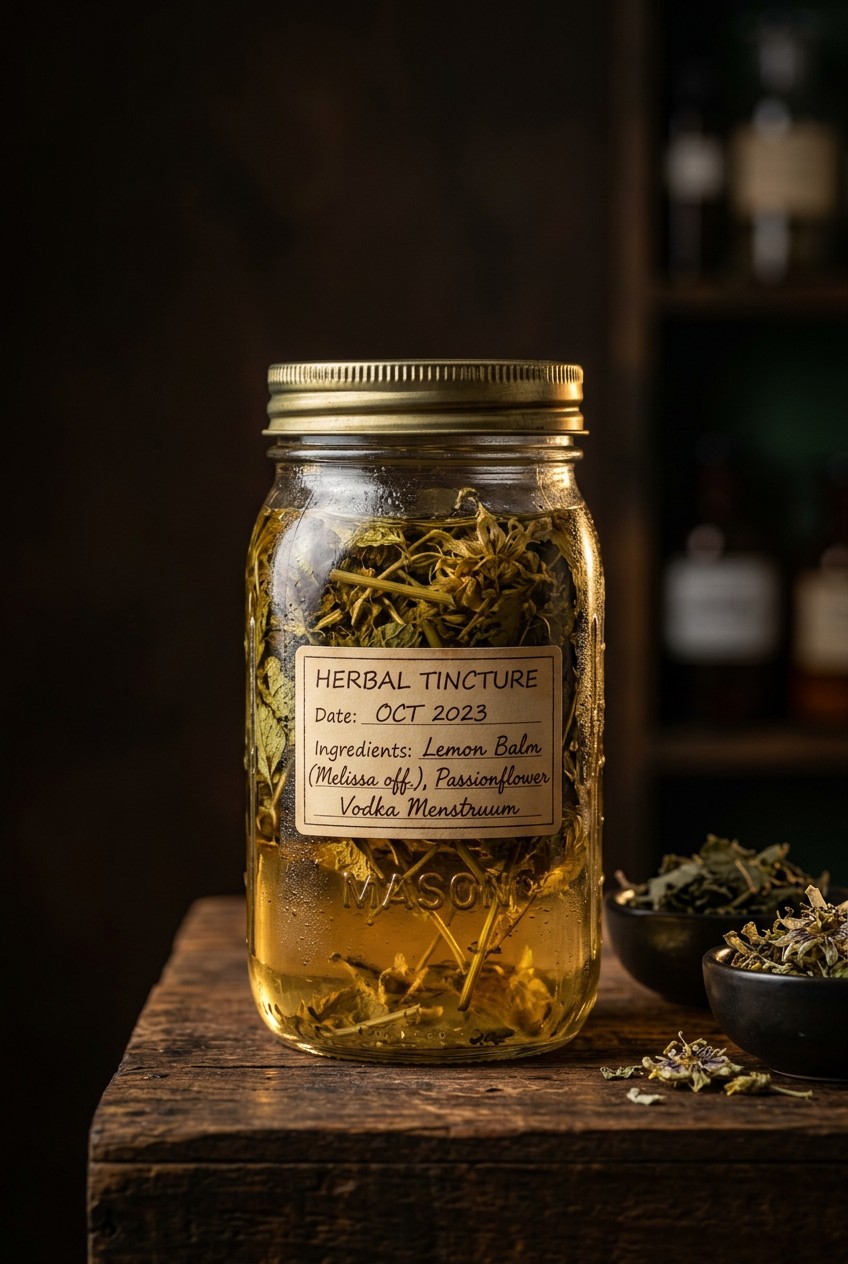
- Pour the vodka over the herbs so they are fully covered, then seal the jar and label it with the date and ingredients.
- Keep the jar in a cool, dark cupboard for 4 to 6 weeks, shaking it once a day.
- Strain through two layers of cheesecloth, squeezing the herbs to get every drop.
- Pour the finished tincture into amber dropper bottles and label each with the herbs and the date. Expect about 400 mL.
Tips for a Good Batch
- Weigh, don’t scoop. The amounts are in grams because dried leaves and stems pack so differently. A cup of oat straw weighs far less than a cup of passionflower.
- Keep the herbs under. Dried herbs soak up vodka in the first day. If anything pokes above the surface, push it down or add a little more vodka.
- Shake daily. It keeps the vodka moving through the herbs and lets you check the level.
- Squeeze hard at the end. The herbs hold a lot of liquid, which is why 500 mL of vodka gives about 400 mL of tincture.
- Label twice. Once on the steeping jar, once on every bottle.
Passionflower Tincture Recipe
For a single-herb passionflower tincture, chop 1 cup of dried passionflower (leaves, vine and flowers) and pack it into a clean jar about one-third full. Pour in 1 1/2 cups of 80-proof vodka until the herb is completely covered, seal, shake, and label. Store it in a cool, dark place for 6 to 8 weeks, shaking a few times a week. Strain through cheesecloth or a coffee filter and bottle in amber glass.
Holy Basil (Tulsi) Tincture Recipe
For a holy basil tincture, also called a tulsi tincture, put 1/2 cup of dried holy basil leaves in a pint jar, chopped small, and cover it with 1 cup of 80-proof or higher vodka. Seal the jar, shake it, and keep it in a cool, dark place for 6 to 8 weeks, shaking 3 or 4 times a week. Strain through a fine-mesh strainer or cheesecloth, funnel it into an amber dropper bottle, and label the date. Holy basil has a warm, clove-like smell, which suits fall.
Sleep Tincture Recipe With Chamomile and Valerian
For an evening version, combine 2 tablespoons each of dried valerian root, passionflower, chamomile flowers and lemon balm in a quart jar and cover with 2 cups of vodka (80 proof or higher), so the herbs sit 1 to 2 inches under the liquid. Steep 4 to 8 weeks in a dark cupboard, shaking daily, then strain, squeezing the herbs, and bottle in amber glass.
Fair warning: valerian root smells strongly earthy, and some people describe it as old socks. The chamomile and lemon balm help.
If you’d rather have something warm in a mug at bedtime, try our herbal tea for sleep or one of these bedtime mocktails .
Common Questions
Can I use fresh herbs instead of dried?
This blend is written for dried herbs by weight. Fresh herbs hold a lot of water, which dilutes the alcohol, so tincture makers usually pair them with higher-proof alcohol and a different ratio. The tincture guide covers fresh-herb tinctures.
Should I use 80 or 100 proof vodka?
This blend uses 100-proof (50%) vodka. The passionflower, holy basil and sleep recipes on this page use 80 proof or higher. For dried herbs, tincture makers generally use anything from 80 to 120 proof.
Can I make it without alcohol?
Yes. Food-grade vegetable glycerin or apple cider vinegar can stand in for the vodka, as one of the holy basil recipes we follow suggests. A glycerin version tastes sweet, a vinegar version tastes tangy, and both are milder and won’t keep as long as an alcohol tincture.
How long does a homemade tincture keep?
Alcohol tinctures keep the longest, especially at 50 percent alcohol like this one. Store the bottles in a cool, dark cupboard away from heat and sunlight, and keep the label with the date. Glycerin and vinegar versions should be used sooner.
Why did my tincture turn dark?
Herbs steeped in alcohol give up their color along with their flavor, so a deep amber or brown tincture is normal. Fine sediment at the bottom of a bottle is normal too. Swirl before using.
Can I make a single-herb lemon balm tincture?
Yes. Use the folk method or the 1:5 ratio for dried herbs from the tincture guide .
More tinctures, syrups and teas are in our apothecary recipes .