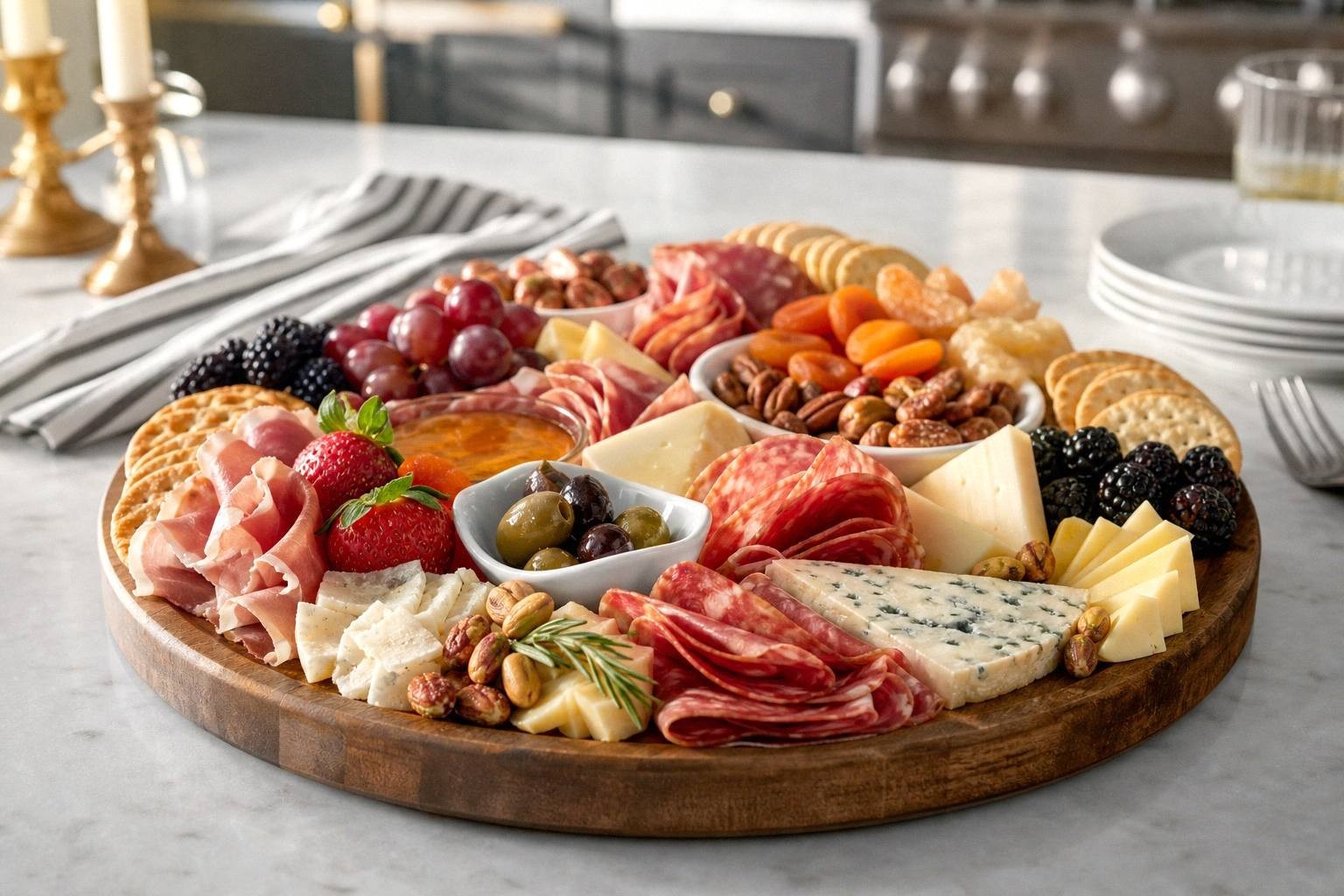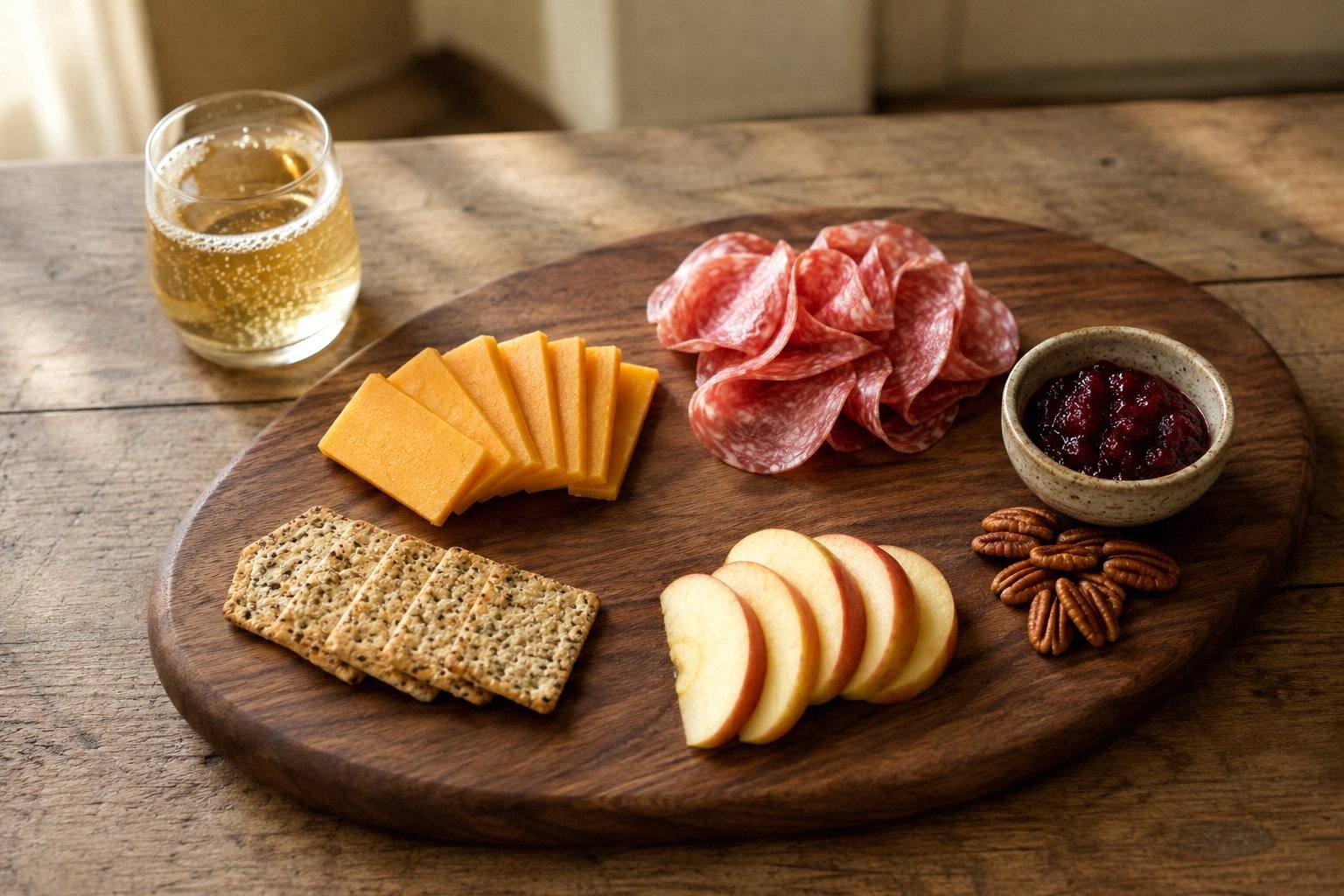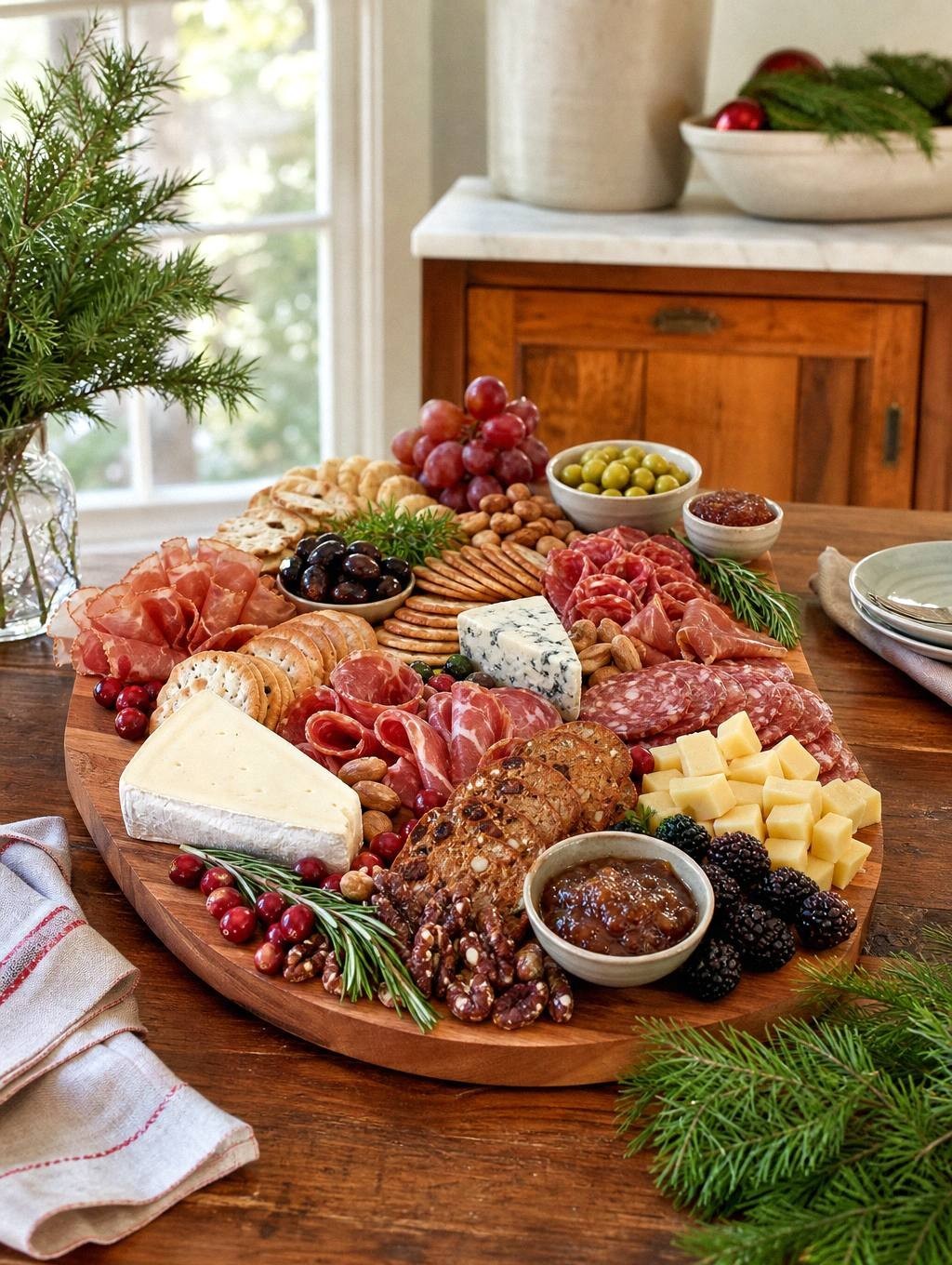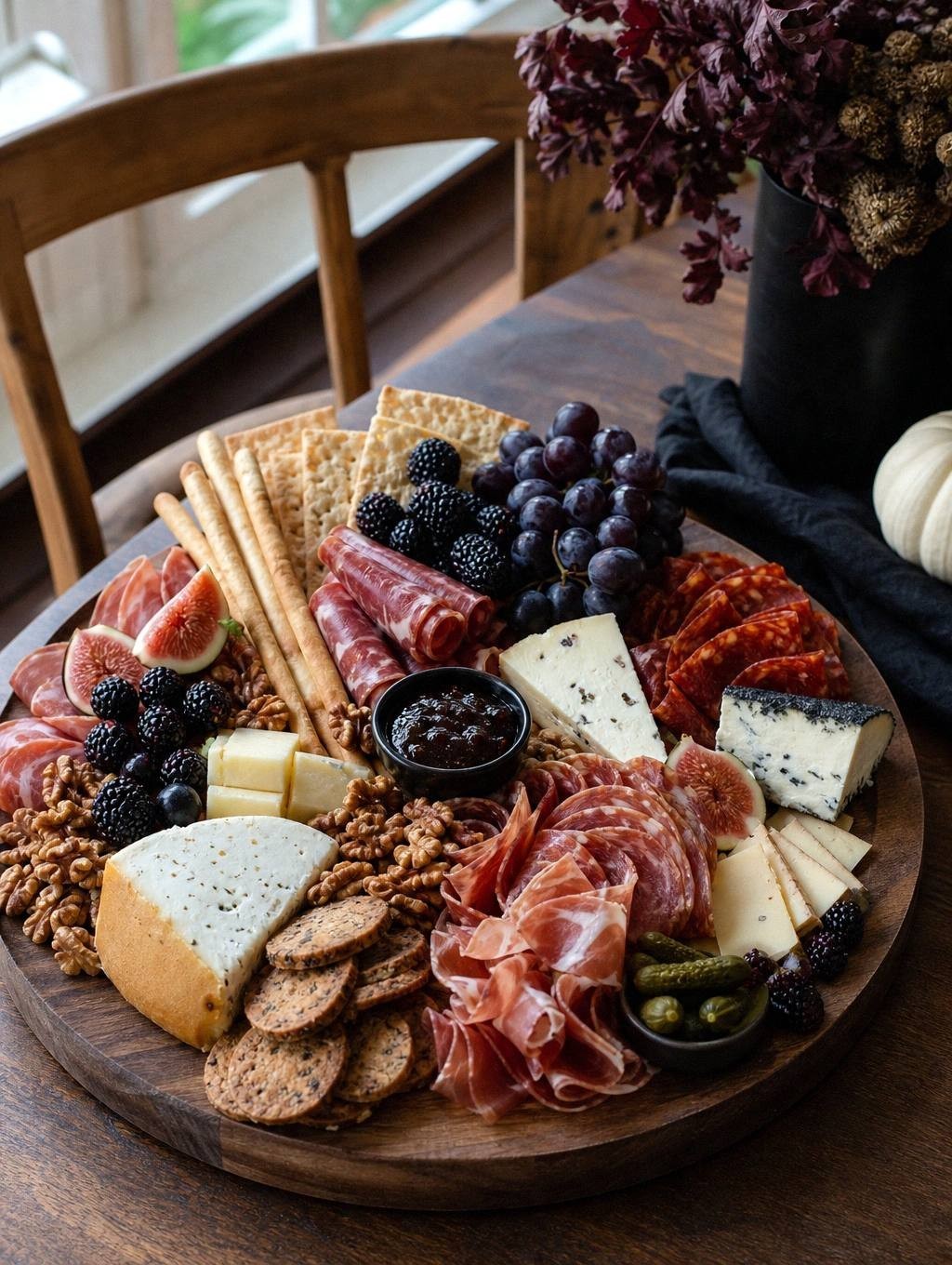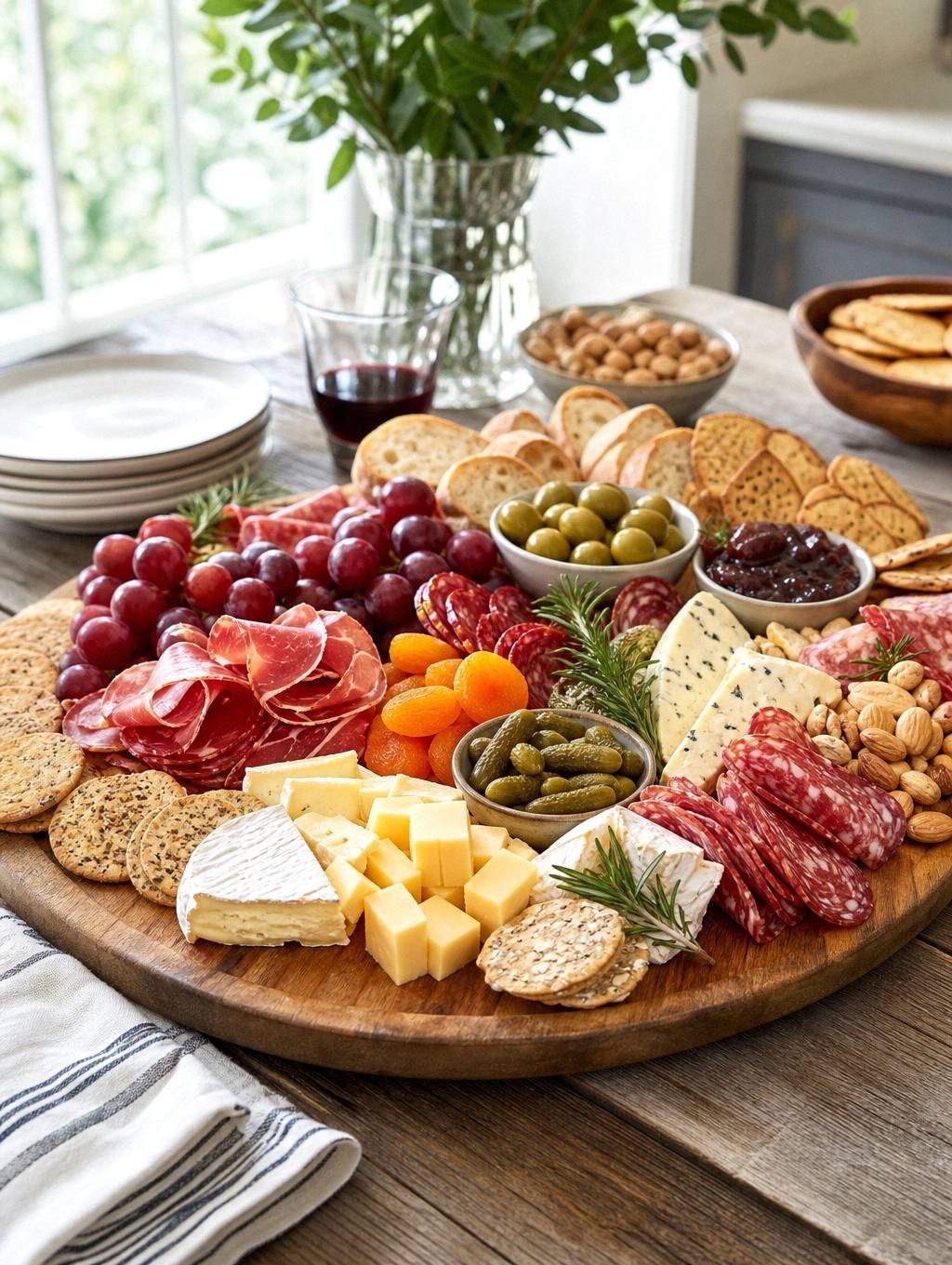
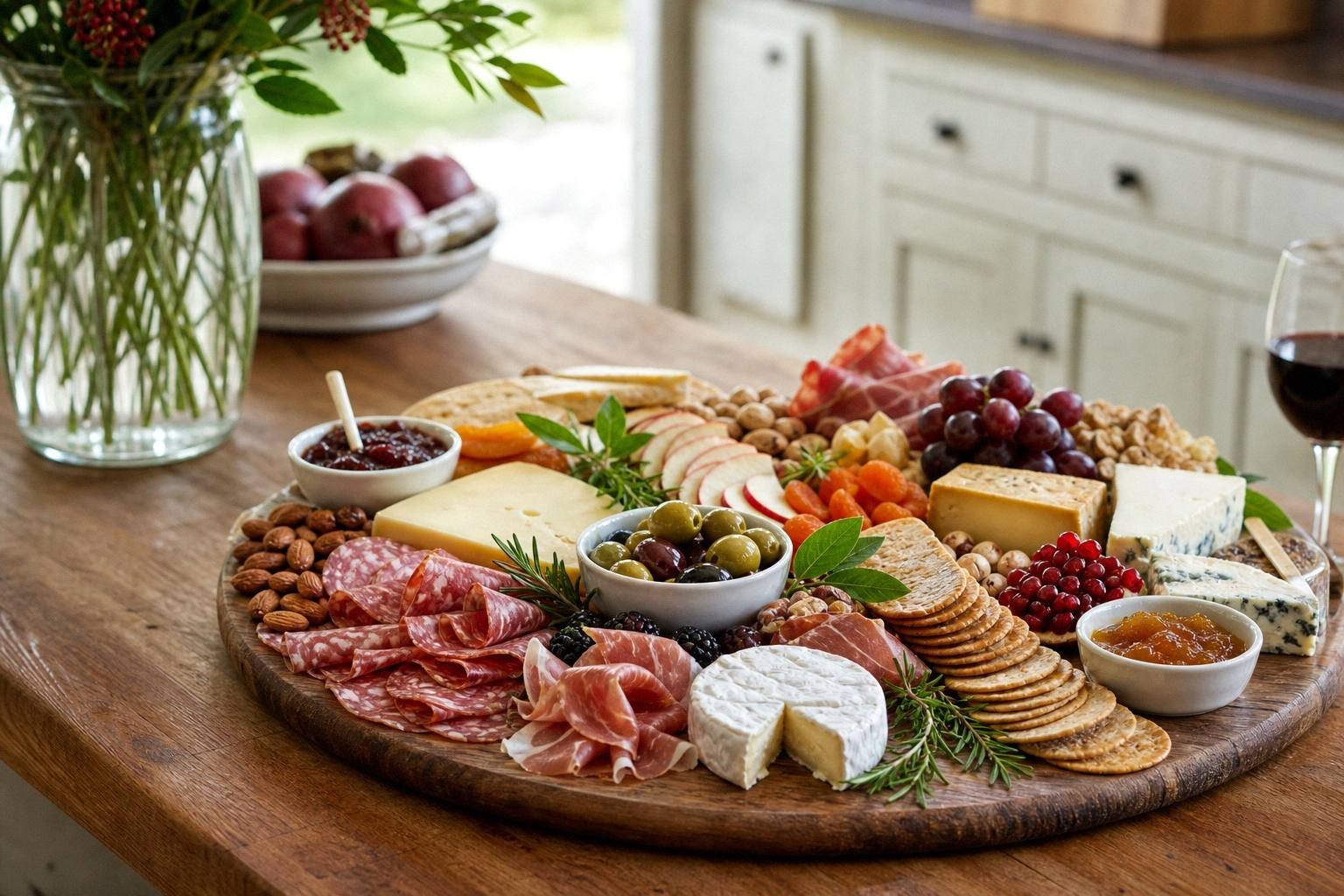
A holiday charcuterie board turns snacking into an event, giving guests something beautiful to gather around while you finish the main course or keep the party going after dinner. Unlike everyday boards, holiday versions lean into seasonal ingredients, festive colors, and arrangements that match the celebration, whether that’s a Christmas wreath shape, Thanksgiving’s harvest palette, or Valentine’s heart motif.
The formula stays simple: cheeses, meats, fruits, crackers, and a few extras. The choices and presentation shift with the calendar.
Why Holiday Boards Work Differently Than Everyday Ones
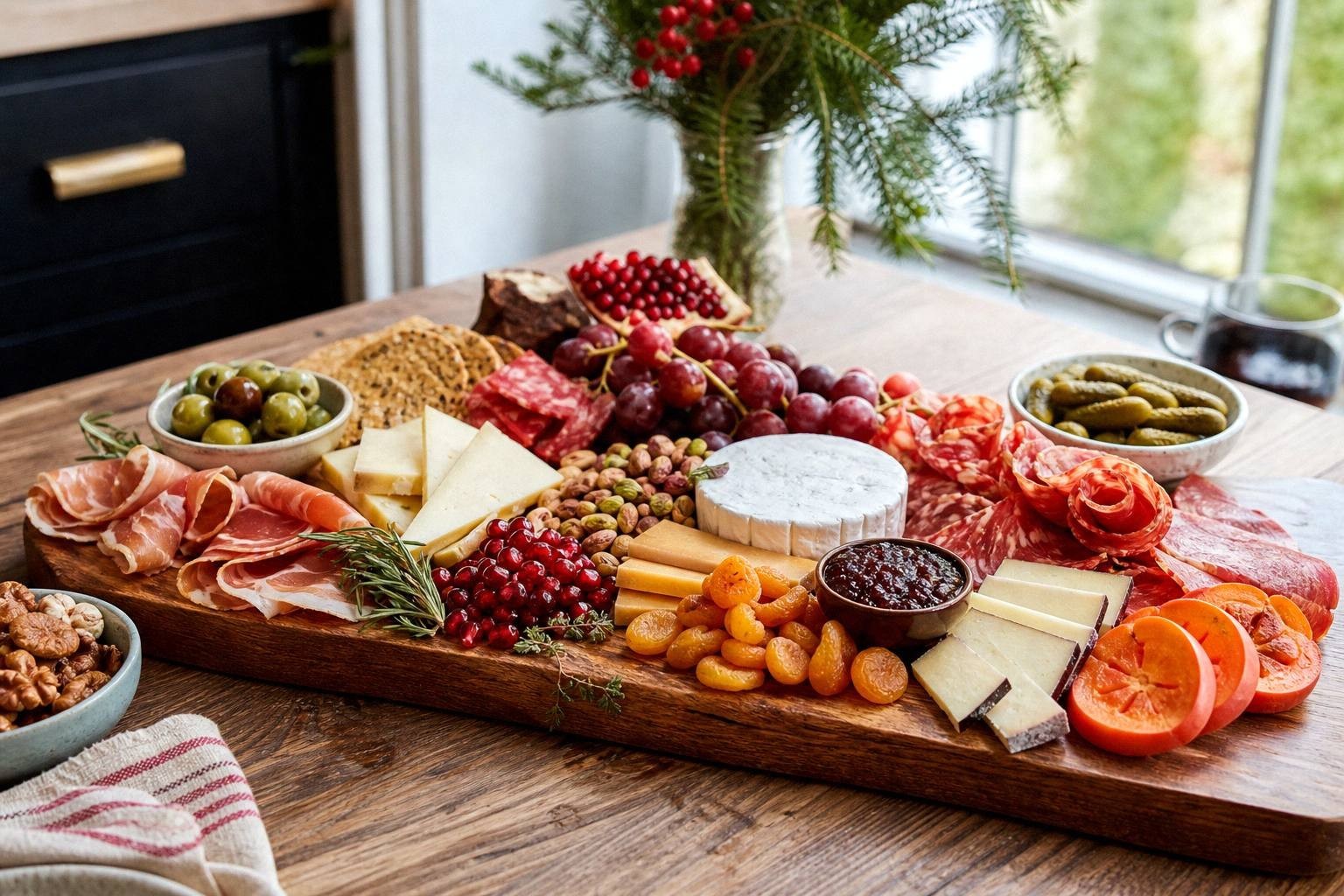
Holiday boards carry more visual weight than a Tuesday night snack platter. Guests expect them to look like part of the celebration, not just food on a plate. That means choosing ingredients for color and seasonality as much as flavor, arranging them with intention, and often building around a theme or shape that signals the occasion.
The practical side matters just as much. Holiday gatherings run longer than casual get-togethers, so the board needs to hold up for hours without sweating, browning, or turning soggy.
You’re also feeding a wider range of tastes and dietary needs than usual, which means planning for vegetarians, gluten-free guests, and people who don’t eat certain meats or cheeses. Timing becomes critical during the holidays when you’re already managing a full menu.
A board you can mostly prep the day before and assemble in fifteen minutes before guests arrive earns its place. One that demands last-minute fussing while the turkey rests does not.
Core Ingredients That Work Across Holidays
Start with five to six wedges or blocks of cheese, mixing textures and strengths. A soft cheese like brie anchors one corner, a sharp cheddar or aged manchego adds bite, and a mild option like white cheddar or asiago keeps things accessible.
Parmesan shards or a creamy blue round out the selection. Let them sit at room temperature for thirty minutes before serving so the flavors open up.
Add three to four cured meats, choosing different styles so each tastes distinct. Prosciutto drapes and folds easily, salami fans out in overlapping circles, and soppressata or another dry-cured option adds a different spice profile. Pile prosciutto in loose stacks rather than laying it flat; the height makes the board look more abundant.
- Fruits and vegetables: Six to seven items bring color and cut the richness of meat and cheese. Grapes, apple slices, pear wedges, fresh figs, and berries all work, and olives add a salty contrast. Pick what’s in season for the holiday you’re serving: crisp apples and pears for fall, citrus and pomegranate seeds for winter, berries for spring and summer.
- Crackers and bread: Provide the base for building bites. Offer at least two types with different textures, a sturdy water cracker and something with more flavor like a seeded crisp or spicy cheese cracker.
- Nuts: Fill gaps and add crunch; roasted pecans and candied almonds both work well.
- Sweet elements: A small bowl of cranberry sauce, fig jam, or honey gives guests a sweet element to pair with cheese.
Adapting the Board for Specific Holidays
Christmas and Winter Holidays
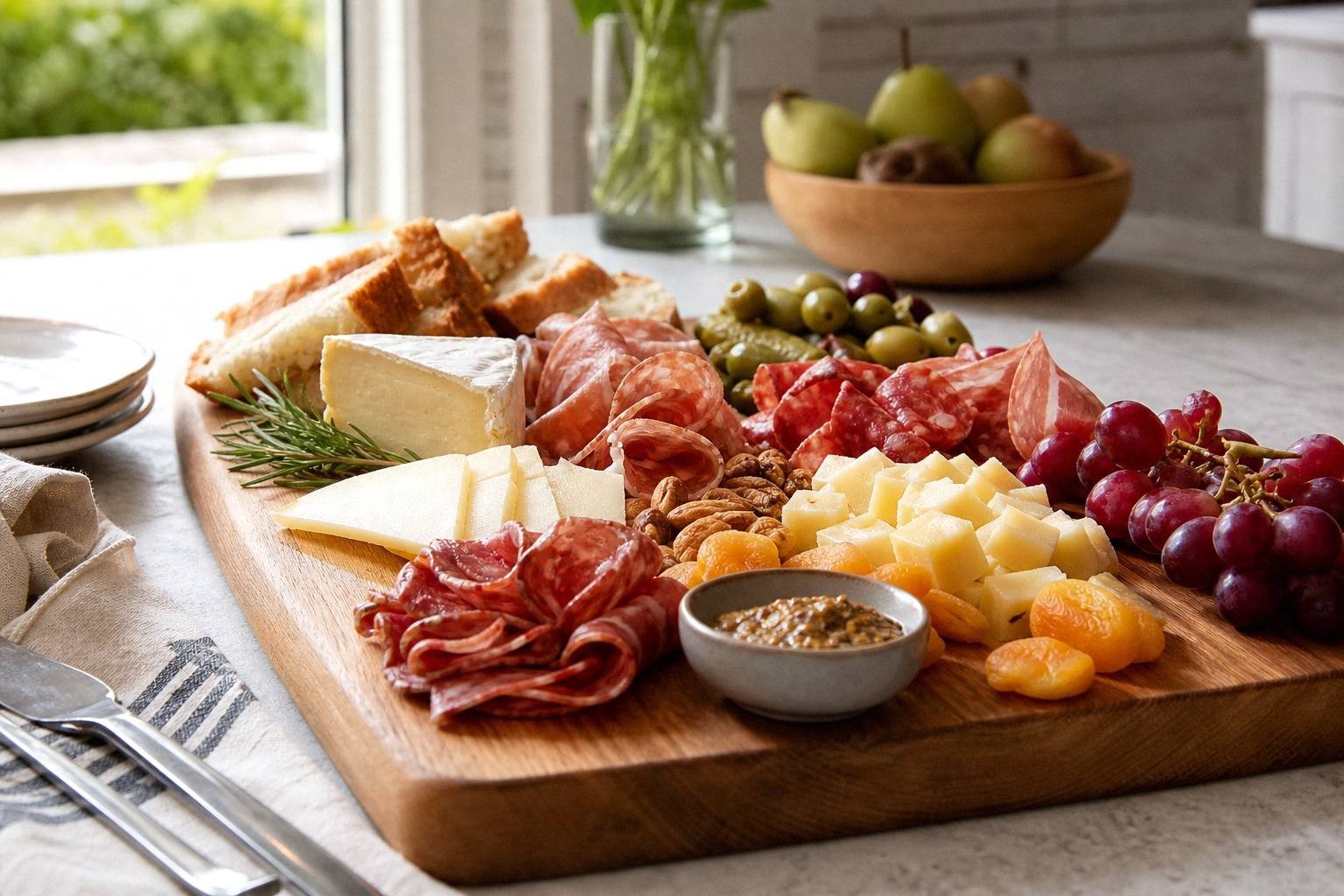
Christmas boards lean into red, green, and white. Use raspberries, blackberries, and pomegranate seeds for red, fresh rosemary sprigs and green grapes for green, and white cheddar or brie for the neutral base.
Dried cranberries, candied pecans, and dark chocolate add seasonal flavors. Arrange the board in a wreath shape by placing a small bowl in the center and building ingredients in a circle around it, or create a Christmas tree silhouette by starting with a wide base and tapering toward the top.
Thanksgiving
Thanksgiving boards showcase harvest colors, deep oranges, golds, and browns. Use dried apricots, fresh persimmons, honeycrisp apples, and roasted nuts.
Add a small dish of cranberry sauce and consider including sliced turkey or ham alongside the cured meats. Whole grain crackers and seeded bread fit the rustic feel better than delicate wafers.
New Year’s Eve
New Year’s boards can go elegant with champagne pairings in mind. Choose creamy cheeses like brie and triple-cream options, add smoked salmon or trout alongside the cured meats, and include briny elements like cornichons and marinated olives.
Caviar or salmon roe in a small bowl elevates the presentation. Keep the color palette sophisticated, whites, silvers, and golds.
Valentine’s Day
Valentine’s boards work in shades of red and pink. Strawberries, raspberries, and dried cherries provide the color, while dark chocolate, chocolate-covered almonds, and raspberry jam add romantic flavors.
Arrange ingredients in a heart shape on the board, or use heart-shaped cookie cutters to cut cheese into themed shapes.
Easter and Spring Holidays
Spring boards favor fresh, bright flavors. Use fresh berries, snap peas, radishes, and baby carrots for color and crunch.
Soft cheeses like goat cheese and fresh mozzarella feel lighter than aged options. Add edible flowers like pansies or nasturtiums for decoration if you can source them safely. Pastel-colored elements like purple grapes and golden honey keep the palette light.
Arranging the Board for Visual Impact
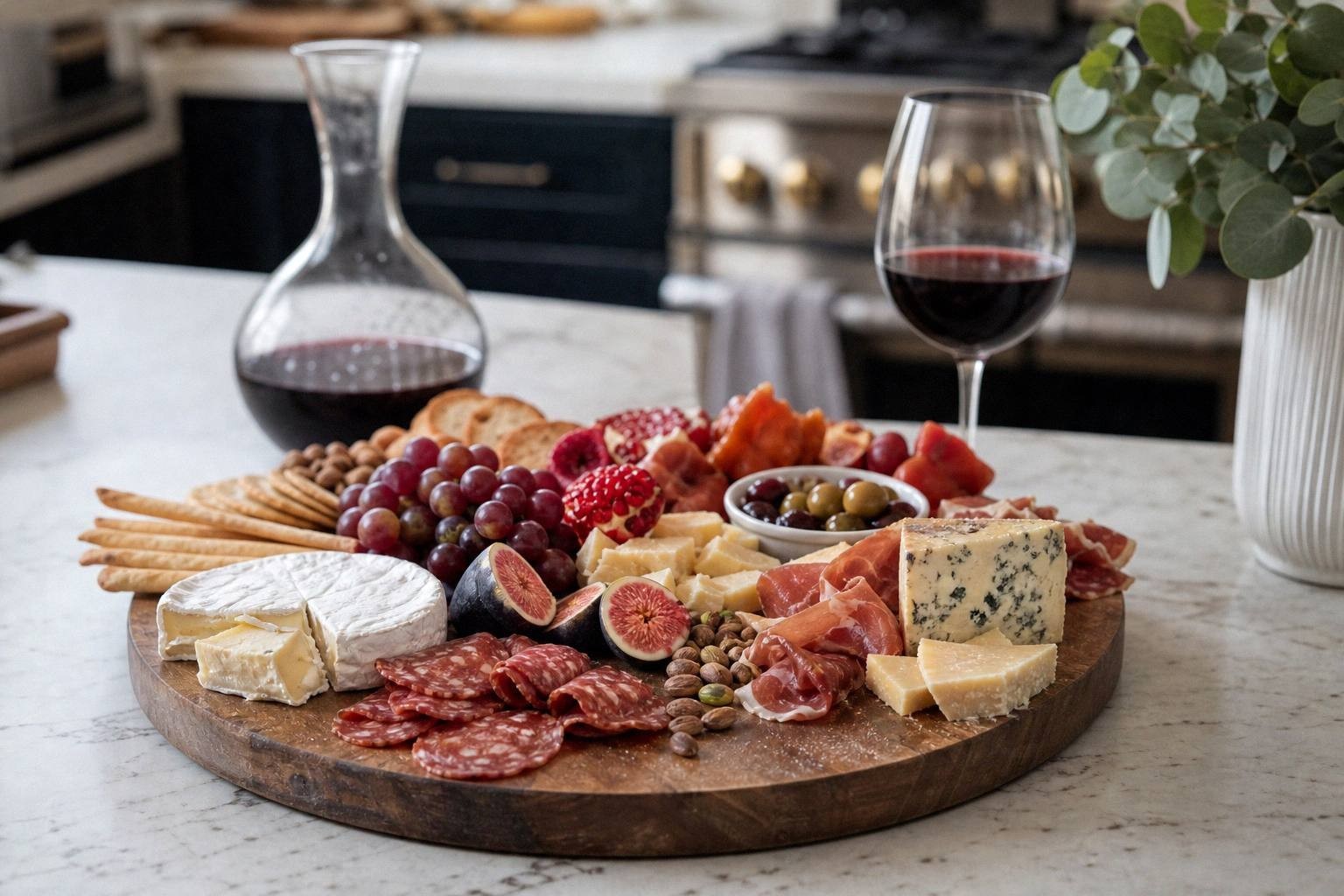
Start with your largest items, whole cheese wheels, bowls of olives or jam, and any decorative elements like small vases of herbs. Place these first to anchor the composition and create natural sections.
Space them out rather than clustering everything in the center; this gives you defined areas to fill and prevents the board from looking like a pile. Add the meats next, using different folding and stacking techniques for each type.
Fan salami in overlapping rows, fold prosciutto into loose ribbons, and roll soppressata into tubes. Varying the shapes creates visual interest and makes it easier for guests to grab what they want.
Fill in with fruits, placing larger items like grape clusters and apple slices first, then tucking smaller berries and nuts into remaining gaps. Put fruit near the cheeses it pairs well with, apples and pears next to sharp cheddar, figs near blue cheese, berries alongside brie. This guides guests toward combinations that work without requiring explanation.
Add crackers last, standing some upright in clusters and laying others flat to fill empty spots. Tuck fresh herb sprigs like rosemary or thyme into small gaps for color and fragrance.
Step back and look for any large empty spaces or areas where one color dominates too much, then adjust until the board feels balanced.
Make-Ahead Strategy and Assembly Timeline
Shop for shelf-stable items, crackers, nuts, dried fruit, olives, and jams, up to a week ahead. Buy cheeses and meats two to three days before the event and store them wrapped in the refrigerator. Purchase fresh fruit the day before or the morning of, since cut fruit browns quickly.
The day before, prep any components that hold well. Wash and dry grapes and berries, cut cheese into wedges or cubes and store them wrapped, and portion nuts and dried fruit into small containers. If you’re making a homemade jam or cranberry sauce, prepare it now and refrigerate.
Two hours before guests arrive, pull cheeses and meats from the refrigerator to come to room temperature. Cold cheese tastes muted and cold meat turns tough.
One hour before, start assembling the board, beginning with cheeses and working through meats, fruits, and crackers. Cover loosely with plastic wrap if you need to hold it for more than thirty minutes, but remove the wrap fifteen minutes before serving so condensation doesn’t make crackers soggy.
Scaling for Different Party Sizes
Plan for one to two ounces each of cheese and meat per person if the board is an appetizer before a meal. Double that if it’s the main food offering.
A board for six people needs about twelve ounces of cheese total and twelve ounces of meat, plus enough crackers, fruit, and extras to fill a standard large cutting board or platter.
For crowds of twelve or more, build two smaller boards instead of one massive one. This lets you place them in different areas so guests don’t bottleneck around a single spot, and it’s easier to replenish one board while the other stays out. Keep backup ingredients in the kitchen and refresh the boards halfway through the party rather than trying to load everything on at once.
Intimate gatherings of four or fewer work better with a smaller board and fewer ingredient types. Three cheeses, two meats, and four or five accompaniments give enough variety without overwhelming a small group or leaving you with excessive leftovers.
Common Problems and How to Fix Them
- Cheese sweating or turning oily: This happens when cheese sits out too long in a warm room. Keep the board in a cooler spot away from heat sources, and don’t pull cheese from the fridge more than two hours before serving. If it starts sweating, blot with a paper towel.
- Apple and pear slices browning: Toss cut fruit in a bowl with a tablespoon of lemon juice before adding it to the board. The acid slows oxidation without making the fruit taste sour. Add fruit to the board last, right before guests arrive.
- Crackers turning soggy: Don’t place crackers directly next to wet ingredients like olives or jam. Leave a small gap or use a piece of cheese as a barrier. If crackers do soften, replace them from your backup stash.
- Board looking sparse or unbalanced: Fill gaps with small items like nuts, berries, or herb sprigs. If one area looks too heavy, move a few items to the opposite side. Odd numbers of each ingredient (three cheese wedges, five salami fans) look more natural than even groupings.
- Guests not knowing what to pair: Place small cheese knives or picks near each cheese, and position fruits and jams next to the cheeses they complement. You can also add small labels if the crowd isn’t familiar with charcuterie boards.
Ingredients
- 5-6 wedges or blocks of cheese, (such as sharp cheddar, brie, white cheddar, asiago, manchego, and parmesan.)
- 3-4 assorted meats, (such as prosciutto, soppresata, and genoa salami)
- 6-7 assorted seasonal fruits and vegetables, (such as raspberries, blackberries, bartlett pear, figs, honeycrisp apple, and olives)
- assorted nuts, (such as roasted pecans and candied almonds)
- Spicy Cheese Crackers, (a variety of your favorite crackers)
- Cranberry Sauce
Instructions
- Cut the cheeses into whatever shapes you like.
- Set out the meat and let everything come to room temperature.
- Start with the biggest items, the brie, the olives, things like that, and arrange them on your board or platter, then fill in the gaps with the meats, fruits, nuts, and crackers.
- Serve right away.
Dietary Modifications for Holiday Gatherings
Vegetarian guests can skip the meat entirely and double up on cheeses, adding varieties like smoked gouda or herb-crusted goat cheese for more flavor complexity. Marinated artichoke hearts, roasted red peppers, and sun-dried tomatoes provide savory elements that fill the role meat usually plays.
Hummus or white bean dip in a small bowl adds protein and substance. For gluten-free boards, swap crackers for rice crackers, gluten-free seed crisps, or vegetable slices like cucumber rounds and bell pepper strips.
Check labels on cured meats since some contain gluten as a binder or filler. Most cheeses are naturally gluten-free, but avoid any with added flavorings or coatings unless you verify the ingredients.
Dairy-free boards replace cheese with nut-based alternatives like cashew cheese or almond-milk brie, though these don’t melt or age the same way. Marinated olives, roasted nuts, fresh and dried fruits, and vegetable crudités become the focus. Dairy-free dark chocolate and vegan salami or seitan-based deli slices add variety if you can source them.
What to Pour Alongside a Holiday Board
The right drink cuts through the salt and fat of cheese and cured meat, refreshing the palate between bites. Dry sparkling wine works across most holidays because the bubbles and acidity balance rich flavors without adding sweetness that competes with fruit or jam. Light reds with soft tannins and bright fruit notes pair well with both cheese and meat, offering enough body to stand up to bold flavors while staying approachable for guests who prefer red over white.
For non-alcoholic options, a spiced cider brings seasonal warmth and enough complexity to match the board’s variety, while a citrus-forward punch with herbs like rosemary or mint adds brightness that complements salty and creamy elements. Hot mulled drinks, whether spiced wine or a non-alcoholic apple cider , work especially well at winter gatherings, giving guests something warming to sip while they graze. The key is choosing drinks that refresh rather than coat the mouth, so each bite tastes as good as the first.
Frequently Asked Questions
How long can a charcuterie board sit out during a party?
Cheese and cured meats can safely sit at room temperature for up to two hours, or one hour if the room is warmer than seventy-five degrees. After that, bacteria growth becomes a concern. For longer parties, keep half the ingredients in the refrigerator and refresh the board halfway through rather than leaving everything out for the full event.
What’s the best way to store leftover board ingredients?
Wrap cheeses tightly in wax paper or cheese paper, then place them in an airtight container or zip-top bag in the refrigerator. They’ll keep for up to a week. Store cured meats in their original packaging or wrapped in parchment, and use them within three to five days. Discard any fruit that’s been sitting out, and refrigerate unopened crackers and nuts in sealed containers.
Can I use pre-sliced cheese and meat?
Pre-sliced options work and save time, but they dry out faster than whole pieces. If you use them, keep the packages sealed until just before assembling the board, and arrange slices in overlapping layers rather than spreading them flat so they don’t look dried at the edges. Whole blocks and logs give you more control over portion size and presentation.
How do I keep fruit from browning on the board?
Toss cut apples and pears in lemon juice before adding them to the board. Use one tablespoon of juice per two cups of sliced fruit. The acid slows oxidation without adding a strong lemon flavor. Add fruit to the board as close to serving time as possible, and keep backup slices in the refrigerator to swap in if the first batch starts to brown.
What if I don’t have a large wooden board?
Any flat surface works, a baking sheet, a large platter, a marble slab, or even a clean section of butcher paper spread on the counter. Slate tiles from a home improvement store make inexpensive serving surfaces and clean up easily. The food matters more than the board itself.
How much does a holiday charcuterie board cost?
A basic board for six people runs about thirty to fifty dollars depending on your cheese and meat choices. Specialty cheeses, imported meats, and out-of-season fruits push the cost higher, while shopping sales and choosing domestic options keeps it lower. Buying whole blocks of cheese and slicing them yourself saves money compared to pre-cut wedges.