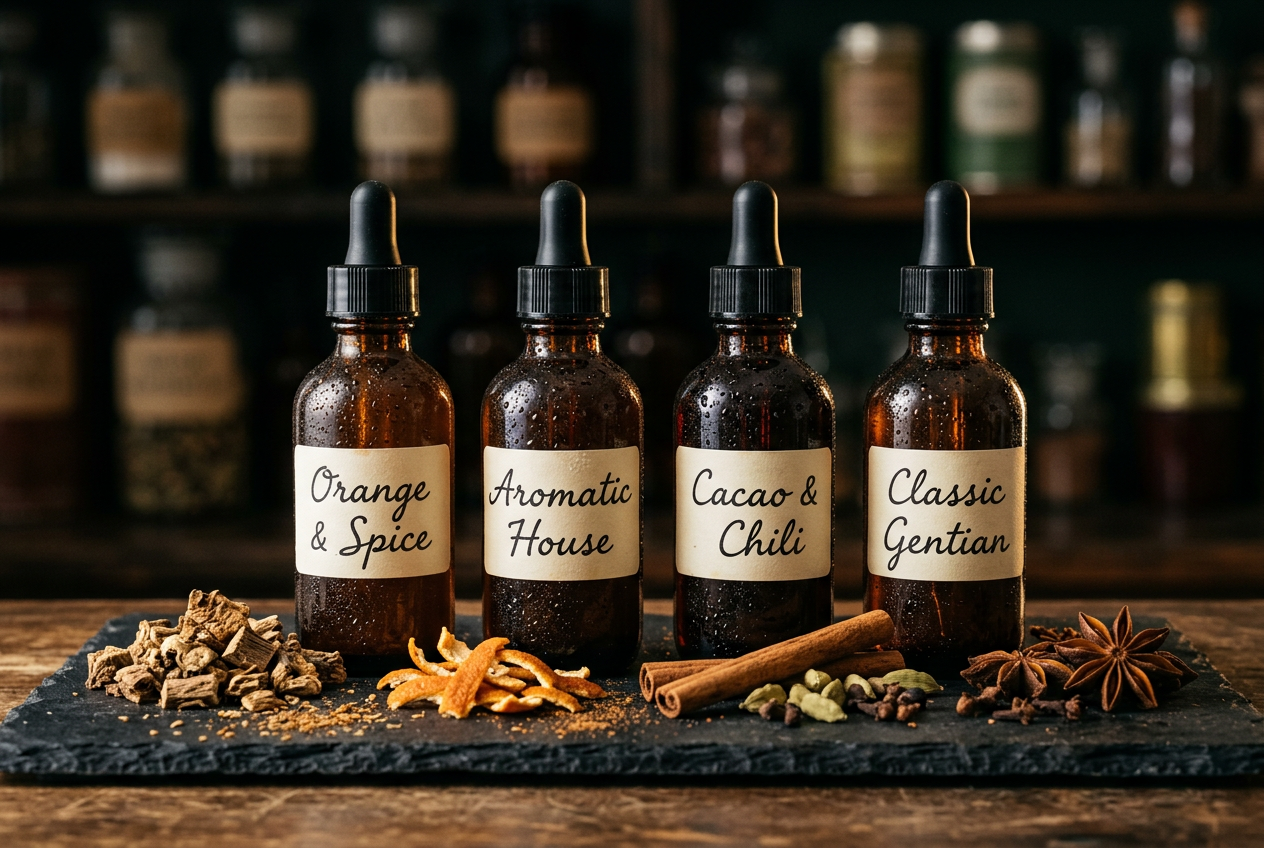
Learn how to make your own aromatic cocktail bitters at home. Two beginner recipes, a complete ingredient guide, and tips for using bitters in cocktails and mocktails.
The world of craft cocktails has experienced a renaissance in recent years, and at the heart of this revival lies a centuries-old ingredient: bitters. These concentrated flavor elixirs transform ordinary drinks into extraordinary experiences with just a few drops. While commercial bitters are readily available, making your own opens up a world of creative possibilities and connects you to an ancient tradition of herbalism and mixology.
What Are Bitters and Why Do They Matter?
Bitters are concentrated infusions of botanicals, herbs, spices, and bittering agents steeped in high-proof alcohol. They add complexity, depth, and balance to cocktails and mocktails through their unique flavor profiles. Just as salt enhances food, bitters enhance drinks by rounding out flavors, bridging disparate ingredients, and adding aromatic complexity that elevates the entire drinking experience.
The defining characteristic of bitters is their bitter taste, which comes from specific botanical compounds. This bitterness stimulates the palate and digestive system while providing a counterpoint to sweet, sour, and strong flavors in mixed drinks. Beyond their taste, bitters contribute aromatic complexity that you experience through both taste and smell, creating a multi-sensory drinking experience.
The Medicinal History of Bitters
Long before bitters became a cocktail staple, they served as medicinal tonics. Ancient civilizations recognized that bitter herbs stimulated digestion and promoted overall wellness. Egyptian, Chinese, and Greek medical traditions all incorporated bitter preparations into their healing practices.
In the 18th and 19th centuries, apothecaries and physicians created proprietary bitter formulas to treat various ailments, particularly digestive complaints. These medicinal bitters were sold as cure-alls for everything from indigestion to malaria. Angostura bitters, created in 1824 by Dr. Johann Siegert as a remedy for stomach ailments, remains one of the most famous examples of this tradition.
As cocktail culture developed in the 1800s, bartenders discovered that these medicinal tonics made excellent cocktail ingredients. The term “cocktail” itself originally referred to a specific drink containing spirits, sugar, water, and bitters. Though Prohibition nearly destroyed the bitters industry in America, the craft cocktail movement has restored these botanical elixirs to their rightful place behind the bar.
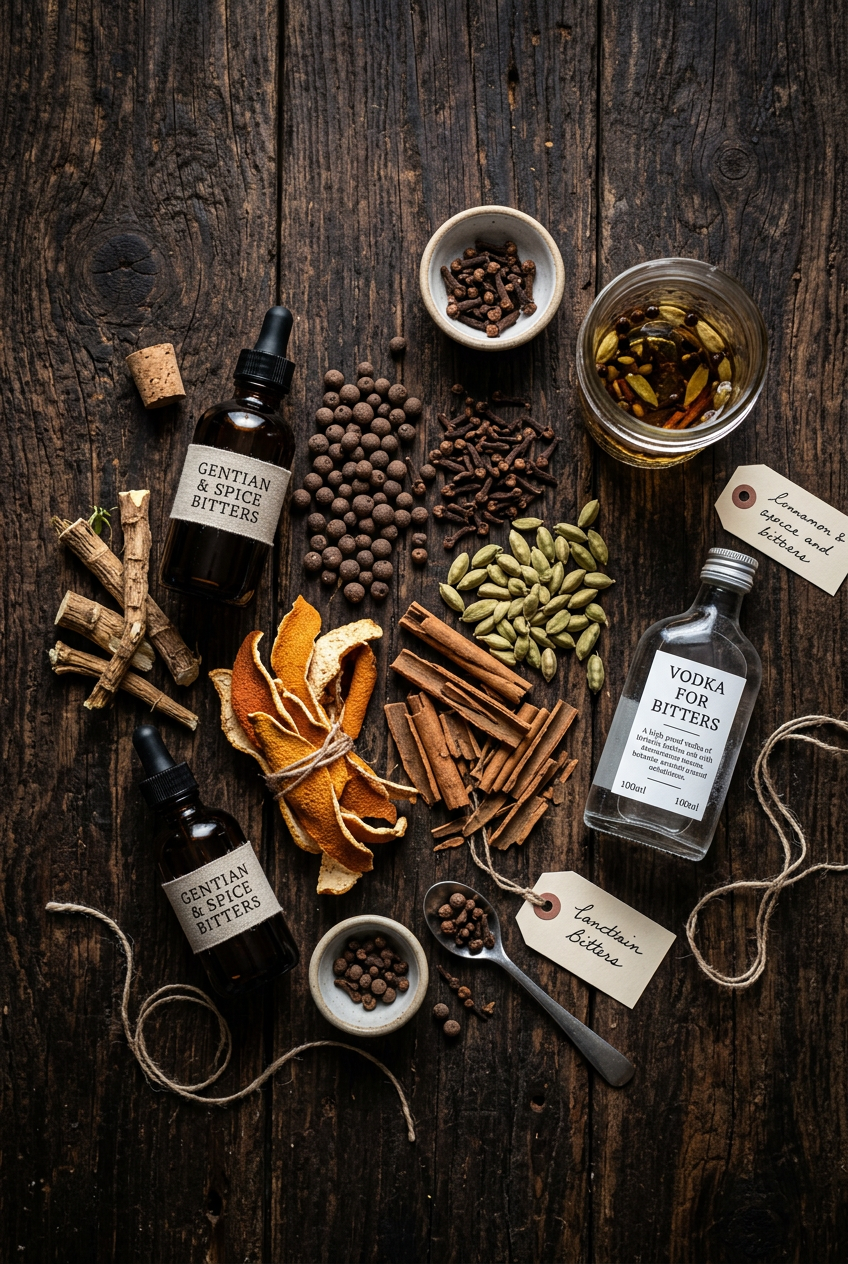
The foundation of great bitters starts with quality botanicals and spices
The Four Components of Bitters
Understanding the building blocks of bitters helps you create balanced, flavorful infusions. Every bitters recipe contains four essential components:
Bittering Agents
These provide the characteristic bitter taste that defines bitters. Bittering agents contain compounds that stimulate bitter taste receptors and promote digestive function. Common bittering agents include:
- Gentian root: The most popular bittering agent, offering a clean, earthy bitterness
- Cinchona bark: Provides quinine and a distinctly bitter, slightly astringent flavor
- Wormwood: Intensely bitter with herbal notes (use sparingly)
- Dandelion root: Milder bitterness with earthy, coffee-like notes
- Burdock root: Gentle bitterness with sweet undertones
Start with gentian root for your first batch, as it provides reliable bitterness without overwhelming other flavors.
Aromatics
Aromatics provide the primary scent profile and contribute significantly to the overall flavor experience. These ingredients contain volatile oils that create the “nose” of your bitters. Common aromatics include:
- Citrus peels (orange, lemon, grapefruit, lime)
- Warm spices (cinnamon, cardamom, star anise, cloves)
- Aromatic seeds (coriander, fennel, caraway)
- Dried flowers (lavender, chamomile, hibiscus)
- Aromatic herbs (mint, lemon verbena, thyme)
Flavor Components
These ingredients add depth, complexity, and supporting flavors that round out your bitters. They work in harmony with aromatics to create a complete flavor profile:
- Dried fruits (cherries, raisins, apricots)
- Nuts and seeds (cacao nibs, coffee beans, almonds)
- Roots and barks (ginger, licorice root, cassia)
- Peppercorns (black, pink, Szechuan)
- Vanilla beans
Base Spirit
The solvent that extracts and preserves the botanical compounds. High-proof alcohol is essential for proper extraction and shelf stability:
- Vodka (neutral, allows botanicals to shine)
- Grain alcohol or Everclear (high proof for maximum extraction)
- Rum (adds sweetness and depth)
- Brandy (contributes fruity, warming notes)
Choose spirits with at least 40% alcohol by volume (80 proof), though 50-60% (100-120 proof) works best for extraction.
Essential Equipment and Ingredients
Making bitters requires minimal equipment, most of which you likely already own:
Equipment
- Glass jars with tight-fitting lids (mason jars work perfectly)
- Fine-mesh strainer or cheesecloth
- Coffee filters for final straining
- Small funnel
- Dark glass dropper bottles for storage (2-4 oz size)
- Measuring spoons and small scale
- Labels for dating and identifying your creations
Sourcing Ingredients
Quality ingredients produce quality bitters. Source your botanicals from:
- Herb shops and apothecaries
- Online herbal suppliers
- Health food stores with bulk herb sections
- Spice merchants
- Your own garden for fresh herbs (dried before use)
Always purchase botanicals from reputable suppliers who can verify the identity and quality of their products. Organic ingredients are preferable when available.
Recipe 1: Classic Aromatic Bitters
This recipe creates bitters similar to commercial aromatic bitters, perfect for Old Fashioneds, Manhattans, and countless other classic cocktails.
Ingredients
- 2 tablespoons gentian root, chopped
- 2 tablespoons dried orange peel
- 1 tablespoon cardamom pods, lightly crushed
- 2 cinnamon sticks, broken into pieces
- 1 teaspoon whole cloves
- 1 teaspoon whole allspice berries
- 2 cups high-proof vodka or grain alcohol
Instructions
Combine all botanicals in a clean glass jar. Lightly crush or break larger pieces to increase surface area.
Pour the alcohol over the botanicals, ensuring everything is fully submerged. Seal the jar tightly.
Store in a cool, dark place for 2-3 weeks, shaking the jar daily to agitate the mixture.
After 2 weeks, taste the bitters. They should be intensely flavored and quite bitter. If the flavor seems weak, continue steeping for another week.
Strain the mixture through a fine-mesh strainer lined with cheesecloth, pressing on the solids to extract all liquid.
Filter the liquid again through a coffee filter to remove fine particles.
Transfer to dark glass dropper bottles, label with the name and date, and store in a cool, dark place.
The bitters will be ready to use immediately but will mellow and improve over the following weeks.
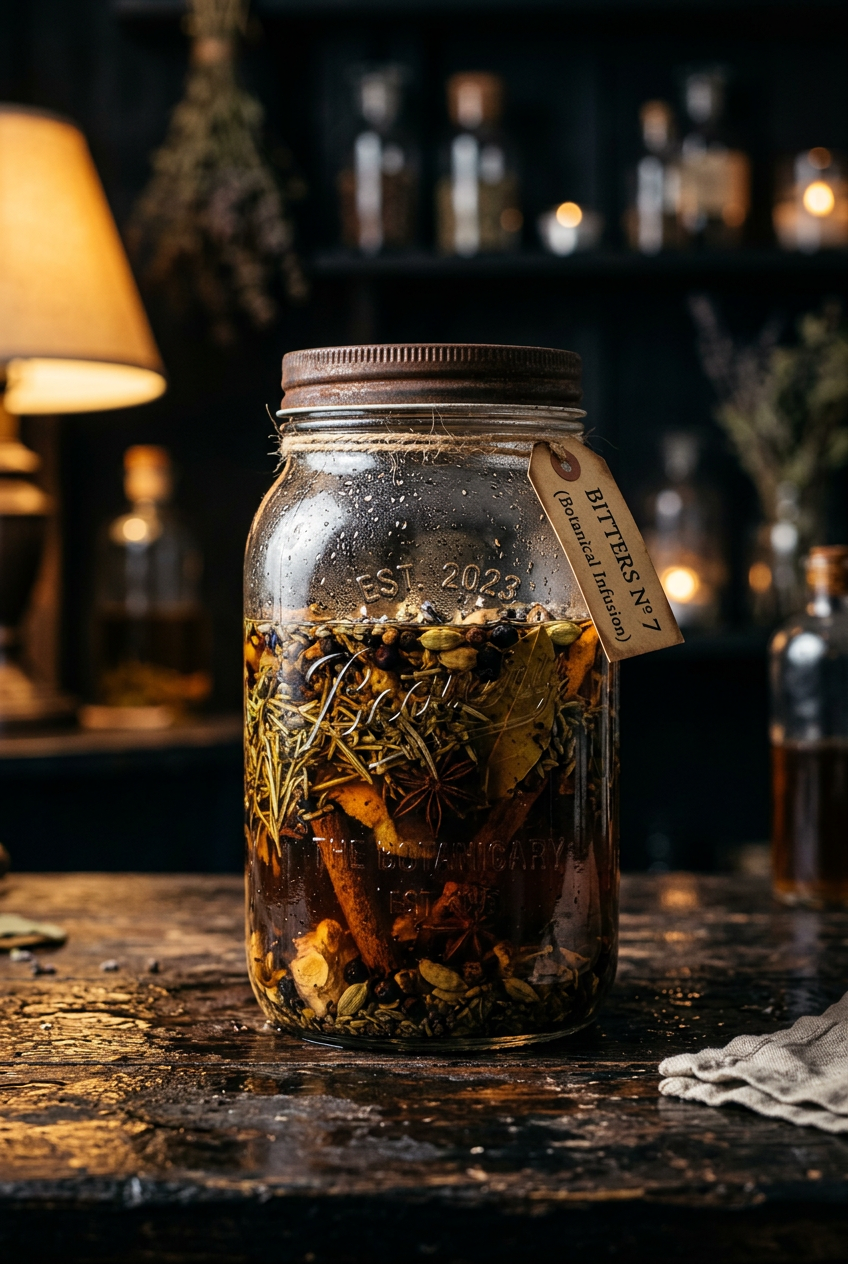
Patience is key when steeping bitters, allowing time for full flavor extraction
Recipe 2: Citrus Herb Bitters
These bright, refreshing bitters work beautifully in gin cocktails, spritzes, and mocktails.
Ingredients
- 1 tablespoon gentian root, chopped
- 3 tablespoons dried lemon peel
- 2 tablespoons dried grapefruit peel
- 2 tablespoons dried lemon verbena
- 1 tablespoon coriander seeds, lightly crushed
- 1 teaspoon black peppercorns, lightly crushed
- 2 cups high-proof vodka
Instructions
Place all botanicals in a clean glass jar. Gently crush the coriander seeds and peppercorns to release their oils.
Cover completely with vodka, ensuring all plant material is submerged. Seal tightly.
Store in a cool, dark location for 2-3 weeks, shaking daily.
Taste after 2 weeks. The bitters should have a pronounced citrus aroma with herbal complexity and definite bitterness.
Strain through cheesecloth-lined strainer, squeezing the botanicals to extract maximum flavor.
Filter through coffee filters until the liquid is clear.
Bottle in dark glass dropper bottles, label, and store away from light and heat.
Using Bitters in Cocktails
Bitters are incredibly versatile in cocktail applications. A little goes a long way, with most drinks requiring only 1-4 dashes (about 1/4 to 1 teaspoon total).
Classic Cocktail Applications
Old Fashioned: Muddle 2-3 dashes of Classic Aromatic Bitters with a sugar cube, add bourbon or rye whiskey, stir with ice, and garnish with orange peel.
Manhattan: Combine 2 oz rye whiskey, 1 oz sweet vermouth, and 2-3 dashes Classic Aromatic Bitters. Stir with ice and strain into a chilled glass.
Champagne Cocktail: Place a sugar cube in a champagne flute, add 2-3 dashes of bitters, and top with champagne.
Gin and Tonic Upgrade: Add 2 dashes of Citrus Herb Bitters to your standard gin and tonic for added complexity.
Whiskey Sour Enhancement: Add 2 dashes of Classic Aromatic Bitters to a whiskey sour for depth and balance.
Modern Applications
Bitters shine in contemporary cocktails as well:
- Float a few drops on top of a cocktail for aromatic impact
- Rim glasses with bitters for a gradual flavor evolution
- Add to simple syrup for bitters-infused sweetener
- Use in place of salt in savory cocktails
- Create bitters-based non-alcoholic aperitifs
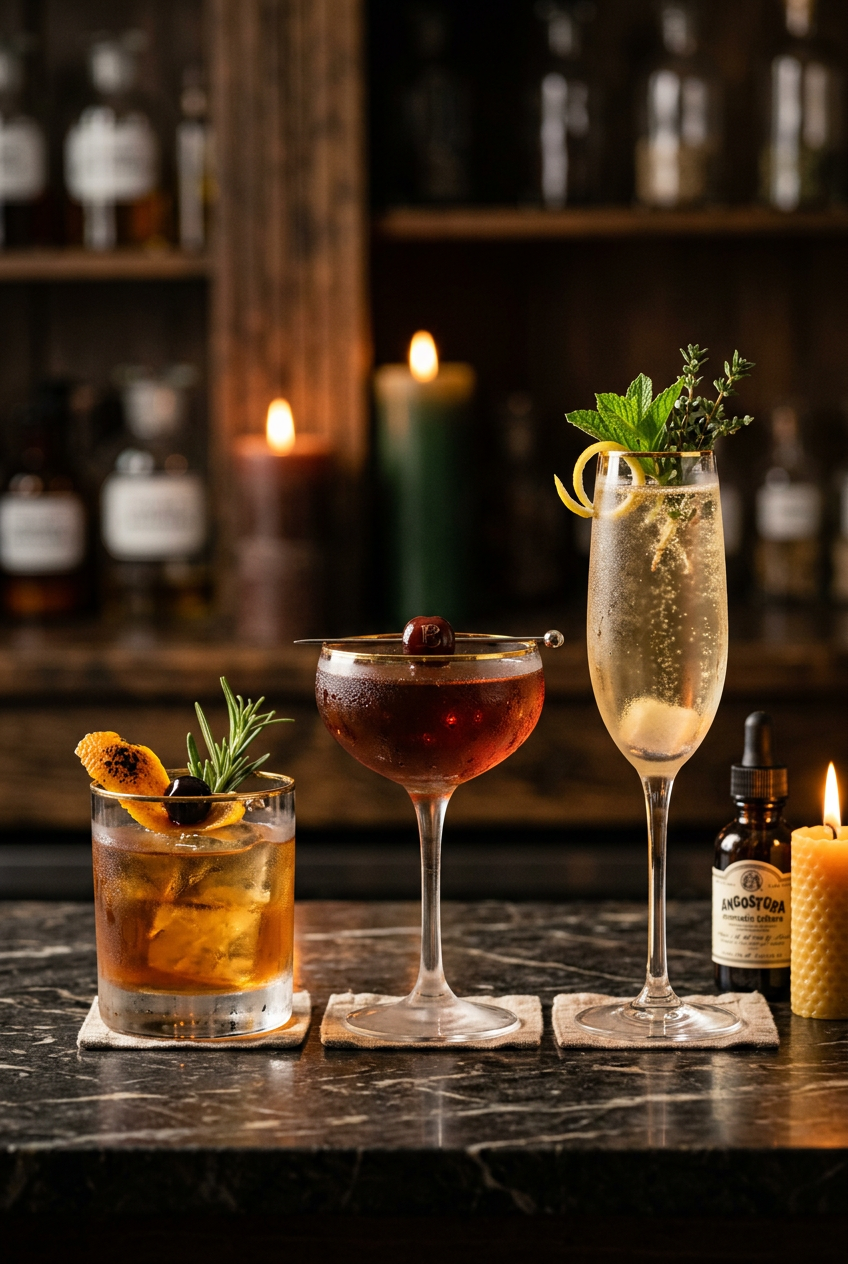
A few drops of homemade bitters elevate cocktails from ordinary to exceptional
Bitters in Mocktails
The craft mocktail movement has embraced bitters as a way to add complexity without alcohol. While bitters contain alcohol, the amount used is negligible (similar to vanilla extract in baking).
Mocktail Recipes
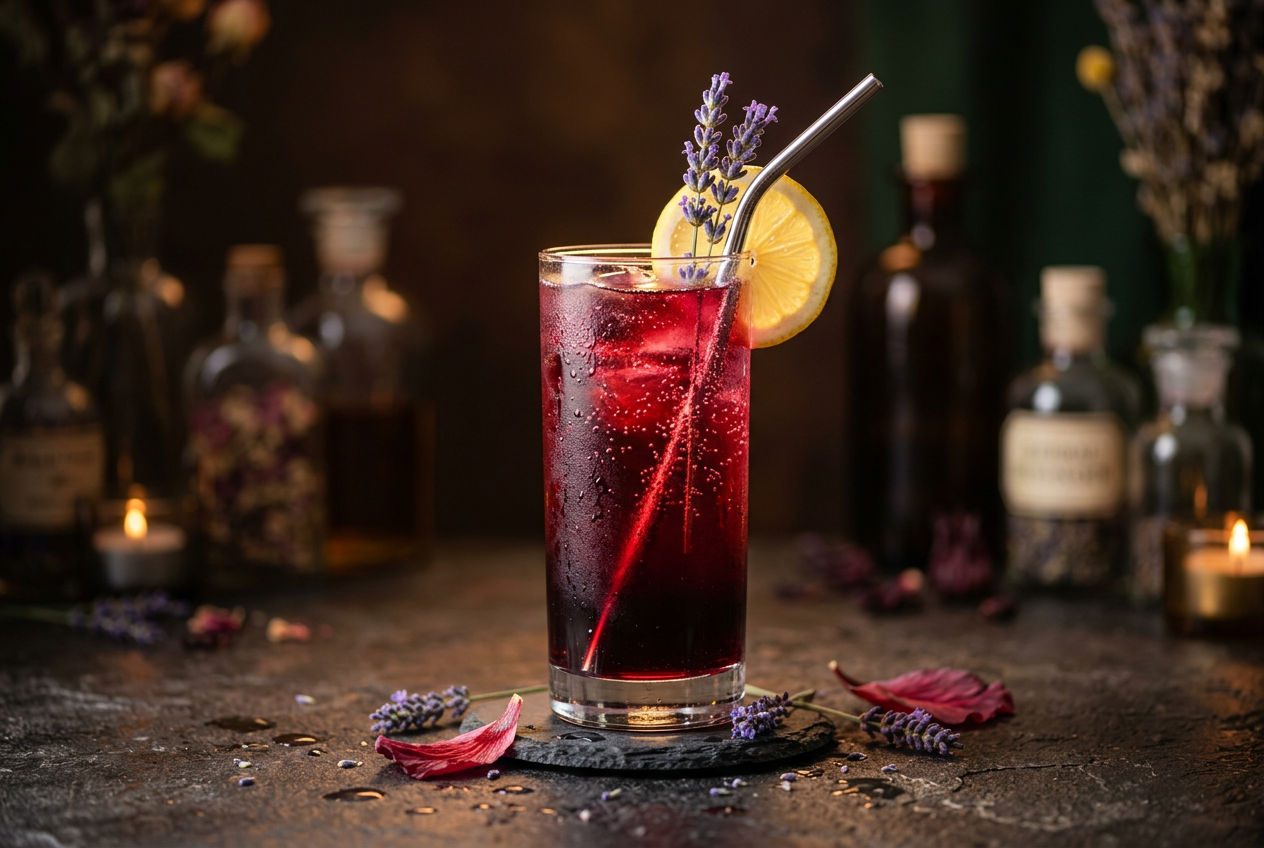
Citrus Bitters Spritz: Combine 2 oz fresh grapefruit juice, 1 oz fresh lemon juice, 1/2 oz honey syrup, 3 dashes Citrus Herb Bitters, and top with sparkling water over ice.
Aromatic Tonic: Mix 3 dashes Classic Aromatic Bitters with 1/2 oz simple syrup and 4 oz tonic water over ice. Garnish with orange peel.
Herbal Refresher: Muddle fresh mint with 1 oz simple syrup, add 2 oz fresh lime juice, 3 dashes Citrus Herb Bitters, and top with soda water.
Bitters and Soda: The simplest preparation is also one of the most refreshing. Add 4-6 dashes of any bitters to a glass of sparkling water over ice with a citrus wedge.
Shrub-Based Mocktail: Combine 1 oz fruit shrub (drinking vinegar), 2 dashes bitters, and sparkling water for a complex, refreshing drink.
Aging and Storage
Proper aging and storage ensure your bitters maintain their quality and develop optimal flavor.
Initial Aging
After straining and bottling, allow your bitters to rest for at least one week before using. During this time, flavors marry and mellow, creating a more harmonious final product. Many bitters improve significantly over the first month after bottling.
Long-Term Storage
Store bitters in dark glass bottles away from direct light and heat. A cupboard or liquor cabinet works perfectly. The high alcohol content preserves bitters indefinitely, though they’re best used within 2-3 years for optimal flavor.
Dark amber or cobalt blue glass protects the bitters from light degradation. If you only have clear bottles, store them in a dark location.
Signs of Proper Aging
Well-aged bitters develop:
- Smoother, more integrated flavors
- Mellowed bitterness that doesn’t overwhelm
- Enhanced aromatic complexity
- Deeper, richer color
Shelf Life Expectations
Properly made and stored bitters last for years:
- High-proof bitters (100+ proof base): 5+ years
- Standard-proof bitters (80-100 proof base): 2-3 years
- Glycerin-based bitters (alcohol-free): 1 year refrigerated
Always label your bottles with the creation date and ingredients. This helps you track aging and recreate successful batches.
Tips for Success
As you begin your bitters-making journey, keep these tips in mind:
Start Simple: Master basic recipes before experimenting with complex combinations. Understanding how individual ingredients behave helps you create better custom blends.
Keep Notes: Document your recipes, steeping times, and tasting notes. This creates a valuable reference for future batches and helps you refine your techniques.
Taste Regularly: Check your steeping bitters every few days. This teaches you how flavors develop over time and prevents over-extraction.
Balance is Key: Aim for harmony between bitter, aromatic, and flavoring components. No single element should dominate unless that’s your intention.
Use Fresh Botanicals: Old, stale herbs and spices produce flat, lifeless bitters. Purchase in small quantities and store properly.
Experiment Gradually: When modifying recipes, change one variable at a time so you can identify what works and what doesn’t.
Consider the Application: Think about how you will use your bitters when designing recipes. Cocktail bitters need to be more concentrated and assertive than bitters destined for sparkling water or mocktails.
Give Them Time: Resist the urge to rush the process. The best bitters are the result of patience. A two-week steep followed by a week of resting after bottling will reward you with flavors you simply cannot achieve by cutting corners.
Your First Batch
Making bitters for the first time is a genuine rite of passage for any home bartender or botanical enthusiast. Start with the Classic Aromatic Bitters recipe using easily sourced ingredients, taste it daily during steeping, and take notes on how the flavor evolves. By the time you strain and bottle your first batch, you will have learned more about botanical flavor extraction than any book can teach.
From there, the possibilities are truly limitless. Every herb garden, every spice rack, every farmers market becomes a potential source of inspiration. The ancient apothecaries who first formulated these recipes understood something fundamental: that the plants around us hold extraordinary power to transform the way we experience flavor. Your homemade bitters are a direct continuation of that tradition.