The Short Version
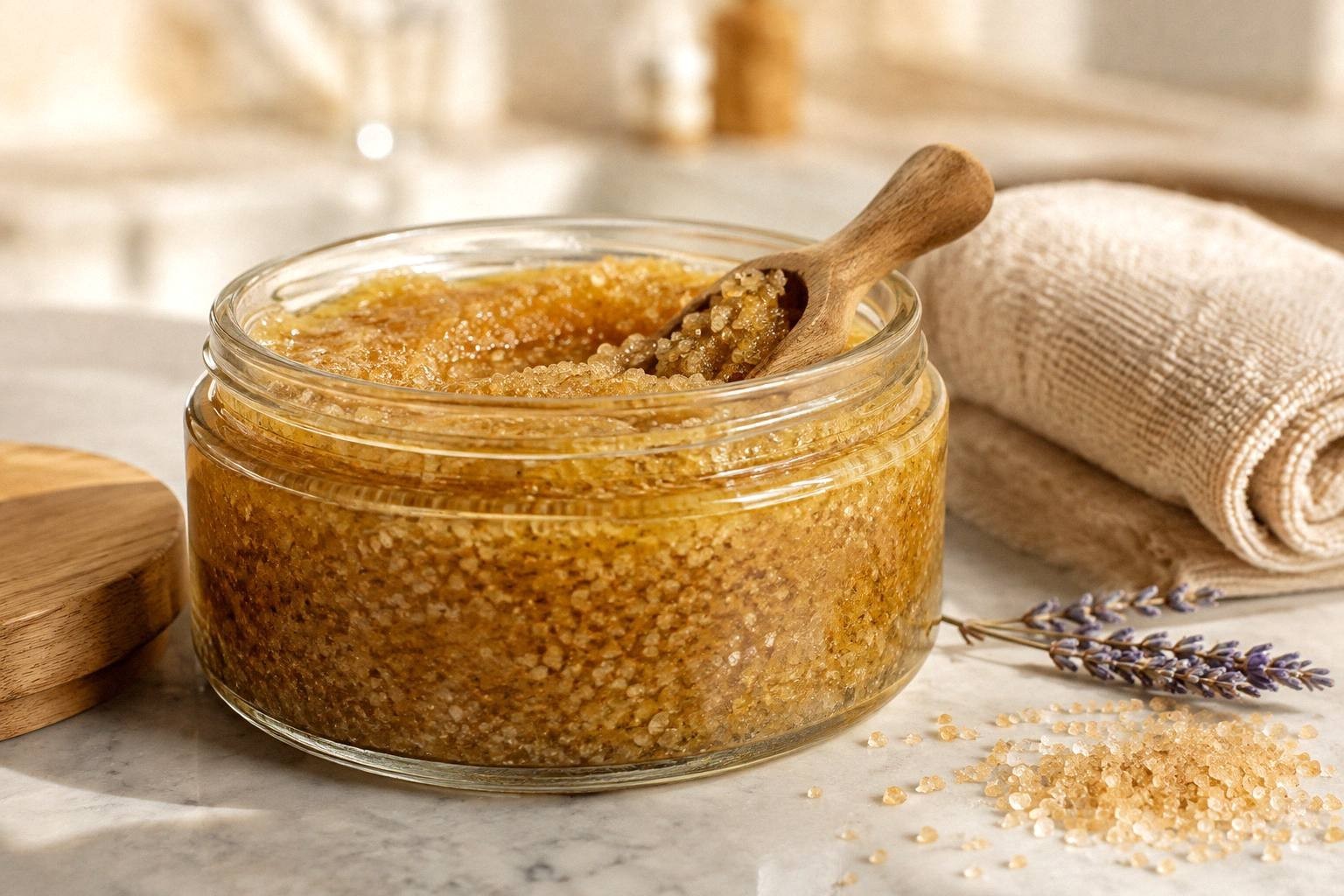
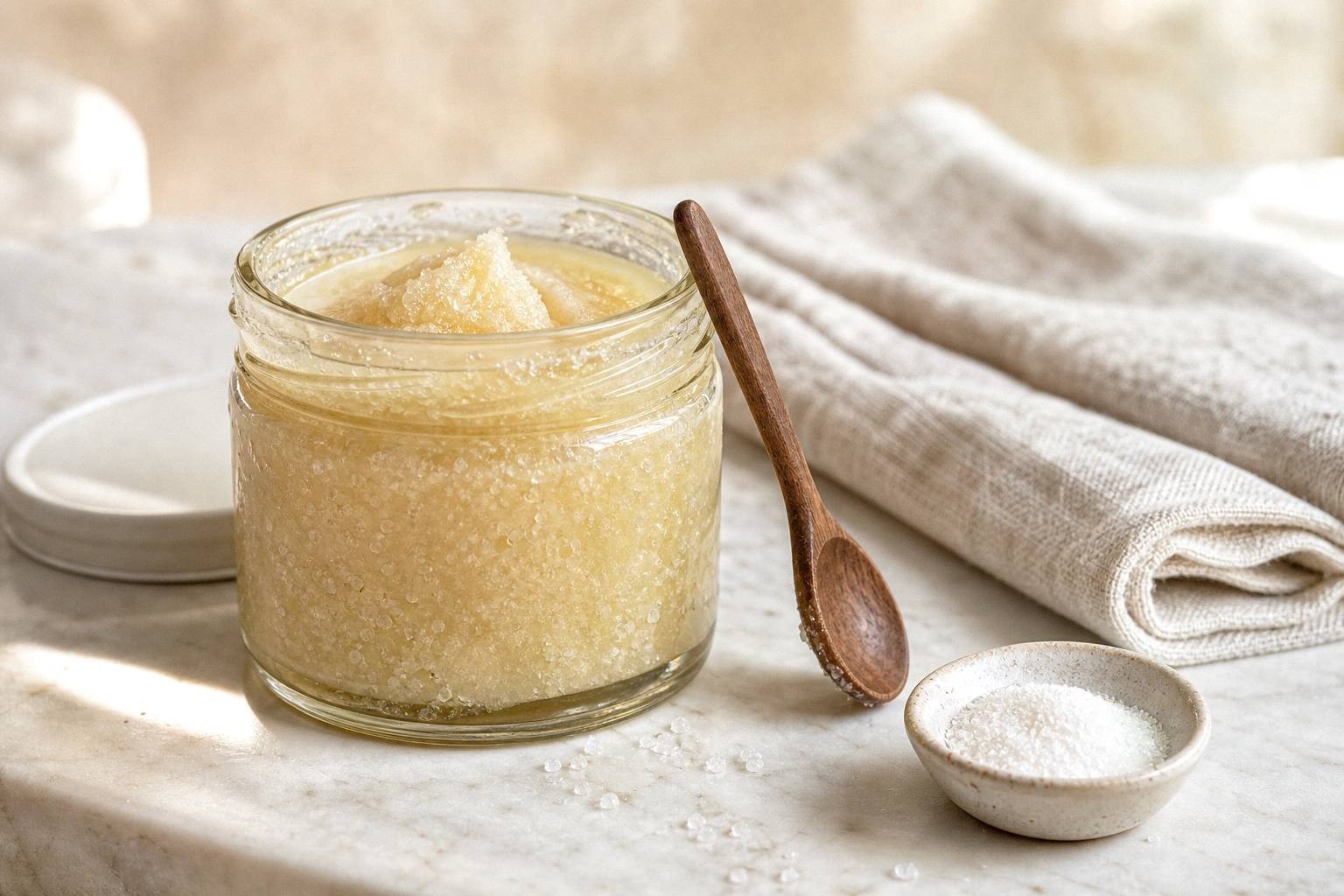
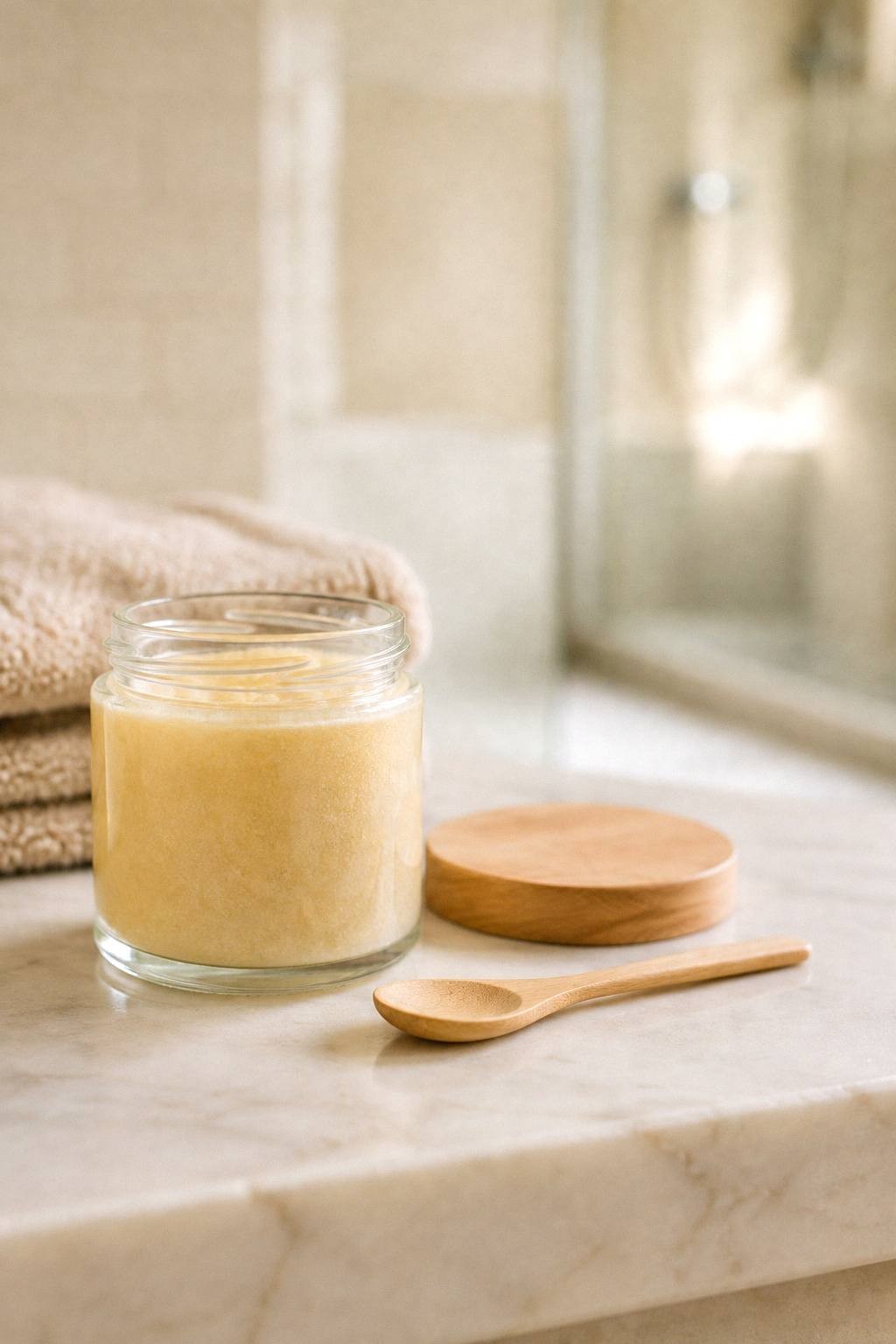
A face scrub is two things: something gritty, and something to carry it. Fine sugar or finely ground oats, stirred into a plain oil until it holds together on a spoon. That is the whole product. Everything sold beyond that is fragrance, packaging, and a story.
What follows is the part most homemade face scrub pages skip: which claims about scrubs hold up, which are folklore that gets repeated because it sounds sensible, and the one thing that genuinely does ruin a jar.
What Goes In
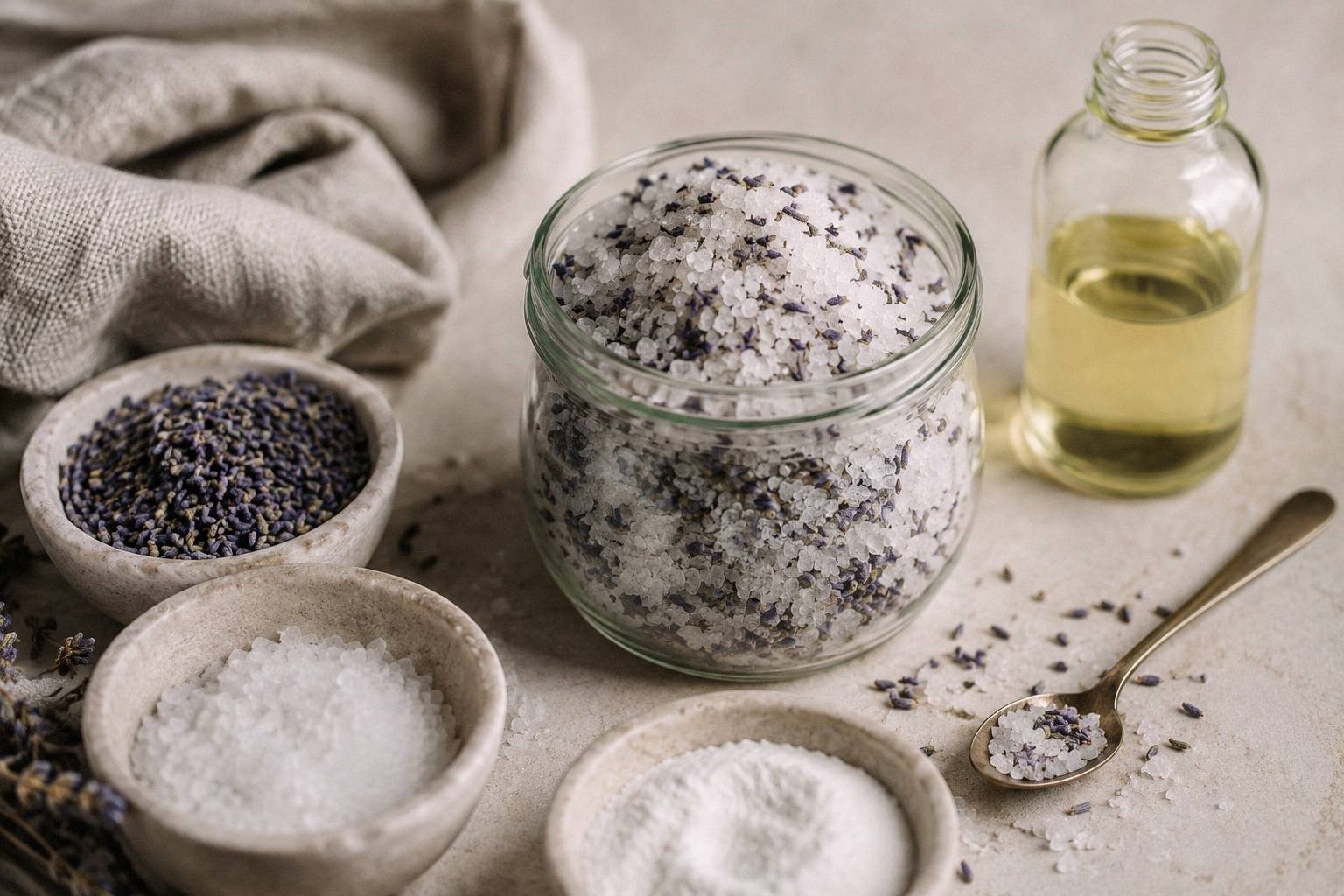
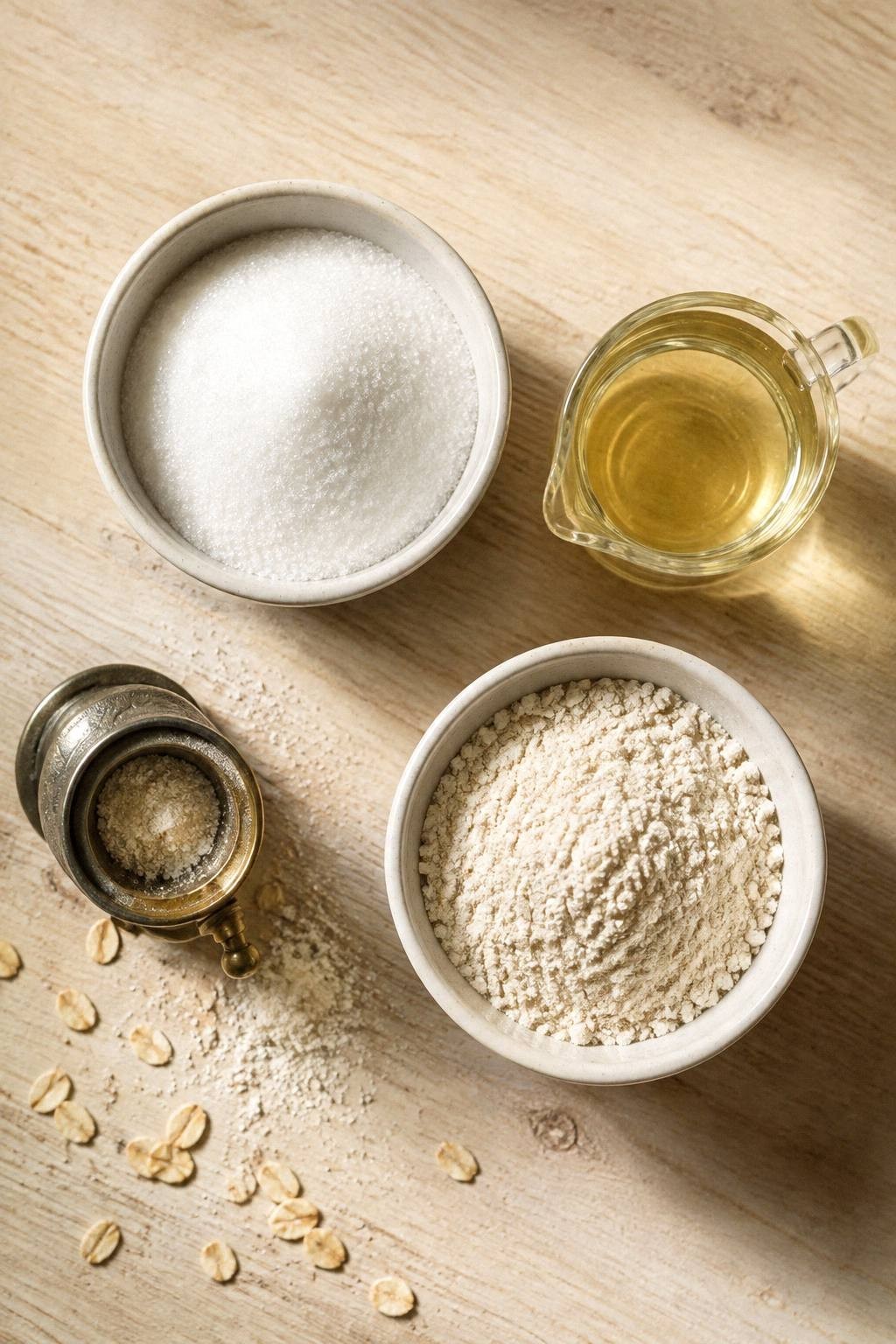
The abrasive. Fine white or caster sugar, or rolled oats run through a spice grinder until they are powder rather than flakes. Both dissolve or soften as you work, which is why they stop scrubbing before you do.
The oil. Jojoba, sweet almond, olive, sunflower. Whatever you already own and would put on your skin. The oil is not a passenger; it is what keeps the abrasive suspended and, as you will see below, it is what keeps the jar safe.
Nothing else, ideally. Every addition either adds water, which is the actual problem, or adds a sensitiser.
The Ratio Is Texture, Not Chemistry
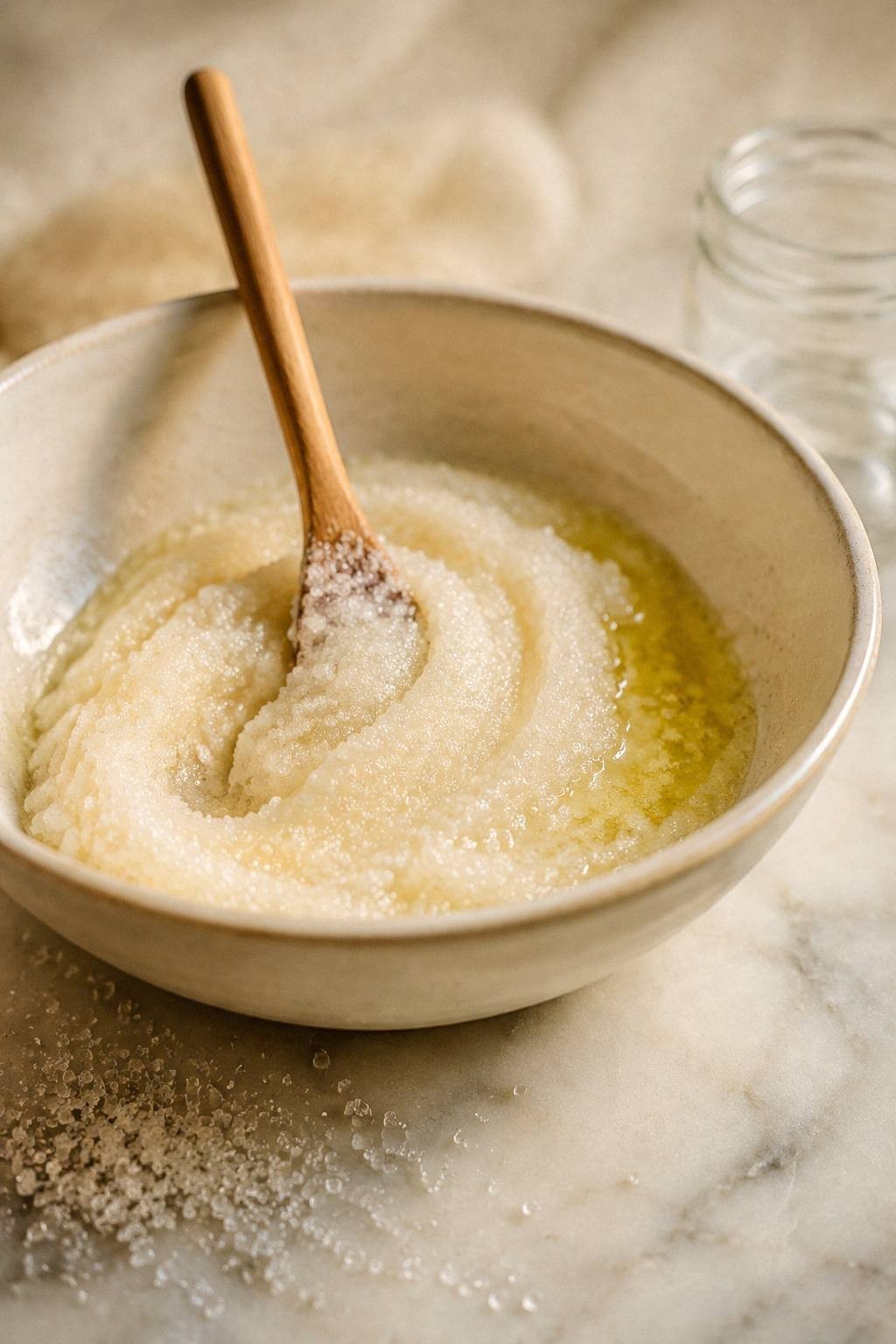
Roughly two parts abrasive to one part oil gives a scrub that holds together and does not run. More oil loosens it, more sugar makes it grittier and drier.
That is genuinely all there is to it. I want to be straight about this, because every scrub recipe online states its ratio with the confidence of a formula, and there is nothing behind those numbers. There is no clinical difference between 2:1 and 3:1. It is a preference about how a paste feels in your hand, and anyone presenting their ratio as the correct one is making that up.
The variable that does matter is not in the ratio at all.
Water Is the Thing That Ruins It
This is the part worth knowing, and almost nobody covers it.
Microorganisms need available water to grow. The measure is water activity, and the cosmetics industry treats a product at or below 0.75 as low risk for exactly this reason; the relevant standard, ISO 29621, lists water activity below 0.75 among the properties that make a product microbiologically low risk in the first place. A genuinely oil-and-sugar scrub sits in that class. Formal preservative challenge testing “is generally not necessary for formulations with aW <0.75”, which is why your jar does not need a preservative on the shelf.
On the shelf. Then you take it into the shower.
The German Society for Scientific and Applied Cosmetics puts the problem plainly in its technical paper on water activity:
The utilization of water activity as a preservation technique may also present “in use” microbiological hazards; for instance, when water free formulations, that typically contain fungal or bacterial spores, are subjected to water during use.
Dry ingredients routinely carry bacterial spores. Spores sit inert in oil and germinate once water arrives, and they can begin doing so at a water activity around 0.80, which a wet finger in a jar reaches easily. The FDA’s own consumer guidance says the same thing in plainer words: do not add water to cosmetic products, because you water down whatever protection is there, and wash your hands before dipping fingers into a container.
So the practical rules, which are the real recipe:
- Keep the jar out of the shower stream, or scoop out what you need before you get in
- Use a dry spoon, not wet fingers
- Make small batches you will finish in a few weeks rather than a big jar that lives in the steam
- If it ever smells off or looks cloudy, it is done. Oil separating is normal, cloudiness is not
About Sugar on Your Face
Here is the claim you have read a hundred times: sugar and salt have sharp, jagged crystals that cause micro-tears in facial skin, which is thinner and more delicate than the skin on your body.
I believed it. I have written it. Then I went looking for the study behind it and there isn’t one.
The most-quoted version traces to a physician assistant quoted in a consumer health article that cites no research. When a version of this claim was actually tested in evidence, in a class action over an apricot-shell scrub, the Ninth Circuit affirmed dismissal in 2020 because the plaintiffs could not link micro-tears to any concrete injury; their own expert would say only that an impaired barrier can increase the chances of unobserved risks. A search of the medical literature for particle shape or edge damage to skin returns nothing at all. The “spherical beads roll, jagged crystals lacerate” material all traces back to companies selling spherical beads.
And the one controlled facial study I could find points the other way. In a split-face comparison, sodium chloride microdermabrasion raised water loss through the skin at twenty-four hours, as you would expect from any abrasion, but by day seven water loss had fallen below where it started and skin hydration was still measurably higher than baseline.
None of that proves sugar scrubs are good for you. Failing to find harm is not the same as demonstrating safety, and one small study on a clinical procedure is not a licence. But it does mean the confident version of this claim is folklore, and I would rather tell you what is actually documented.
Facial skin genuinely is thinner. Measured by confocal Raman spectroscopy, the stratum corneum runs about 16.8 micrometres on the cheek against 22.6 on the forearm. That is a real difference and a modest one, and it is worth putting next to the palm at 173. The face is not made of tissue paper.
The Rules That Are Actually Documented
The American Academy of Dermatology treats mechanical exfoliation, which is what a scrub is, as a legitimate method rather than a mistake. Its guidance routes by skin type instead of banning it: dry, sensitive and acne-prone skin “may prefer just a washcloth and a mild chemical exfoliator, as mechanical exfoliation may be too irritating,” while oilier and thicker skin can take more.
Its hard rules are narrower and considerably more useful than the folklore:
- Never on sunburned skin, or skin with open cuts or wounds.
- Not while you are using a retinoid or benzoyl peroxide. Exfoliating on top of those “may worsen dry skin or even cause acne breakouts.”
- Go gently or not at all if you have a darker skin tone, or if you tend to get dark marks after spots and bug bites. This is the strongest caveat the AAD gives, and the reason is that the irritation itself is what leaves the mark.
- If you have acne, scrubbing is on the list of habits that make it worse. The AAD includes it among ten skin care habits that worsen acne, because “scrubbing can irritate your skin, causing acne to flare.”
For technique the AAD is specific: gentle, small circular motions, about thirty seconds, then rinse well with lukewarm water, not hot.
How Often
I am not going to give you a number, because the AAD deliberately does not give one either. Its rule is a proportion instead:
Generally, the more aggressive the exfoliation, the less often it needs to be done.
Every “two to three times a week” you have read on a scrub page was invented by the person writing it. What the AAD does name as the sign you have overdone it is simple and worth watching for: skin that is red and irritated.
Essential Oils, With Real Numbers
Most DIY scrub recipes say “add ten drops of your favourite essential oil,” and that instruction is wrong in a way worth spelling out, because there is no single safe percentage for essential oils. Limits are set per oil and per product type, which is why a blanket rule cannot exist.
The published figures are far lower than most home recipes assume. The Cosmetic Ingredient Review puts peppermint oil at 3% or less in rinse-off products and 0.2% or less in leave-on. Real-world industry use of tea tree oil in leave-on products with skin contact tops out around 0.5%. Citrus is its own problem: expressed lime, lemon and sweet orange oils have produced phototoxic reactions in people, lemon and sweet orange at 1%, and the CIR limits 5-methoxypsoralen in leave-on citrus peel products to 15 parts per million.
Tea tree oil carries one more catch that matters specifically for a jar living in a warm bathroom: oxidised tea tree oil is a sensitiser, and the CIR panel’s conclusion was that it is safe as used only when formulated to be non-sensitising. Old oil is not the same material as fresh oil.
The lazy and honest answer: leave them out. A scrub does not need fragrance to work, and a plain oil smells like nothing, which is a feature.
The Coconut Oil Question
Somebody always asks, because the internet has assigned coconut oil a comedogenic rating of four out of five and treats that as settled.
It is not traceable to anything. PubMed returns zero results for coconut oil and comedogenicity. The rating scale itself comes from a rabbit ear assay whose own authors wrote that it “is not an ideal animal model but is the best we have,” a review in the same journal criticised for “the absence of correlation with experience in the human,” and coconut oil was not among the ingredients they tested.
What coconut oil does have is human data, on body skin. In a randomised double-blind trial in children with atopic dermatitis it outperformed mineral oil over eight weeks, and in a separate controlled trial it reduced Staphylococcus aureus colonisation compared with olive oil.
That is not a recommendation to put it on your face. It is a caution against retiring an oil on the strength of a rabbit-ear number that never tested it. If coconut oil breaks you out, it breaks you out, and your own face is better evidence than the rating.
Common Questions
Is a homemade face scrub as good as a store-bought one?
For the scrubbing part, yes, because the scrubbing part is not complicated. Where commercial products are genuinely better is preservation: they are formulated and tested to survive a wet bathroom and repeated fingers. Your jar is not, which is why the water rules above matter more than the recipe.
Can I use table salt instead of sugar?
You can, and the only head-to-head facial data I could find used salt rather than sugar. It is coarser than caster sugar, so grind it or use a fine grade. There is no sourced comparison of sugar against salt as an abrasive, so anyone ranking them for you is guessing.
What is the best natural exfoliating scrub for sensitive skin?
The AAD’s answer for dry, sensitive and acne-prone skin is that a washcloth and a mild chemical exfoliant may suit better than a scrub at all. If you want to scrub anyway, finely ground oats in oil is the least aggressive version of this, and thirty seconds is still thirty seconds.
How long does a homemade face scrub last?
An oil and sugar scrub kept genuinely dry is a low-risk product on the shelf. Once water gets in, no honest number exists, because it depends on your jar, your hands and your bathroom. Make a small batch, keep it dry, and throw it out at the first sign of cloudiness or an off smell rather than trusting a date.
Should I scrub before or after cleansing?
After. Scrubbing over the day’s sunscreen and grime just moves it around. Cleanse, scrub gently for about thirty seconds, rinse lukewarm, then moisturise while the skin is still slightly damp.
Can I use a face scrub on my body?
Yes, and it will go further there. Our DIY body scrub is the same idea at a coarser grade, with the herbal additions that are worth making. The reverse is the one to watch: a body scrub is a harsher product than anything the AAD suggests pointing at your face.
Should I scrub or mask?
They do different jobs and they stack badly on the same day. A scrub takes things off the surface; a mask sits on it and puts something in. If you want both, put a day between them. Our homemade face masks cover eight built around the same pantry and garden ingredients as this scrub.
Where These Numbers Come From
The water activity thresholds, the ISO 29621 reference and the in-use spore quotation come from the German Society for Scientific and Applied Cosmetics technical paper on water activity in cosmetic products . The consumer guidance on adding water and dipping fingers is the FDA’s page on microbiological safety and cosmetics .
Exfoliation technique, frequency and every safety rule above are the American Academy of Dermatology’s, from how to safely exfoliate at home and habits that can worsen acne .
Stratum corneum thickness by body site is from Egawa, Hirao and Takahashi . The split-face salt microdermabrasion result is Rajan and Grimes . Peppermint oil limits are CIR ; citrus peel oil phototoxicity limits are CIR’s citrus peel oils report . The comedogenic rating’s origin is Fulton, Pay and Fulton and the criticism of the assay is Frank . Coconut oil’s human trials are Evangelista et al. and Verallo-Rowell et al. .
None of this is medical advice and a scrub is not a treatment. Skin that is painful, spreading, infected or changing quickly needs a clinician rather than a jar of sugar.