Make homemade kombucha from scratch: sweet tea base, SCOBY, first ferment 7-14 days, then second fermentation with fruit and ginger flavors.
The first sip of your own homemade kombucha tastes nothing like the stuff from the store. It is sharper, more alive, faintly sweet with a vinegar edge that tells you something real happened in that jar. Making it at home costs about 40 cents a bottle instead of four dollars. The process takes patience more than skill.
What Kombucha Actually Is
Kombucha is fermented sweet tea. A SCOBY (Symbiotic Culture of Bacteria and Yeast) sits in brewed tea and sugar, consuming the sugar over 7-14 days. The bacteria produce organic acids, primarily acetic and gluconic acid. The yeast produce a small amount of carbon dioxide and trace alcohol, usually under 0.5%. The result is a tangy, lightly effervescent drink that has been brewed across Central Asia and China for centuries, with records dating back to 220 BCE in Manchuria where it was called the “tea of immortality.”
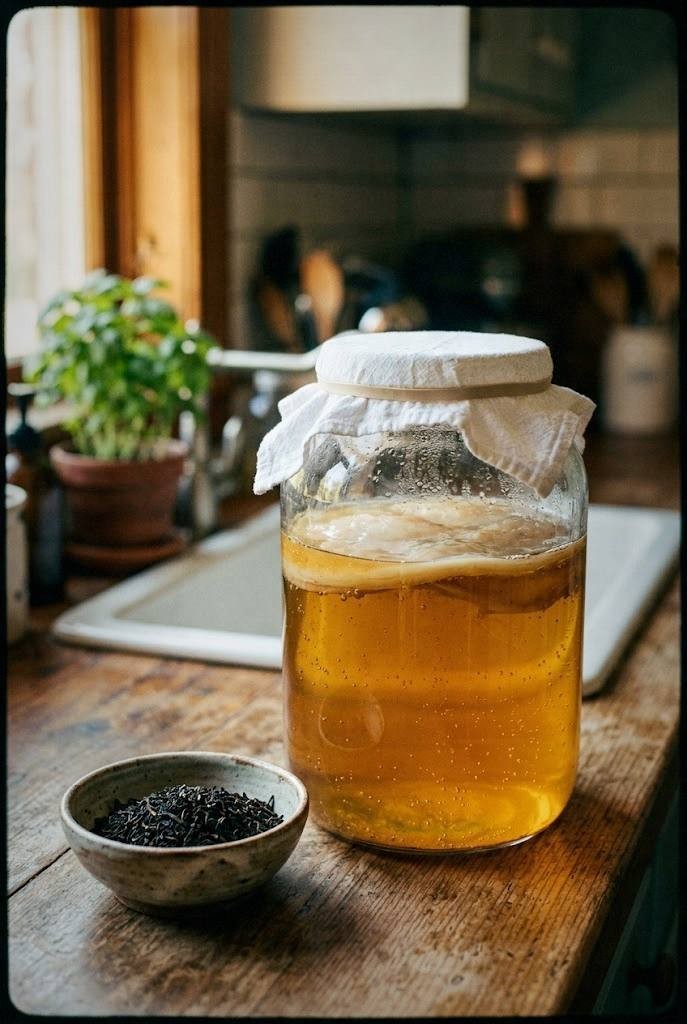
The SCOBY looks like a pale, rubbery disc. It grows with every batch, producing a baby SCOBY on top that you can pass to friends or compost. What you cannot see is the living culture inside it: Lactobacillus, Acetobacter, Gluconobacter, and wild yeasts working together. The starter liquid (finished kombucha kept back from a prior batch) acidifies the new batch immediately, preventing mold from taking hold before the culture establishes itself. That starter is not optional.
What You Need
Equipment
- 1-gallon wide-mouth glass jar (Mason jar works well)
- Tightly woven cloth or coffee filters for covering (breathable but not bug-permeable)
- Rubber band
- Long wooden or glass spoon
- 4-6 flip-top glass bottles (Grolsch-style, 16 oz each) for second fermentation
- Fine-mesh strainer
Ingredients for First Fermentation
- 1 gallon filtered water (chlorine in tap water can harm the culture)
- 8 black tea bags, or 2 tablespoons loose-leaf black tea
- 1 cup plain white cane sugar (not honey, not coconut sugar for your first batch)
- 1 SCOBY with 2 cups unflavored starter liquid
A note on tea: black tea gives the most vigorous fermentation because it contains the most nitrogen that feeds the culture. Gunpowder green tea works too and gives a lighter flavor. Avoid flavored teas with essential oils (Earl Grey, chai blends) as they can inhibit the culture. Plain Lipton or Bigelow black tea is perfectly fine.
On sugar: white cane sugar is the cleanest fuel for your first batch. The SCOBY metabolizes almost all of it, so the finished brew has far less sugar than you added. Alternative sweeteners like honey contain antimicrobial compounds and can stall fermentation. Once you have a healthy established culture, you can experiment.
Ingredients for Second Fermentation (per 16 oz bottle)
Choose one per bottle:
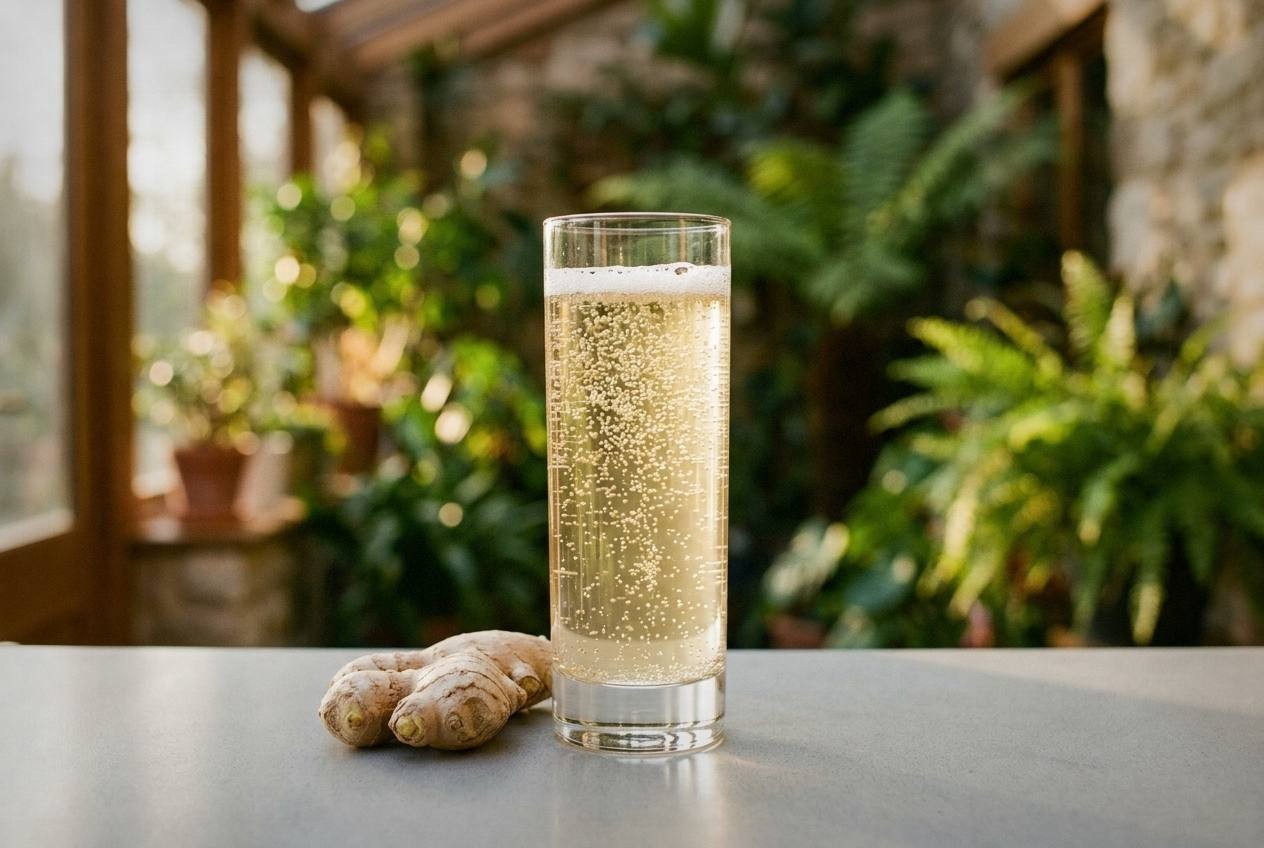
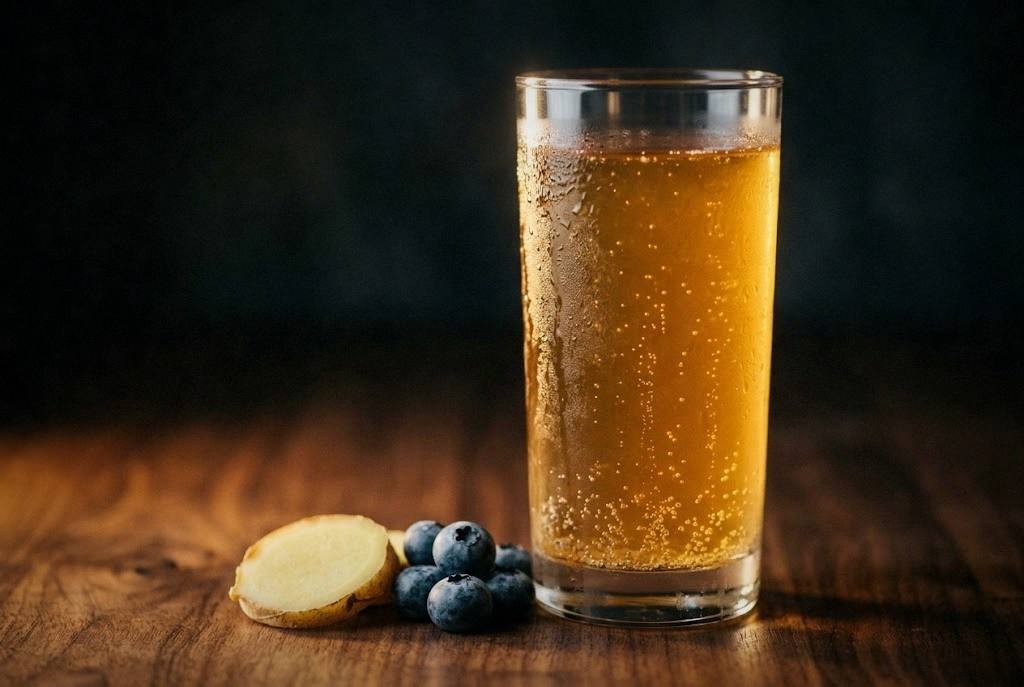
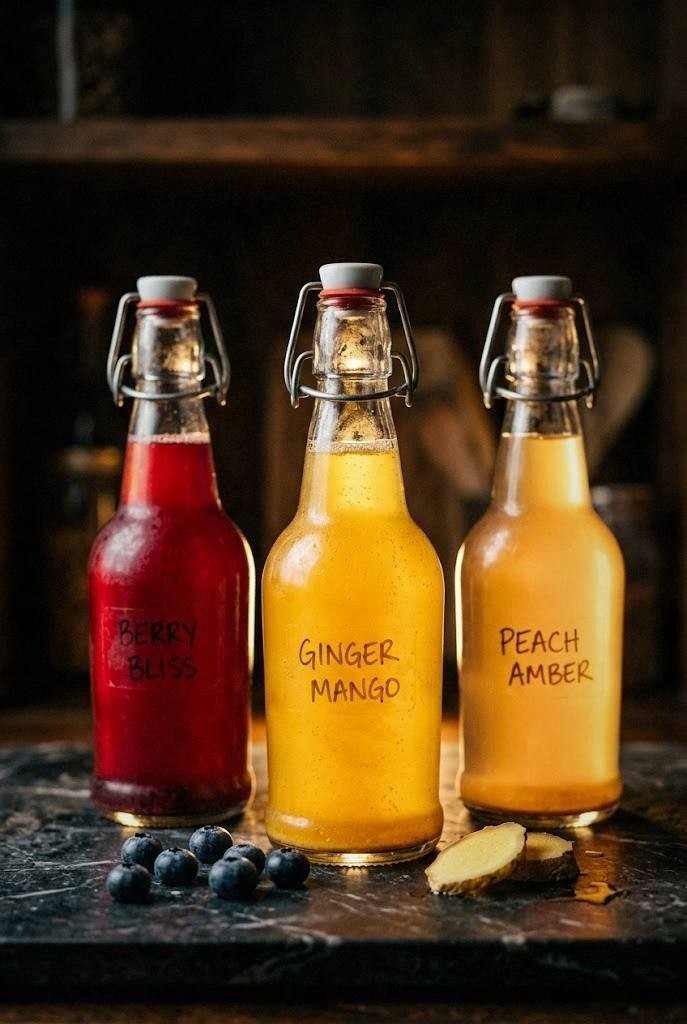
- 2 tablespoons fresh ginger juice (grate and squeeze) or 1 tablespoon grated ginger
- 3 tablespoons fresh or frozen blueberries, smashed
- 2 tablespoons fresh lemon juice plus 1 teaspoon lemon zest
- 3 tablespoons pure cherry juice (not cocktail mix)
- 2 tablespoons fresh strawberry puree
- 1 tablespoon fresh turmeric juice plus a pinch of black pepper
First Fermentation: Step by Step
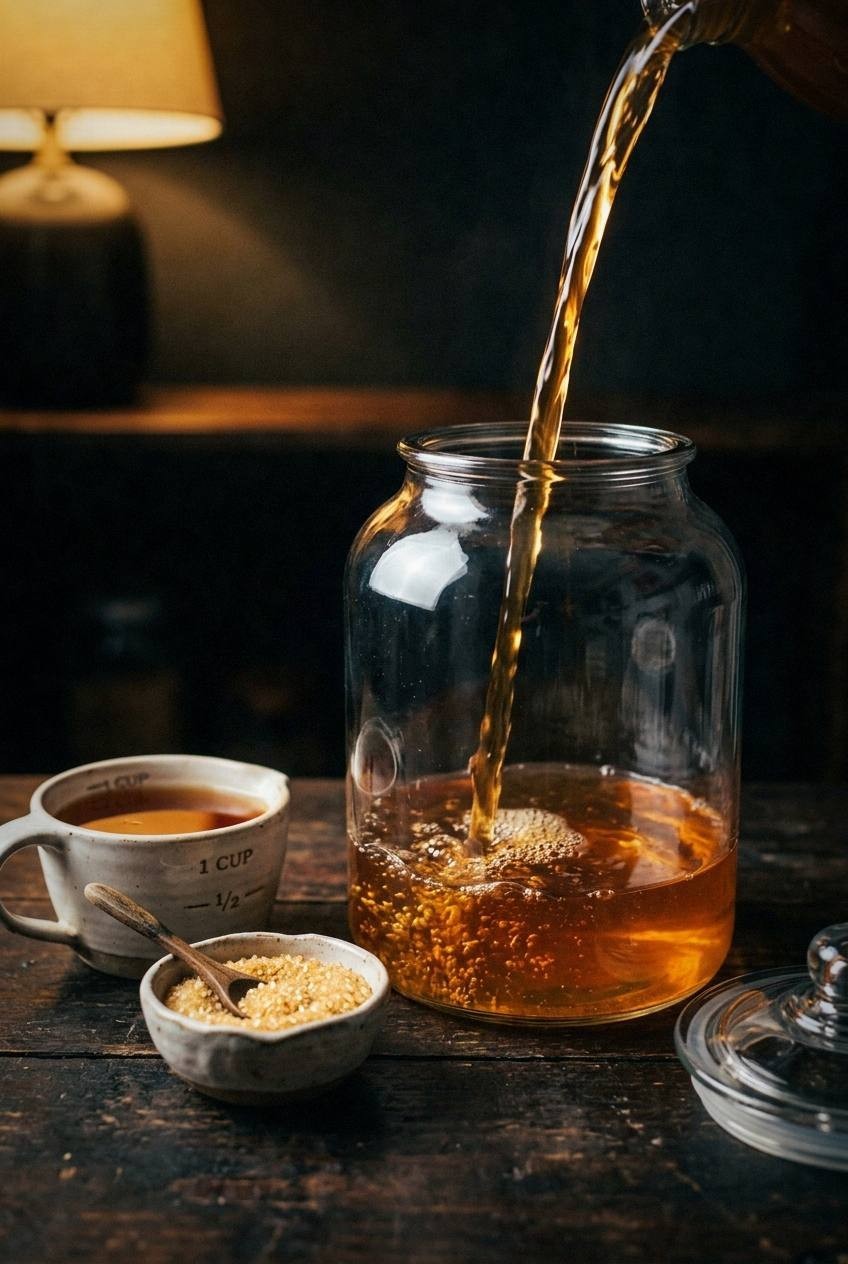
Step 1: Brew the sweet tea base. Bring 4 cups of filtered water to a boil, 200-212°F. Remove from heat and steep your tea bags for 5-7 minutes. Do not over-steep; tannins become harsh. Remove tea bags and stir in 1 cup of cane sugar until completely dissolved. You should see no granules remaining.
Step 2: Cool to fermentation temperature. Add the remaining 12 cups of cool filtered water. Check the temperature. The liquid must be between 68 and 78°F before you add the SCOBY. Anything above 90°F will harm the culture. Anything below 65°F will slow fermentation significantly. If in a hurry, set the jar in a bowl of ice water, stirring occasionally.
Step 3: Build the brew vessel. Pour the cooled sweet tea into your clean gallon jar. Add 2 cups of starter liquid and stir gently. Place the SCOBY on top. It may float, sink, or tilt sideways. All of these are fine. The SCOBY position does not affect the outcome.
Step 4: Cover and find a home. Cover the jar opening with two layers of tightly woven cloth or a coffee filter and secure with a rubber band. You want air flow but not fruit fly access. Find a spot that stays between 68 and 85°F. The higher end of that range (78-82°F) produces faster, more vigorous fermentation. Direct sunlight is a problem: it heats unevenly and can cause temperature spikes. A kitchen cabinet works well.
Step 5: Wait and taste. Leave the jar undisturbed for 7 days. After day 7, use a straw to extract a small sample from below the SCOBY. Taste it. If it is still noticeably sweet with little tang, give it 2 more days. If it is tart, slightly fizzy, and no longer syrupy, it is ready. The full window is 7-14 days depending on room temperature and how tart you prefer it. Longer fermentation means more acidity and less residual sugar.
You may see brown stringy blobs hanging from the SCOBY or settled on the bottom. These are yeast strands. They are harmless and beneficial. White or cream-colored patches on the SCOBY surface are normal. Fuzzy green, black, or pink growth is mold. If you see mold, discard the entire batch and start fresh. Mold is rare if you used sufficient starter liquid.
Second Fermentation: Building the Fizz
First fermentation makes kombucha. Second fermentation makes kombucha carbonated, flavored, and complex. This is where the real fun begins.
Remove and reserve. When your first ferment is ready, clean your hands, remove the SCOBY, and set it aside in a clean bowl. Pour out 2 cups of finished kombucha and save it as your starter for the next batch. Keep this starter at room temperature if you plan to brew again within a week, or refrigerate it for longer.
Bottle it. Pour the remaining kombucha through a fine-mesh strainer into your flip-top bottles, leaving 1-2 inches of headspace at the top. Add your flavoring of choice to each bottle, seal the caps, and label with the date and flavor.
Ferment at room temperature for 2-4 days. The fruit sugars or fresh juice give the yeast fresh fuel to produce carbon dioxide, which has nowhere to go inside the sealed bottle except into solution as carbonation. Check carbonation daily by carefully opening one bottle a crack (“burping”). If you hear a significant release of pressure, the rest are ready. Refrigerate immediately when they reach your preferred carbonation level.
Important: bottles can over-pressurize. Burp daily. Do not leave sealed bottles unattended for longer than 4 days at room temperature.
Refrigerate before drinking. Cold slows fermentation and locks in the carbonation. Chill for at least 12 hours before opening to drink. Serve over ice for best results.
Variations
Green tea kombucha. Substitute 8 green tea bags for black. Use 175°F water for steeping (boiling water makes green tea bitter) and steep for 3 minutes only. Fermentation takes 1-2 days longer. The flavor is lighter, slightly grassy, with less acidity.
Jun tea. A traditional Tibetan variant, jun is brewed with green tea and raw honey instead of black tea and white sugar. Because honey has antimicrobial properties, jun requires a specific jun culture rather than a standard SCOBY. The fermentation is slower (10-21 days) and produces a more delicate, floral kombucha with a distinct honey complexity.
Continuous brew. Instead of bottling everything at once, leave 20-30% of the first ferment in the jar with the SCOBY, add fresh sweet tea to refill, and draw off bottles every 2-3 days. The SCOBY stays in place permanently. This method produces more consistent results once established, reduces batch-to-batch variation, and develops deeper flavor over time.
Ginger bug addition. For a particularly wild carbonation in second fermentation, add 1 teaspoon of strained ginger bug liquid per bottle alongside your other flavoring. Ginger bug is a fermented ginger-sugar-water culture teeming with wild yeasts. It supercharges carbonation in ways that straight fruit juice cannot.
Troubleshooting
No carbonation after second ferment. Your kombucha may have been over-fermented in first fermentation (very little residual sugar left for the yeast). Add a small amount of sugar (1/4 teaspoon per 16 oz) directly to the bottle at second fermentation. Alternatively, your room may be too cold. Move bottles to a warmer spot.
Too sour. First fermentation went too long. Try bottling at day 7 next time. You can also add a few tablespoons of fresh fruit juice to a glass to balance acidity before drinking, or blend with sparkling water 50/50.
Mold. Discard everything, clean all equipment with hot water and white vinegar, and source fresh starter. This usually happens when starter liquid is insufficient (less than 2 cups) or equipment was contaminated.
SCOBY is thin or not growing. Normal for a new SCOBY in first few batches. Temperature may be too low. Make sure you are above 68°F. Check that your tea was not too hot when you added the SCOBY.
Storage and Serving
Finished, bottled second-ferment kombucha keeps in the refrigerator for 2-3 months. It continues to ferment slowly even when cold, becoming more acidic over time. Most people find it best in the first 4 weeks.
Your SCOBY and starter can stay at room temperature between batches for up to one week. For longer storage, keep the SCOBY submerged in starter liquid in a covered jar in the refrigerator. A well-maintained SCOBY hotel (a jar of SCOBYs in starter liquid) can store multiple cultures for months.
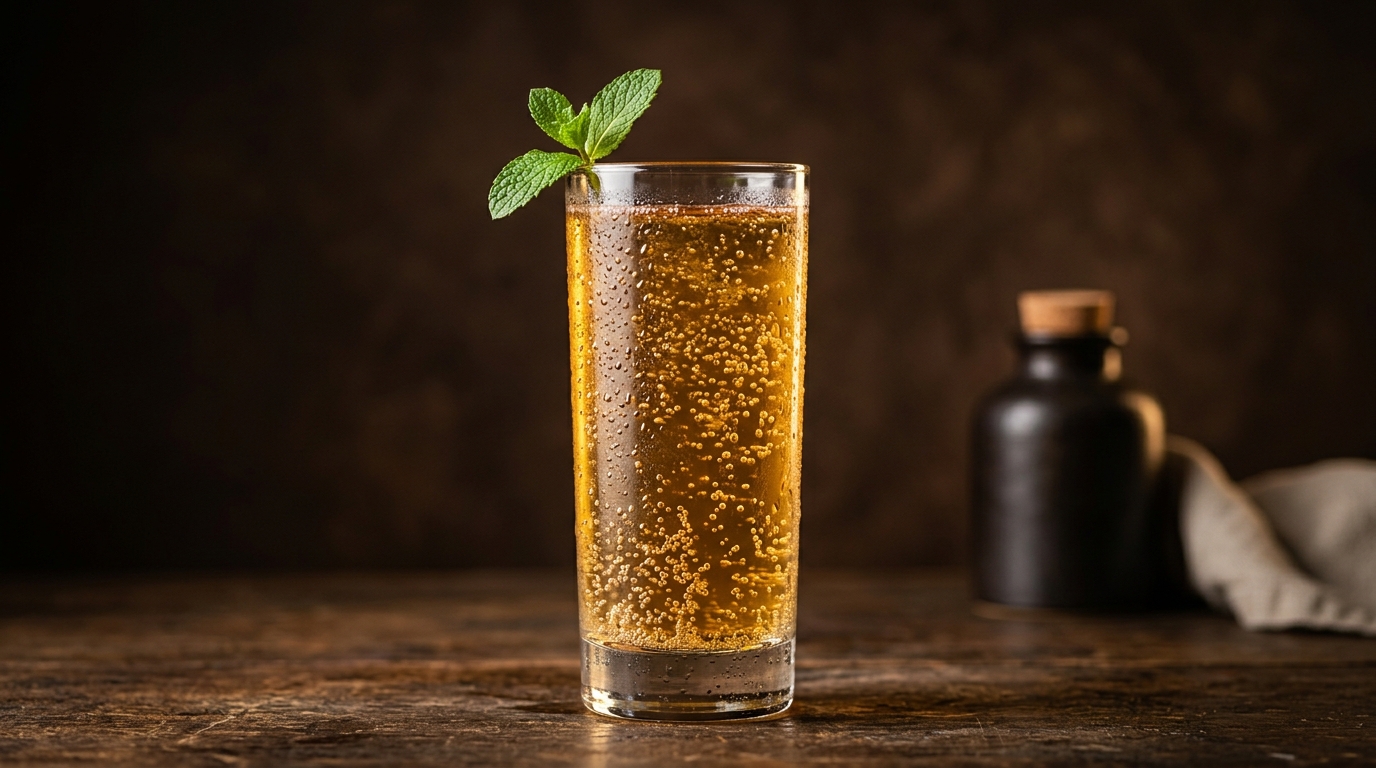
Serve kombucha very cold, straight from the refrigerator. Pour gently to preserve carbonation. Drink it in a chilled glass with ice. The effervescence is best immediately after opening. One 8-ounce serving contains roughly 30 calories, trace amounts of B vitamins, and a range of organic acids including glucuronic acid, which supports liver detoxification pathways. The beneficial bacterial content varies widely by batch and fermentation time, but raw unfiltered kombucha consistently contains active cultures.
One batch per week gives you 4-6 bottles of flavored kombucha at a fraction of the cost of commercial brands. After a few batches, the process becomes quick and automatic. The SCOBY grows stronger with each brew. By batch four or five, you will have a thick, established culture that ferments reliably in 7 days and a starter liquid so acidic it protects every new batch effortlessly.

Camille writes about botanical drinks, herbal cocktails, and the old plant wisdom that makes them work. Most days you'll find her in the garden or the kitchen, turning herbs into something worth sipping.