Kombucha is fermented sweet tea. A beginner needs a complete process that specifies the culture, acidity checks, vessel size and handling, rather than a calendar and a taste test.
Audit hold: The former TFA first brew, sealed second fermentation, six flavor formulas and culture variations are withdrawn pending a complete process review. Do not brew, bottle, taste or consume a batch using the withdrawn instructions. No working ingredient list or Recipe card is provided here.
What Needed Correction
The old gallon jar could not hold a gallon of water plus starter, dissolved sugar and the culture, with working space. Its four to six pint bottles also could not hold the stated output. The seven-day total excluded the longer fermentation window, bottle stage and chilling.
Taste, fizz and culture appearance did not establish acidity or alcohol content. Daily opening and a four-day cutoff did not establish safe bottle pressure. The ginger quantity changed between the card and prose, and fruit, juice, turmeric, green tea, honey-fed jun, continuous brewing and ginger-bug additions changed the process without corresponding controls. Warming bottles or adding more sugar to fix carbonation could increase pressure.
A Source to Use as a Whole
The National Center for Home Food Preservation’s kombucha page and its linked consumer FAQ provide a different home process. They include starter-acidity screening, sanitation and a larger vessel. Their directions are intended to be followed together. They do not validate this page’s old sealed flavor-bottle schedule.
The NCHFP ingredient list leaves starter liquid unquantified; its FAQ discusses sufficient starter and liquid retained between batches. Clarify the appropriate starter supply with Extension for that complete process rather than importing this page’s former amount into it. This page does not turn the external source into a newly verified TFA formula.
BCCDC’s kombucha and jun guidance identifies acidity, added flavorings, continuing fermentation, alcohol and packaging pressure as separate control questions. Refrigeration slows activity; it does not sterilize a ferment or correct an unsafe starting batch. A commercial raw drink is not automatically a suitable starter.
What the Hold Covers
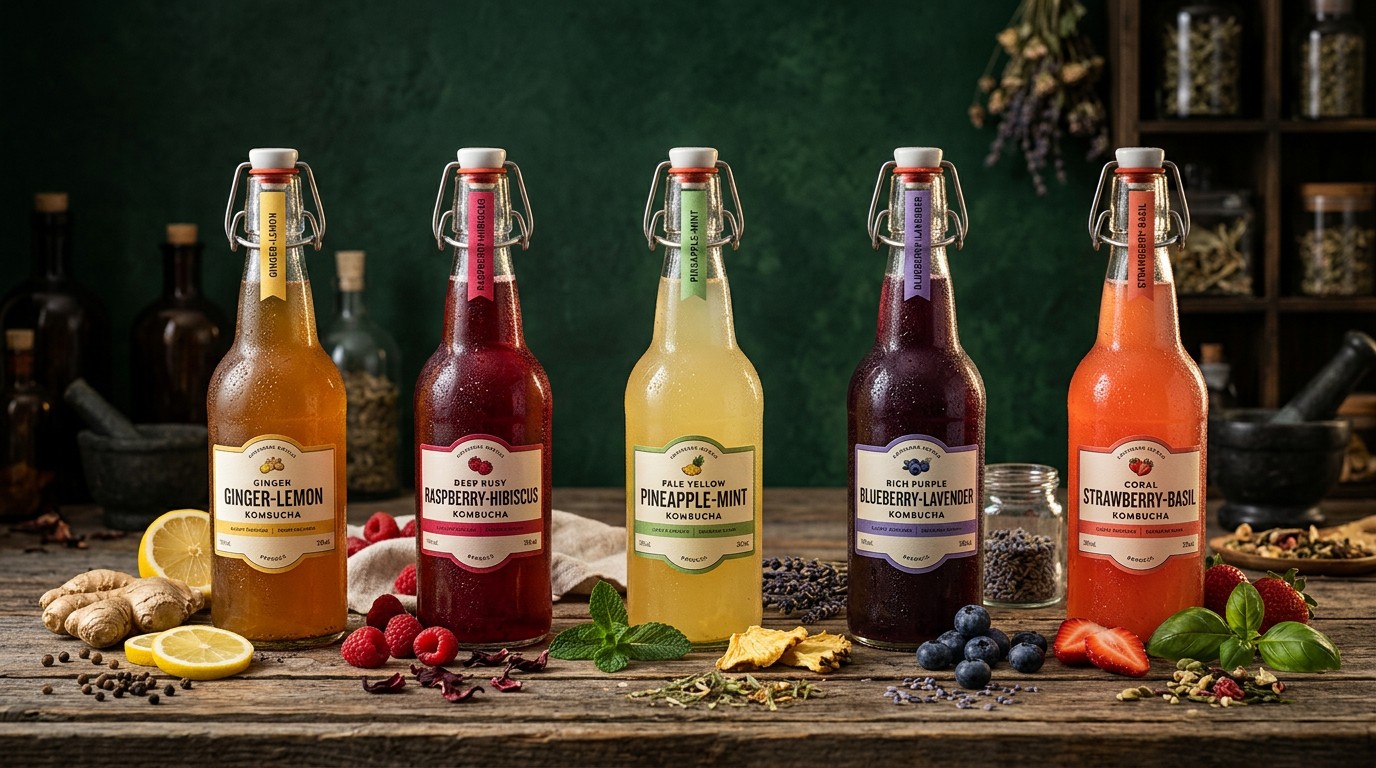
The ginger-juice/grated-ginger, blueberry, lemon-zest, cherry-juice, strawberry and turmeric-pepper bottles remain held, along with green-tea substitution, jun, continuous brewing, ginger bug, sugar boosters, juice/sparkling-water rescue, starter storage and the SCOBY hotel. No two-to-three-month shelf life, alcohol percentage, calorie figure, cost saving or guaranteed benefit is established for them.
Visible mold or a suspect batch is a reason to discard, never to skim, dilute or taste for clearance. The source FAQ also identifies pregnancy, children, immune compromise and some medical conditions as situations needing particular care. This review did not measure acidity, pathogens, alcohol or pressure.