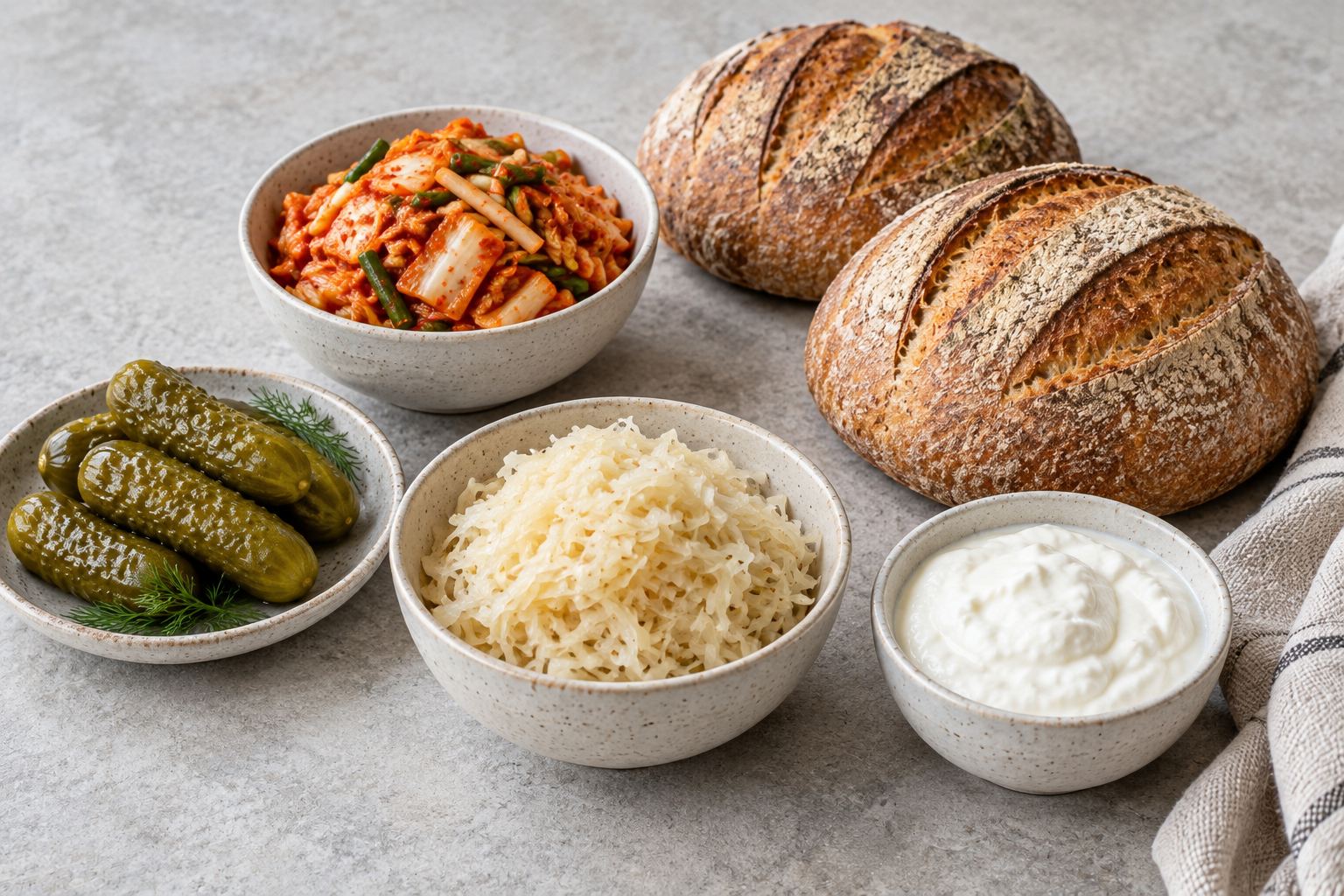
This plain kombucha method uses Colorado State University Extension’s published home recipe . It retains the measured starter-and-tea batch and primary fermentation. The serving path is immediate refrigeration, an option the source provides. It supplies no flavored sealed second fermentation or continuous-brew instructions.
The acidity controls below are separately attributed to BCCDC’s kombucha guidance . That document addresses food processors. Citing its limits does not mean BCCDC tested this home recipe or TFA independently validated the combined presentation. The pre-brew starter check below comes separately from NCHFP’s own kombucha recipe . Its recipe has different tea quantities and brewing conditions; adding its starter check does not establish that it validated this combined CSU/BCCDC presentation. Read the linked sources before brewing.
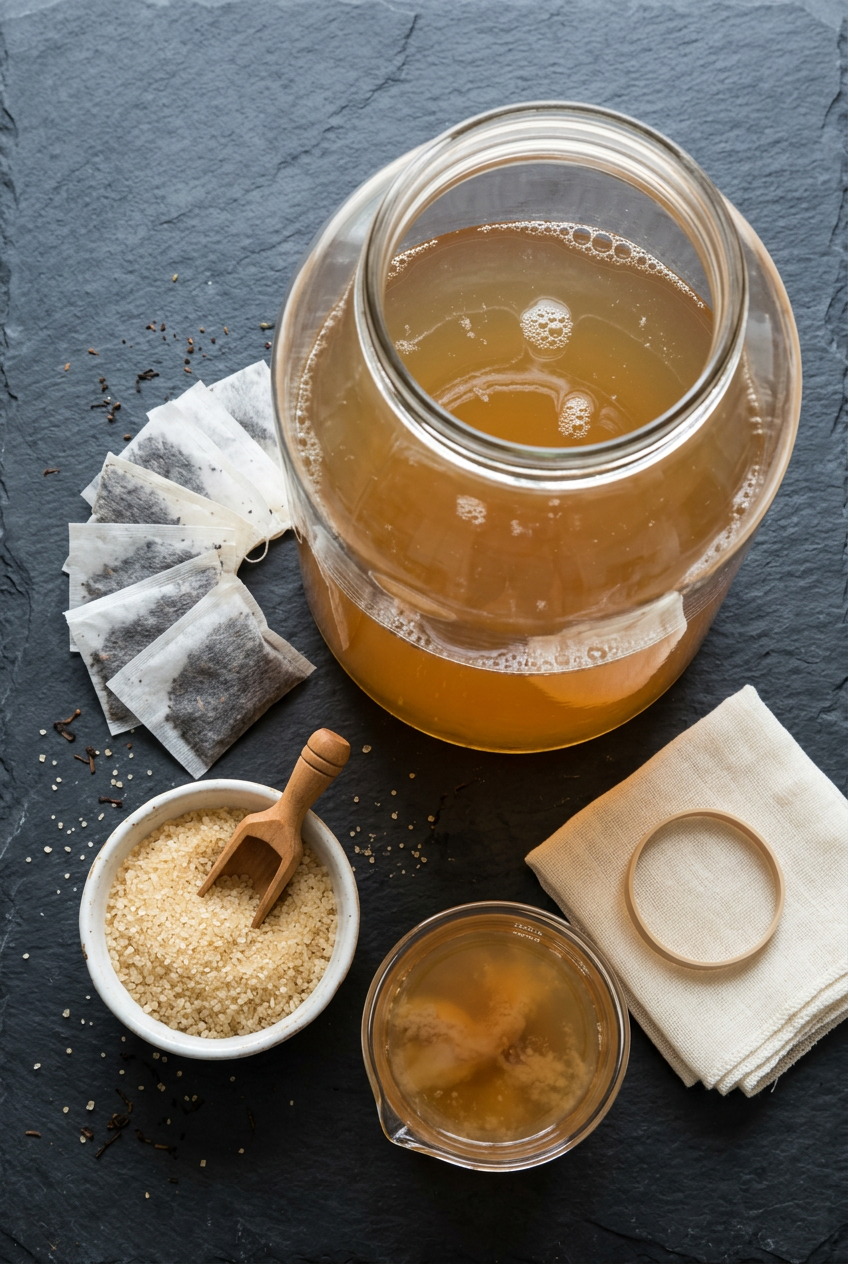
Ingredient batch and vessel size
- 1/4 cup green and/or black tea, or 4-8 tea bags.
- 1 gallon filtered water.
- 1 cup cane sugar.
- 1-2 cups mature kombucha starter liquid, checked before brewing at pH 4.0 or below. Exclude the discarded test spoonful from this measured batch quantity.
- 1 healthy SCOBY.
CSU calls this a one-gallon recipe, but its measured liquids total 17-18 cups before sugar and the SCOBY: 16 cups water plus starter. That arithmetic is not a measured finished yield. Use a clean acid-resistant food-grade vessel with more than that capacity and room above the liquid. A two-gallon vessel is a practical capacity choice; a one-gallon jar cannot hold the listed inputs. Use a heat-safe pot for brewing and transfer only after cooling, so ordinary glass is not exposed to a boiling-water pour.
Check the starter before brewing
NCHFP’s pre-brew check takes one tablespoon of starter liquid in a separate small cup and tests it following the pH-paper manufacturer’s instructions. If the starter reads above pH 4.0, do not brew with it: discard it and obtain fresh starter. If it is 4.0 or below, discard the tested sample and measure the recipe’s 1-2 cups from the remaining sound starter. This is a check of the starter before it is diluted into sweet tea , separate from the finished-drink pH range. Passing it does not establish freedom from contamination or validate the mixed-source process.
Primary method
- Complete the starter check above before brewing. Use only starter at pH 4.0 or below, and discard the test sample.
- Steep the tea in heated water for 10 minutes, remove leaves or bags, and dissolve sugar while hot. BCCDC’s separately attributed control chart specifies boiling sweet tea before adding culture, then cooling from 60 C to 20 C within two hours, with no longer than six hours before culture is added. Cool completely to room temperature. These processor controls supplement the home recipe; the combination is not claimed validated.
- With washed hands, add cooled sweet tea, mature starter liquid and a healthy SCOBY to the fermentation vessel.
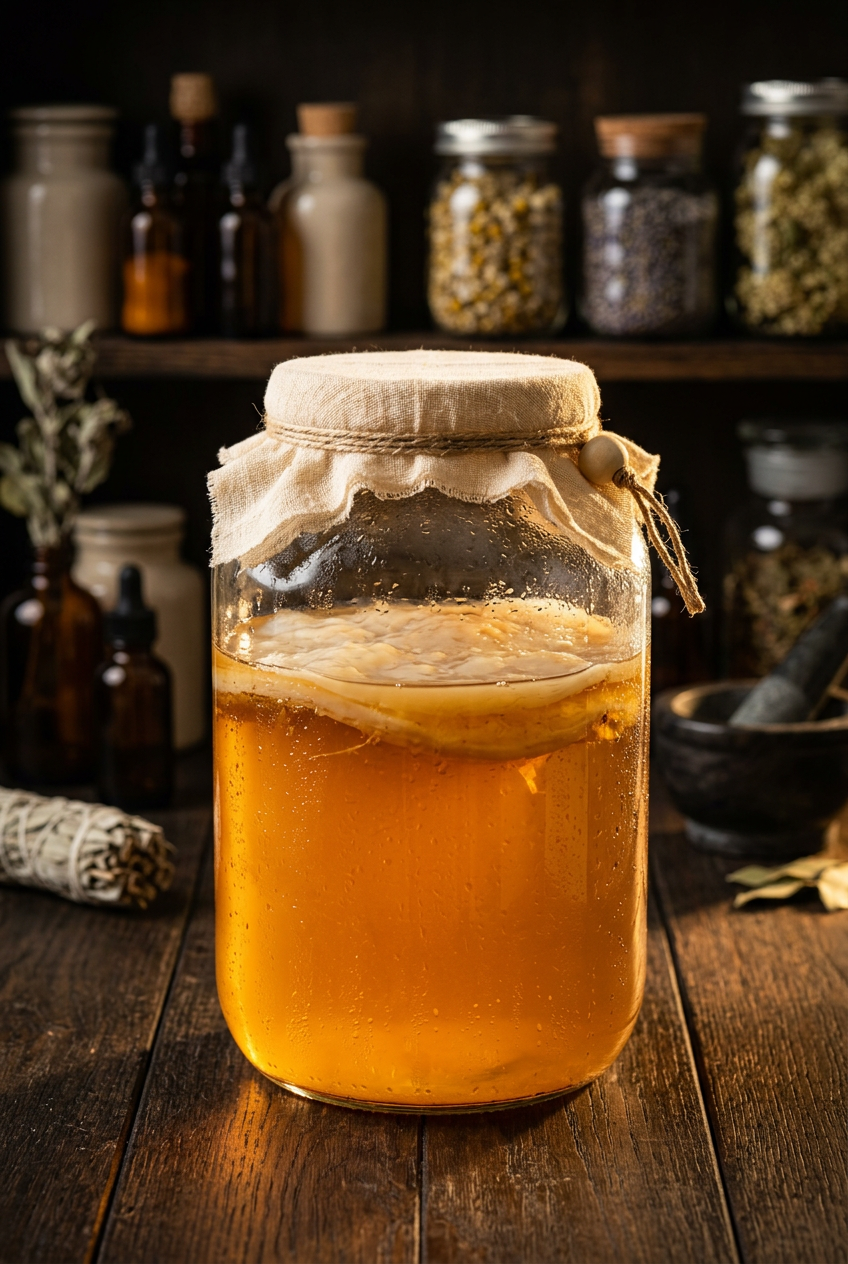
- Cover with clean fine-weave cloth or a coffee filter secured by a band. Air must pass while pests and dirt stay out. Record the start date.
- CSU gives 64-79 F (18-26 C) and 7-14 days for its primary recipe. Monitor the liquid’s acidity as well as conditions. Its flavor-based endpoint is not sufficient by itself for this guide’s serving decision.
- When fermentation is complete and the checks below are satisfied, remove the SCOBY, retain 1-2 cups sound starter if repeating, and transfer plain liquid into clean sanitized acid-resistant bottles or jars. Refrigerate immediately at 4 C (40 F) or below. Finished liquid is less than the starting liquid after starter is reserved; no fixed glass count is claimed.
Measure and decide before serving
| Check | Meaning | Action |
|---|---|---|
| Starter liquid before brewing | NCHFP rejects starter above pH 4.0 | Test a separate spoonful; discard test sample. Reject starter above 4.0 and replace it |
| Temperature and date | Recipe conditions, not proof of completion | Keep a written record |
| Calibrated pH measurement | BCCDC upper limit is 4.2; lower critical limit is 2.5 | Serve only above 2.5 and at or below 4.2; follow meter calibration instructions |
| Dry, fuzzy white or colored patches on tea or SCOBY | Mold/spoilage concern | Discard all tea and the SCOBY; never skim and continue |
| Failure to acidify adequately | Failed fermentation | Discard; use a new healthy starter for another batch |
| Finished plain liquid | Live fermentation can continue | Refrigerate immediately; no room-temperature sealed stage here |
| Alcohol content | pH, bubbles and refrigeration do not measure ABV | Do not describe a home batch as alcohol-free |
BCCDC recommends discarding a failed batch and keeping finished live kombucha refrigerated. Its guidance flags alcohol and excess pressure during continued fermentation, and unsuitable use for young children or pregnancy. A clean-looking SCOBY and a tart taste cannot replace measurements. This article provides no rescue dilution, room-temperature bottle schedule or validated shelf life.
UGA’s kombucha guidance identifies dry, fuzzy white or colored patches on the tea surface or SCOBY as spoilage. Discard the entire tea batch and SCOBY, then clean and sanitize the vessel; do not save starter from that batch. A developing smooth, cream-colored pellicle is different from dry, fuzzy growth: CSU describes a new surface layer progressing from a light haze to whitish and thicker, and BCCDC refers to a white/cream pellicle. Its appearance alone does not prove safety. If you cannot distinguish expected growth from contamination, discard the batch.
Flavor and health limits
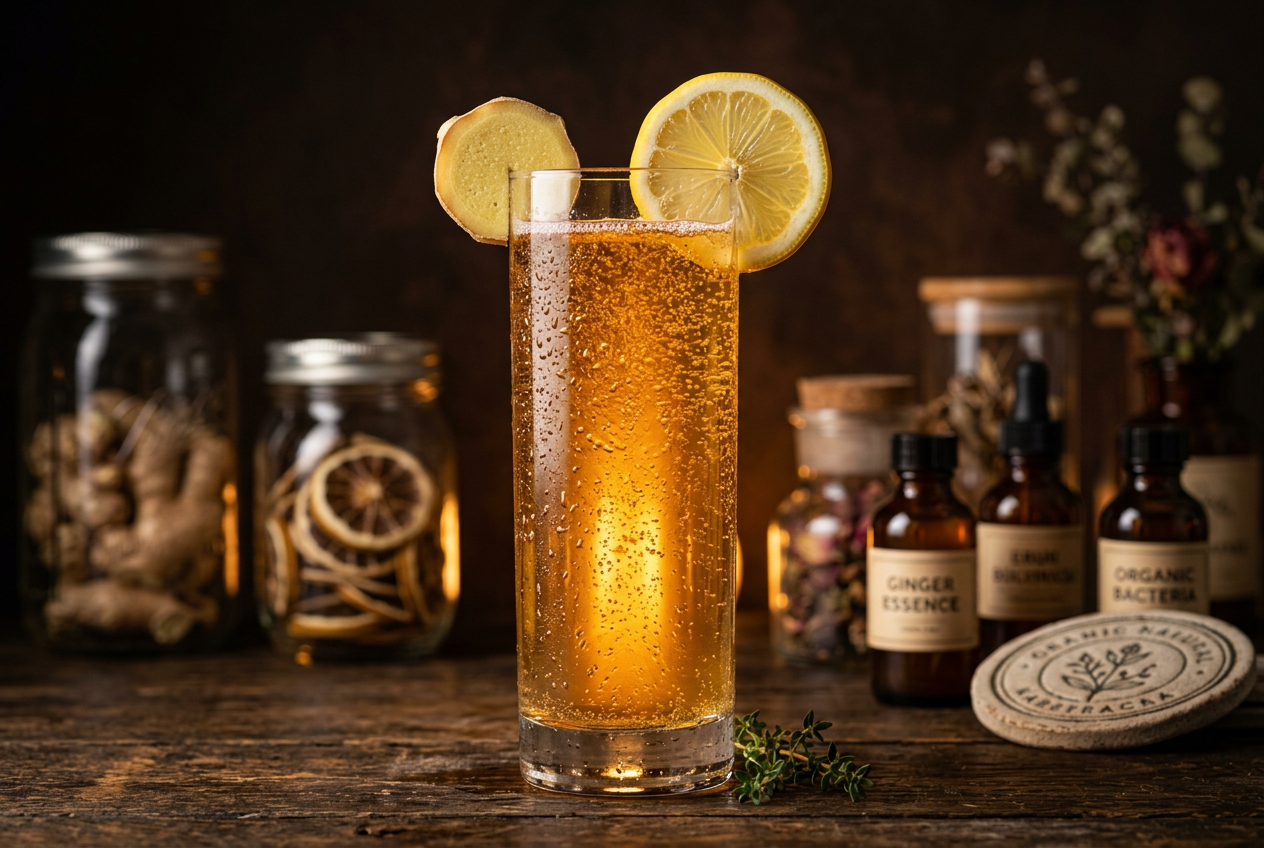
Make this batch plain. Adding fruit, juice or herbs changes the process and can introduce contamination or restart fermentation; a complete separate process is needed before doing that. The photos are brewing illustrations, not evidence that a pictured flavored or capped bottle followed this method.
Neither a home ferment nor its unknown live-culture count establishes a probiotic treatment. No calorie, sugar, clinical dose or therapeutic outcome is calculated for this batch. For five different food projects, use the fermentation collection ; do not transfer vegetable salt ratios to tea. If you want a drink with no fermentation stage, choose the simple mocktail guide and follow a complete measured recipe there.