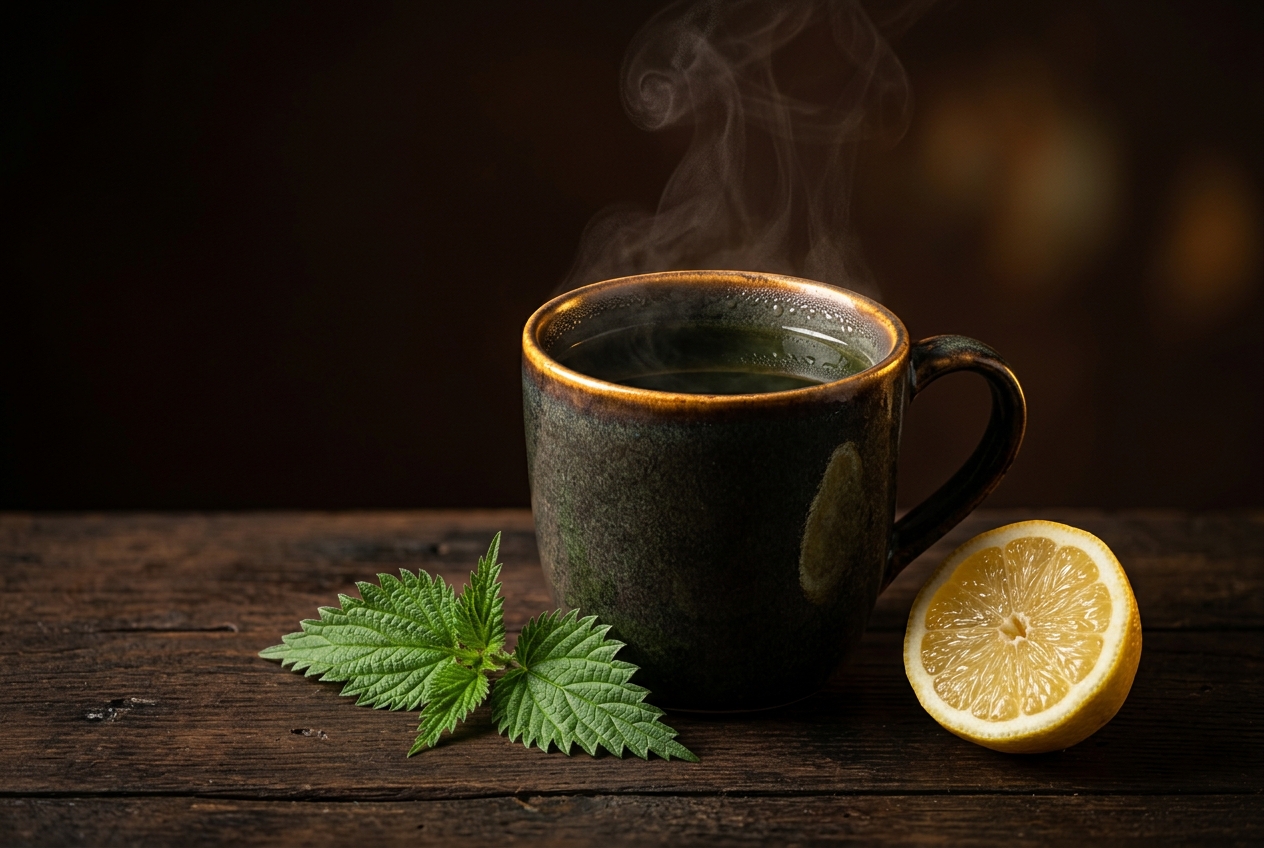
Hormonal imbalance drink with fresh stinging nettle, lemon, and honey. A deep green, mineral-tasting spring tonic that is ready in 10 minutes.
Why You Will Love This
Your body shifts with the seasons, and spring nettle arrives exactly when the winter version of you is running on empty. This is the classic nourishing green infusion of Western herbalism, the thing herbalists hand you when you say you feel wrung out. The taste is green and bright, faintly mineral, almost like a very good broth, with honey rounding the edges and lemon keeping it from going flat. I drink it warm in the morning through March and April because it feels like something my body wanted, which is a different and more honest claim than saying it fixes anything.
The Story Behind It
Western herbalists have handed nettle to women since long before anyone wrote the reasons down, and the plant shows up in spring tonic traditions across northern Europe for the same reason: it is the first properly nourishing green thing available after a long winter of stored root vegetables. Spring nettle, harvested before flowering in March and April, is the tender pick. Later growth goes coarse and gritty. I make this tonic when the first nettles push through cold soil, their leaves still soft enough to steep without turning the cup bitter.
What You Will Need
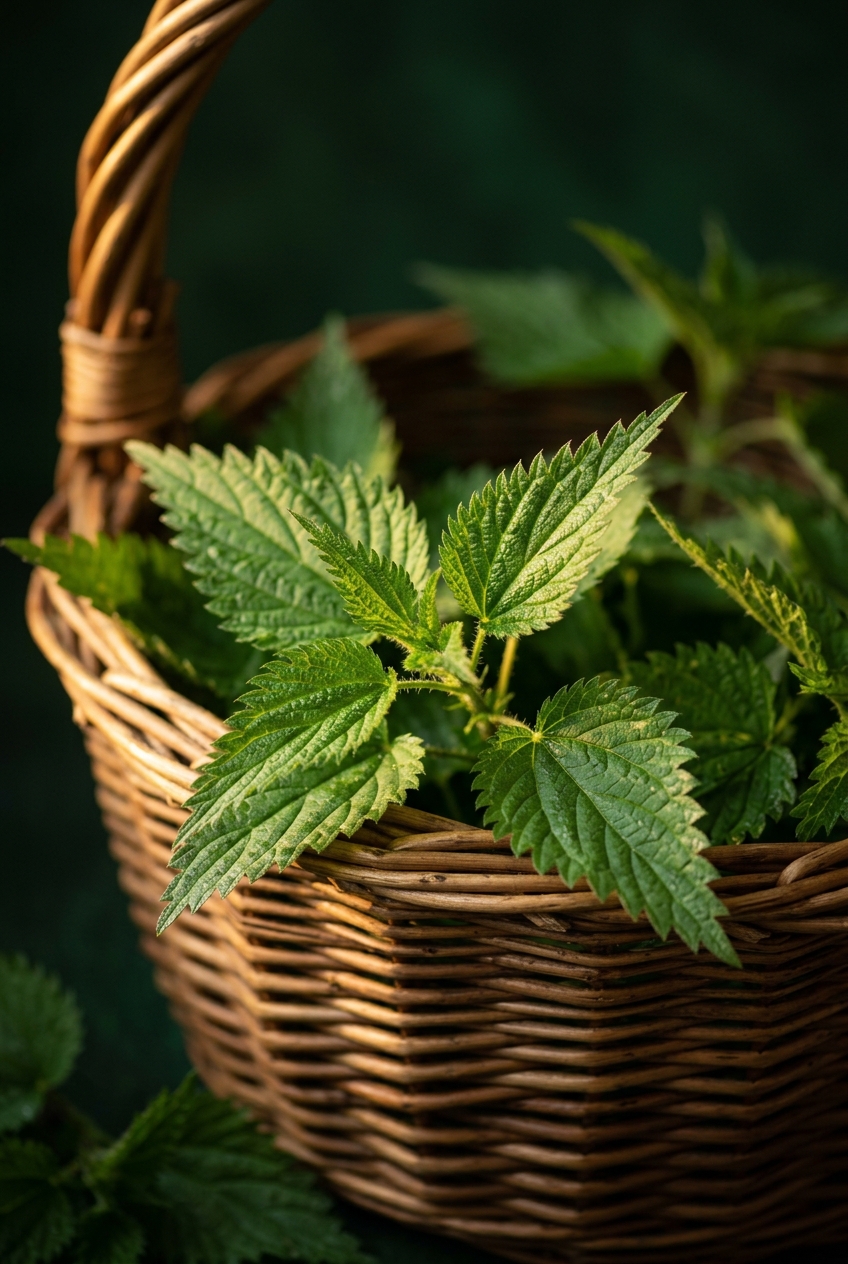
- 2 cups (480ml) fresh stinging nettle leaves, loosely packed (or 1/4 cup dried)
- 4 cups (960ml) filtered water
- 2 tablespoons fresh lemon juice
- 1-2 tablespoons raw honey
- Optional: 1/4 teaspoon dried red raspberry leaf (adds a soft tannic edge)
Use gloves when handling fresh nettle. The sting disappears completely once the leaves hit hot water.
How to Make It
- Bring 4 cups filtered water to a rolling boil in a medium saucepan.
- Remove from heat and add fresh nettle leaves. If using dried nettle, use 1/4 cup instead.
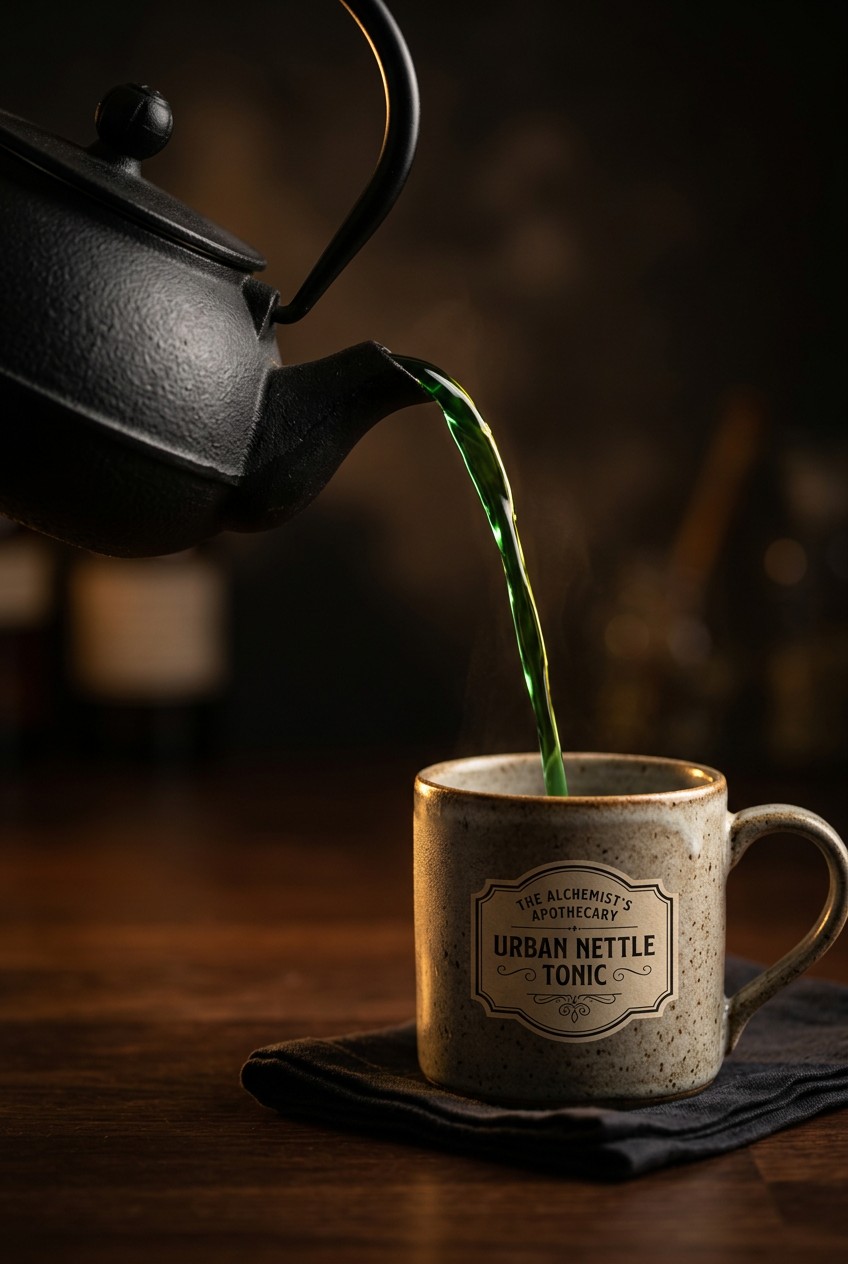
- Steep covered for 8-10 minutes. The liquid will turn deep green.
- Strain through a fine-mesh sieve, pressing leaves gently to extract all liquid.
- Stir in lemon juice and honey while still warm. Taste and adjust sweetness.
- Serve warm immediately or chill for 2-4 hours and serve over ice.
Herbalist Notes
Nettle as a nourishing green: Nettle sits in the herbal cabinet under nourishing rather than acting. It is not a herb that does something dramatic in an afternoon. It is closer to a food than a remedy, which is exactly why the old spring tonic traditions used it in quantity and over weeks. The lemon is not decorative either. Acid brightens an infusion that would otherwise taste flat and slightly muddy, and it is a habit worth keeping.
On the hormone question: I want to be straight with you about this one. Nettle has a long and genuine reputation in Western herbalism for what old texts called women’s complaints, and that reputation is worth taking seriously as folk knowledge. It is not the same thing as evidence that a cup of green tea-coloured water rearranges your endocrine system, and I am not going to tell you it does. If your cycle has changed, if you are exhausted in a way sleep does not touch, or if something feels genuinely off, the useful move is bloodwork and a clinician, not a stronger infusion.
Red raspberry leaf: The classic women’s herb of the English-speaking herbal tradition, drunk as a plain daily infusion for generations. It is astringent and faintly tea-like, and a small pinch gives this tonic a drier finish. If you are pregnant or trying to become pregnant, raspberry leaf is a herb to raise with the person managing your care rather than one to add on your own reading.
Make It Your Own
Add 1/2 teaspoon dried spearmint if you want a cooler, sweeter cup. It plays well against nettle’s mineral edge and makes the tonic much easier to drink cold. For a rounder, fruitier version, chill it overnight and blend with frozen mango and coconut water. Vitex berries are sometimes steeped alongside nettle in this style of tonic, but vitex is a genuinely strong herb with real interactions, so that is one to talk over with a clinician rather than to add because a recipe page mentioned it. Store the plain tonic in the refrigerator for up to 4 days. It is best on day one and noticeably duller by day four.
Common Questions
What drinks can help with hormonal imbalance?
The honest answer is that no drink is going to be the thing that sorts this out, and anyone who tells you otherwise is selling something. What herbal infusions can do is put a nourishing, unhurried habit into a day that probably does not have many. Nettle is the classic spring nourishing green. Red raspberry leaf is the traditional women’s tonic herb. Spearmint makes both of them taste better. Drink them because you like them and because sitting down with a warm cup is good for you, and get the actual question looked at properly alongside that.
What are the benefits of nettle tea for hormones?
Nettle is one of the oldest nourishing herbs in the European tradition, drunk in spring by people who had gone all winter without fresh greens. That is a real and long-standing use, and it is the reason the herb keeps appearing in modern tonic recipes. What I cannot do is tell you it does a specific thing to a specific hormone, because the studies that would show that mostly do not exist for herbs like this, and inventing them would be worse than saying so. Treat it as a good habit rather than an intervention.
How do you make a wellness tonic at home?
Use a 1:2 ratio of dried herb to water for strong infusions, or 1:1 for fresh herbs. Boil the water, pour it over the herbs, and steep covered for 8-10 minutes for leaves or 15-20 minutes for roots and berries. Strain thoroughly, because grit ruins a good infusion faster than anything else. Add lemon juice while it is still warm, sweeten minimally with raw honey, and store it in glass in the refrigerator for 3 to 4 days at most.
What herbs are good for balancing hormones naturally?
The herbs that come up over and over in this conversation are nettle, red raspberry leaf, spearmint, vitex, dong quai, and maca, each carrying a long tradition behind it. I will not hand you doses for any of them. Vitex in particular is a strong herb with real interactions, and the gap between a cup of tea and a standardised extract is enormous. If you want to work with these plants seriously rather than casually, that is a conversation with a herbalist or a clinician who knows your history, not something to settle from a recipe page.
Can I use dried nettle instead of fresh?
Yes. Use 1/4 cup dried nettle leaves per 4 cups water instead of 2 cups fresh. Dried nettle makes a darker, deeper, slightly dustier cup than fresh, and it is what most people will actually have on hand. Steep it the full 10 minutes, covered. Buy organic dried nettle from a supplier that turns over stock, and store it in airtight glass away from light. Good dried nettle is a deep green and smells like hay in a good way. If yours is brown and smells of nothing, it will make a cup that tastes of nothing.
When to Serve and Pairings
This tonic works best as a small ritual drink: fresh enough for daytime, but still useful when you want something more intentional than water.
Perfect occasions include:
- Morning prep
- Afternoon reset breaks
- Post-garden cleanup
- Light brunches
- Meal-prep days
- Quiet weekend routines
Food pairings:
- Greek yogurt with fruit
- Seeded toast
- Simple grain bowls
- Citrus salads
- Soft scrambled eggs
- Roasted vegetables
Tonic-style drinks pair best with simple food because strong spices, heavy sauces, or too much sugar can bury the botanical notes.
Printable recipe
Hormonal Imbalance Drink: Spring Nettle Tonic Recipe
Hormonal imbalance drink with fresh stinging nettle, lemon, and honey. A deep green, mineral-tasting spring tonic that is ready in 10 minutes.
Ingredients
- 2 cups (480ml) fresh stinging nettle leaves, loosely packed
- 4 cups (960ml) filtered water
- 2 tablespoons fresh lemon juice
- 1-2 tablespoons raw honey
- Optional: 1/4 teaspoon dried red raspberry leaf
Instructions
- Bring 4 cups filtered water to a rolling boil in a medium saucepan.
- Remove from heat and add fresh nettle leaves. If using dried nettle, use 1/4 cup instead.
- Steep covered for 8-10 minutes. The liquid will turn deep green.
- Strain through a fine-mesh sieve, pressing leaves gently to extract all liquid.
- Stir in lemon juice and honey while still warm. Taste and adjust sweetness.
- Serve warm immediately or chill for 2-4 hours and serve over ice.
Keep browsing
Turn this into the next thing you make

Camille writes about botanical drinks, herbal cocktails, and the old plant wisdom that makes them work. Most days you'll find her in the garden or the kitchen, turning herbs into something worth sipping.