How long to ferment tepache, what it should smell and taste like each day, when to bottle it, and how to avoid over-fermented tepache.
The Short Answer
Most tepache ferments in 2 to 4 days at room temperature. In a warm kitchen, it may be ready in 36 to 48 hours. In a cool kitchen, it may need 4 days. The best signal is not the calendar. It is the combination of smell, bubbles, and taste.
If you need the full ingredient method, start with the main tepache recipe. This guide is for timing the ferment once your jar is already mixed.
Tepache Fermentation Timeline
| Time | What You Should See | What to Do |
|---|---|---|
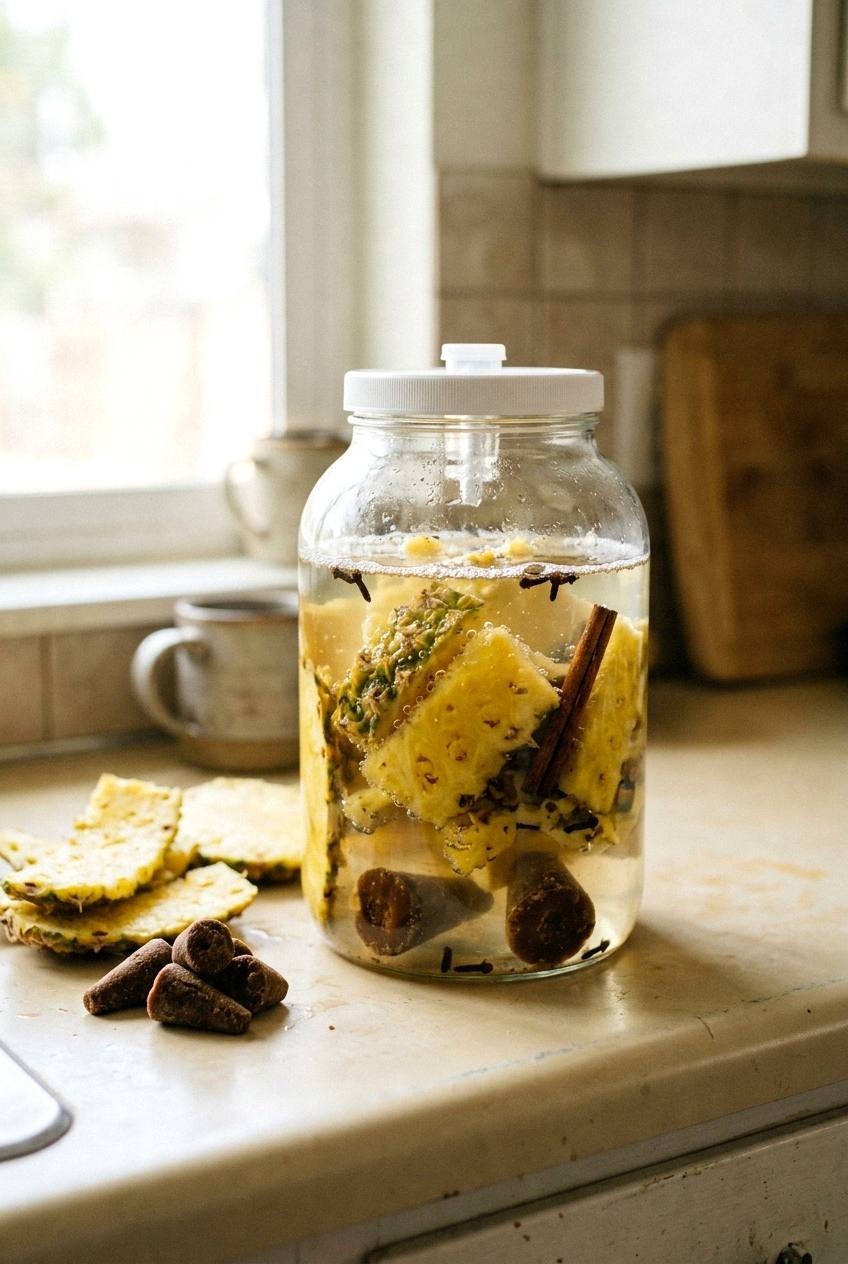
| Day 0 | Pineapple rinds, sugar, spices, and water | Cover with cloth, not a sealed lid |
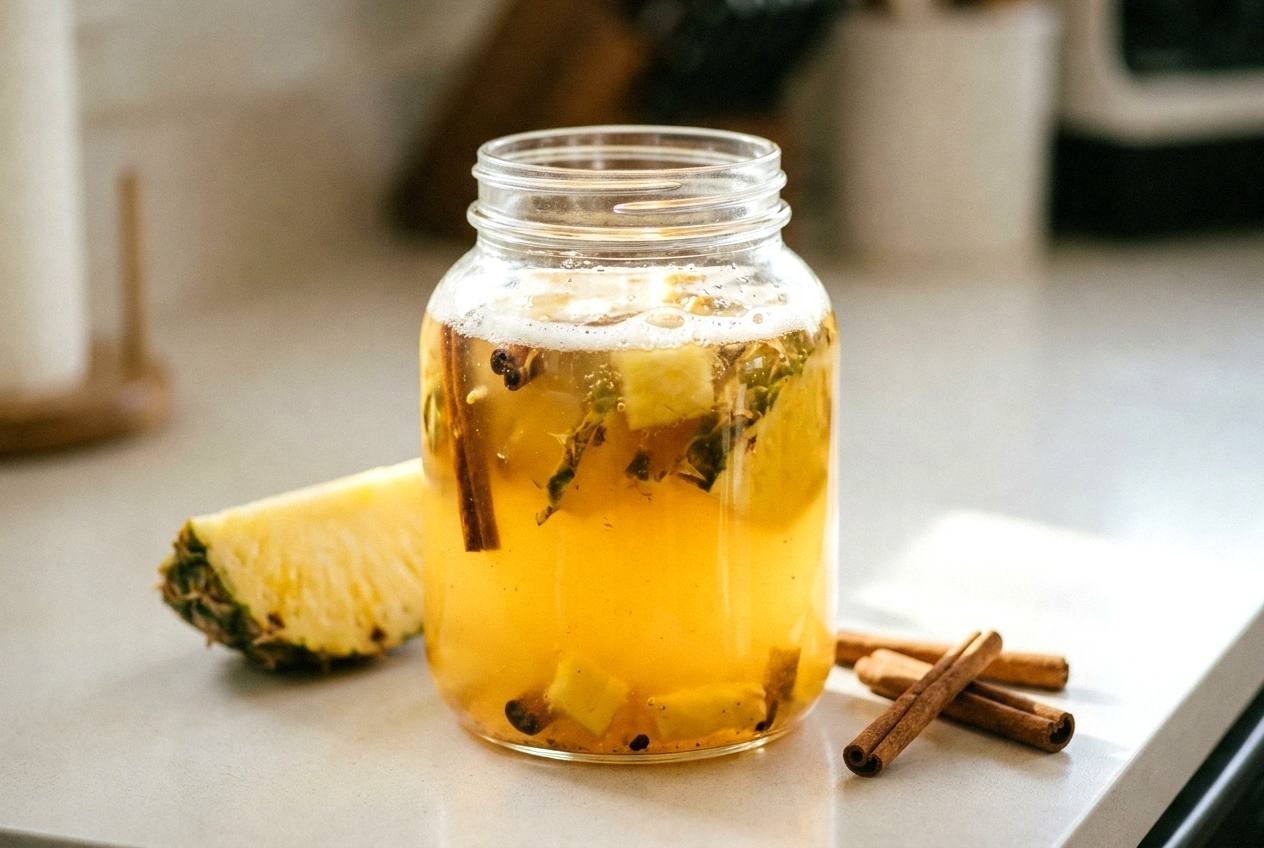
| Day 1 | Small bubbles, fruity smell | Stir and keep fruit submerged |
| Day 2 | More bubbles, light foam, sweet-tart smell | Start tasting |
| Day 3 | Fizzy, tangy, less sweet | Strain if the flavor is balanced |
| Day 4+ | Sharper, more sour, sometimes vinegary | Strain and chill before it goes too far |
The sweet spot is usually day 2 or day 3. You want pineapple, spice, gentle fizz, and a little tang. If it tastes like pineapple vinegar, it went longer than ideal but may still be usable as a mixer.
What Temperature Does
Temperature changes everything.
- 75 to 80 F: fast ferment, check after 36 hours
- 68 to 75 F: normal ferment, check after 48 hours
- 62 to 68 F: slow ferment, expect 3 to 4 days
Do not put the jar in direct sun to speed it up. Warm, steady room temperature is better than hot light on the jar.
When to Bottle Tepache
Bottle tepache when it tastes slightly sweeter than you want the final drink to be. The second fermentation will keep eating sugar and building fizz.
For a gentle fizz, bottle for 12 hours. For a stronger fizz, bottle for 24 hours. Use pressure-safe bottles and burp them carefully. If the bottle hisses aggressively, move it to the fridge.

Signs Tepache Is Ready
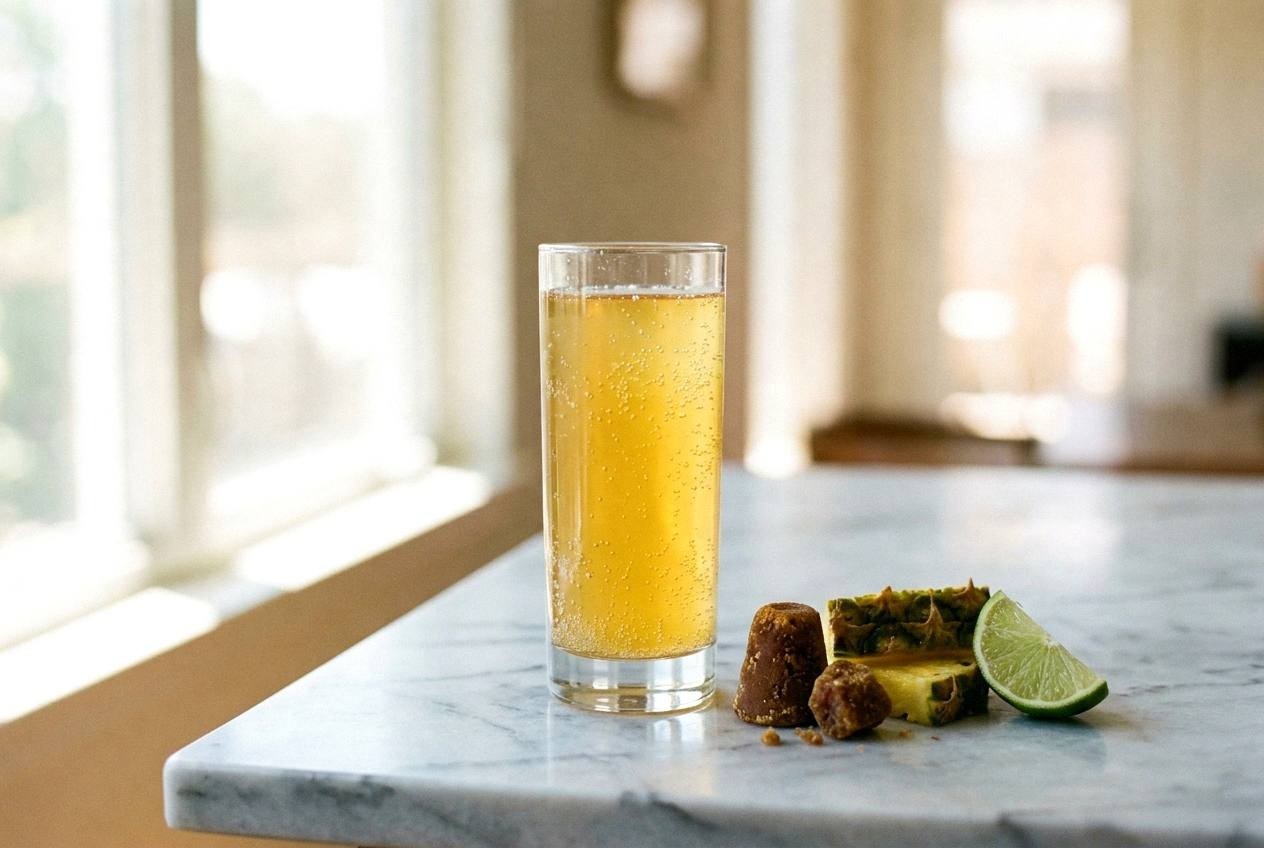
Ready tepache smells fruity and lightly fermented, like pineapple with a little cider-like tang. It should taste bright, sweet-tart, and gently fizzy.
It is ready when:
- The pineapple smell is still fresh
- Bubbles rise when you stir
- The sweetness has dropped
- The flavor is tangy but not harsh
- The spices are present but not bitter
Signs It Went Too Long
Over-fermented tepache tastes sharp, thin, and vinegary. It may still be safe if there is no mold or rotten smell, but it will not taste as round or refreshing.
Use over-fermented tepache in small amounts with sparkling water, lime, and honey, or use it like a pineapple drinking vinegar. If it smells rotten, looks slimy, or has fuzzy mold, discard it.
For more safety details, see the tepache recipe troubleshooting section.
Common Questions
Can tepache ferment too long?
Yes. It keeps getting more sour as fermentation continues. Past the sweet spot, it moves toward pineapple vinegar.
Should tepache be covered or sealed?
The first ferment should be covered with cloth or a towel. Do not seal it. The second ferment can be sealed in pressure-safe bottles to build carbonation.
How often should I stir tepache?
Stir once daily. This helps keep fruit wet and discourages surface problems.
Why is my tepache not bubbling?
The room may be cool, the pineapple may have been washed too aggressively, the water may contain chlorine, or the ferment may need more time. Use filtered water and a ripe pineapple.

Camille writes about botanical drinks, herbal cocktails, and the old plant wisdom that makes them work. Most days you'll find her in the garden or the kitchen, turning herbs into something worth sipping.