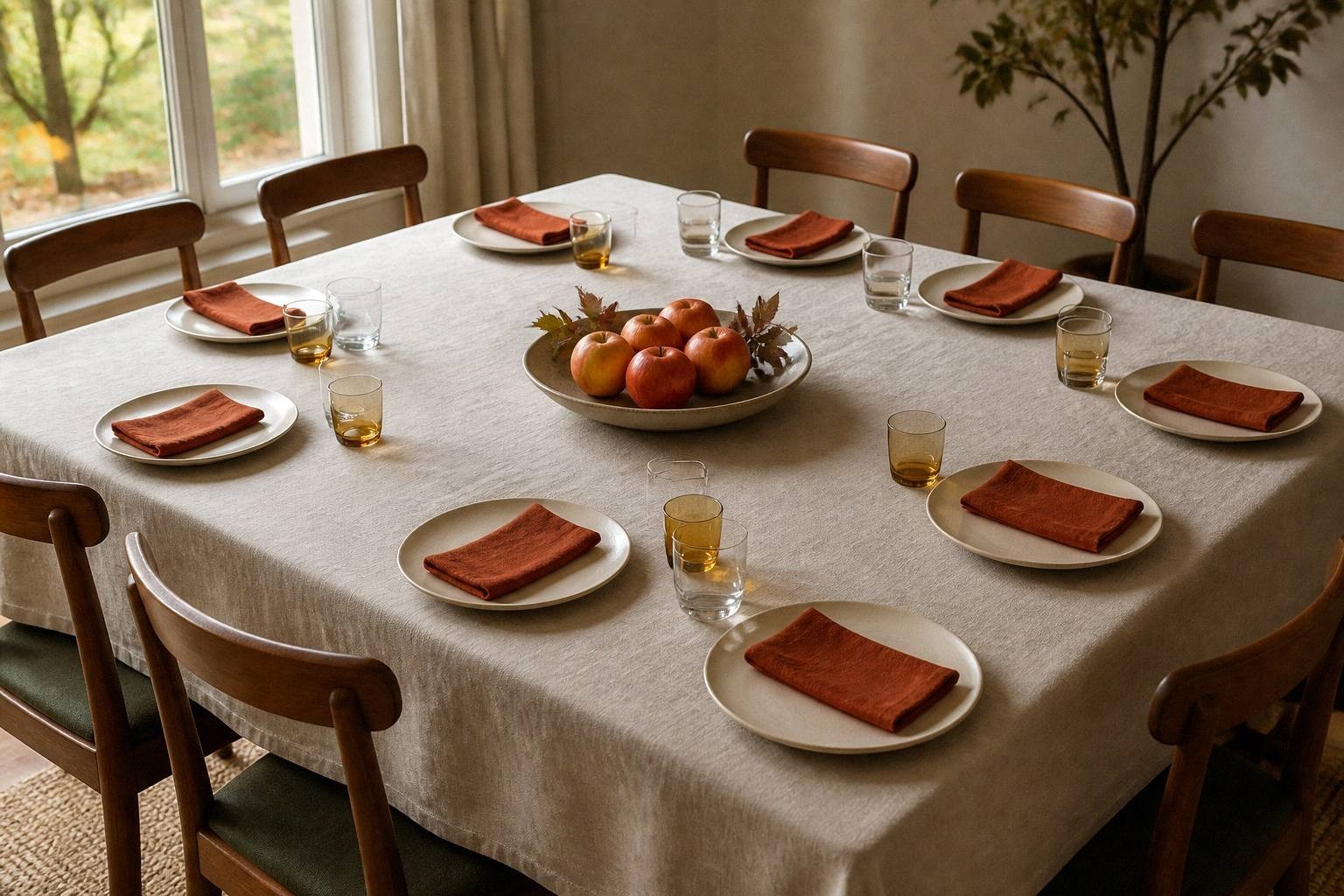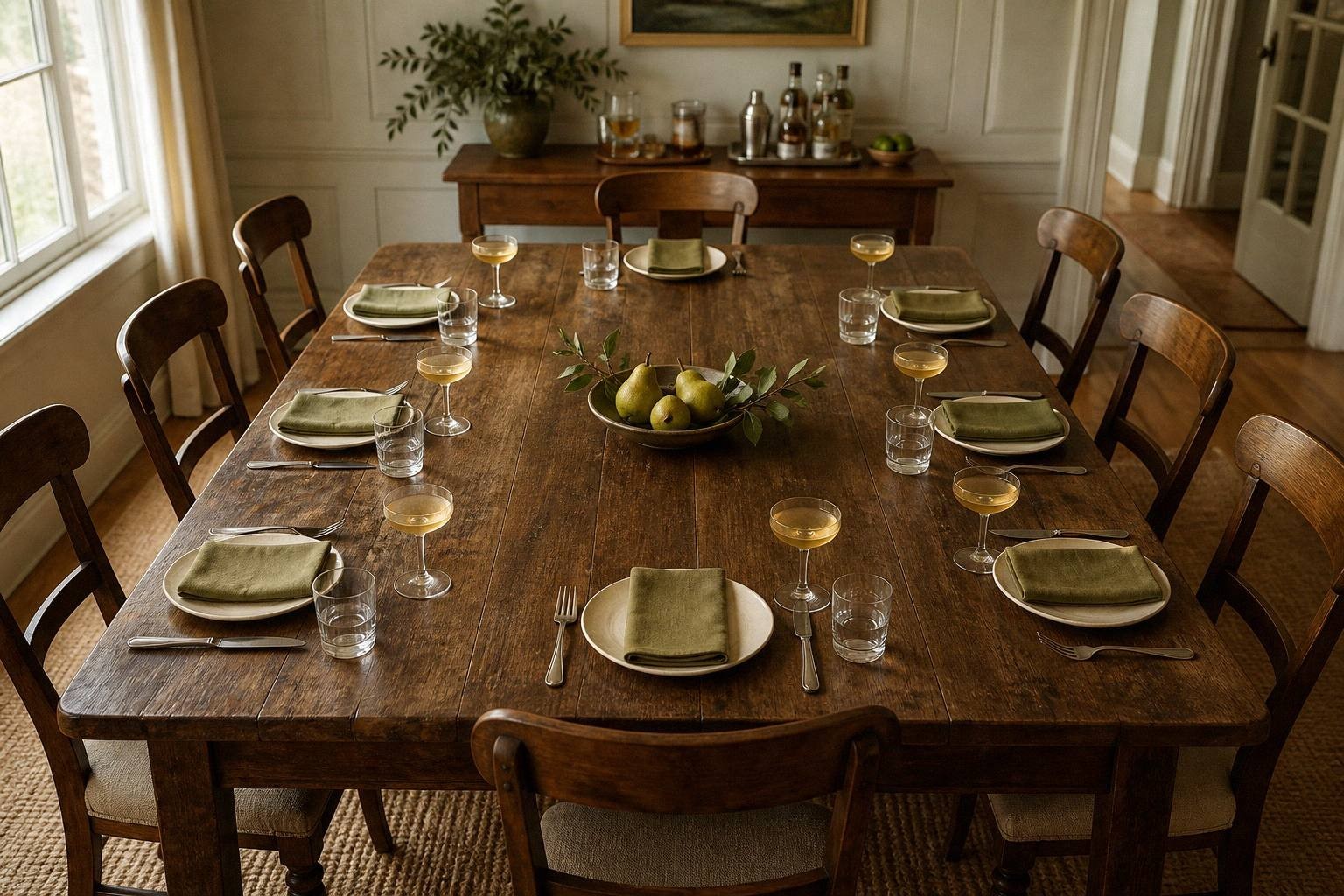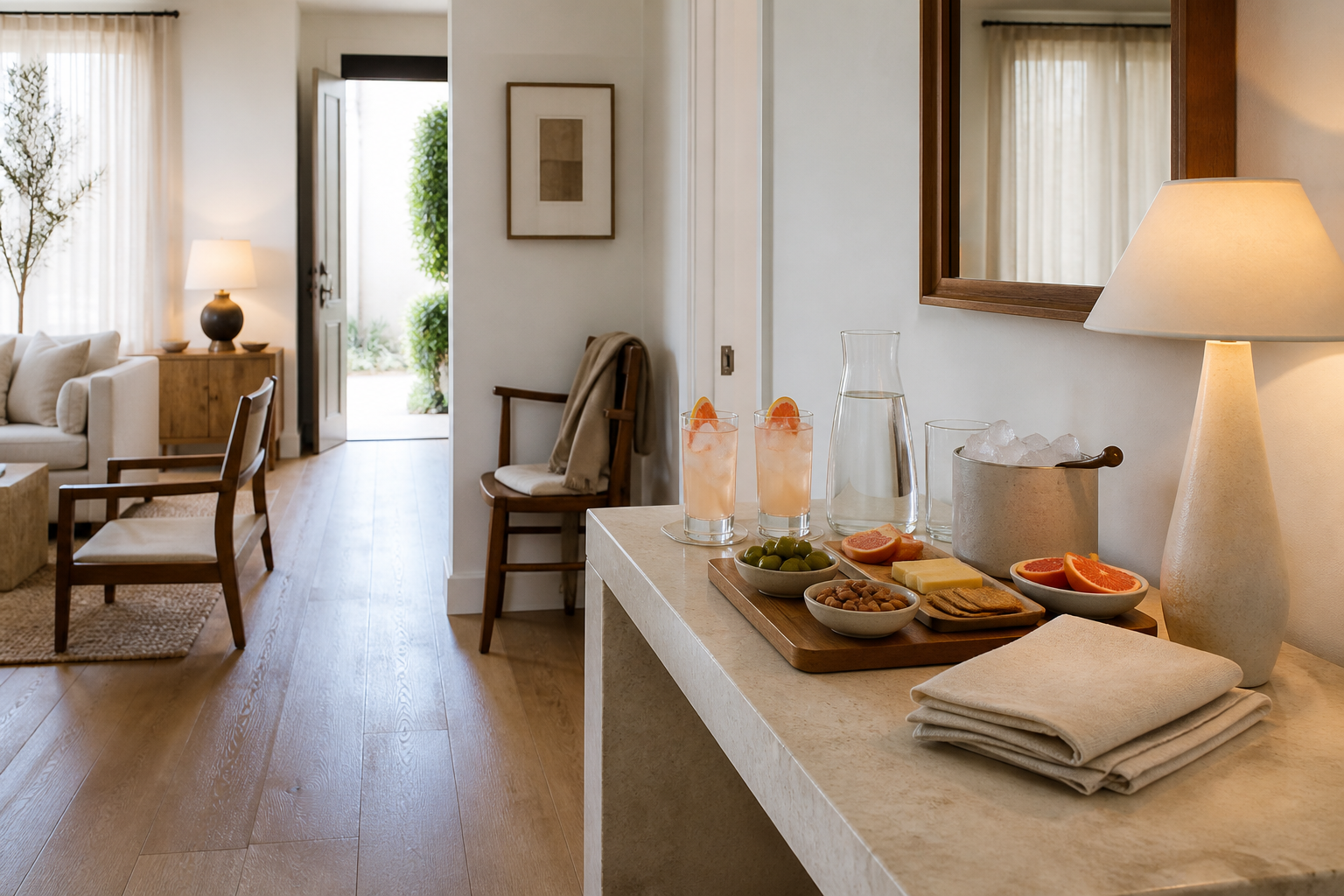
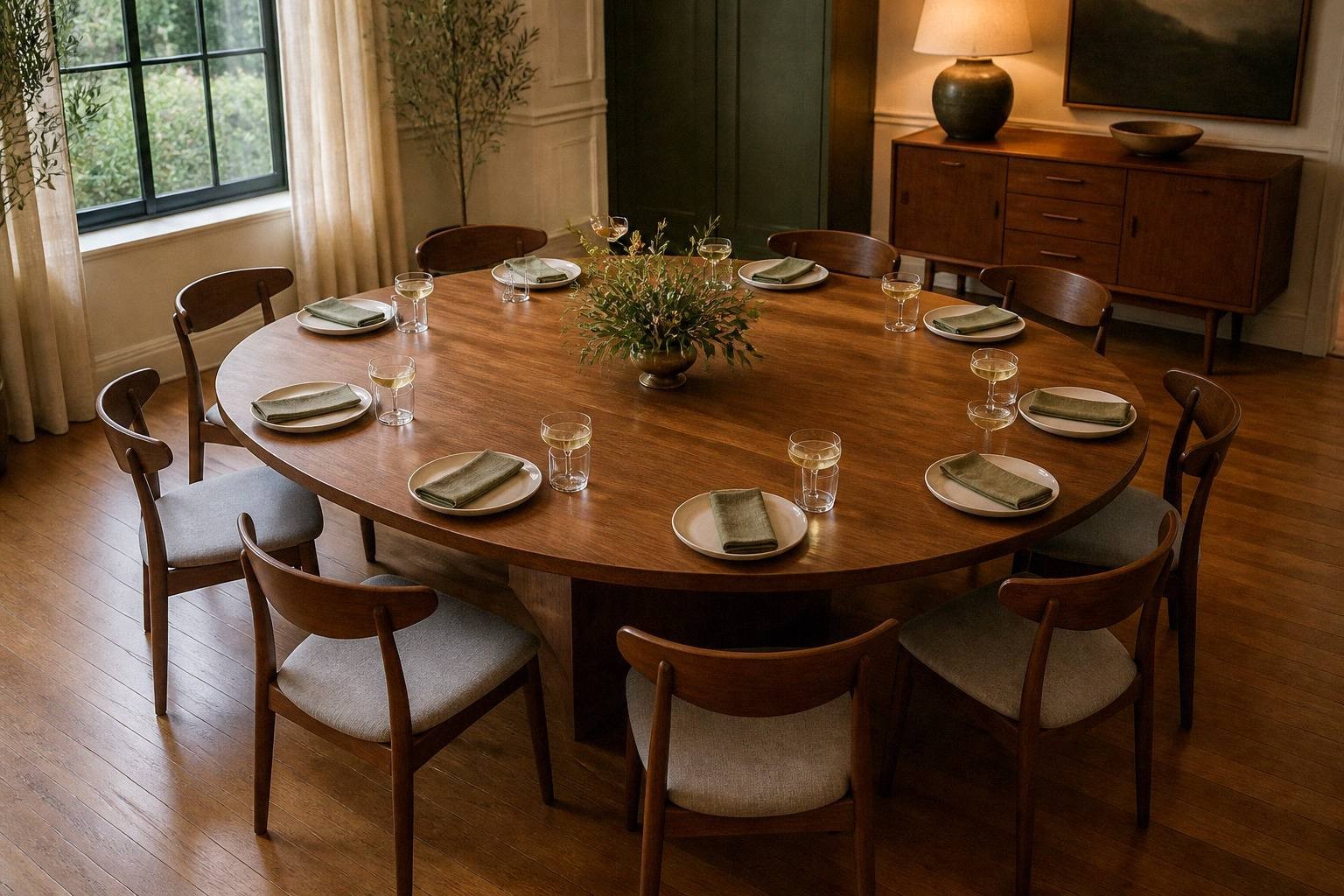
The fastest way to make a party table feel calm is to protect the guest space first. Mark each place setting, reserve a clear route around the table, and decide whether the center is for food or decor. It cannot do both jobs well on every table.
Then edit by movement: if someone has to reach over a glass, lift a branch, or carry a plate around a dead end, remove or relocate the object causing it.
Start with the table math
Utah State University Extension describes one place setting, or cover, as about 20 to 24 inches wide and 15 inches deep. That gives you a better starting point than counting how many chairs can technically touch the table.
- A 72-inch edge holds three generous 24-inch covers: 72 ÷ 3 = 24 inches each.
- A 96-inch edge holds four 24-inch covers: 96 ÷ 4 = 24 inches each.
- Two opposing 15-inch covers use about 30 inches of table depth.
- A 36-inch-deep table therefore leaves about 6 inches in the middle: 36 - 15 - 15 = 6.
Use those numbers as a layout estimate, then build one real place setting because plate diameter, chair arms, and table legs can change the fit. The original dimensions are in the Utah State University Extension table-setting guide .
Give the table three zones
Every party table needs three kinds of space, even when one of them lives on another surface.
1. The guest zone
This holds the plate, napkin, necessary flatware, water, and one active drink. Nothing decorative should lean into it.
2. The shared zone
This holds food people can actually reach, or one low arrangement. On a narrow table, move shared food to a serving tray or sideboard instead of shrinking the guest zones.
3. The travel zone
This is the route behind chairs and between the table, bar, and doorway. Pull the chairs out before judging it. A path that exists only when every chair is tucked in will disappear as soon as guests sit down.
The ADA standards use a 36-inch clear route to accessible fixed dining tables and a 30-by-48-inch clear floor space at wheelchair seating. Those rules apply to covered public accommodations, not automatically to a private dining room, but the measurements are a practical accessibility benchmark for a home layout. See the U.S. Department of Justice standards .
Choose food or decor for the center
A 36-inch-deep table with two full covers leaves about 6 inches down the center. That may hold a few votives or one slim row of bud vases. It will not comfortably hold a centerpiece, bread basket, water carafe, three platters, and someone’s phone.
Make one of these decisions:
- Food-first: Keep the center clear for one or two shared dishes and skip decorative objects.
- Decor-first: Use one low arrangement and serve food from a sideboard or in small passed rounds.
- Conversation-first: Keep the center nearly empty, place drinks elsewhere, and let the faces around the table be the scene.
The choice is not about formality. It is about square inches.
The five-minute clutter edit
Minute 1: Remove every object without a job
Take off signs, spare glasses, unopened bottles, scattered leaves, extra candles, and little themed objects. You can add one back later if the table truly misses it.
Minute 2: Group what remains
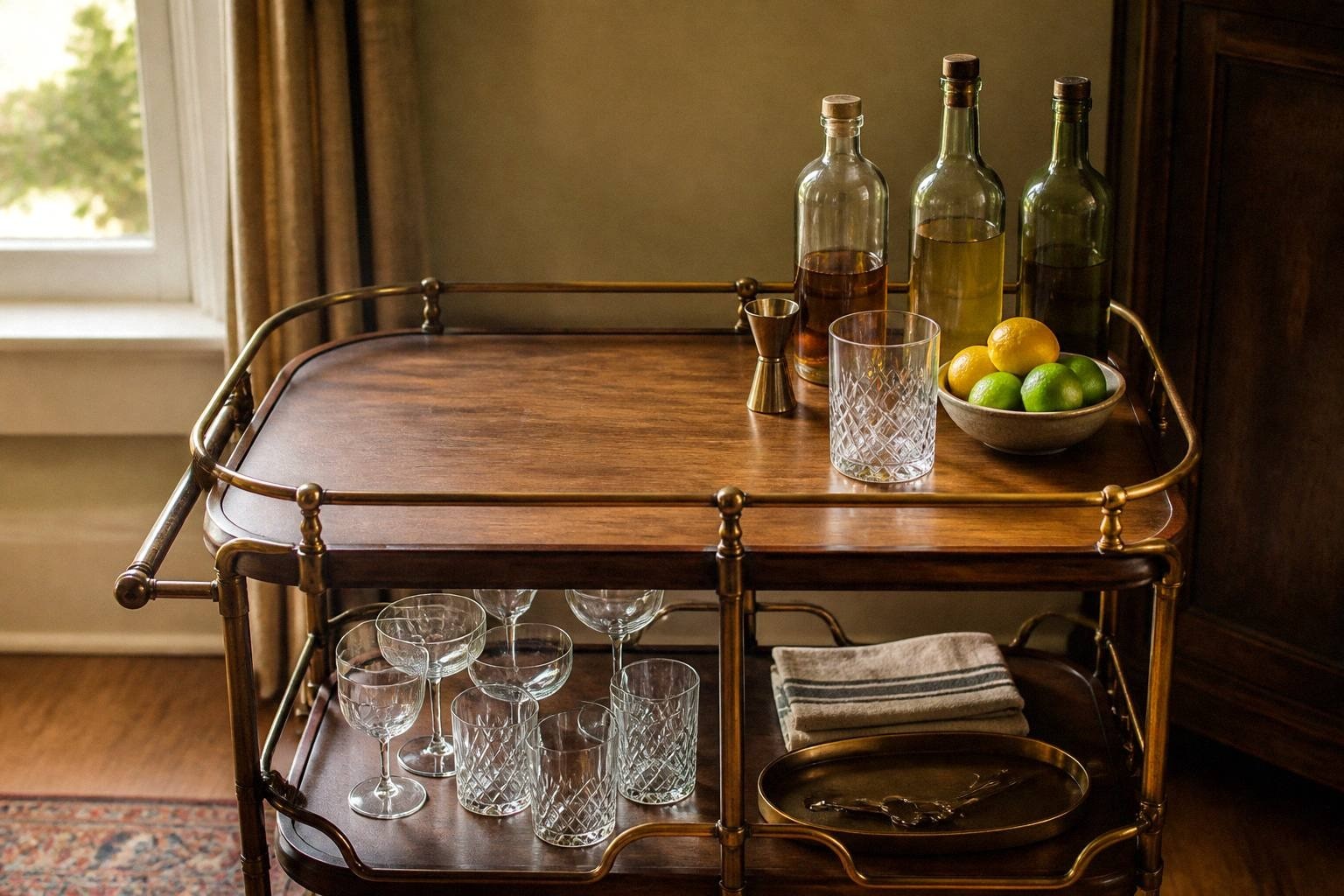
Three small objects spread across a table read as three interruptions. Put them on one tray and they read as one arrangement. Our bar-tray guide uses the same principle: the visible border helps the eye understand where the group ends.
Minute 3: Lower the sightline
Sit in two opposite chairs. If the arrangement cuts through a face, shorten it or move it. Do not trust the standing view; nobody spends dinner looking down at the table from above.
Minute 4: Run the reach test
From one seat, pick up the water glass, the active drink, and the nearest shared item. Nothing should make your sleeve cross an open flame or your hand pass over another glass.
Minute 5: Walk the refill route
Carry an empty tray from the kitchen to the table and back. Move anything that creates a dead end. The best-looking drink cart is still clutter if it blocks the only path.
Before and after: the same six-foot table
Before
- Eight chairs squeezed along the long sides
- Two place settings with three glasses each
- A tall flower arrangement
- Bottles, mixer cans, ice bucket, and garnish in the center
- Three platters added when food arrives
- Spare napkins tucked between plates
The problem is not one ugly object. Six different jobs are competing for the same strip of table.
After
- Three chairs per long side and one at each end
- One water glass and one active drink per guest
- One low arrangement no wider than a salad plate
- Bar, ice, and garnish on a separate drink station
- Food served in small rounds or from a sideboard
- Spare napkins with the refills
The table still has flowers and cocktails. It just stops storing the whole party.
Use height where it helps, not where it interrupts
Height belongs at the back of a buffet, on the wall behind the drink station, or above the table when professionally and safely installed. The seated table needs low pieces and clear faces.
If you want candles, keep the flame within sight and away from anything that can catch fire. The U.S. Consumer Product Safety Commission also recommends a stable, heat-resistant surface where children and pets cannot knock the candle over. Greenery, paper menus, loose sleeves, and open flame are a bad little cluster. Use an unlit candle or a household-appropriate alternative when supervision or clearance is uncertain.
Keep the drink beautiful by moving its supplies
One finished glass at each place looks generous. A half-built bar in the center looks like work.
Move these off the dining table:
- Spirit and wine bottles not being poured at the table
- Mixer cans and empty packaging
- Ice bucket and scoop
- Backup glassware
- Garnish containers
- Bar towels and sticky tools
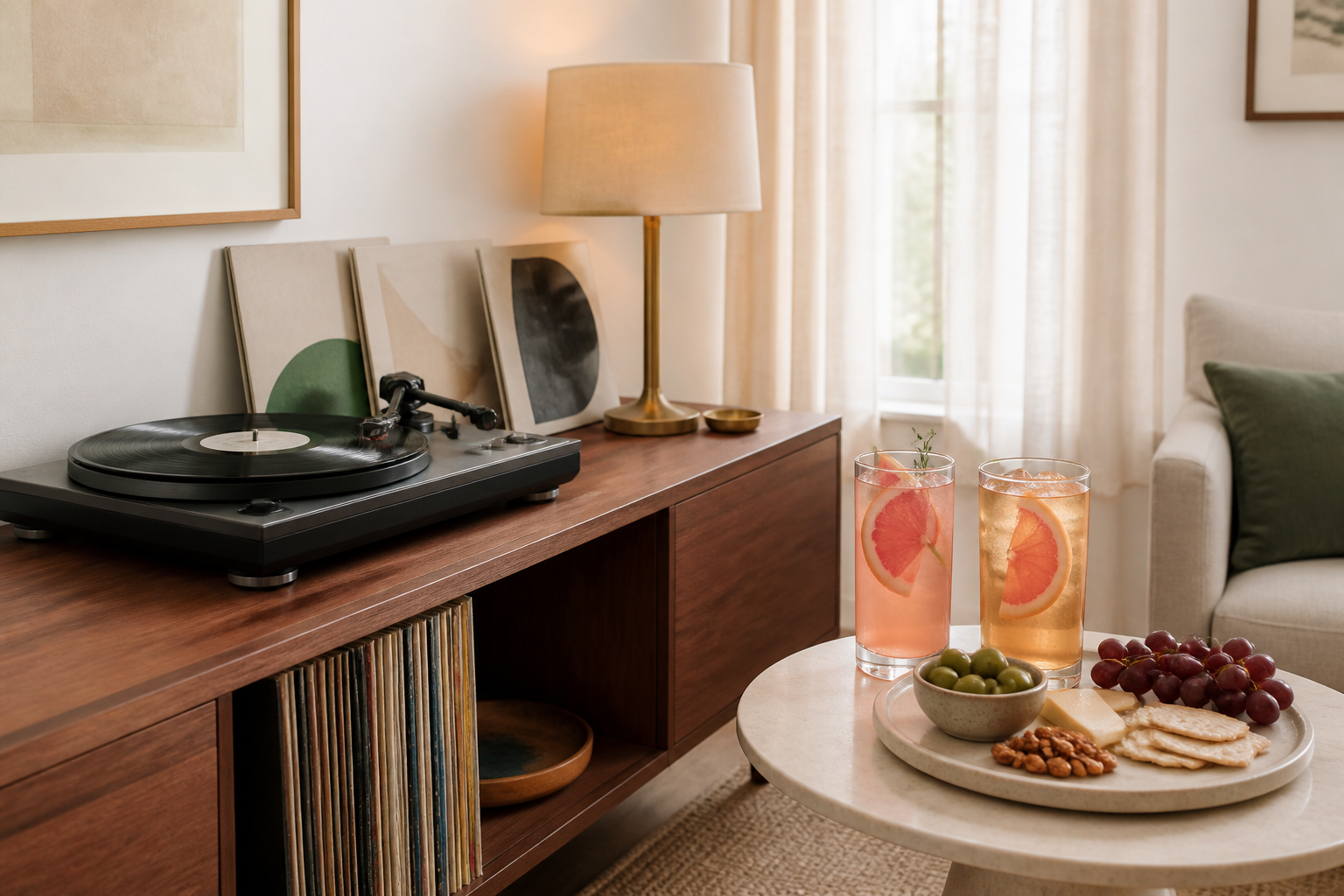
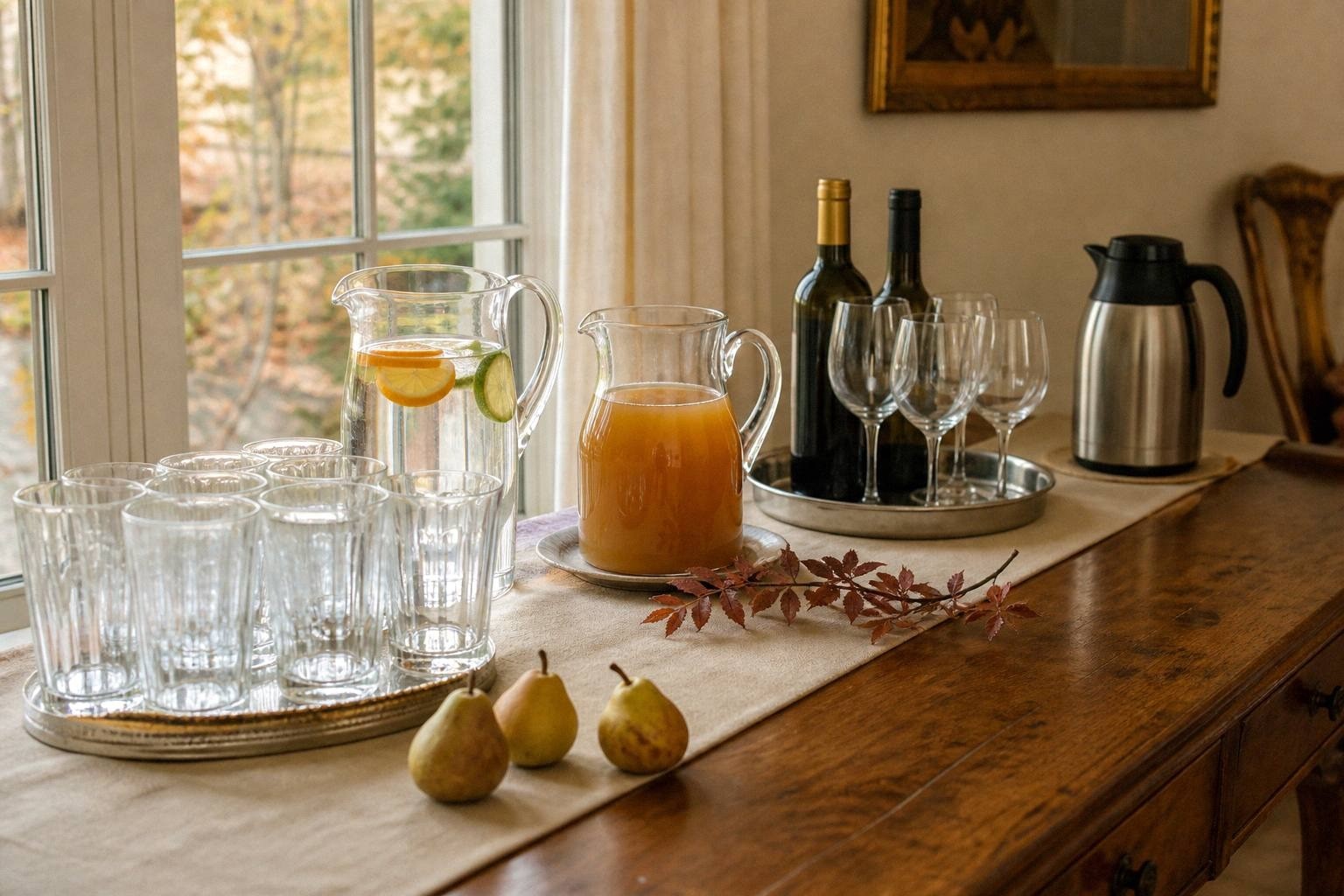
Give those pieces a dedicated surface in the order guests use them. A small-space drink station can work on a shelf or console; it does not need another full table.
Serve perishables in smaller rounds
A crowded platter often stays out longer because the host does not want to rebuild it. Smaller batches solve both the visual problem and the food-safety problem.
FoodSafety.gov recommends holding cold foods over ice or setting out smaller portions so less food remains on the table’s two-hour timer. Keep the backup cold and replace the serving dish rather than piling new food onto a warm platter.
For a long open house, put a small card in the kitchen with the time the first cold tray went out. That is useful information. A sign in the table center that says “gather” is not.
A budget-minded buy and skip list
Buy or borrow if the table needs it
- One tray that groups wet or refill items
- Cloth napkins that can repeat the table color
- A low, stable vessel for flowers or fruit
- A tablecloth sized with a measured, even drop
- A side surface, cart, or folding stand for drinks
Skip until there is a real job
- Chargers that narrow the guest space
- A second set of decorative glasses
- Tall floral stands
- Loose table scatter
- One-party signs
- Multiple tiny condiment bowls when one divided tray works
If the budget has room for one upgrade, solve the bottleneck. Buy the clean-pouring pitcher, the tray that catches drips, or the cloth that hides the folding table before buying objects that only appear in the photograph.
Common questions
How many centerpieces should a long table have?
Use one centered arrangement or a repeated set of low clusters with generous empty space between them. The exact count matters less than sightlines, reach, and whether food also needs the center.
How do I make a party table look full without clutter?
Repeat useful pieces at every seat, then concentrate seasonal color in napkins, drinks, and one arrangement. Repetition creates fullness; scattered objects create noise.
What should never go on the dining table?
Backup supplies, packaging, extra tools, and anything guests cannot identify or use. Keep those at the refill station.
What if my room cannot hold a 36-inch path?
Reduce chairs, move the serving surface, split guests between two tables, or ask the guest who needs a particular access arrangement what will work. Do not treat the benchmark as a substitute for the person’s actual needs.
Empty space is part of the setup
Protect the guest zone, decide what owns the center, and preserve the travel path. When those three spaces work, the table can carry color, candlelight, and a beautiful drink without feeling bare.
The last edit is usually the one that makes the party look intentional: take one thing away, then sit down and see whether you miss it.