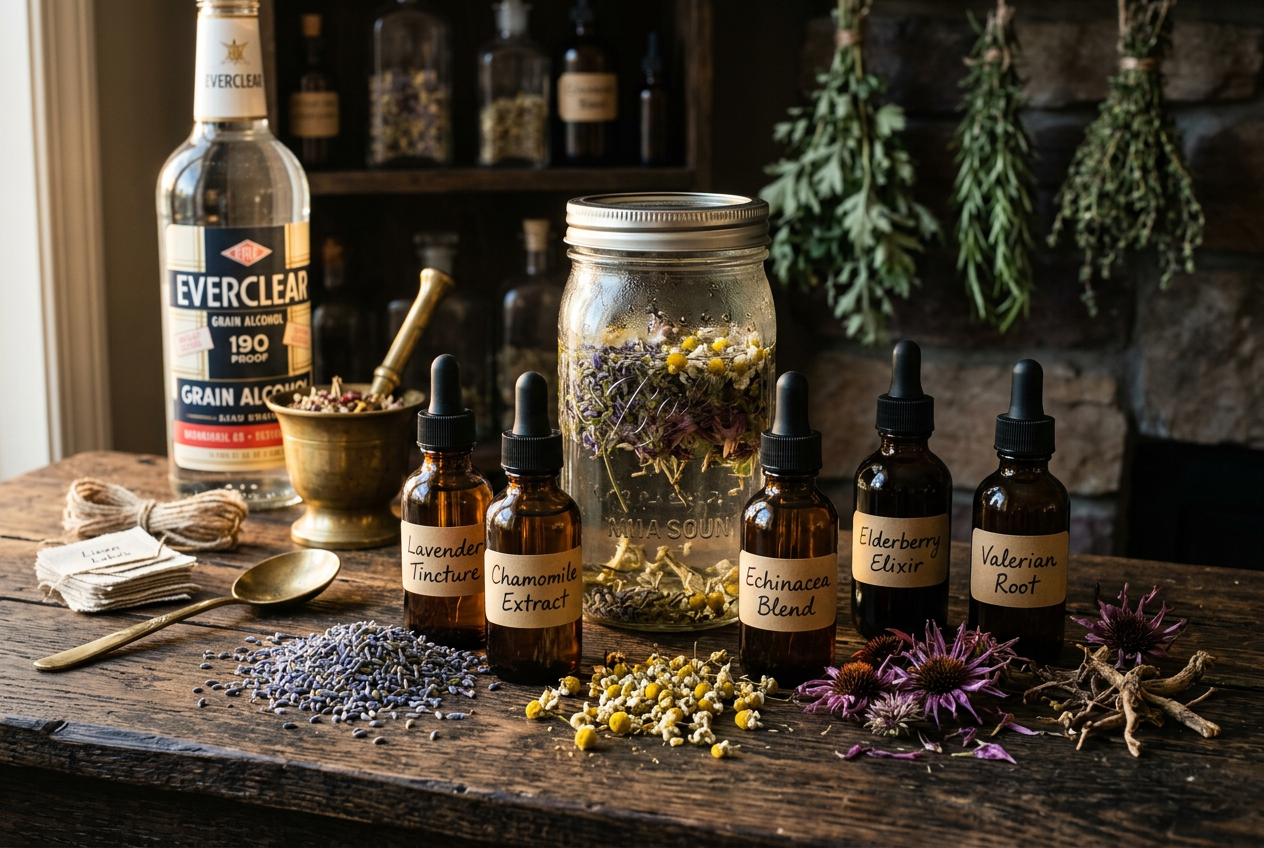
Learn how to make your own herbal tinctures at home with this complete beginner's guide. Includes the folk method, weight-to-volume ratios, and the best herbs to start with.
Making your own herbal tinctures is one of the most rewarding skills you can learn as an herbalist. These concentrated liquid extracts preserve the medicinal properties of plants in a form that is easy to store, dose, and use. Whether you want to support your immune system with elderberry, calm your nerves with lemon balm, or aid digestion with ginger, tinctures offer a versatile way to work with healing herbs.
This guide will walk you through everything you need to know to start making tinctures at home, from choosing your herbs to understanding extraction ratios.
What Is an Herbal Tincture?
An herbal tincture is a concentrated liquid extract made by soaking plant material in alcohol. The alcohol acts as a solvent, drawing out the active compounds from the herbs, including alkaloids, glycosides, essential oils, and resins that water alone cannot extract.
Tinctures have been used for centuries across many healing traditions. They offer several advantages over teas and infusions. The alcohol preserves the extract for years when stored properly, and the concentrated nature means you only need small doses, typically measured in drops or milliliters.
Most tinctures use high-proof alcohol like vodka, brandy, or grain alcohol. The alcohol percentage matters because different plant compounds require different strengths to extract properly. Generally, fresh herbs do well with higher proof alcohol (around 95%), while dried herbs work with lower proof (40-60%).
Why Make Your Own?
Creating your own tinctures gives you complete control over the quality and sourcing of your herbal medicine. You can choose organic herbs, work with plants you have grown yourself, or wildcraft from clean areas you trust.
Homemade tinctures are also significantly more affordable than purchasing them from herbal companies. A single bottle of commercial tincture can cost $15-30, while making your own might cost just a few dollars per batch.
You also gain the satisfaction of deepening your relationship with plants. The process of making tinctures connects you to traditional herbalism and helps you understand how different plants work in the body. Over time, you will develop an intuition for which herbs to reach for and how to blend them effectively.
Finally, making tinctures allows you to create custom formulas tailored to your specific needs. You can combine herbs that support your unique constitution rather than settling for generic commercial blends.
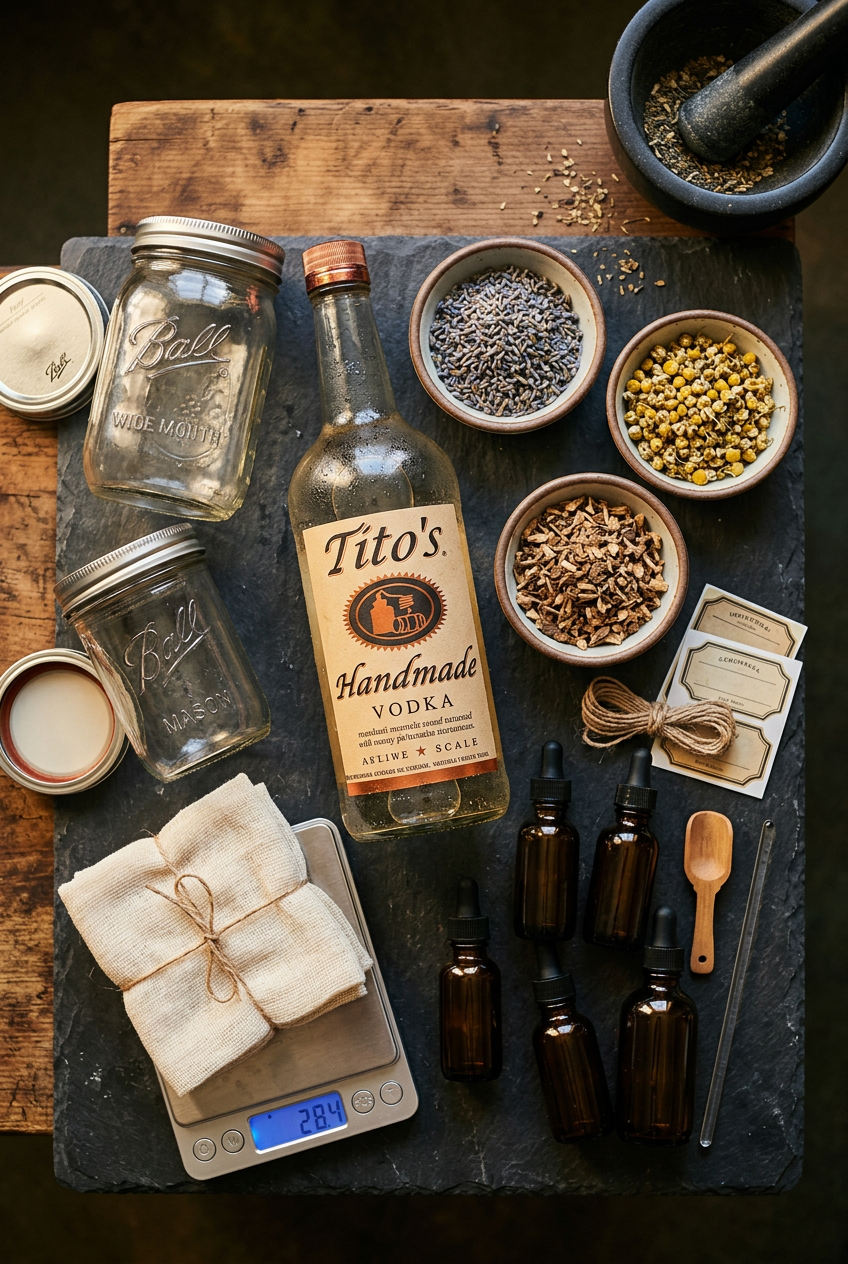
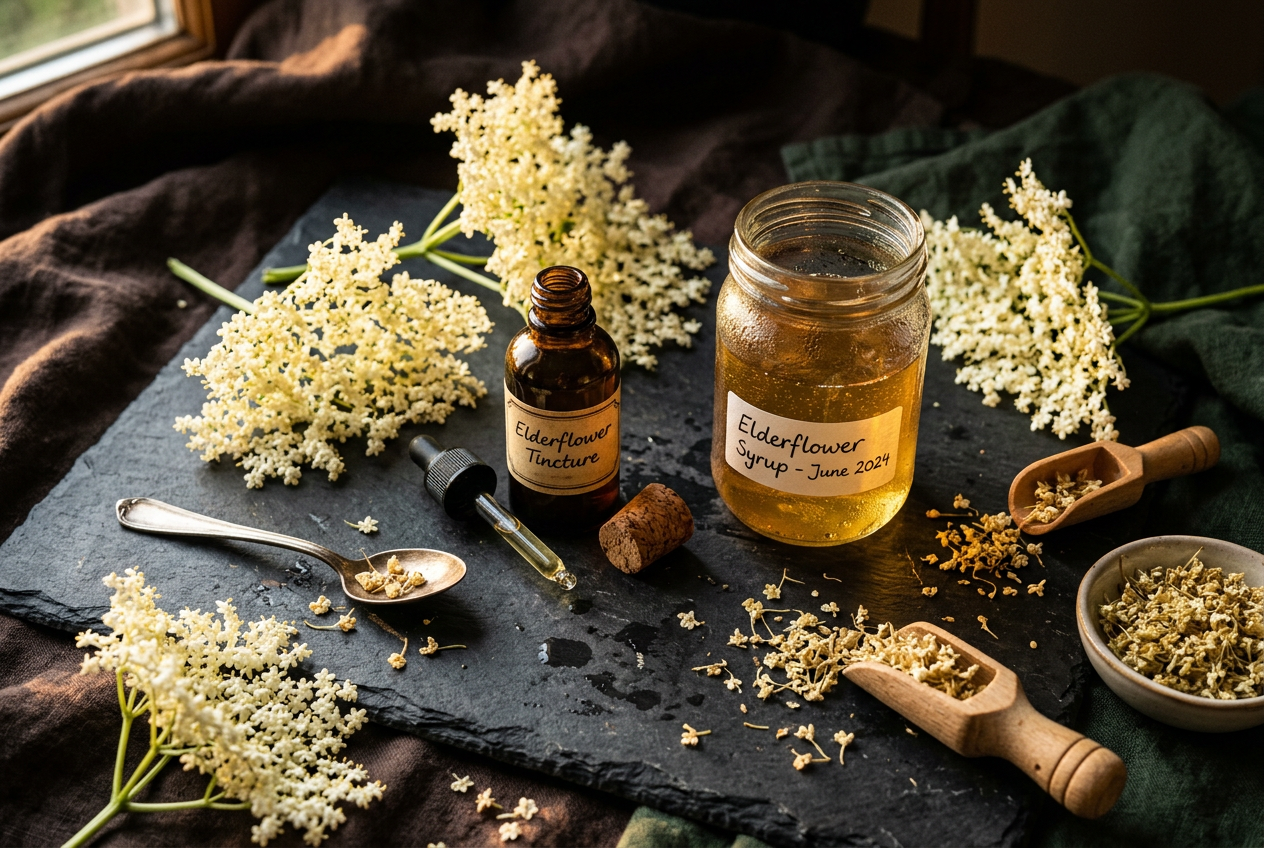
Gather your herbs and alcohol to begin the tincture-making process
What You Will Need
The supplies for tincture making are simple and inexpensive. Here is what you should gather before you begin:
Glass jars with tight-fitting lids: Mason jars work perfectly. Choose sizes based on how much you want to make. Pint and quart jars are most common for home herbalists.
High-proof alcohol: Vodka (80-100 proof) is the most popular choice because it has a neutral flavor. Brandy adds a pleasant taste to some formulas. Grain alcohol like Everclear (190 proof) can be diluted to the exact percentage you need.
Dried or fresh herbs: Source from reputable suppliers, grow your own, or wildcraft responsibly. Make sure you can positively identify any wild plants.
Labels: Always label your jars with the herb name, alcohol percentage, and date started. This prevents confusion and helps you track extraction time.
Cheesecloth or fine mesh strainer: You will need this to strain out the plant material after the extraction period.
Dark glass bottles for storage: Amber or cobalt bottles protect finished tinctures from light degradation. Include dropper tops for easy dosing.
Optional scale: If you want to use precise ratios, a kitchen scale that measures in grams is helpful but not required.
The Folk Method (No-Measurement Approach)
The folk method is the traditional, intuitive way of making tinctures. It requires no measuring or math, making it perfect for beginners. This approach has been used successfully for generations.
Start by filling your jar about halfway with dried herbs or three-quarters full with fresh herbs. Fresh herbs contain water, so you need more plant material to achieve the same concentration.
Pour alcohol over the herbs until the liquid rises about one to two inches above the plant material. The herbs will absorb some alcohol and may swell, so check after a few hours and add more alcohol if the herbs are exposed.
Put the lid on tightly and shake the jar. Store it in a cool, dark place like a cupboard. Shake the jar daily or every few days. This agitation helps the extraction process.
Let the mixture sit for four to six weeks. Some herbalists extract for as little as two weeks, while others prefer eight weeks for maximum potency. Four to six weeks is a good middle ground for most herbs.
When ready, strain the tincture through cheesecloth, squeezing out as much liquid as possible. Compost the spent herbs. Pour the finished tincture into dark glass bottles, label with the herb name and date, and store in a cool place away from direct sunlight.
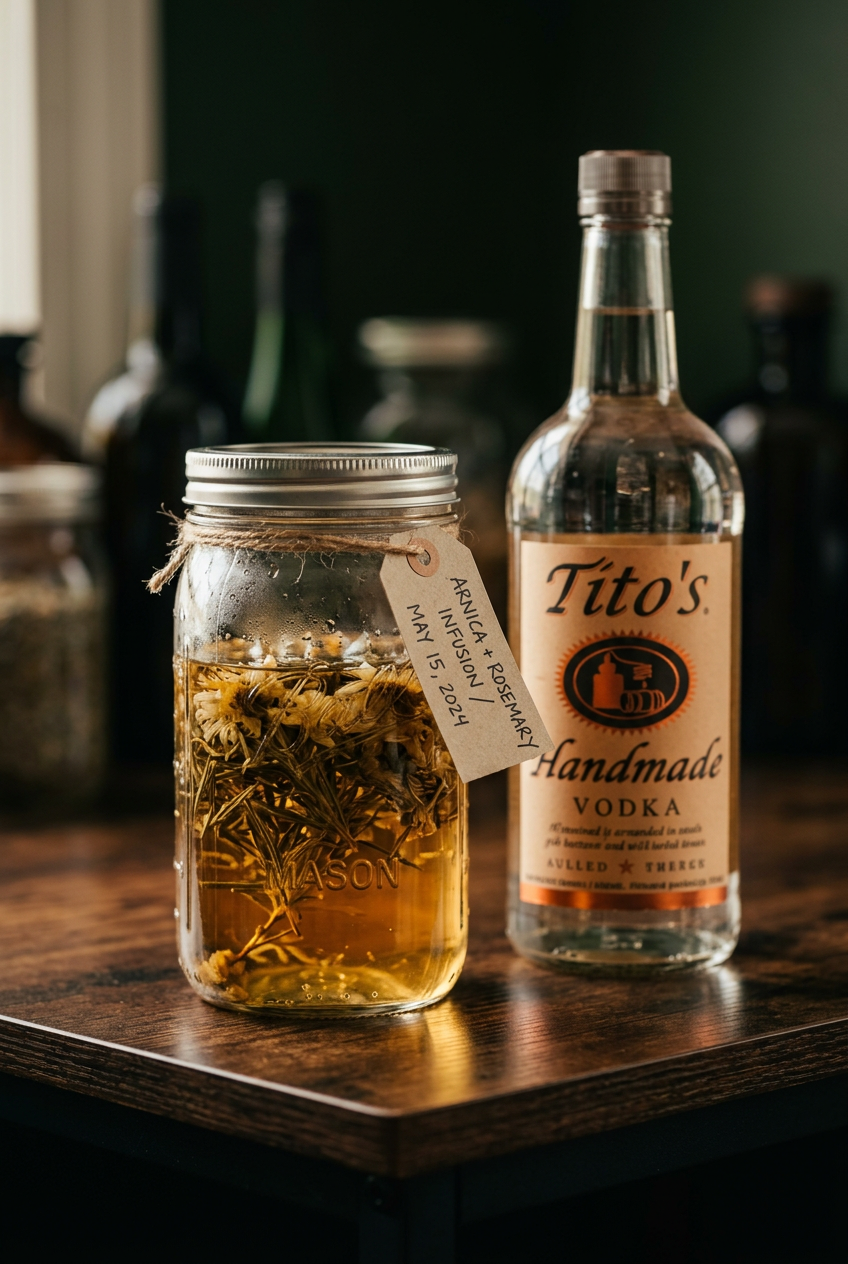
Strain your tincture after four to six weeks of extraction
The Weight-to-Volume Method
For those who want more precision, the weight-to-volume method allows you to create tinctures with specific ratios. This approach is especially useful when following traditional herbal formulas or working with potent herbs where dosage matters.
The ratio is expressed as herb weight to liquid volume. A 1:5 ratio means one part herb by weight to five parts liquid by volume. For example, 100 grams of dried herb would be covered with 500 milliliters of alcohol.
Common ratios include:
- 1:5 for most dried herbs
- 1:2 for fresh herbs (because of their water content)
- 1:10 for very potent herbs or when making a gentler extract
You also need to consider alcohol percentage. Most dried herbs extract well in 40-60% alcohol (80-120 proof). Fresh herbs need higher alcohol content, around 75-95%, because the water in the plant material will dilute the final percentage.
To make a tincture using this method, weigh your dried herbs and place them in a jar. Calculate the amount of alcohol needed based on your chosen ratio. Pour the alcohol over the herbs, ensuring they are fully submerged.
Follow the same process as the folk method: shake daily, extract for four to six weeks, then strain and bottle.
Best Herbs for Beginners
Some herbs are more forgiving and versatile than others, making them ideal for your first tincture-making projects.
Lemon balm is wonderfully calming and uplifting. It supports the nervous system and has a pleasant, lemony flavor. Use the dried or fresh leaves in a 1:5 ratio with 50% alcohol.
Calendula is a gentle, healing herb excellent for immune support and inflammation. The bright orange flowers make a beautiful golden tincture. Use dried flowers at 1:5 in 60% alcohol.
Ginger root aids digestion and warms the body. Fresh ginger makes a spicy, potent tincture that is wonderful in small doses. Use fresh root at 1:2 with 95% alcohol.
Chamomile is soothing and relaxing, perfect for stress and sleep support. The dried flowers are easy to work with. Try a 1:5 ratio with 40% alcohol.
Peppermint supports digestion and adds a refreshing flavor to formulas. Dried leaves work well at 1:5 with 50% alcohol.
Elderberry is famous for immune support, especially during cold and flu season. Use dried berries at 1:5 with 40% alcohol. Some herbalists add a little vegetable glycerin for sweetness.
Start with one or two herbs that appeal to you. As you gain confidence, you can experiment with combinations and more complex formulas.
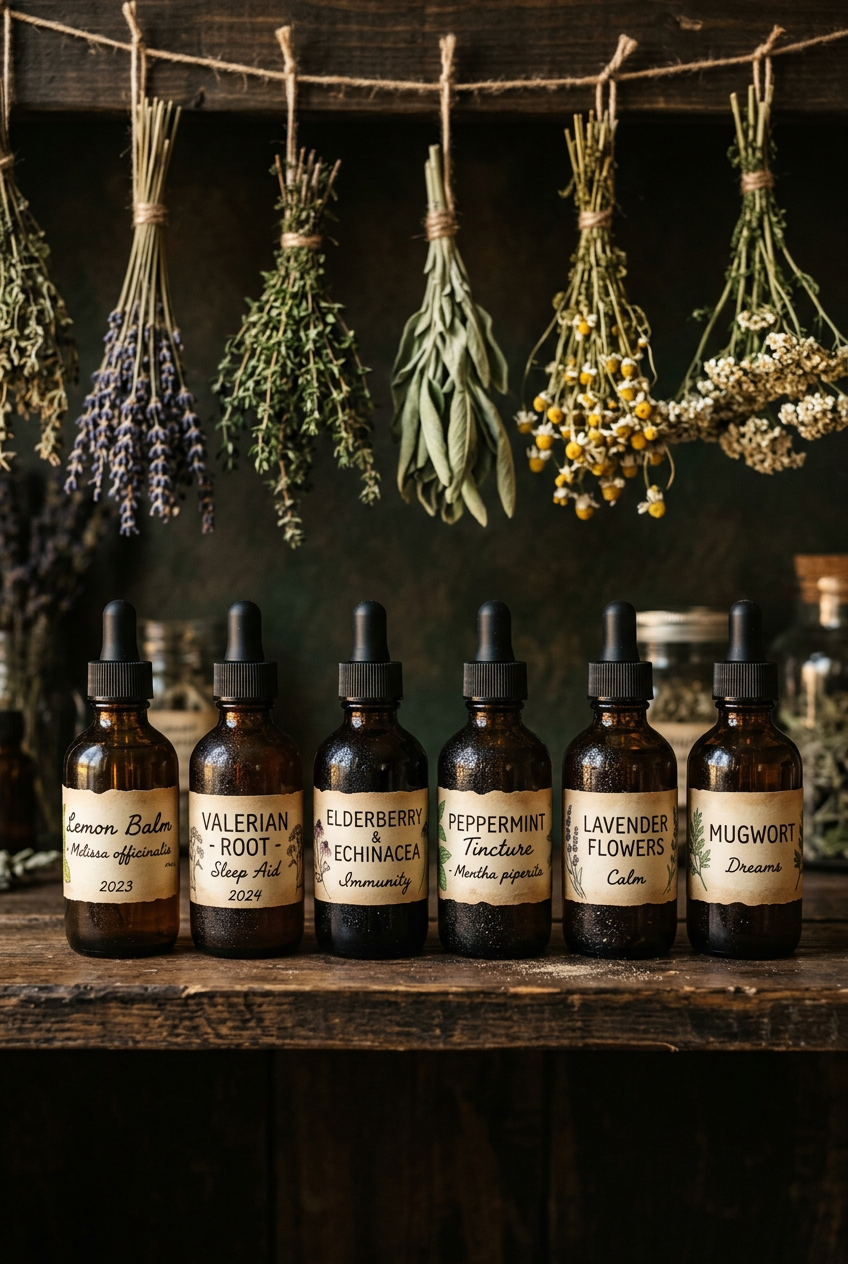
Store finished tinctures in dark glass bottles for long-lasting potency
How to Use Your Tincture in Drinks
Once you have made your tincture, the question becomes how to take it. While you can place drops directly under your tongue for fast absorption, many people prefer to add tinctures to drinks.
The simplest method is to add your dose (typically 1-3 droppers full or 30-90 drops) to a small amount of water or juice. Stir and drink quickly. The alcohol taste will be diluted but still present.
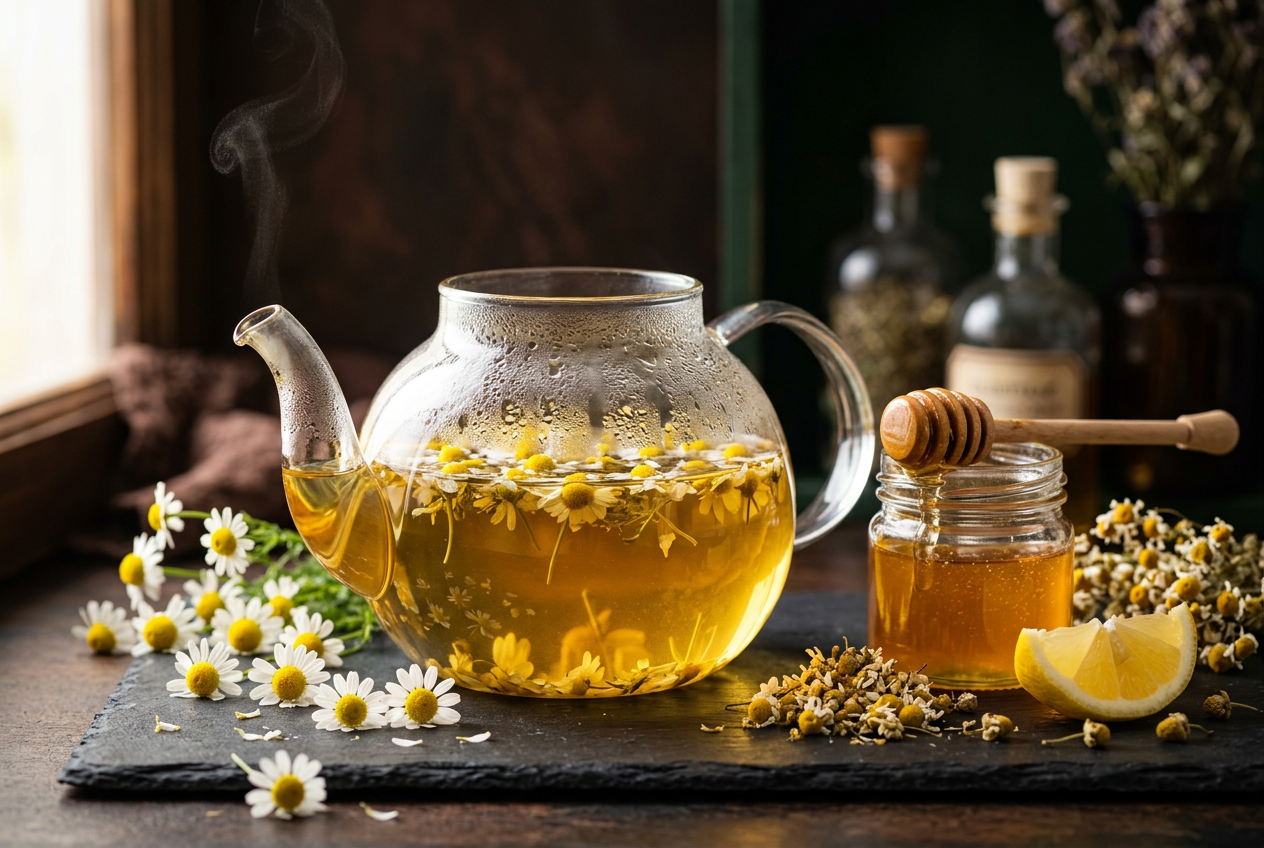
For a more pleasant experience, try adding tinctures to herbal tea. The hot water helps evaporate some of the alcohol while the tea flavor masks any bitterness. Chamomile tea pairs well with relaxing tinctures, while peppermint tea complements digestive formulas.
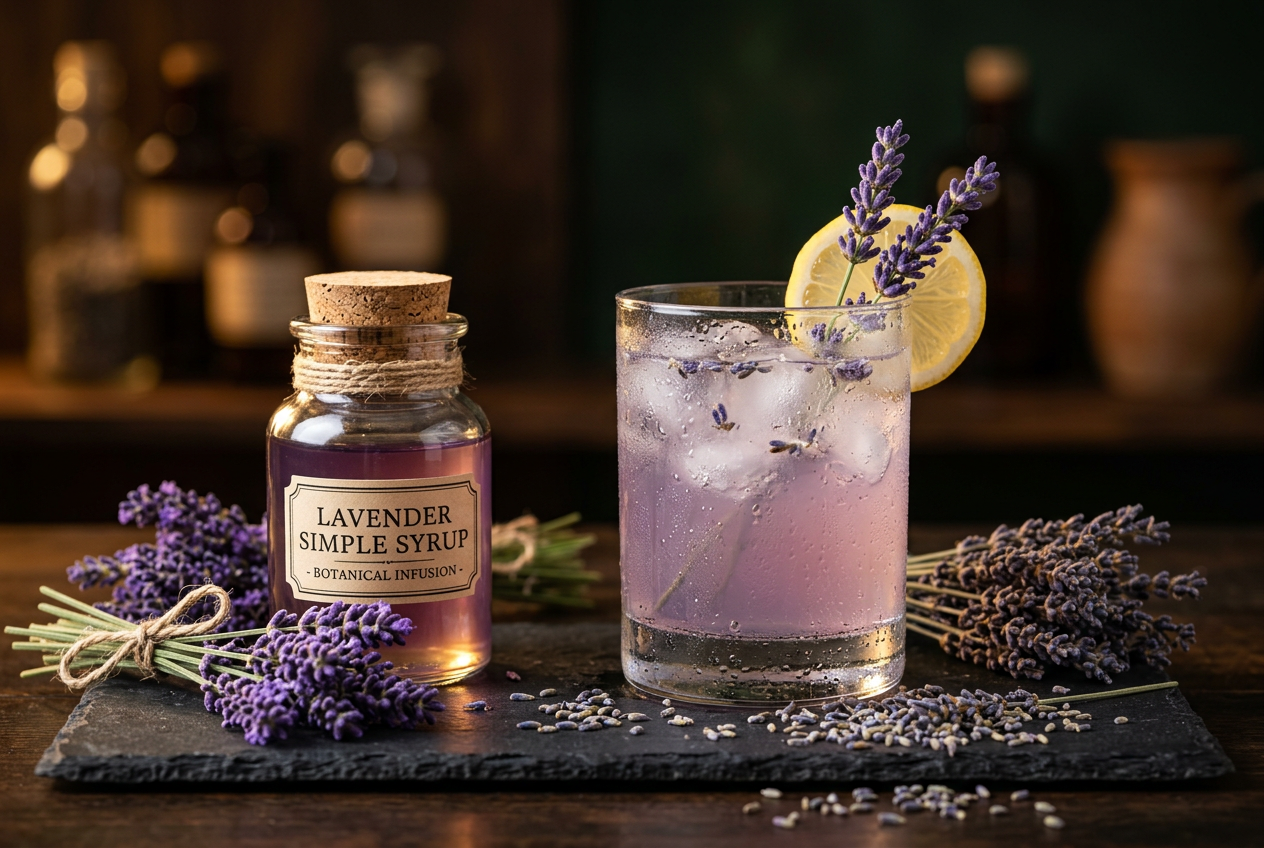
Sparkling water with a squeeze of lemon or lime makes a refreshing tincture delivery system. Add a dropper of your chosen tincture to create an instant herbal tonic.
You can also incorporate tinctures into homemade sodas, shrubs, and botanical cocktails. Ginger and elderberry tinctures add complexity to mixed drinks, while lemon balm and chamomile create soothing evening beverages.
Some people add tinctures to smoothies, though the alcohol may be more noticeable