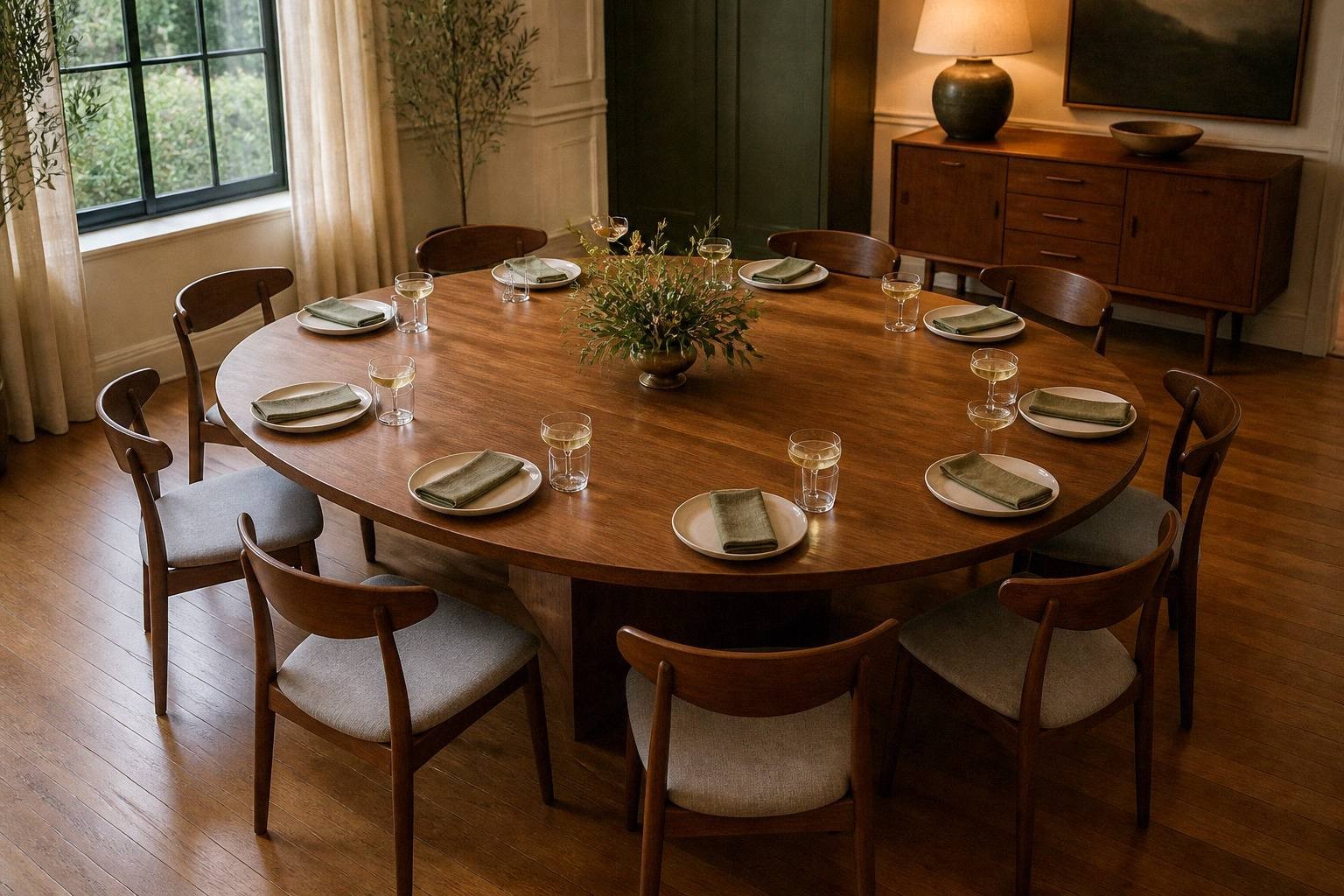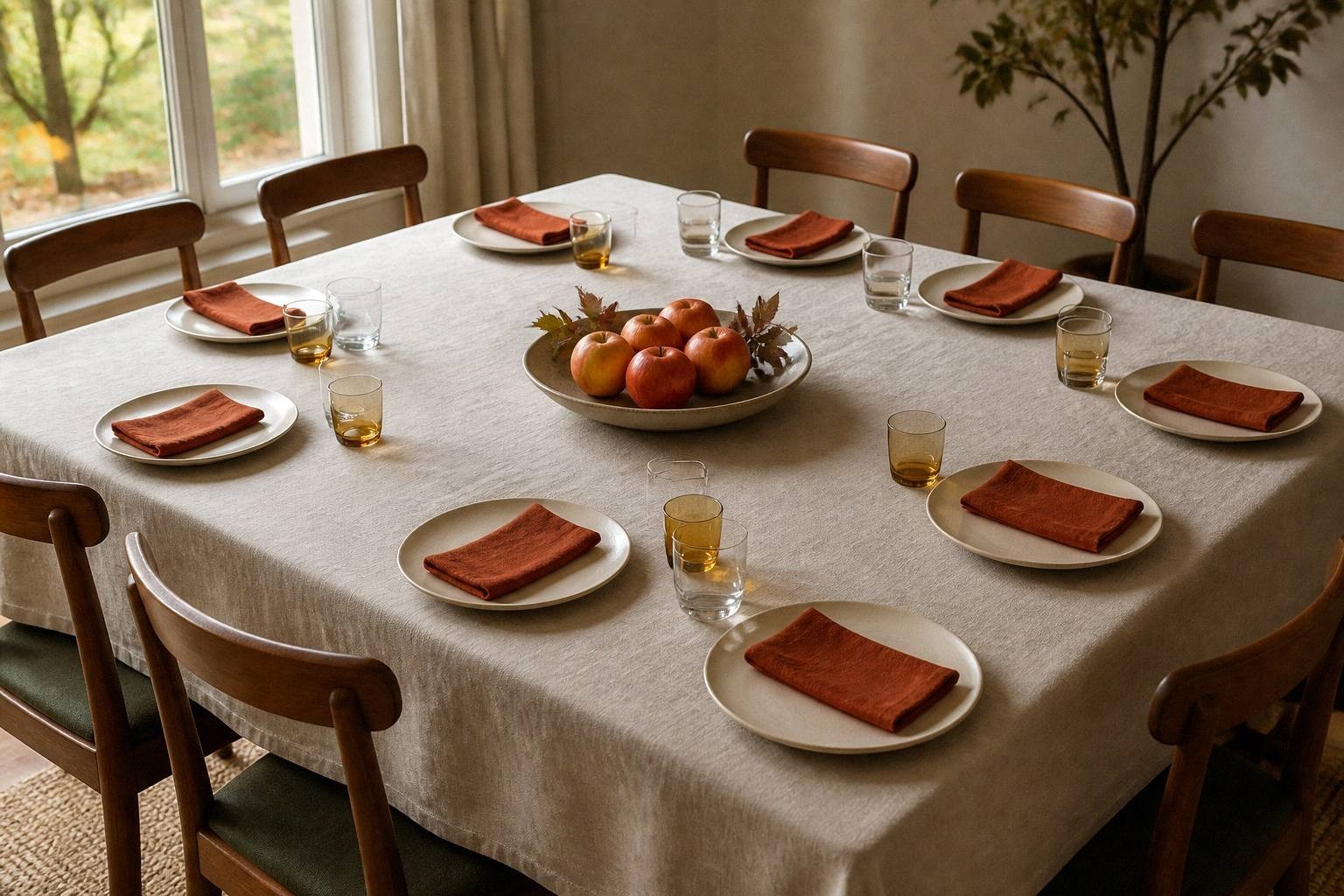
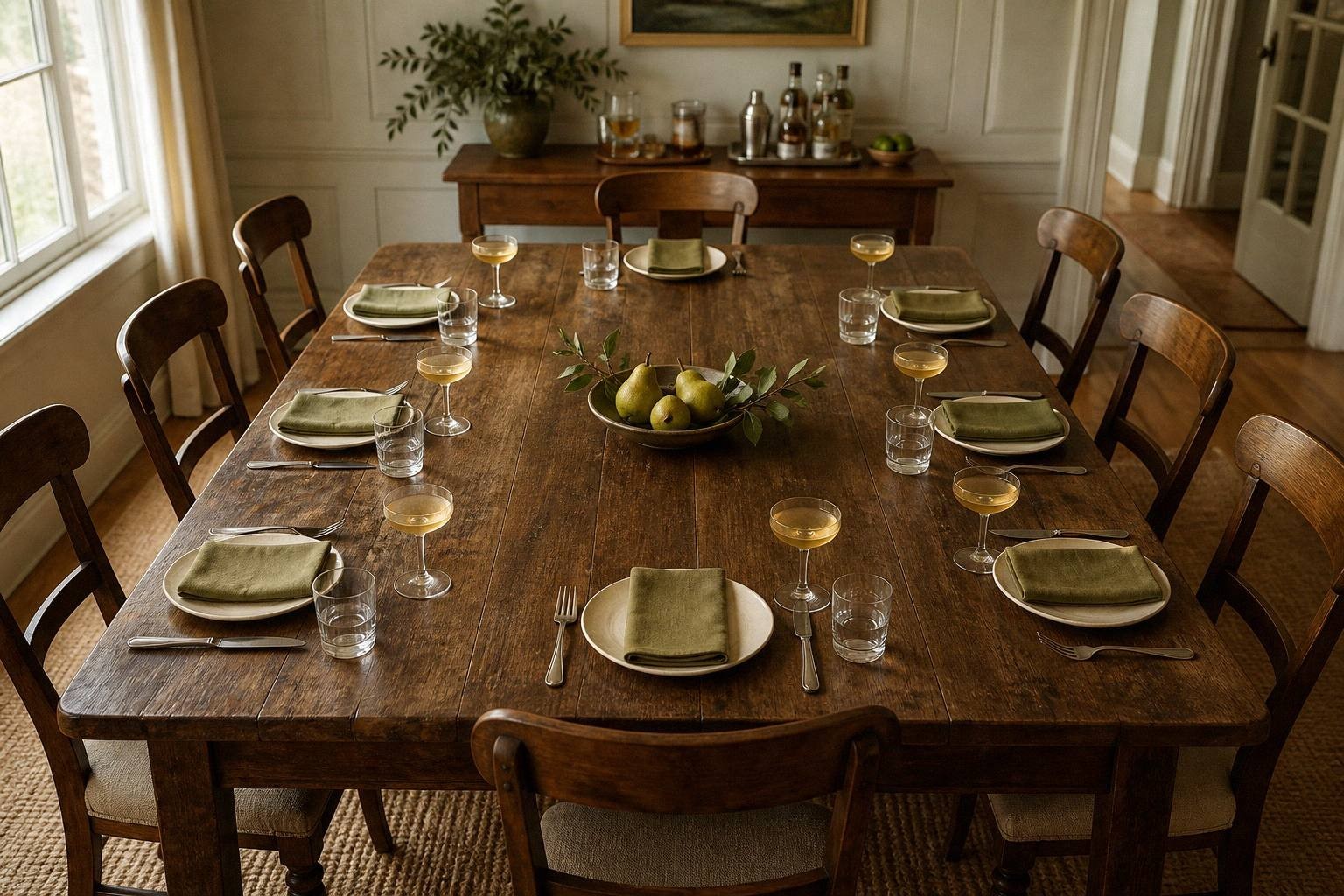
For eight guests, the table works when every person gets a clear landing place and the shared food stays out of the glass path. On a 72-inch rectangular table, seat three people on each long side and one at each end. On a 96-inch table, seat four per long side and leave the ends open for easier conversation and serving.
That one choice settles most of the setup. Now you can make the table feel like a cocktail party instead of a tiny dinner table wearing too many decorations.
The quick table plan for eight
Use this as the starting layout:
| Table | Seating plan | Best use | Center space |
|---|---|---|---|
| 36 x 72 inches | 3 on each long side, 1 at each end | Compact room, plated small bites | Narrow, so keep shared pieces off the center |
| 42 x 96 inches | 4 on each long side | Roomier cocktail supper | Enough depth for a slim shared tray or low flowers |
| Two smaller tables | 4 guests at each | Conversation-first party | One small centerpiece per table |
Utah State University Extension describes one place setting, or cover, as roughly 20 to 24 inches wide and 15 inches deep. That gives us useful planning math: four 24-inch covers require 96 inches of table edge. Three covers need 72 inches. A 36-inch-deep table loses about 30 inches to two opposing 15-inch covers, leaving only 6 inches down the middle. A 42-inch table leaves about 12 inches.
Those numbers explain why a centerpiece that looks modest in the kitchen can feel enormous once eight glasses arrive.
What belongs at each place
Give each guest one small plate, one napkin, the utensils the menu actually needs, one water glass, and one cocktail or mocktail glass. Put the dinner or appetizer plate about an inch from the table edge, following the basic placement guidance in Utah State University Extension’s table-setting study guide .
Set the fork to the left and the knife to the right with its blade facing the plate. If the menu needs a spoon, place it to the right of the knife. The water glass sits above the knife; the cocktail glass can sit slightly right and forward of it, where the two glasses do not touch.
This is a cocktail party, so do not build a five-course place setting for a two-fork menu. Emily Post’s informal place-setting guide is a good reality check: the setting should match the meal being served.
Build one sample setting before you copy it eight times
I always want to see one complete seat before I commit to the whole table. Put down the plate, napkin, flatware, water glass, and the widest cocktail glass you plan to use. Then sit in the chair.
Can you lift the water glass without nudging the cocktail? Can your elbows stay inside the setting? Can you see the person across from you? If not, fix one seat now. Eight cramped copies will not improve it.
Once the sample works, measure its width and repeat it. A folded paper marker at each place keeps the spacing honest while you set the rest.
Put drinks in two places, not everywhere
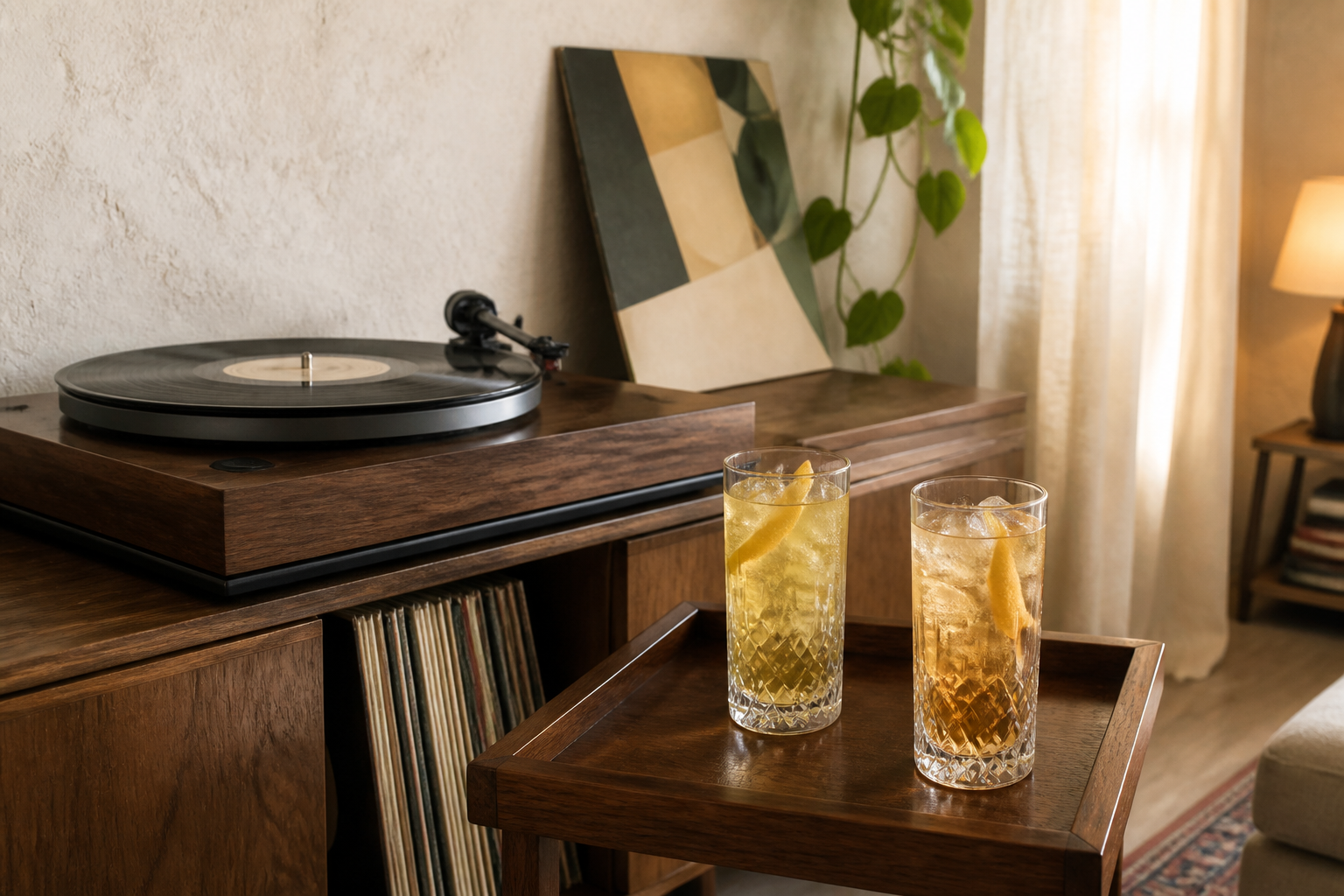
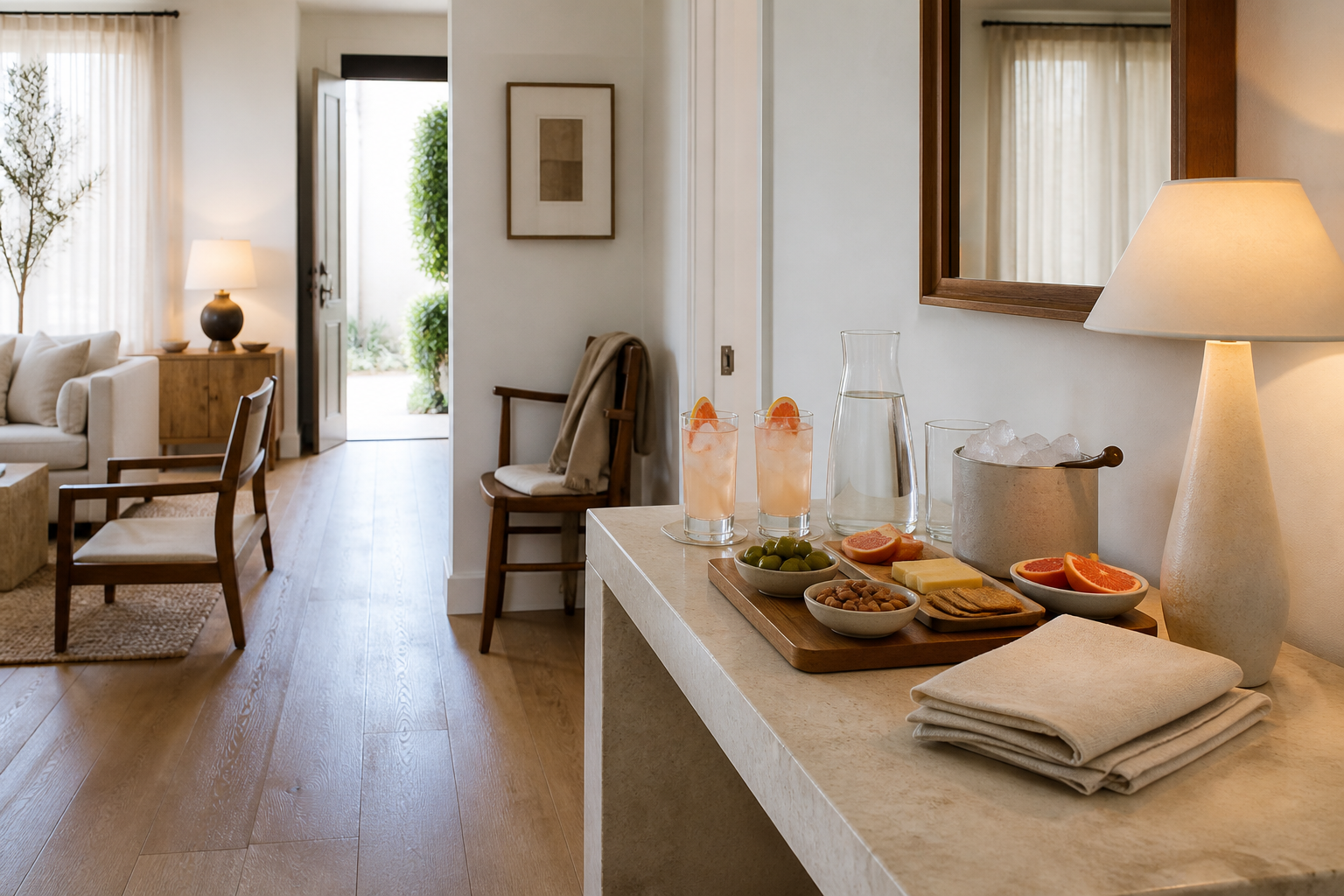
The table should hold the drink each person is enjoying, not the complete bar. Keep bottles, mixers, ice, backup glassware, and garnish on a separate self-serve drink station .
At the table, each guest needs:
- Water within easy reach
- One active cocktail or mocktail glass
- A small coaster only if the table surface needs protection
That is enough. A bottle display in the center steals room from the conversation and makes refills harder, not easier.
For a host-made welcome drink, pour shortly before guests sit down. For a choose-your-own setup, leave the cocktail glass empty and let guests bring a finished drink from the station.
Choose bites that fit the table you have
A 36-inch-deep table does not have a useful center lane once full-size settings are in place. Serve each person a small plate of bites, or keep one serving tray on a nearby console and pass it once.
A 42-inch-deep table can take a narrow shared board, but only if guests can reach it without leaning across glassware. Try this three-part menu:
- One room-temperature savory bite
- One cold bite served in a small batch
- One sweet finish brought out later
Putting everything out at once is not generosity when nobody can move a glass. It is just the second course taking up the first course’s room.
For cheese, cut fruit, dips, and other perishables, use small refills rather than one large platter. FoodSafety.gov’s party guidance recommends cold foods be held over ice or offered in smaller portions so they do not spend the whole party on the two-hour clock.
Keep a real path around the table
Pull every chair out as if someone were sitting in it, then walk the room with a tray. If a guest has to stand so you can pass, the table is too close to the wall or another piece of furniture.
For an accessibility-minded benchmark, the ADA standards use a 36-inch clear route to accessible fixed dining tables and a 30-by-48-inch clear floor space at wheelchair seating. A private home party is not automatically governed by restaurant rules, but those dimensions are a useful way to notice when decor, spare chairs, or a drinks cart has blocked a guest’s route. See the U.S. Department of Justice dining guidance .
If the room cannot give you that route, move the bar cart or split the group between two tables. Do not make the guest solve the floor plan.
The setup order that saves the most rework
The day before
- Confirm the seating plan and table size
- Wash and inspect all glassware
- Make any syrups or batched drink bases
- Fold eight napkins the same simple way
- Clear one shelf for cold refills
Two hours before
- Set the complete table while it is still empty
- Put water at each place, or stage chilled bottles nearby
- Build the separate drink station
- Portion the first round of cold bites and refrigerate it
- Move extra chairs and decor out of the main path
Fifteen minutes before
- Add the first small tray of food
- Fill the welcome drinks, if using them
- Light candles only if an adult can keep them in sight
- Sit in one chair for the final reach-and-sightline test
The U.S. Consumer Product Safety Commission says burning candles should stay within sight, on a stable heat-resistant surface, and away from anything that can catch fire. If the table needs greenery, paper menus, or flowing sleeves close to the centerpiece, use an unlit candle or another low light source instead. Read the CPSC candle guidance .
Three layouts worth copying
The compact 72-inch table
Seat three per side and one at each end. Use plated bites, no central platter, and one low vase no wider than a salad plate. Put the complete drink setup on a separate surface.
The roomy 96-inch table
Seat four per side. Place one slim shared tray in the middle, with two small low arrangements at the quarter points. Keep the ends clear so the host can approach with refills.
Two tables of four
Use this when the room has awkward corners or the guest list includes someone who needs a clearer route. Repeat the same linens and glassware at both tables so the split feels intentional. Put the drinks between the two groups, not inside one group’s conversation.
Common questions
How many glasses does each guest need?
Start with one water glass and one cocktail or mocktail glass per guest. Keep clean replacements nearby if the menu includes a second drink style. Setting three empty glasses at every place uses room before it offers value.
Can I use a six-foot folding table for eight?
Yes, if you seat three on each long side and one at each end. Test the end seats before the party because table legs and braces can steal knee room.
Should the food go in the middle?
Only if the center lane is wide enough and everyone can reach safely. On a 36-inch-deep table, opposing 15-inch covers leave about 6 inches, so plated bites or a nearby serving surface usually work better.
Where should the bar go?
Put it on a separate wall or console where one person pouring does not block a chair or doorway. Our self-serve mocktail bar guide shows how to keep the menu small and the refill plan clear.
The table is ready when the host can sit down
Eight complete landing places, one clear route, one active drink per person, and food in small waves will do more for the party than another layer of decor. Set one seat, copy what works, and keep the working bar somewhere else.
That is how the table looks considered without asking you to hover over it all night.