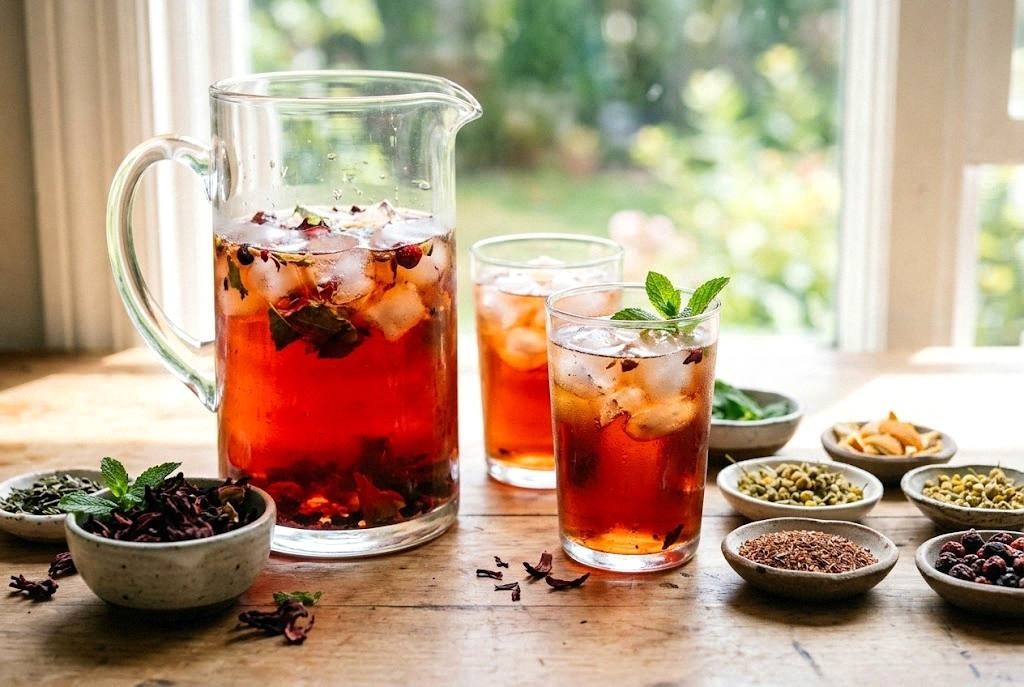
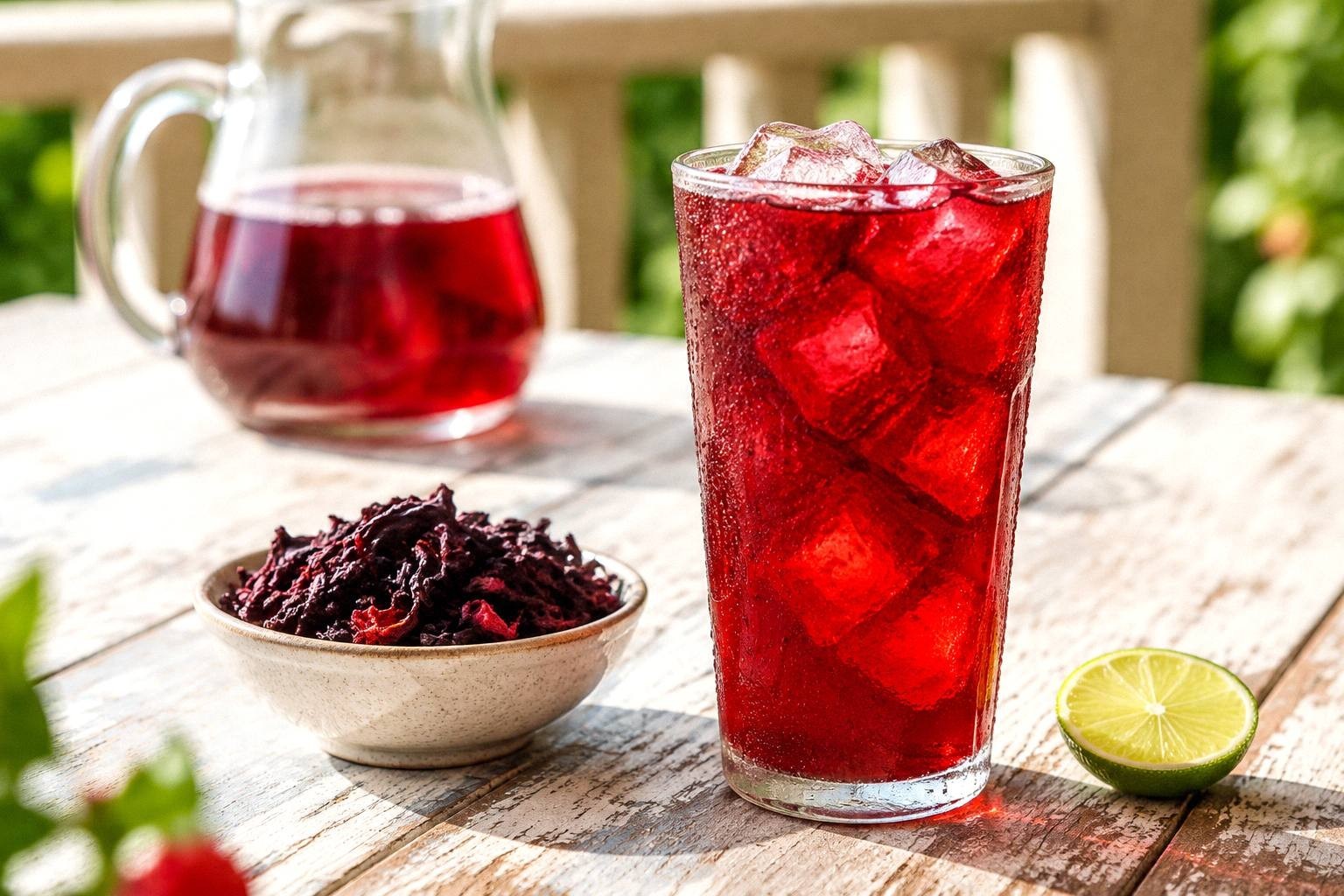
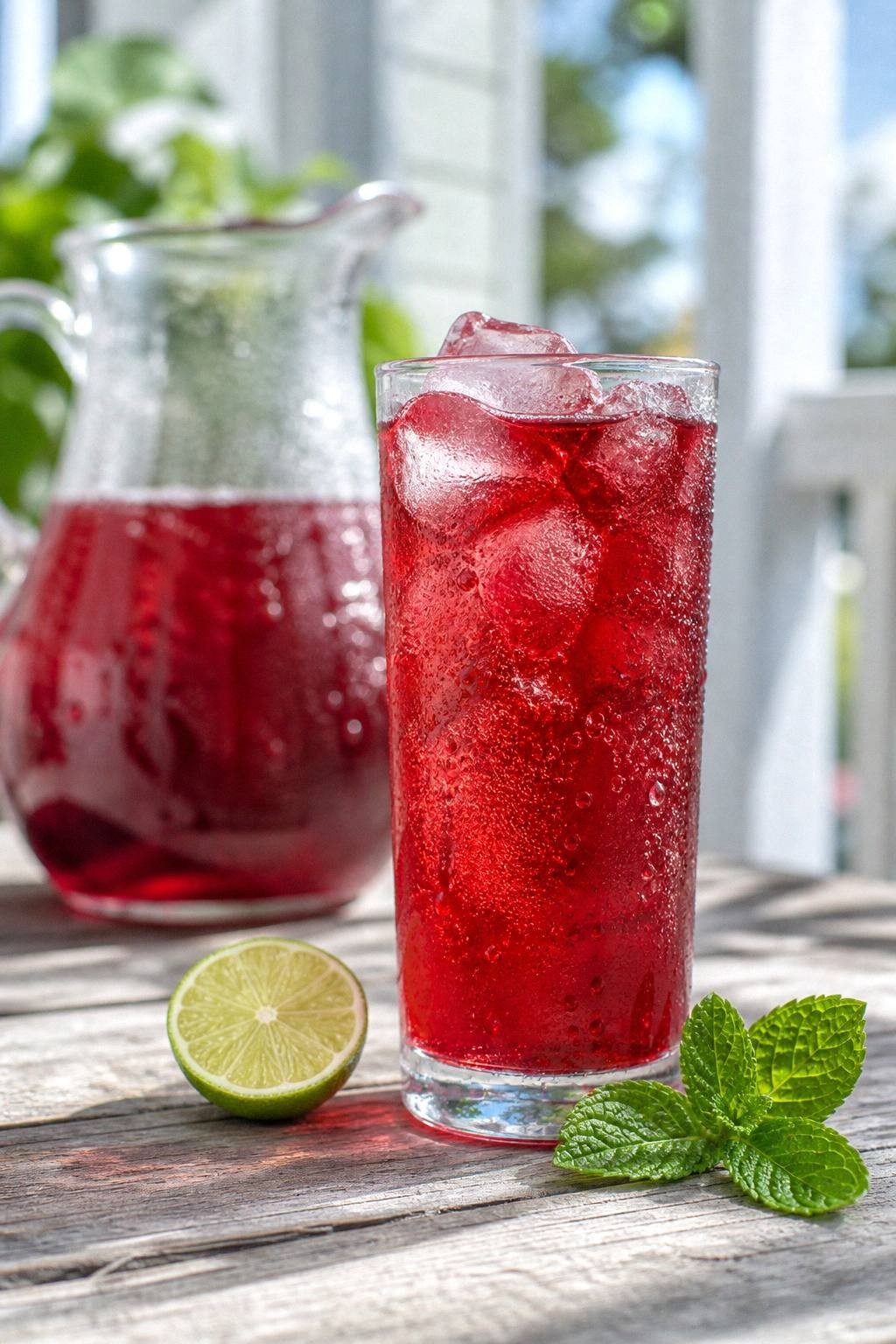
When it’s 97 degrees and the air feels like soup, lemonade is too sweet and iced black tea goes flat and tannic by the second glass. Hibiscus solves both problems. It brews up tart like cranberry, deep ruby red, and it actually tastes better the colder it gets.
This is the pitcher I make on repeat from June through September. The whole thing takes 20 minutes of attention, most of which is waiting on a steep, and it costs pennies a glass.
One thing matters more than everything else: the ratio. Hibiscus is strong. Get the proportions right and you get a clean, bright, drinkable tea. Eyeball it and you get something that tastes like sour punch concentrate.
Quick answer
Iced hibiscus tea tastes better when it is tart, cold, and balanced with citrus or honey. Steep it strong enough for ice so the glass does not go flat halfway through.
Better iced hibiscus tea checklist
- Strong steep
- Good strain
- Citrus
- Honey or syrup
- Full chill
- Plenty of ice
- Pitcher backup
Related helpful guides
- Sparkling Iced Tea Mocktails for Summer
- Cold Brew Loose Leaf Tea Blends
- Hibiscus Ginger Syrup for Mocktails and Iced Tea
- Backyard Drink Station Ideas
What to save from this guide
- The checklist above for the next time you shop, prep, host, or make the recipe
- The practical problem this guide solves before you spend money or set the table
The Ratio That Matters
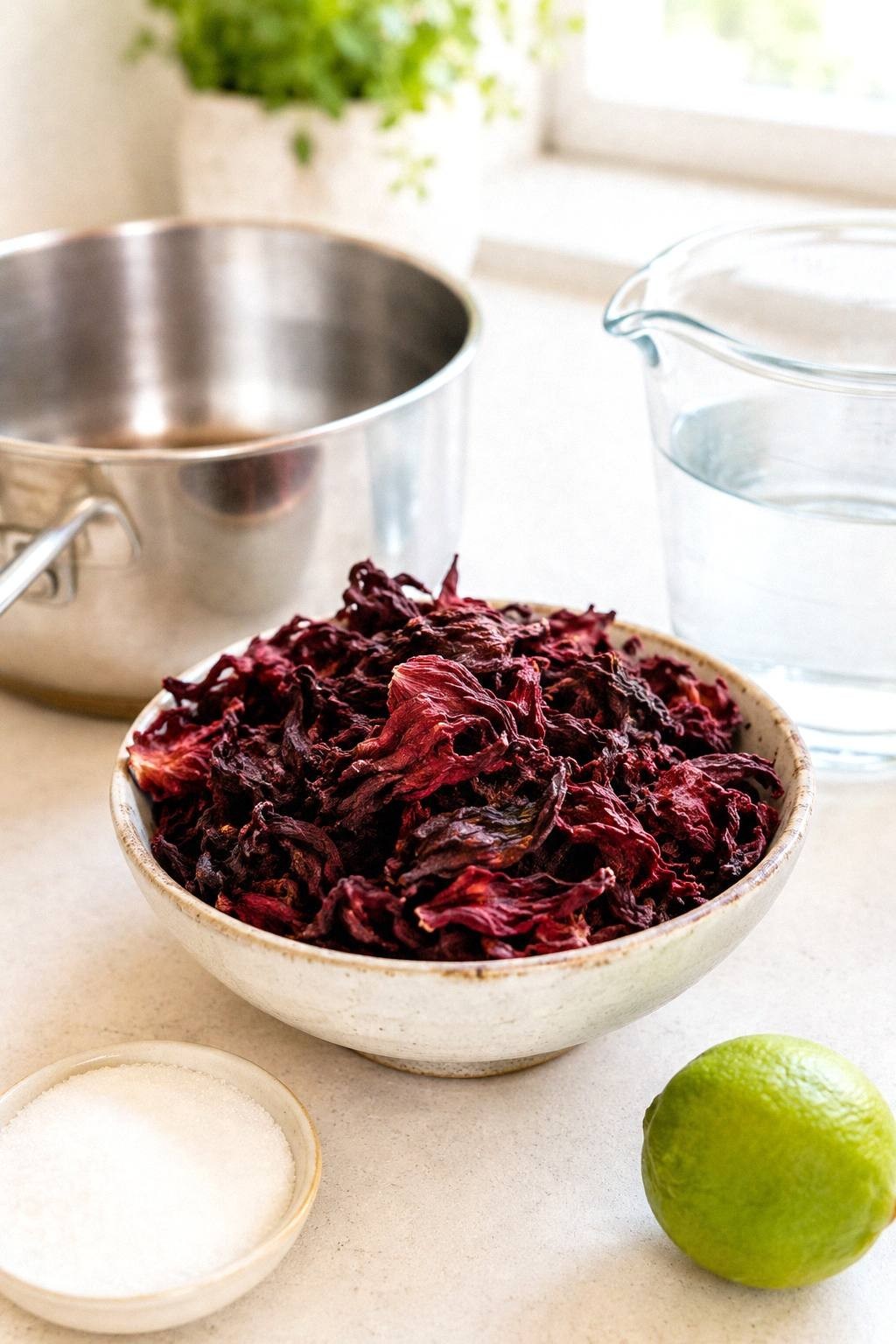
Hibiscus wants a full rolling boil and a 10 minute steep. Cooler water under-extracts the color and leaves the tea thin. Longer steeps don’t make it stronger in a good way, they just stack up the sharpness.
| Batch size | Water | Dried hibiscus | Steep time |
|---|---|---|---|
| 1 quart | 4 cups | 1/4 cup | 10 minutes |
| Half gallon | 8 cups | 1/2 cup | 10 minutes |
| 1 gallon | 16 cups | 1 cup | 10 minutes |
| Concentrate | 2 cups | 1/2 cup | 12 minutes |
The concentrate row is the workhorse for parties. Brew it double strength, chill it, and cut each serving 1:1 with cold water or sparkling water at the glass. It takes up half the fridge space and won’t water down over ice.
How to Brew It
- Bring the water to a full rolling boil. Big bubbles, not a shimmer.
- Add the flowers, stir once, and kill the heat.
- Cover and steep exactly 10 minutes. Set a timer. At 15 minutes the tartness starts shading into harsh.
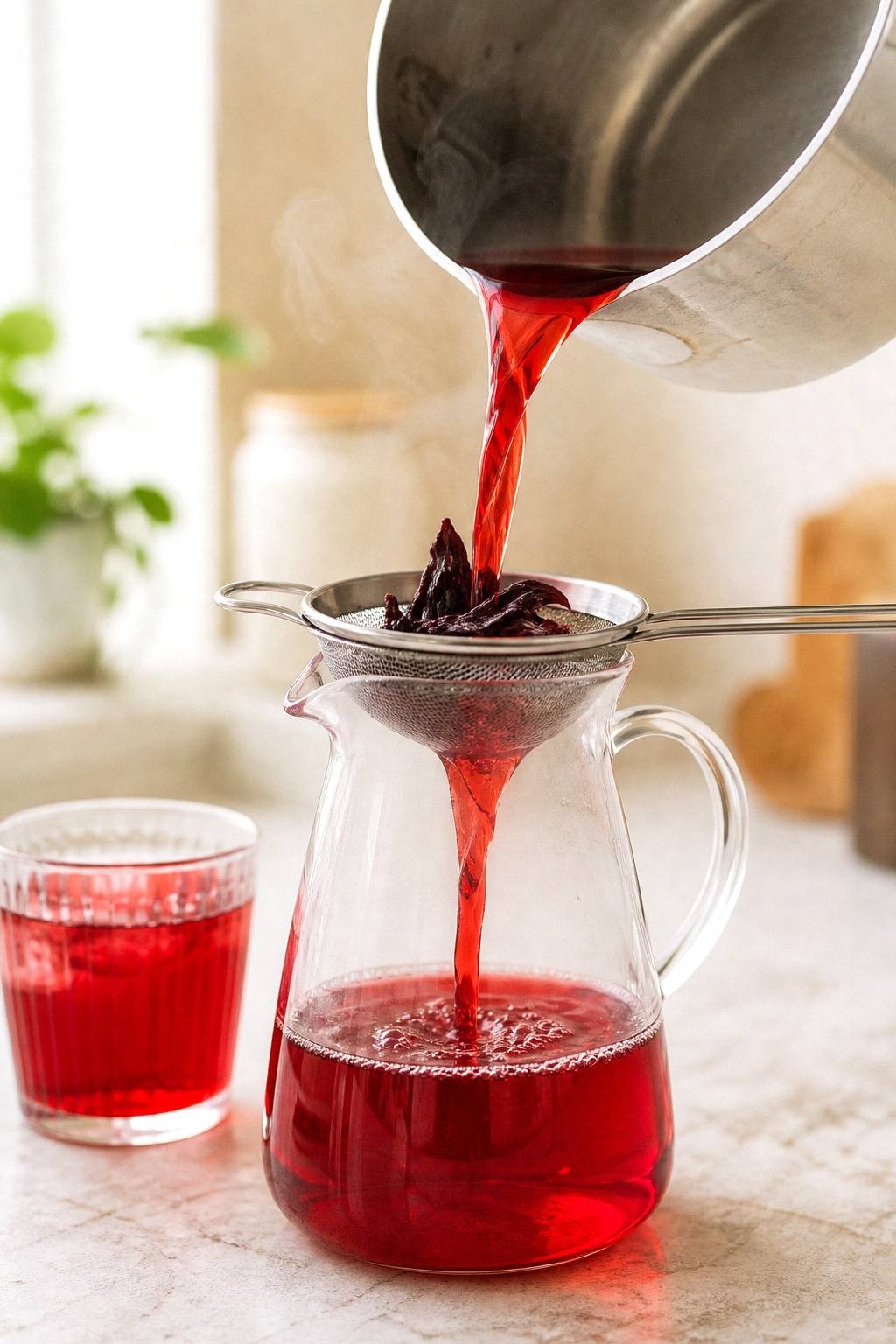
- Strain into a pitcher, pressing the flowers lightly. They hold a surprising amount of liquid.
- Sweeten while warm, then chill.
The color test is your quality check. Done right, the tea is a deep, transparent ruby, like a glass of garnet. If it leans purple, your water is very alkaline, and a squeeze of lime snaps it back to red. If it looks brown, the flowers were old or the steep ran long.
Sweetening Options
Hibiscus needs some sweetness to read as refreshing instead of punishing. How much is personal, but here’s the honest range for a 1 quart batch:
- Cane sugar, 2 to 4 tablespoons. The classic. Dissolves clean and lets the tartness lead. This is how agua de jamaica is usually balanced in Mexico.
- Honey, 2 to 3 tablespoons. Stir it in while the tea is warm or it will sit on the bottom. Adds a floral weight that suits the flower.
- A flavored syrup, 1 to 2 ounces. A lavender simple syrup turns this into a different drink entirely, floral over tart. Ginger syrup works too if you like a little heat behind the cold.
- Nothing. Legitimate choice if you drink unsweetened cranberry juice on purpose. Add extra lime and lots of ice.
Always sweeten warm. Sugar stirred into cold hibiscus tea takes ages to dissolve and leaves the last glass syrupy.
The Sparkling Version
This is the one guests ask about. Brew the concentrate from the table above, chill it completely, then build each glass:
- 4 oz hibiscus concentrate
- 4 oz cold sparkling water
- Squeeze of lime
- Full glass of ice
Pour the concentrate first, then the sparkling water down the side of the glass so it keeps its fizz. It drinks like a dry soda, ruby red with fine bubbles, and it sits comfortably next to the other sparkling iced tea mocktails on a summer table. For a grown-up pour, 1 1/2 oz of gin or blanco tequila slides in without changing anything else.
Pitcher Math for Parties
Plan on 12 oz per guest for the first hour of a hot afternoon, then 8 oz per hour after. For a party of 10 running three hours, that’s roughly 2 gallons if hibiscus is the main pitcher.
The practical version of that math:
- Small gathering, 4 to 6 people: one half gallon batch, plus a backup quart of concentrate in the fridge.
- Party of 10 to 12: one gallon brewed regular strength, one quart of concentrate held back for refills and sparkling pours.
- Big cookout: brew two gallons the night before. Hibiscus holds in the fridge for 4 to 5 days without losing color, which black tea can’t do.
Ice melt is the hidden variable. Brew slightly strong for any pitcher that will sit outside, the same trick that keeps a frozen mocktail from going watery. And if you want a second pitcher with a different personality beside it, a non-alcoholic sangria covers the fruity end while the hibiscus holds down tart.
Where to Buy Dried Hibiscus
Look for flor de jamaica (pronounced ha-MY-ka) at any Mexican or Caribbean grocery. It’s usually in the produce section or spice aisle in cellophane bags, and a bag that brews 8 to 10 quarts typically costs less than two fancy coffees. This is the best value by a wide margin.
Other reliable sources:
- Bulk bins at natural food stores, sold as hibiscus flowers or hibiscus petals.
- Online spice and herb shops, where a pound runs in the mid-teens range and lasts most of a summer.
- The international aisle of bigger supermarkets, sometimes labeled sorrel, the Caribbean name for the same flower.
Buy whole dried calyxes, not tea bags. Bagged hibiscus blends are mostly fine but they’re cut with rose hips and apple, and you can’t control the ratio. Whole flowers should look dark cranberry-red and feel papery, not dusty. Store them in a sealed jar away from light and they keep for a year.
Common Questions
Is iced hibiscus tea caffeinated?
No. Hibiscus is an herbal infusion with no caffeine, which is why it works for all-afternoon pitchers and for kids’ cups at a cookout.
Why did my hibiscus tea come out bitter?
Almost always the steep ran long or the flowers boiled instead of steeping off the heat. Ten minutes, covered, heat off. The flowers keep extracting as long as they’re in the pot, so strain on time.
Can I cold brew hibiscus instead?
Yes, 1/4 cup flowers per quart of cold water, 8 to 12 hours in the fridge. The result is gentler and a little less ruby. I still prefer the hot brew for parties because the color and tartness are fuller, and it’s done in 20 minutes instead of overnight.
Can I reuse the strained flowers?
A second steep gives you maybe half the flavor and color, so I don’t for pitchers. The spent flowers are edible though. Mexican cooks sauté flor de jamaica for tacos after brewing agua fresca from it.