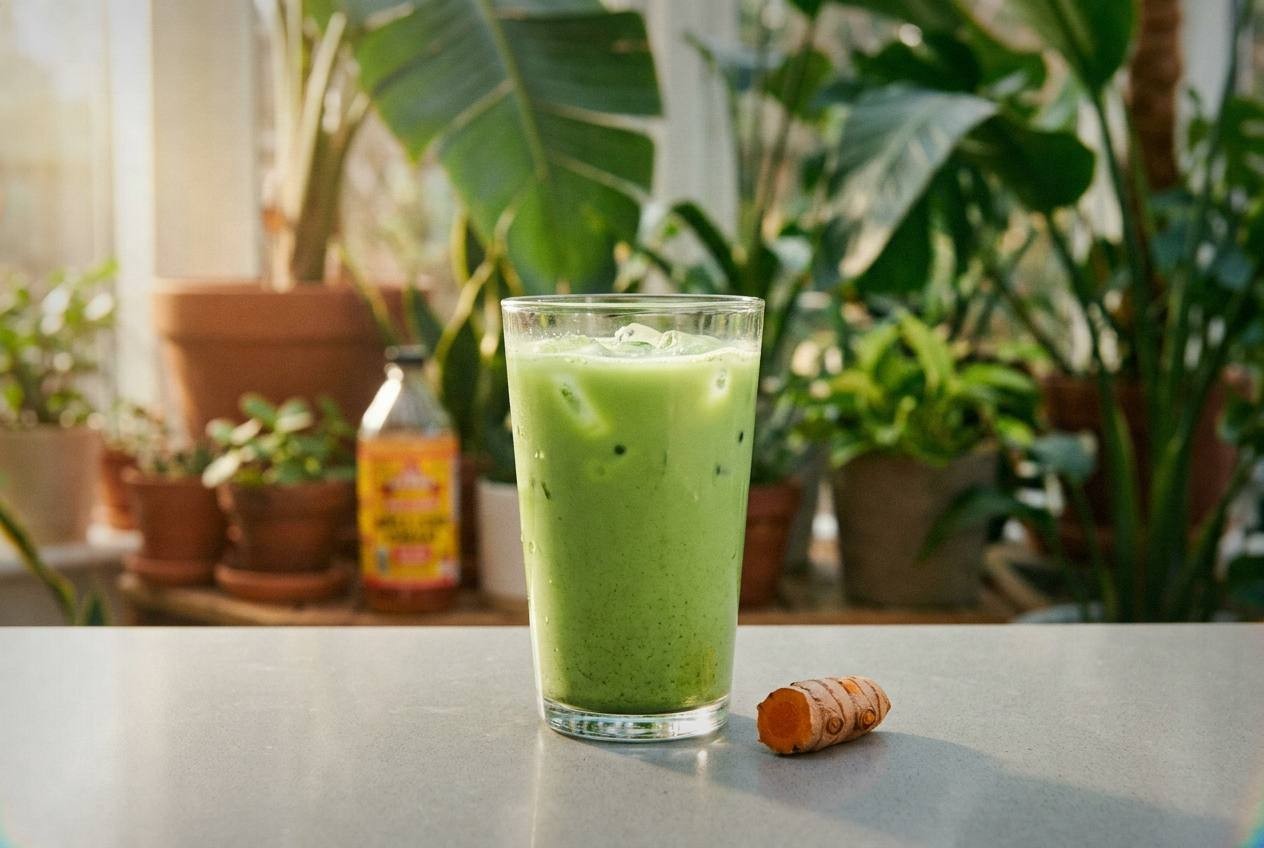
Make a creamy iced matcha latte at home with ceremonial-grade matcha, oat milk, and simple syrup. Ready in 5 minutes flat.
A good iced matcha latte is five minutes and four ingredients. Sift the matcha, whisk it with warm water until it goes glossy, pour it over oat milk and ice. One serving has roughly 45 mg of caffeine paired with 48 mg of L-theanine, which is the amino acid that gives you three to six hours of steady focus instead of the spike-and-crash you get from coffee. The whole thing costs about 75 cents if you buy decent ceremonial-grade matcha in bulk.
At a Glance
| Detail | Info |
|---|---|
| Prep time | 5 minutes |
| Total time | 5 minutes |
| Servings | 1 |
| Difficulty | Easy |
| Key ingredient | Ceremonial-grade matcha |
| Best for | Morning energy, afternoon pick-me-up |
| Flavor profile | Grassy, creamy, slightly sweet |
| Caffeine | ~45 mg (about half a cup of coffee) |
Why This Works Better at Home
Coffee shops charge four to six dollars for an iced matcha latte and most of them use culinary-grade matcha, which is the cheaper stuff meant for baking. It tastes bitter and chalky because the leaves are harvested later in the season when the L-theanine content drops and the catechins spike. Ceremonial grade comes from the earliest spring harvest, shade-grown for three weeks before picking. Those shaded leaves produce more chlorophyll and L-theanine, which is why the color is that deep jade green instead of army green and why the flavor leans sweet and umami instead of astringent.
You will spend about 30 dollars on a tin of good ceremonial matcha. That tin makes 30 to 40 lattes. Do the math.
The Science Behind the Calm Energy
Matcha is not just green tea in powder form. You are consuming the entire leaf, which changes the nutritional math completely. A 2021 review in the journal Current Research in Food Science found that matcha contains 137 times more catechins than standard steeped green tea. The big one is EGCG (epigallocatechin gallate), a polyphenol that researchers at the National Institutes of Health have studied for its antioxidant and neuroprotective properties.
But the real reason people switch from coffee to matcha is the L-theanine. A 2019 clinical trial published in Nutrients showed that matcha consumption reduced stress-related biomarkers in participants under psychosocial stress. The L-theanine slows how your body absorbs the caffeine, so instead of a 90-minute caffeine spike you get a slow, even release over several hours. That is why matcha drinkers describe it as “alert but not wired.”
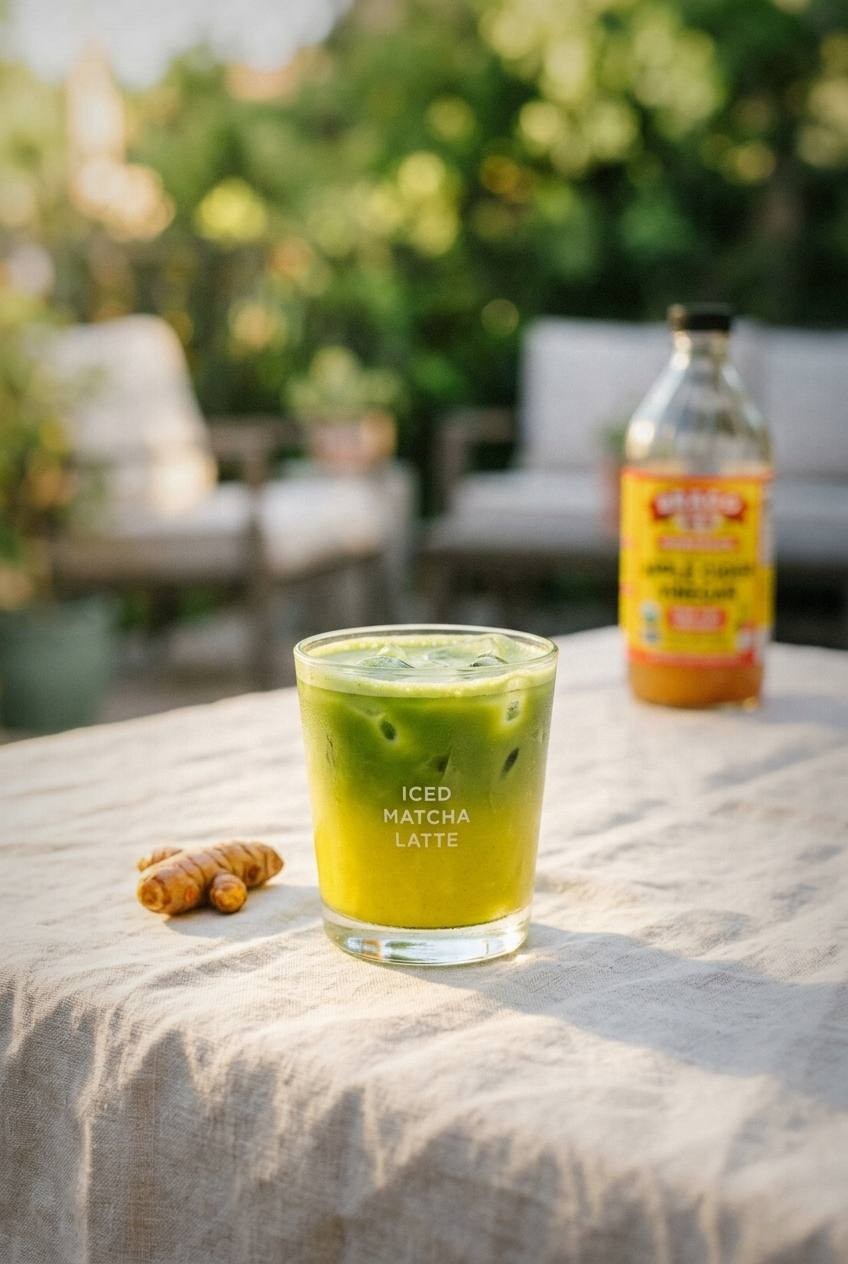
What You Will Need
- 1 1/2 teaspoons ceremonial-grade matcha powder
- 2 oz warm water (170F / 77C, not boiling)
- 1 cup cold oat milk (or any milk you prefer)
- 1 to 2 teaspoons simple syrup or honey (optional)
- Large ice cubes
On matcha grade: Ceremonial grade is not marketing. It is a real distinction based on harvest timing, shade growing, and stone grinding. Culinary grade works fine in smoothies and baked goods where other flavors mask it. For a latte where the matcha is front and center, ceremonial is worth the difference. I Am a Food Blog and Love and Lemons both stress this point in their recipe notes.
On milk: Oat milk is the consensus pick across recipe developers because its natural sweetness and body complement matcha’s earthy grassiness. Feel Good Foodie tested several and landed on oat. Whole dairy milk works if you want the richest version. Almond milk is thinner and lets the matcha flavor dominate.
On water temperature: 170F is the target. Boiling water scorches matcha and turns it bitter. If you do not have a thermometer, bring water to a boil and let it sit for two minutes.
How to Make It
Sift 1 1/2 teaspoons of matcha through a fine mesh strainer into a small bowl. This takes ten seconds and it matters. Matcha powder compresses in the tin and forms clumps that will not dissolve no matter how aggressively you whisk.
Pour 2 oz of warm water (170F) over the sifted matcha. Using a bamboo chasen or small whisk, whisk vigorously in a W or zigzag pattern for 15 to 20 seconds. You are looking for a smooth, glossy paste with a thin layer of microfoam on top. No dry clumps visible.
If you want sweetener, stir in 1 to 2 teaspoons of simple syrup or honey now while the matcha is warm. Honey dissolves poorly in cold liquid, so this is the window.
Fill a tall glass about two-thirds with large ice cubes. Not crushed ice. Large cubes melt slower, so your latte stays concentrated instead of turning into matcha-flavored water after five minutes.
Pour 1 cup of cold oat milk over the ice.
Slowly pour the matcha concentrate over the back of a spoon so it floats on the milk. You will get that layered green-over-white look that photographs well. Or just pour it straight in and stir. Both taste the same.
Drink immediately. Matcha separates and oxidizes within an hour or two. The bright green fades and the flavor flattens.
Variations Worth Trying
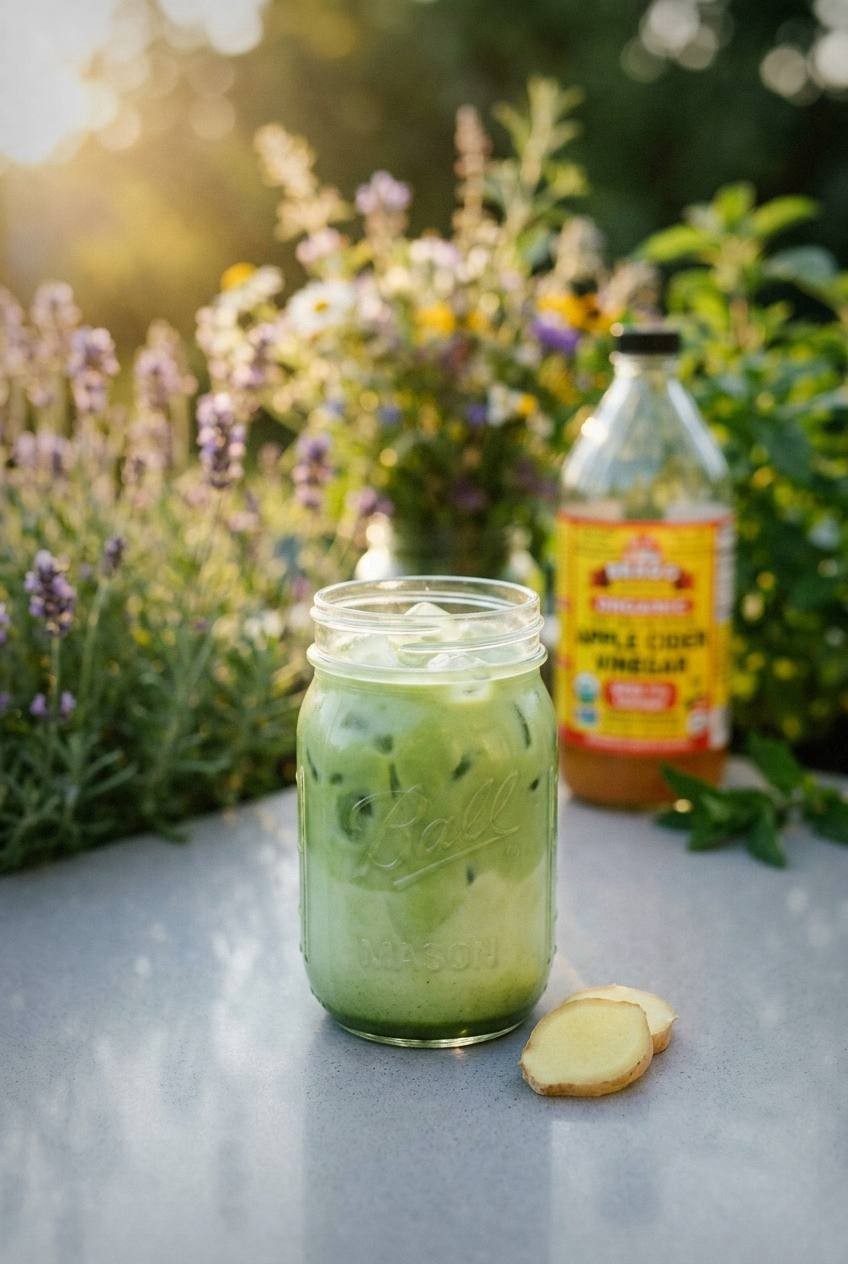
Lavender matcha latte: Add 1 tablespoon of lavender simple syrup instead of regular sweetener. The floral note sits behind the matcha’s grassiness in a way that works surprisingly well. This is the Starbucks-inspired variation that is all over Pinterest right now.
Strawberry matcha: Blend 3 fresh strawberries with 1 tablespoon of simple syrup. Pour the pink strawberry layer first, then ice, then matcha. The color contrast is striking and the fruit sweetness balances matcha’s earthiness.
Coconut matcha: Swap the oat milk for full-fat coconut milk. Richer, more tropical, pairs well with a squeeze of lime on top.
Vanilla matcha: Add 1/4 teaspoon of real vanilla extract to the oat milk before pouring. Rounds out the flavor and adds a bakery-like warmth.
If you are interested in other energy-boosting drinks without the coffee jitters, our herbal tea recipes for energy use ginseng and peppermint for a completely caffeine-free route. And for another green tea approach, the green tea wellness tonic leans more into the detox angle with added ginger and lemon.
Before You Start
Buy from a Japanese supplier. Ippodo, Marukyu Koyamaen, and Encha are consistently recommended across food blogs and tea communities. Amazon matcha is a gamble. The good stuff comes in sealed tins, not resealable bags.
Store it in the freezer. Matcha oxidizes fast once opened. Keep the tin in the freezer between uses and it will stay vibrant for two to three months. At room temperature, it starts going stale within a few weeks.
Use more matcha than you think. Cold mutes flavor. What tastes perfectly balanced hot will taste weak over ice. That is why this recipe uses 1 1/2 teaspoons instead of the 1 teaspoon most hot matcha recipes call for. Preppy Kitchen and Matcha Sunday both make this point in their iced latte guides.
Invest in a chasen if you make this regularly. A bamboo matcha whisk costs about eight dollars and it breaks up clumps better than anything else. The fine tines create microfoam that a regular whisk or fork cannot match. That said, a handheld milk frother works in a pinch.
Common Questions
Is matcha healthier than coffee?
Different, not necessarily better. Matcha has more antioxidants (137 times the catechins of steeped green tea per a 2021 review in Current Research in Food Science), less caffeine per cup, and the L-theanine smooths out the energy curve. Coffee has more caffeine per serving and its own set of antioxidants. If you are switching because coffee makes you jittery, matcha is a legitimate alternative.
Can I use culinary-grade matcha for lattes?
You can, but you will taste the difference. Culinary grade is more bitter and less nuanced. In a latte where the matcha flavor is front and center, that bitterness comes through. Save culinary grade for smoothies, baking, and matcha ice cream where sugar and other flavors cover for it.
Why does my matcha taste bitter?
Three common causes. Your water was too hot (above 175F scorches it). Your matcha is old or was stored at room temperature (oxidation turns it bitter). Or you are using culinary grade when the recipe calls for ceremonial. Fix all three and the bitterness disappears.
How much caffeine is in an iced matcha latte?
About 45 mg from 1 1/2 teaspoons of matcha. That is roughly half a cup of drip coffee. But the L-theanine changes how you experience it. Instead of a quick hit, the energy comes on gradually and lasts longer. Most people describe it as focused alertness without the restlessness.

Camille writes about botanical drinks, herbal cocktails, and the old plant wisdom that makes them work. Most days you'll find her in the garden or the kitchen, turning herbs into something worth sipping.