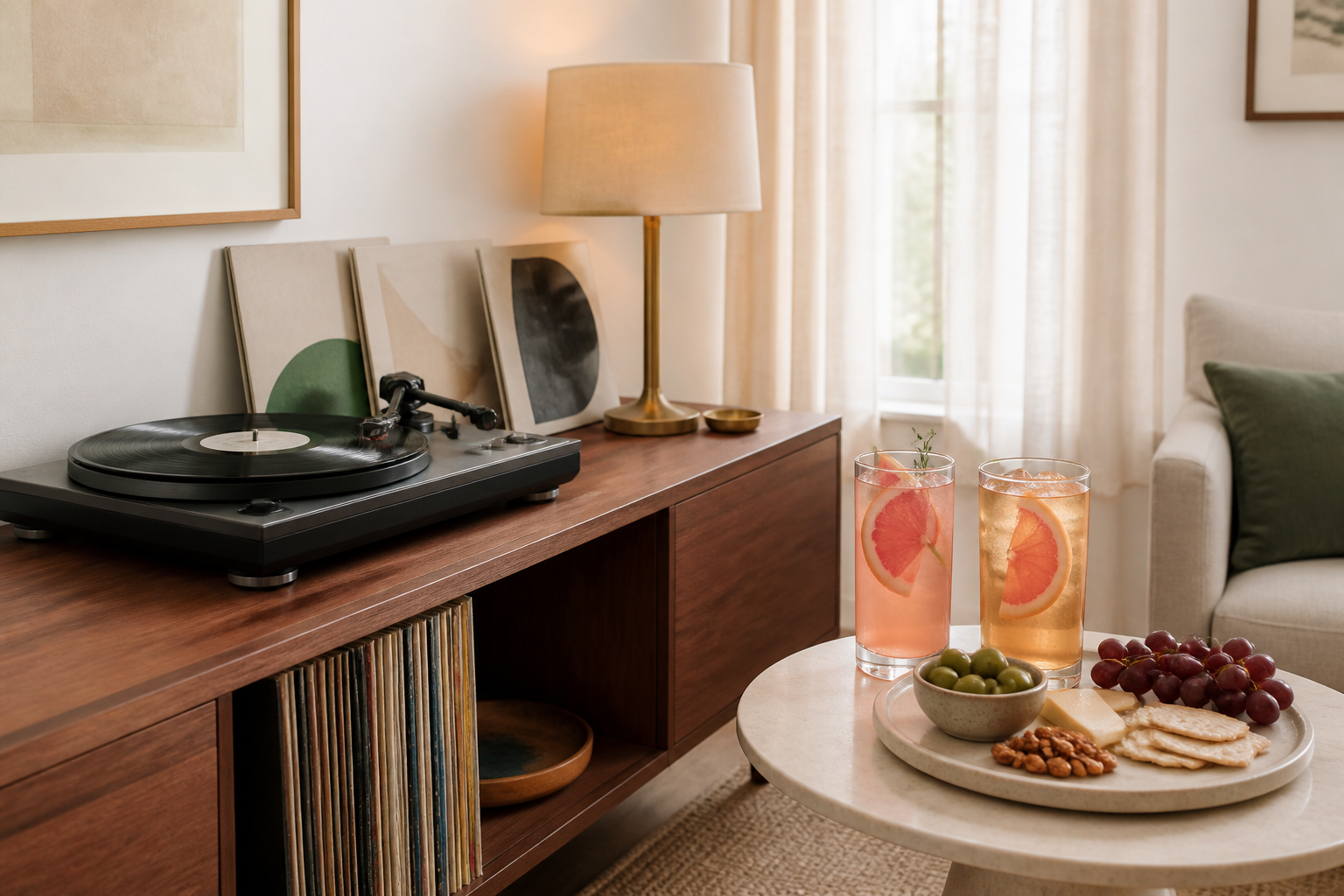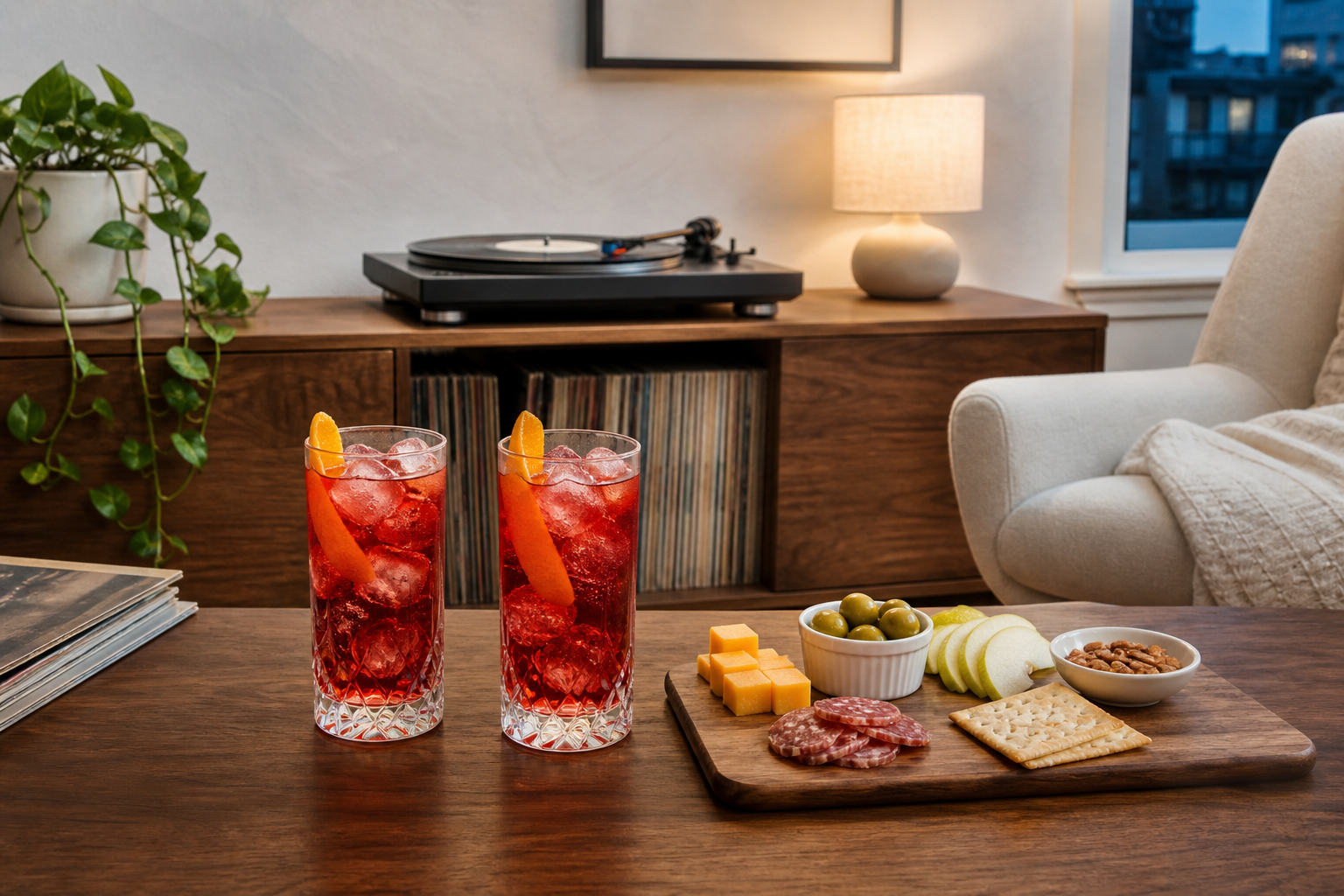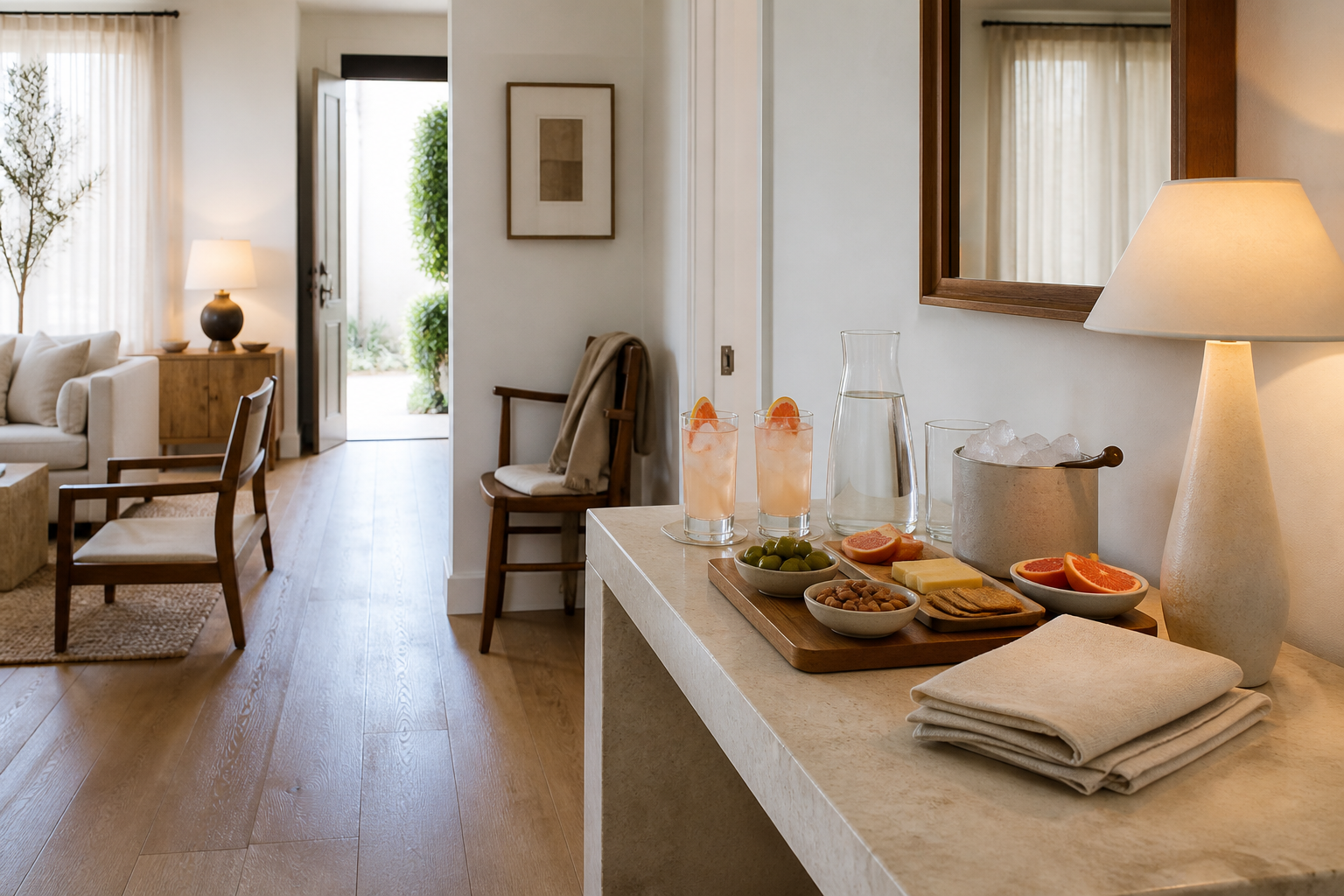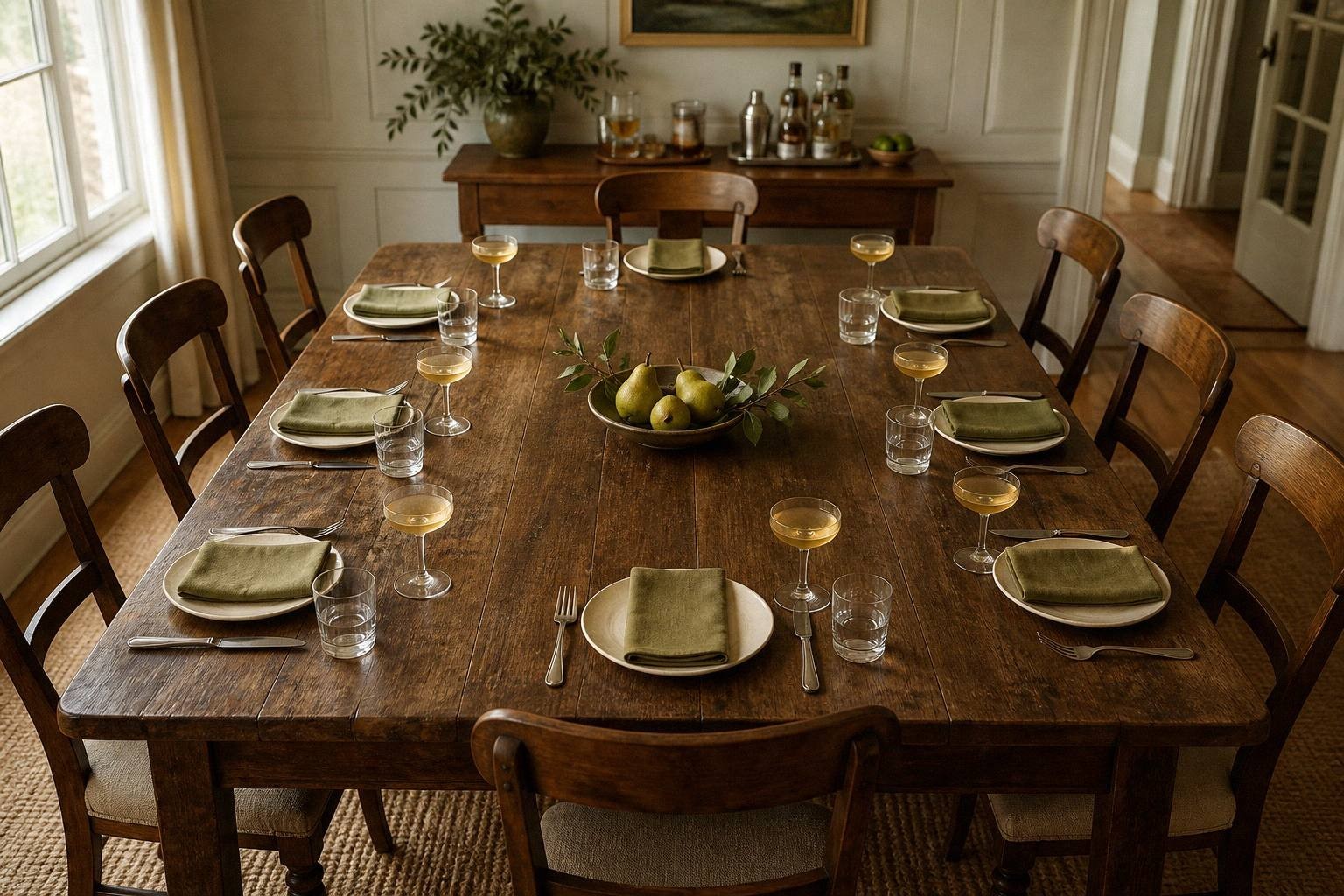
The easiest jazz cocktail pairing starts with mood, not a musician’s name. Serve a cool, bright highball while people arrive, move to a warm stirred drink when everyone settles in, and finish with a lower-proof pour as the room gets quieter. Give every alcoholic drink an equally considered zero-proof counterpart.
For a broader plan for drinks, bites and music at home, see cocktail night at home . For a record-focused room and hosting plan, use the vinyl listening party guide .
This isn’t an artist endorsement or a claim that one drink “belongs” to a recording. It is a way to make the glass, sound, light, and pace feel like one evening.
Pair mood and texture, not celebrity
Music and drinks share a useful vocabulary. Both can feel bright, dry, warm, bitter, plush, quick, or unhurried. Those are practical pairing cues because they tell you what the room will feel like.
Use four questions:
- Does the music invite conversation, or does it ask for attention?
- Is the drink crisp and tall, or slow and spirit-forward?
- Will the snack support the drink without making noise over the record?
- Does the next pairing lower or raise the room’s energy?
Choose two pairings for a small night, not all four. One arrival drink and one seated drink create a complete arc without turning the evening into a tasting exam.
Cool and bright: the highball pairing
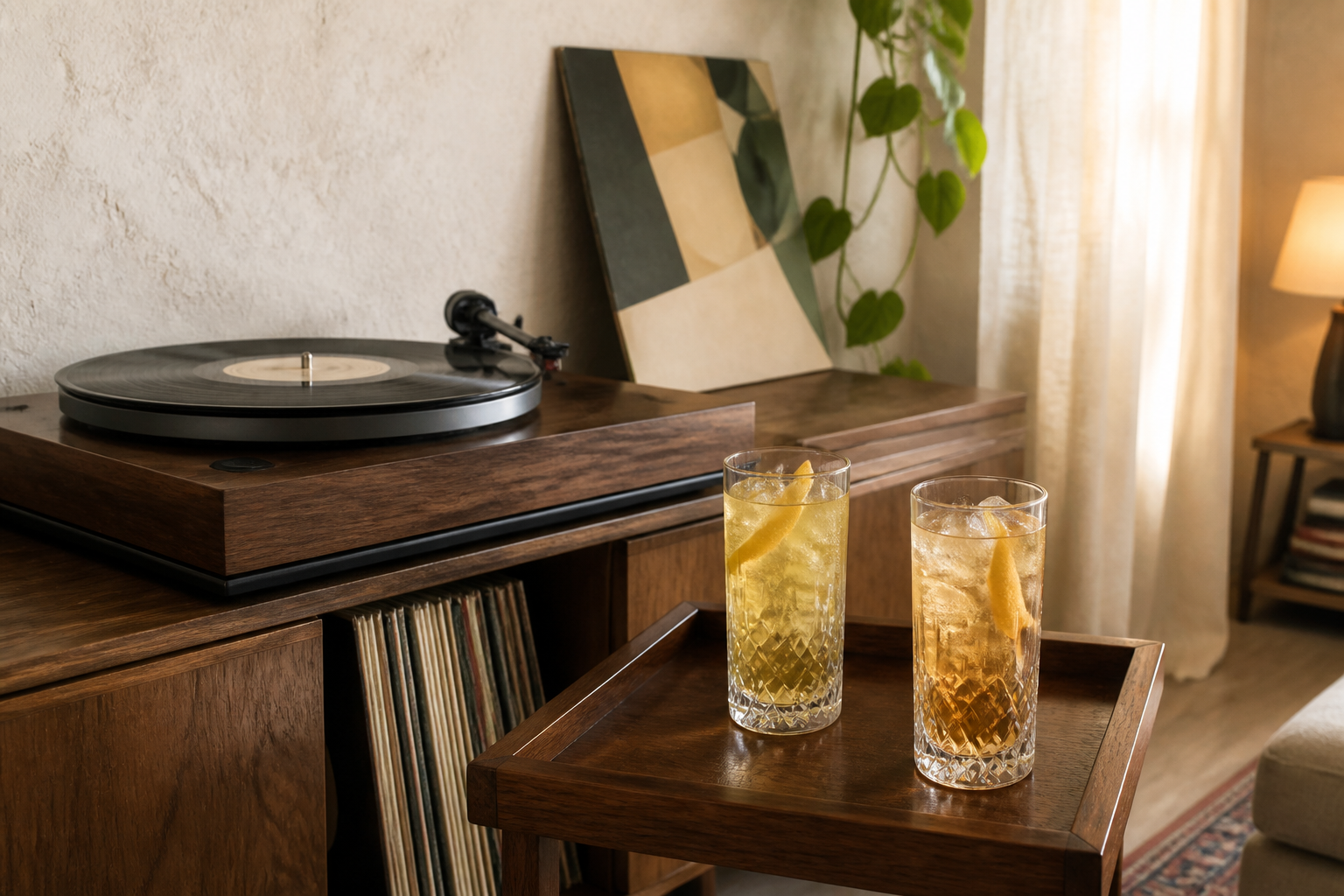
A highball has lift. Cold bubbles, a long glass, and bright citrus suit an opener with space and movement. Try it with the airy confidence of Miles Davis’s Kind of Blue, the clean rhythmic shapes of Dave Brubeck’s Time Out, or any record that lets people enter the room without feeling they have interrupted it.
Whisky citrus highball
- 1 1/2 oz blended whisky
- 1/2 oz fresh lemon juice
- 1/4 oz honey syrup
- 3 oz cold club soda
- Lemon peel
Add whisky, lemon, and honey syrup to an ice-filled highball. Stir briefly, top with club soda, and express the lemon peel over the glass.
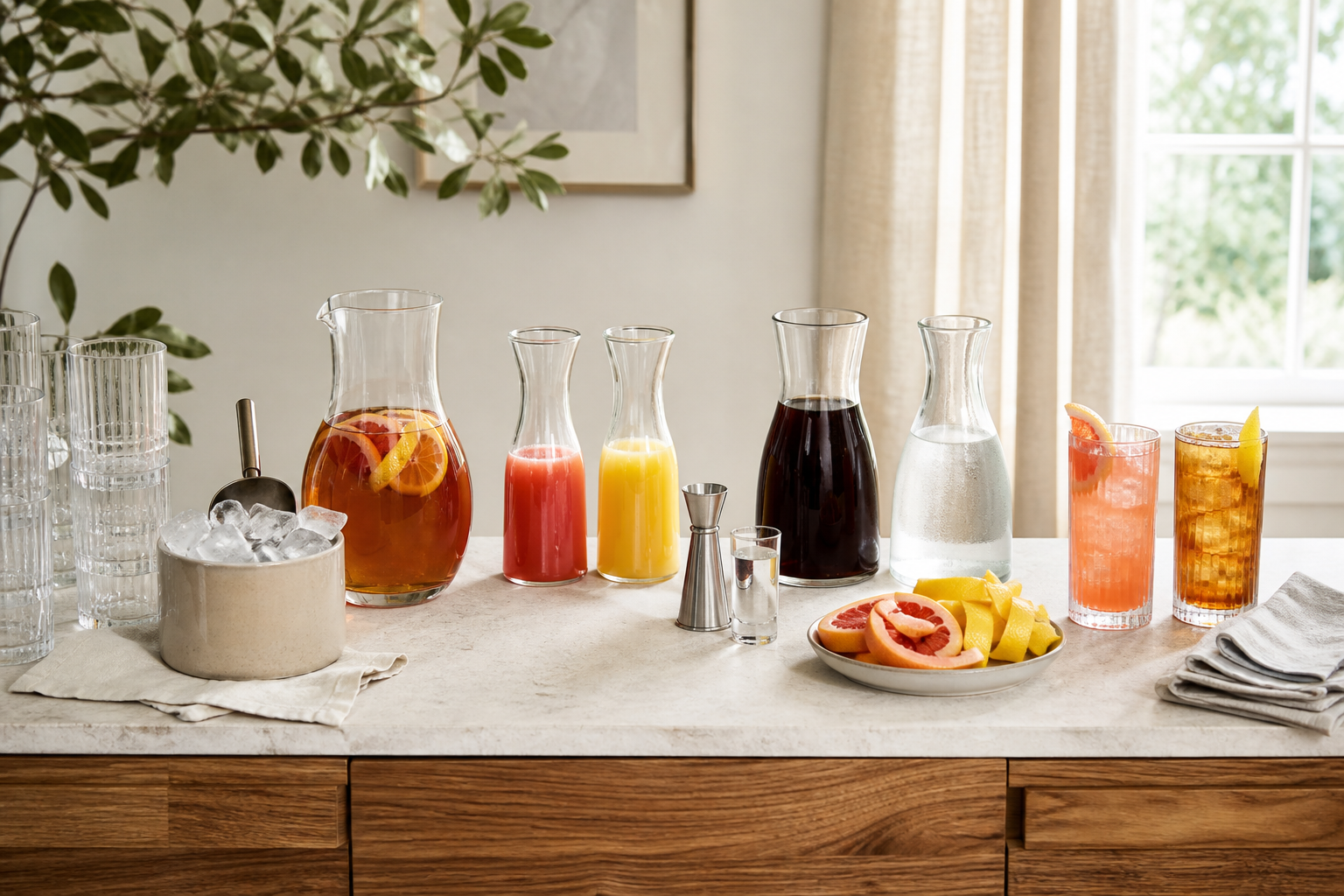
Zero-proof ginger citrus highball
- 1 oz strong chilled black tea
- 1/2 oz fresh lemon juice
- 1/4 oz honey syrup
- 2 oz ginger beer
- 1 oz club soda
- Lemon peel
Build it in the same glass, with the same clear ice and lemon peel. The tea supplies tannin, ginger adds heat, and soda keeps the finish light. It should look like a deliberate second route, not the children’s table.
Quiet bite: salted almonds or firm cheese on plain crackers.
Warm and unhurried: the Old Fashioned pairing
A stirred whiskey drink asks for a slower side. Bitterness, orange oil, and dilution unfold over time, so this pairing fits a record people intend to hear rather than use as background. Try the late-night intimacy of Chet Baker Sings or the relaxed interplay of Ella and Louis.
Maple Old Fashioned
- 2 oz bourbon or rye
- 1 teaspoon maple syrup
- 2 dashes aromatic bitters
- Orange peel
Stir the whiskey, maple, and bitters with ice until chilled. Strain over one large cube in a rocks glass and express the orange peel.
Zero-proof black tea Old Fashioned
- 2 oz strong chilled Assam tea
- 1/2 oz unsweetened tart cherry juice
- 1 teaspoon maple syrup
- 2 dashes nonalcoholic aromatic bitters, optional
- Orange peel
Stir with ice and strain over one large cube. Tart cherry gives the tea weight and acidity without making the drink taste like soda.
Quiet bite: a mushroom pastry square or aged Gouda. The savory, toasted flavors can stay beside the drink without taking over.
Dry and conversational: the aperitif pairing
This is the glass for the part of the evening when the music and the conversation share the room. Choose cool bossa nova, vocal jazz, or a piano trio that feels present without demanding silence. Getz/Gilberto is an obvious editorial starting point, but the idea works with whatever record gives the group room to talk.
Fifty-fifty martini
- 1 1/2 oz gin
- 1 1/2 oz dry vermouth
- 1 dash orange bitters
- Lemon twist or olive
Stir with ice, strain into a chilled small coupe or Nick and Nora glass, and garnish once. Keep the portion modest and the vermouth refrigerated after opening.
Zero-proof dry citrus aperitif
- 1 1/2 oz chilled white tea
- 1 oz nonalcoholic aperitif
- 1/2 oz verjus or fresh lemon juice
- 1 oz tonic water
- Lemon twist or olive
Stir the tea, aperitif, and verjus with ice. Strain into the same style of chilled glass and add tonic. Taste the nonalcoholic aperitif first because sweetness varies by brand.
Quiet bite: olives, white bean crostini, or a thin slice of firm cheese.
Late and low: the nightcap pairing
The last pairing should make the room easier, not restart the party. Choose a small pour, lower the lights, and play a final side with fewer hard edges. Bill Evans’s Waltz for Debby or Duke Ellington and John Coltrane’s self-titled album can carry that quieter finish.
Amontillado and orange
- 2 1/2 oz amontillado sherry
- 1 dash aromatic bitters
- Orange peel
Pour over one large cube or serve chilled in a small wine glass. Add the peel and leave it alone.
Zero-proof roasted pear tea
- 3 oz strong chilled roasted barley tea
- 1 oz pear nectar
- 1/4 oz fresh lemon juice
- Orange peel
Stir with ice and strain into a small wine glass over one cube. The roasted tea makes the pear taste less sweet and gives the last glass some depth.
Quiet bite: one square of dark chocolate or a few toasted walnuts.
Build a 60-to-90-minute listening arc
One album can be the whole plan. Two records work when the first welcomes conversation and the second gets a more attentive listen.
| Time | Music job | Drink job | Host move |
|---|---|---|---|
| 0 to 15 minutes | Open, social, easy entry | Highball or aperitif | Greet, point out both drink paths, then sit down |
| 15 to 35 minutes | First focused side | Let the first glass carry | Bring one quiet snack; do not start a new recipe |
| Side change | Natural intermission | Water and refills | Flip the record, clear empty glasses, check the volume |
| 40 to 65 minutes | Warmer or more attentive set | Stirred drink or zero-proof counterpart | Lower one light, keep the room still |
| 65 to 90 minutes | Gentle final side | Small nightcap or tea | Put out water and one last bite |
Do not shuffle the whole library. Choosing the sequence before anyone arrives is what lets you listen too.
Set the volume for people, not speakers
Start lower than you think. The arrival volume should let two people talk without leaning close or raising their voices. Once everyone has settled and agreed to listen, raise it a little if the room and equipment allow.
Speaker placement and room size matter more than an arbitrary number on a volume knob. Sit where guests will sit and listen to a full song before they arrive. If cymbals feel sharp or the bass swallows the conversation, adjust placement or volume rather than asking the room to endure it.
Keep the turntable on a level, dry surface away from the pour zone. Drinks belong on a tray or side table, not on the record console. The National Archives recommends protecting audio recordings and playback equipment from heat, humidity, water, and sunlight; its audio storage guidance is written for collections, but the separation principle is useful at home too.
Use glassware that supports the pace
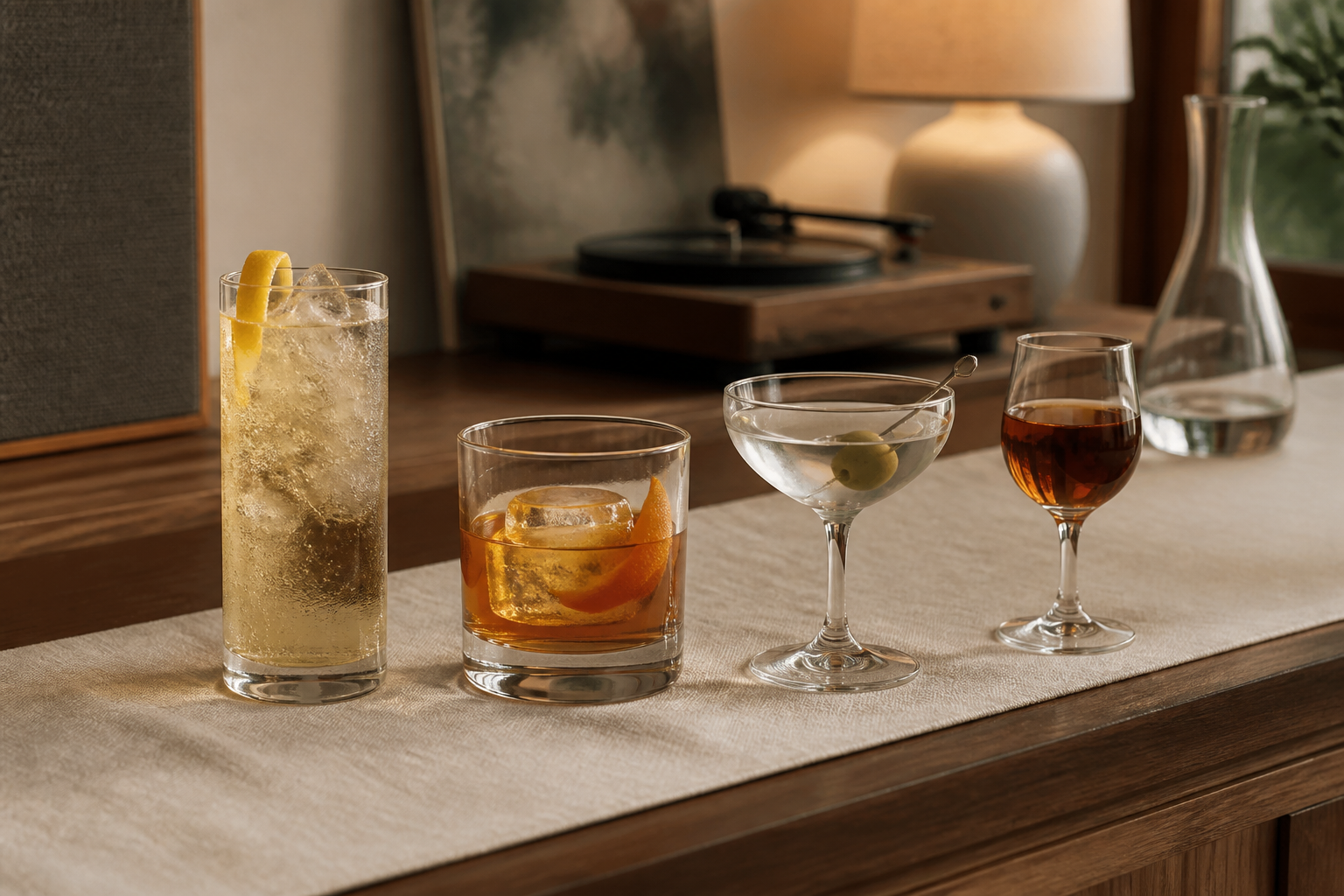
- Highball: cold, bright, and easy during arrivals
- Rocks glass: stable for a seated, slower drink
- Small coupe or Nick and Nora: best when the drink is served up and the guest is settled
- Small wine glass: right for sherry, tea, or a lower-volume final pour
Our vintage glassware guide explains what to inspect before serving drinks in thrifted pieces.
Measure alcoholic pours instead of free-pouring in a dim room. The National Institute on Alcohol Abuse and Alcoholism explains that one U.S. standard drink contains about 0.6 fluid ounces of pure alcohol, though a cocktail may contain more than one depending on its ingredients. See NIAAA’s standard drink guide . Keep water visible, serve food, and make the zero-proof route just as easy to choose.
Serve snacks the record can survive
Choose one-hand bites that do not crunch loudly, drip, or leave greasy fingers:
- Firm cheese on small crackers
- Olives with picks
- Mushroom pastry squares
- White bean crostini
- Toasted nuts in a small bowl
- One square of chocolate with the final pour
Avoid shell-on nuts, towering sandwiches, sticky wings, and anything that sends guests repeatedly to the sink. The easy board-and-bites menu gives exact quantities for six to twelve people.
Listening-party checklist
- One or two records chosen before guests arrive
- Sleeves and vinyl stored away from the pour zone
- One arrival drink and one equal zero-proof version
- Water visible and easy to reach
- One quiet board or bite
- Seats angled toward sound, not the television
- A side-change plan for refills
- Warm task light at the bar and softer light near the seats
- Unidentifiable record sleeves in any party photography
Frequently asked questions
What cocktails go with jazz?
Choose by mood. Highballs suit bright, open records; stirred whiskey drinks suit slower listening; dry aperitifs leave room for conversation; and small lower-proof pours work for the final side.
How many records do I need for a listening party?
One album is enough for a focused evening. Two records comfortably fill 60 to 90 minutes with an arrival period and side-change intermissions.
Can I use a playlist instead of vinyl?
Yes. Keep the same arc: open and social, warmer and more attentive, then a gentle finish. Build the queue before guests arrive so choosing the next song does not become the night’s main activity.
Should everyone stay quiet during a listening party?
Set the expectation in the invitation. Some nights are conversation with records; others include one side everyone listens to closely. Guests are more comfortable when they know which kind of night you planned.
How do I include guests who do not drink alcohol?
Give each pairing a zero-proof drink with equal glassware, garnish, and placement. Do not hide it in the refrigerator or make someone ask for an alternative.
Pour something good and play the whole side
The grown-up feeling does not come from a rare bottle or a collectible pressing. It comes from choosing the record, making two thoughtful drink paths, putting the snacks within reach, and staying in the chair when the music begins.
That is a late-night listening party worth repeating.