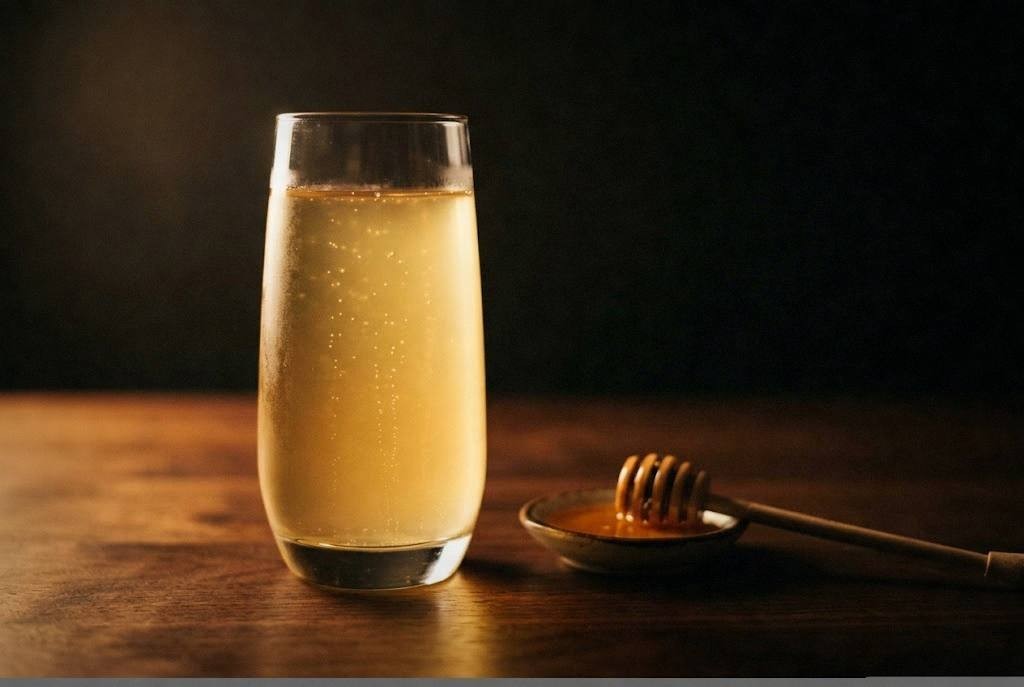
Jun tea is the honey-fed kombucha alternative serious brewers swear by. Learn how to brew this silky, floral ferment at home.
Pour a glass of jun on a warm afternoon and the first thing you notice is what it is not. It is not sour the way kombucha can be sour. It is not sharp, not vinegary, not demanding. Jun is lighter. Floral. There is a softness to the carbonation that reads almost delicate against the green tea base, and underneath all of it, a honey sweetness that does not disappear during fermentation so much as transform into something quieter and more complex.
Kombucha brewers who try it tend to go quiet for a moment, then start asking questions.
What Jun Tea Actually Is
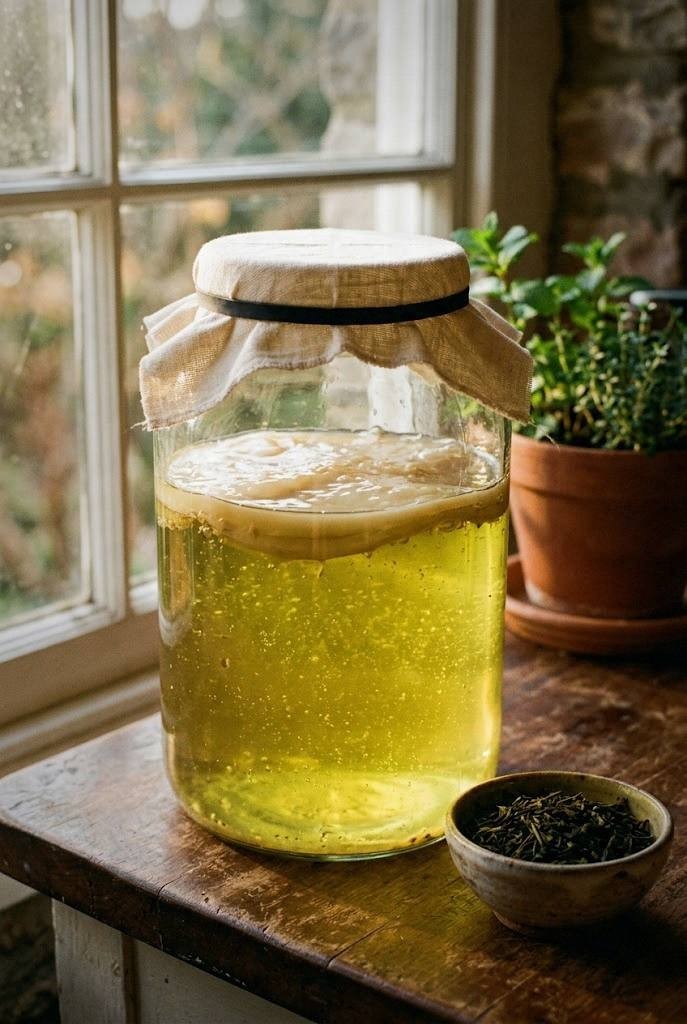
Jun tea is a fermented beverage made from green tea and raw honey, cultured with a specific symbiotic colony of bacteria and yeast called a jun SCOBY. The origin story most often repeated traces it to Tibetan monks, though food historians are skeptical. The documentary evidence is thin, and the drink does not appear prominently in historical Tibetan culinary records. What is more likely true is that jun represents a regional or artisanal fermentation tradition that moved westward through small fermentation communities, gaining the Tibetan mystique somewhere along the way.
Regardless of provenance, the drink is real, the culture is distinct, and the result is measurably different from kombucha.
The key differences come down to three things. First, jun uses green tea rather than black. Green tea is lower in tannins, lighter in body, and carries floral and grassy notes that translate directly into the finished ferment. Second, jun is sweetened with raw honey rather than white sugar. Raw honey brings its own bacterial and enzymatic profile to the process, which interacts with the jun culture in ways that refined sugar simply cannot replicate. Third, the jun SCOBY itself is a different culture from a standard kombucha SCOBY. The two are not interchangeable, despite what you may read on fermentation forums. A kombucha SCOBY can adapt to honey over time, but it will not produce the same flavor or culture activity as a true jun SCOBY raised on honey from the start.
The Recipe
This batch makes one gallon, which yields roughly eight 16-ounce servings.
What you need:
- 8 cups filtered water
- 2 tablespoons loose-leaf green tea (sencha, dragonwell, or gunpowder all work well)
- 1 cup raw honey
- 1 jun SCOBY with 1-2 cups starter liquid from a previous batch
- 1-gallon wide-mouth glass jar, clean and free of soap residue
Step by Step
Brew the tea carefully. Green tea is sensitive to temperature. Heat your water to 175°F, not a full boil. Steep the loose-leaf tea for 3 minutes, then remove it. Overbrew it and the tannins spike, which makes the finished jun bitter and drying.
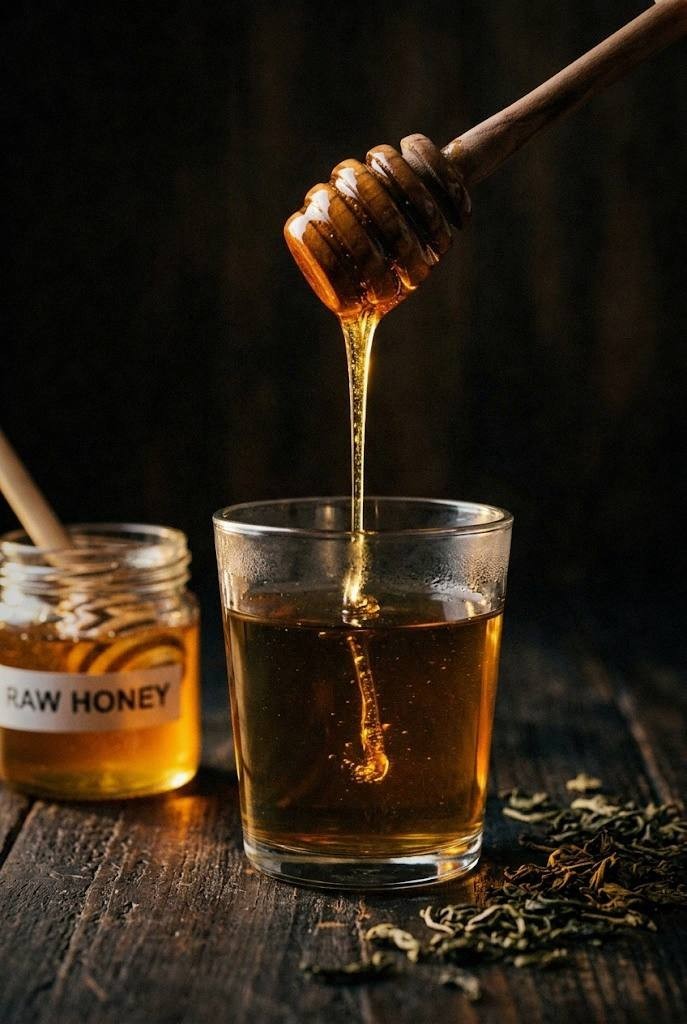
Cool completely before adding honey. This is the step that trips people up. Raw honey above 95°F begins losing its enzymatic activity. Above 140°F the damage is significant. Let your brewed tea sit until it reaches room temperature, which takes 1-2 hours on the counter or can be sped up by placing the pot in an ice bath. Once it is cool, under 90°F, stir in the honey until it dissolves fully. Do not rush this.
Add the SCOBY and starter liquid. Pour the cooled sweetened tea into your clean 1-gallon jar. Gently lower in the jun SCOBY and add your starter liquid. The starter acidifies the tea immediately, which protects the batch from unwanted microbial competition during the early days of fermentation.
Cover and leave it alone. Secure a breathable cover over the jar opening. Place it somewhere with stable temperature between 68-78°F, away from direct light. Jun ferments slightly cooler than kombucha, which tends to prefer 75-85°F. This matters if you are sharing shelf space with an existing kombucha setup.
Taste starting at day 5. Jun moves quickly. By day 5 you should have a lightly effervescent, pleasantly tart brew with floral and honey notes still present. By day 7 it will be more tart and less sweet. Some batches in warm rooms are done by day 4. Taste daily once you are in the window and pull it when the balance is right for you.
Reserve your starter. Before bottling, remove the SCOBY and measure out 1-2 cups of finished jun to use as starter for your next batch. Keep both in a covered glass container in the refrigerator if you are not brewing again immediately.
Jun vs. Kombucha: The Real Differences
The comparison comes up constantly, and it is worth being specific rather than just saying “it is lighter.”
Flavor: Kombucha made with black tea has a more assertive base: earthy, slightly tannic, with a vinegar edge that becomes more pronounced as fermentation extends. Jun is softer at baseline. The green tea brings grassy and floral notes, and raw honey adds a distinct sweetness that does not fully ferment out. The result is a drink that reads more like a botanical tonic than a sour ferment.
Fermentation temperature: Kombucha runs best in the mid-70s to low 80s Fahrenheit. Jun prefers the cooler end of that range, and can ferment successfully at temperatures that would slow a kombucha batch considerably. This makes jun particularly well-suited to spring and fall brewing when kitchen temperatures fluctuate.
Culture specificity: The jun SCOBY is adapted to honey. Its bacterial and yeast populations have been selected over generations to work with honey’s unique sugar profile and antimicrobial compounds. Feeding a jun SCOBY refined sugar long-term degrades the culture. The reverse is also true: a kombucha SCOBY placed in a honey-sweetened environment will struggle initially, and some strains never fully adapt.
Alcohol content: Both hover in the low range for home ferments, typically 0.5-3% depending on fermentation time and honey quantity. Jun is not inherently lower in alcohol than kombucha, though the lighter flavor can make it seem that way.
Second Fermentation and Serving
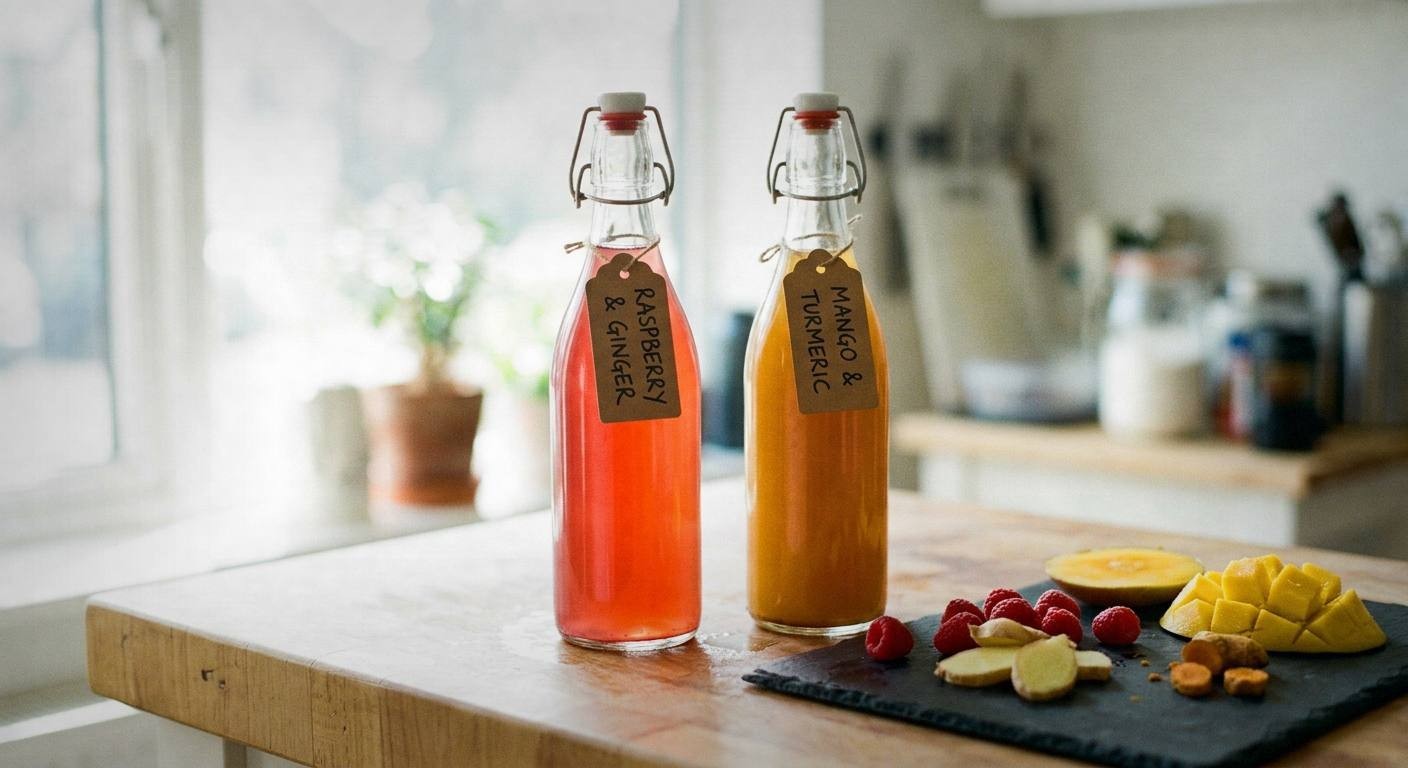
Jun rewards a second fermentation. Once you have bottled the finished brew, leave the sealed swing-top bottles at room temperature for 24-48 hours before refrigerating. This builds carbonation and allows added flavors to meld into the base.
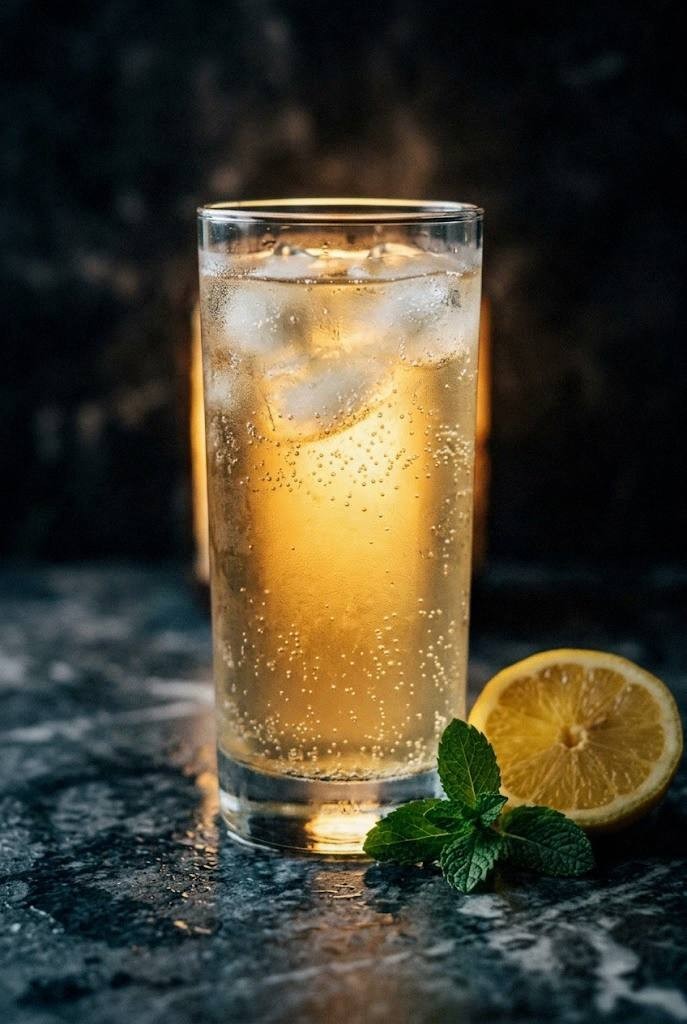
For spring and summer, cold-serve jun is the move. The floral honey quality reads best when chilled, and the lighter carbonation is refreshing rather than aggressive. Some additions that pair cleanly with the green tea base:
- Fresh ginger and lemon (a narrow strip of zest per bottle, not juice: juice muddies the color and can slow second fermentation)
- Cucumber and mint, added as a thin slice and two leaves per bottle
- Dried lavender, just a pinch. It amplifies the floral character without tipping into perfume.
- Rose hip pieces for a subtle tartness and a pink tint
A word on honey variety for second fermentation additions: the honey you used in the primary ferment already flavored the base. You do not need to add more sweetness at this stage. Let the additions be about botanical complexity rather than residual sugar.
Jun keeps well in the refrigerator for 2-3 weeks after bottling. The flavor continues to develop slowly even when cold, so a bottle that tastes mildly tart on day one will be more assertive by day ten. Pull it when it is where you want it.
A Note on Sourcing Jun SCOBYs
Finding a genuine jun SCOBY takes a little effort. Dedicated fermentation supply shops and online communities are your best sources. Look for sellers who specify that the culture has been maintained on honey and green tea, not adapted from kombucha stock. Some larger retailers sell “jun starter kits,” but the quality of the culture varies considerably.
If you already brew kombucha and want to try jun, the cleanest path is to source a true jun SCOBY from another home brewer. Local fermentation groups, community food co-ops, and fermentation workshops often have surplus cultures available at little or no cost. Starting with a genuine culture gives you the actual flavor profile jun is known for, rather than a honey-adapted approximation.
Once you have a healthy jun SCOBY, it requires the same basic care as kombucha: brew regularly, keep starter on hand, and never use tap water that has not been filtered or left to dechlorinate. Treat the culture well and it will remain vigorous for years.

Camille writes about botanical drinks, herbal cocktails, and the old plant wisdom that makes them work. Most days you'll find her in the garden or the kitchen, turning herbs into something worth sipping.