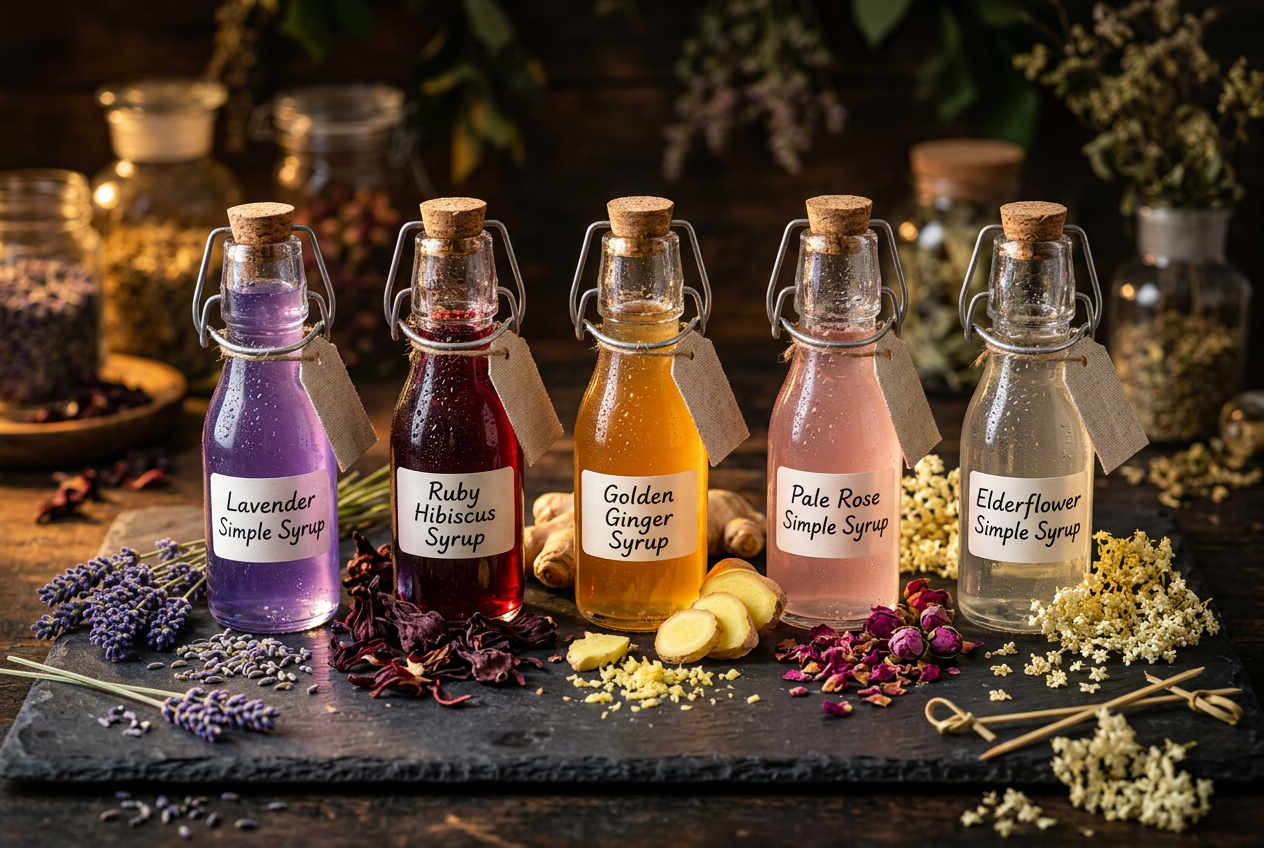
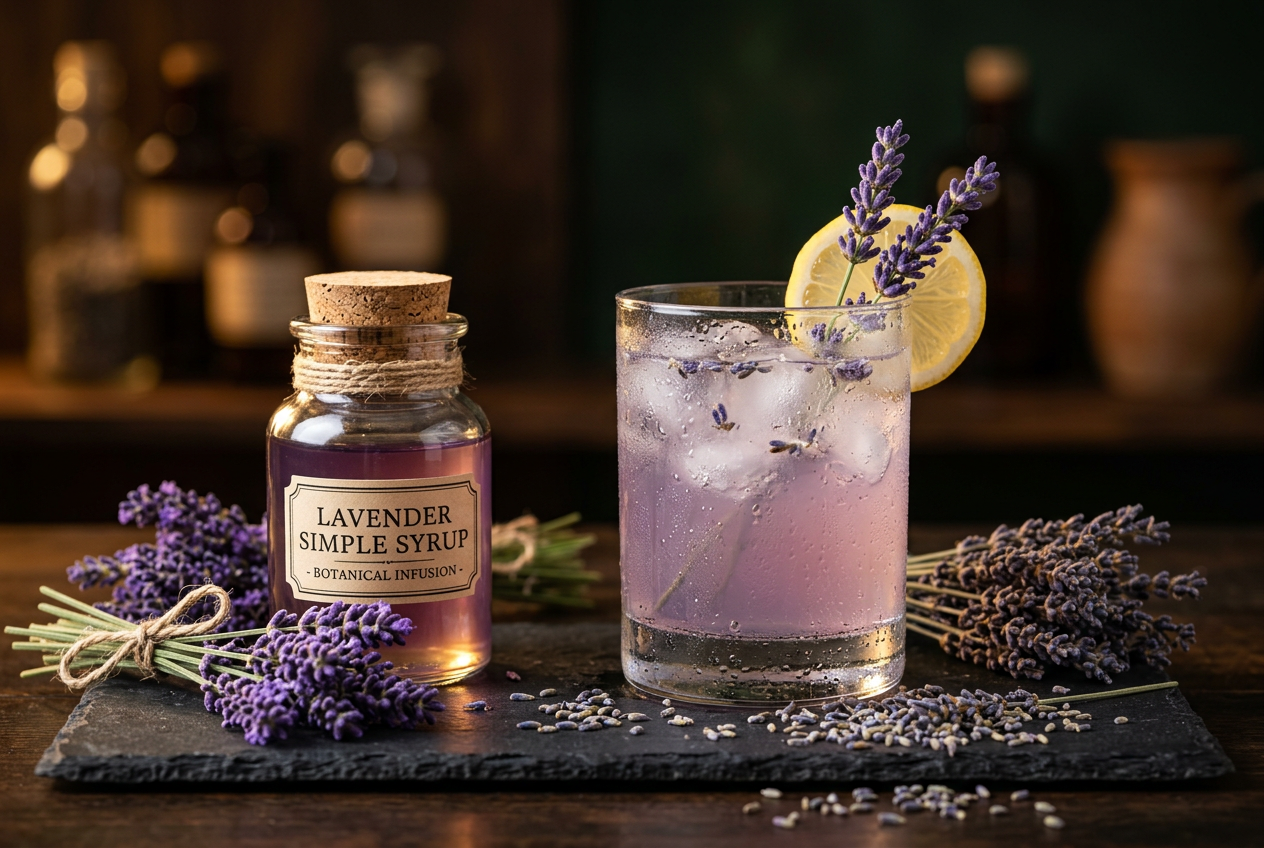
Lavender brings a floral aroma to tea and citrus drinks. Use dried flowers sold for food: this page includes a hot tea, a measured syrup and an alcohol-free lemonade. These are culinary preparations, with no promised sleep, calming or digestive effect.
Culinary Flavor and Evidence
Lavender has a history of herbal use, but tradition does not validate these drink proportions or a therapeutic effect. NCCIH distinguishes evidence for particular products and uses from general claims about lavender.
What Lavender Is Actually Known For
The culinary use here is floral flavor and aroma. This page supplies no week-long sleep trial, digestive remedy, headache treatment or daily tonic. Persistent or concerning symptoms need medical assessment.
Choosing Quality Lavender for Drinking
Not all lavender is equal when it comes to botanical beverages. The quality and type you choose affects both safety and how the finished drink tastes.
Always use culinary-grade lavender for drinks. Choose lavender explicitly sold for food use; culinary or organic labeling does not mean no pesticides were used. Ornamental lavender from garden centers may have been treated with substances you should not ingest.
English lavender (Lavandula angustifolia) is the preferred variety for drinking. It has a sweeter, more delicate flavor than the other species. French lavender carries more camphor and tastes distinctly medicinal, which is fine in a sachet and unpleasant in a glass.
Fresh and dried flowers vary in strength. Do not assume a universal three-to-one conversion; use a recipe written for the form you have.
How to Use Lavender in Botanical Drinks
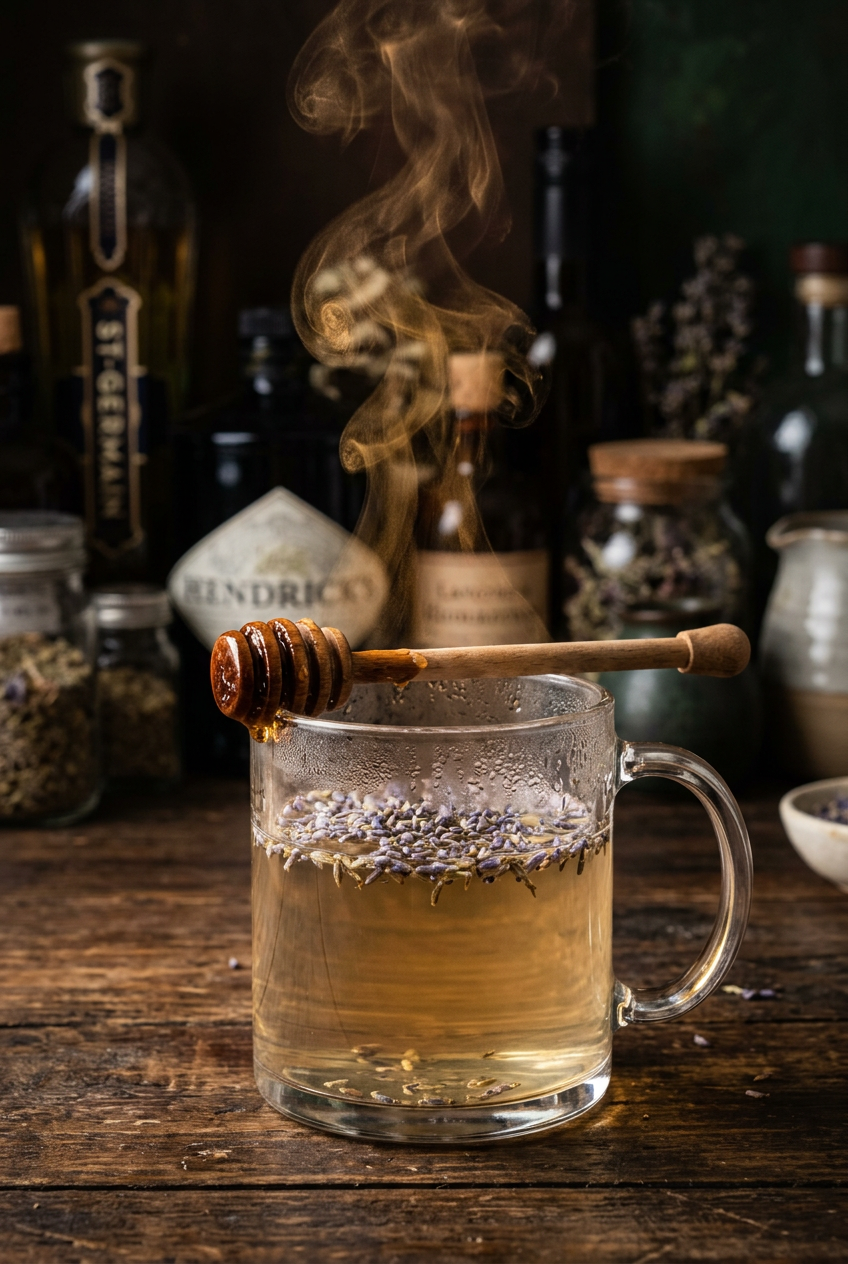
The original tea uses 1 teaspoon dried culinary lavender per 8 US fluid ounces freshly boiling water, covered for 5–7 minutes, then strained. These are original culinary measures, not a medicinal dose. Follow the identified food-grade product’s brewing directions.
Chamomile, lemon balm, peppermint , rose hips and hibiscus are possible flavor pairings. They are separate ingredients, so use a measured blend written for the particular product rather than treating them as interchangeable.
Lavender Syrup
The recipe card below adapts the proportions and saucepan method from Daniel Gritzer’s lavender syrup at Serious Eats . Start with the milder flower amount; the alternative is a flavor choice, not a medicinal dose. The flowers go into the saucepan before boiling, giving the preparation a clear heating sequence.
This replaces the earlier warm-steep formula. It is an attributed culinary recipe, not a TFA kitchen-tested preparation. Measure the finished syrup because evaporation and straining change the yield. Heating and cooling add time beyond the simmer. Keep the cooled syrup refrigerated; no storage duration is assigned here to this batch or to drinks made with it.
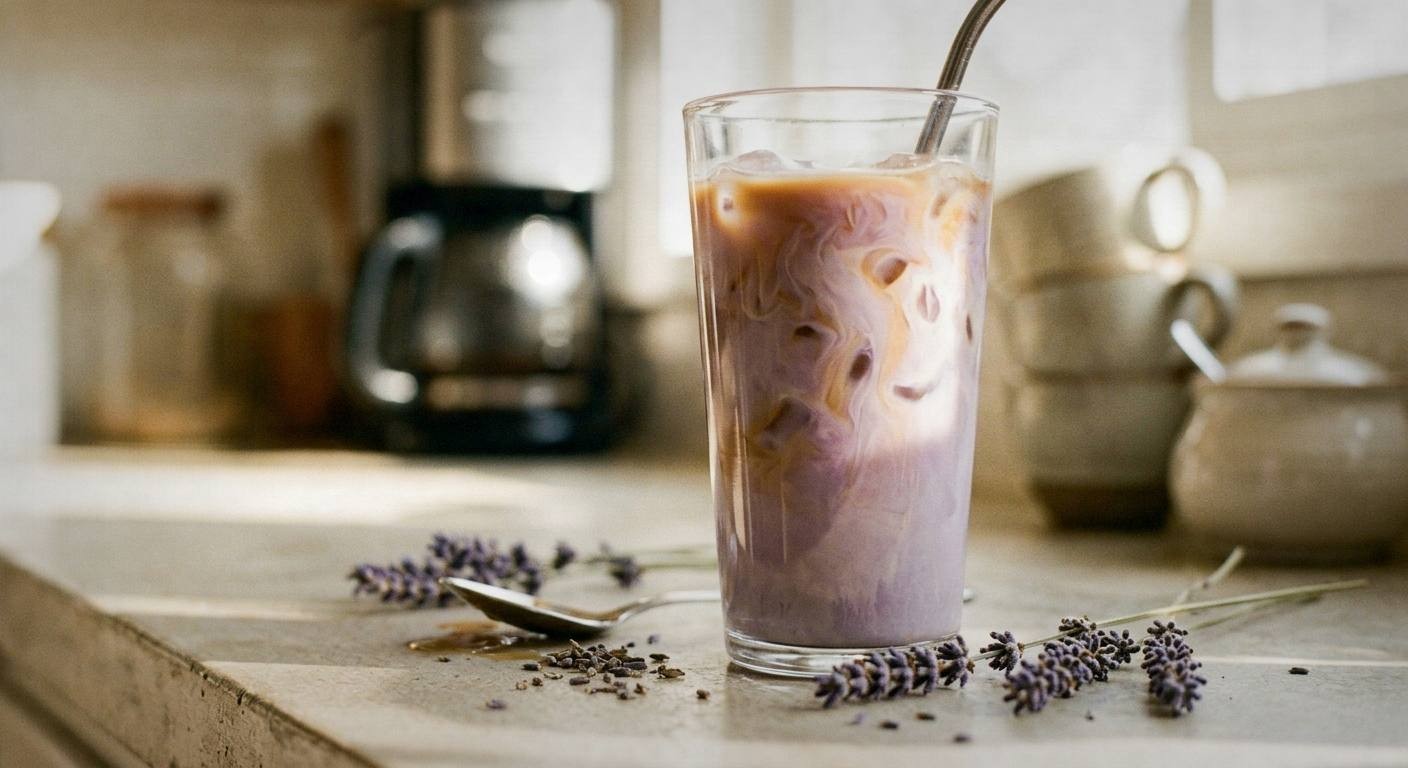
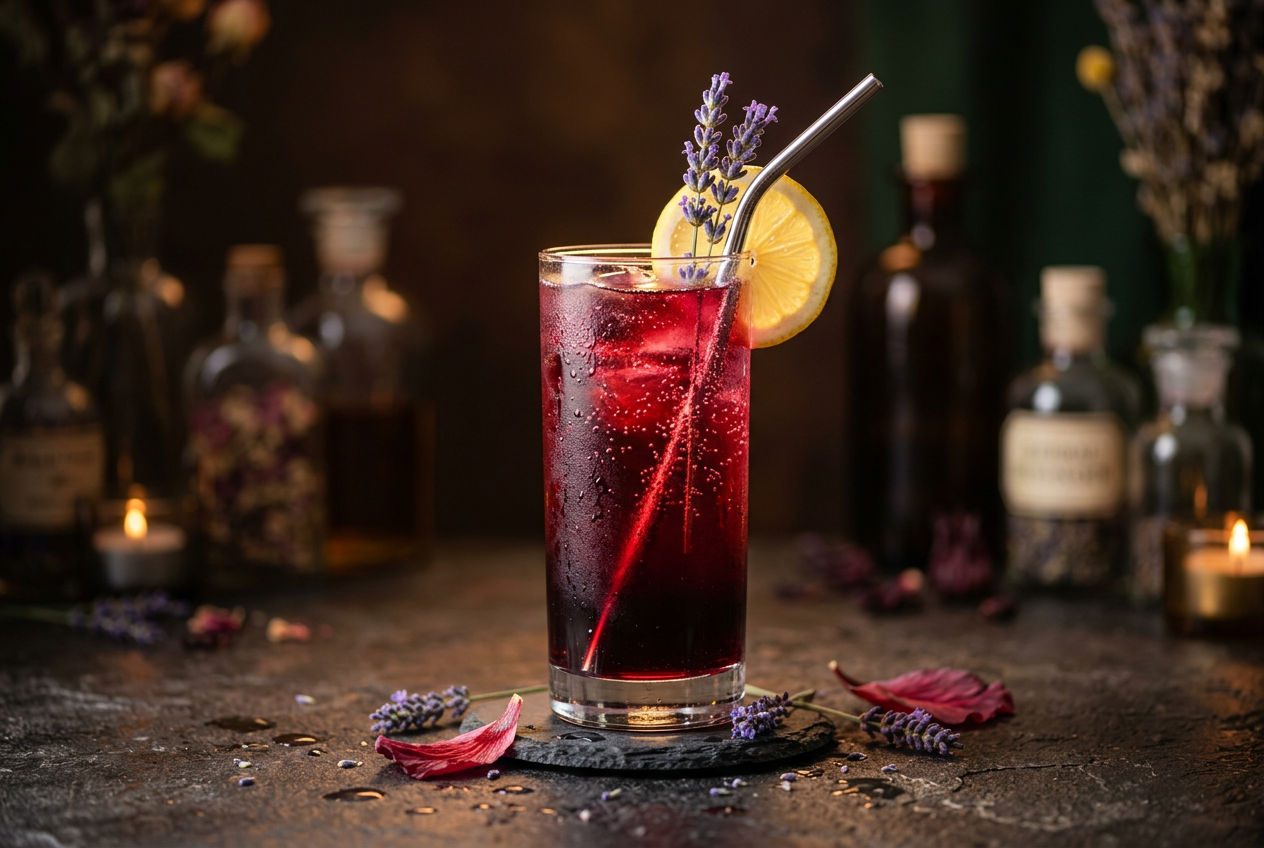
Lavender Lemonade: One Glass
This alcohol-free assembly adapts Amy Traynor’s lemonade at Moody Mixologist . It uses the Serious Eats syrup above instead of Traynor’s own syrup, so the lavender intensity may differ. The component substitution is deliberate; neither source tested this combined version for TFA.
- 1 US fluid ounce cooled lavender syrup from the recipe card
- 1 US fluid ounce fresh lemon juice
- 4–6 US fluid ounces cold still or sparkling water
- Ice; a lemon wheel, optional
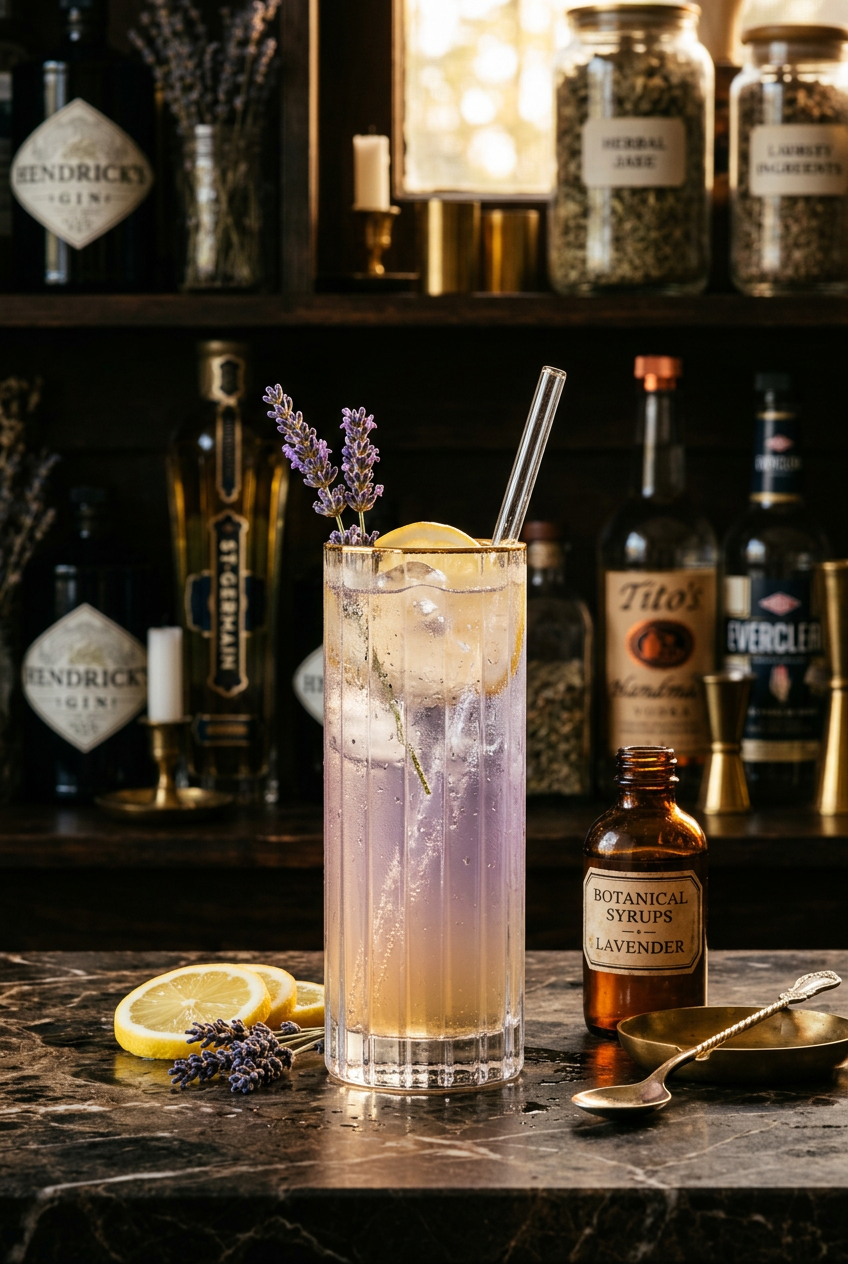
Add syrup and lemon juice to a glass with ice. Pour in the cold water and stir gently. This makes one drink with 6–8 fluid ounces of liquid before ice; use a glass with enough extra space. Start at the lower water amount and adjust dilution to taste. Add sparkling water when serving. Syrup preparation and cooling happen first and are separate from this quick assembly.
Precautions and Sourcing
Choose correctly identified lavender sold for food use, not florist or decorative nursery material. Culinary or organic labeling does not prove pesticide-free handling. Follow the supplier’s storage directions rather than assuming a year-long life.
NCCIH notes possible interactions with sedative medicines or herbs and limited pregnancy/breastfeeding safety information. These drink notes do not establish a routine dose or a clinical effect.
Preparation Sources and Limits
The syrup is adapted from Gritzer’s published recipe; the lemonade combines that component with Traynor’s measured alcohol-free build. The hot tea uses original culinary measures and the identified product’s directions. BfR brewing guidance supports boiling water for herbal tea ; it does not prove an earlier off-heat syrup was contaminated. NCCIH separates evidence about particular lavender products from general drink claims. No physical testing, clinical benefit or mixed-drink shelf life is claimed.