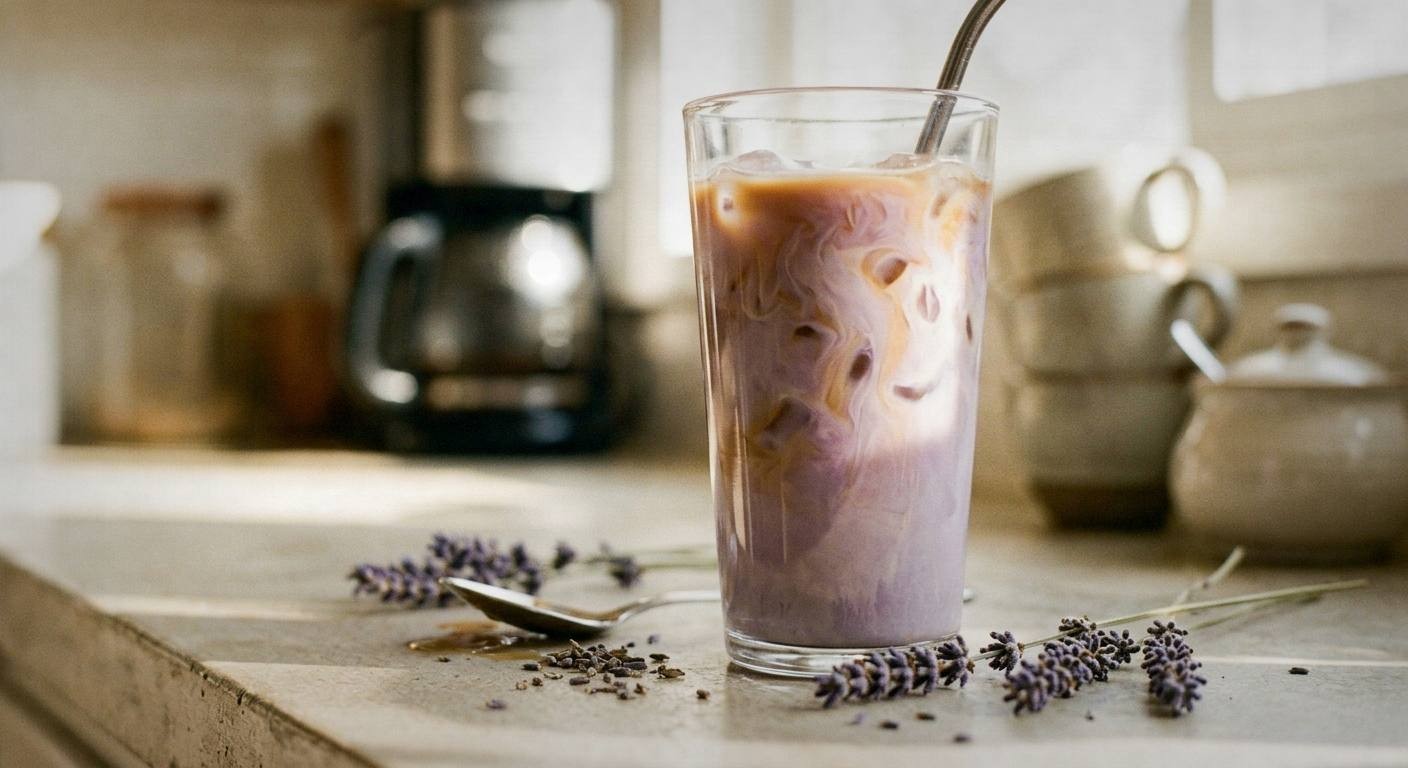
Lavender iced coffee with homemade lavender syrup, cold brew concentrate, and oat milk. Floral, smooth, and better than the coffee shop version.
The first time I added lavender syrup to cold brew, I used too much. It tasted like drinking a candle. The second time, one tablespoon in a tall glass of iced coffee, the lavender sat underneath the coffee bitterness and rounded the whole thing out. That is the ratio. One tablespoon. More than that and the floral takes over.
At a Glance
| Detail | Info |
|---|---|
| Prep time | 5 minutes (syrup already made) |
| Total time | 5 minutes |
| Servings | 1 |
| Difficulty | Easy |
| Key ingredient | Lavender simple syrup + cold brew |
| Best for | Spring mornings, afternoon pick-me-up |
| Flavor profile | Floral, smooth, lightly sweet, coffee-forward |
| Caffeine | About 100 mg (from cold brew) |
Why This Works
Lavender and coffee sound like they should clash. One is a flower you associate with soap and sachets. The other is a roasted bean you associate with 6am alarms. But linalool, the primary aromatic compound in lavender, shares structural similarities with some of the flavor compounds in coffee. Both have terpene backbones. When the lavender is subtle (syrup, not raw buds), it reads as a smooth floral undertone rather than perfume. A comprehensive review in Evidence-Based Complementary and Alternative Medicine found that linalool and linalyl acetate produce anxiolytic effects by modulating GABAergic neurotransmission. In plain terms, lavender might take the edge off the caffeine jitters in a way that goes beyond just flavor.
Coffee shops figured this out years ago. Starbucks ran a lavender oat milk latte that sold well enough to stay on the menu through multiple rotations. A Couple Cooks has one of the most reliable homemade versions, using the same 1:1 sugar-to-water syrup ratio with 2 tablespoons of dried buds that showed up in every tested recipe I checked. The homemade version is better because you control the sweetness and the lavender intensity.
What You Will Need
- 1/2 cup cold brew coffee concentrate
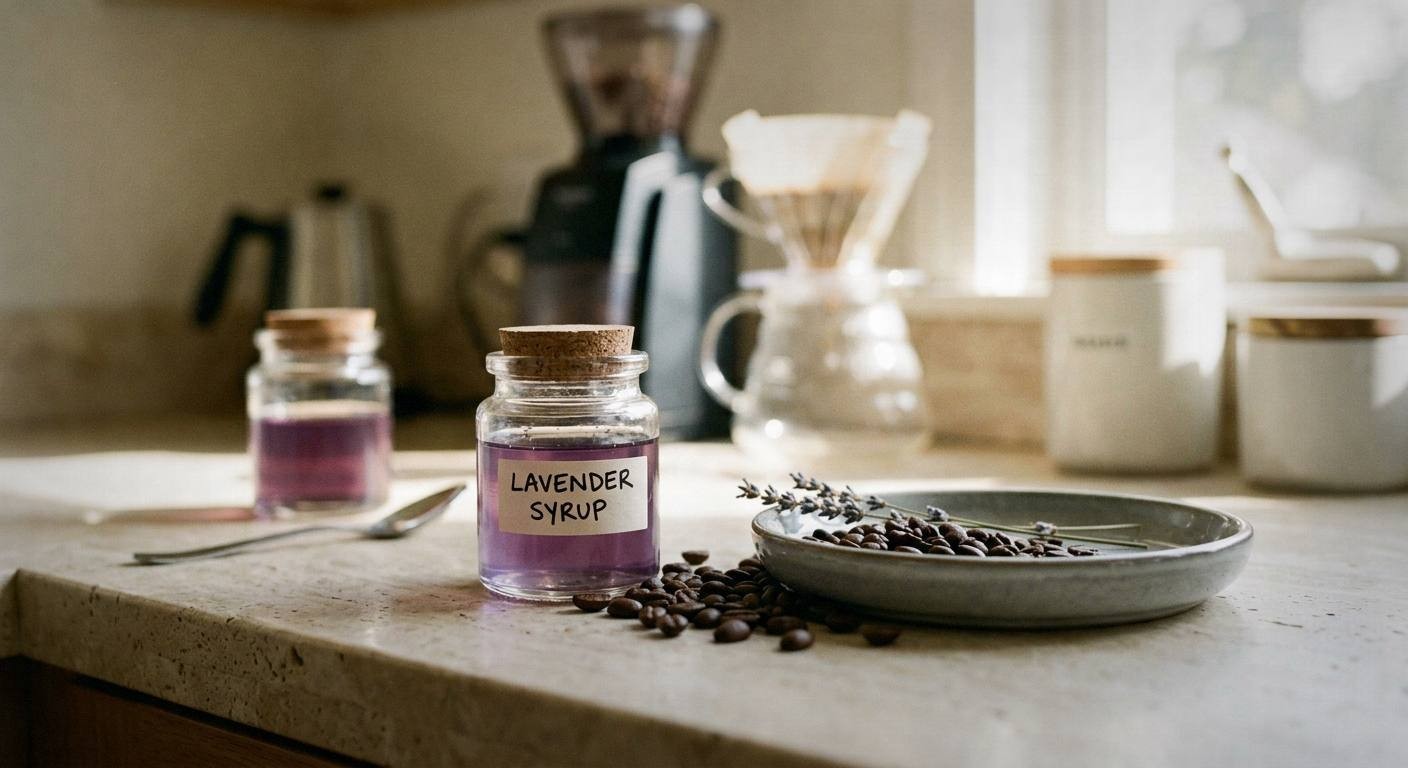
- 1 tablespoon lavender simple syrup
- 3/4 cup cold oat milk (or any milk)
- Ice cubes
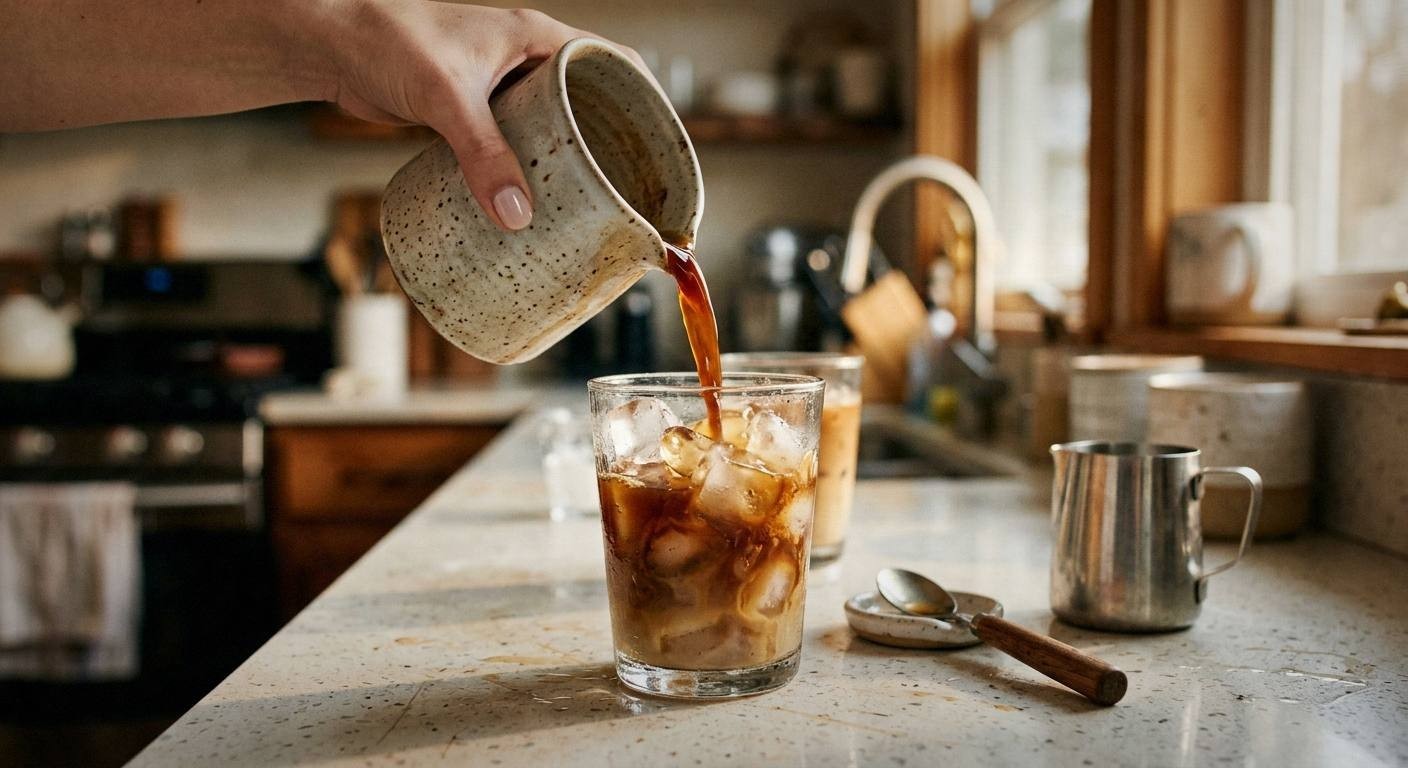
On the cold brew: Use concentrate, not ready-to-drink cold brew. Concentrate is roughly twice as strong, which means it holds up against the milk and ice without tasting watered down. Make your own by steeping 1 cup coarsely ground coffee in 4 cups of cold water for 12 to 18 hours, then straining. Or buy it. Chameleon and Stumptown both make good concentrate.
On the lavender syrup: Our lavender simple syrup recipe covers this in detail. The short version: simmer equal parts sugar and water, add 2 tablespoons dried culinary lavender, steep 15 minutes, strain. Keeps two weeks in the fridge. One batch makes enough syrup for about 30 iced coffees.
On the milk: Oat milk froths and layers the best. Its natural sweetness complements the lavender without competing. Almond milk works but is thinner. Whole dairy milk makes it richer and more latte-like. Coconut milk gives it a tropical lean that fights the lavender. Stick with oat.
How to Make It
Fill a tall clear glass with ice cubes. The clear glass matters because the layers look good and people will ask what you are drinking.
Pour 1/2 cup cold brew concentrate over the ice.
Add 1 tablespoon lavender simple syrup. Stir once or twice to distribute it into the coffee.
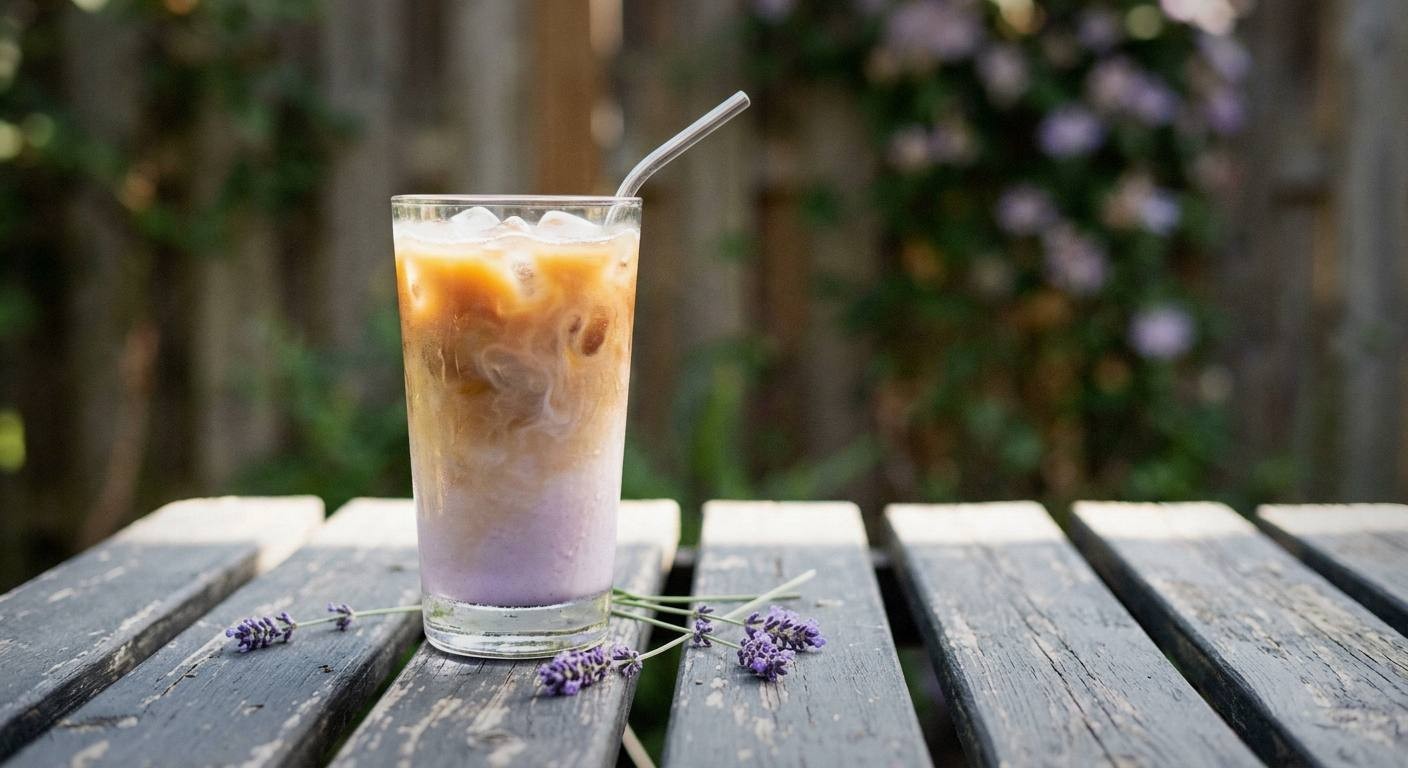
Slowly pour 3/4 cup cold oat milk over the back of a spoon so it floats on top of the coffee in a layer. Or just pour and stir if you do not care about the visual.
Stir to combine when you are ready to drink.
Variations
Vanilla lavender iced coffee: Add 1/4 teaspoon vanilla extract to the oat milk before pouring. The vanilla bridges the lavender and coffee flavors and makes it taste like something from a bakery.
Lavender honey iced coffee: Replace the lavender syrup with 1 tablespoon of honey stirred into the cold brew. Add a drop of lavender extract or food-grade lavender oil (literally one drop, these are potent). The honey adds body and a different kind of sweetness.
Lavender iced mocha: Add 1 tablespoon of chocolate syrup to the cold brew along with the lavender syrup. Chocolate and lavender is a classic French pairing. The mocha version is richer and works as a dessert coffee.
Double floral: Add 1 teaspoon of rose water to the oat milk for a lavender-rose iced coffee. This one splits opinions. Some people love it. Some think it tastes like Turkish delight in a glass. Try it once.
Before You Start
Culinary lavender only. The lavender sold for sachets and potpourri is often treated with chemicals you do not want in your coffee. Buy lavender labeled “culinary” or “food grade.” Our lavender healing benefits guide covers sourcing in more detail.
Cold brew is not negotiable. Hot brewed coffee poured over ice gets bitter and acidic in a way that fights the lavender. Cold brew is naturally less acidic (about 67% less, according to Scientific Reports) and smoother. The smooth base lets the lavender come through.
Start with less syrup. If you are new to lavender in drinks, start with 2 teaspoons instead of a full tablespoon. You can always add more. You cannot un-lavender your coffee.
Common Questions
Does lavender iced coffee taste like perfume?
Not when you get the ratio right. One tablespoon of lavender syrup in a full glass of cold brew and milk produces a subtle floral note, not a fragrance counter experience. The coffee is still the dominant flavor. The lavender rounds it out.
Can I use lavender extract instead of syrup?
You can, but go easy. Lavender extract is much more concentrated than syrup. Start with 1/4 teaspoon and taste. The syrup is better because it also adds sweetness and body.
How long does cold brew last?
Cold brew concentrate keeps 7 to 10 days in the fridge in a sealed container. Make a big batch on Sunday and you have lavender iced coffees all week.
Is this the same as the Starbucks lavender latte?
Similar idea, different execution. The Starbucks version uses espresso, their proprietary lavender powder, and steamed oat milk served hot or iced. This recipe uses cold brew concentrate and homemade lavender syrup, which gives you more control over the lavender intensity and sweetness. The homemade version also costs about 80 cents per glass instead of six dollars.

Camille writes about botanical drinks, herbal cocktails, and the old plant wisdom that makes them work. Most days you'll find her in the garden or the kitchen, turning herbs into something worth sipping.