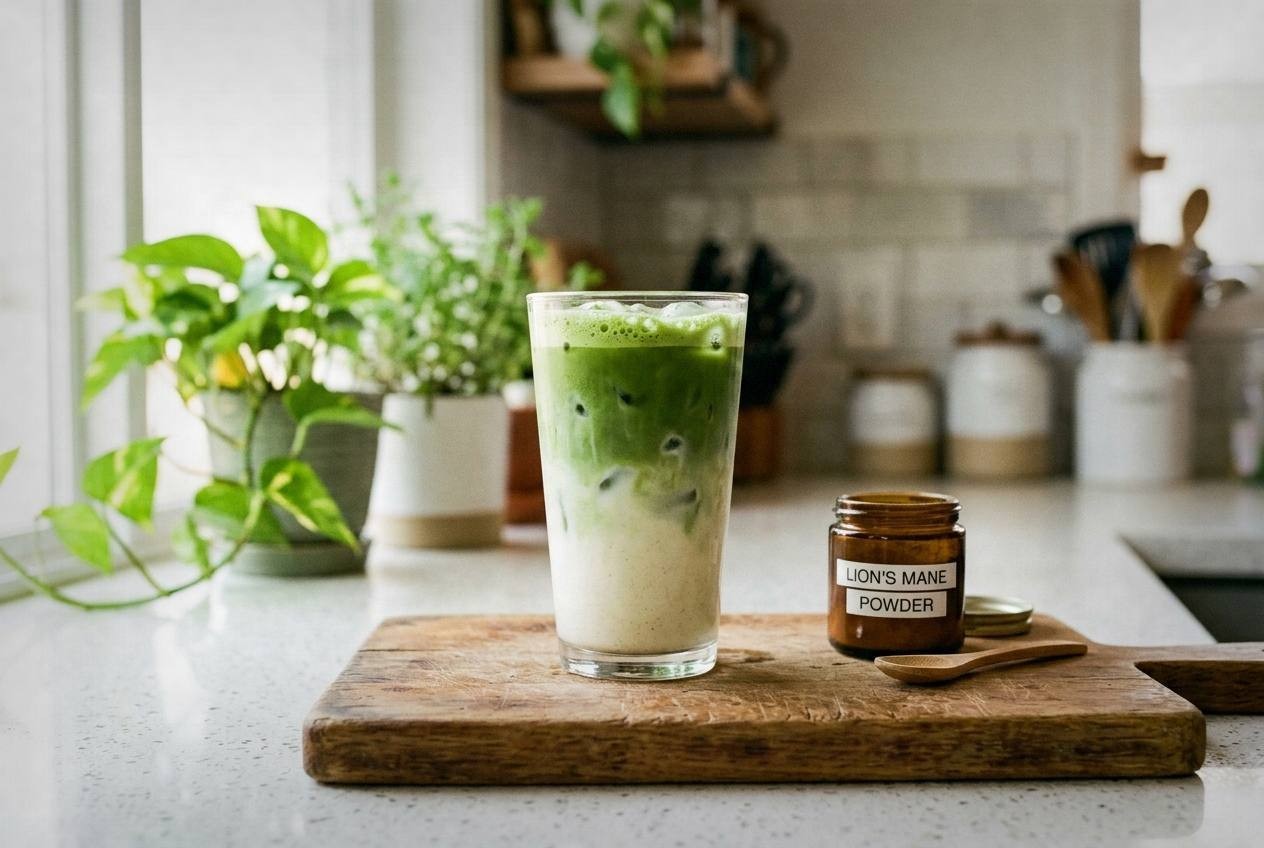
Iced lion's mane matcha latte with oat milk and maple syrup. Combines mushroom cognitive support with matcha calm energy in one 5-minute nootropic drink.
This is what happens when you put the two biggest functional beverage trends in one glass. Lion’s mane for focus. Matcha for calm energy. The mushroom powder dissolves into the matcha paste and you can’t taste it. What you get is an iced latte that looks like a regular matcha but carries a different kind of clarity with it.
At a Glance
| Detail | Info |
|---|---|
| Prep time | 5 minutes |
| Total time | 5 minutes |
| Servings | 1 |
| Difficulty | Easy |
| Key ingredient | Lion’s mane mushroom extract powder |
| Best for | Morning focus, work sessions, study afternoons |
| Flavor profile | Earthy, grassy, creamy, lightly sweet |
| Caffeine | About 70 mg (from matcha) |
Why This Combination Works
Lion’s mane (Hericium erinaceus) and matcha operate on different mechanisms, which is why stacking them makes more sense than choosing one or the other.
Lion’s mane contains two groups of compounds called hericenones and erinacines that stimulate nerve growth factor (NGF) synthesis in the brain. NGF supports the growth, maintenance, and survival of neurons. A clinical trial published in Phytotherapy Research found that elderly Japanese adults who took lion’s mane tablets for 16 weeks scored significantly higher on cognitive function tests than the placebo group. The improvements reversed when they stopped taking it, which suggests lion’s mane supports ongoing cognitive maintenance rather than permanent change.
Matcha delivers about 70 mg of caffeine alongside 25 to 30 mg of L-theanine, an amino acid that promotes alpha brain wave activity. Alpha waves are associated with a state of relaxed alertness. A study in Nutritional Neuroscience found that L-theanine combined with caffeine improved attention and task switching more than caffeine alone.
Put them together and you get caffeine for wakefulness, L-theanine to smooth the edges, and lion’s mane for longer-term cognitive support. The nootropic community calls this a “stack,” and this particular combination is one of the most popular ones.
What You Will Need
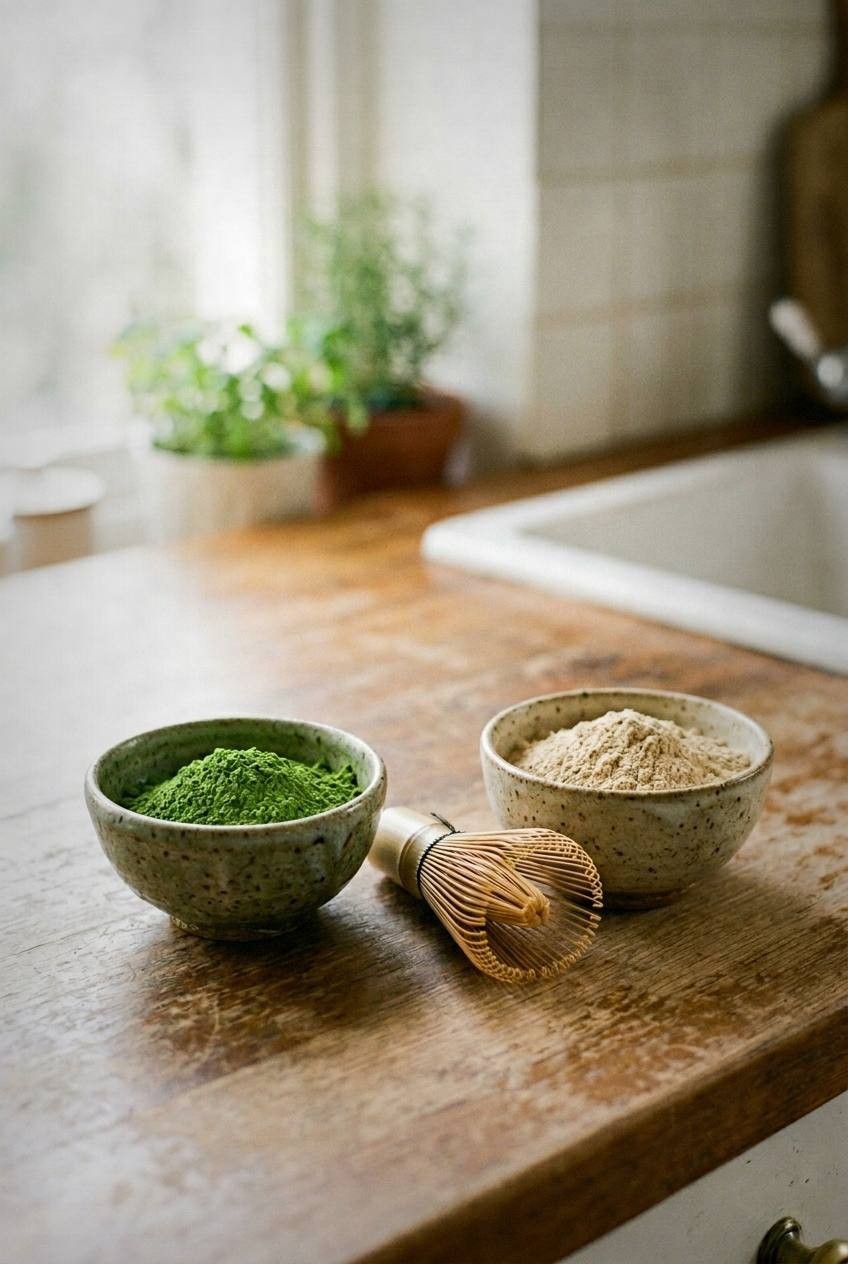
- 1 1/2 teaspoons ceremonial grade matcha
- 1/2 teaspoon lion’s mane mushroom extract powder
- 2 oz warm water (170F / 77C)
- 1 cup cold oat milk
- 1 tablespoon maple syrup
- Ice cubes
On the lion’s mane: Buy extract powder, not raw dried mushroom powder. The extraction process (hot water or dual extraction) concentrates the hericenones and erinacines to levels that matter. Real Mushrooms is the gold standard for verified fruiting body extracts with tested beta-glucan content. Four Sigmatic is the mainstream convenience pick. Om Mushroom Superfood is a budget option available at Costco. Look for “fruiting body” on the label, not “mycelium on grain,” which is a cheaper product diluted with starch.
On the matcha: Ceremonial grade dissolves smoother and tastes less bitter than culinary grade. For matcha basics and sourcing, our iced matcha latte recipe covers this in more detail.
On the water temperature: Matcha scorches above 180F and tastes bitter. Boil your water and let it sit for two minutes, or use a kettle with temperature control set to 170F. The warm water is only for dissolving the powders. The drink itself is served cold.
How to Make It
Sift 1 1/2 teaspoons of matcha and 1/2 teaspoon of lion’s mane powder into a bowl. Sifting matters. Both powders clump if you skip this step, and the lumps are unpleasant.
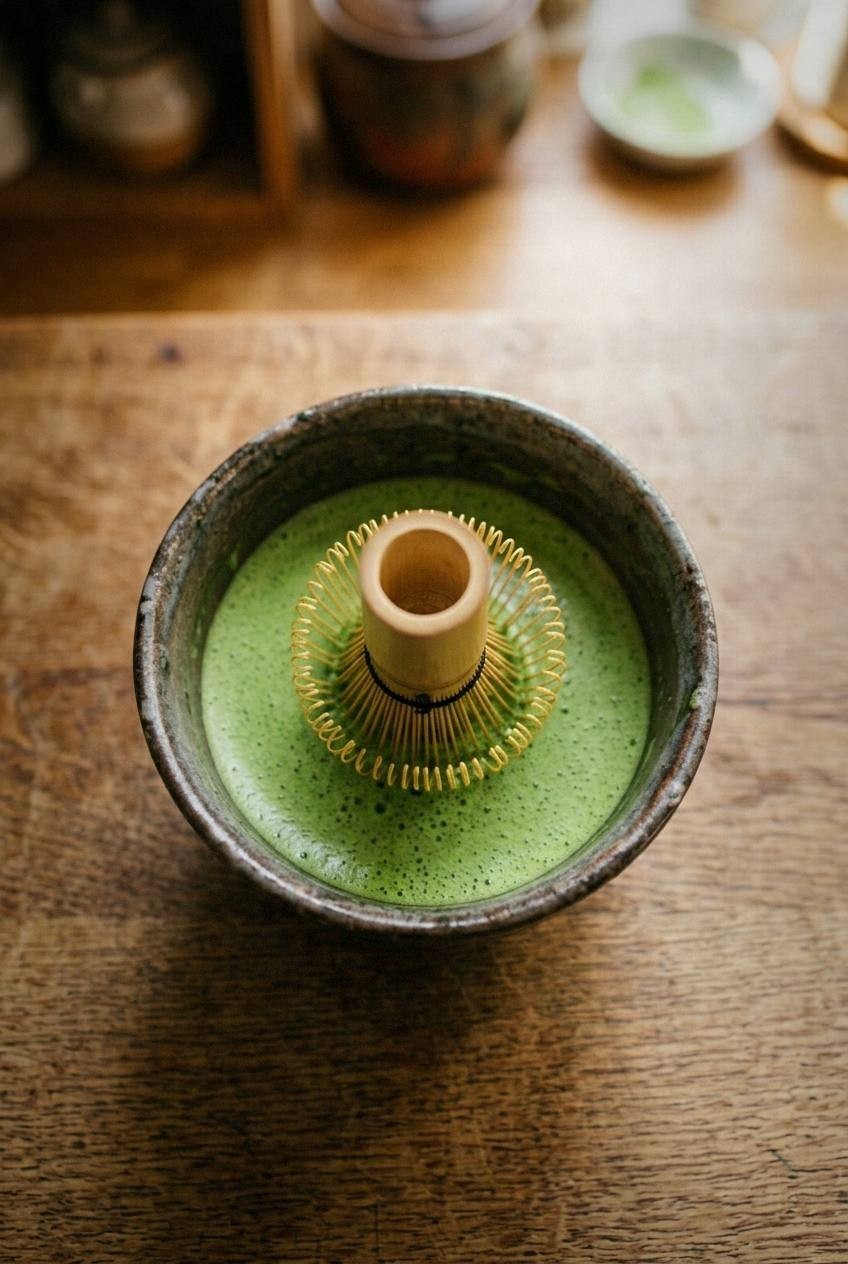
Add 2 oz of warm water (170F). Whisk vigorously with a bamboo chasen for about 30 seconds. You are making a smooth, bright green paste with no dry clumps and a thin layer of foam on top.
Stir in 1 tablespoon of maple syrup while the paste is still warm. Maple dissolves better in warm liquid.
Fill a tall clear glass with ice cubes.
Pour the cold oat milk over the ice.
Pour the warm matcha-mushroom paste over the milk. It will create layers if you pour slowly, or blend into a uniform green if you pour fast. Both look good.
Stir to combine and drink.
How This Differs from Our Other Latte Recipes
We already have an iced matcha latte that covers the matcha-only version. That recipe is the place to start if you have never made matcha at home. This one builds on it by adding lion’s mane.
Our mushroom coffee recipe takes the mushroom angle with cold brew instead of matcha. If you prefer coffee as your caffeine base, that one gives you the lion’s mane benefits without matcha.
This recipe is specifically for people who want both. The matcha provides a smoother, longer-lasting caffeine curve than coffee (no crash), and the lion’s mane adds the nootropic layer. If you have been drinking plain matcha lattes and wondering what else you can do with the format, this is the next step.
Variations
Double mushroom matcha: Add 1/4 teaspoon of cordyceps extract alongside the lion’s mane. Cordyceps is traditionally used for physical energy and endurance. The flavor impact is minimal.
Adaptogen matcha latte: Add 1/4 teaspoon of ashwagandha (KSM-66 extract) for stress resilience on top of the cognitive support. This creates a broader adaptogen stack.
Vanilla mushroom matcha: Add 1/4 teaspoon of vanilla extract to the oat milk before pouring. The vanilla rounds out the earthiness of the mushroom and makes the drink taste more like something from a coffee shop.
Iced mushroom matcha with coconut: Replace oat milk with full-fat coconut milk. Richer body, slightly tropical, and the fat helps with absorption of fat-soluble compounds in the matcha.

Before You Start
Lion’s mane takes time. The cognitive benefits in the research showed up after weeks of consistent use, not after one drink. Think of this as a daily habit, not a one-time experiment.
Taste the mushroom powder by itself first. Some brands are more bitter or earthy than others. Good lion’s mane extract tastes mild, almost neutral with a faint nuttiness. If yours tastes strongly bitter, it may be low-quality mycelium powder rather than fruiting body extract.
Consult your doctor if you take blood thinners. Lion’s mane may have mild anticoagulant properties. People on warfarin or other blood thinning medications should check with their healthcare provider first.
The matcha caffeine is real. About 70 mg per serving, comparable to a shot of espresso. If you are caffeine-sensitive, start with 1 teaspoon of matcha instead of 1 1/2, or drink this before 2pm.
For broader context on mushroom drinks and what the research actually says, our mushroom coffee article includes a section on the Cleveland Clinic’s take on functional mushroom claims.
Common Questions
Does lion’s mane matcha taste like mushrooms?
No. Good lion’s mane extract powder has a very mild flavor that disappears completely into matcha. The dominant taste is grassy matcha, creamy oat milk, and maple sweetness. You cannot detect the mushroom.
Which is better, lion’s mane in coffee or in matcha?
Different tools for different needs. Coffee gives you more caffeine (about 95 mg vs 70 mg) and a sharper energy spike. Matcha gives you L-theanine alongside the caffeine, which smooths the energy curve and adds its own cognitive benefits. If you want sharp alertness, go coffee. If you want sustained focus without jitters, matcha wins.
How much lion’s mane should I take per day?
Most research used 750 mg to 3,000 mg of extract per day. One half-teaspoon of concentrated extract powder is roughly 1,000 to 1,500 mg depending on the brand and concentration. One serving per day is a reasonable starting point.
Can I add lion’s mane to other drinks?
Absolutely. It dissolves in anything warm. Add it to golden milk, stir it into your morning smoothie, or blend it into the green tea wellness tonic. The flavor is neutral enough to disappear into most recipes.

Camille writes about botanical drinks, herbal cocktails, and the old plant wisdom that makes them work. Most days you'll find her in the garden or the kitchen, turning herbs into something worth sipping.