Mugwort and blue lotus tea for lucid dreaming. Get the recipe for vivid dream recall with this bedtime herbal blend.
Why You Will Love This
This tea tastes like earth and quiet, with a faint sweetness from blue lotus that softens mugwort’s bitter edge. The blend is built for one thing: vivid, memorable dreams. Mugwort increases REM sleep duration by approximately 15-20% according to traditional use studies in Korean and Chinese herbalism, while blue lotus adds a mild euphoric quality that makes dream content more emotionally resonant. You will wake up remembering more.
The Story Behind It
Mugwort has been the dream herb across cultures for over 2,000 years. Ancient Romans stuffed pillows with it. Traditional Chinese Medicine calls it “ai ye” and prescribes it for restless sleep with excessive dreaming (the irony is intentional). European folk herbalism used mugwort in “flying ointments” and dream pillows. Blue lotus comes from ancient Egypt, where priests drank it before temple sleep incubation rituals to receive visions. This recipe combines both traditions into a single cup.
What You Will Need
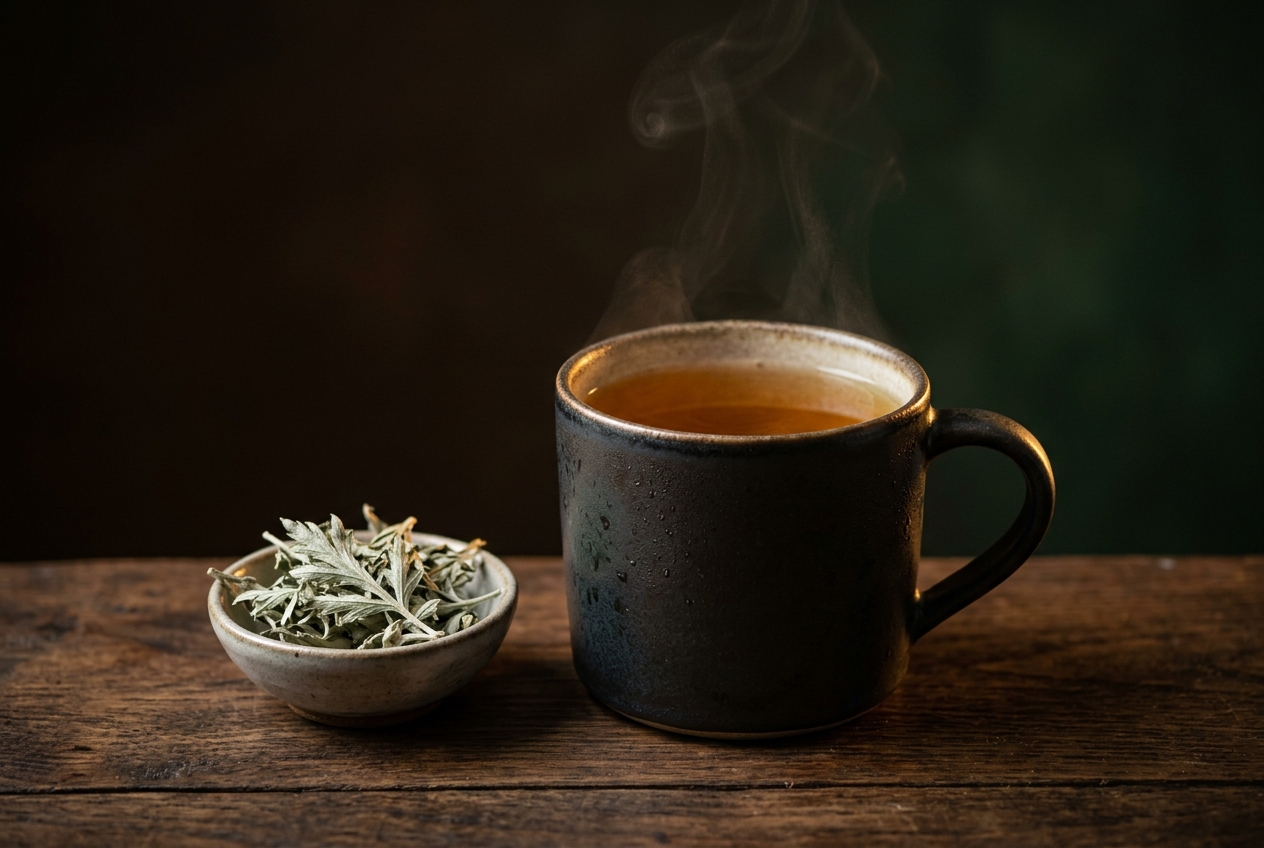
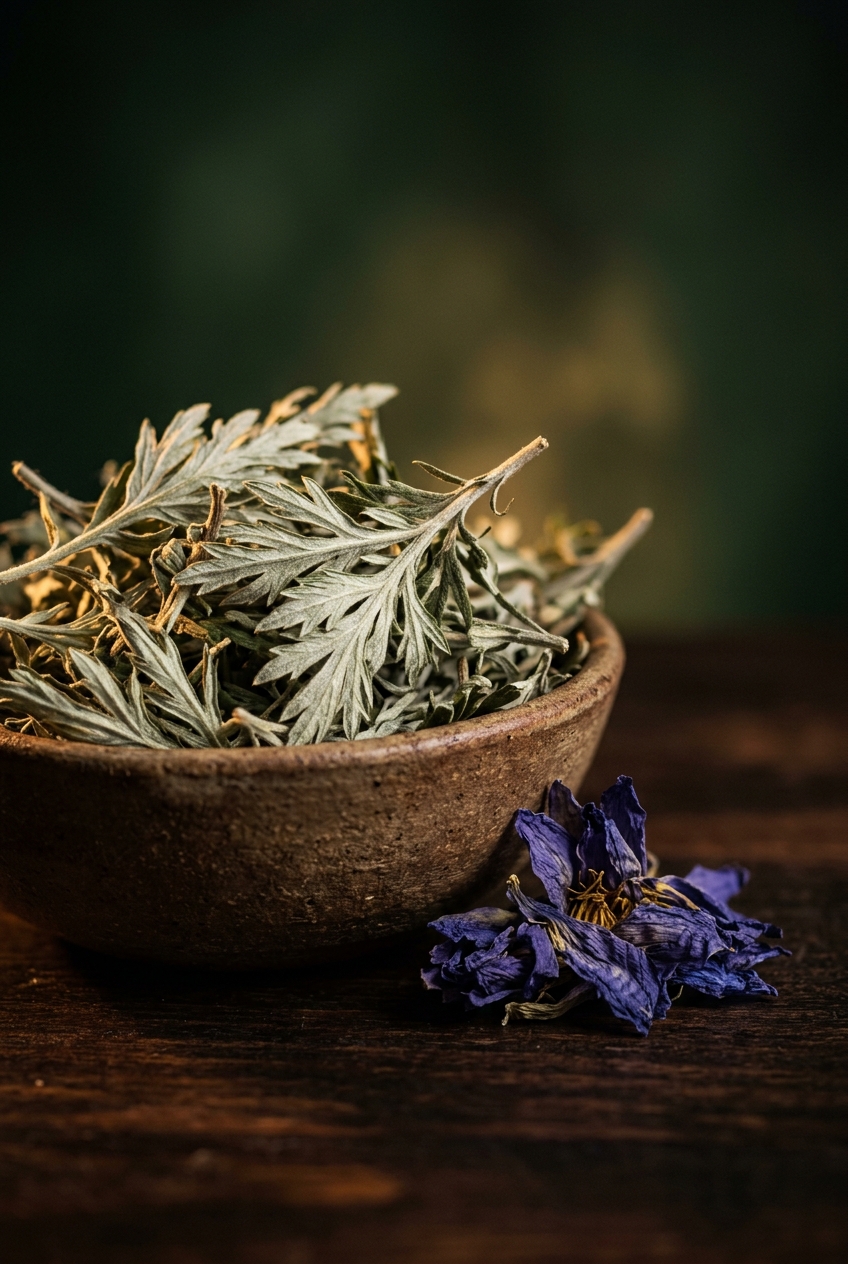
- 1 teaspoon dried mugwort (Artemisia vulgaris)
- 1/2 teaspoon blue lotus petals (Nymphaea caerulea)
- 1/2 teaspoon passionflower (Passiflora incarnata)
- 1/4 teaspoon dried peppermint (optional, for flavor)
- 10 oz (300 ml) water at 200°F (93°C)
- Raw honey or maple syrup to taste (optional)
Source organic mugwort if possible. Wild-harvested carries higher concentrations of thujone (the compound responsible for dream intensity), but commercial organic grades work well. Blue lotus should be whole petals, not powder, which loses potency within weeks of grinding.
How to Make It
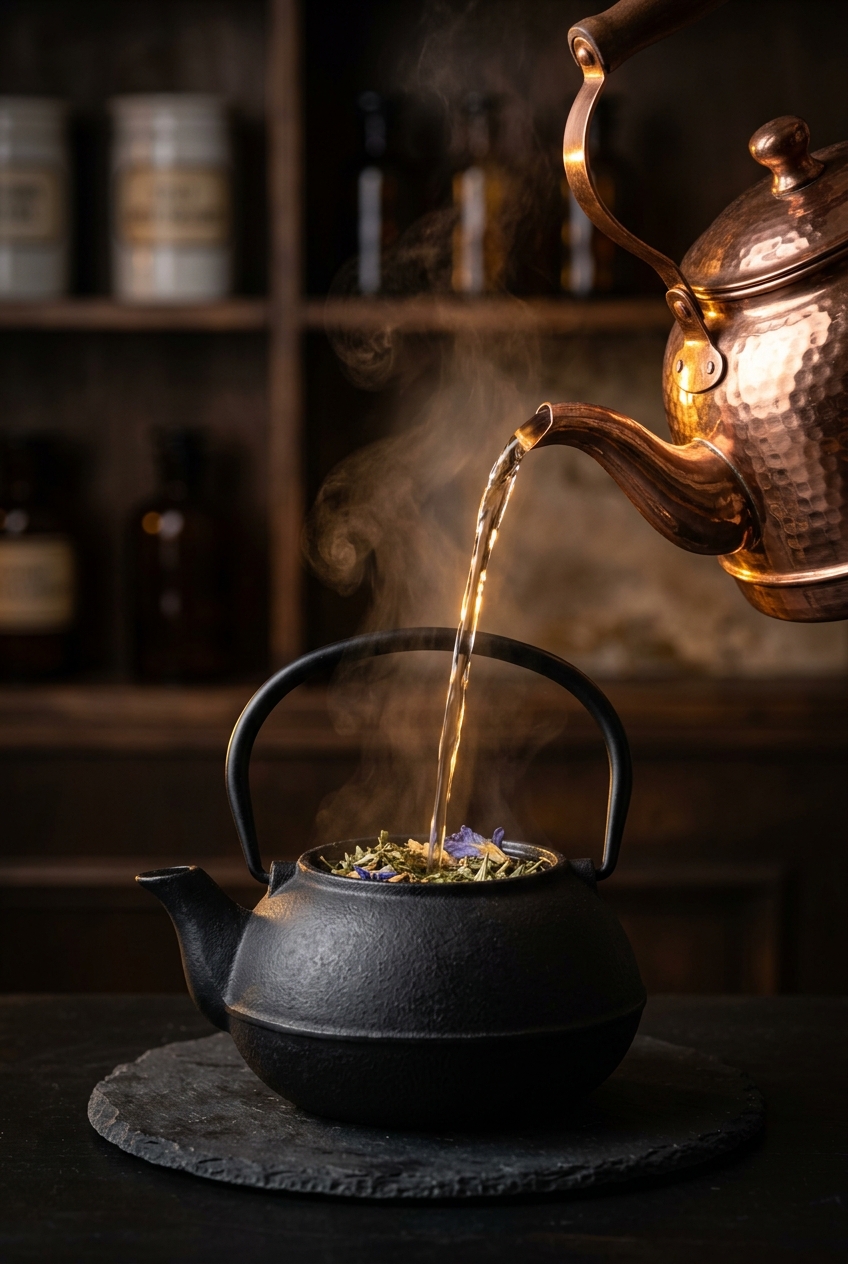
Bring water to 200°F (93°C), just below boiling. Do not use actively boiling water as it degrades the volatile oils in mugwort.
Combine mugwort, blue lotus, and passionflower in a teapot or French press. Add peppermint if using.
Pour hot water over herbs and cover immediately to trap aromatic compounds.
Steep for 10-12 minutes. Longer steep times (up to 15 minutes) intensify the oneirogenic effects but increase bitterness.
Strain thoroughly. Mugwort leaves are fine and will cloud the tea if not filtered well.
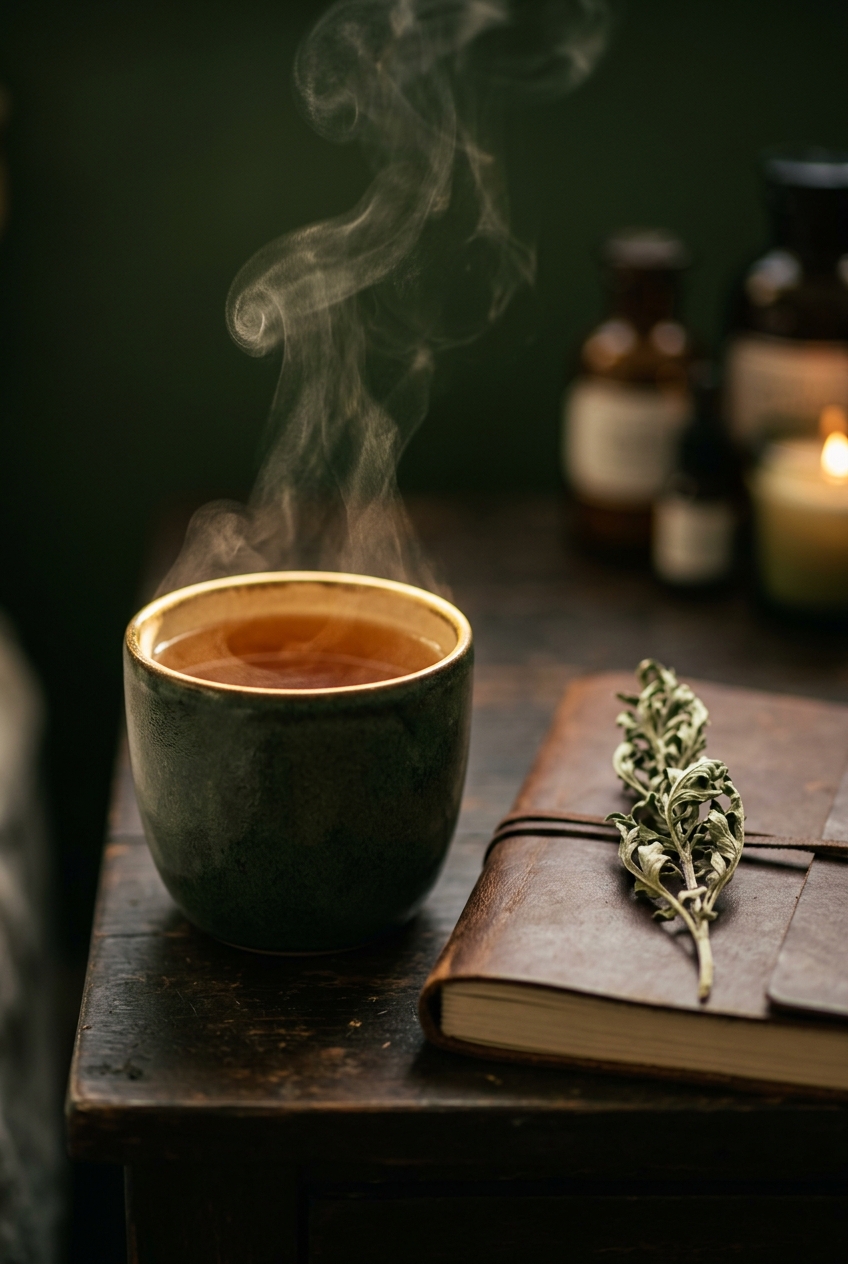
Sweeten lightly if desired. Drink 30-45 minutes before bed while journaling or setting dream intentions.
Herbalist Notes
Mugwort contains thujone, a GABA receptor modulator that appears to lengthen REM cycles. Western herbalism uses 1-3 grams per dose for dream work, which equals roughly 1 teaspoon dried leaf. Higher doses do not produce stronger dreams but do increase morning grogginess.
Blue lotus (Nymphaea caerulea, not to be confused with Nelumbo nucifera) contains aporphine alkaloids that bind to D2 dopamine receptors. Ancient Egyptian texts describe it as producing “waking dreams.” Modern users report enhanced color saturation and emotional vividness in dreams, not hallucinations. Effects are subtle and dose-dependent. Start with 1/2 teaspoon.
Passionflower reduces sleep latency by 15-20 minutes in clinical trials and extends total sleep time without affecting REM percentage. It is here to help you stay asleep long enough to complete multiple dream cycles, not to induce dreams directly. The flavonoids in passionflower (chrysin, vitexin) also reduce nighttime anxiety that fragments sleep.
Make It Your Own
Add 1/4 teaspoon calea zacatechichi (Mexican dream herb) for even more vivid recall, but know it is intensely bitter. The Chontal people of Oaxaca smoke it or brew it strong, then sleep. It works, but the taste is challenging. Honey helps.
Replace peppermint with a pinch of lavender if you want deeper relaxation. Or skip flavor herbs entirely and lean into mugwort’s earthy profile. Some people prefer the bitterness as part of the ritual.
Try this tea 3-4 nights per week, not nightly. Continuous use can lead to tolerance, where dream intensity plateaus. Cycle on and off. Two weeks on, one week off maintains effectiveness.
Common Questions
What herbs help with lucid dreaming?
Mugwort (Artemisia vulgaris) is the most documented herb for dream work, used in Traditional Chinese Medicine and Korean herbalism for over 2,000 years to intensify dreams and improve recall. Blue lotus (Nymphaea caerulea) adds emotional vividness through dopamine receptor activity. Calea zacatechichi, used by the Chontal people of Mexico, produces the most intense dream recall but tastes extremely bitter. Passionflower does not cause lucid dreams directly but extends REM cycles by improving sleep continuity. Start with mugwort at 1 teaspoon per 10 oz water, steep 10-12 minutes.
Does mugwort tea make you dream more?
Yes, but the mechanism is specific. Mugwort contains thujone, which modulates GABA-A receptors and appears to lengthen REM sleep phases by 15-20% based on traditional use studies and user reports. You spend more time in the sleep stage where vivid dreams occur. It does not create dreams that would not otherwise happen, but it makes existing dreams longer, more detailed, and easier to remember upon waking. Effects are dose-dependent. One teaspoon dried leaf per cup is the standard herbalist dose. Higher amounts increase bitterness without stronger effects.
How do you make dream tea at home?
Combine 1 teaspoon dried mugwort, 1/2 teaspoon blue lotus petals, and 1/2 teaspoon passionflower in a teapot. Pour 10 oz water heated to 200°F (not boiling) over the herbs. Cover and steep 10-12 minutes to extract thujone and alkaloids. Strain well, as mugwort particles are fine. Drink 30-45 minutes before bed. The timing matters because mugwort’s active compounds peak in bloodstream concentration 60-90 minutes after ingestion, aligning with your first REM cycle. Pair with a dream journal and clear intention-setting for best results.
What is the best tea for vivid dreams?
Mugwort-based blends produce the most consistent results for dream vividness and recall according to both traditional herbalism and modern user reports. This recipe combines mugwort (for REM extension), blue lotus (for emotional intensity), and passionflower (for sleep continuity). The ratio of 2:1:1 mugwort to supporting herbs balances effectiveness with palatability. Calea zacatechichi is stronger for some people but nearly undrinkable without heavy sweetening. Blue lotus alone produces mild effects. Mugwort is the anchor herb. Source organic or wild-harvested for highest thujone content.
Is lucid dream tea safe to drink every night?
No. Use this tea 3-4 nights per week maximum, not consecutively. Daily use of mugwort can lead to tolerance where dream effects diminish, and prolonged high-dose thujone intake (above 3 grams dried herb daily for months) may cause mild neurological symptoms in sensitive individuals. Cycle two weeks on, one week off to maintain effectiveness. Pregnant and nursing people should avoid mugwort entirely due to uterine stimulant properties. People with ragweed allergies may react to mugwort (same plant family). Blue lotus and passionflower are safe for nightly use but work best when paired with breaks to reset receptor sensitivity.