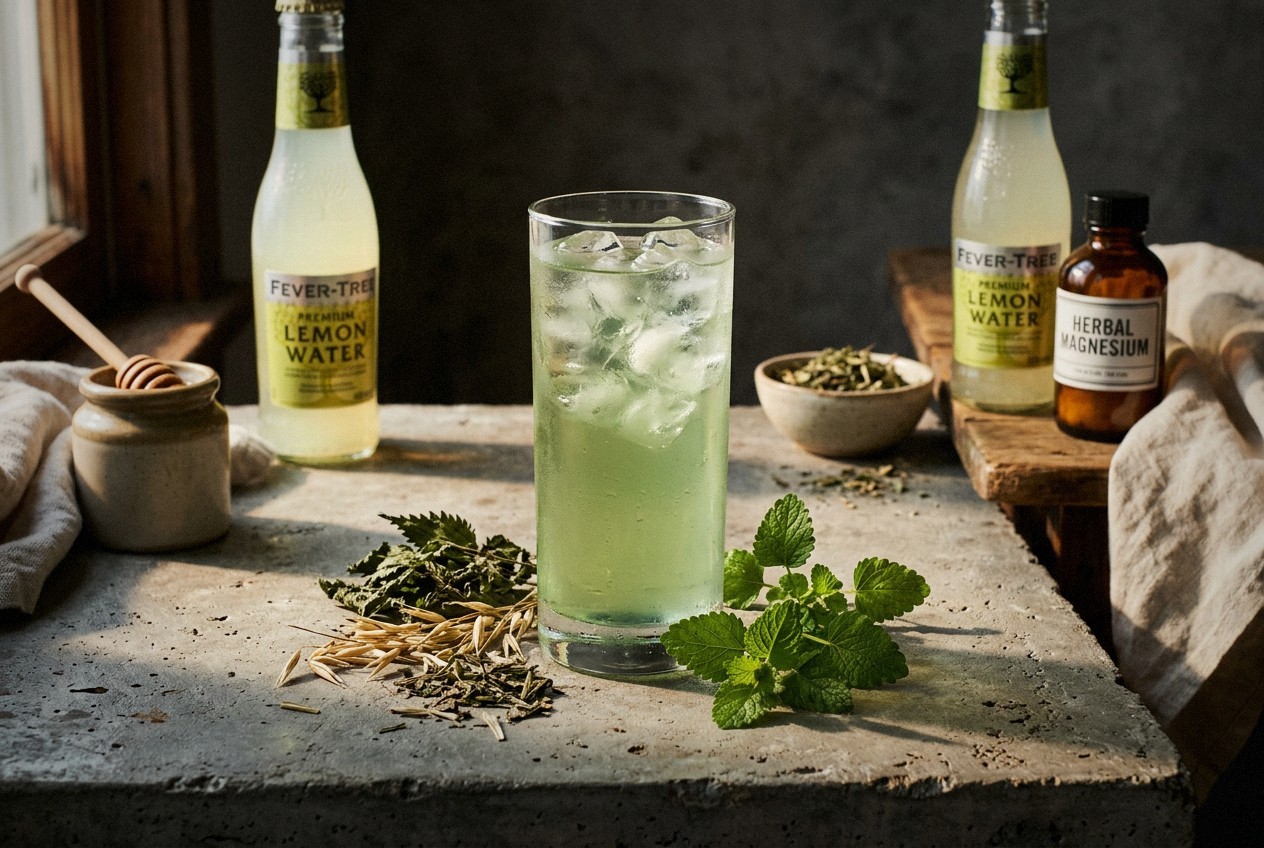
Magnesium-rich herbal iced tea with nettle, oatstraw, and lemon balm. Cold-brew overnight for better sleep. Get the recipe.
Why You Will Love This
This magnesium drink delivers 300-400mg of bioavailable magnesium per quart through four mineral-dense herbs steeped overnight. The cold-brew method extracts magnesium, calcium, and trace minerals without the bitterness that comes from heat. You get a pale green iced tea that tastes slightly sweet, grassy, and clean. Pour it over ice in the afternoon and your nervous system downshifts by evening.
The Story Behind It
Herbalists have used overnight infusions of nettle and oatstraw for decades to build mineral reserves in people with stress-depleted systems. This recipe comes from that tradition but adds lemon balm for its GABA-modulating effects and red raspberry leaf for additional magnesium and a rounder flavor. March is the perfect time to start this routine because spring stress (seasonal allergies, schedule changes, longer daylight) burns through magnesium faster than winter’s slower pace.
What You Will Need
- 2 tablespoons dried nettle leaf
- 2 tablespoons dried oatstraw (milky oat tops)
- 1 tablespoon dried red raspberry leaf
- 1 tablespoon dried lemon balm
- 4 cups filtered water
- 1 teaspoon raw honey (optional)
- Fresh lemon slices for garnish
- Ice cubes
How to Make It
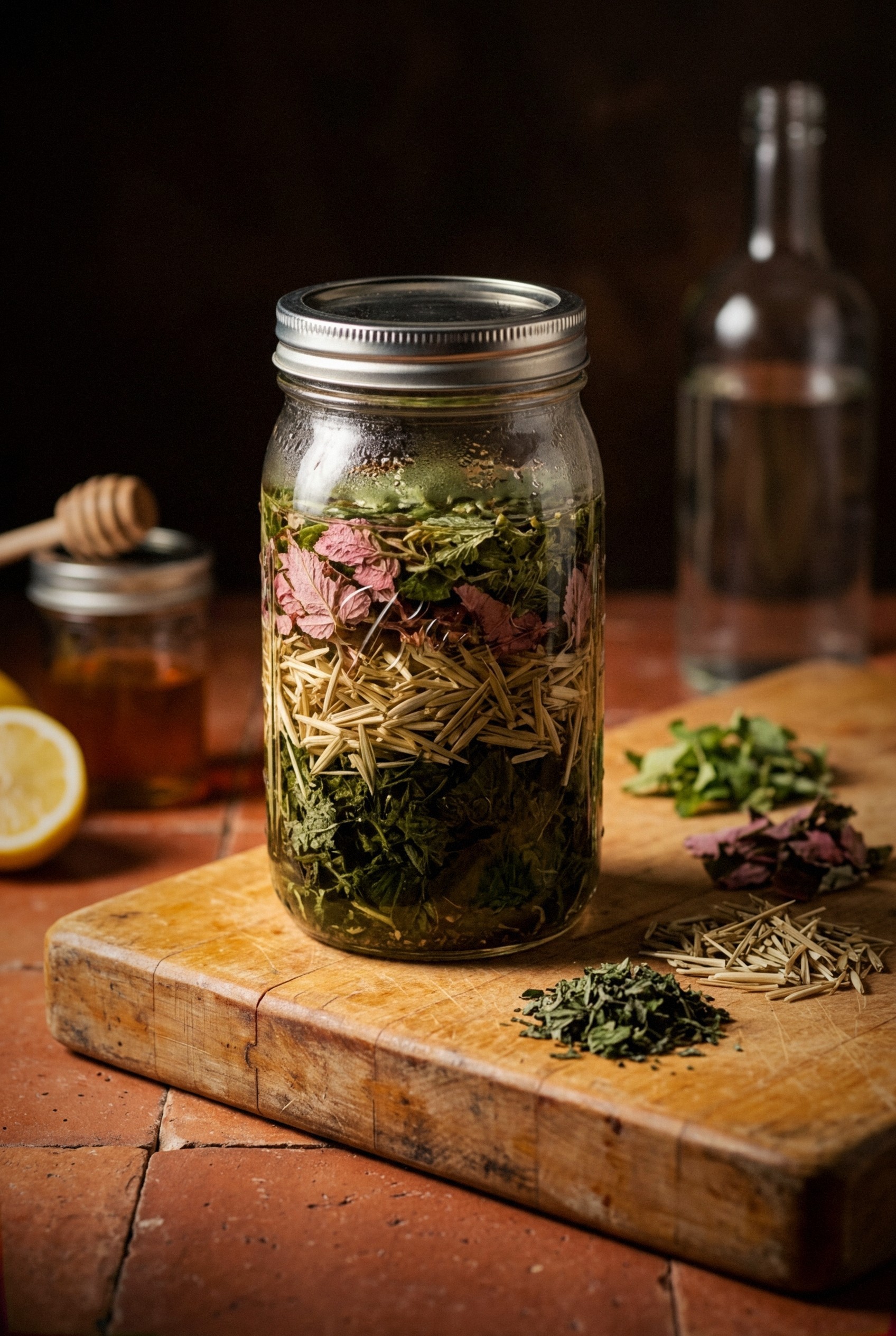
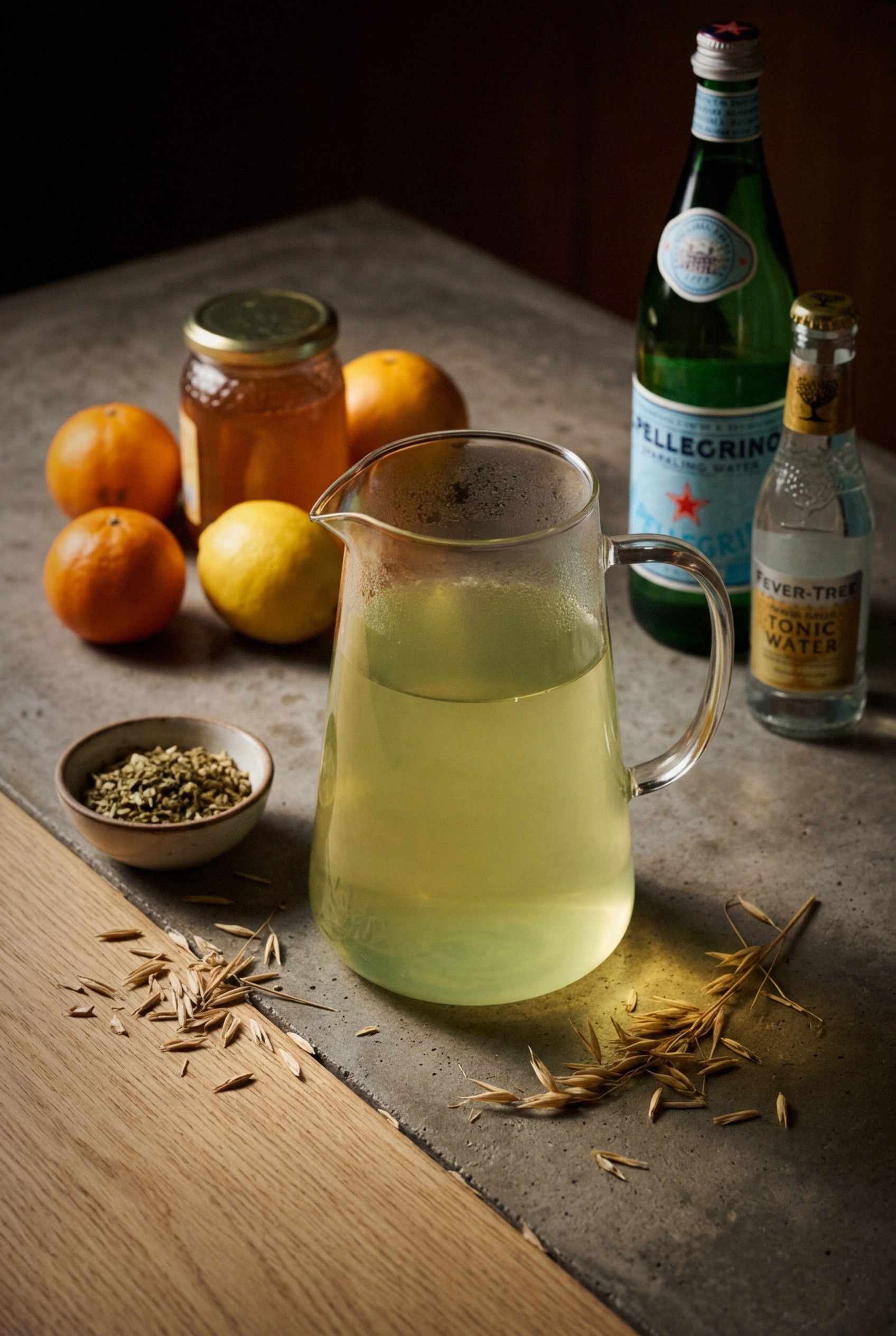
- Combine nettle, oatstraw, red raspberry leaf, and lemon balm in a quart-sized mason jar.
- Pour room-temperature filtered water over the herbs until the jar is full.
- Cap tightly and let sit on the counter for 8-12 hours (overnight works perfectly).
- Strain through a fine-mesh sieve or cheesecloth, pressing gently to extract all liquid.
- Store in the refrigerator for up to 3 days.
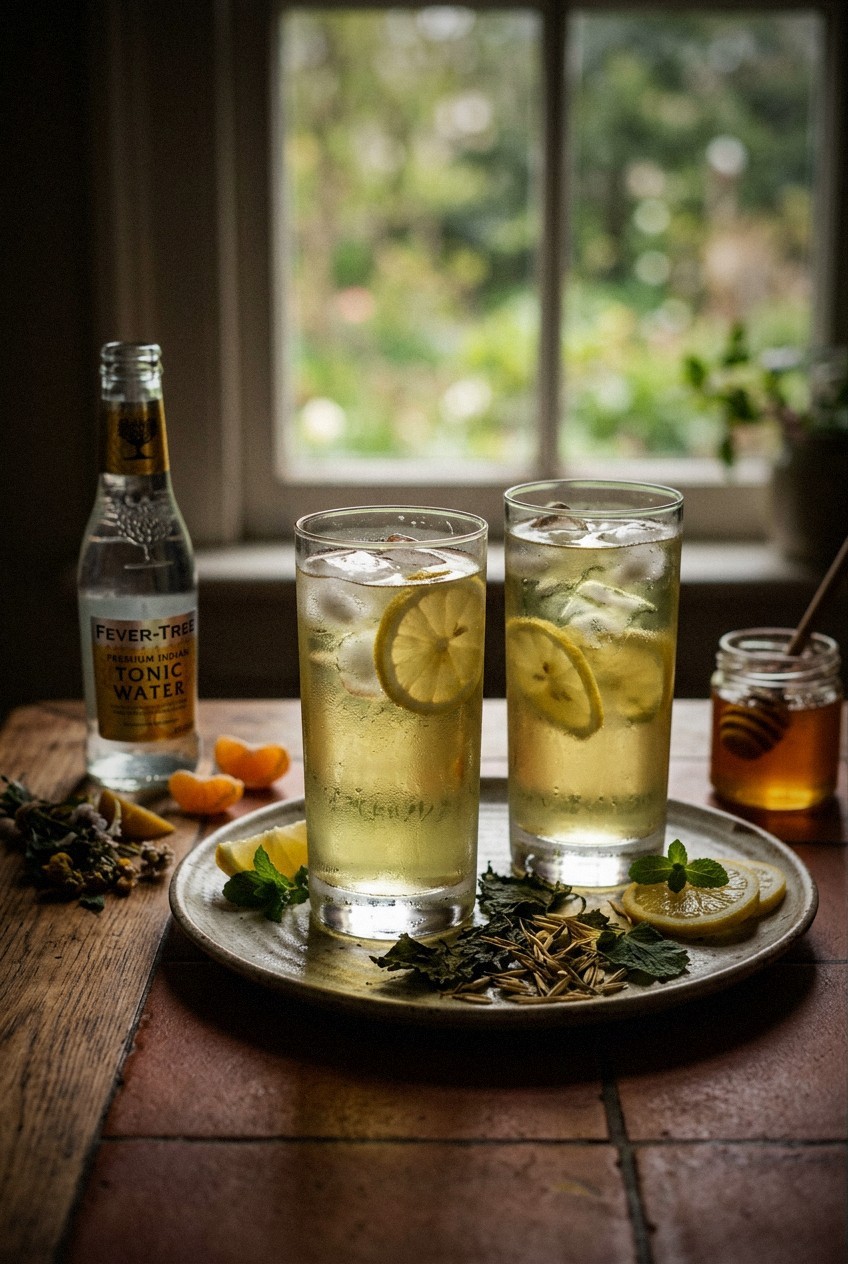
- Serve over ice with a lemon slice. Add honey if desired, stirring until dissolved.
Herbalist Notes
Nettle leaf contains approximately 250-300mg magnesium per 100g dried herb, plus iron, calcium, and silica. Oatstraw (harvested during the milky stage) provides magnesium alongside B-vitamins and compounds that support the nervous system during stress. Studies on Avena sativa extract show it reduces cortisol response and improves sleep latency in adults with mild anxiety.
Red raspberry leaf adds another 40-50mg magnesium per tablespoon and contains fragarine, which relaxes smooth muscle tissue. Lemon balm (Melissa officinalis) doesn’t contribute significant magnesium but increases GABA activity in the brain. A 2011 study in Mediterranean Journal of Nutrition and Metabolism found 600mg lemon balm reduced anxiety scores by 18% and improved sleep quality by 42% in participants with mild-to-moderate anxiety.
Cold-brewing for 8-12 hours extracts more minerals than a 5-minute hot steep because the extended contact time allows ionic minerals to leach into the water. The lack of heat also prevents the breakdown of volatile oils in lemon balm that contribute to its calming effect.
Make It Your Own
Double the lemon balm if you’re using this primarily for sleep. The standard ratio here balances mineral replenishment with nervous system support, but 2 tablespoons lemon balm shifts the blend toward sedation. Add a handful of fresh mint leaves during the last hour of steeping for a brighter flavor.
For a quick version, steep the herbs in just-boiled water for 15 minutes, strain, and pour over ice. You’ll lose some mineral extraction but gain speed. The flavor will be slightly more astringent. Sweeten with a teaspoon of elderflower cordial instead of honey for a floral spring note.
Common Questions
What tea is high in magnesium?
Nettle leaf and oatstraw are the two highest-magnesium herbs commonly used in tea. Nettle provides 250-300mg magnesium per 100g dried leaf. Oatstraw contains 150-200mg per 100g. Red raspberry leaf, alfalfa, and horsetail also contribute meaningful amounts (40-80mg per tablespoon). Standard black or green tea contains only trace magnesium (5-10mg per cup), so herbal infusions are the better choice for mineral replenishment.
Can you make a magnesium drink at home?
Yes. This recipe uses four dried herbs steeped overnight to extract 300-400mg magnesium per quart. The cold-brew method allows minerals to leach into water without heat. You can also make a faster version by steeping the same herbs in hot water for 15 minutes, though you’ll extract slightly less magnesium. Nettle and oatstraw are the foundation. Buy organic dried herbs from Mountain Rose Herbs or Starwest Botanicals to ensure quality.
What herbs help with magnesium absorption?
Vitamin C-rich herbs like rose hips improve magnesium absorption when consumed together. Dandelion root supports liver function, which regulates magnesium storage. Ginger increases stomach acid production, aiding mineral uptake. But the most important factor is magnesium form. Herbs provide magnesium bound to organic compounds (like chlorophyll in nettle), which absorbs better than inorganic forms like magnesium oxide. Pair this tea with a small amount of fat (a few nuts, a slice of avocado) to enhance absorption of fat-soluble nutrients that work synergistically with magnesium.
Is magnesium tea good for sleep?
Yes, if it contains magnesium-rich herbs and you drink it consistently. Magnesium regulates GABA receptors and melatonin production. A 2012 study in Journal of Research in Medical Sciences found 500mg supplemental magnesium improved sleep quality and reduced insomnia severity in elderly participants over 8 weeks. This herbal tea provides 75-100mg magnesium per cup (300-400mg per quart). Drink 1-2 cups daily for at least two weeks to build magnesium stores. The lemon balm in this recipe adds direct sedative effects, with studies showing improved sleep onset within 30-60 minutes of consumption.
How long does magnesium herbal tea stay fresh?
Strained magnesium tea lasts 3 days refrigerated in a sealed glass container. The high mineral content makes it more stable than plain water, but lemon balm’s volatile oils degrade after 72 hours. You’ll notice the flavor becomes flat and slightly metallic by day four. For best results, make a fresh quart every 2-3 days. The dry herb blend stores for 6-12 months in an airtight container away from light and heat. If you see mold or the tea smells sour, discard it.