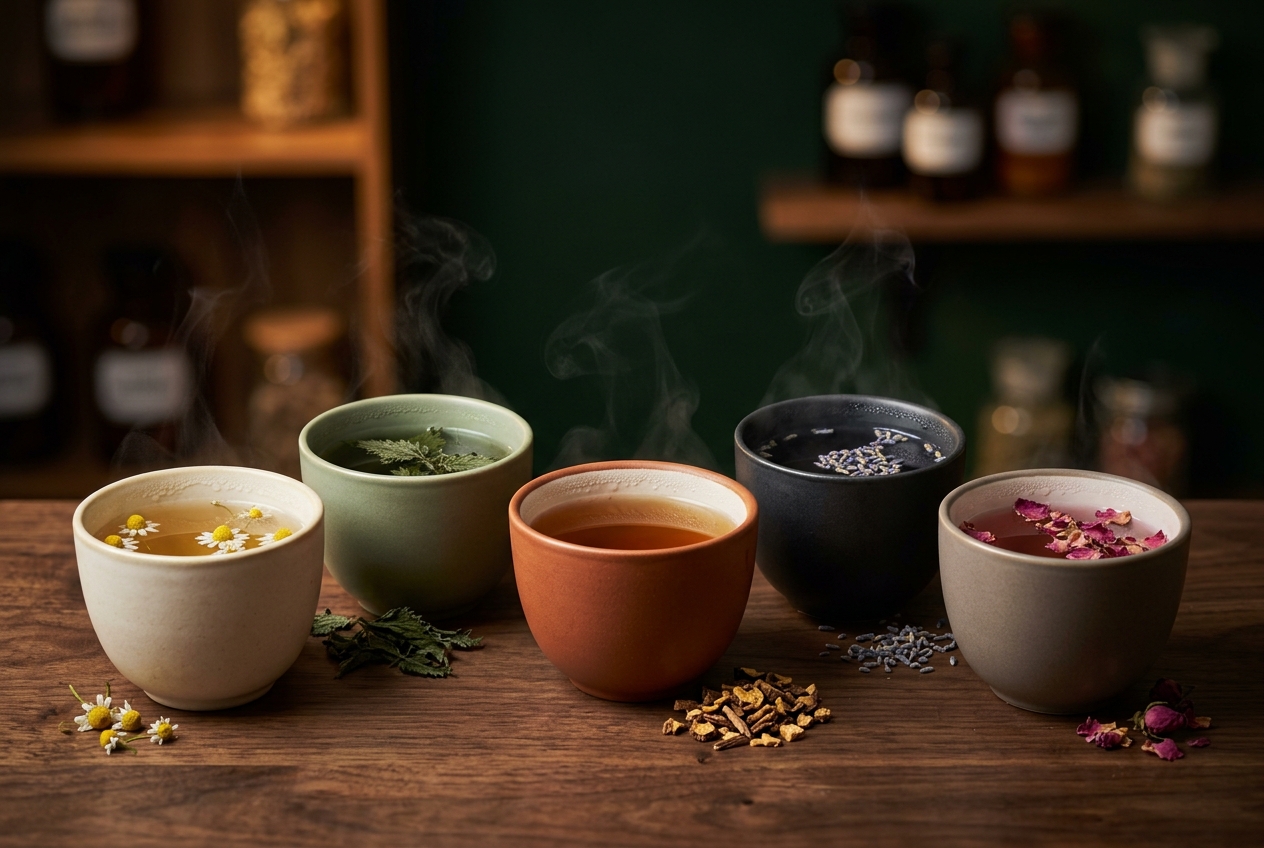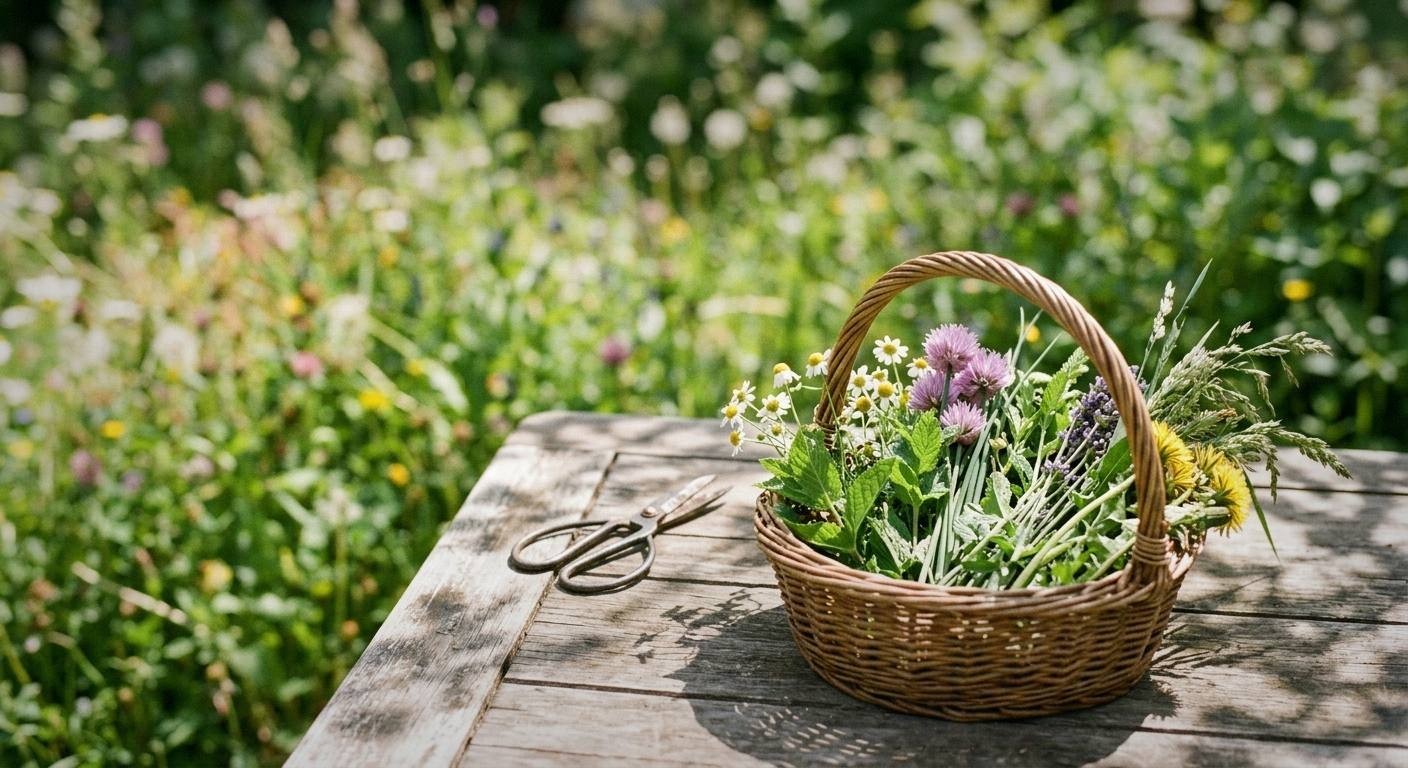
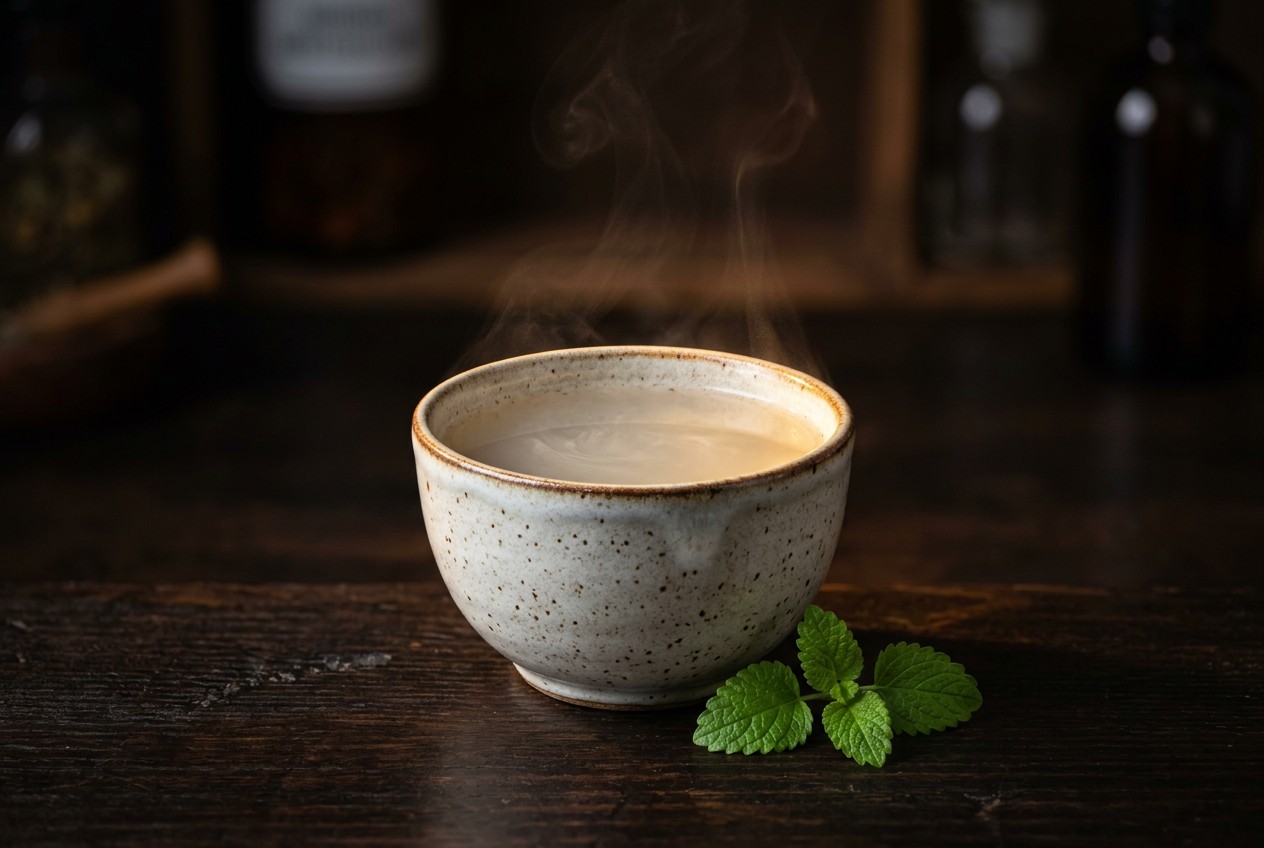
Mallow tea with marshmallow root, chamomile, and fennel. Cold-brewed 4 hours for that silky mucilage texture. Caffeine-free, gentle, and quietly soothing.
Why You Will Love This
This mallow tea pulls its silky texture from marshmallow root steeped cold overnight. The result is a pale, slightly sweet infusion with a real slip to it, the same slick quality okra gives a pot of gumbo. Chamomile and fennel round out the blend with mild floral notes and a whisper of anise. It tastes gentle, almost neutral, with a viscosity you can feel on your tongue.
The Story Behind It
Marshmallow root (Althaea officinalis) has been used in Western herbalism since ancient Greece, where physicians like Hippocrates recorded its use for wound poultices and respiratory complaints around 400 BCE. The cold-water extraction method preserves the plant’s mucilage polysaccharides, which break down above 104°F. This technique appears in European folk medicine traditions and modern clinical herbalism alike. Spring is the traditional harvest time for mallow roots, making this a seasonally aligned digestive tonic.
What You Will Need
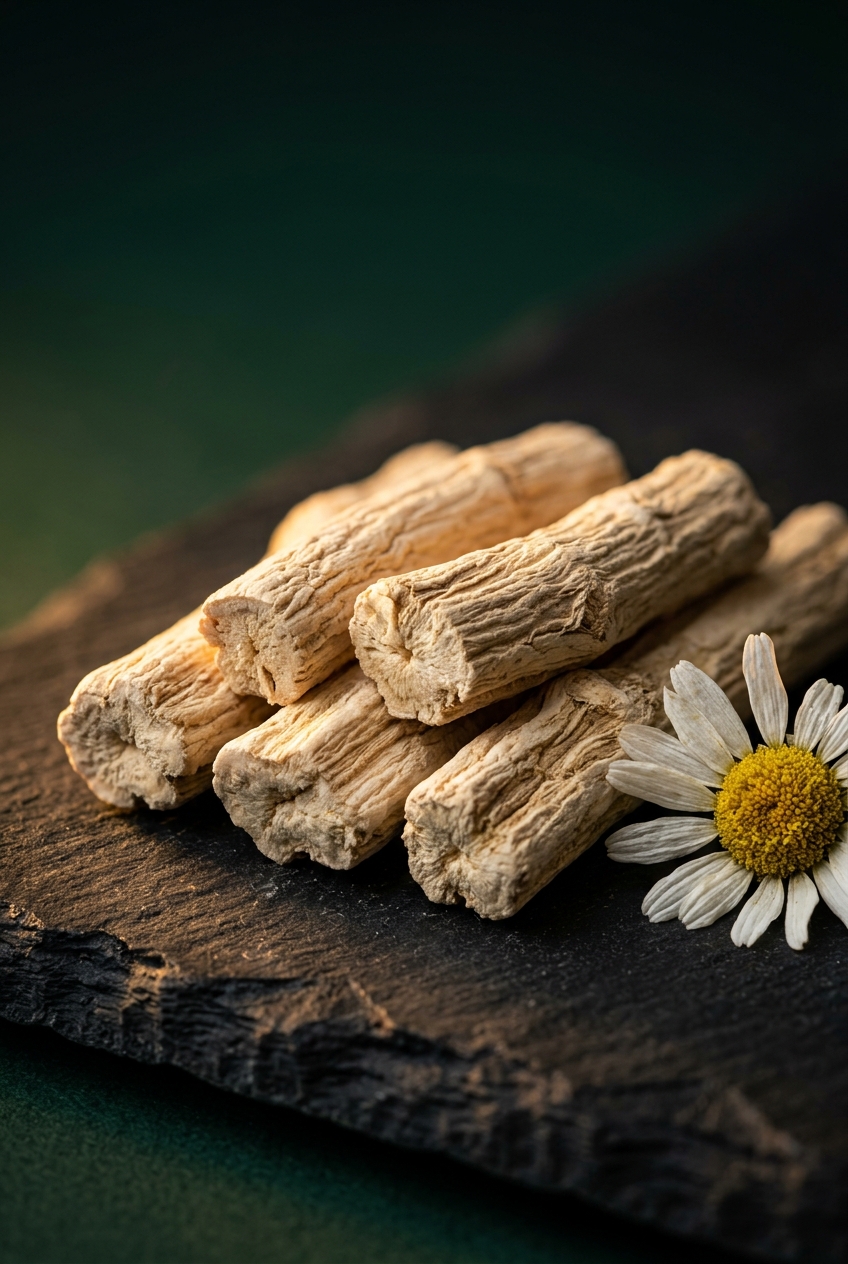
- 2 tablespoons dried marshmallow root
- 1 tablespoon dried chamomile flowers
- 1 teaspoon fennel seeds, lightly crushed
- 4 cups cold filtered water
- Raw honey, to taste (optional)
- Fresh lemon balm leaves for garnish (optional)
How to Make It
- Place marshmallow root in a quart-sized glass jar or pitcher.
- Add chamomile flowers and crushed fennel seeds to the jar.
- Pour 4 cups cold filtered water over the herbs.
- Stir gently, cover, and refrigerate for 4-8 hours or overnight.
- Strain through a fine-mesh sieve or cheesecloth, pressing herbs gently to extract all liquid.
- Serve cold or gently warm to body temperature (not above 100°F to preserve mucilage).
- Sweeten with raw honey if desired and garnish with fresh lemon balm.
Herbalist Notes
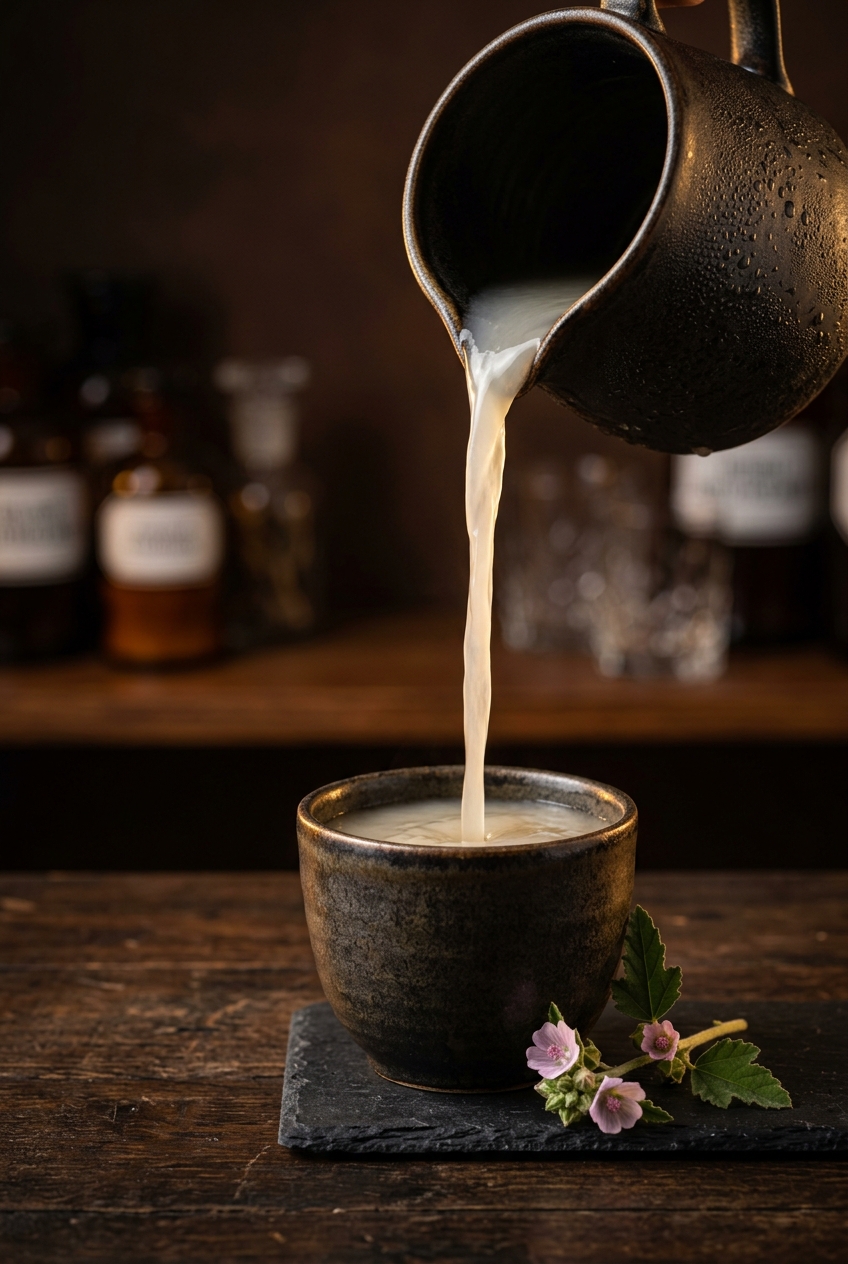
Marshmallow root is the plant Western herbalists reach for when something feels raw and irritated. The slip is the whole point. Those long-chain sugars are what herbalists call a demulcent, an old word for anything that feels soft and coating going down. Cold infusion is what pulls them out cleanly. Hot water gives you a thinner, more astringent cup because it drags tannins along with everything else.
Fennel is the seed that ends a meal in half the world. Indian restaurants set a bowl of it by the door, and the anise smell is the volatile oil doing the work. Traditional use for fennel is digestive: heavy meals, a tight or gassy stomach, the general feeling of having eaten too much too fast. It also keeps this blend from tasting like nothing.
Chamomile is the classic evening herb, and it earns its spot here for reasons beyond flavor. Traditional herbalism treats it as the go-to for the kind of stomach trouble that shows up when you are wound tight. If your digestion tends to go sideways under stress rather than after a specific food, this is the piece of the blend doing that job.
Make It Your Own
If you cannot source marshmallow root, slippery elm bark works similarly but has a stronger, more earthy flavor. Use 1 tablespoon per 4 cups water. For a warming version, add 2-3 slices of fresh ginger during the cold steep, then gently heat to 95-100°F before serving. The ginger will not interfere with mucilage extraction if added cold.
Serve this over ice with a sprig of mint for a summer digestive cooler, or warm it slightly and add a cinnamon stick for a cozy evening cup. The tea keeps refrigerated for 48 hours but loses some viscosity after day two.
Common Questions
What is mallow tea good for?
Mallow tea, specifically marshmallow root tea, is the cup Western herbalists hand you when something feels scraped and sore. That is the whole traditional reputation of the plant: soothing, coating, soft. People drink it when their stomach feels raw, when a dry cough has been going for days, or when they simply want something that does not sit sharp. What I can tell you honestly is what it does in the glass, which is turn silky, and what people have used it for, which is comfort. Whether that comfort is doing anything measurable inside you is not something I can promise, and I am not going to pretend otherwise.
How do you make marshmallow root tea at home?
Use a cold infusion method to preserve mucilage. Place 2 tablespoons dried marshmallow root in 4 cups cold filtered water and refrigerate for 4-8 hours. Strain and drink cold or warm to body temperature (not above 100°F). Hot water gives you a thinner, more astringent cup, which is easy to confirm yourself: brew one jar hot and one cold from the same root and compare how they feel on the spoon. Cold steeping takes longer but yields the viscous, coating texture the whole recipe is built around. You can reuse the same roots for a second 4-hour steep, though the second batch will be noticeably thinner.
Can mallow tea help with digestive issues?
Traditionally it is used for the raw, irritated kind of discomfort rather than the sluggish kind. Marshmallow root is a comfort herb in the old sense, not a laxative and not a stimulant, and nobody has ever claimed it speeds digestion up. Fennel and chamomile are the two pieces of this blend with a long reputation for cramping and a tight stomach, which is why they are in here alongside the root. If your trouble is ongoing, painful, or new, that is a conversation with a clinician rather than something a jar of tea sorts out. Most people who drink this drink a cup before a meal, mostly because it is pleasant that way.
What does mallow tea taste like?
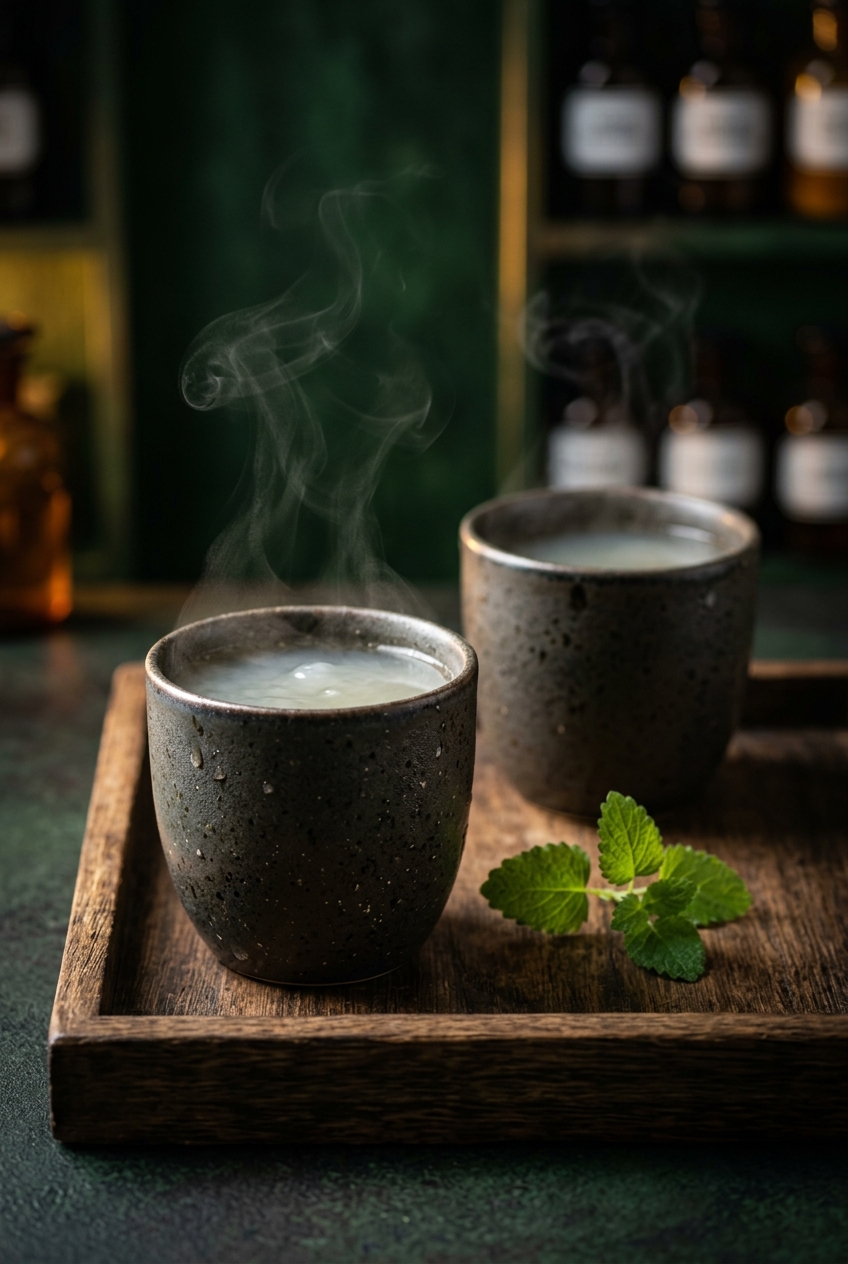
Mallow tea tastes mild, slightly sweet, and almost neutral with a silky, viscous texture. The marshmallow root itself has a faint earthy sweetness, similar to cooked parsnip but much lighter. Chamomile adds a gentle floral note, and fennel contributes a subtle anise-like finish. The texture is the defining characteristic: it feels thick and coating on your tongue, like a very diluted okra water. Some people find it soothing, others find it strange. Honey or lemon balm can brighten the flavor if the neutrality feels too flat.
How long does mallow tea stay fresh?
Store strained mallow tea in a sealed glass jar in the refrigerator for up to 48 hours. The mucilage begins to break down after two days, and the tea loses its characteristic viscosity. You will notice it becomes thinner and less coating. The dried herb blend keeps for 12-18 months in an airtight container away from light and heat. Older root gives a thinner cup, which you can feel immediately once you have made this a few times, so buy from suppliers with high turnover and use it within a year of harvest. If a batch comes out watery, the root is usually the reason, not the steep.
When to Serve and Pairings
This tea is best served when you want a quieter drink: something warm, simple, and easy to repeat without much setup.
Perfect occasions include:
- Bedtime wind-downs
- Rainy afternoons
- Slow mornings
- Seasonal sniffle days
- Reading breaks
- After-dinner sipping
Food pairings:
- Honey toast
- Plain shortbread
- Oatmeal with fruit
- Citrus slices
- Almond biscotti
- Simple yogurt bowls
For herbal teas, keep pairings mild and not too sweet so you can still taste the herb, steep time, and honey or lemon if you add them.
Printable recipe
Mallow Tea Recipe: Soothing Herbal Blend for Digestion
Mallow tea with marshmallow root, chamomile, and fennel. Cold-brewed 4 hours for that silky mucilage texture. Caffeine-free, gentle, and quietly soothing.
Ingredients
- 2 tablespoons dried marshmallow root
- 1 tablespoon dried chamomile flowers
- 1 teaspoon fennel seeds, lightly crushed
- 4 cups cold filtered water
- Raw honey, to taste (optional)
- Fresh lemon balm leaves for garnish (optional)
Instructions
- Place marshmallow root in a quart-sized glass jar or pitcher.
- Add chamomile flowers and crushed fennel seeds to the jar.
- Pour 4 cups cold filtered water over the herbs.
- Stir gently, cover, and refrigerate for 4-8 hours or overnight.
- Strain through a fine-mesh sieve or cheesecloth, pressing herbs gently to extract all liquid.
- Serve cold or gently warm to body temperature (not above 100°F to preserve mucilage).
- Sweeten with raw honey if desired and garnish with fresh lemon balm.
Keep browsing
Turn this into the next thing you make

Camille writes about botanical drinks, herbal cocktails, and the old plant wisdom that makes them work. Most days you'll find her in the garden or the kitchen, turning herbs into something worth sipping.