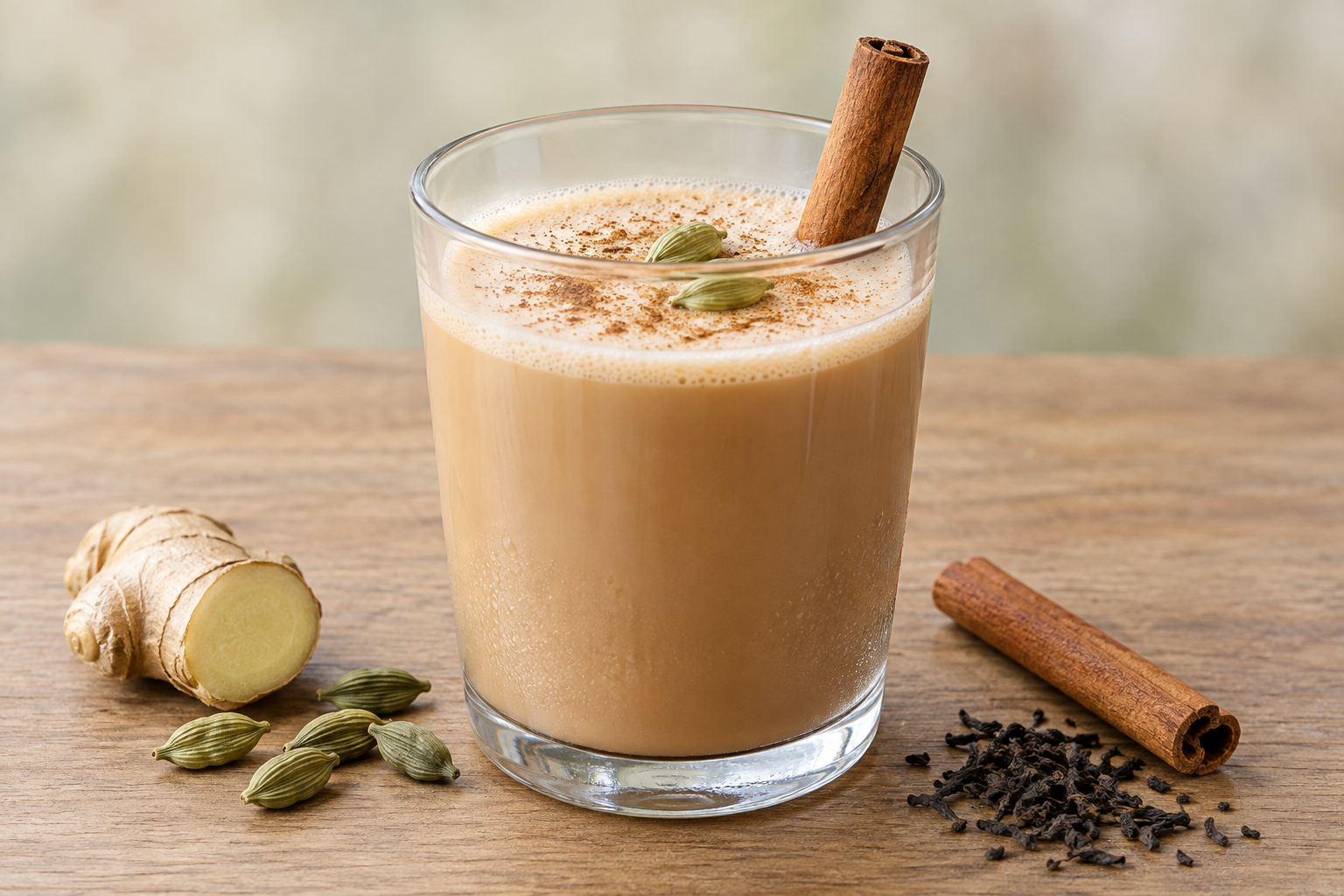
The first time you simmer ginger and cardamom in water, the smell alone tells you this is not the chai latte from a coffee shop. Real masala chai is spiced milk tea, built from scratch with whole spices that you crush yourself, black tea leaves that steep just long enough to turn the liquid dark without going bitter, and milk that foams as it hits a rolling boil.
This recipe walks you through the traditional method, explains why each spice matters, and shows you how to avoid the two mistakes that ruin most first attempts: adding milk too early and letting the pot boil over.
What Masala Chai Is and How It Differs from Chai Latte
Masala chai is spiced milk tea, brewed by simmering whole spices in water, steeping black tea leaves in that spiced water, then adding milk and bringing the mixture to a boil. The word “chai” means tea, and “masala” means spice blend, so masala chai is simply tea with spices.
A chai latte is espresso -bar shorthand for a drink made with a pre-mixed spiced syrup or powder, steamed milk , and sometimes no actual tea at all. The difference is not just authenticity.
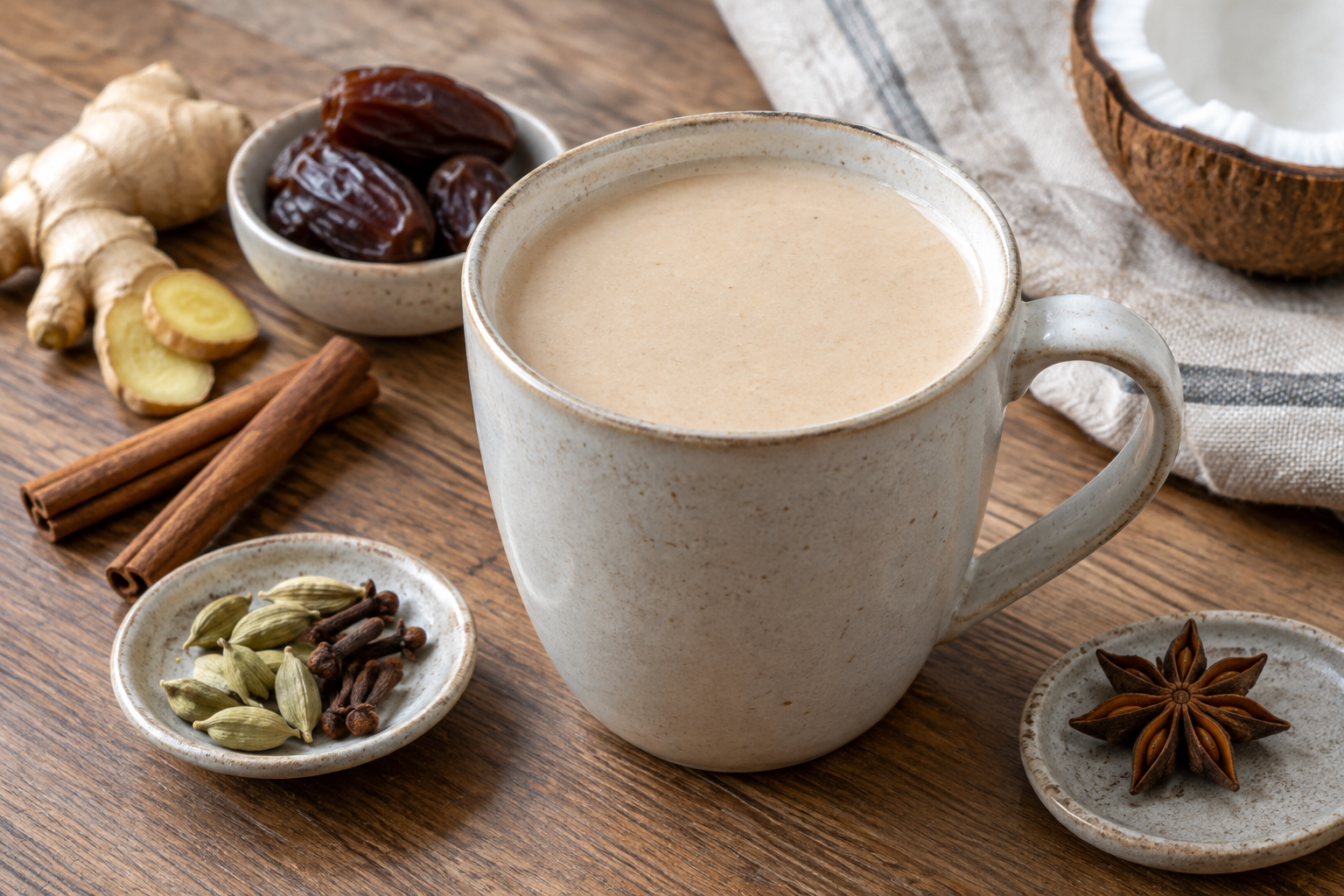
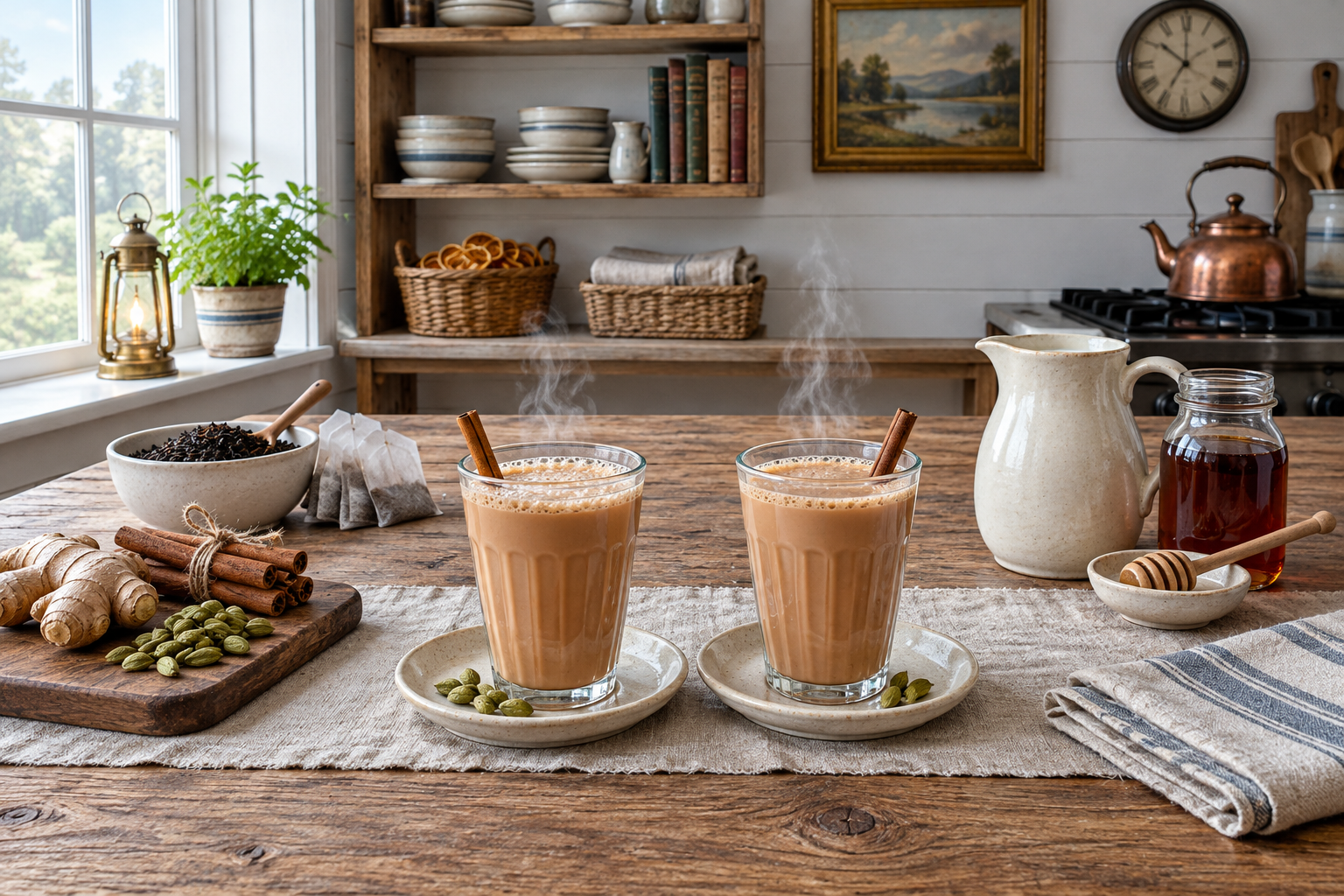
Whole spices release volatile oils as they simmer, creating layers of flavor that a powder or syrup cannot match. Fresh ginger adds heat and brightness. Cardamom pods, lightly crushed, give a floral, almost minty note.
Cinnamon sticks contribute warmth without the dusty sweetness of ground cinnamon. When you make masala chai from scratch, you control the spice intensity, the tea strength, and the milk-to-water ratio, so the cup tastes exactly the way you want it.
Core Spices and What Each One Does
Green cardamom is the backbone of masala chai. Crush the pods lightly with the flat side of a knife to release the seeds inside, which carry most of the flavor.
Cardamom adds a floral, slightly citrusy note that balances the heat from ginger and black pepper. Use 14 pods for a strong cardamom presence, or drop to 10 if you prefer a subtler background note.
Fresh ginger, grated or chopped, adds sharp heat and a bright, almost lemony edge. Ginger must simmer in water before milk is added, because the acids in ginger can curdle milk if they meet too early. Simmering also mellows the raw bite and lets the ginger infuse the water fully.
A 1½-inch piece is standard; use more if you like heat, less if you’re making chai for someone who finds ginger too strong.
Cinnamon stick, lightly crushed, contributes warmth and a faint sweetness without the chalky texture of ground cinnamon. A 3-inch stick is enough for four servings. Do not substitute ground cinnamon; it clouds the tea and settles at the bottom of the cup.
Cloves, if you use them, add a bitter, almost medicinal note that cuts through the sweetness of milk and sugar. Use them sparingly, four whole cloves is plenty, or leave them out entirely if you find their flavor too strong.
Black peppercorns are optional but traditional. They add a fruity heat that’s different from ginger’s sharpness. Crush three or four peppercorns lightly and add them with the other spices.
Nutmeg and star anise are less common but worth trying once you have the basic recipe down. Nutmeg adds a warm, slightly sweet note; star anise brings a licorice-like flavor that some people love and others can’t stand. Start with the core spices, cardamom, ginger, cinnamon, and add others only after you know what the base tastes like.
Whole Spices Versus Chai Masala Powder
| Whole Spices | Chai Masala Powder |
|---|---|
| Volatile oils at peak when crushed just before brewing | Oils fade after grinding; flat after three months |
| Adjust the balance: more cardamom, less cinnamon, no cloves | Locked into someone else’s ratio |
| Takes time to crush and measure each spice | Faster and consistent for daily brewing |
| Brighter, more layered flavor | Convenient but tastes dusty after six months |
If you go the powder route, use about two teaspoons per four servings, and add it to the water with the ginger so it has time to bloom. Taste the first batch and adjust the amount next time if it’s too strong or too weak.
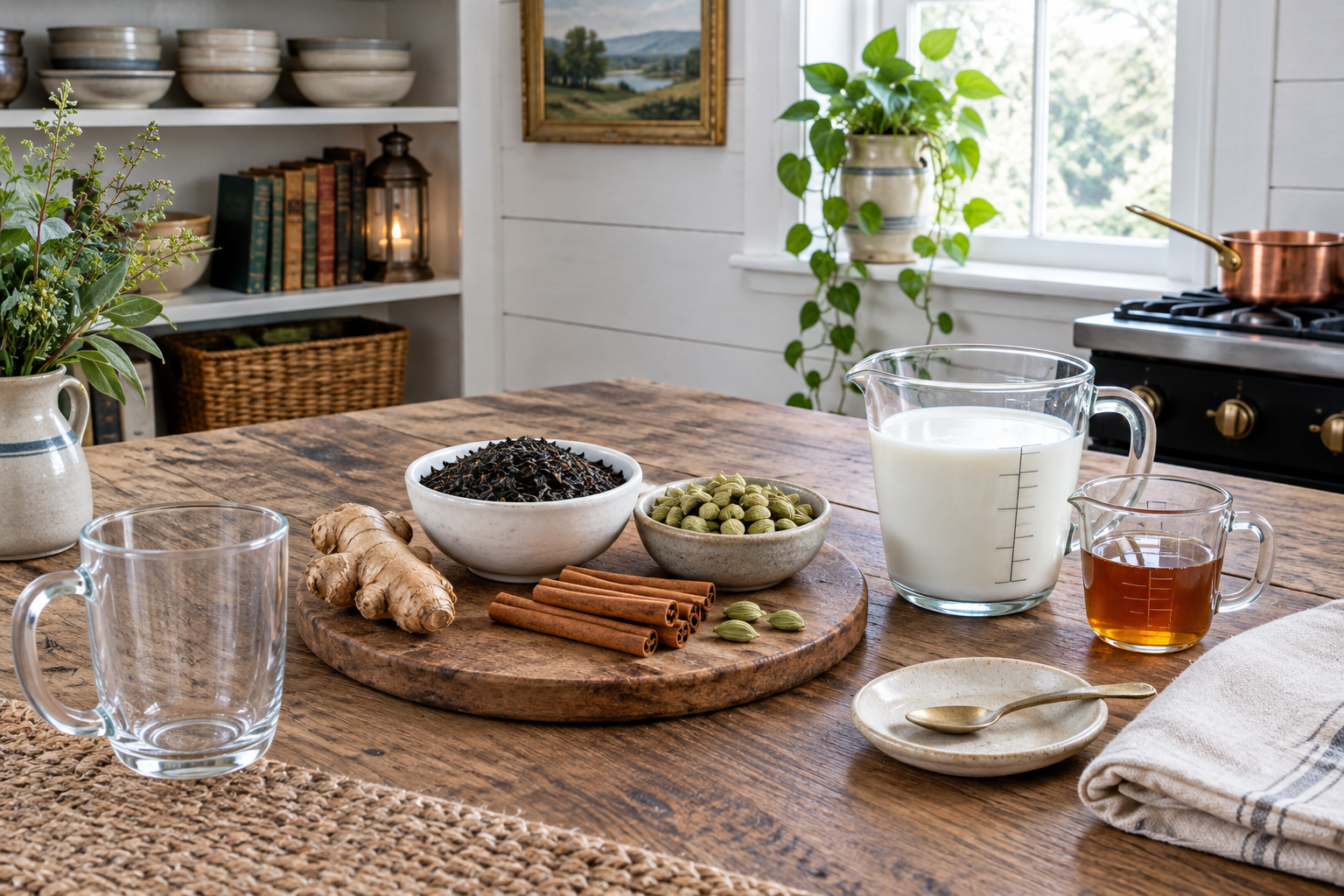
Ingredients
- 1 (1½") piece fresh ginger, unpeeled, coarsely grated
- 1 (3") cinnamon stick, lightly crushed with the flat side of a knife
- 6 tsp. loose strong black tea (such as Assam) or 6 tea bags (such as PG Tips)
- 14 green cardamom pods, lightly crushed, or ¾ tsp. cardamom seeds, lightly crushed
- 2¾ cups whole milk
- ¼ cup pure maple syrup
Instructions
- Pour 3½ cups water into a medium saucepan and add one 1½-inch piece of fresh ginger, unpeeled and coarsely grated, and one 3-inch cinnamon stick, lightly crushed with the flat side of a knife. Bring to a boil over medium-high heat, then lower the heat and let it simmer rapidly, stirring now and then, until the liquid reduces by a third and smells wonderful, about 20 minutes.
- Take the pan off the heat and stir in 6 teaspoons loose strong black tea (such as Assam) or 6 tea bags (such as PG Tips) and 14 green cardamom pods, lightly crushed, or ¾ teaspoon cardamom seeds, lightly crushed. Let it steep for 2 minutes.
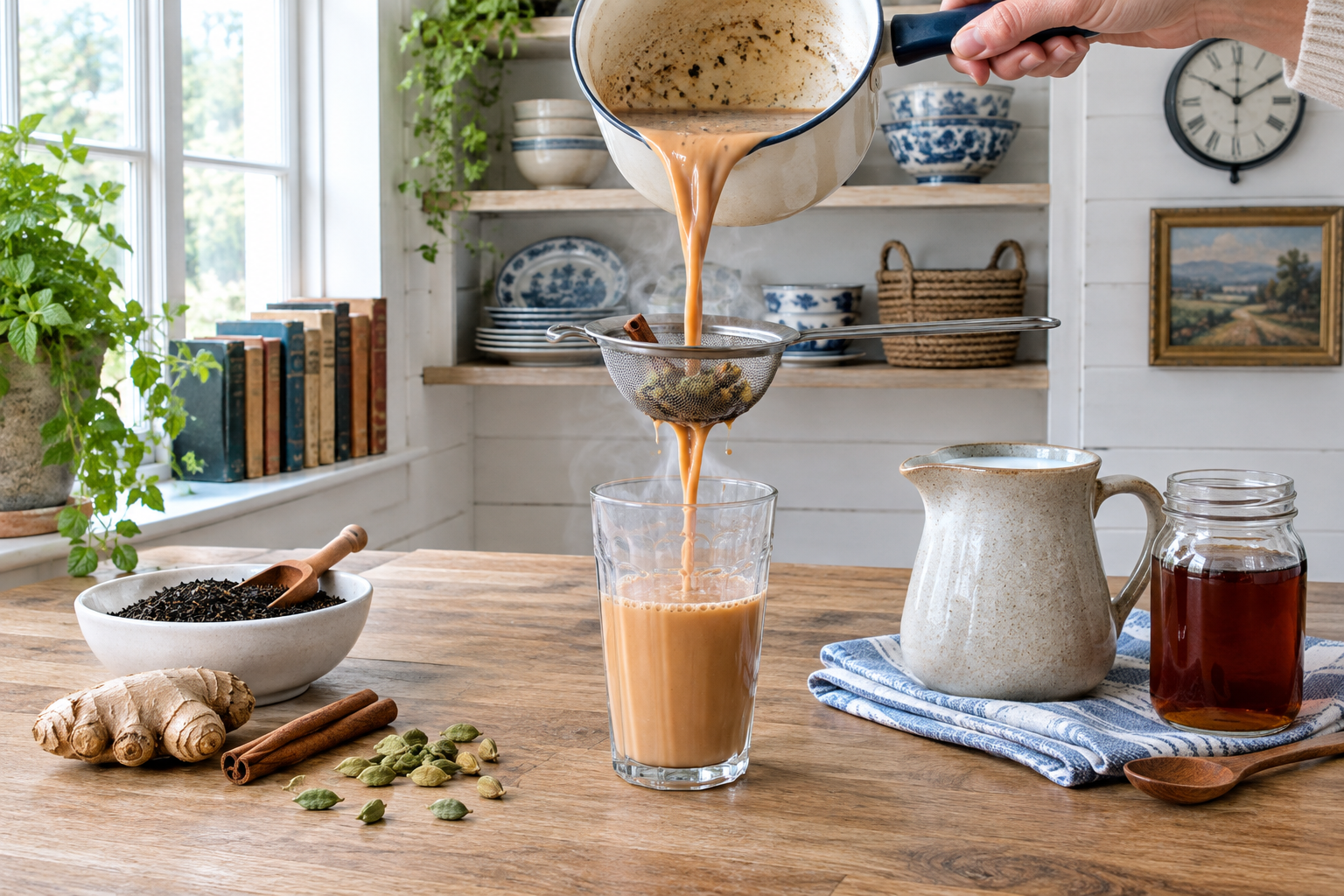
- Put the pan back over medium-high heat and stir in 2¾ cups whole milk and ¼ cup pure maple syrup. Cook, stirring occasionally and watching closely, until the mixture foams up and starts to boil, about 5 minutes. Take it off the heat right away and let it sit for 5 minutes. Strain the chai through a fine-mesh sieve into a teapot or pitcher and serve.
Brewing Technique and Why It Matters
The order of operations is not arbitrary. Ginger and cinnamon simmer in water first because they need time to release their oils, and because ginger’s acids can curdle milk if they meet too soon.
Tea leaves go in after the spices have infused the water, and they steep off the heat so they don’t turn bitter. Black tea releases tannins quickly when boiled, and tannins make the tea taste astringent and metallic. Three minutes of steeping off the heat is enough to extract color and flavor without bitterness.
Milk goes in last, and the mixture must come to a full rolling boil. This is not about temperature; it’s about aeration. As the milk boils, foam rises and the liquid churns, which incorporates air and gives the chai a creamy, frothy texture.
Street vendors in India use a technique called the chaiwala pull, pouring the boiling chai back and forth between two vessels from a height to aerate it further. You don’t need to do this at home, but letting the chai boil until foam rises achieves a similar effect.
Watch the pot closely once the milk goes in. Milk boils over fast, and once it starts, it doesn’t stop. Keep a wooden spoon nearby and lay it across the top of the pot if you see the foam climbing.
The spoon breaks the surface tension and gives the foam somewhere to collapse. If the chai does boil over, reduce the heat immediately and stir to bring the foam down.
Common Problems and How to Fix Them
- Weak tea: You steeped the tea leaves for less than 3 minutes, or you used too much water relative to tea. Add another teaspoon of tea leaves next time, or let the tea steep for 4 minutes instead of 3.
- Bitter tea: You boiled the tea leaves instead of steeping them off the heat, or you steeped them for longer than 4 minutes. Remove the pan from the heat before adding the tea, and set a timer.
- Curdled milk: You added milk before the ginger had simmered in water, or you used milk that was close to its expiration date. Always simmer the spices in water first, and use fresh milk.
- Overflow: You walked away after adding the milk. Stay at the stove and watch the pot. If foam starts to rise, remove the pan from the heat immediately or lay a wooden spoon across the top.
- Flat spice flavor: You used pre-ground spices or whole spices that have been sitting in your pantry for over a year. Buy fresh whole spices and crush them just before brewing.
Water-to-Milk Ratio and How to Adjust It
The recipe above uses 3½ cups water to 2¾ cups milk, which gives you a balanced chai that tastes like spiced tea with milk, not like spiced milk with tea. If you prefer a creamier, milkier chai, use 3 cups water and 3¼ cups milk.
If you want the tea flavor stronger and the milk lighter, use 4 cups water and 2 cups milk. The total liquid should stay around 6 to 6½ cups for four servings, so adjust the proportions rather than adding more of both.
Whole milk gives the richest, creamiest result. You can use 2% milk, but the chai will taste thinner. Non-fat milk works but lacks body.
Oat milk and almond milk both work as dairy-free substitutes, but they don’t foam as well as whole milk, and they can separate if boiled too hard. If you use a non-dairy milk, bring the mixture just to a simmer rather than a full boil, and stir constantly.
Tea Leaf Selection and Why Assam Works Best
Assam black tea is the standard choice for masala chai because it’s strong, malty, and holds up to milk and spices without disappearing. Assam tea comes from the Assam region of India and has a bold, slightly astringent flavor that cuts through the sweetness of milk and sugar.
If you can’t find loose Assam tea, use a strong black tea bag such as PG Tips or Wagh Bakri. Avoid Earl Grey, English Breakfast, or other flavored or blended teas; the bergamot or other added flavors clash with the spices.
Loose tea gives you more control over strength than tea bags. Six teaspoons of loose tea for four servings is the baseline; use seven or eight teaspoons if you want a stronger tea flavor, or five if you prefer it lighter.
If you use tea bags, use six bags and leave them in for the full 3 minutes. Don’t squeeze the bags when you remove them; squeezing releases extra tannins and makes the tea bitter.
Frequently Asked Questions
Can I make masala chai without a recipe and just eyeball the spices?
Yes, once you’ve made it a few times and know what the spice balance should taste like. Start with the measured recipe, taste the result, and adjust next time. If the cardamom is too strong, use fewer pods.
If the ginger is too mild, grate more. Write down what you change so you can repeat it.
How do I crush whole spices without a mortar and pestle?
Place the spices on a cutting board and press down on them with the flat side of a chef’s knife. For cardamom pods, you just need to crack them open so the seeds inside are exposed.
For cinnamon sticks, press until the stick breaks into a few pieces. You can also put the spices in a zip-top bag and hit them with a rolling pin or the bottom of a heavy pan.
Can I make a big batch of masala chai and reheat it later?
Yes, but the tea will continue to steep and may turn bitter. If you want to make chai ahead, brew the spiced water and steep the tea, then strain out the solids and refrigerate the concentrate for up to three days.
When you’re ready to serve, reheat the concentrate, add the milk and sweetener, and bring it to a boil. This keeps the tea from over-steeping.
What sweetener should I use?
Maple syrup, white sugar, and honey all work. Maple syrup adds a faint caramel note that complements the spices. White sugar is neutral and lets the spices come through cleanly.
Honey can overpower the tea if you use too much, so start with two tablespoons and add more to taste. Add the sweetener after the milk so you can taste the chai and adjust the amount.
Can I use pre-ground ginger instead of fresh?
No. Pre-ground ginger tastes dusty and lacks the bright, sharp heat of fresh ginger.
Fresh ginger also releases oils as it simmers, which pre-ground ginger can’t do. If you don’t have fresh ginger, leave it out rather than substituting the powder.
How do I know when the chai is ready to strain?
When the mixture comes to a full rolling boil and foam rises to the top of the pan, it’s ready. The color should be a deep tan, almost caramel.
If the chai looks pale, let it boil for another 30 seconds. If it looks dark brown and smells bitter, you’ve boiled it too long.
Conclusion
Masala chai is not complicated, but it is precise. Simmer the spices in water first, steep the tea off the heat, add the milk and bring it to a boil, then strain and serve.
The whole process takes 21 minutes, and most of that is hands-off simmering. Once you’ve made it a few times, you’ll know the smell of the spices when they’re ready, the color of the tea when it has steeped long enough, and the sound of the milk just before it boils over.
Make it once with the measured recipe, then adjust the spices, the milk ratio, and the sweetness until it tastes exactly the way you want it.