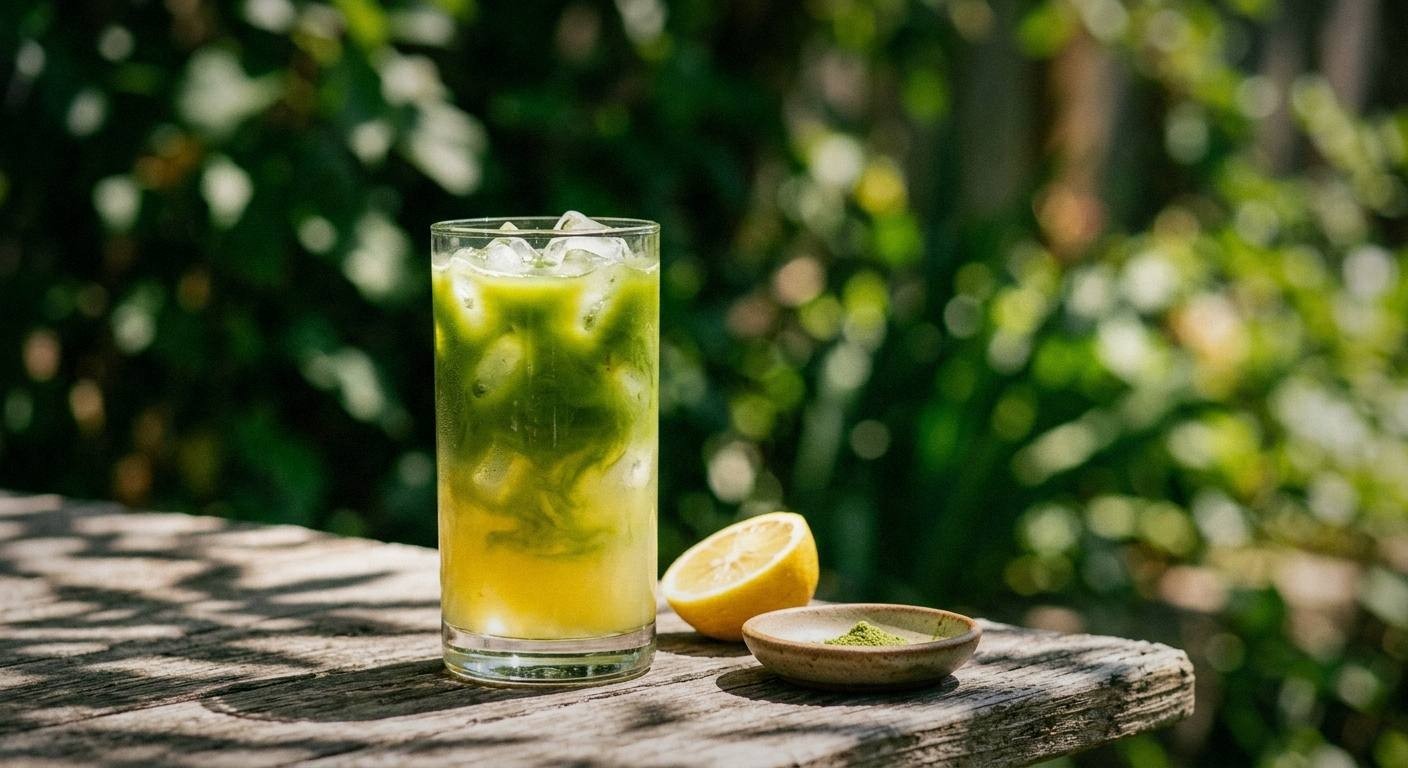
Iced matcha lemonade with ceremonial matcha and fresh lemon juice. Bright green, tart, and caffeinated. The Starbucks copycat that costs 75 cents.
Starbucks discontinued their iced matcha lemonade in March 2025. People were upset. The homemade version is better anyway because Starbucks used sweetened matcha powder (sugar is the first ingredient) and boxed lemonade. This recipe uses actual ceremonial matcha and fresh lemon juice. It costs about 75 cents a glass and takes the same five minutes you’d have spent in the drive-through line.
At a Glance
| Detail | Info |
|---|---|
| Prep time | 5 minutes |
| Total time | 5 minutes |
| Servings | 1 |
| Difficulty | Easy |
| Key ingredient | Ceremonial grade matcha |
| Best for | Summer afternoons, caffeine without jitters |
| Flavor profile | Bright, tart, grassy, lightly sweet |
| Caffeine | About 70 mg (from matcha) |
Why Matcha and Lemon Work Together
The tartness of fresh lemon juice cuts through the grassiness of matcha the same way it cuts through the richness of fish. Both are about acid balancing a dominant flavor. Lemon also brightens the green color. Matcha in plain water can look murky or olive-toned. Add lemon and the citric acid shifts the chlorophyll slightly, keeping it a vivid green.
The caffeine profile is the real reason to pick this over regular lemonade. Matcha delivers about 70 mg of caffeine alongside L-theanine, an amino acid that promotes alpha brain wave activity. A study in Nutritional Neuroscience found the combination improved attention and task-switching better than caffeine alone. You get alert without wired.
What You Will Need
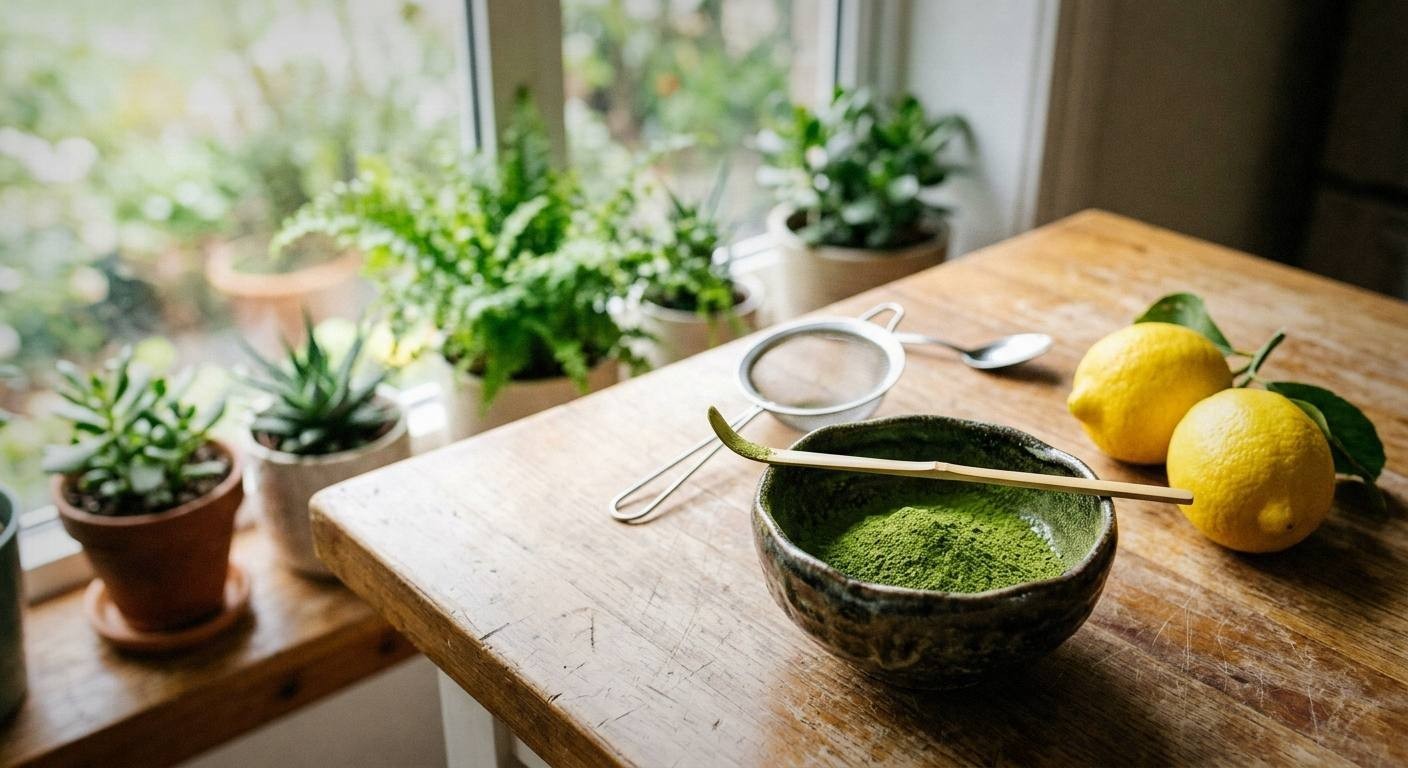
- 1 1/2 teaspoons ceremonial grade matcha
- 2 oz warm water (170F / 77C)
- 2 tablespoons fresh lemon juice (about 1 lemon)
- 1 tablespoon simple syrup or honey
- 1 cup cold water
- Ice cubes
On the matcha: Ceremonial grade makes a difference here because you taste the matcha directly. Culinary grade works in baked goods where other flavors mask it, but in lemonade the bitterness of cheap matcha will overpower the lemon. Ippodo, Marukyu Koyamaen, and Kettl are the real deal. Our iced matcha latte recipe covers matcha sourcing in more detail.
On the lemon: Fresh. Always fresh. Bottled lemon juice has a flat, cooked taste that ruins this. One medium lemon gives you about 2 tablespoons.
On the sweetener: Simple syrup dissolves instantly in cold liquid. Honey works if you stir it into the warm matcha paste first (it will not dissolve in cold water). Maple syrup adds a different sweetness that some people prefer. Raw cane sugar does not dissolve well cold.
How to Make It
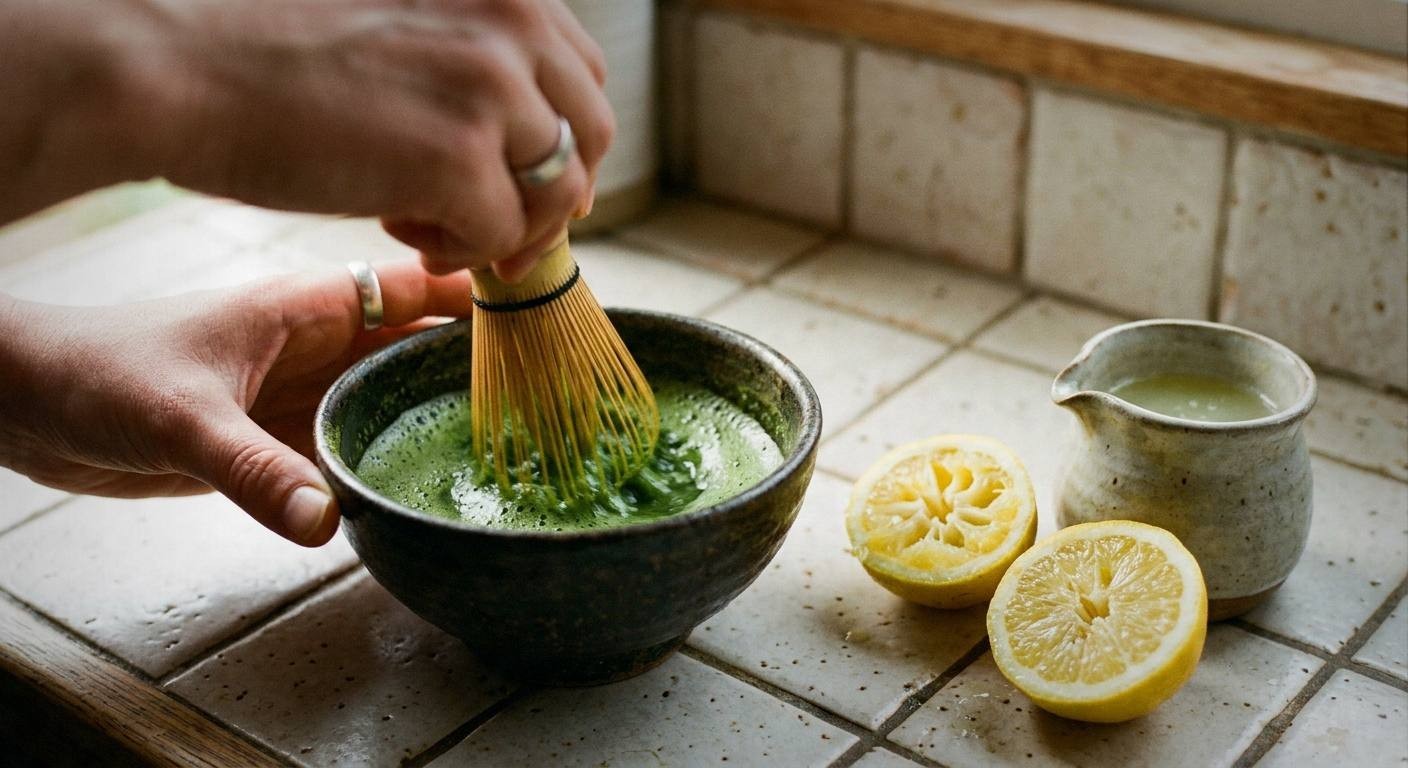
Sift 1 1/2 teaspoons of matcha into a small bowl. Sifting prevents lumps. This step takes ten seconds and saves you from a gritty drink.
Add 2 oz of warm water (170F, not boiling). Whisk vigorously with a bamboo chasen or small whisk for about 30 seconds until the paste is smooth, bright green, and slightly frothy.
Fill a tall glass with ice cubes.
Add 2 tablespoons fresh lemon juice, 1 tablespoon simple syrup, and 1 cup cold water to the glass. Stir to combine the lemonade base.
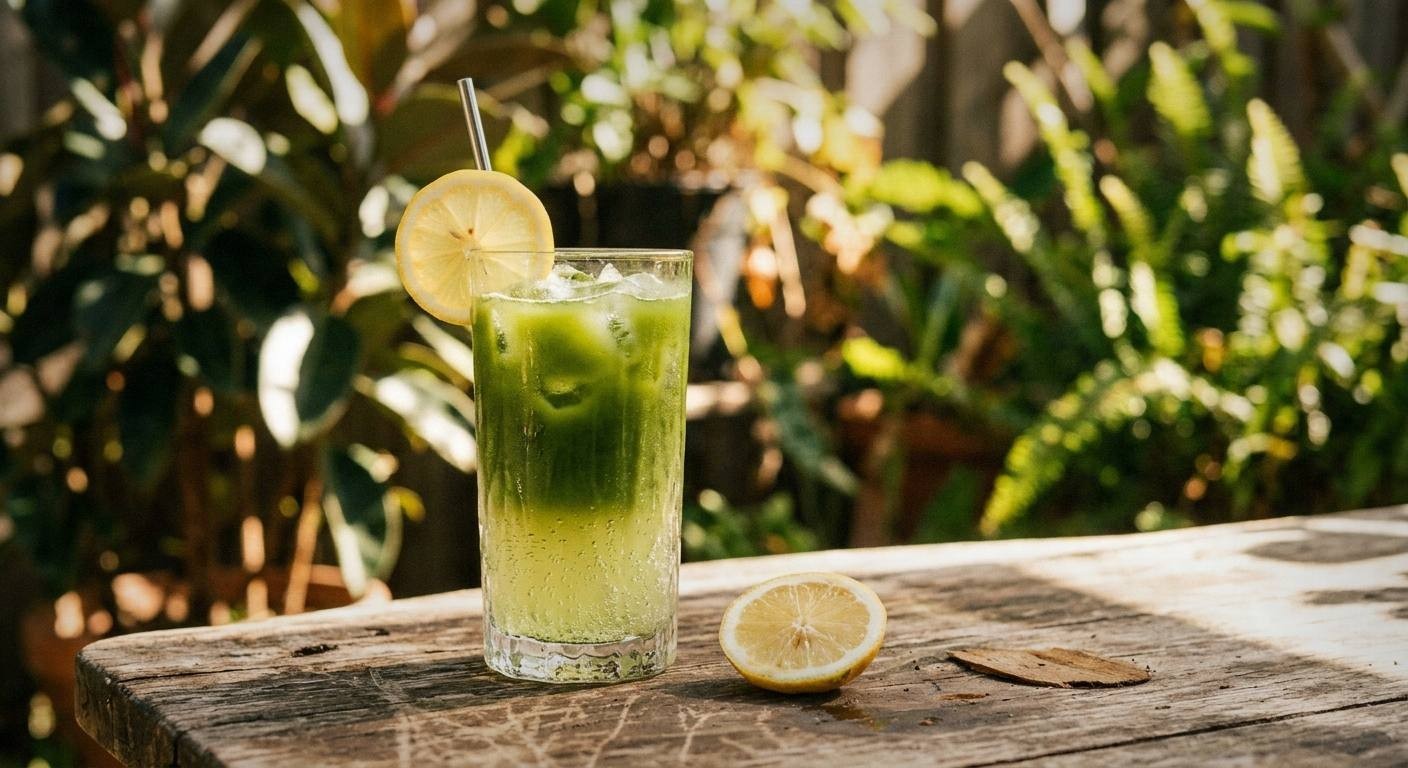
Pour the matcha concentrate over the lemonade. It will sink and swirl through the yellow lemonade, turning it bright green. Stir once to combine, or leave it layered for the visual.
Variations
Sparkling matcha lemonade: Replace the 1 cup of cold water with sparkling water (Topo Chico for maximum fizz). Add the sparkling water last, after the matcha, so you do not lose carbonation from stirring.
Matcha mint lemonade: Muddle 5 or 6 fresh mint leaves in the bottom of the glass before adding ice. The mint adds a cooling layer that makes this taste like summer in a glass.
Matcha lavender lemonade: Replace simple syrup with 1 tablespoon lavender simple syrup. Lavender and matcha share some of the same grassy, floral notes and they layer well together.
Matcha Arnold Palmer: Use cold brewed black tea instead of water for the base. You get the tannins from black tea, the L-theanine from matcha, and the citrus from lemon. Triple-layered flavor.
Before You Start
Water temperature matters. Matcha scorches above 180F and turns bitter. Boil your water and let it sit for 2 minutes, or use a kettle with temperature control. The warm water is only for dissolving the matcha. The drink itself is cold.
Do not skip the separate whisking step. Adding matcha powder directly to cold lemonade gives you clumps. The warm water dissolves the matcha into a smooth paste first, then that paste disperses evenly into the cold liquid.
Adjust sweetness to your lemon. Lemons vary. A very tart lemon might need an extra teaspoon of syrup. A mild one might need less. Taste the lemonade base before adding matcha and adjust.
Common Questions
Is this the same as the Starbucks matcha lemonade?
Same concept, better execution. Starbucks uses their sweetened matcha blend (which contains sugar as the first ingredient) and pre-made lemonade. This version uses pure ceremonial matcha and fresh lemon juice. You control the sugar. The matcha quality is higher. And it costs about a fifth of the price.
Can I make this in a batch?
Make the lemonade base (lemon juice, simple syrup, water) in a pitcher. Store in the fridge for up to 2 days. Make the matcha paste fresh for each glass because matcha oxidizes and loses flavor within about 20 minutes of whisking.
How much caffeine is in matcha lemonade?
About 70 mg per serving from the 1 1/2 teaspoons of matcha. That is roughly equivalent to a shot of espresso but with L-theanine to smooth the energy curve.
Does the lemon change the matcha color?
Slightly. The citric acid can shift matcha from deep green toward a brighter, more yellow-green. This is normal and does not affect the flavor. The final color depends on your matcha quality and how much lemon you use.

Camille writes about botanical drinks, herbal cocktails, and the old plant wisdom that makes them work. Most days you'll find her in the garden or the kitchen, turning herbs into something worth sipping.