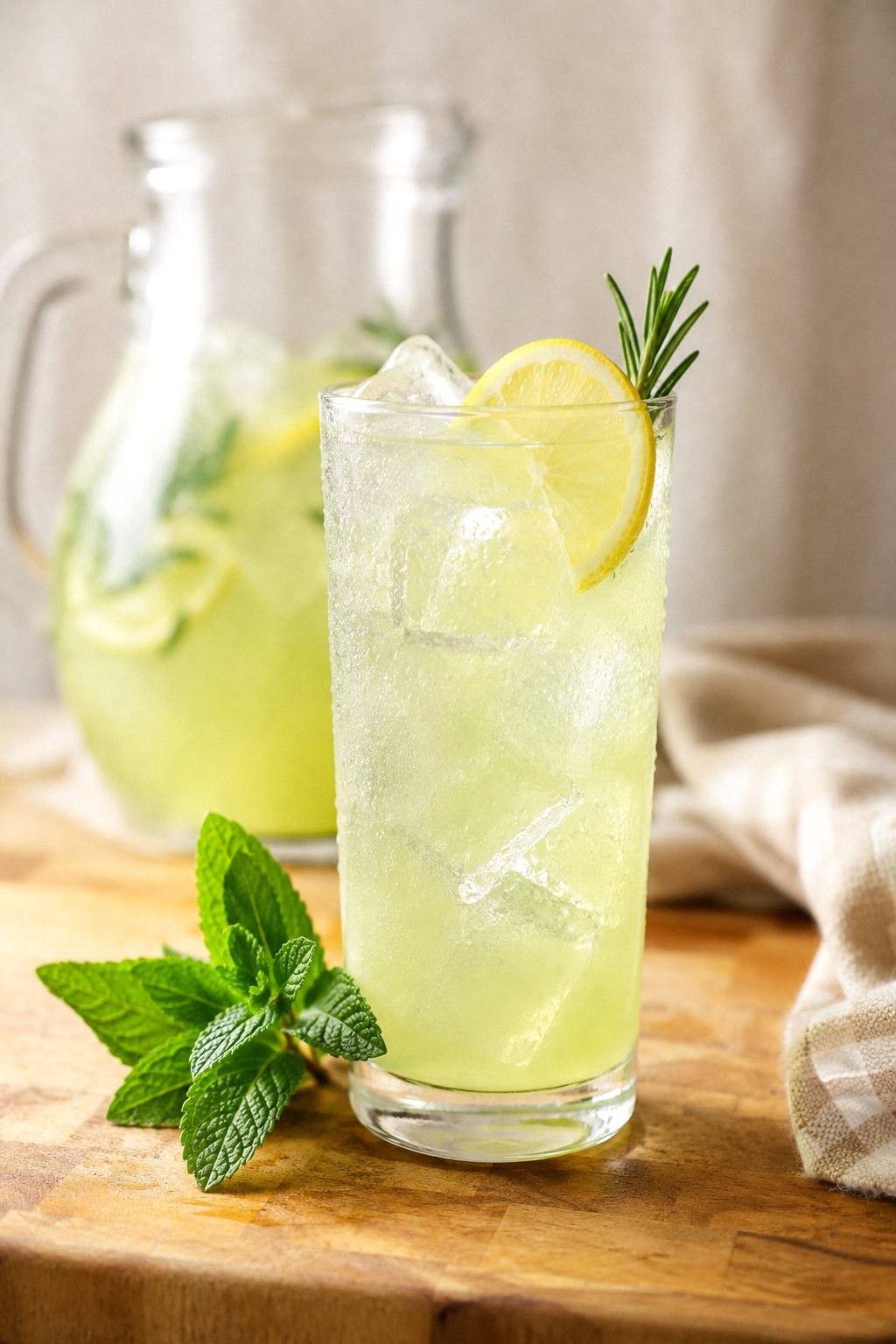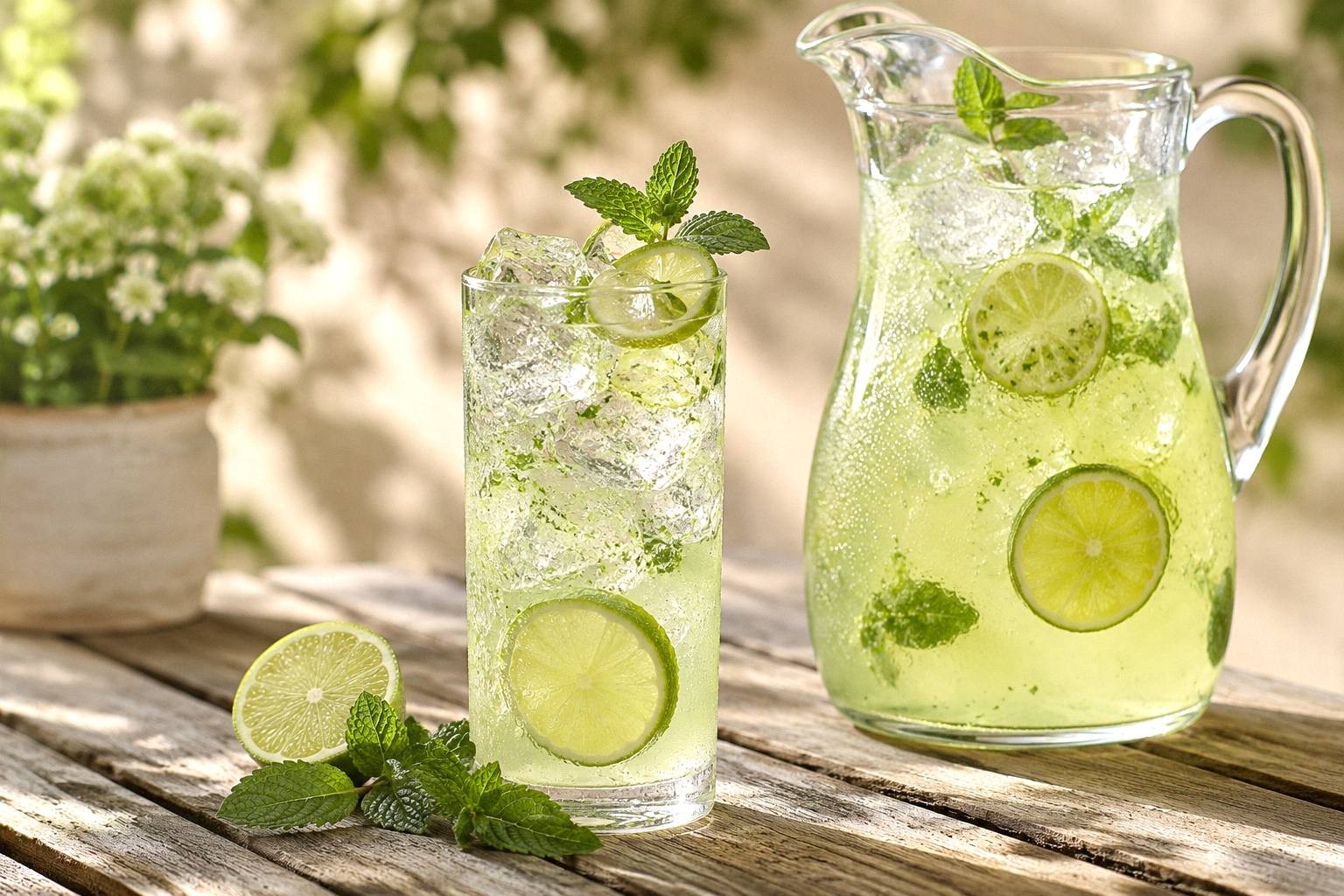
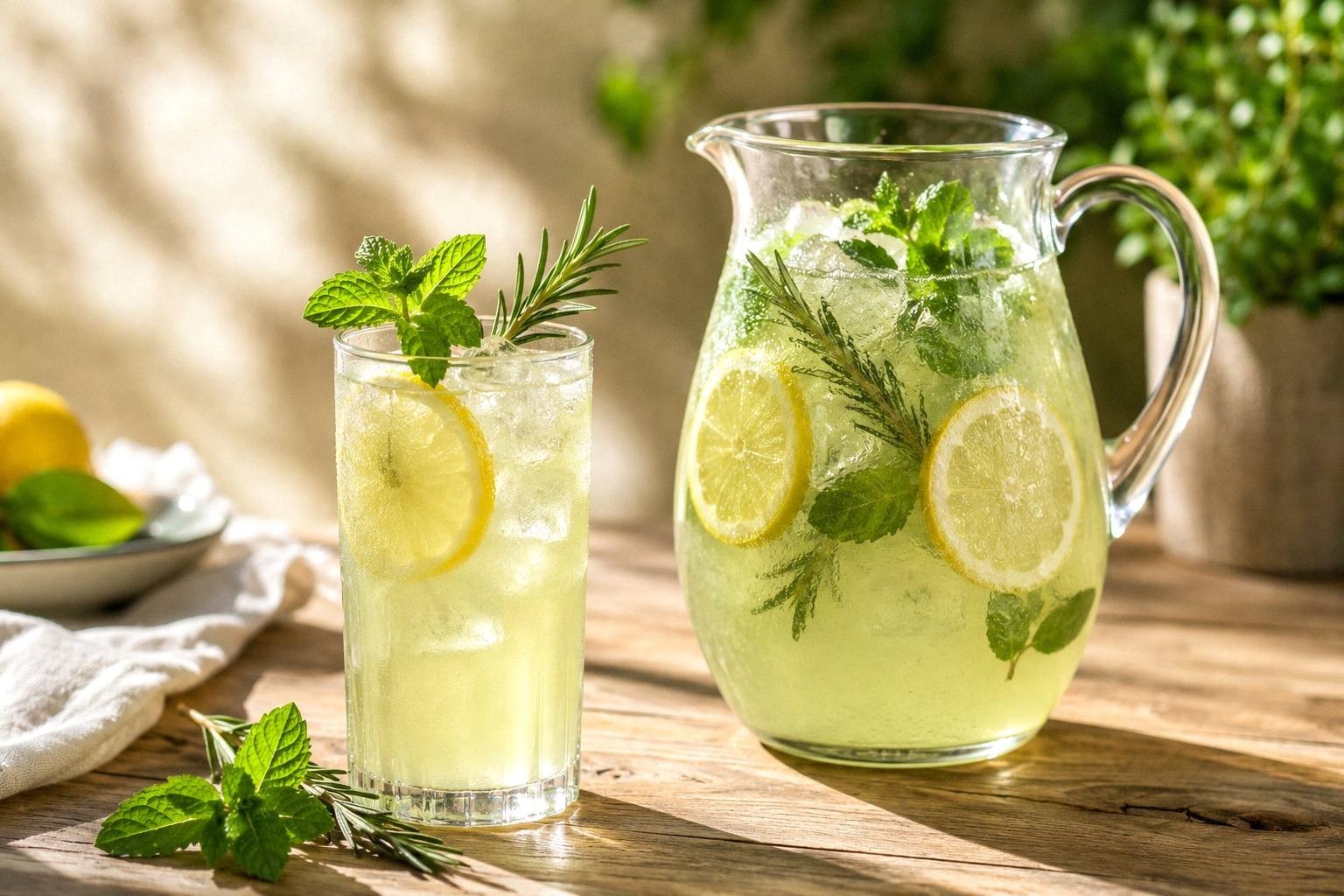
A good Mint Rosemary Lemonade tastes like a garden in July. A bad one tastes like a piney candle. The whole difference is where the rosemary goes: into a slow syrup, not floating in the glass.
Why You Will Love This
Rosemary is a powerful, resinous herb. Drop a whole sprig into lemonade and it bullies everything else out of the way within minutes. Infuse it gently into a warm syrup with a little vanilla, though, and it turns soft and rounded, more pine-honey than Christmas tree. Add fresh lemon, cold water, and a handful of slapped mint, and you get a Homemade Herbal Lemonade that is herbal and bright without a hint of bitterness. It is also a beautiful pale herb-green that looks like money in a glass pitcher on the table.
The Story Behind It
Lemonade goes back to medieval Egypt, where qatarmizat, a sweetened lemon drink, was sold in the streets of Cairo by the 13th century. The herbal versions came later, as kitchen gardens taught people that the same rosemary and mint they cooked with could perfume a drink.
I learned the syrup lesson the hard way. The first time I made rosemary lemonade I did what most recipes tell you and dropped three sprigs straight into the pitcher. Twenty minutes later it tasted like furniture polish, and no amount of extra lemon could pull it back. A friend who keeps a serious herb garden set me straight. Strong woody herbs like rosemary belong in the syrup, where you control the contact time and then strain them out. Soft herbs like mint go in the glass, slapped not crushed. Get those two rules right and the drink almost makes itself.
What You Will Need
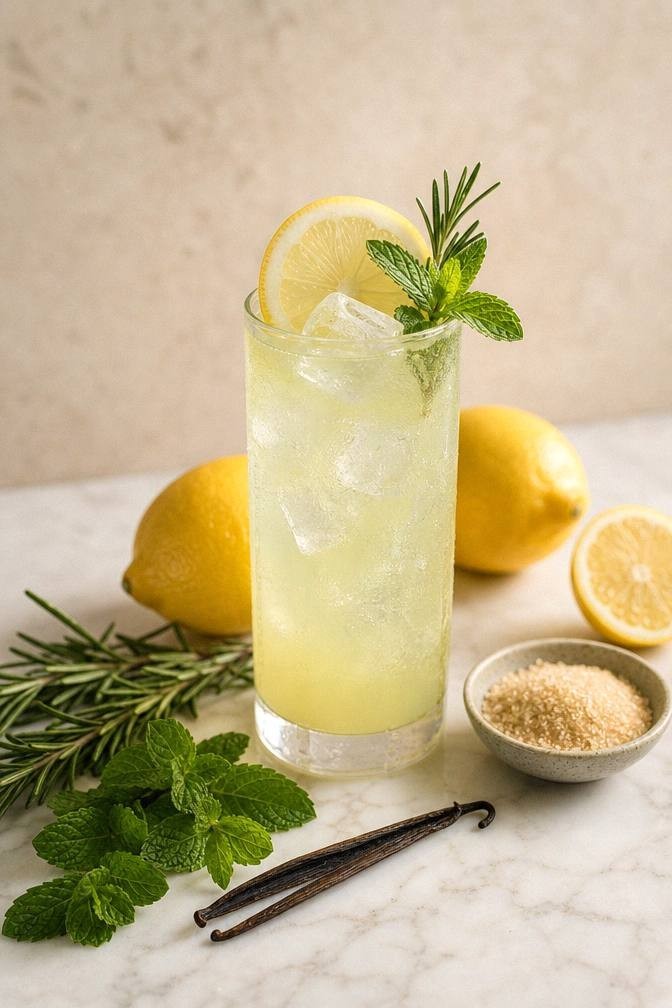
- 1 cup (240 ml) water, for the syrup
- 1/2 cup (100 g) cane sugar
- 3 sprigs fresh rosemary
- 1/2 vanilla bean, split, or 1 teaspoon vanilla extract
- 3/4 cup (180 ml) fresh lemon juice, about 4 lemons
- 3 cups (720 ml) cold water, for the lemonade
- 10-12 fresh mint leaves, plus sprigs for garnish
- Ice
- Lemon wheels and rosemary sprigs for garnish
How to Make It
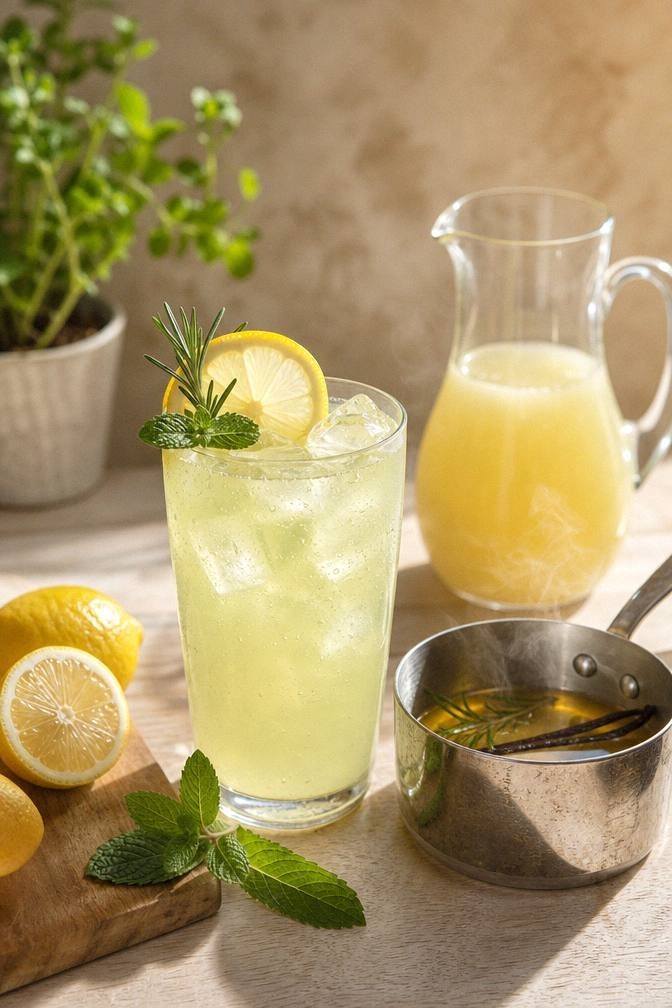
Make the syrup: combine 1 cup water, the sugar, rosemary sprigs, and the split vanilla bean in a small pot. Bring to a simmer, stir until the sugar dissolves, then simmer gently 10 minutes.
Take off the heat and let the syrup steep another 10 minutes as it cools. Strain out the rosemary and vanilla bean. You should have a pale gold, piney-sweet syrup.
In a pitcher, combine the lemon juice, the cooled syrup, and 3 cups cold water. Stir well and taste, adding a splash more water if you want it lighter.
Slap the mint leaves between your palms to release the oils and drop them in whole. Do not muddle them, it turns the lemonade bitter.
Fill glasses with ice, pour over, and garnish with a lemon wheel and a fresh rosemary sprig. Serve cold.
Herbalist Notes
Rosemary (Salvia rosmarinus) carries its punch in volatile oils, mainly cineole, camphor, and pinene, the same resinous compounds that make it bracing in roast potatoes. Those oils extract fast and aggressively in hot water, which is exactly why a controlled syrup infusion beats a free-floating sprig. Ten minutes of gentle simmer pulls a warm, piney sweetness, and straining stops the extraction before it turns medicinal. Rosemary has a long folk reputation as a circulation and memory herb, which is a pleasant bonus to a drink that already tastes like a garden.
Mint (Mentha) plays the cooling counterpoint. Slap the leaves to release the surface menthol oils without rupturing the cells that hold the bitter chlorophyll. Spearmint keeps it sweet and classic. Peppermint pushes it sharper and more cooling.
Vanilla is the quiet rounder here. A half a bean or a teaspoon of good extract softens the edge between the pine of the rosemary and the acid of the lemon, the way a pinch of salt rounds a sauce. Use real vanilla if you can. Imitation vanilla brings a flat, slightly chemical note that fights the fresh herbs.
Make It Your Own
Make it sparkling by cutting the cold water to two cups and topping each glass with sparkling water. Swap the rosemary syrup for a thyme or lavender one, using the same method and the same ten-minute steep. For a Rosemary Drinks variation with more bite, add a thin round of fresh ginger to the syrup pot. Turn it into a cocktail by adding an ounce of gin or vodka per glass, which leans the herbal notes toward a garden spritz. The vanilla rosemary syrup keeps in a sealed jar in the fridge for two weeks, so make a double batch and you are one pitcher of lemon water away from this lemonade any afternoon.