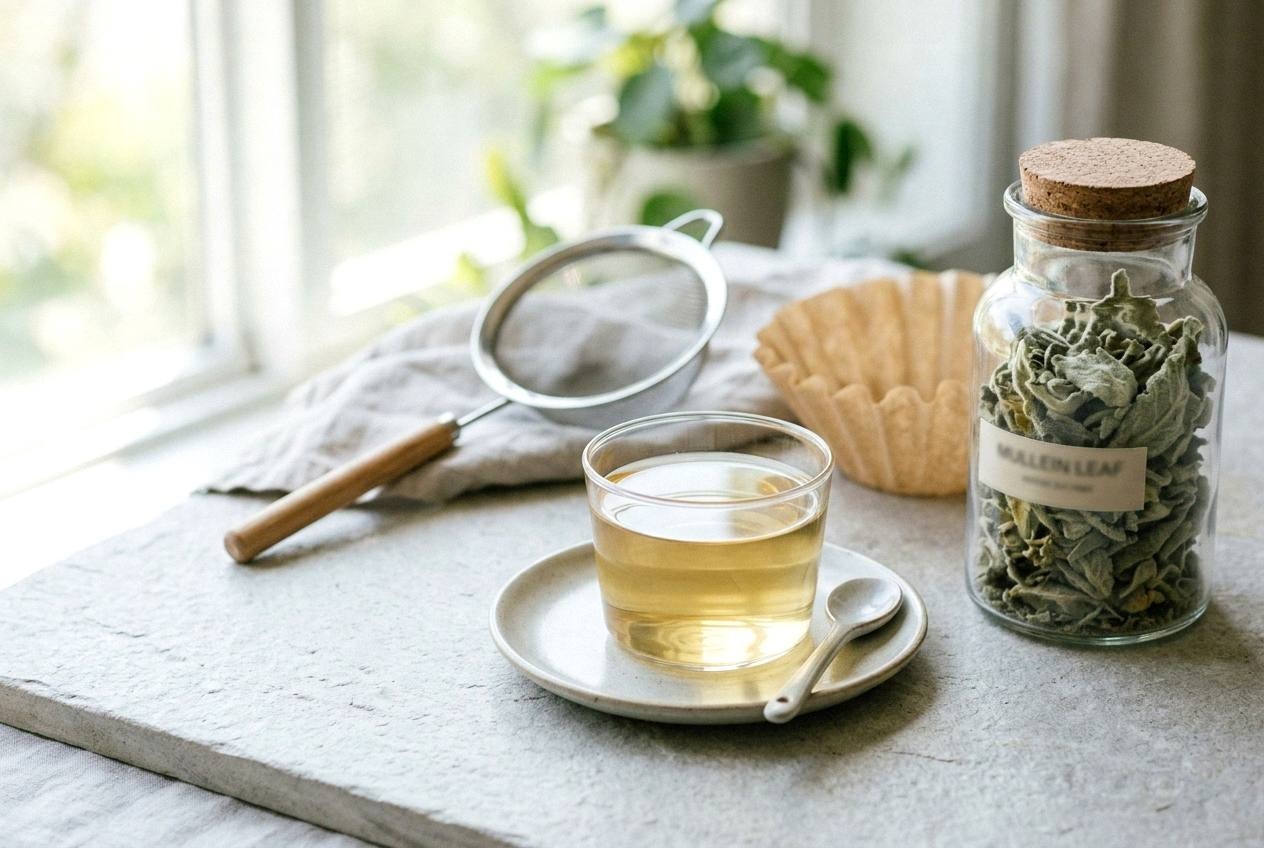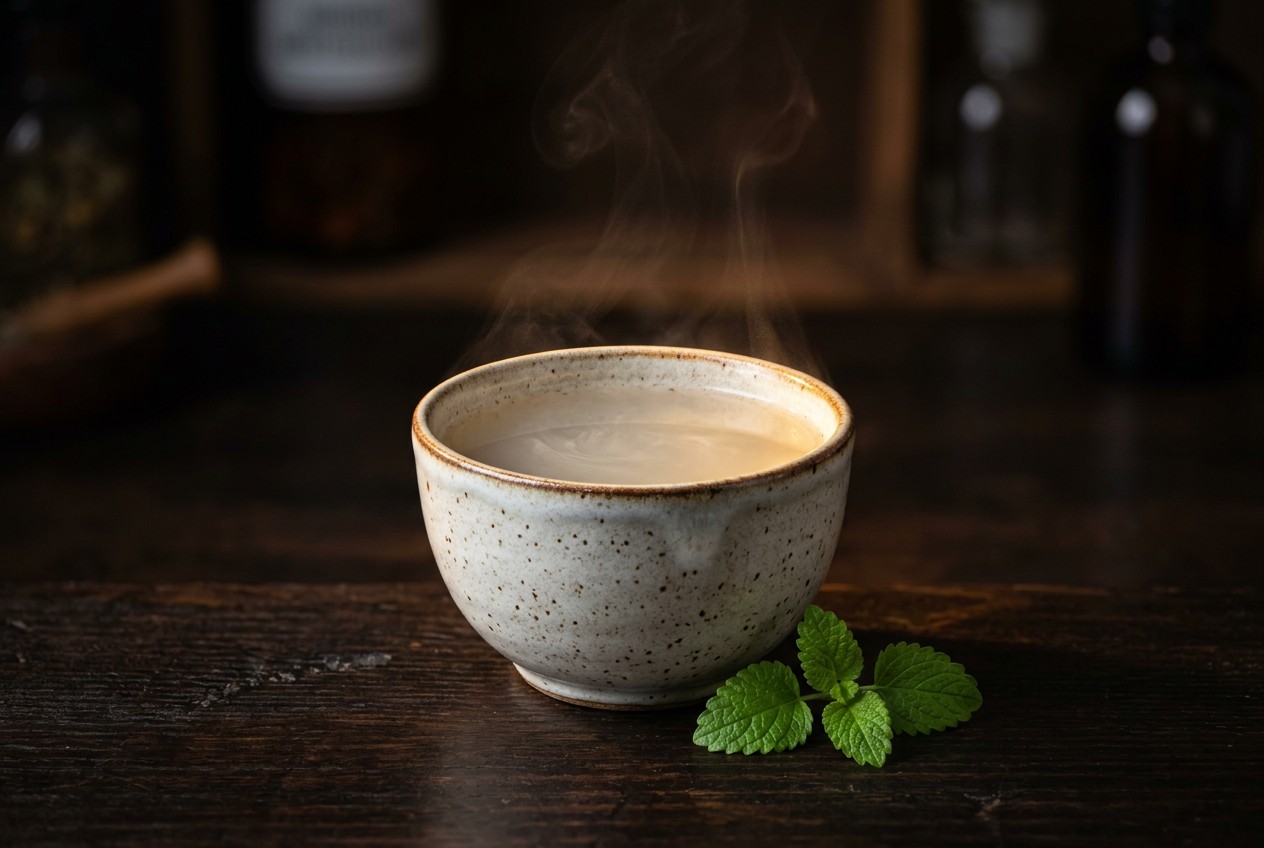

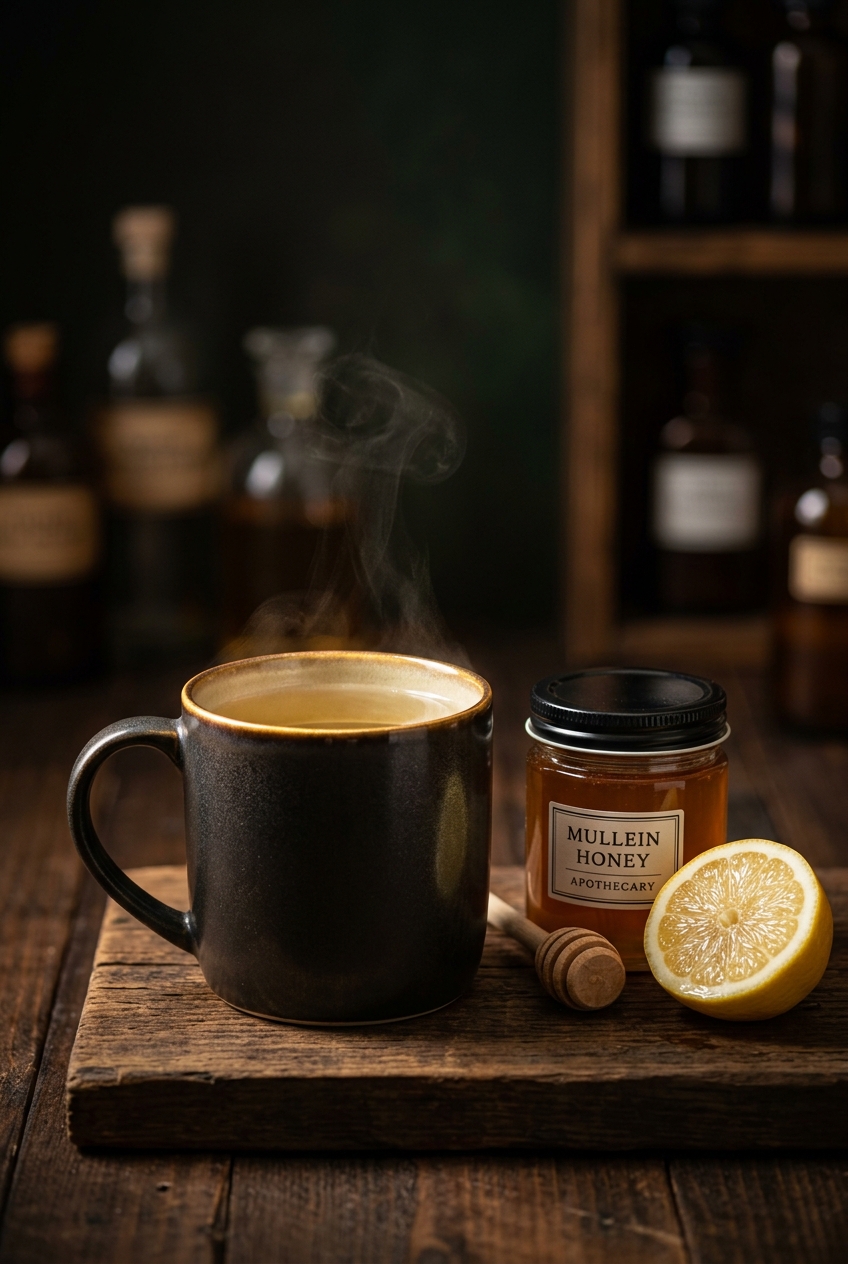
To make mullein tea, steep 1-2 teaspoons of dried mullein leaves in 8 oz of boiling water, covered, for 10-15 minutes. Then strain it through a coffee filter, because the leaves are covered in fine hairs that tickle your throat if they get into the cup. The tea is mild, a little sweet and earthy, and takes honey and lemon well.
Mullein Tea at a Glance
| Detail | Info |
|---|---|
| Steep time | 10 to 15 minutes, covered |
| Caffeine | None |
| Taste | Mild, slightly sweet, a little earthy |
| Texture | Soft and faintly slippery |
| Color | Pale amber |
| Strain with | A paper coffee filter or very fine mesh |
| Good with | Honey and lemon |
What Mullein Tea Tastes Like
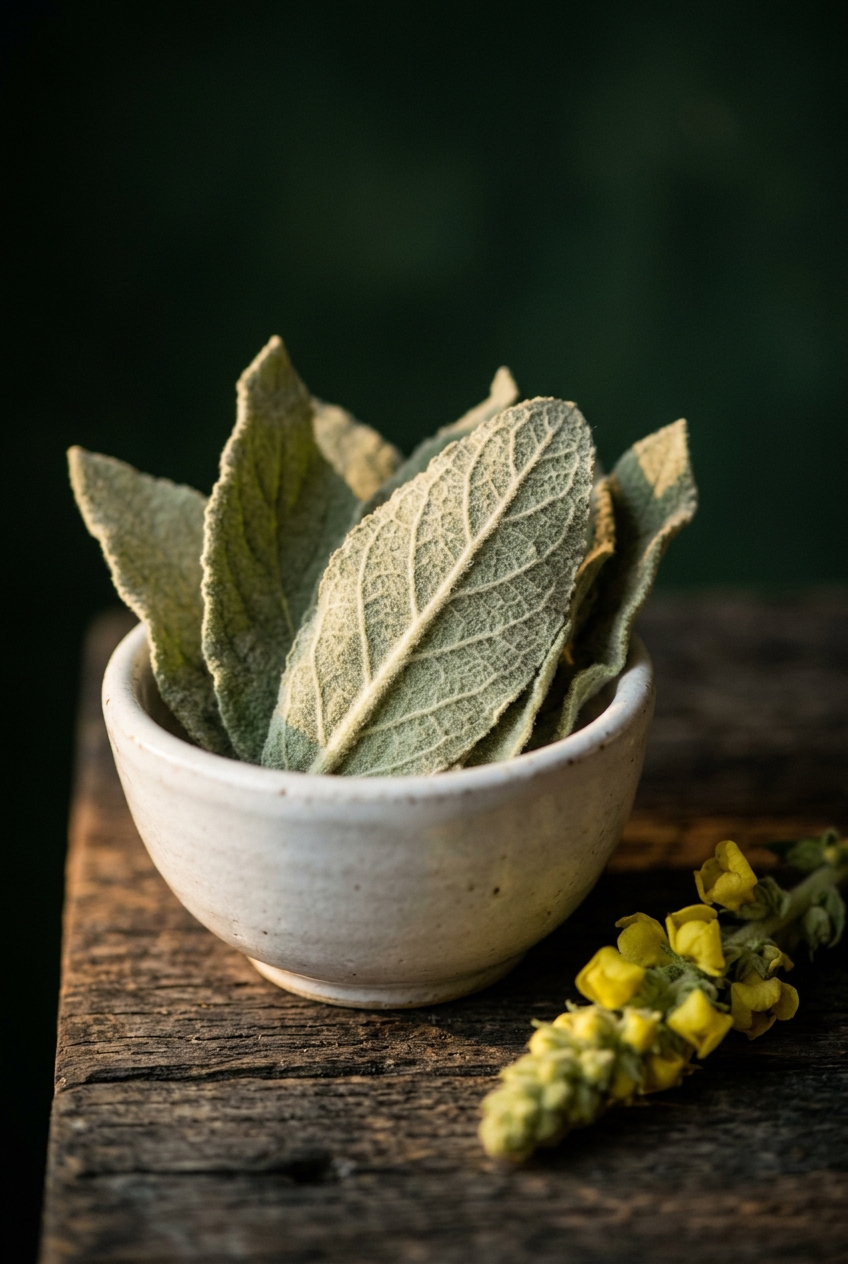
Mild. There’s a light, slightly sweet, earthy flavor, closer to a gentle herbal tea than anything sharp or bitter. The leaf of mullein (Verbascum thapsus) is full of mucilage, so a long steep gives the finished cup a soft, faintly slippery feel in the mouth. That texture is a big part of why people like it on a dry, scratchy evening.
Plain mullein has no caffeine, so it works as an evening cup.
If your herb jar says gordolobo, you may be holding mullein under its Spanish common name, but that name is used for more than one plant. Check the botanical name on the package. Our mullein tea side effects guide explains the mix-up.
What You Will Need
- 1-2 teaspoons dried mullein leaves
- 8 oz (240 ml) boiling water
- 1 teaspoon raw honey (optional)
- Fresh lemon juice, 1/2 teaspoon (optional)
How to Make It
- Place 1-2 teaspoons dried mullein leaves in a tea infuser or directly in a mug.
- Pour 8 oz boiling water over the leaves.
- Cover and steep for 10-15 minutes.
- Strain through a fine-mesh strainer or coffee filter to remove leaf particles and fine hairs.
- Stir in honey and lemon juice if using.
- Drink it warm.

How to Strain Mullein Tea
Mullein leaves are covered in tiny hairs that give them their felt-like feel. A regular tea ball or a coarse sieve lets them through, and they leave a dry tickle at the back of your throat. Any of these catch them:
- A paper coffee filter. The most thorough option. Set it in a pour-over cone or line a small sieve with it, and pour the tea through slowly.
- A tight-weave cloth tea filter. Reusable, and nearly as good as paper.
- A very fine stainless mesh strainer. Fine for cut leaf if the mesh really is fine. Hold it up to the light and check.
- A French press, then paper. The press does the first pass and the filter catches what slips past the plunger.
- Fillable paper tea bags. Put the dry leaf in the bag before you steep, and there’s nothing to strain afterward.
Pour and let it drip rather than squeezing the filter or pressing the leaves. Squeezing pushes fine bits through.
Leaf, Flower or Tea Bag
| Form | What it is | Straining | Taste | Notes |
|---|---|---|---|---|
| Dried leaf, cut and sifted | The fuzzy gray-green leaf, chopped | Coffee filter or very fine mesh | Mild, earthy, slightly sweet | This recipe is written for leaf |
| Dried flowers | The small yellow flowers from the tall flower spike | Still strain finely | Lighter and more floral than leaf | Often sold in blends. We don’t give a flower amount. |
| Tea bags | Pre-portioned leaf, alone or in a blend | The bag does the work | Depends on the blend | Follow the box, and check the label for other herbs |
Tips for a Better Cup
- Keep the lid on. A covered 10-15 minute steep is longer than most teas, and it’s what pulls out the soft texture.
- Drink it warm, not scalding. A very hot cup is rough on a sore throat, and the silky feel comes through better as it cools a little.
- Keep it simple. Mullein, honey and lemon is the classic cup. Herbal tradition pairs mullein with thyme or plantain for a stronger-tasting blend, and a small pinch of dried thyme makes it sharper and more herbal.
- Buy by botanical name. Look for Verbascum thapsus and “leaf” on the label.
How Mullein Compares to Other Tea Herbs
| Herb | Taste | In the cup | Try it in |
|---|---|---|---|
| Mullein (Verbascum thapsus) | Mild, slightly sweet | Soft and faintly slippery | This recipe |
| Marshmallow root (Althaea officinalis) | Neutral, slightly sweet | The most slippery of the lot | Mallow tea |
| Thyme (Thymus vulgaris) | Herbal, pungent | Sharp, a little goes a long way | Herbal tea for sore throat |
| Ginger | Hot, spicy | Warming | Ginger lemon honey tea |
| Elderflower (Sambucus nigra) | Light, floral | Perfumed | Elderflower benefits and uses |
| Nettle (Urtica dioica) | Green, earthy | Grassy and mineral | Spring allergy relief tea |
For a cup built around elderberry, ginger and thyme, try our herbal tea for cold and flu season . The allergy relief drink pairs nettle with chamomile, and our guide to DIY loose leaf tea blends covers mixing your own. For a bedtime cup, the herbal tea for sleep uses chamomile, lavender and passionflower. More teas, syrups and tonics are on our apothecary recipes page.
Common Questions
Does mullein tea have caffeine?
No. Mullein is an herb, not a true tea plant, so plain mullein tea is caffeine-free. If you’re drinking a blend, check the label for black or green tea.
What does mullein tea taste like?
Mild, slightly sweet and a little earthy, with a soft, faintly slippery texture. It’s gentle enough that honey and lemon carry most of the flavor.
Can you drink mullein tea before bed?
Yes. It’s caffeine-free and mild, which makes it an easy evening cup. Whether it makes you sleepy is covered in mullein tea side effects .
Is mullein tea good for your lungs?
Mullein has a long history in Western herbal tradition as a cough-season tea. In the cup, what you notice is a warm, steamy drink with a soft, slightly slippery feel.
Can you make mullein tea from fresh leaves?
This recipe is written for dried leaves, and we don’t give a fresh-leaf amount. Dried leaf is also easier to measure and strain.
Can you dry your own mullein leaves?
Yes, if you’re certain of the plant. Mullein grows wild along roadsides and in open ground, so pick away from traffic and sprayed areas. How to dry and store herbs for tea covers drying, jars and storage.
Where do you buy dried mullein?
Herb shops, co-ops and online herb suppliers sell it cut and sifted. Look for Verbascum thapsus and “leaf” on the label.
What are the side effects of mullein tea?
The common one is a scratchy throat from leaf hairs that weren’t strained out. The full list, and who should ask a doctor first, is in mullein tea side effects .
Is it safe to drink mullein tea every day?
There’s no established guideline for how much or how often. Mullein tea side effects covers that question and who should check with a pharmacist or doctor first.