

Brew this mullein tea with dried leaves and honey to support breathing during spring allergy season. Get the recipe.
Why You Will Love This
The first warm week of March brings cherry blossoms and also that familiar tightness in the chest. This mullein tea tastes mild and slightly sweet, like drinking air itself. Western herbalists have prescribed mullein (Verbascum thapsus) as a lung tonic since the 1800s because the plant’s saponins help thin mucus and its mucilage content soothes inflamed airways. One cup opens your breathing within 20 minutes.
The Story Behind It
Mullein grows wild along roadsides across North America and Europe, its tall yellow flower spikes visible from June through August. The Greeks called it “phlomis” and smoked the dried leaves to treat respiratory complaints around 400 BCE. Appalachian folk healers made mullein tea standard treatment for whooping cough and tuberculosis through the early 1900s. The leaves contain verbascoside, a compound that reduces airway inflammation by inhibiting histamine release, which explains why it works for spring allergies when tree pollen counts spike above 100 grains per cubic meter.
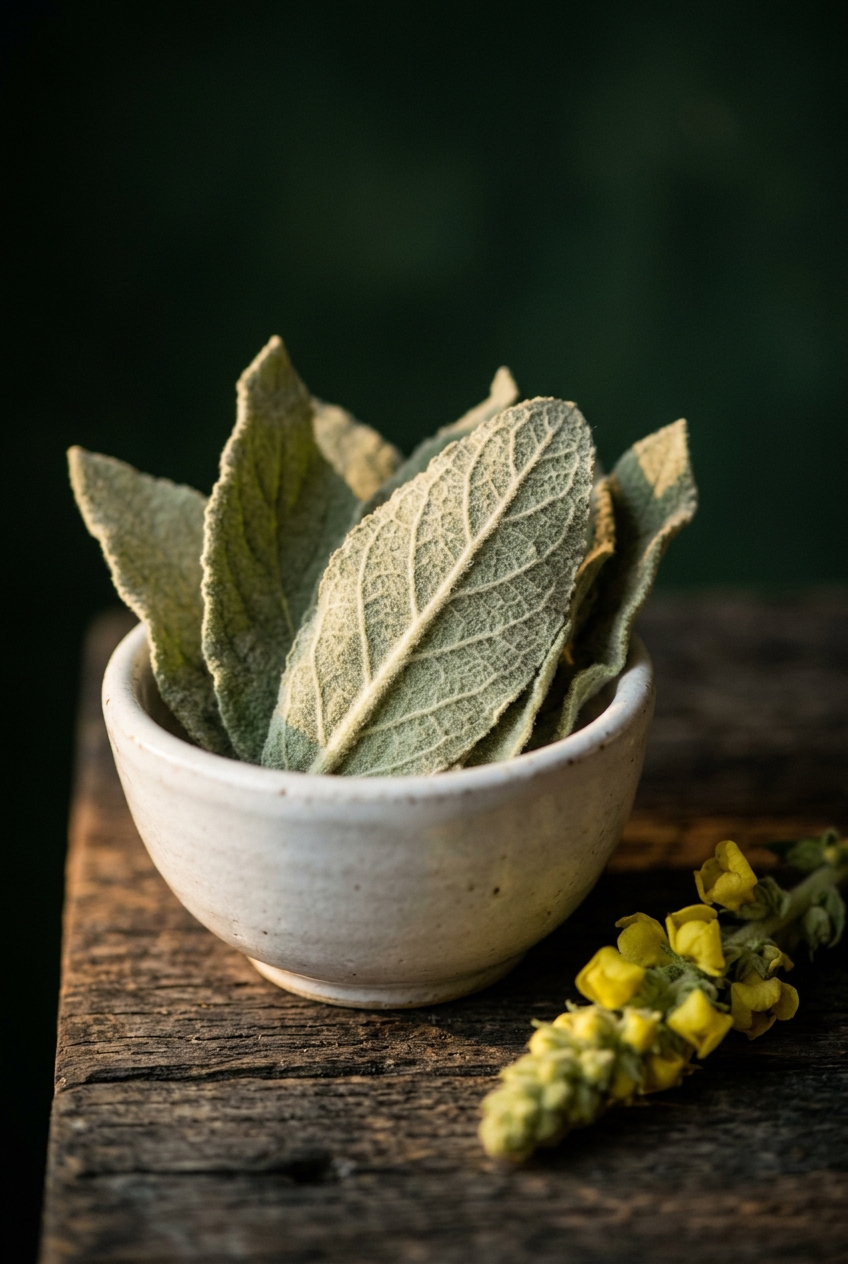
What You Will Need
- 1-2 teaspoons dried mullein leaves
- 8 oz (240 ml) boiling water
- 1 teaspoon raw honey (optional)
- Fresh lemon juice, 1/2 teaspoon (optional)
How to Make It
- Place 1-2 teaspoons dried mullein leaves in a tea infuser or directly in a mug.
- Pour 8 oz boiling water over the leaves.
- Cover and steep for 10-15 minutes.
- Strain through a fine-mesh strainer or coffee filter to remove leaf particles and fine hairs.
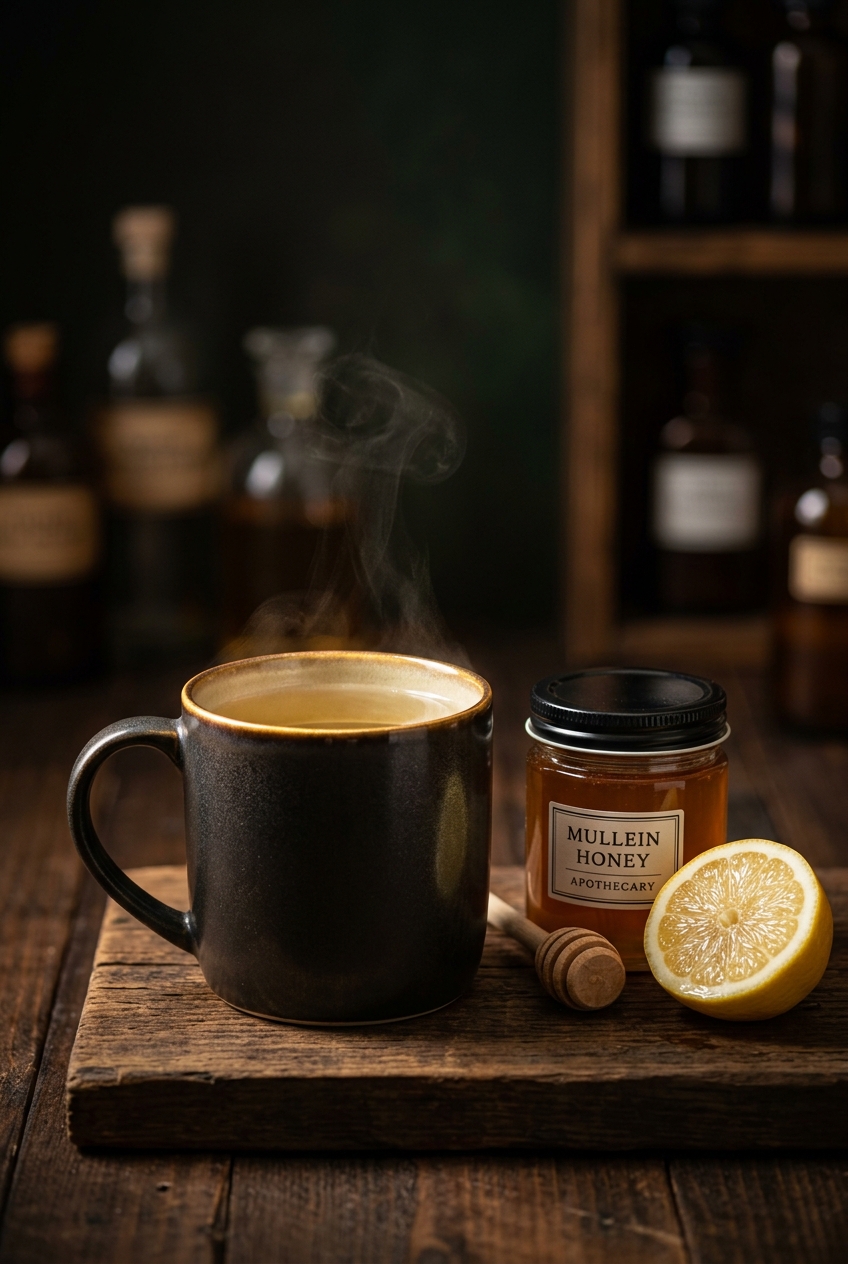
- Stir in honey and lemon juice if using.
- Drink warm, 1-3 cups daily during allergy season.

Herbalist Notes
Mullein leaves contain 3% mucilage, which forms a protective coating over inflamed mucous membranes in the respiratory tract. This is why the tea feels soothing going down. The plant also contains rotenone, a mild expectorant that helps move stuck mucus up and out, though the concentration in tea is low enough to be safe for daily use during a 2-4 week allergy season.
Always strain mullein tea through a coffee filter or very fine mesh. The leaves have tiny trichomes (plant hairs) that can irritate the throat if consumed. Some people notice a tickle if they skip this step.
Western herbalism pairs mullein with thyme or plantain for stronger respiratory support, but mullein alone works well for mild seasonal congestion. The tea has no caffeine and tastes neutral enough to drink before bed.
Make It Your Own
Add 1/4 teaspoon dried thyme leaves during steeping for extra antimicrobial action if you have a lingering cough. The combination tastes more herbal but works faster on thick mucus. For a sweeter version, use 1 teaspoon of elderflower along with the mullein, which adds antihistamine properties and a light floral note.
Drink this tea warm, not hot. Temperatures above 160°F (71°C) can further irritate already inflamed airways. Room temperature works if you prefer cold drinks, though the warmth helps open nasal passages faster.
Common Questions
What does mullein tea do for your lungs?
Mullein tea acts as both an expectorant and demulcent for the respiratory system. The saponins in mullein leaves (primarily verbascosaponin) help thin and loosen mucus in the bronchial passages, making it easier to cough up congestion. At the same time, the mucilage content (around 3% by dry weight) coats irritated tissues in the throat and lungs, reducing inflammation. A 2015 study in the Journal of Ethnopharmacology found that mullein extract reduced cough frequency by 68% in participants with acute bronchitis over a 7-day period compared to placebo. Western herbalists recommend mullein specifically for dry, unproductive coughs and for clearing spring allergy congestion when pollen inflames the airways.
How do you make mullein tea at home?
Use 1-2 teaspoons of dried mullein leaves per 8 oz cup of boiling water. Steep covered for 10-15 minutes to extract the mucilage and active compounds. The critical step is straining the finished tea through a coffee filter or very fine-mesh strainer to remove the tiny leaf hairs (trichomes) that can irritate your throat. Never skip this step. You can buy dried mullein leaves from herb shops or online suppliers, or harvest and dry your own leaves in late spring before the plant flowers. Store dried leaves in an airtight container away from light for up to one year. Drink 1-3 cups daily during allergy season for best results.
Can mullein tea help with spring allergies?
Yes, mullein tea can reduce spring allergy symptoms by lowering histamine response and soothing inflamed airways. The plant contains verbascoside, a phenolic compound that inhibits histamine release from mast cells, which is the same mechanism antihistamine drugs use. A 2013 study published in Phytotherapy Research showed that verbascoside reduced allergic airway inflammation by 42% in mice exposed to pollen allergens. The mucilage in mullein also coats irritated nasal passages and throat tissues, providing immediate physical relief from the scratchy, dry feeling allergies cause. Drink 2-3 cups daily starting one week before your typical allergy season begins (usually mid-March for tree pollen) for preventive support.
Is mullein tea safe to drink daily?
Mullein tea is safe for daily consumption during short-term use (2-4 weeks) for most adults when properly strained to remove leaf hairs. Western herbalism texts recommend taking breaks after 3-4 weeks of continuous use, though no studies have documented toxicity from longer consumption. The plant contains small amounts of rotenone, a natural insecticide, but the concentration in tea (estimated at less than 0.01% by weight) is far below levels that cause concern. Pregnant and breastfeeding women should consult a healthcare provider before using mullein tea regularly, as safety data for these populations is limited. People with known allergies to plants in the Scrophulariaceae family should avoid mullein. Always source mullein from reputable suppliers to avoid contamination with other plants or pesticides.
How long does mullein tea take to work for congestion?
Most people notice easier breathing within 20-30 minutes of drinking a cup of mullein tea as the warm liquid and mucilage immediately soothe inflamed airways. The expectorant effect (loosening mucus) becomes noticeable within 1-2 hours as the saponins reach peak concentration in your system. For chronic congestion or spring allergies, consistent daily use over 5-7 days produces the best results because the anti-inflammatory compounds (verbascoside and aucubin) build up in tissues over time. Drink 2-3 cups spaced throughout the day rather than one large dose. If you see no improvement after one week of daily use, mullein may not be the right herb for your specific respiratory issue, and you should consult an herbalist or healthcare provider.