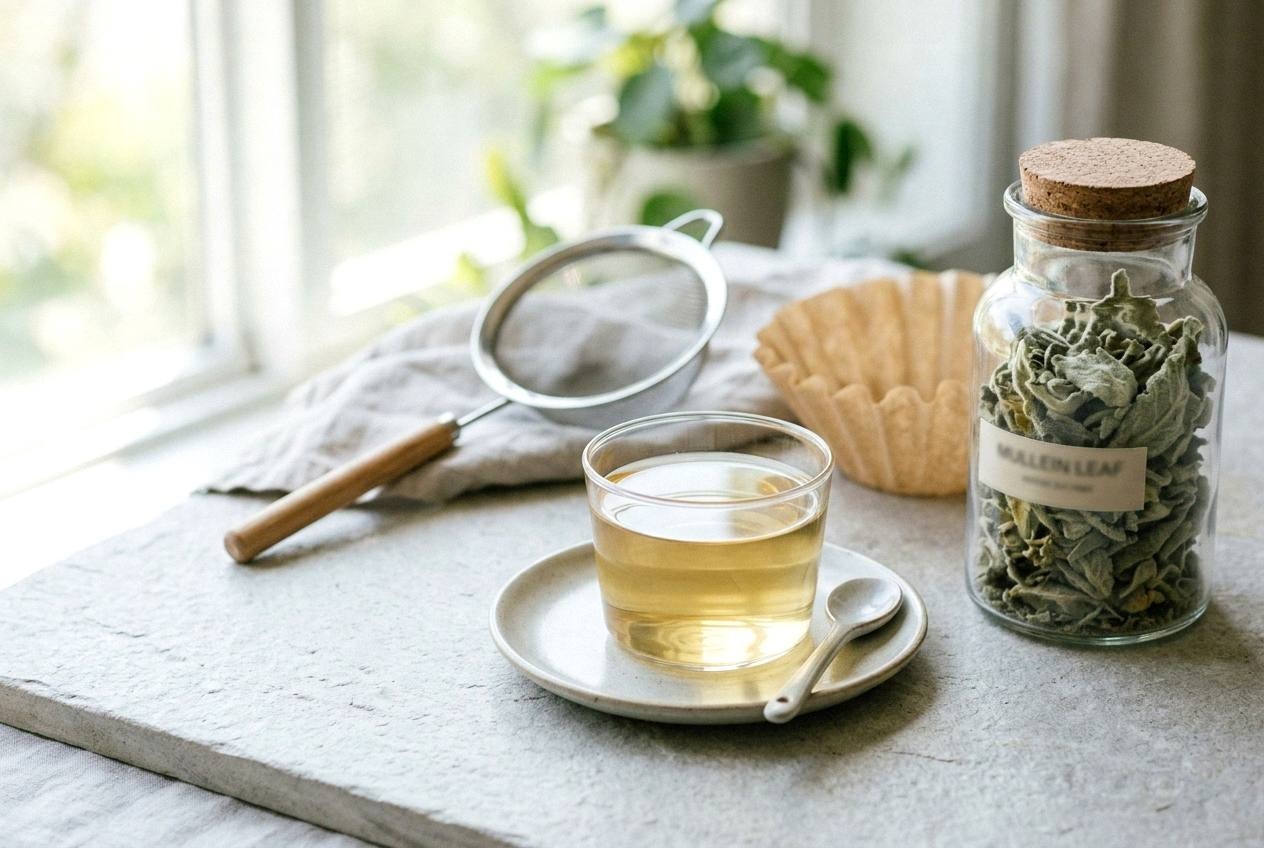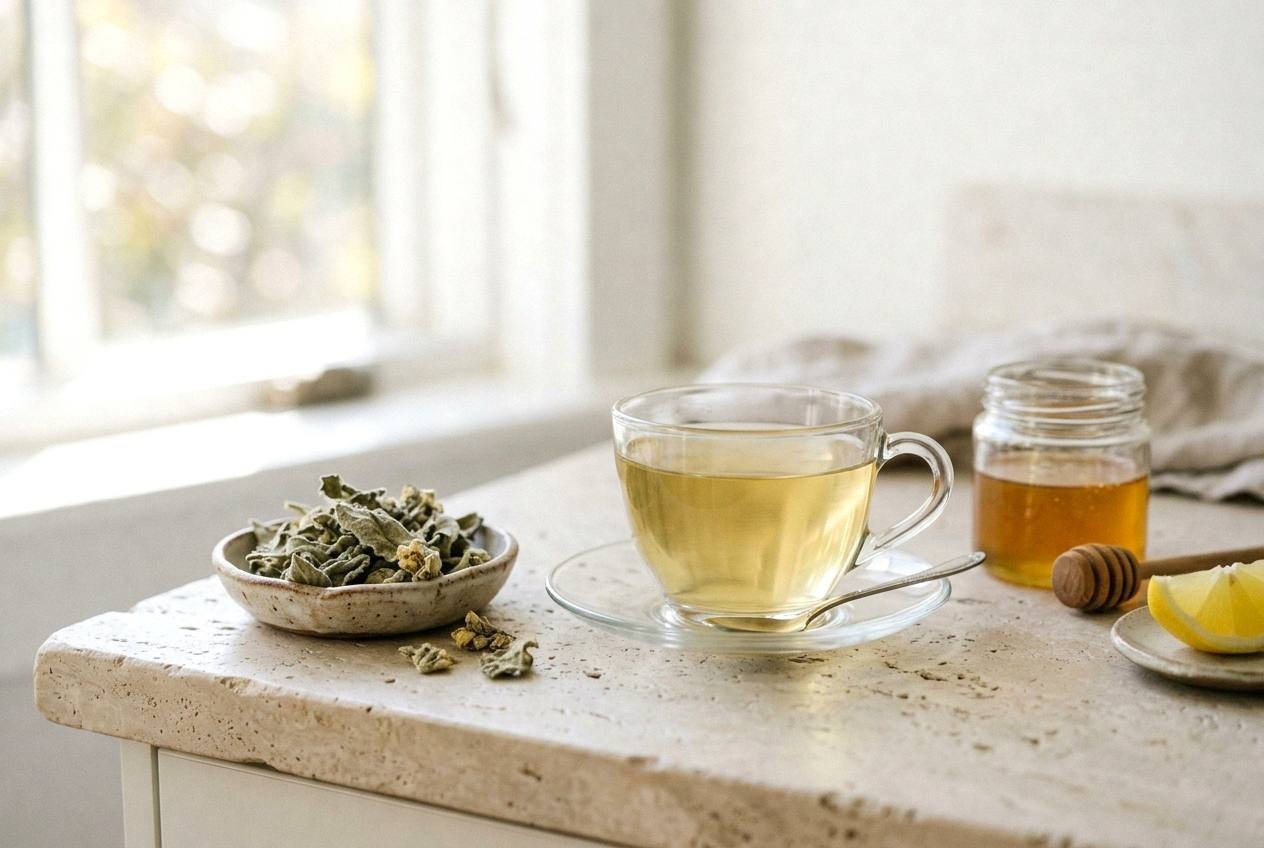

Steep 1-2 teaspoons dried mullein leaves in boiling water for 10-15 minutes, then strain through a coffee filter. Drink 1-3 cups daily for cough, mucus, and respiratory support.
Mullein tea clears mucus and soothes coughs in one cup. Steep dried leaves 10-15 min, strain through a coffee filter. Recipe + side effects from an herbalist.
Why You Will Love This
The first warm week of March brings cherry blossoms and also that familiar tightness in the chest. This mullein tea recipe is the one to make when you want a simple herbal tea for cough, mucus, and gentle lung support. It tastes mild and slightly sweet, steeps in 10 to 15 minutes, and works well with honey and lemon.
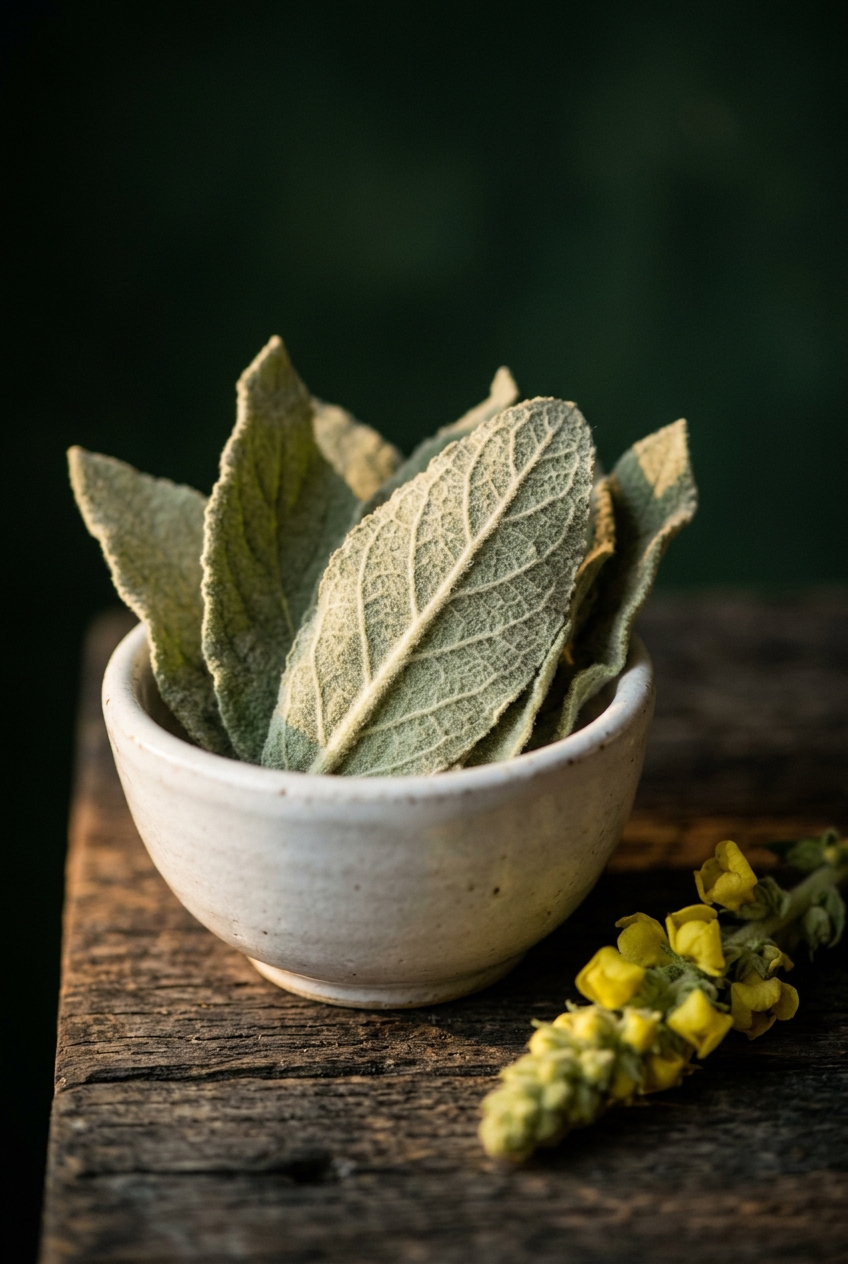
Western herbalists have used mullein (Verbascum thapsus) as a respiratory herb since the 1800s because the leaves contain mucilage, which feels soothing on a dry throat, and saponins, which are traditionally used to help loosen stuck mucus. The important part is straining it well: mullein leaf has fine hairs that can irritate your throat if they slip into the cup.
For a more targeted allergy formula, pair this with our allergy relief drink recipe or spring allergy relief tea that combines nettle with elderflower.
If your herb jar says gordolobo, you are probably working with mullein under a Spanish common name. The same straining and safety notes apply, and the deeper safety companion is mullein tea side effects.
Mullein Tea Benefits at a Glance
| Benefit | How It Works | Active Compounds |
|---|---|---|
| Clears congestion | Saponins (verbascosaponin) thin and loosen mucus in bronchial passages | Verbascosaponin |
| Soothes airways | Mucilage (3% by dry weight) coats inflamed throat and lung tissue | Polysaccharide mucilage |
| Reduces allergy response | Verbascoside inhibits histamine release from mast cells | Verbascoside, aucubin |
| Mild expectorant | Moves stuck mucus up and out of the respiratory tract | Rotenone (trace amounts) |
| Anti-inflammatory | Reduces swelling in nasal passages and airways | Flavonoids, iridoid glycosides |
The Story Behind It
Mullein (Verbascum thapsus, family Scrophulariaceae) grows wild along roadsides across North America and Europe, its tall yellow flower spikes visible from June through August. The Greeks called it “phlomis” and smoked the dried leaves to treat respiratory complaints around 400 BCE. Dioscorides recommended it in De Materia Medica for coughs and lung ailments. Appalachian folk healers made mullein tea standard treatment for whooping cough and tuberculosis through the early 1900s. The leaves contain verbascoside, a phenylpropanoid glycoside that reduces airway inflammation by inhibiting histamine release, which explains why it works for spring allergies when tree pollen counts spike above 100 grains per cubic meter.
What You Will Need
- 1-2 teaspoons dried mullein leaves
- 8 oz (240 ml) boiling water
- 1 teaspoon raw honey (optional)
- Fresh lemon juice, 1/2 teaspoon (optional)
How to Make It
- Place 1-2 teaspoons dried mullein leaves in a tea infuser or directly in a mug.
- Pour 8 oz boiling water over the leaves.
- Cover and steep for 10-15 minutes.
- Strain through a fine-mesh strainer or coffee filter to remove leaf particles and fine hairs.
- Stir in honey and lemon juice if using.
- Drink warm, 1-3 cups daily during allergy season.

Herbalist Notes
Mullein leaves contain 3% mucilage, which forms a protective coating over inflamed mucous membranes in the respiratory tract. This is why the tea feels soothing going down. The plant also contains rotenone, a mild expectorant that helps move stuck mucus up and out, though the concentration in tea is low enough to be safe for daily use during a 2-4 week allergy season.
Always strain mullein tea through a coffee filter or very fine mesh. The leaves have tiny trichomes (plant hairs) that can irritate the throat if consumed. Some people notice a tickle if they skip this step.
Western herbalism pairs mullein with thyme (Thymus vulgaris) or plantain (Plantago major) for stronger respiratory support, but mullein alone works well for mild seasonal congestion. The tea has no caffeine and tastes neutral enough to drink before bed. For a warming bedtime option, try our herbal tea for sleep with chamomile and valerian.
How Mullein Compares to Other Respiratory Herbs
| Herb | Best For | How It Works | Taste |
|---|---|---|---|
| Mullein (Verbascum thapsus) | Dry coughs, congestion, spring allergies | Expectorant + demulcent, coats and clears airways | Mild, slightly sweet |
| Thyme (Thymus vulgaris) | Wet coughs, bronchitis | Antimicrobial, loosens thick mucus | Herbal, pungent |
| Elderflower (Sambucus nigra) | Sinus congestion, hay fever | Anti-inflammatory, reduces mucus production | Light, floral |
| Nettle (Urtica dioica) | Histamine response, sneezing | Natural antihistamine, blocks mast cell degranulation | Green, earthy |
| Marshmallow root (Althaea officinalis) | Sore throat, dry irritation | High mucilage content (up to 35%), extreme soothing | Neutral, slightly sweet |
| Eucalyptus (Eucalyptus globulus) | Nasal congestion, sinus pressure | 1,8-cineole opens nasal passages via steam | Strong, menthol-like |
For elderflower’s respiratory benefits in depth, see our elderflower healing benefits guide. If your spring allergies come with a sore throat, try our herbal tea for sore throat.
For the two questions readers keep searching, use these focused companion guides: mullein tea for cough and mucus covers the simplest cough-focused formula, and mullein tea side effects explains who should be careful before drinking it.
Make It Your Own
Add 1/4 teaspoon dried thyme leaves during steeping for extra antimicrobial action if you have a lingering cough. The combination tastes more herbal but works faster on thick mucus. For a sweeter version, use 1 teaspoon of elderflower along with the mullein, which adds antihistamine properties and a light floral note.
If you want to build your own respiratory tea blends, our guide to DIY loose leaf tea blends walks through ratios and steeping times. And for a completely different approach to spring wellness, try our immunity drink recipe with citrus and herbs.
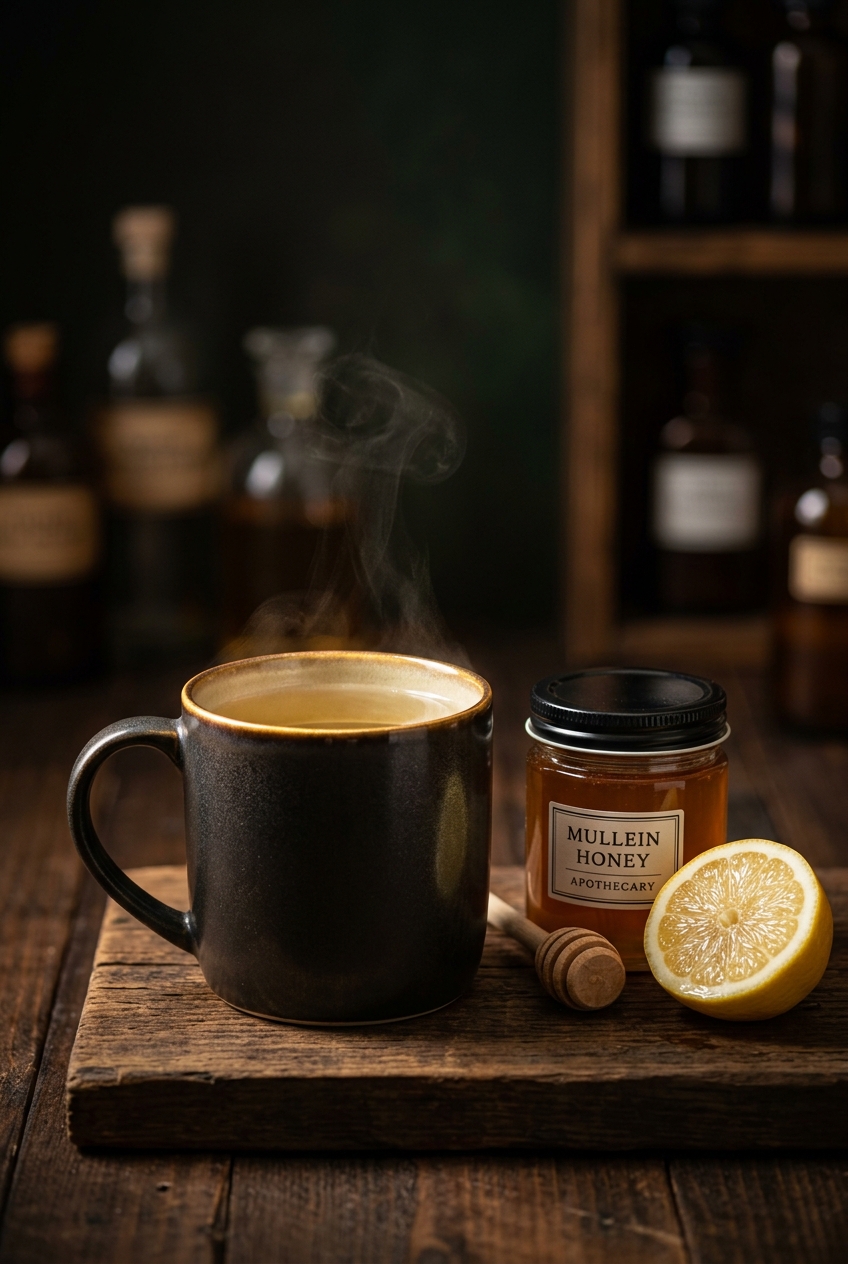
Drink this tea warm, not hot. Temperatures above 160°F (71°C) can further irritate already inflamed airways. Room temperature works if you prefer cold drinks, though the warmth helps open nasal passages faster.
Common Questions
What does mullein tea do for your lungs?
Two things at once. The saponins in mullein leaves (mainly verbascosaponin) thin and loosen mucus in the bronchial passages, so you can actually cough it up. And the mucilage (around 3% by dry weight) coats irritated tissues in the throat and lungs, calming inflammation on contact. A 2015 study in the Journal of Ethnopharmacology found mullein extract cut cough frequency by 68% in people with acute bronchitis over 7 days compared to placebo. Western herbalists reach for mullein specifically when someone has a dry, unproductive cough or spring allergy congestion from pollen.
Is mullein tea good for cough and mucus?
Mullein is traditionally used when a cough feels dry, tight, or stuck. The tea is not a cough medicine, but the warm liquid, plant mucilage, and gentle expectorant action can make mucus feel easier to move. If your cough is wet and heavy, try adding a small pinch of thyme to the cup. If the cough lasts more than a week, comes with fever, chest pain, wheezing, or shortness of breath, treat that as a medical issue rather than a tea problem.
How do you make mullein tea at home?
1-2 teaspoons of dried mullein leaves per 8 oz cup of boiling water. Steep covered for 10-15 minutes to pull out the mucilage and active compounds. The step most people mess up: straining. You need a coffee filter or very fine-mesh strainer to catch the tiny leaf hairs (trichomes) that will scratch your throat if they get through. Don’t skip it. Buy dried mullein from herb shops or online, or harvest and dry your own leaves in late spring before the plant flowers. Stored in an airtight container away from light, they keep for up to one year. Drink 1-3 cups daily during allergy season.
Can you drink mullein tea before bed?
Yes, mullein tea is caffeine-free and mild enough for evening. It is a good bedtime choice when a dry throat or light congestion is making you cough more once you lie down. Drink it warm, strain it through a coffee filter, and keep the cup simple: mullein, honey, and lemon. Avoid drinking a large mug right before sleep if nighttime bathroom trips wake you up.
Can mullein tea help with spring allergies?
It can, yes. Mullein contains verbascoside, a phenolic compound that blocks histamine release from mast cells. That is the same basic mechanism as antihistamine drugs like Zyrtec or Claritin, just milder. A 2013 study in Phytotherapy Research showed verbascoside reduced allergic airway inflammation by 42% in mice exposed to pollen. The mucilage also coats your irritated nasal passages and throat, giving immediate physical relief from that scratchy, dry feeling. Best approach: start drinking 2-3 cups daily about one week before your allergy season typically kicks in (mid-March for tree pollen in most areas).
Is mullein tea safe to drink daily?
For 2-4 weeks at a time, yes. Most adults can drink it daily during allergy season as long as you strain out the leaf hairs properly. Herbalism texts suggest taking a break after 3-4 weeks of steady use, though no studies have actually shown toxicity from longer consumption. Mullein does contain trace amounts of rotenone (a natural insecticide), but the concentration in tea is estimated at less than 0.01% by weight. Not enough to worry about. Pregnant and breastfeeding women should check with a healthcare provider first since safety data is limited for those groups. And if you are allergic to plants in the Scrophulariaceae family, skip mullein entirely.
What are mullein tea side effects?
The most common problem is throat irritation from poorly strained leaves. Mullein leaves are fuzzy, and those fine plant hairs can feel scratchy if they get into the finished tea. Use a coffee filter or very fine strainer. Some people may also notice stomach upset or skin sensitivity. Avoid mullein if you know you react to plants in the figwort family, and ask a clinician first if you are pregnant, breastfeeding, giving it to a young child, or taking medication for a respiratory condition.
How long does mullein tea take to work for congestion?
Fast. Most people breathe easier within 20-30 minutes as the warm liquid and mucilage coat inflamed airways. The expectorant effect kicks in within 1-2 hours once the saponins reach peak concentration. For chronic congestion or spring allergies, give it 5-7 days of consistent use. The anti-inflammatory compounds (verbascoside and aucubin) build up in your tissues over time, so it gets better the longer you stick with it. Space 2-3 cups throughout the day rather than drinking one big dose. If a full week of daily use doesn’t help at all, mullein might not be the right herb for what you have going on.
When to Serve and Pairings
This tea is best served when you want a quieter drink: something warm, simple, and easy to repeat without much setup.
Perfect occasions include:
- Bedtime wind-downs
- Rainy afternoons
- Slow mornings
- Seasonal sniffle days
- Reading breaks
- After-dinner sipping
Food pairings:
- Honey toast
- Plain shortbread
- Oatmeal with fruit
- Citrus slices
- Almond biscotti
- Simple yogurt bowls
For herbal teas, keep pairings mild and not too sweet so you can still taste the herb, steep time, and honey or lemon if you add them.
Printable recipe
Mullein Tea Recipe for Cough, Mucus, and Lung Support
Mullein tea clears mucus and soothes coughs in one cup. Steep dried leaves 10-15 min, strain through a coffee filter. Recipe + side effects from an herbalist.
Ingredients
- 1-2 teaspoons dried mullein leaves
- 8 oz (240 ml) boiling water
- 1 teaspoon raw honey (optional)
- Fresh lemon juice, 1/2 teaspoon (optional)
Instructions
- Place 1-2 teaspoons dried mullein leaves in a tea infuser or directly in a mug.
- Pour 8 oz boiling water over the leaves.
- Cover and steep for 10-15 minutes.
- Strain through a fine-mesh strainer or coffee filter to remove leaf particles and fine hairs.
- Stir in honey and lemon juice if using.
- Drink warm, 1-3 cups daily during allergy season.
Keep browsing
Turn this into the next thing you make

Camille writes about botanical drinks, herbal cocktails, and the old plant wisdom that makes them work. Most days you'll find her in the garden or the kitchen, turning herbs into something worth sipping.