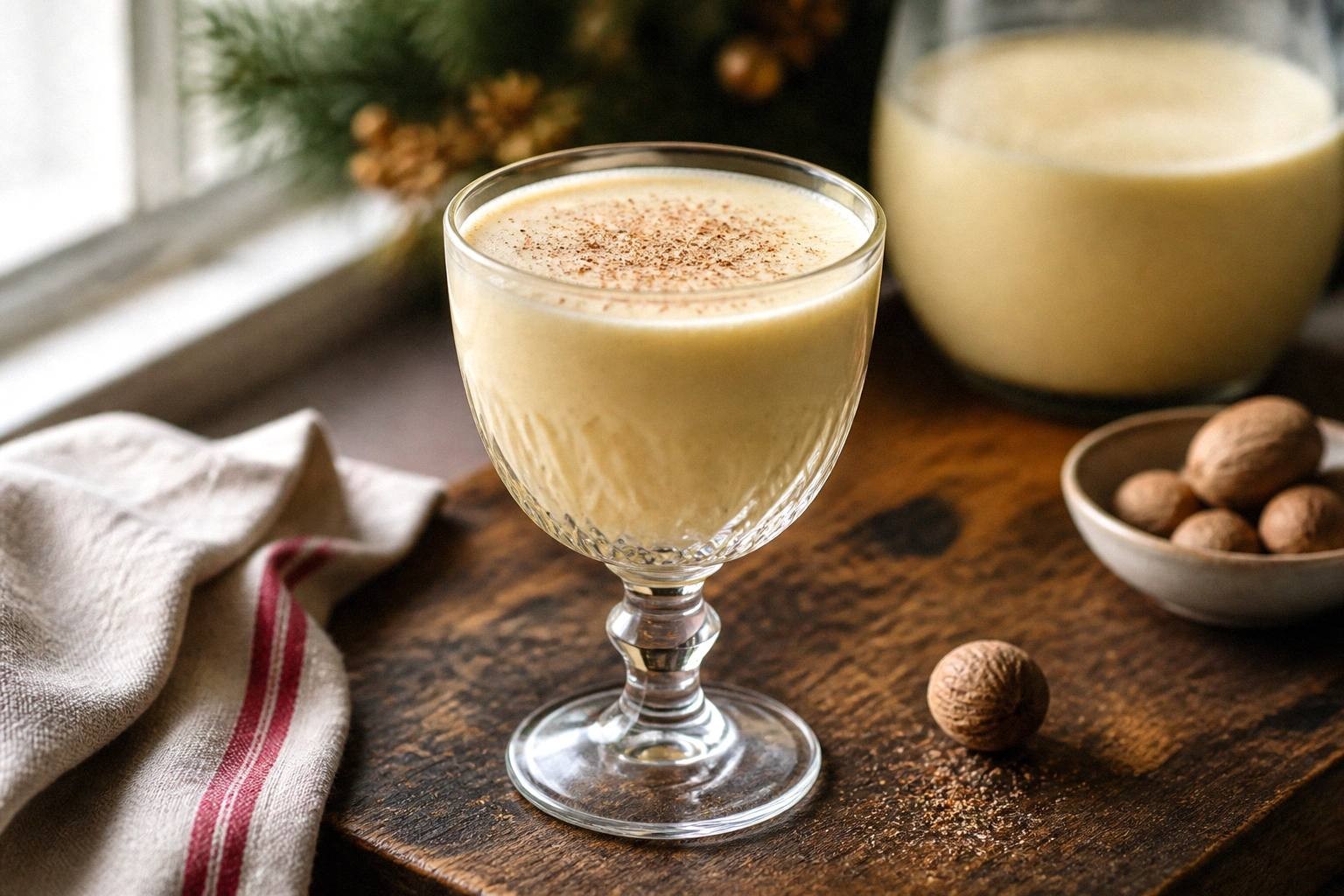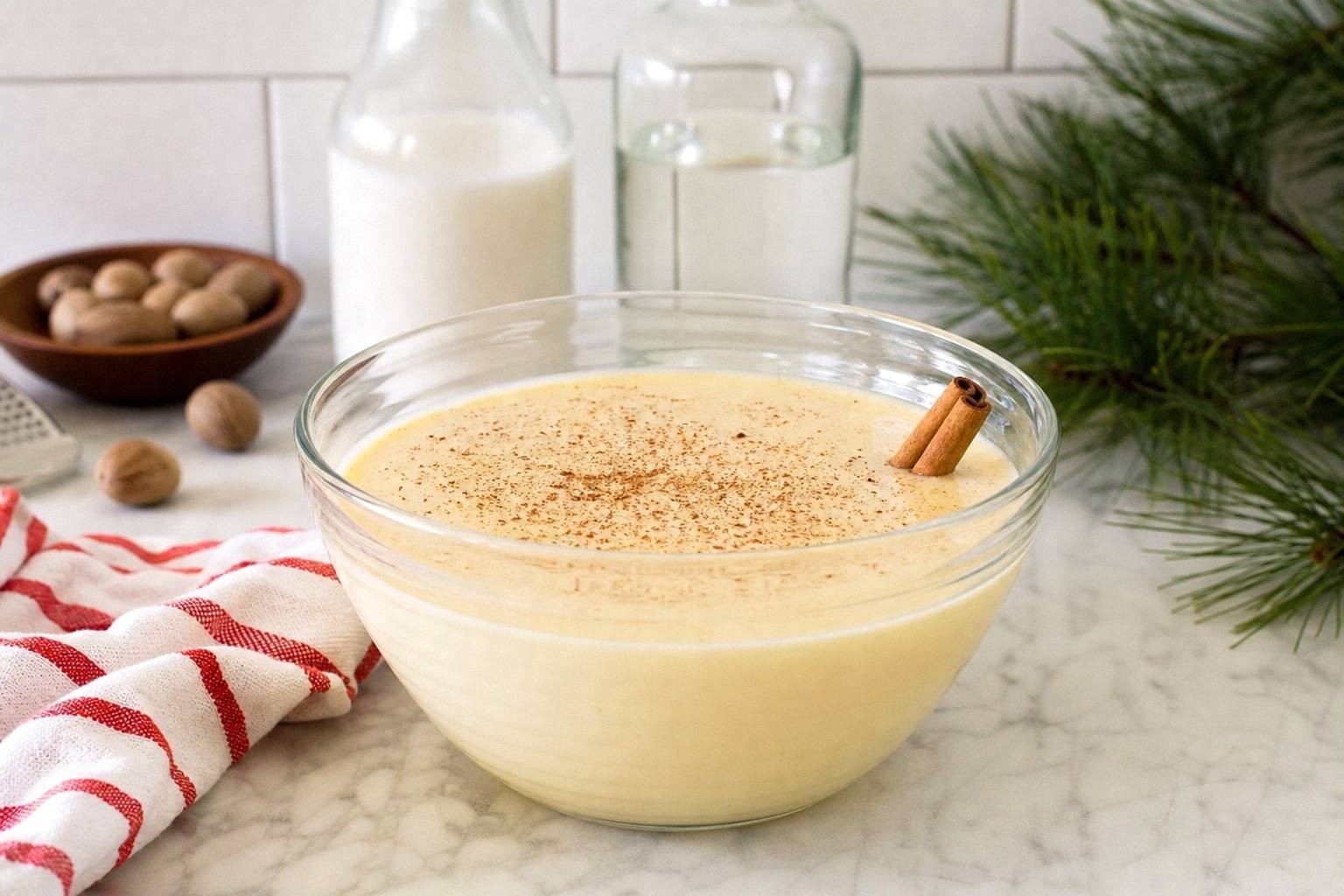
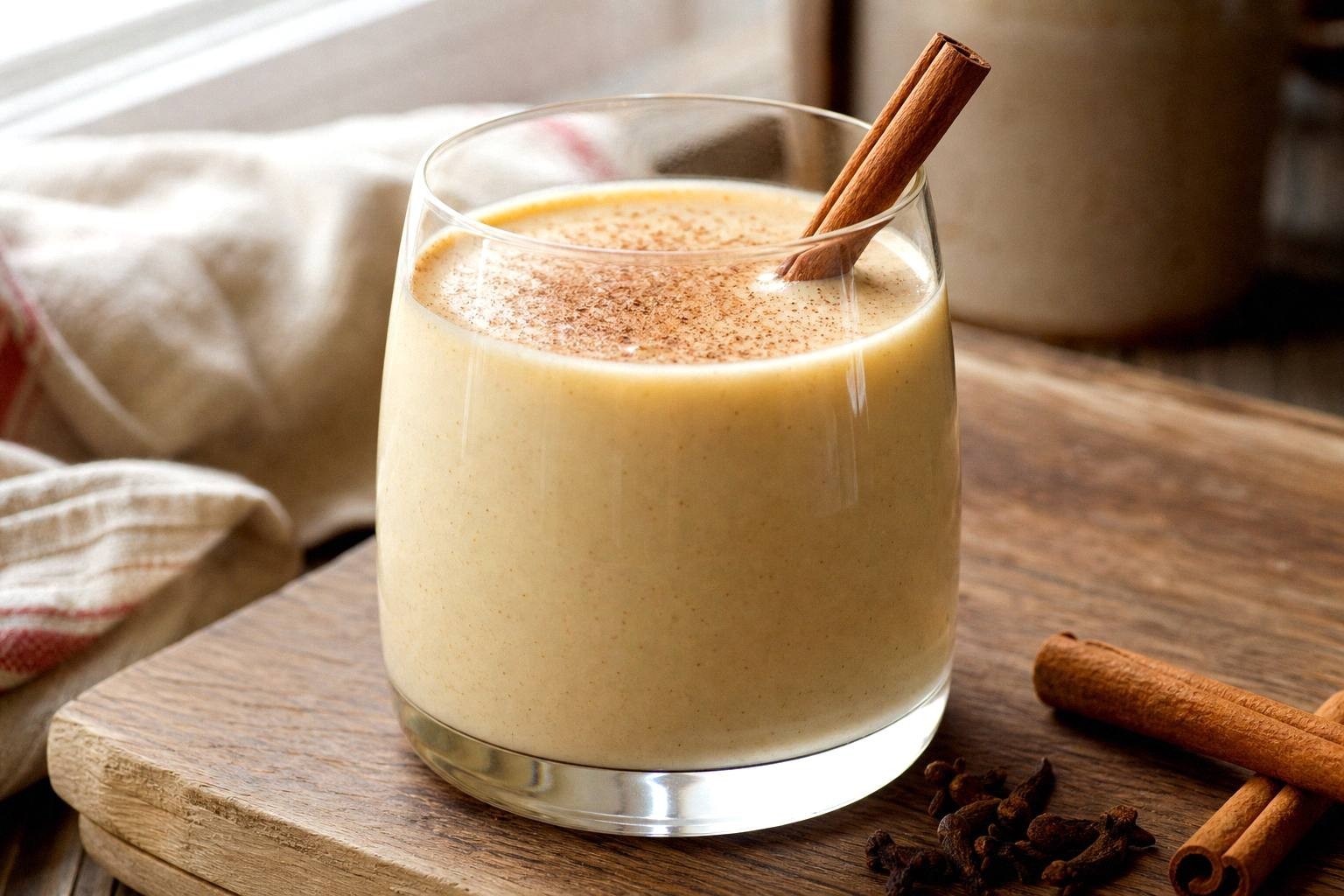
glass of creamy non-alcoholic eggnog topped with whipped cream and cinnamon, cinnamon sticks beside it
Cooked custard base makes this eggnog safe and silky without raw eggs.

Homemade eggnog without alcohol delivers the same creamy, spiced richness you expect from the holiday classic, but it’s safe for everyone at the table. This version uses a cooked custard base that eliminates raw egg concerns while building a silky texture that store-bought cartons can’t match. You’ll temper the eggs gently, infuse the milk with nutmeg and vanilla, and chill the batch so the flavors deepen before you serve it.

Why Cooked Eggnog Works Better

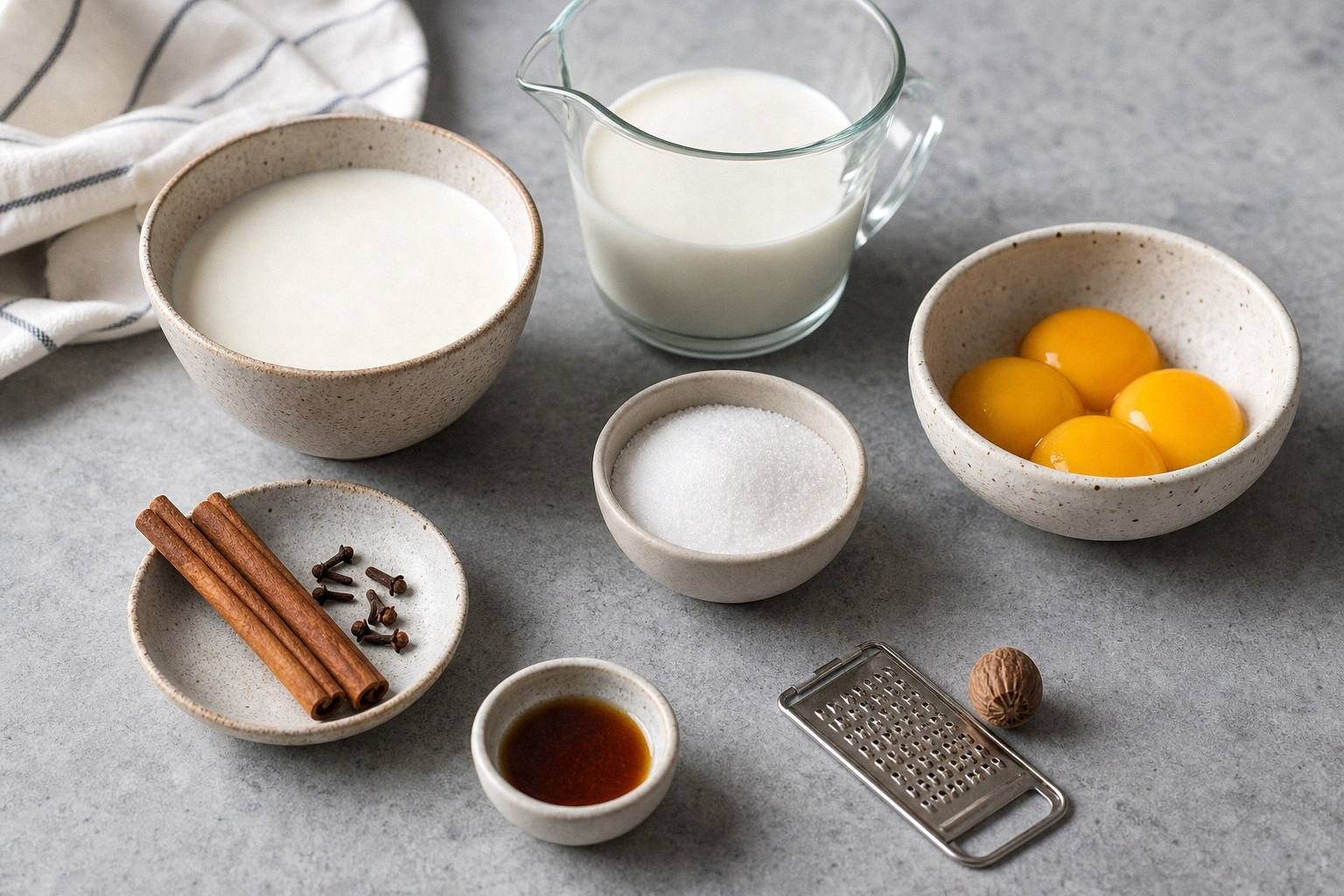
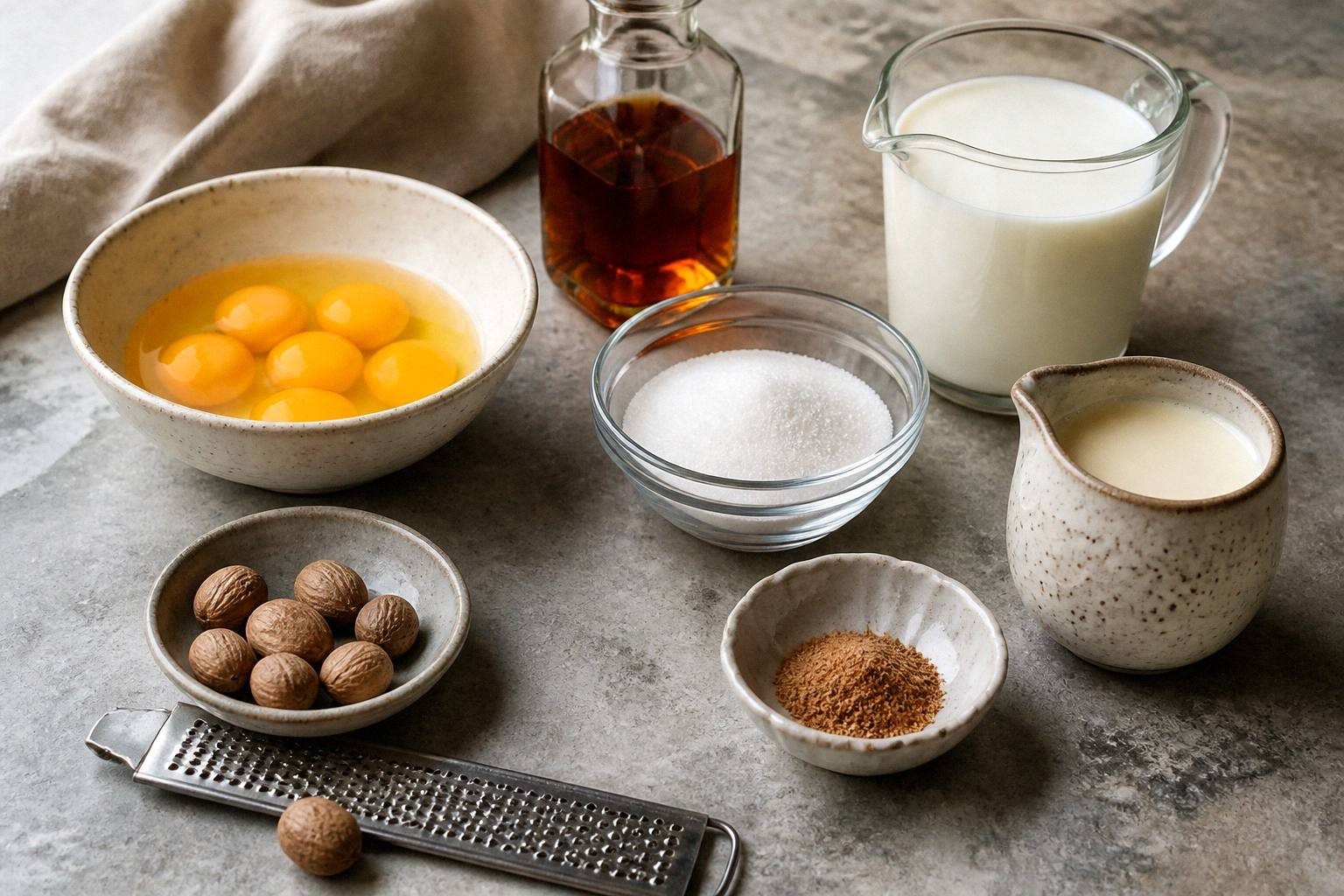
ingredients for eggnog laid out: egg yolks in bowl, sugar, heavy cream, milk, whole nutmeg, cinnamon sticks, cloves
Fresh whole nutmeg and room temperature yolks give the smoothest texture.

Cooking the egg yolks with milk creates a custard that thickens naturally and tastes richer than raw versions. The gentle heat denatures the proteins in the yolks, turning them into a stable emulsion that holds the cream and milk together without separating. You’re building the same base a pastry chef uses for crème anglaise, which is why the texture feels luxurious rather than thin.

The cooked method also solves the safety problem. Heating the mixture to 160°F kills any bacteria that might be present in raw eggs, making this eggnog safe for pregnant women, young children, and anyone with a compromised immune system. You’ll use a thermometer to confirm the temperature, but you can also watch for the custard to thicken enough to coat the back of a spoon.

Tempering is the technique that keeps the eggs from scrambling. You add a small amount of the hot milk to the beaten yolks first, whisking constantly to raise their temperature gradually. Once the yolks are warm, you can pour them back into the saucepan without shocking them into lumps. This step takes an extra two minutes but guarantees a smooth custard every time.

What to Buy for the Best Texture

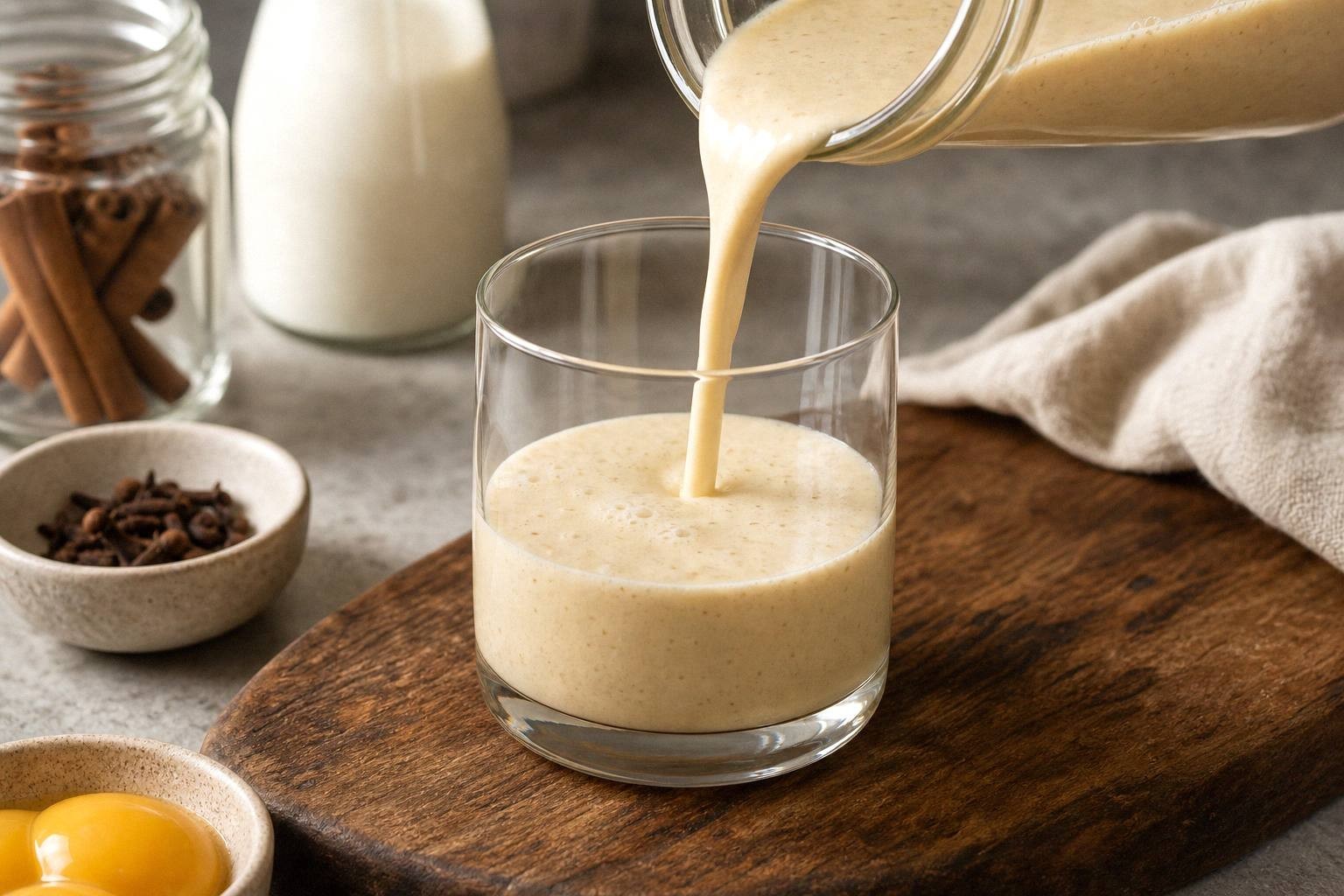
pouring spiced milk mixture into beaten egg yolks while whisking to temper the custard base
Tempering the eggs slowly prevents scrambling and builds a stable emulsion.
  • Whole milk and heavy cream: Use whole milk for the liquid base and clean dairy flavor, with heavy cream adding fat that coats your palate and carries the spices. Using 2% or skim milk will leave the eggnog thin and watery, so don’t substitute down.
  • Fresh whole nutmeg: Grate it on a microplane to release volatile oils that pre-ground nutmeg has already lost. Fresh nutmeg smells sharp and almost citrusy, while the jar on your shelf tastes flat and dusty. Buy whole nutmeg once and it will last through several holiday seasons.
  • Room temperature egg yolks: These temper more smoothly than cold ones straight from the refrigerator. Set your eggs out thirty minutes before you start, or place them in a bowl of warm water for five minutes. Cold yolks need more whisking to incorporate the hot milk, and they’re more likely to form lumps if you rush the tempering step.

Ingredients

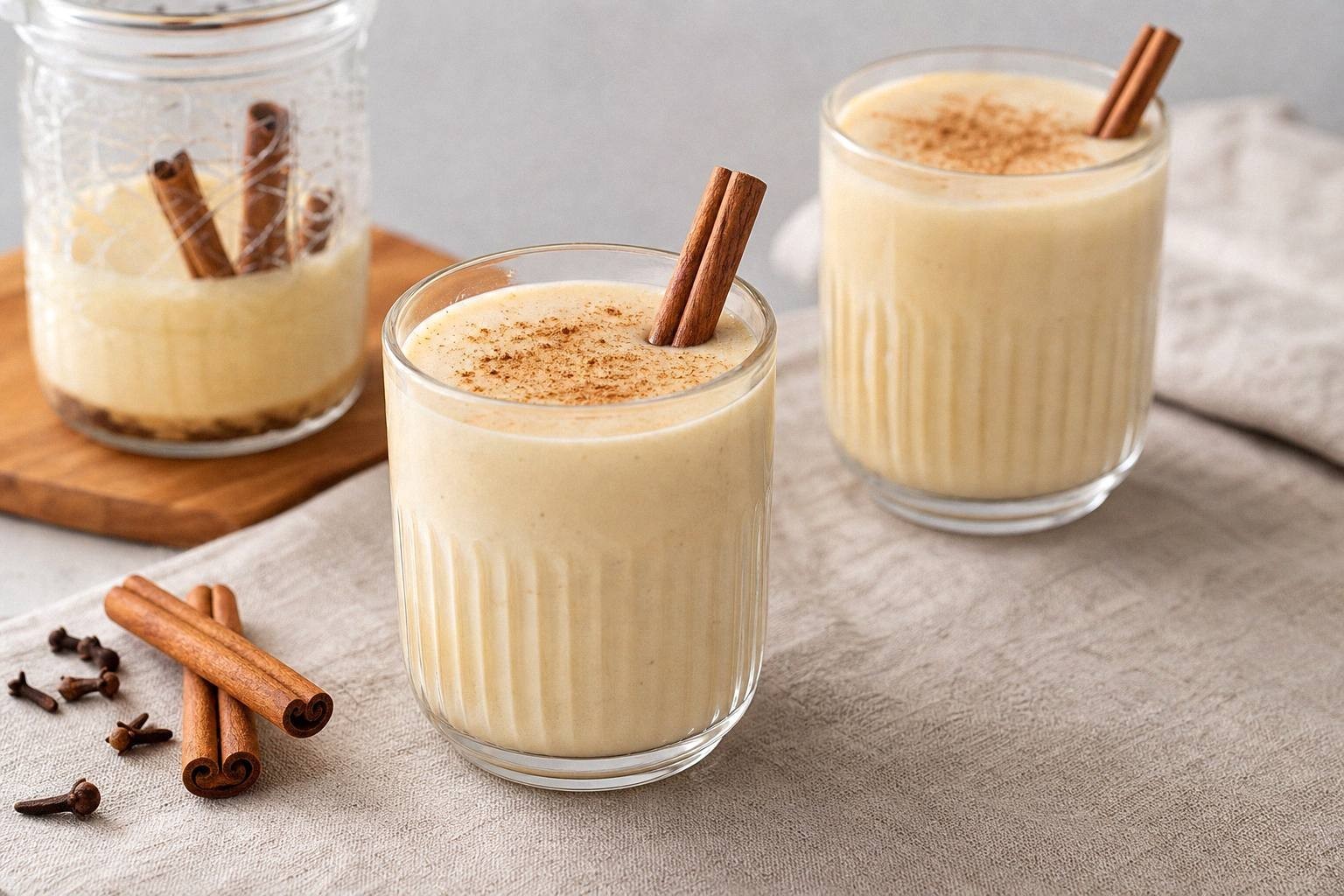
two glasses of finished non-alcoholic eggnog garnished with whipped cream and cinnamon on holiday table
Chill overnight before serving so the spices infuse the custard fully.
  • 6 egg yolks
  • 1/2 cup sugar
  • 1 cup heavy cream
  • 2 cups milk
  • 2 cinnamon sticks
  • 2 cloves
  • 1/2 teaspoon nutmeg
  • 1/2 teaspoon vanilla
  • 30 mls Lyre’s American Malt (optional)
  • Whipped cream and cinnamon for topping (optional)

Instructions

  1. Whisk the eggs and sugar together until the mixture lightens a little in color and goes creamy. An electric beater makes this easier, but a handheld whisk works fine too.
  2. Pour the cream and milk into a saucepan and add the ground nutmeg, cinnamon, and cloves. Set it over low-medium heat and stir to combine until the mixture is steaming slightly. Don’t let it boil.
  3. Add a large spoonful of the warm milk mixture to your egg mixture, then whisk it quickly to combine. Add another large spoonful and whisk again. Repeat this process until half of the milk mixture has been whisked into the egg mixture.
  4. Remove the cinnamon sticks from the milk mixture, then pour the egg mixture back into the saucepan on the stove.
  5. Whisk constantly until the mixture reaches about 160F on a cooking thermometer or thickens a little. This will only take a few minutes. Don’t worry if it doesn’t seem thick enough, it will thicken more as it cools.
  6. Remove from the stove and stir in the vanilla.
  7. Pour the eggnog into a jug, cover it, and place in the fridge to cool. If you love cinnamon, add it back into the jug before placing in the fridge to steep further.
  8. Pour into your favorite glasses or mugs and stir in 30ml/1oz of Lyre’s American Malt to each glass right before serving, if you like.
  9. Top with whatever you choose. I love whipped cream and powdered cinnamon.

Make-Ahead and Storage

Eggnog tastes better the day after you make it because the spices have time to infuse the custard and the flavors meld together. You can refrigerate it in a sealed container for up to five days, though the texture stays silkiest within the first three. Give the pitcher a good stir before serving, since the cream may settle slightly on top.

For larger gatherings, double or triple the recipe and make it two days ahead. The custard base scales cleanly: just use a larger saucepan and whisk more frequently while it heats to prevent scorching on the bottom. A gallon batch serves twelve to sixteen people and fits in a standard beverage dispenser, which keeps it cold and makes self-service easy.

Freezing homemade eggnog works if you plan to use it within a month. Pour it into a freezer-safe container, leaving an inch of headspace for expansion, and freeze for up to four weeks. Thaw it overnight in the refrigerator and whisk it vigorously to reincorporate any separated cream. The texture won’t be quite as smooth as fresh, but the flavor holds up well.

Common Problems and How to Fix Them

  • Scrambled eggs in the custard: You added the hot milk too quickly or didn’t whisk constantly while the custard cooked. Strain the mixture through a fine mesh sieve to catch the lumps, then continue. Next time, temper more slowly and keep the heat at medium rather than high.
  • Thin, watery texture: You used low-fat milk or didn’t cook the custard long enough to thicken. The mixture needs to reach 160°F and coat the back of a spoon before you take it off the heat. If it’s already chilled and thin, you can’t fix it by reheating, but you can serve it over ice as a lighter drink.
  • Grainy mouthfeel: The eggs overcooked and the proteins curdled. This happens if the custard boils or sits too long on the heat after it thickens. Strain it immediately and chill it fast by setting the bowl in an ice bath. The graininess will soften slightly as it rests, but it won’t disappear completely.
  • Flat, bland flavor: You used pre-ground nutmeg or skipped the resting time. Fresh nutmeg and a full two-hour chill are not optional if you want the spices to come through. Taste the eggnog before serving and add another pinch of nutmeg or a splash of vanilla if it needs more depth.

Serving Suggestions

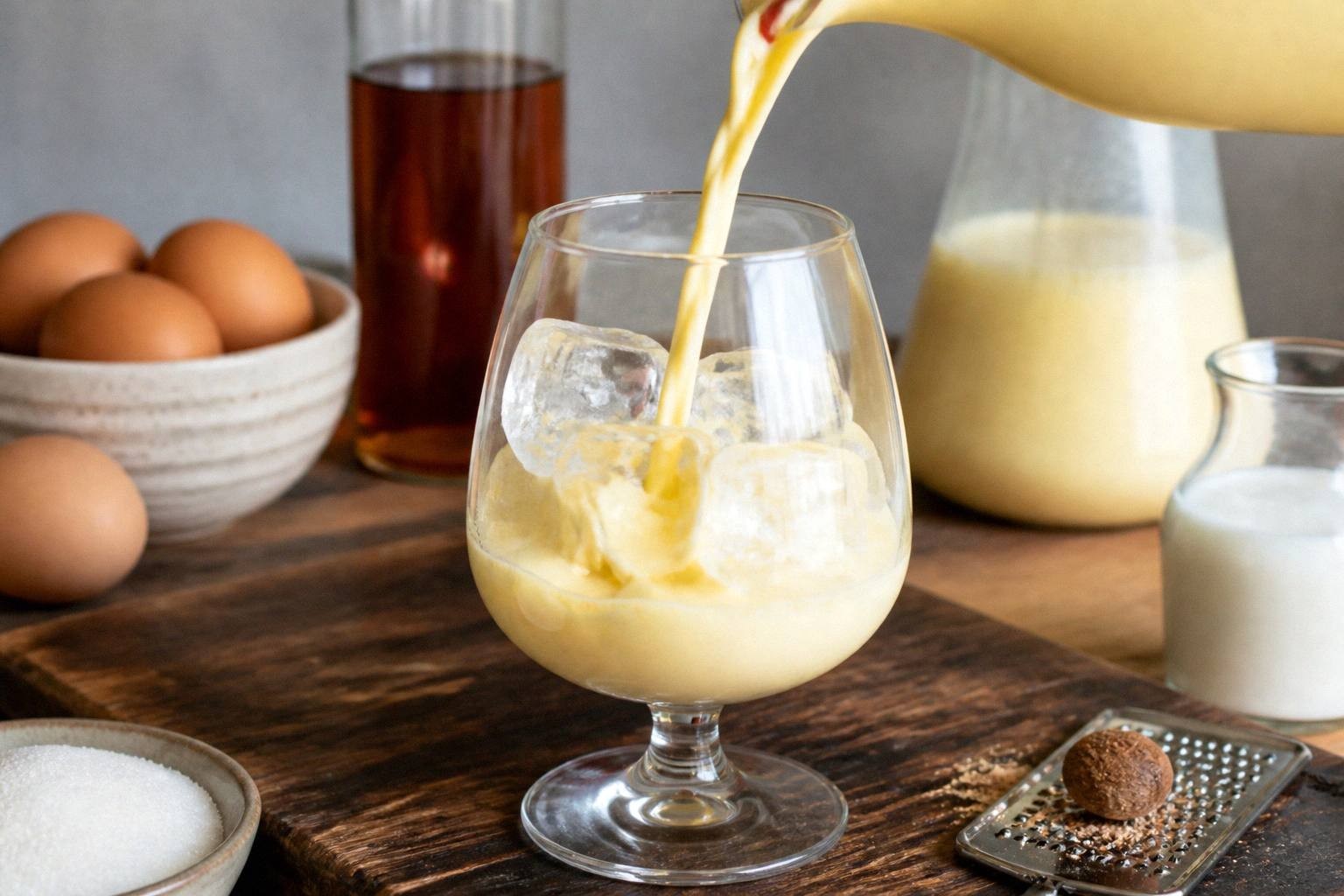
Serve eggnog cold in small glasses or mugs, since the richness fills you up quickly. A four-ounce pour is traditional, and it pairs well with gingerbread cookies, spiced nuts, or a slice of pecan pie. The creamy texture also makes it a good match for desserts that are less sweet, like shortbread or plain pound cake.

You can warm eggnog gently on the stove for a hot version, but don’t let it boil or the custard will break. Heat it over low, stirring constantly, until it steams. Pour it into mugs and top with whipped cream and a cinnamon stick. Hot eggnog works especially well on cold evenings when you want something comforting that isn’t coffee or hot chocolate.

For a festive presentation, rim the glasses with cinnamon sugar or grate fresh nutmeg directly over each serving at the table. A cinnamon stick makes a good stirrer and adds a subtle spice note as the drink sits. If you’re serving a crowd, set out bowls of whipped cream, ground cinnamon, and grated nutmeg so guests can garnish their own glasses.

Frequently Asked Questions

How do you make eggnog without alcohol?

You replace the volume that spirits would normally provide with extra cream and milk, then rely on nutmeg, vanilla, and a cooked custard base to build the flavor. The recipe above uses 3 cups of whole milk and 2 cups of heavy cream to create the same richness a traditional eggnog gets from rum or bourbon.

Is this eggnog safe for pregnant women and children?

Yes, because the custard is cooked to 160°F, which kills any bacteria that might be present in raw eggs. This makes it safe for anyone who needs to avoid raw or undercooked eggs, including pregnant women, young children, and people with weakened immune systems.

How long does homemade eggnog last in the fridge?

Homemade eggnog keeps for up to five days in a sealed container in the refrigerator. The flavor is best within the first three days, and the texture stays smoothest during that window. Always store it in the coldest part of your fridge, not in the door.

Can you make eggnog ahead of time?

Yes, and it actually improves if you make it a day or two before you plan to serve it. The spices infuse the custard more deeply, and the flavors meld together as it rests. Just give it a good stir before pouring, since the cream may settle on top.

What is the tempering method?

Tempering means gradually raising the temperature of the egg yolks by whisking in small amounts of hot milk before you add them to the saucepan. This prevents the eggs from scrambling when they hit the heat. You add a spoonful of hot milk, whisk it in, then repeat until the yolk mixture feels warm.

Can you serve eggnog hot?

Yes, you can gently reheat eggnog on the stove over low heat, stirring constantly, until it steams. Don’t let it boil or the custard will curdle. Hot eggnog is especially good in the winter, served in mugs with whipped cream and a cinnamon stick.

Conclusion

This non-alcoholic eggnog gives you the creamy, spiced drink the holidays call for without the raw eggs or the alcohol. The cooked custard base is safe for everyone, and the flavor deepens as it chills, so you can make it ahead and serve it cold or gently warmed. Once you’ve made it from scratch, the carton version won’t taste the same.